On this page
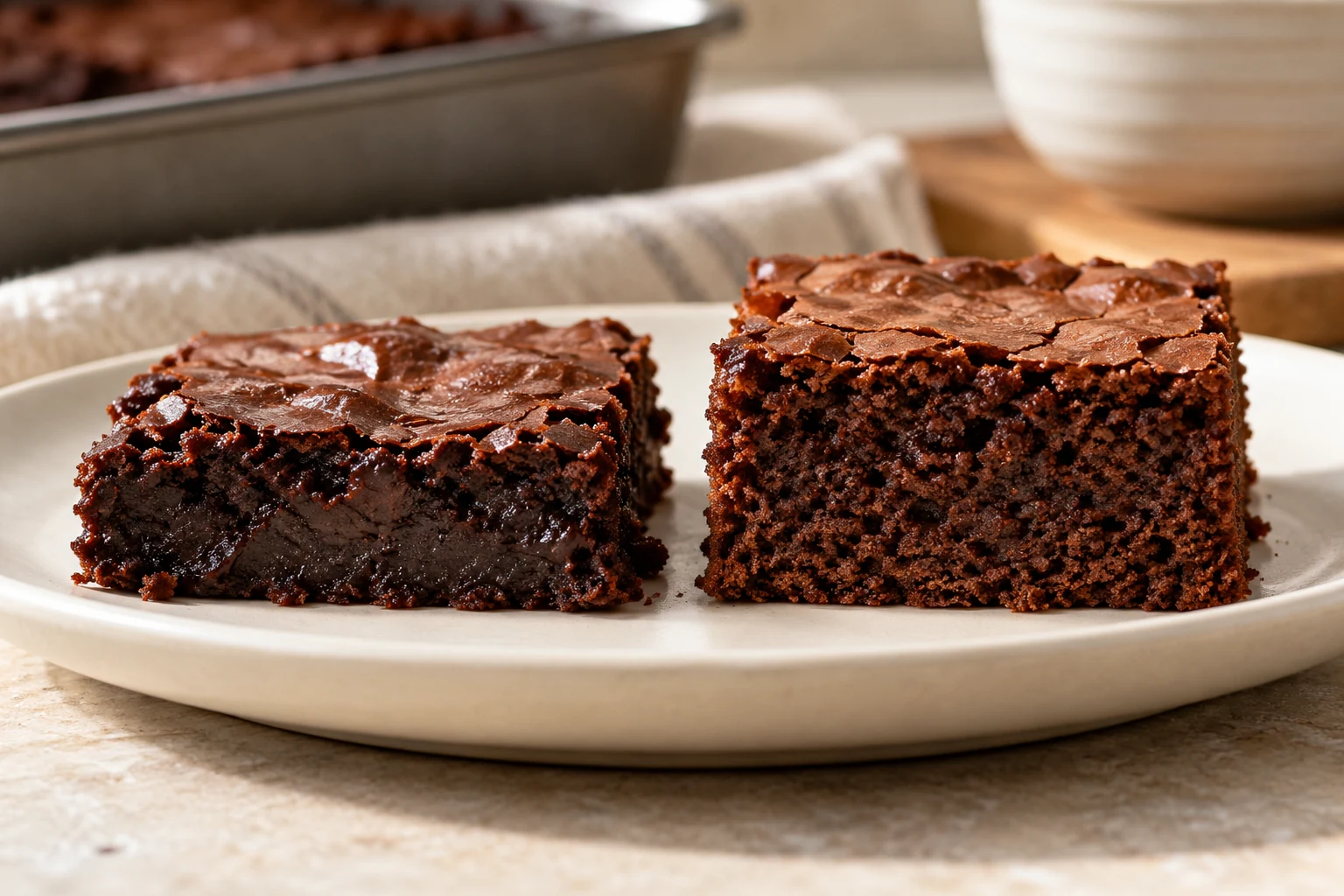
Brownie lovers tend to have a preference: a dense, almost truffle-like square or a light, soft bar that feels closer to chocolate cake. Both styles are legitimate, and the choice is built into the recipe. Small changes in flour, egg, fat, cocoa and leavener shift the crumb, sometimes dramatically. Learning those relationships helps you select a brownie that matches what you actually enjoy rather than hoping one formula can be transformed by a few extra minutes in the oven.
The fundamental distinction
Fudgy brownies usually have a compact, very moist crumb and high chocolate richness. Cakey brownies have more open, aerated structure and resemble a moist chocolate cake in miniature. Chewy brownies sit between or alongside those categories, often emphasizing a resilient bite rather than pure density or fluffiness.
Flour is a major lever

More flour relative to the other ingredients generally provides more structure and supports a cake-like crumb; lower flour helps create a dense brownie. Too much flour produces dryness and heaviness rather than a beautifully tender cake. Compare weighed ingredient ratios instead of adding spoonfuls by eye.
Fat makes brownies richer
Butter, oil and cocoa butter contribute to softness and richness. Fudgy formulas frequently have a relatively high fat-to-flour ratio. Less fat may encourage a drier crumb, but reducing it without adjusting liquid and egg can create a disappointing bar.
Eggs provide structure
Egg proteins set in the oven and help hold the baked batter together. Formulas with a relatively high egg proportion can develop a more cake-like structure, particularly alongside additional flour and mixing. Yolks also contain fat and emulsifiers, so the effect isn't as simple as counting eggs alone.
Baking powder increases lift

A little chemical leavener can contribute a slightly airy crumb. Cakey brownies are more likely to rely on it alongside sufficient flour and liquid; many very dense brownies use little or none. Adding twice the prescribed powder can yield an uneven rise, off flavour or collapse.
Sugar keeps the crumb tender
Sugar affects moisture, sweetness, structure and the surface crust. Higher sugar levels can produce chewy or soft brownies within a suitable formula. Major untested reductions can make the final crumb unexpectedly dry or firm, regardless of whether you're aiming for fudgy or cakey.
Melted chocolate versus cocoa
Melted chocolate contributes cocoa butter and potentially sugar, while cocoa powder adds concentrated dry cocoa solids that need sufficient moisture and fat. Both can appear in either style, but a recipe's balance matters. King Arthur Baking's brownie analysis discusses these distinctions across multiple tested formulas.
Liquid can change the style
Some cakey brownie recipes include additional water, coffee or milk, working alongside flour and leavening to create a softer cake-like crumb. A fudgy recipe may not include separate liquid beyond eggs and melted fat. Adding extra milk to a fudgy batter can destabilize the formula rather than making it softer.
Mixing method influences air

Creaming butter and sugar or whipping eggs can introduce air. Stirring melted butter and sugar gently often creates a denser batter. But some glossy fudgy brownies intentionally beat eggs and sugar; the complete formula determines whether that creates a cake-like structure.
Pan depth matters

The same brownie batter baked in an eight-inch square pan is deeper than in a nine-inch square. A deeper slab may feel softer in the centre and needs more time to bake. Don't interpret an undercooked centre from a too-small pan as a desirable fudgy recipe.
Fudgy isn't the same as raw

A correctly baked fudgy brownie should still be cohesive and safe. It may leave moist crumbs on a tester, depending on the recipe, but uncooked shiny batter should not remain in the centre. Refrigerating or freezing raw batter after baking doesn't make it properly cooked.
Cakey isn't the same as dry
A well-made cakey brownie can be moist and tender while having small air cells and a springier bite. Too much flour or overbaking makes it dry, not merely more cakey. Choose a formula written for that crumb rather than overbaking a fudgy formula until it resembles a dry sponge.
How chewy brownies fit in
Chewy brownies may use combinations of melted butter and oil, higher sugar ratios and comparatively little leavener. Their bite offers resistance, unlike a very soft truffle-like centre. Chewy is a texture choice in its own right, not simply halfway between successful fudge and cake.
The role of chocolate chunks
Chunks and chips provide pockets of melted or firm chocolate, depending on serving temperature. They add richness but don't turn a cakey batter into a fudgy one. Use the recipe's quantity and consider whether you want smooth texture or distinct pieces.
Why a shiny top isn't a texture category
A crackly sugar-rich crust can appear on fudgy, chewy or other brownie styles when the recipe promotes it. It doesn't prove the inside is fully baked, and a matte top doesn't mean the crumb must be cake-like. Judge surface and interior separately.
Choose the style before baking
If you want fudge-like density, seek a lower-flour, higher-fat recipe with appropriate mixing. If you want a cake-like square, select a formula with the right flour, egg, liquid and leavener balance. King Arthur Baking publishes separate tested brownie styles for comparison.
Avoid changing several variables at once
Reducing flour, adding melted chocolate, removing baking powder and switching pans in one attempt makes it nearly impossible to learn which change mattered. Choose an established recipe as a baseline, then make one controlled adjustment if necessary.
Troubleshooting overly dense cakey brownies
If a cake-style formula turned out heavy, check leavener freshness, mixing method, egg and flour measurement, and actual oven temperature. A low rise can result from multiple causes. More baking time alone won't create the airy crumb the recipe intended.
Troubleshooting dry fudgy brownies
Excess flour, an oversized pan, a hot oven or prolonged baking can strip the soft texture from a fudgy formula. Check the measured quantities and time before adding extra fat or water to the next batch.
Cooling changes how texture feels

Warm chocolate and butter make brownies softer; cooling firms them. A fudgy brownie cut hot may smear while the same bar at room temperature feels cohesive and luscious. A cakey brownie also benefits from cooling so its crumb doesn't tear.
Serving ideas for each style
Extra-fudgy brownies pair well with coffee and can be served as small rich squares. Cakey brownies are pleasant with a scoop of ice cream or a light glaze. Chewy bars travel well when fully cooled. Match toppings to the base instead of hiding its intended texture.
Frequently asked questions
Does more flour make cakey brownies? It can contribute, alongside eggs and leavener. Are fudgy brownies underbaked? They shouldn't be. Is oil always fudgier than butter? It affects softness, but the formula matters. Can one recipe produce both? Pan and time alter texture, but a separate tested recipe is more reliable.
Bake the brownie you actually want
Fudgy, chewy and cakey are all worthwhile styles. Let the recipe's ingredient ratios, mixing method, pan and doneness cues work together. The best brownie isn't the one with the most extreme texture, but the one intentionally designed for your favourite bite.
Related recipe: Almond Flour Brownies.
Technique reference: King Arthur Baking.
IN PICTURES
From the baking notebook
FROM THE RECIPE BOX


