On this page
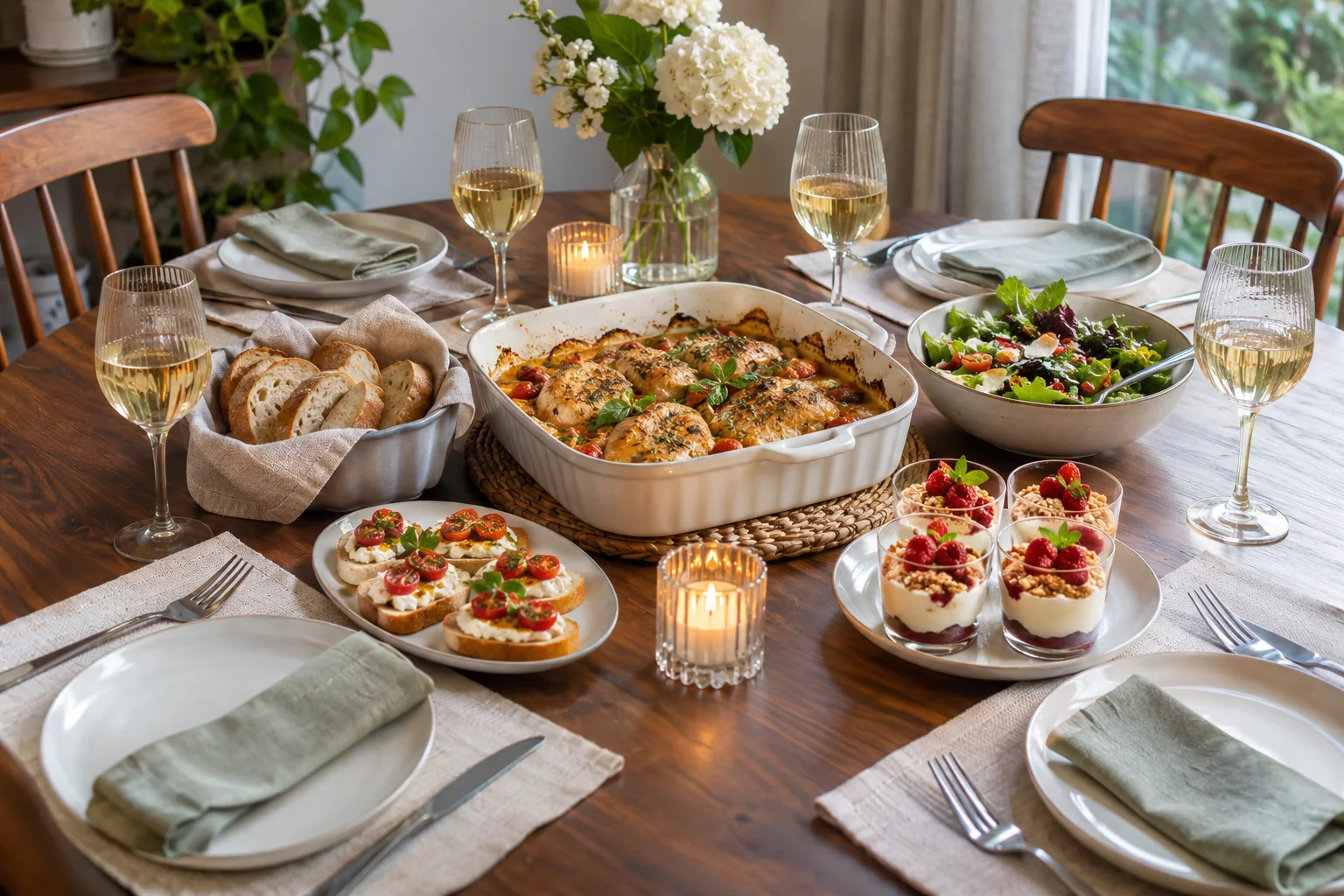
A first dinner party can feel intimidating because you are cooking and hosting at the same time. Yet guests rarely expect restaurant-level plating; they want a delicious meal, conversation and a comfortable atmosphere. For beginners, the winning formula is one tested main dish, a simple side, a starter that doesn't compete for oven space and a dessert you can finish in advance.
Keep the guest list manageable
Four to six guests is a comfortable starting size for many home kitchens. You can use ordinary cookware and easily account for dietary needs without renting extra equipment. If hosting a larger group, choose a buffet-friendly menu and plan for enough safe hot and cold holding space.
Pick the main before anything else
Choose a main that you have cooked successfully or can rehearse in advance. Sheet-pan chicken with vegetables, a baked pasta or a hearty bean stew are practical options. Avoid experimenting with expensive unfamiliar cuts of meat or a sauce that is famously easy to split on the evening itself.
Use the two-plus-one menu rule
Aim for two savoury components—a main and a vegetable or starch side—plus one simple dessert. You may add a starter, but it should be easy to prepare. This prevents the common beginner mistake of designing four hot courses that all need the same burner at the same time.
Menu one: relaxed Italian evening
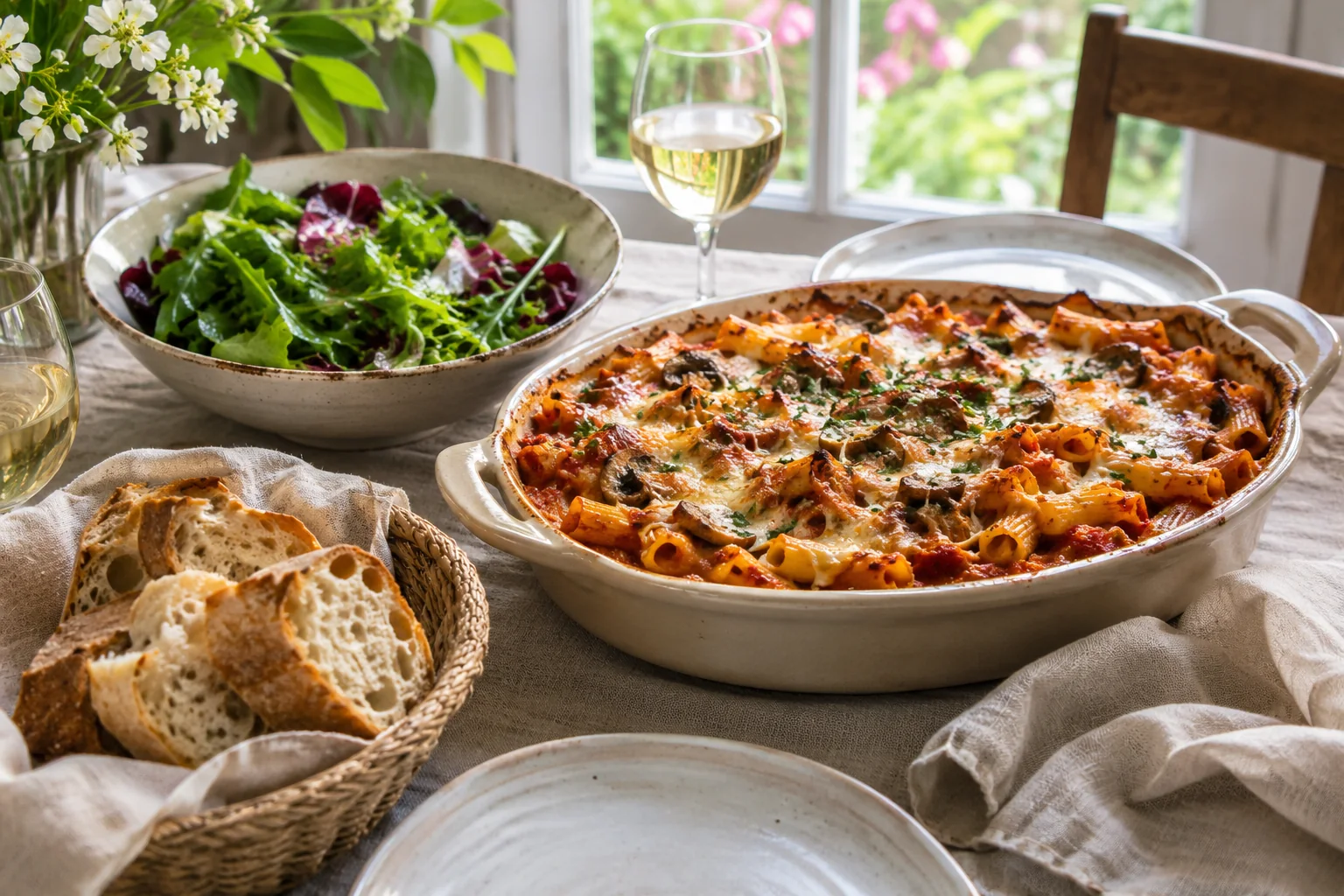
Start with tomato crostini, serve a baked pasta with roasted vegetables and a green salad, then finish with panna cotta or a simple lemon cake. Choose a tested make-ahead dessert and keep dairy components refrigerated. The main can often be assembled ahead under its recipe's instructions.
Recipe to try: Mushroom Pasta. Follow this recipe’s ingredient amounts and complete method.
Menu two: cosy roast dinner
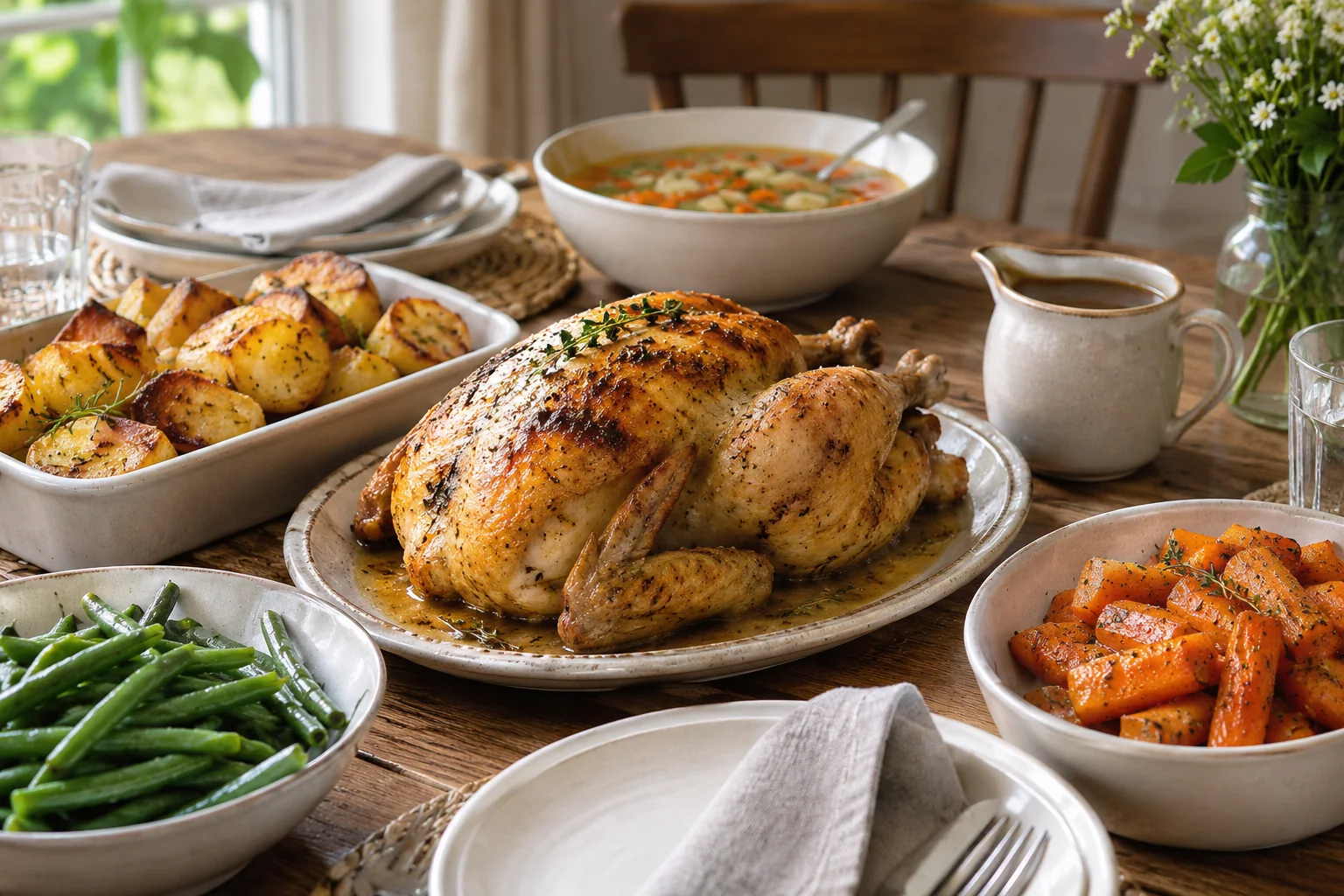
Serve a bowl of vegetable soup, roast chicken pieces with potatoes and carrots, then offer apple crisp. Roast individual portions according to a safe method rather than cooking an oversized whole bird for the first time. A fruit dessert can be prepared before guests arrive.
Recipe to try: Vegetable Soup. Follow this recipe’s ingredient amounts and complete method.
Menu three: vegetarian gathering
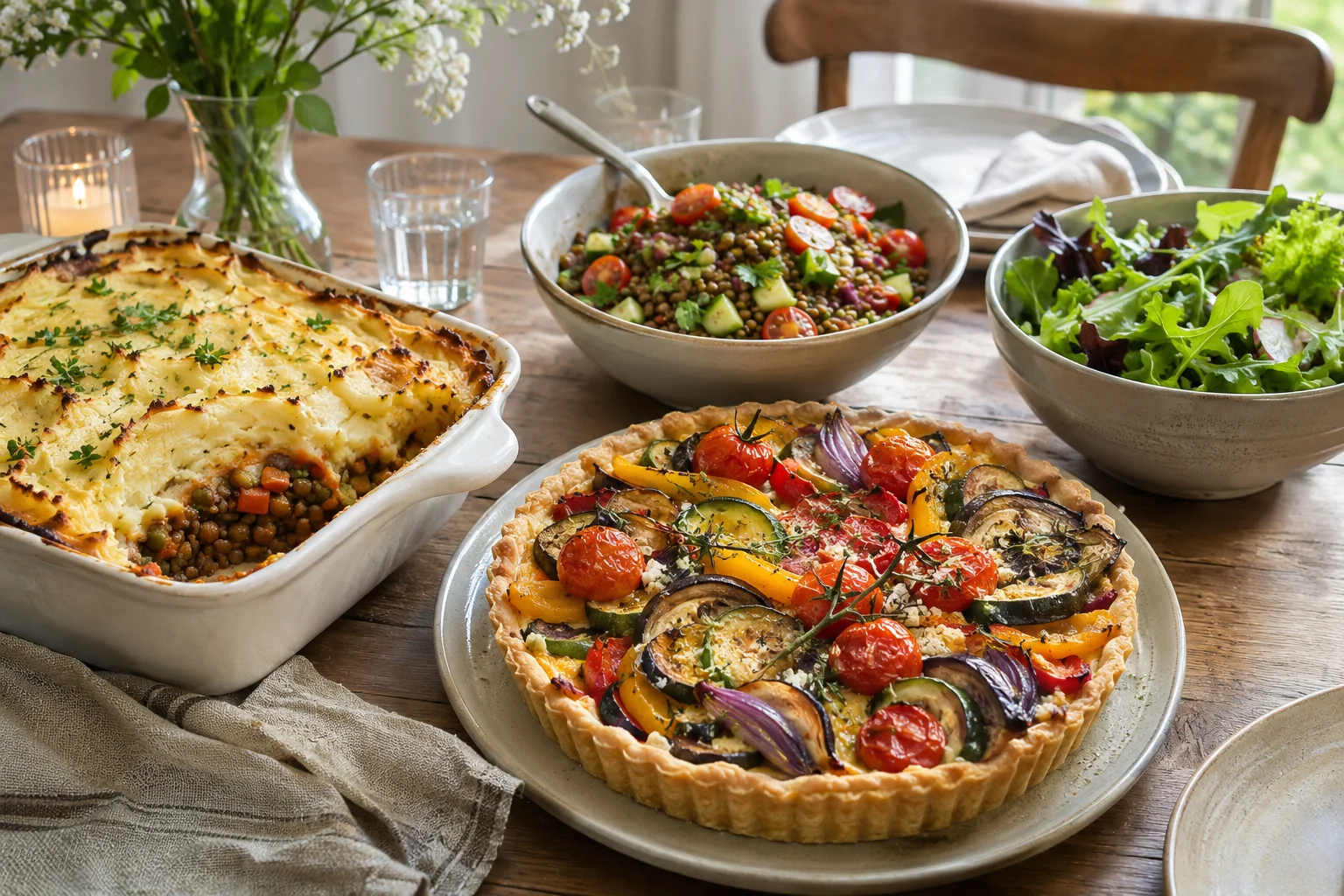
Start with hummus and vegetables, serve a lentil-and-mushroom shepherd's pie with a simple salad, and finish with berries and chocolate pots. This menu has substance and can suit a range of preferences, but label dairy and other allergens rather than assuming vegetarian means allergy-free.
Recipe to try: Vegan Shepherd's Pie. Follow this recipe’s ingredient amounts and complete method.
Menu four: a casual taco night
Offer black bean or appropriately cooked meat filling with tortillas, cabbage, avocado and two sauces. Serve a tray of roasted corn or vegetables, then chocolate brownies. Keep fresh toppings chilled and raw-meat utensils separate from cooked fillings.
A starter that doesn't demand the stove
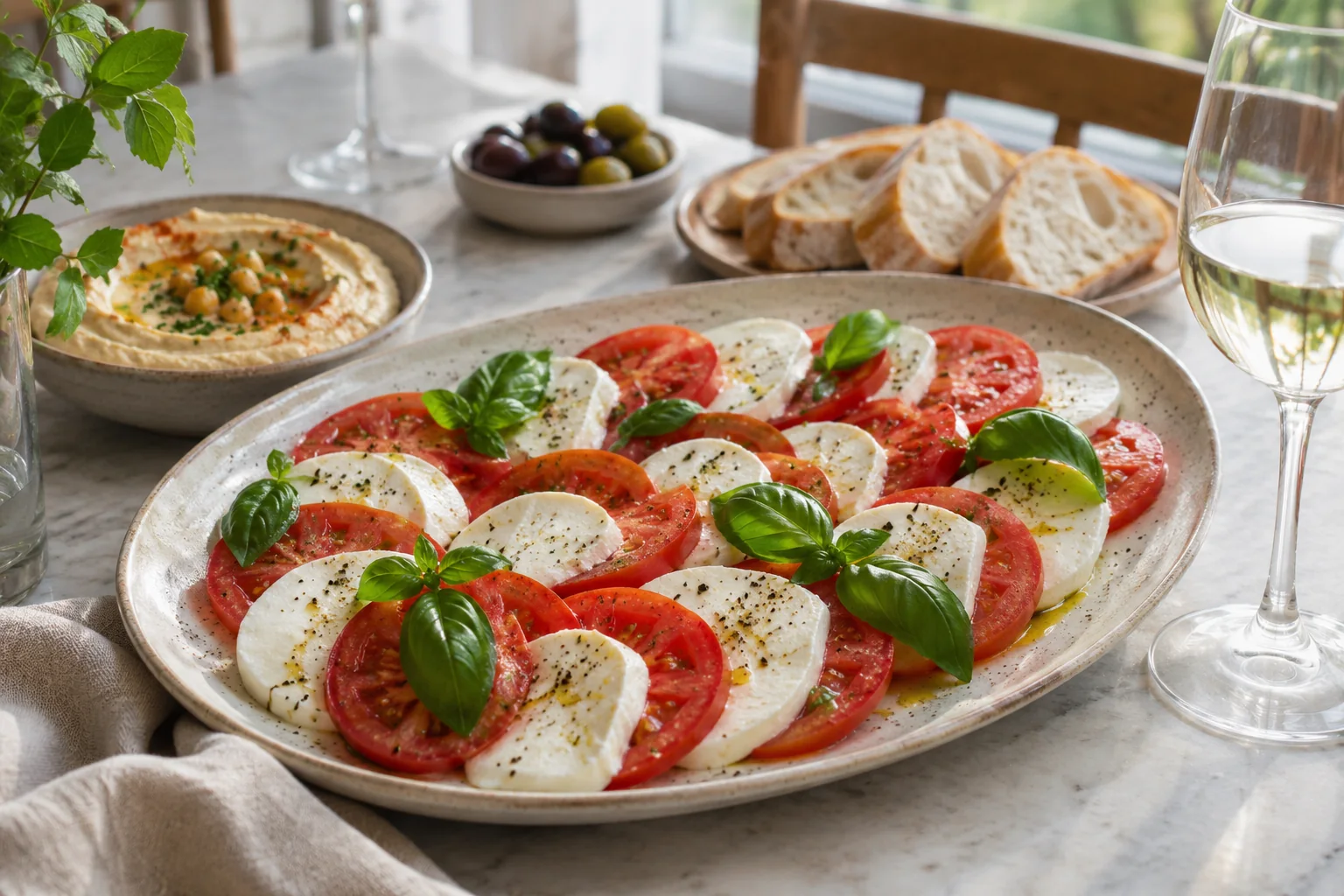
Choose a small platter of vegetables and dip, a salad or bread with olive oil. These can be arranged near arrival. A complicated hot appetizer requiring oven space just as the main should finish makes dinner timing more stressful.
Recipe to try: Classic Homemade Hummus. Follow this recipe’s ingredient amounts and complete method.
Choose an oven-friendly main
A casserole or roasted dish frees you to greet guests rather than stir a pan constantly. Use the pan size and yield specified by the recipe so the centre heats properly. A too-deep casserole may be underdone even when the edges bubble vigorously.
Make the dessert first
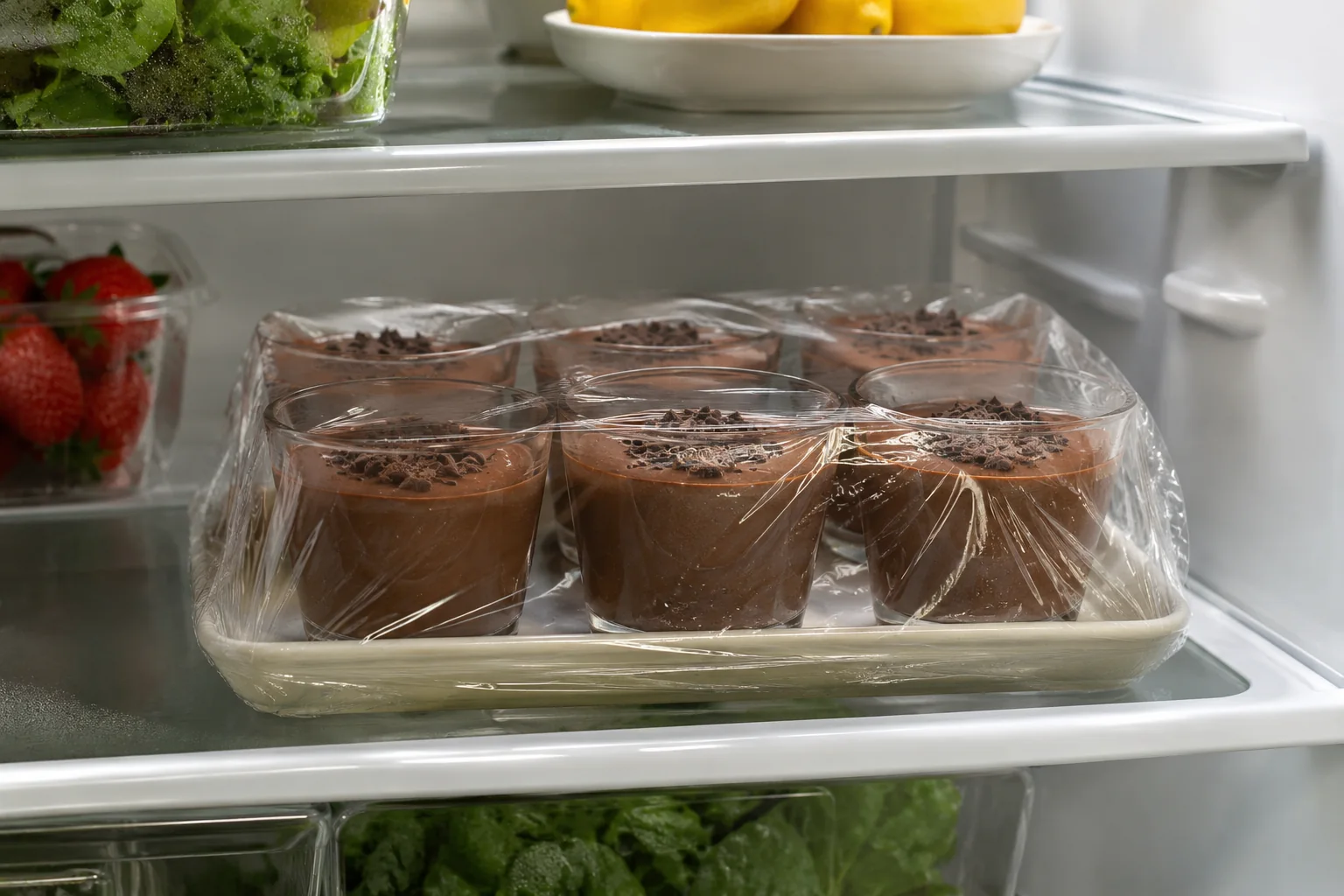
A cake, baked fruit dessert or set pudding can often be made before party day under a suitable formula. Dessert then becomes a pleasure rather than another cooking crisis. Save whipped cream, fruit garnishes or crisp toppings for the stage best suited to their texture.
Recipe to try: Lemon Layer Cake. Follow this recipe’s ingredient amounts and complete method.
Calculate portions before shopping
Use the recipe's serving yield as a starting point, then account for side dishes, appetites and whether children are attending. Don't double a recipe by simply using a deeper pan; two ordinary pans may bake more predictably than one oversized dish.
Check dietary needs early
Ask guests about allergies and relevant restrictions before choosing the menu. Plan safe alternatives using a complete tested recipe and prevent cross-contact with clean tools. A shared buffet can be challenging for severe allergies, so individually plated safe portions may be preferable.
Make a realistic grocery list
Group ingredients into produce, proteins, pantry, dairy and baking items. Check what you already have before shopping. Choose dishes that share a few herbs or lemons, avoiding specialty purchases used for only one spoonful in one recipe.
Plan the oven schedule
Write down each dish's oven temperature, rack, pan size, bake duration and required rest before service. Two dishes at radically different temperatures cannot simply share an oven and finish perfectly. Cook the make-ahead component earlier or choose an alternative side.
A two-day preparation plan
Two days before: confirm guests, menu, equipment and pantry. The day before: shop, prepare a suitable dessert, wash produce and safely cook any recipe-approved make-ahead item. On party day: set the table early and prepare ingredients for the main before anyone arrives.
Two hours before arrival
Finish any cold starter, arrange serving dishes and start the main at the correct time. Double-check refrigerator space for dairy desserts and fresh produce. Set utensils beside dishes and keep a clear counter area for hot pans.
The final half-hour
Check safe doneness with a thermometer, let the main rest if required and dress the salad near serving. Put out water and drinks. Avoid starting a completely new sauce while the doorbell rings. A calm thirty minutes is often more valuable than one extra elaborate side.
Keep drinks simple
Offer chilled water, sparkling water with citrus, tea or another accessible beverage. Use a separate drink area so guests don't queue in front of hot pans. Ensure the selection includes a nonalcoholic option and doesn't depend on everyone liking the same flavour.
Think about serving style
A small dinner party can use family-style platters so everyone chooses their portions. If you prefer plating, select dishes that can be portioned quickly. Soup served first in bowls may slow the schedule; a light cold starter gives you more flexibility.
Food safety for hosting
Cook meat and eggs to the applicable temperatures, keep hot foods at 60°C (140°F) or above and cold foods at 4°C (40°F) or below when holding for service. Refrigerate leftovers within two hours and use shallow containers. Never depend on the appearance of meat or a casserole to confirm safe cooking.
What if one dish is late?
Serve the starter and drinks, then finish the main safely rather than raising oven heat dramatically. A small delay is preferable to undercooked poultry. If the dessert isn't perfect, serve it simply in bowls and enjoy the conversation.
Make cleanup easier
Empty the dishwasher before guests arrive, use cookware that can also serve when appropriate and keep a place for dirty plates. Store leftovers promptly before relaxing at the end of the night. A manageable kitchen makes the evening feel successful long after everyone leaves.
The beginner's advantage
A modest menu lets you pay attention to seasoning, cooking and hospitality. One tested dish executed well, a crisp salad and a good dessert are more impressive than a complicated meal that leaves the host exhausted.
IN PICTURES
From the baking notebook
FROM THE RECIPE BOX


