On this page
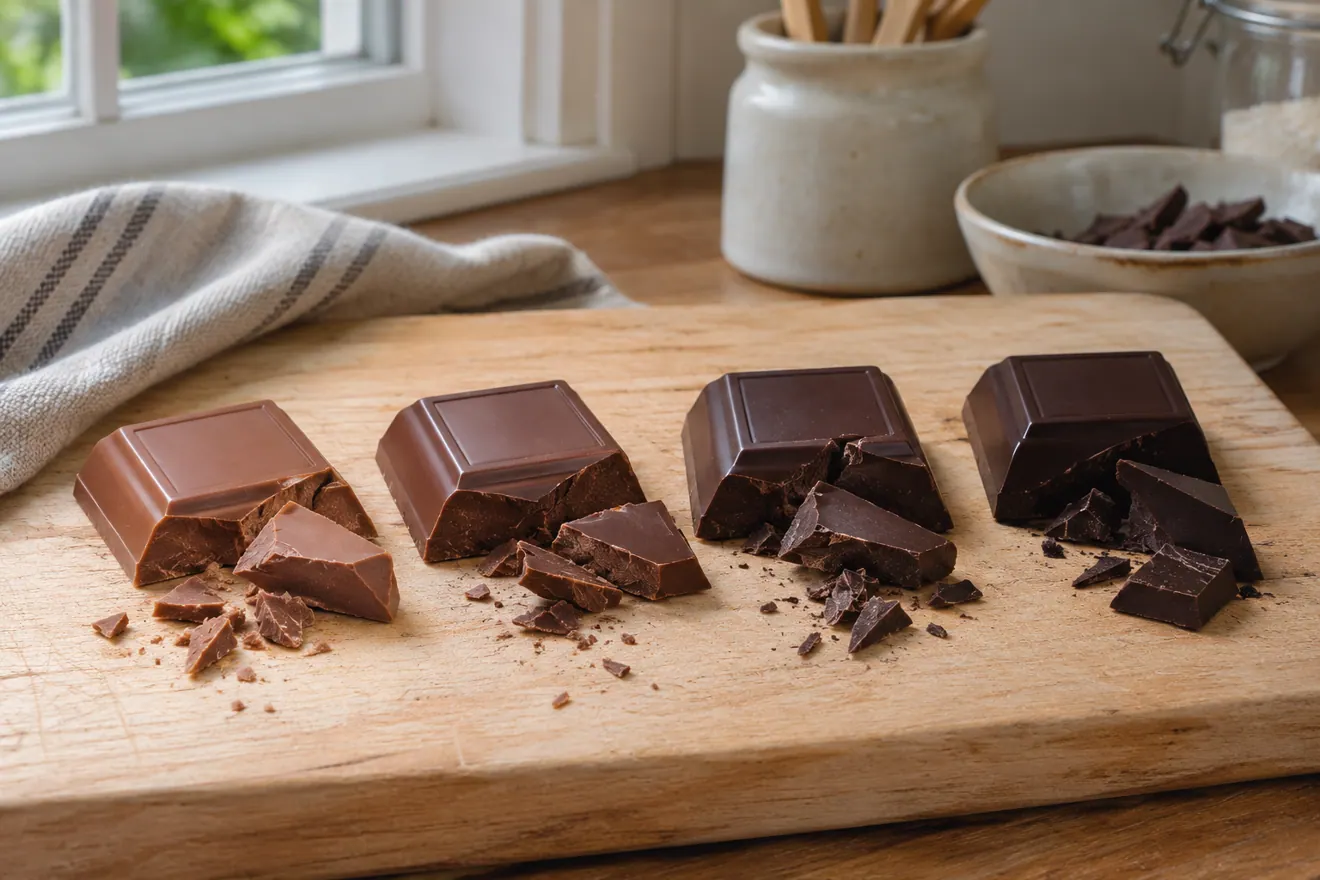
Pick up two bars of dark chocolate and you'll probably see a large number on the wrapper: 55%, 70%, perhaps 85%. It looks like a simple scale from mild to intense. Yet two bars marked 70% can taste completely different, melt differently and create surprisingly different results in a cake or ganache.
Chocolate percentage is useful information, but it doesn't tell the whole story. Understanding what the number includes—and what it leaves out—will help you choose chocolate for baking, tempering, ganache and simple enjoyment.
What Does Chocolate Percentage Actually Mean?
A dark chocolate bar labelled 70% contains approximately 70% cocoa-derived ingredients by weight. That total includes cocoa material, such as cocoa mass or cocoa nib components, as well as cocoa butter. The remainder is principally sugar in many dark chocolates, along with small amounts of other ingredients allowed in the formulation.
That does not mean 70% of the bar consists of dark cocoa powder. It also doesn't mean precisely 30% sugar in every conceivable product, since other ingredients can appear. The percentage is a measure of total cocoa content, not an isolated measure of bitterness, sweetness or quality.
Cocoa Mass and Cocoa Butter Do Different Things
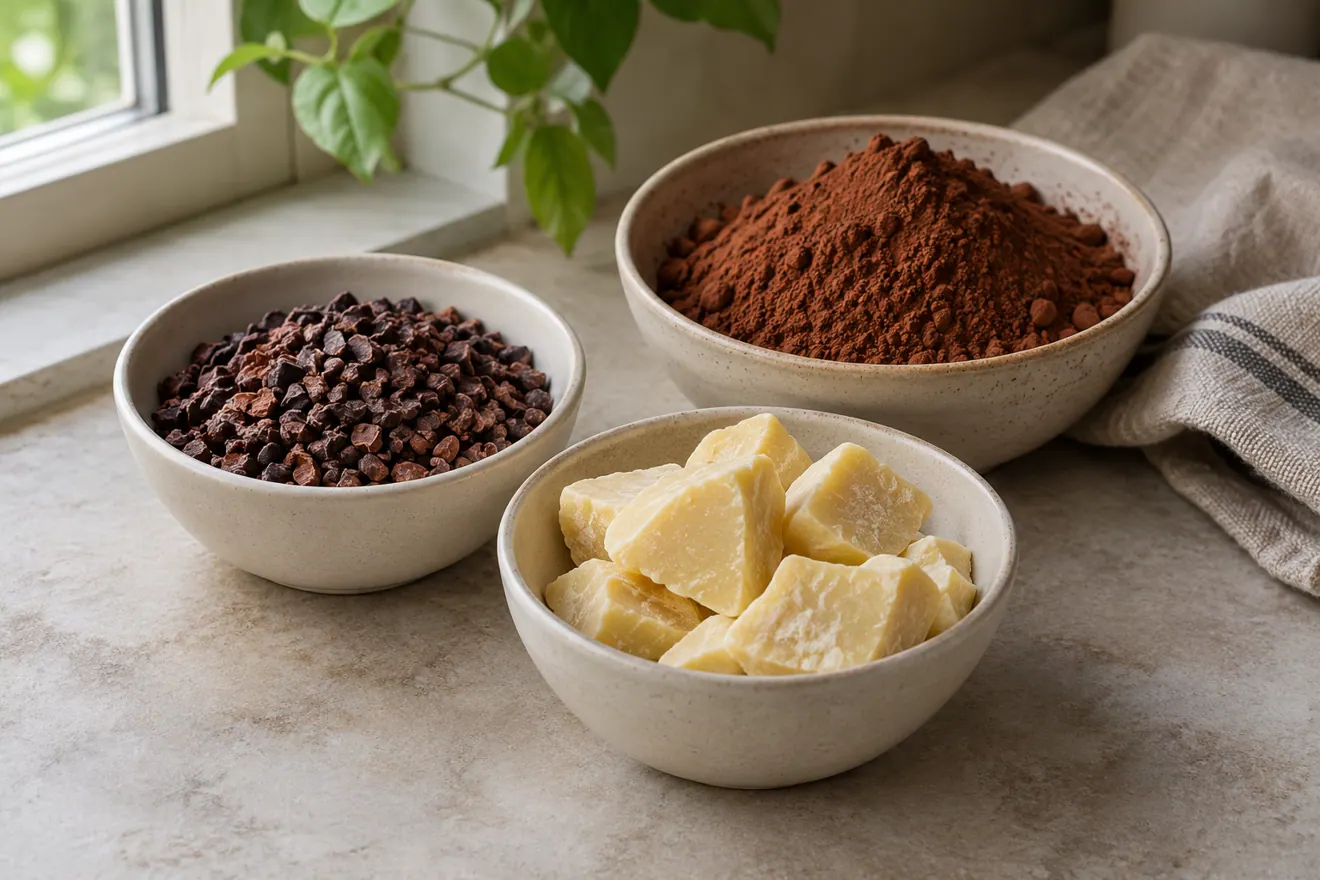
Cocoa mass is produced from processed cocoa beans and contains cocoa solids and naturally occurring cocoa butter. Cocoa solids provide much of chocolate's colour and distinctive cocoa character. Cocoa butter is the fat that helps chocolate melt and gives it some of its smooth texture.
A manufacturer can make two 70% chocolates with different proportions of cocoa solids and added cocoa butter. They will share the same headline percentage while differing in viscosity, flavour and baking performance.
Does Higher Percentage Mean Less Sugar?
Often, yes, when comparing two otherwise similar plain dark chocolates. A larger proportion of cocoa-derived material leaves less room for sugar and other ingredients. A high-percentage bar can therefore taste less sweet.
But avoid treating the number as a complete nutrition or flavour profile. Read the full ingredient and nutrition labels, especially when comparing bars containing milk, sweeteners, inclusions or speciality ingredients.
What Does 50% or 55% Chocolate Taste Like?
Chocolate around 50–55% cocoa often has a relatively approachable dark chocolate flavour with noticeable sweetness. Some bars taste fruity or caramel-like, while others are straightforwardly chocolatey.
This range can be useful for cookies and cakes when you want a darker flavour without pronounced bitterness. But a 55% bar may be much sweeter than the specific 70% chocolate a brownie recipe was designed around.
What Does 60–65% Chocolate Taste Like?
Many midrange dark chocolates balance a distinct cocoa character with moderate sweetness. Some are excellent for baking because they contribute depth without overpowering vanilla, fruit or spice.
The exact taste depends on bean origin, fermentation, roasting, conching and formulation. Don't assume every bar in this range will taste identical or behave the same when melted.
What Does 70% Chocolate Taste Like?
A 70% bar commonly tastes more cocoa-forward and less sweet than a comparable 55% bar. It may have roasted, fruity, earthy, nutty or other notes depending on its formulation and the cocoa source.
For ganache and chocolate desserts, 70% chocolate can produce a rich, assertive flavour. Some recipes are designed specifically for this percentage and may need different cream or sugar amounts if you substitute another bar.
What Does 80–85% Chocolate Taste Like?
High-percentage bars often taste more intense and less sweet, and their textures may be different because of the cocoa butter and solids balance. Some people enjoy them on their own; others find them too bitter for a casual chocolate chip cookie.
When baking, such a bar may shift the sweetness and consistency significantly. Use it when a recipe calls for a high percentage rather than expecting it to behave like standard semisweet chocolate.
Is 100% Chocolate the Same as Cocoa Powder?
No. Unsweetened chocolate made from cocoa mass generally contains cocoa butter as well as nonfat cocoa solids. Cocoa powder is produced by removing much of the fat from cocoa material and milling the remaining solids.
That is why an ounce of unsweetened baking chocolate cannot simply be replaced with an ounce of cocoa powder in every recipe. Fat and solids affect texture, and tested substitutions account for both.
What About Milk Chocolate Percentages?
Milk chocolate contains cocoa-derived ingredients, milk components and sugar. A cocoa percentage on milk chocolate still describes its cocoa-derived portion, but the product differs from dark chocolate because milk solids and other ingredients affect sweetness, flavour and texture.
A higher-percentage milk chocolate may taste deeper and less sweet than another milk chocolate, but the headline number does not remove the importance of reading its composition.
Why White Chocolate Is Different
Real white chocolate contains cocoa butter but no nonfat cocoa solids that give dark chocolate its colour and intense cocoa flavour. Milk solids and sugar contribute its creamy, sweet taste.
A cocoa percentage shown on some white chocolates therefore isn't directly comparable with a dark chocolate percentage. Check whether the product is real white chocolate or a white confectionery coating with different fats.
Is Higher Cocoa Percentage Better Quality?
Not necessarily. Cocoa percentage says how much cocoa-derived material the bar contains, not how carefully its beans were selected, processed or formulated. A thoughtfully made 60% chocolate can taste more balanced than a poorly made 85% one.
Judging quality involves flavour, texture, aroma, appropriate manufacturing and how the chocolate performs for its intended use.
How Percentage Changes a Brownie
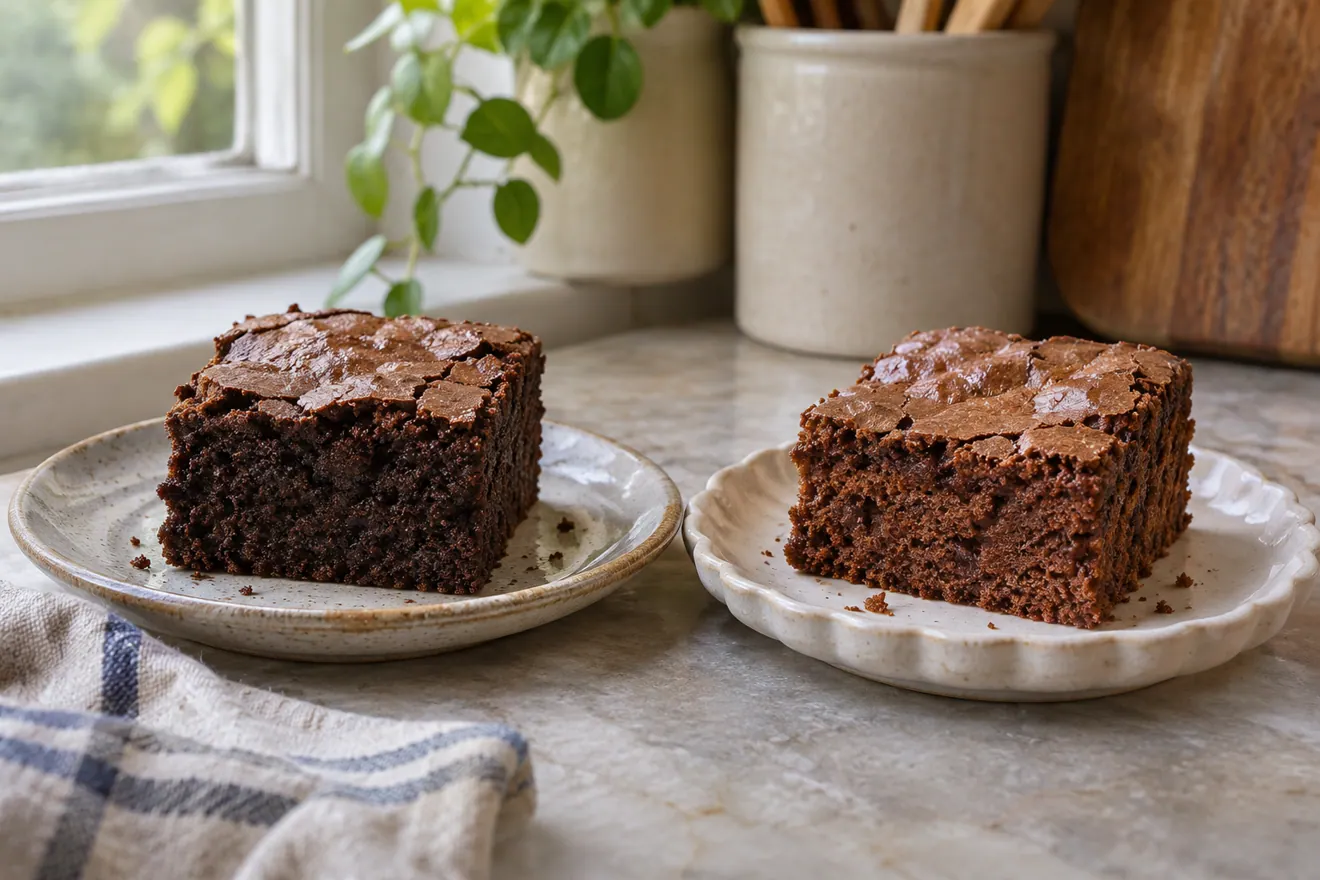
Brownies rely on a balance between chocolate, fat, sugar and flour. Replacing a 55% chocolate with 85% changes the sweetness and often the balance of cocoa-derived solids and fats. The brownie may taste more bitter and its texture may differ.
Small variations may be acceptable in some formulas, but large changes are not risk-free. Choose a brownie recipe that names the chocolate percentage you want or supplies a tested substitution range.
In Almond Flour Brownies, start with the ingredients the recipe specifies. Cocoa powder and solid chocolate bring different amounts of fat, sugar and cocoa solids to the batter.
How Percentage Changes Ganache
Ganache is an emulsion whose fluidity and set depend on chocolate composition and the amount of cream or other liquid. A high-percentage dark chocolate may require a different ratio from milk or white chocolate. Even two dark chocolates at 70% can differ because their cocoa butter proportions aren't identical.
Weigh ingredients and follow a formula appropriate to your chocolate and final application. A pourable cake drip, pipeable filling and firm truffle centre call for different consistencies.
The ganache in Keto Chocolate Truffles needs to firm up enough to shape. Make a small test if changing chocolate, and check how it feels once chilled.
How Percentage Changes Cookies
Chopped dark chocolate creates irregular melted pockets, and a higher percentage can provide a bittersweet contrast to sweet cookie dough. A sweeter semisweet chocolate makes the overall flavour softer.
In cookies where chocolate is merely folded in, flavour differences may be more obvious than structural differences. Still, very high-percentage bars and chocolate chips may melt or retain shape differently, so use the form called for by the recipe.
If you want to try two flavours in a bake where the chocolate stays in pockets, Chocolate Chip Muffins gives you a familiar base for two small test batches.
How to Read the Ingredient Label
Look for cocoa mass, cocoa butter, sugar, milk ingredients where relevant, emulsifiers and added flavours. The order of ingredients can tell you which components are most prominent, although the exact label rules vary by jurisdiction.
If you have a dairy allergy or another food restriction, never assume “dark chocolate” automatically means dairy-free or allergen-free. Read the label and cross-contact information carefully.
If a recipe names a cocoa percentage, compare that first and then check whether cocoa butter is listed separately. The same headline percentage can produce a thicker or thinner melt depending on the bar.
Chocolate Percentage vs Cocoa Intensity
Higher percentage often correlates with stronger cocoa flavour, but that isn't a guarantee. Roasting style, cocoa origin, processing and added cocoa butter all influence perceived intensity. A bar with more cocoa butter may feel smoother or have a different balance of flavour than another bar with the same number.
If choosing chocolate for a special dessert, taste a small piece first. The baking process will change its flavour somewhat, but you can still decide whether the bar's basic profile complements the recipe.
Does Cocoa Percentage Predict Melting?
No. Fluidity depends on cocoa butter content, particle characteristics and other formulation details. Couverture designed for coating is often chosen for its specific fluidity; a standard chocolate bar may melt more thickly even at a similar percentage.
When a recipe calls for chocolate intended for tempering or molding, choose a product that suits that use rather than relying on percentage alone.
Can You Mix Chocolates with Different Percentages?
For some recipes, yes, when the developer provides a blend or a reliable range. Mixing a dark chocolate with a slightly sweeter one can adjust flavour. But the final cocoa percentage isn't always a simple guide to performance because the two chocolates may have different fat compositions.
When experimenting, keep records of the brands, weights and results. For a pastry filling or ganache, test small batches before making an entire cake.
A Practical Selection Guide
| Chocolate type | Typical profile | What to consider |
|---|---|---|
| 50–55% dark | Relatively sweet, approachable | Suitable in recipes designed for sweeter dark chocolate |
| 60–65% dark | Balanced dark chocolate character | Often useful when recipe allows a midrange chocolate |
| 70% dark | More cocoa-forward, less sweet | Check ganache and brownie ratios |
| 80–85% dark | Intense and typically less sweet | May be too bitter or structurally different for some substitutions |
| Milk chocolate | Creamy, sweeter profile | Different cream ratios in ganache |
| White chocolate | Cocoa butter and dairy sweetness | Different from dark chocolate and white coating |
Frequently Asked Questions
Does 70% chocolate contain 70% cocoa powder?
No. It refers to total cocoa-derived ingredients, including cocoa material and cocoa butter, not simply cocoa powder.
Does 85% chocolate always taste more bitter than 70%?
It commonly tastes less sweet and more intense, but origin, processing and fat balance also affect perceived bitterness.
Is a 70% chocolate bar always better for baking?
No. The right percentage is the one the recipe was designed for and that delivers the flavour you want.
Can I use milk chocolate instead of dark?
Sometimes, but the greater sweetness and different fat and milk composition may change both flavour and texture. Use a tested adaptation.
Does the number tell me whether chocolate is dairy-free?
No. Always check ingredient and allergen labels.
The Number Is a Starting Point
Use the cocoa percentage with the ingredient list and the recipe. The percentage helps you narrow the choices, and the ingredient list gives you more clues about sweetness, dairy and how the bar may melt.
Some images are AI-generated illustrations of the dishes and techniques described.
IN PICTURES
From the baking notebook
FROM THE RECIPE BOX


