On this page
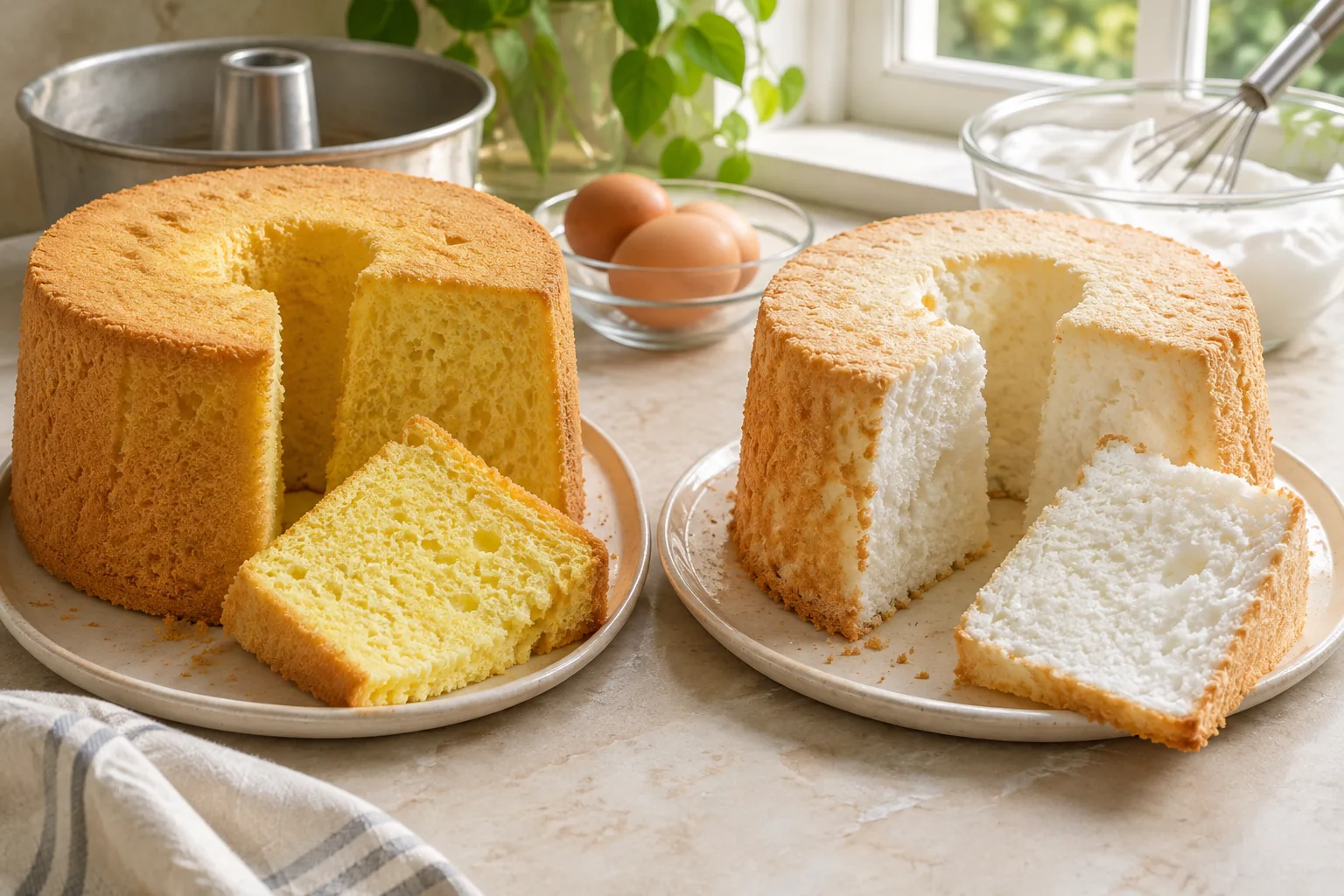
Chiffon cake and angel food cake both rise into tall, airy desserts that seem almost weightless. Their methods rely heavily on whipped egg whites, yet the recipes are not the same. Angel food cake traditionally uses whites without added fat and has a delicate, springy structure. Chiffon adds oil and egg yolks for a richer, moister crumb. Knowing how the ingredients differ helps you whip, bake and cool each without collapsing its carefully formed foam.
The recipe links below offer other cake styles for comparison. They are not chiffon or angel food formulas, and their mixing or pan instructions should not be transferred to an egg-foam cake.
What defines angel food cake?
Traditional angel food cake is an egg-white foam cake made with sugar, flour and flavouring, usually with no added butter, oil or egg yolks. Its fine white crumb is light, springy and subtly sweet. The whipped whites provide much of the lift, so fat contamination can interfere with the foam.
What defines chiffon cake?
Chiffon cake generally combines a whipped egg-white foam with a batter containing flour, egg yolks, sugar, oil and liquid. The two components are folded together carefully. Oil contributes moisture and tenderness, resulting in a richer texture than most traditional angel food cakes.
The main ingredient difference
Angel food cake deliberately omits yolks and fat, whereas chiffon cake often uses both. This changes flavour, colour and the way the crumb feels after cooling. Both may use cake flour and carefully incorporated air; neither should be treated as simply a low-sugar sponge cake.
Why whites must whip well
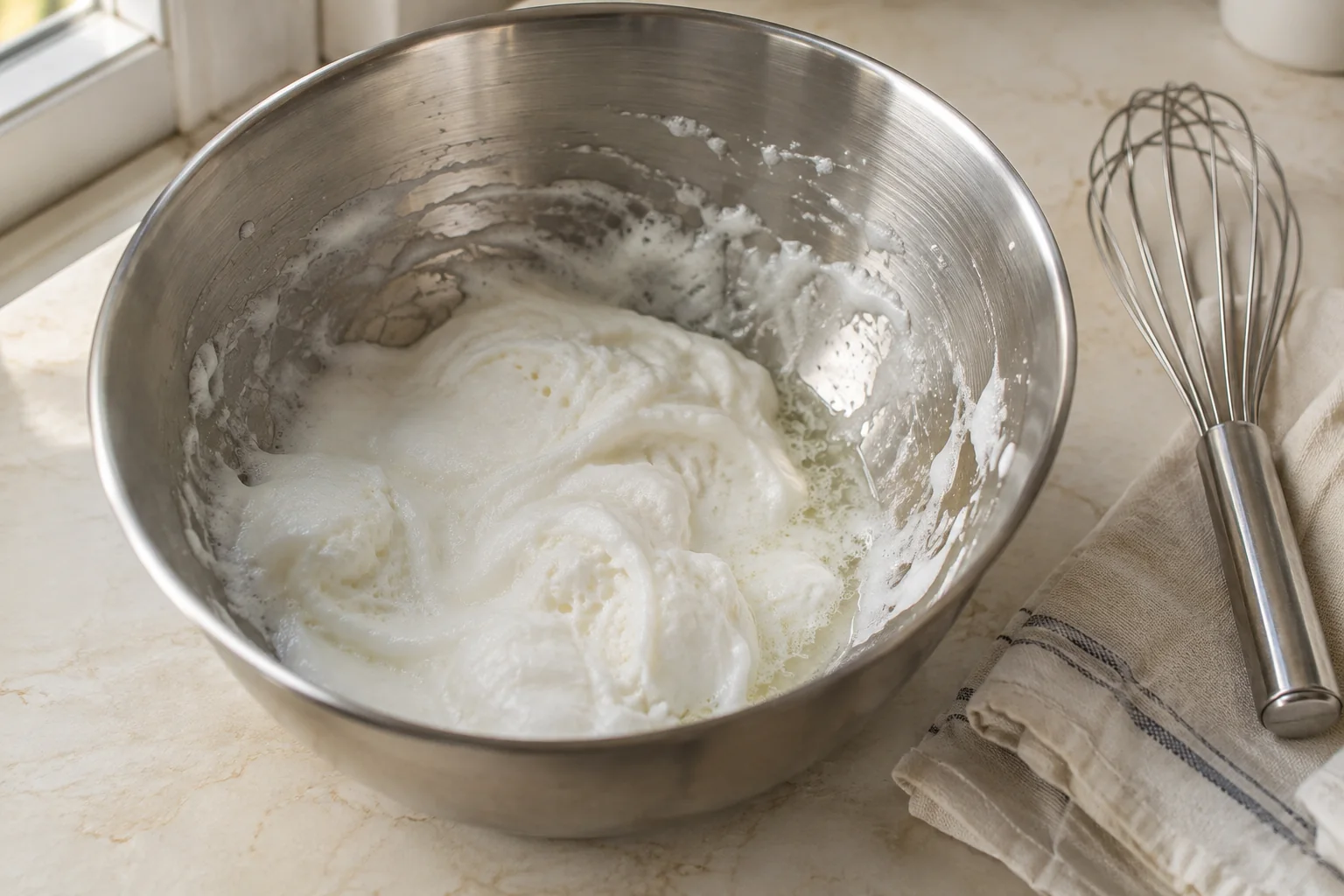
Egg-white proteins stabilize air bubbles as they are beaten. Those bubbles expand during baking and help create height. A greasy bowl or yolk contamination may make the foam less stable. Use clean tools and follow the recipe's stage of soft, medium or stiff peaks.
The role of sugar in the foam
Sugar helps stabilize egg-white foam and influences tenderness and browning. Adding it at the wrong stage can change how the foam develops. Follow the recipe's sequence, often gradually incorporating sugar after the whites become frothy.
How chiffon uses an oil-based batter
The oil, yolks and other wet ingredients are mixed with flour and leavening as directed to form the richer component. Whipped whites are then folded in carefully. Overmixing can knock out the air; undermixing leaves large patches of unmixed white foam.
Is chemical leavening included?
Many chiffon recipes include baking powder in addition to whipped egg whites. Traditional angel food cake normally depends on its egg foam rather than a comparable addition. Specific formulas vary, so use exactly the leavening stated and don't interchange recipes based on appearance.
Which cake tastes richer?
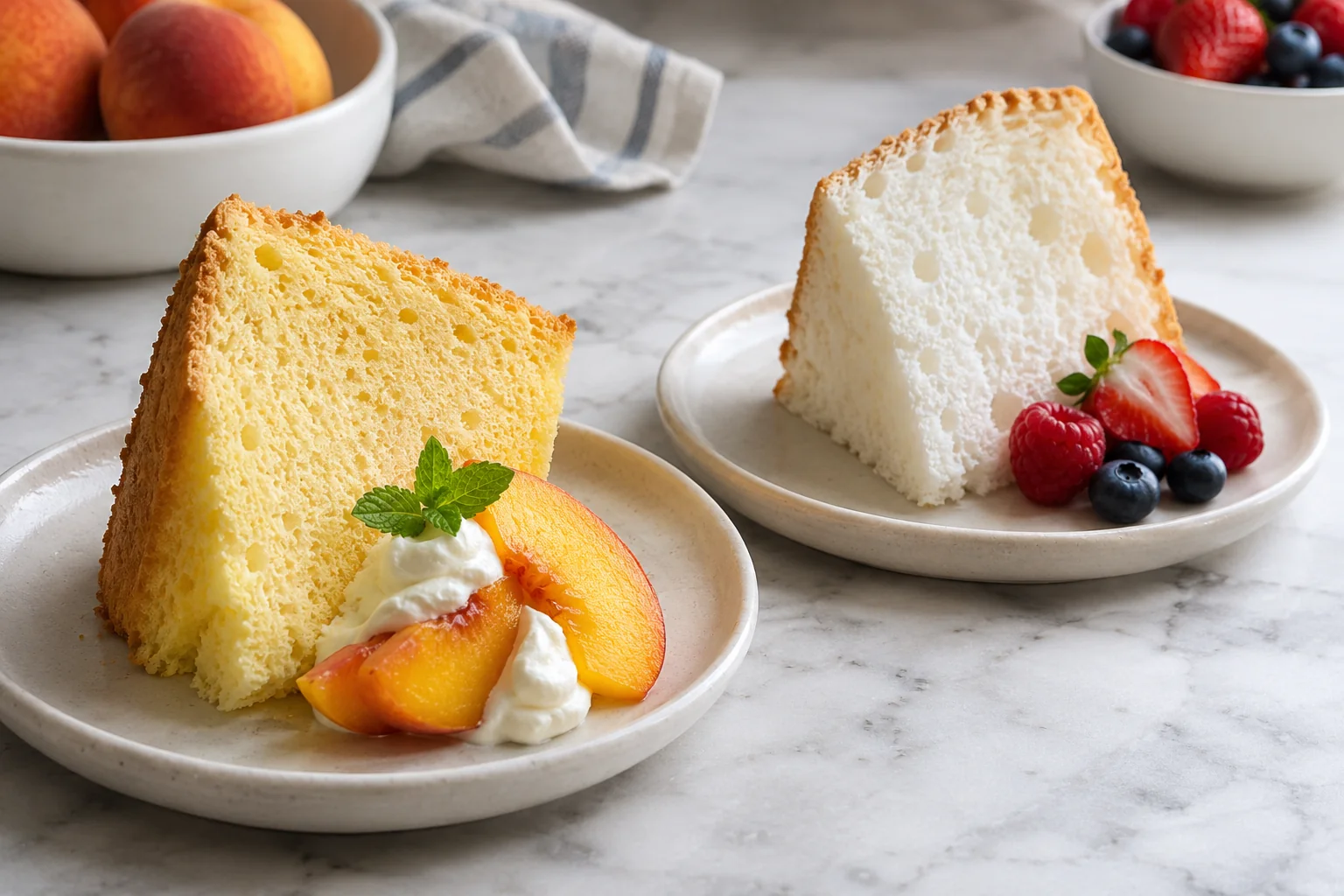
Chiffon usually tastes more rounded and rich because of yolks and oil. Angel food cake has a cleaner sweet flavour and a very light bite that pairs well with berries. Neither is automatically more nutritious; portion size and toppings remain important.
Which is moister?
Oil in chiffon can contribute to a supple crumb that stays soft after cooling. Angel food cake is airy but may feel drier when stored uncovered. Technique and baking time also matter; an overbaked chiffon can become tough, while a well-made angel food cake remains pleasant.
The importance of folding
Use a flexible spatula to lift batter from the bottom and turn it gently through the foam. The goal is even mixing while preserving enough bubbles for the oven rise. Stirring vigorously destroys volume, but leaving streaks also creates an uneven baked cake.
Why tube pans are common
Both styles are often baked in tube pans that let the batter climb around the central core and outer walls. An appropriate ungreased pan can help some foam cakes grip the sides during baking. Do not grease a pan if the recipe specifically relies on that adhesion.
Can you use an ordinary Bundt pan?
A decorative Bundt pan may be nonstick and have a different shape from the straight-sided tube pan specified by foam-cake recipes. It may prevent proper rise or make inverted cooling difficult. Use the pan designed for the formula rather than assuming all pans with a centre hole work identically.
Why cooling upside down matters
Many angel food and chiffon cakes are inverted after baking so their structure can remain stretched while setting as they cool. A warm foam cake may collapse under its own weight if left upright. Follow the recipe's instructions and use a pan suitable for safe inverted cooling.
Removing cakes from the pan
Once fully cool, a thin appropriate tool may be run around the sides and central tube to release the cake. Foam cakes can tear if forced out warm. A removable-bottom tube pan simplifies removal, though the correct tool and technique depend on the finish of the pan.
Texture when sliced
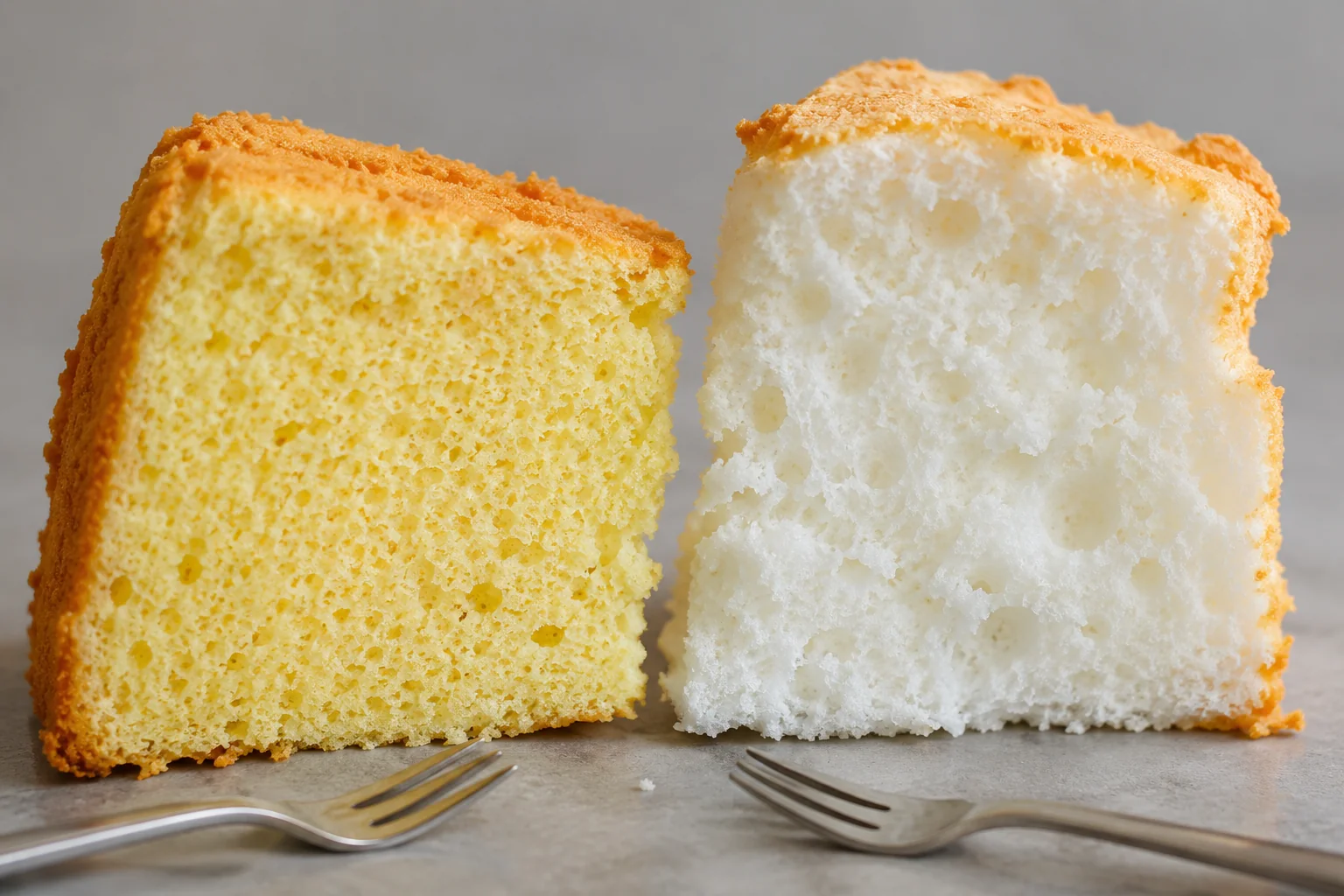
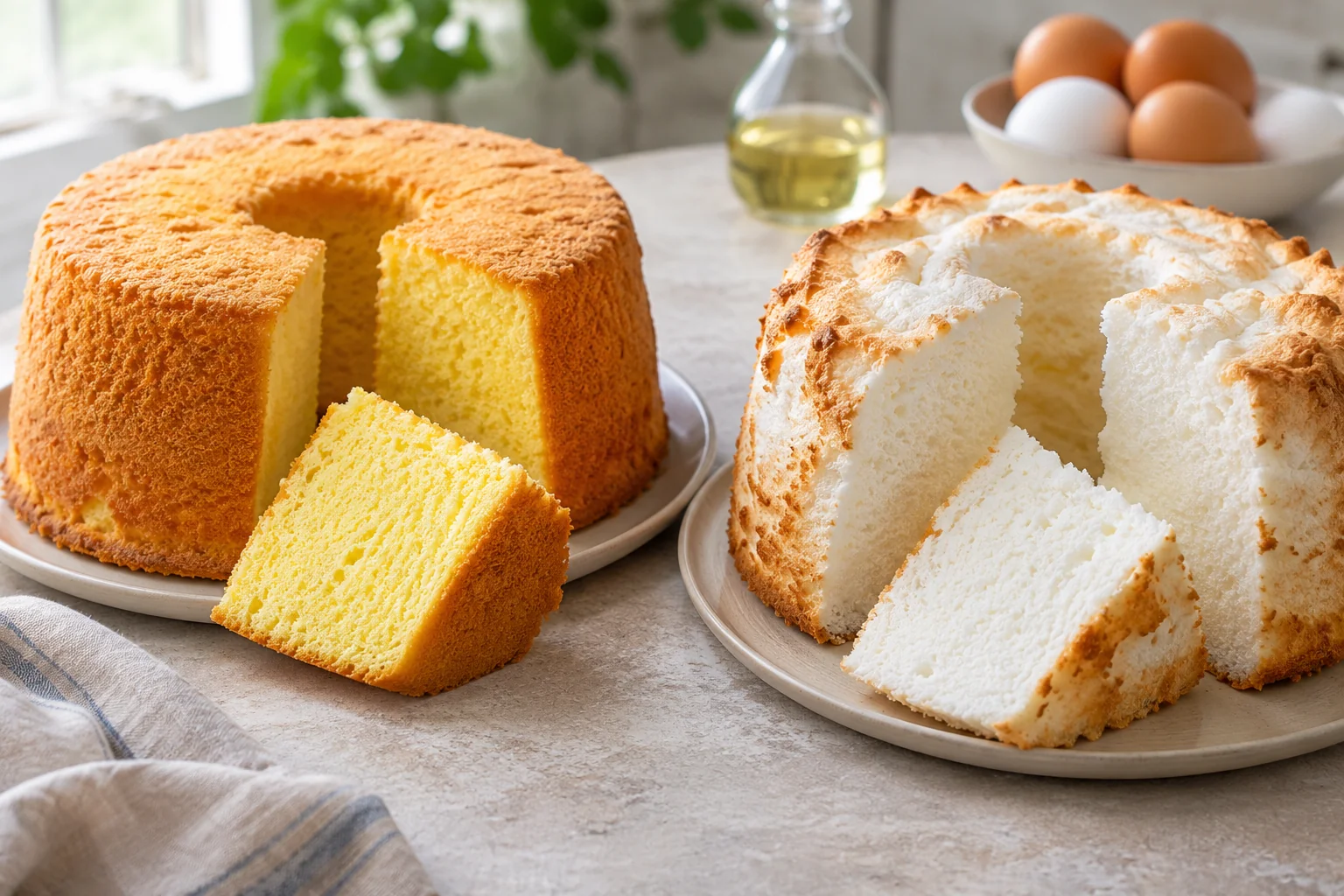
Angel food cake tends to have a fine elastic, snowy crumb; chiffon offers a tender pale-yellow or flavoured crumb with a little more richness. Use a sharp serrated knife and a gentle sawing motion to avoid compressing either cake.
Common angel food mistakes
Residual yolk or grease can weaken the foam, overwhipping can make it dry and difficult to fold, and greasing the wrong pan can impede rise. A cake removed from its support too early may collapse. Follow a tested foam-cake method and equipment instructions.
Common chiffon mistakes
Overmixing whites into the yolk batter, using oil amounts that don't match the formula, underbaking the tall centre and skipping inverted cooling can all cause a heavy or sunken cake. Chiffon is forgiving in flavour but still depends on careful foam handling.
Which is better for layered desserts?
Chiffon may offer slightly more richness and moisture under light frostings and fruit. Angel food cake is particularly lovely with berries, lightly sweetened whipped cream and simple glazes. Extremely heavy buttercream can compress the delicate structure of either.
Recipe to try: Classic Vanilla Layer Cake. An alternative cake style for comparing texture; use its own formula, not chiffon or angel-food instructions.
Storage differences
Both cakes should be cooled completely before wrapping. Their toppings determine refrigeration requirements: whipped cream, custard and fresh fruit can make an otherwise simple cake perishable. Follow the complete finished dessert's storage instructions.
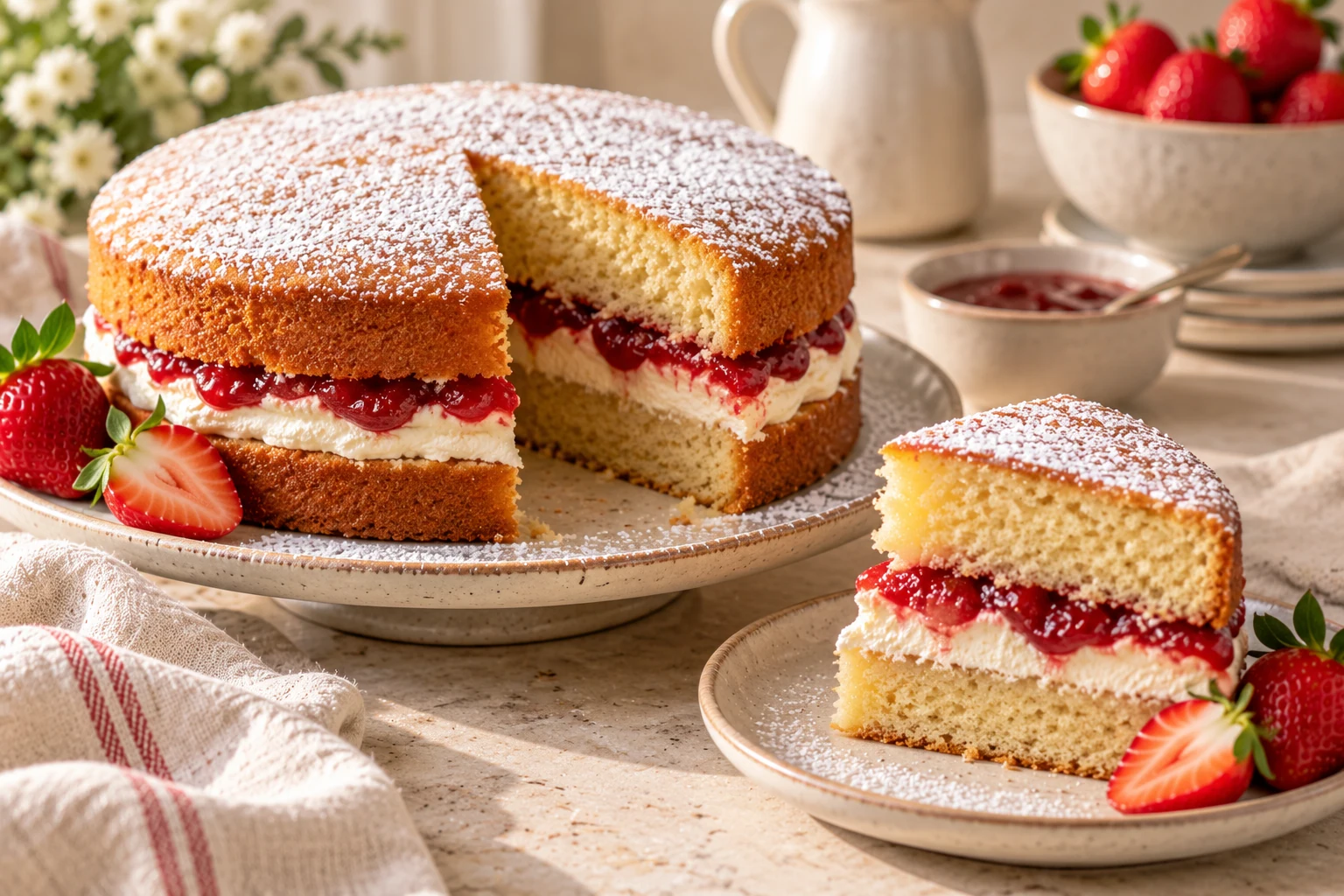
Recipe to try: Vegan Victoria Sponge Cake. An alternative cake style for comparing texture; use its own formula, not chiffon or angel-food instructions.
Frequently asked questions
Does chiffon contain oil? Usually yes. Does angel food use only egg whites? In classic formulas, yes. Must they cool upside down? Many tube-pan recipes say so. Can you substitute one for the other? Texture and pan methods differ. Is chiffon just sponge cake? It belongs to the broader foam-cake family with its own technique.
Choose airy simplicity or tender richness
Angel food highlights an egg-white foam without added fat. Chiffon balances that airiness with yolks and oil. Give either cake clean whipping tools, careful folding, the correct pan and adequate inverted cooling to achieve its signature height.
Recipe to try: Pound Cake Bundt. An alternative cake style for comparing texture; use its own formula, not chiffon or angel-food instructions.
IN PICTURES
From the baking notebook
FROM THE RECIPE BOX


