On this page
You don't need to spend an entire day standing beside a bowl to make good sourdough. Much of the process is waiting while the starter or dough develops, and a refrigerator can help make the schedule fit around work, school or family life. The key is recognizing that sourdough is guided by fermentation rather than an exact clock. A practical plan gives you convenient check-in points, then leaves room to respond to the dough's actual progress.
The simplest approach: separate active work from waiting
Most sourdough routines have relatively short periods of mixing, folding and shaping surrounded by longer periods of fermentation. For busy bakers, the helpful question isn't 'How many hours does sourdough take?' but 'When must I be near the dough?' Plan your mixing and folds for a time when you can be at home, then use a recipe-supported overnight refrigerated proof to shift baking to the next day.
Start with one reliable recipe
For your first few loaves, choose a beginner sourdough recipe with specific flour weights, starter feeding directions, dough-temperature guidance, bulk-fermentation cues and a cold-proof option. Resist combining the feeding ratios from one blog with the hydration and baking plan of another. A coherent tested formula provides a much better chance of success than a schedule assembled from unrelated shortcuts.
What you need before planning a schedule
Gather a kitchen scale, clean mixing bowl, clear container if available, dough scraper, proofing basket or suitable lined bowl, and the baking vessel required by your recipe. An instant-read thermometer helps you record dough temperature. Make sure your oven and Dutch oven, if using one, can be preheated according to their manufacturers' directions.
Understand the five major phases
A practical naturally leavened loaf usually involves preparing an active starter or levain, mixing and developing the dough, bulk fermenting, shaping and final proofing, then baking and cooling. Some recipes include an autolyse, preshape or other stages. Knowing which are hands-on and which are waiting phases makes it easier to fit the process around everyday life.
Phase one: prepare the starter
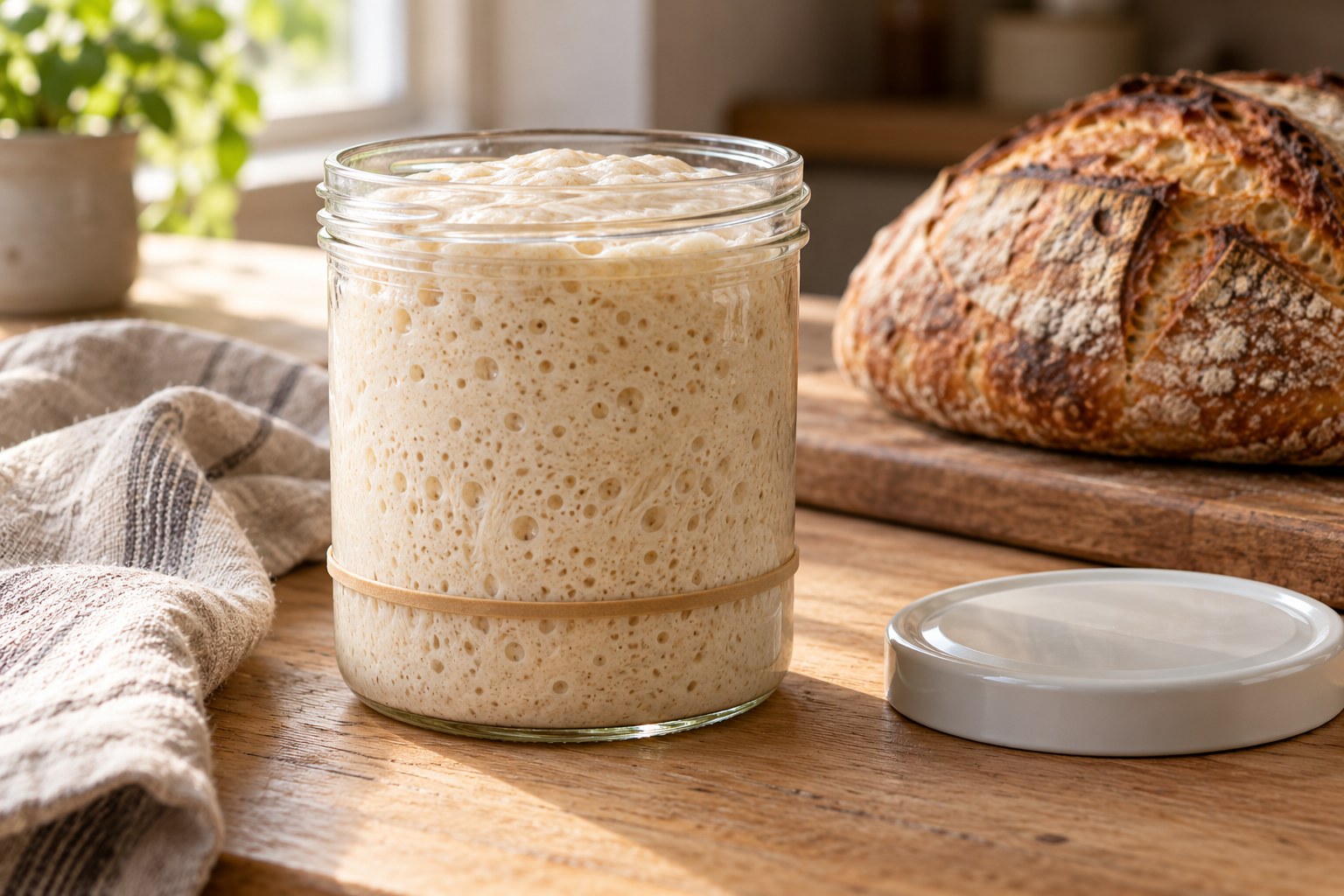
A starter often needs feeding before it can leaven dough reliably. Its rise time depends on the feeding ratio, flour, temperature and its established strength. Mark the starting level and note the time. Use the starter at the maturity your recipe specifies, often near its peak rather than long after it has collapsed.
Don't schedule solely by the starter clock
A formula that expects a vigorous starter may fail when yours is sluggish. The amount of elapsed time after feeding isn't proof of readiness. A starter that repeatedly rises predictably and looks visibly aerated is a stronger guide. If your starter is recovering from refrigeration, allow the refreshment process recommended by the recipe rather than forcing it into an unrealistic baking timetable.
Phase two: mix at a time you can stay nearby
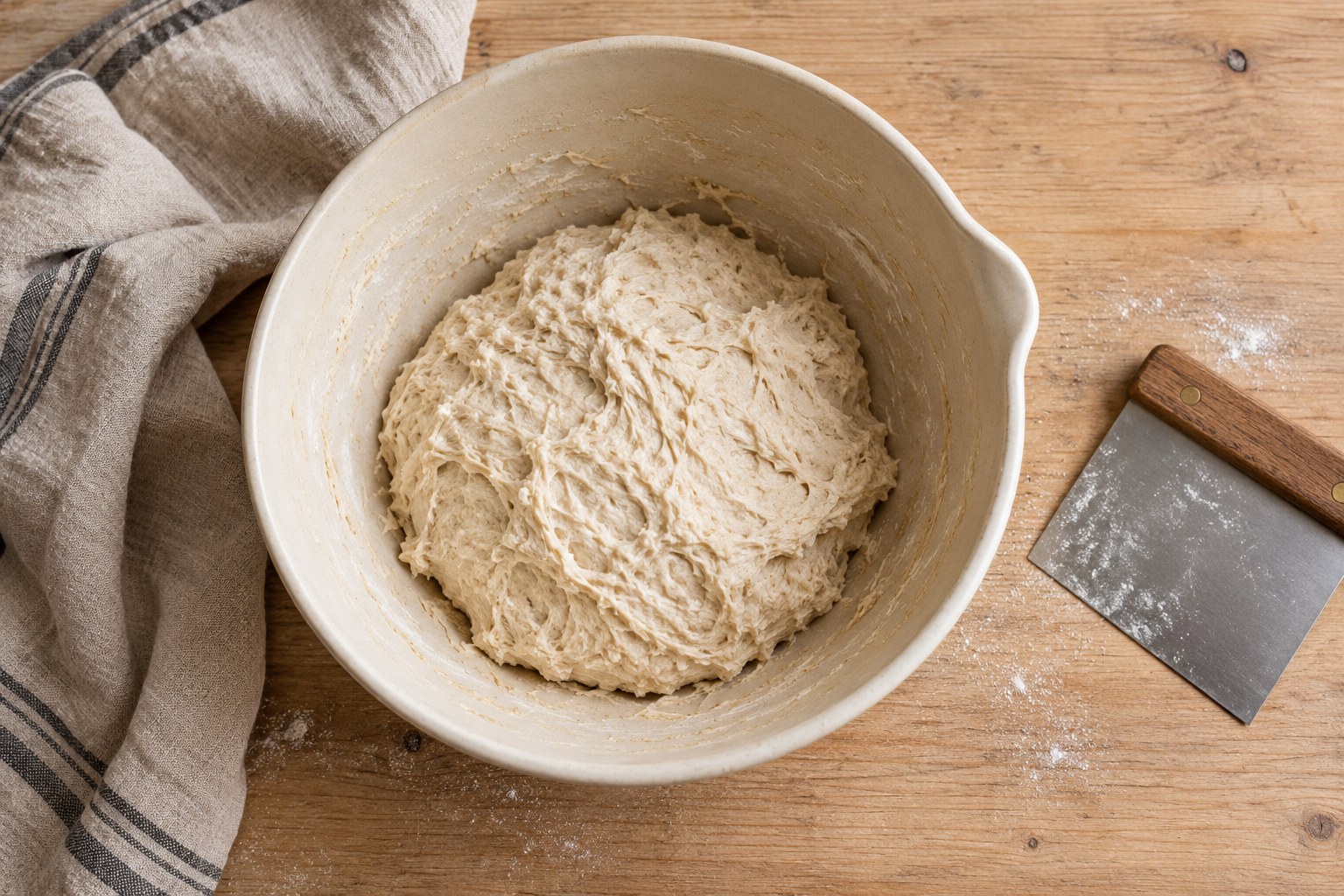
Mix the flour, water, starter and salt according to the formula. Some recipes separate these steps with an autolyse or other rest. Choose a mixing window that gives you availability for any folds in the early hours afterward. Don't start mixing just before leaving for a long errand if the recipe requires several check-ins.
Phase three: folds are brief check-ins
During bulk fermentation, many sourdough recipes call for several stretch-and-fold or coil-fold sessions spaced apart. The hands-on work is usually brief, even though the stage itself can last hours. Use alarms as reminders to look at the dough, but follow the recipe's fold schedule and stop excessive handling once the dough has developed sufficient strength.
Phase four: judge bulk by the dough
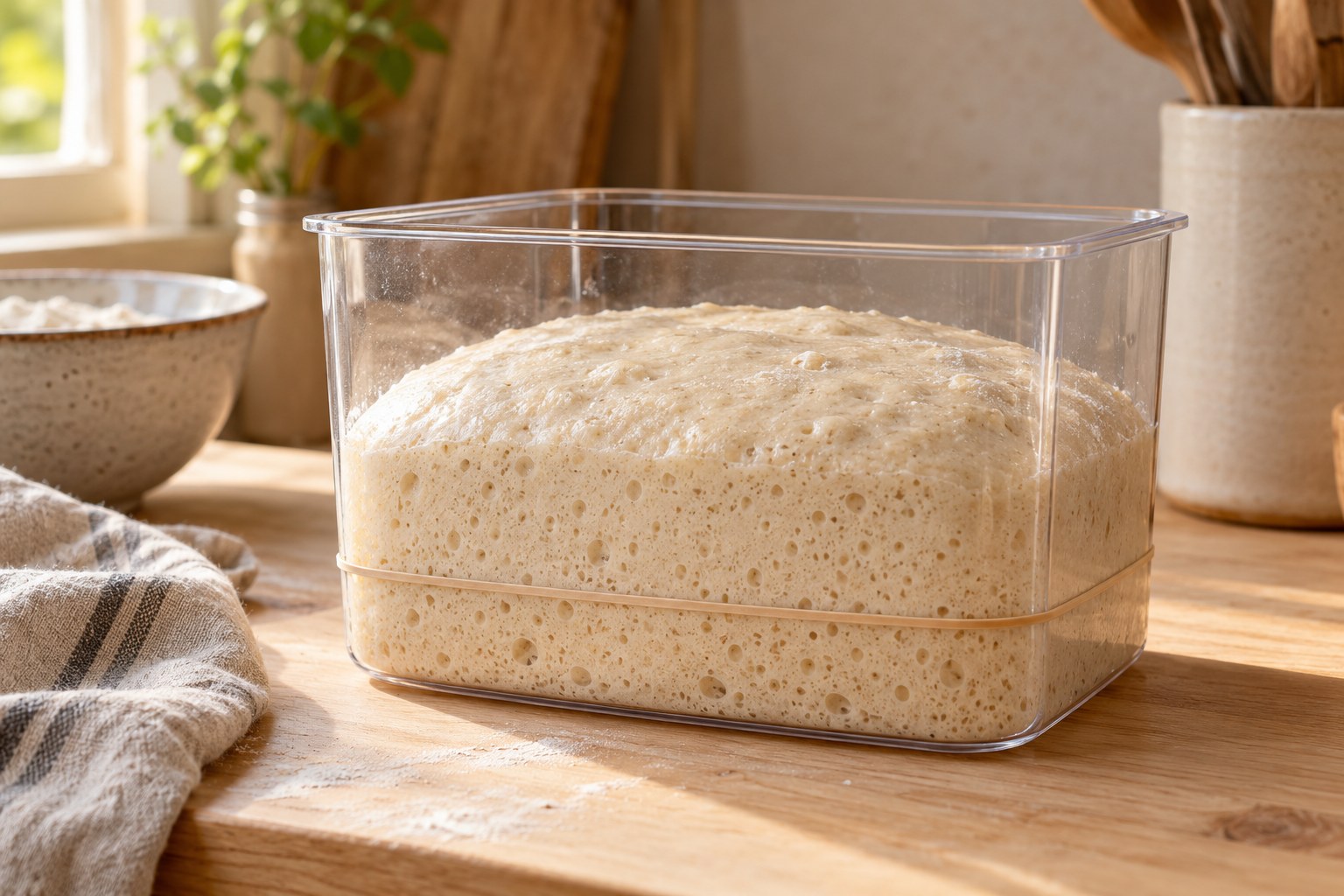
Bulk ends when the dough has reached the required development for the chosen formula and temperature. Look for the specified rise, bubbles, smoothness, elasticity and gentle jiggle. King Arthur Baking explains that bulk time is dictated by the bread, dough temperature and room conditions. A timetable is therefore a planning framework, not permission to shape dough that is plainly under-fermented.
Phase five: shape and refrigerate when supported
An overnight cold proof is a popular way to separate dough preparation from baking. After the recipe's bulk endpoint, preshape, rest and final-shape as directed, then place the loaf into a suitable covered proofing basket or container and refrigerate for the permitted window. The refrigerator slows fermentation but doesn't instantly stop it; the previous bulk stage must account for that.
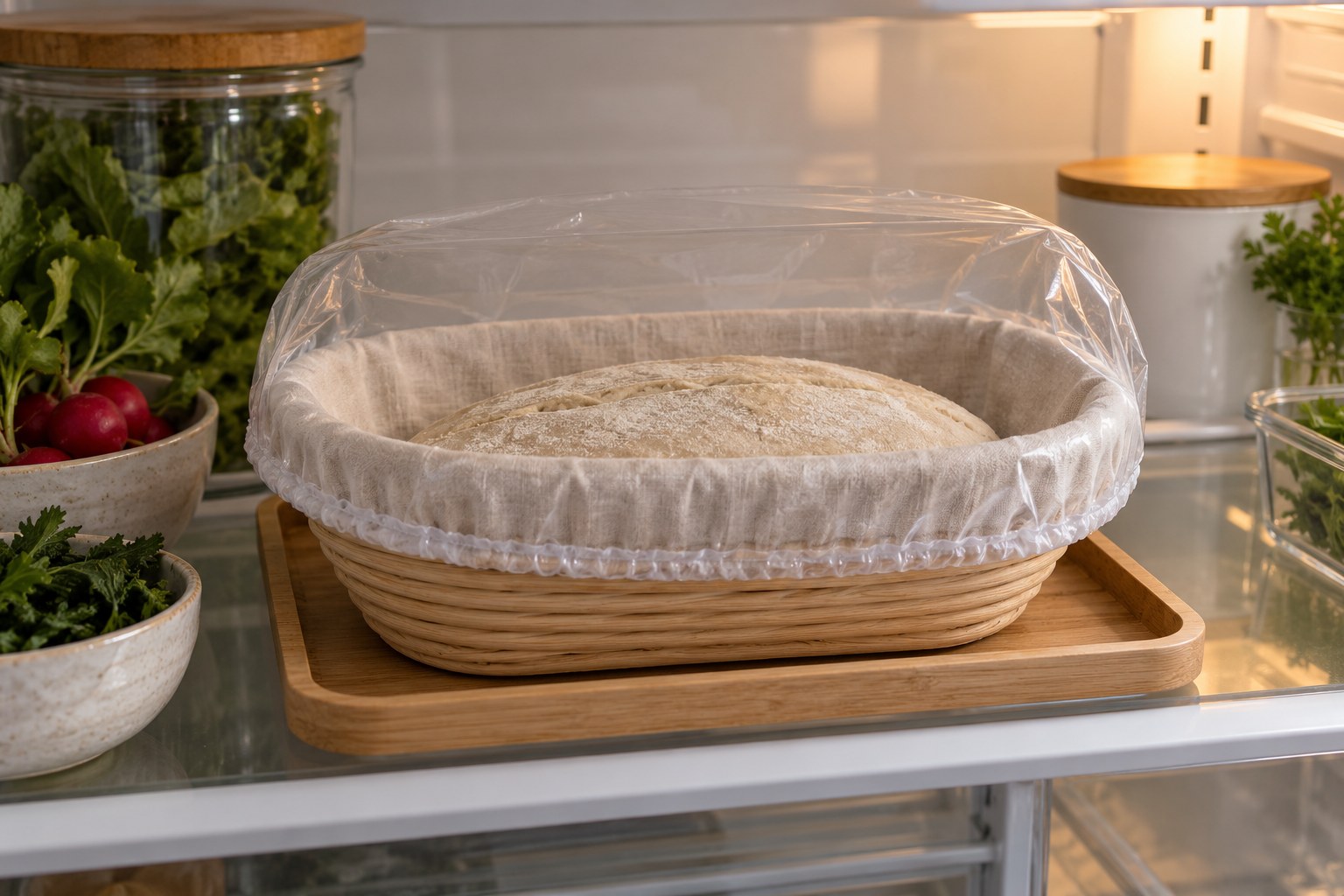
A sample evening-mix, next-day-bake plan
For a formula designed for a cool overnight proof, feed the starter early enough that it becomes active around the evening mixing window. Mix dough while you're home, complete the scheduled folds, and allow bulk to finish according to the required rise. Shape and refrigerate after it reaches the correct point, then bake the next day following the recipe. This pattern only works if dough temperature and fermentation pace fit the available evening; it isn't guaranteed for every starter or room.
What if bulk is not finished by bedtime?
Don't automatically shape and refrigerate a severely under-fermented dough just to satisfy the clock. If your recipe permits adjustments, you may need more bulk time, a different mixing start on the next attempt or a cooler schedule planned from the beginning. In the current batch, evaluate the dough and recipe's safe options rather than improvising major temperature or starter changes without guidance.
A sample morning-mix schedule
If you have a day at home, feed the starter according to its schedule so it is ready in the morning. Mix, perform folds while completing other home tasks, then monitor bulk during the day. Shape once the dough reaches the recipe's endpoint. You can finish the final proof and bake the same day if the formula is written for it, or refrigerate overnight when supported.
A weekend-friendly two-day routine
Many home bakers find it convenient to prepare and ferment dough on Saturday, refrigerate shaped loaves overnight, then preheat and bake on Sunday. This separates the more hands-on mixing from the oven session. The exact times depend on dough temperature and starter strength; use the weekend structure without assuming every loaf will be ready at the same hour.
How to arrange baking around an early workday
For an early start, baking after an overnight cold proof may fit better in the evening than before work, depending on your recipe's refrigerated proof limits. Alternatively, prepare dough on an evening when you have enough time for mixing and folds, then bake on a day off. Avoid leaving fermenting dough unattended at a warm temperature for longer than the tested method allows.
Why dough temperature controls your plan
Fermentation typically accelerates at warmer viable temperatures and slows when cooler. A dough at one temperature may finish bulk much earlier than the same formula in a cool kitchen. Record actual dough temperature after mixing and use it to interpret rising behaviour. That makes your future scheduling more reliable than trying to hit an arbitrary number of hours.
Changing the inoculation changes the schedule
The amount of ripe starter or levain in the formula influences fermentation pace. Some experienced bakers deliberately adjust starter percentage to fit a schedule, but that affects more than convenience. For a beginner, use a recipe already designed for the desired timeline rather than adjusting the starter quantity without recalculating flour and water.
Can the refrigerator pause sourdough indefinitely?
No. Refrigeration slows but does not permanently suspend fermentation. The dough can continue developing while it cools and overproof if held beyond the formula's recommended window. Very long cold proofs can also alter acidity and gluten structure. Follow the tested recipe's refrigeration time instead of treating it as an unlimited pause button.
Planning around a weak starter
If the starter is recovering from neglect or doesn't rise reliably, treat starter maintenance as a separate project. Refresh it until its behaviour is consistent, then choose a baking day. Trying to make bread from an inactive starter to meet a rigid deadline often produces dense loaves and makes the schedule stressful.
The baker's short daily checklist
Before work or other commitments, note when the starter was fed and how it is rising. During your home mixing window, measure ingredients and the dough temperature. Through bulk, check rise and perform recipe-directed folds. Before bed, decide on shaping only after inspecting the dough. Before baking, ensure your vessel is safely preheated and the cold proof is within the recipe's schedule.
Timers are reminders, not verdicts
Set alarms for fold sessions and the first bulk inspection, but use actual dough observations to decide whether fermentation is complete. A reminder saying 'check dough' is more useful than one saying 'shape now' when conditions vary. Take quick photographs of the marked container at each check for later comparison.
How to avoid over-handling while multitasking
Frequent checking can tempt bakers to poke, fold or reshuffle dough repeatedly. Most observations can be done through a clear container without touching it. After the scheduled folds, let the dough ferment undisturbed unless the recipe instructs otherwise. Preserve the gas and structure you're trying to develop.
Baking from cold dough
Many overnight cold-proof sourdough recipes direct you to score and bake the loaf straight from the refrigerator. Cold dough can be easier to score because the surface is firmer. Other formulas need a room-temperature interval before baking, so follow the developer's actual instructions rather than assuming every cold loaf should be treated alike.
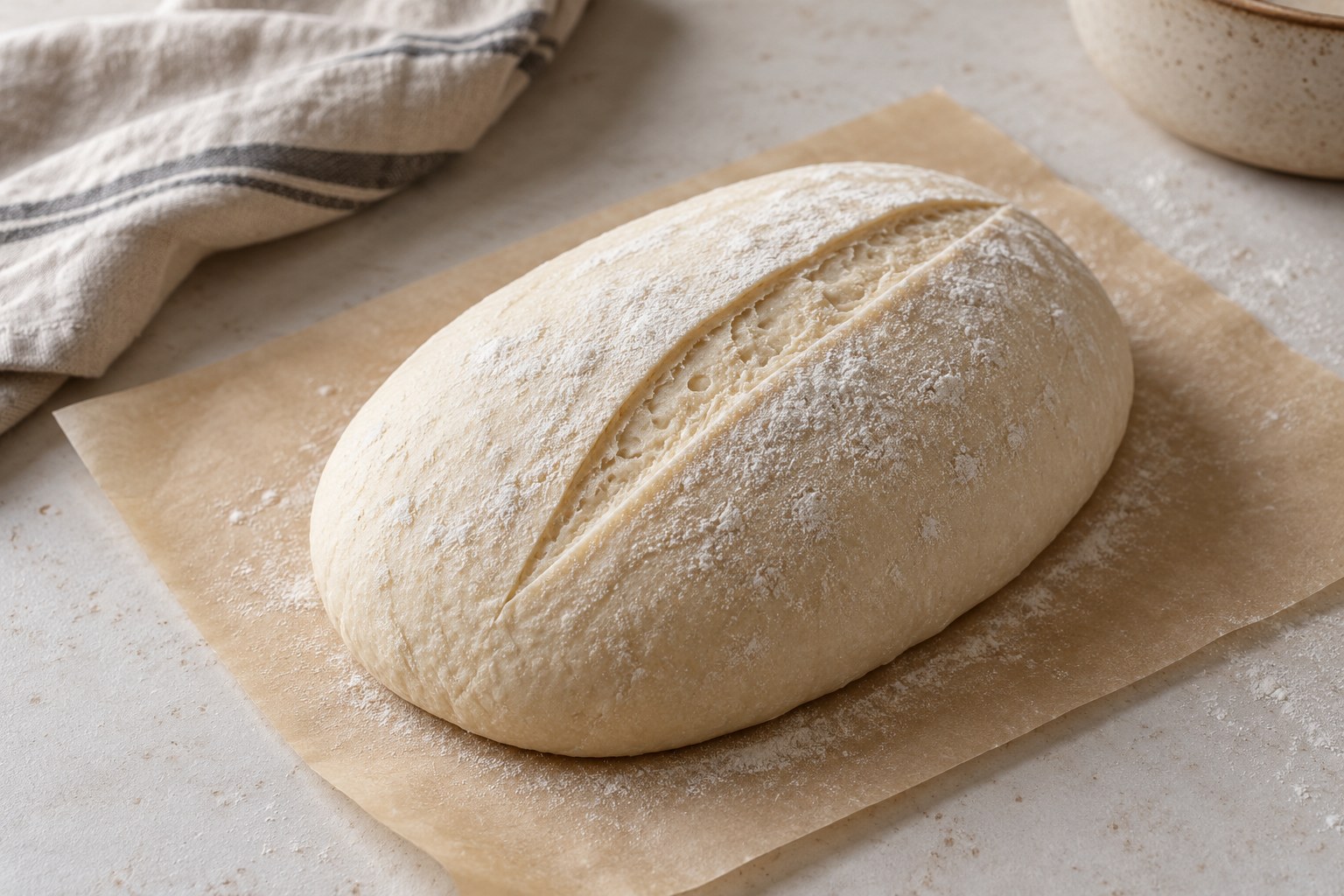
The oven stage still requires attention
A covered Dutch oven may provide steam for early expansion, followed by an uncovered stage to develop crust. Preheating and handling very hot cookware require planning and care. Keep children and pets away, use suitable heat protection and never add water to hot glass or equipment against manufacturer directions.
Cooling belongs on the schedule too
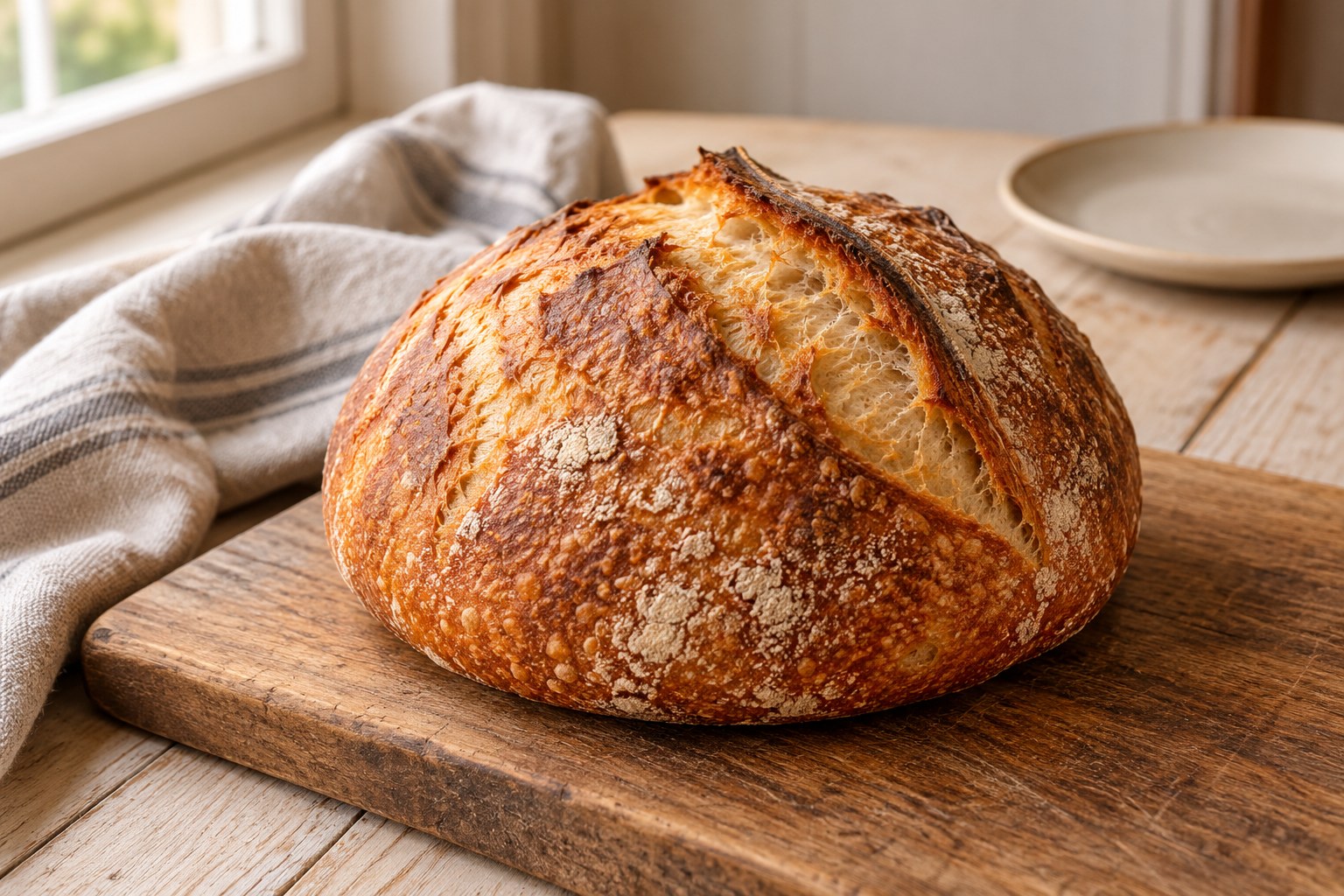
The bread isn't ready for neat slicing the instant it leaves the oven. Its crumb is still warm and may appear gummy when cut too early. Plan time for rack cooling before lunch, dinner or photographs. A well-timed baking schedule includes a cooling window, not just the moment the crust turns brown.
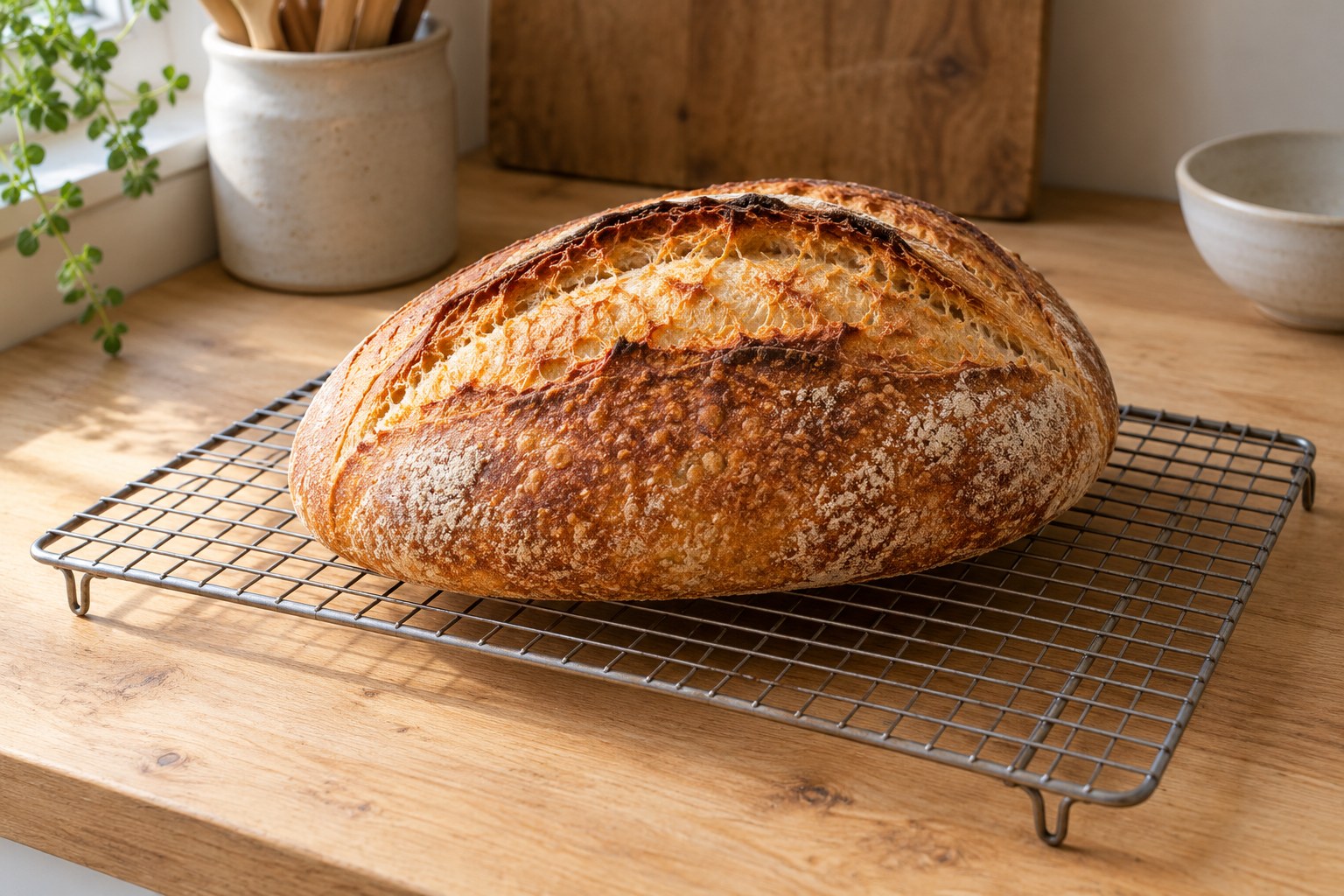
One-page timeline: your first loaf
Preparation: refresh starter until active. Mix: combine ingredients as the recipe directs. Early bulk: perform prescribed folds. Late bulk: watch rise and aeration. Shape: preshape, rest and final-shape when ready. Proof: use the formula's room-temperature or refrigerated route. Bake: preheat fully, score if appropriate and bake. Cool: allow the crumb to set before slicing.
Common scheduling mistakes
Using a starter that's not ready, mixing before a long absence, stopping bulk strictly by the clock, assuming a refrigerator stops fermentation instantly, and baking without enough preheat time can all undermine a loaf. So can trying to compress a cool-kitchen fermentation into a warm-kitchen schedule. Build flexibility into the process by checking the dough at each transition.
Frequently asked questions
Can I make sourdough while working full-time? Yes, using a recipe with manageable fold intervals and a supported overnight proof. Does it take all day? Elapsed time is long, but hands-on time is much shorter. Can I proof overnight on the counter? Only in a formula developed for your temperature and timing; refrigeration is often easier to control. Can I bake cold? Many recipes allow it. What if the dough runs late? Follow dough readiness and adjust your next schedule rather than forcing it.
Make the schedule work for the bread and your life
A good sourdough routine isn't rigid. Choose a trustworthy formula, identify the short periods that need your attention and use a recipe-approved refrigerated proof when convenient. As you learn the starter and fermentation cues, the process becomes easier to fit around real life—and your loaves become more consistent.
Technique reference: King Arthur Baking, Bulk Fermentation Explained.
IN PICTURES
From the baking notebook
FROM THE RECIPE BOX


