Tanghulu Recipe

Crunchy, crystallized fruit skewers with a glossy hard candy coating that shatters delightfully between your teeth, offering a perfect balance of sweet and tart flavors.
Difficulty:
Intermediate
Prep Time:
15 mins
Cook Time:
10 mins
Serves:
8 skewers
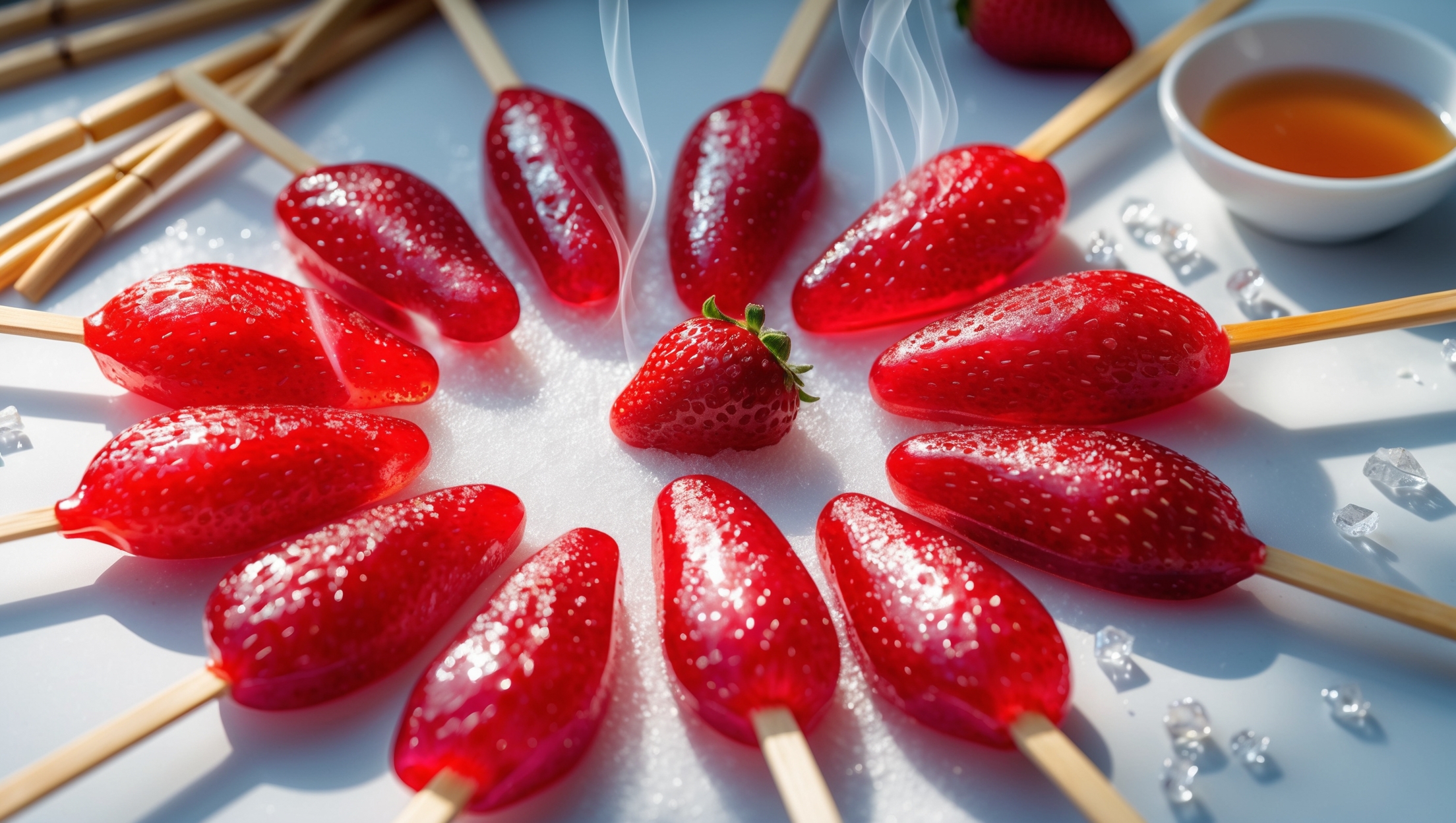
An overhead shot of vibrant red strawberry tanghulu skewers arranged in a sunburst pattern on a sleek white marble surface, their glass-like candy shells glistening under soft natural light. A close-up reveals the perfect transparency of the hard sugar coating, showcasing the juicy fruit beneath. In the background, bamboo skewers and scattered sugar crystals add textural interest, while a small bowl of remaining sugar syrup sits nearby, its golden hue capturing the light beautifully. Steam rises subtly from freshly dipped pieces, emphasizing the fresh, handmade quality of these traditional Chinese treats.

Ingredients

<ul class="ingredients-main-list"><li class="ingredients-single-item">250g fresh strawberries (or other firm fruits like grapes, blueberries, kiwi chunks, or mandarin segments)</li><li class="ingredients-single-item">200g granulated sugar</li><li class="ingredients-single-item">60ml water</li><li class="ingredients-single-item">1 tbsp light corn syrup (or rice syrup)</li></ul>

Equipment

<ul class="equipment-main-list"><li class="equipment-single-item">8 bamboo skewers</li><li class="equipment-single-item">Digital candy thermometer</li><li class="equipment-single-item">Heavy-bottomed saucepan</li><li class="equipment-single-item">Silicone baking mat or parchment paper</li></ul>
BAKE SMARTER

Kitchen Converter

Quickly switch between common baking units without leaving the recipe.

Convert
Result—

Volume uses US cups, tablespoons, and teaspoons. Converting weight to volume depends on the ingredient.

Directions

<ol class="no-list-style"><li class="MethodStepper"><h4 class="step-title">Step 1</h4>Prepare your workspace by laying out a silicone mat or parchment paper where you'll place your finished tanghulu. Wash and thoroughly dry your fruit - this is crucial as any moisture on the surface will prevent the candy coating from adhering properly. For strawberries, keep the stems intact as they add visual appeal and make skewering easier.</li><li class="MethodStepper"><h4 class="step-title">Step 2</h4>Carefully thread your fruit onto bamboo skewers, leaving about 5cm of skewer at the bottom to hold. If using larger fruits like strawberries, use 2-3 pieces per skewer; for smaller fruits like blueberries, use 5-6 pieces. Arrange your skewers on a plate near your stovetop so they're ready when the sugar syrup reaches temperature.</li><li class="MethodStepper"><h4 class="step-title">Step 3</h4>In a heavy-bottomed saucepan, combine the sugar, water, and corn syrup. The corn syrup prevents crystallization during cooking, ensuring a perfectly smooth candy coating. Stir gently over medium-low heat until the sugar completely dissolves.</li><li class="MethodStepper"><h4 class="step-title">Step 4</h4>Once the sugar has dissolved, stop stirring (continued stirring can cause crystallization) and increase the heat to medium-high. Clip your candy thermometer to the side of the pan, making sure the tip doesn't touch the bottom. Cook the syrup until it reaches exactly 149°C (300°F) - the "hard crack" stage. This precise temperature is what gives tanghulu its characteristic glass-like crunch.</li><li class="MethodStepper"><h4 class="step-title">Step 5</h4>As soon as the syrup reaches temperature, remove from heat immediately. The syrup will be extremely hot, so be cautious. Allow the bubbling to subside for about 10 seconds, but work quickly as the syrup will begin hardening as it cools.</li><li class="MethodStepper"><h4 class="step-title">Step 6</h4>Tilt your saucepan to create a deeper pool of syrup. Hold a skewer by the wooden end and dip each fruit piece into the hot syrup, rotating gently to ensure complete coverage. Let excess syrup drip off for a few seconds - this prevents puddles from forming at the base of your tanghulu.</li><li class="MethodStepper"><h4 class="step-title">Step 7</h4>Immediately place the dipped skewer onto your prepared silicone mat or parchment paper. The coating will begin hardening almost instantly, creating that beautiful transparent shell. Repeat with remaining skewers, working quickly. If the syrup becomes too thick to work with, you can reheat it very briefly over low heat.</li><li class="MethodStepper"><h4 class="step-title">Step 8</h4>Allow the tanghulu to cool completely for about 5 minutes until the candy coating is fully hardened. You'll know it's ready when the surface is no longer tacky and makes a tapping sound when gently tapped. For the best texture and flavor contrast, enjoy your tanghulu immediately after cooling - the delightful crack of the candy shell giving way to juicy fruit is what makes these treats so special!</li></ol>
Nutrition Facts (per serving)

🍽️ Serving Size: 1 slice
🔥 Calories: 185 calories
🥑 Fat: 3 g
🧈 Saturated Fat: 0.5 g
🍞 Carbohydrates: 35 g
🍭 Sugar: 5 g
🍗 Protein: 5 g
🫀 Cholesterol: 31 mg
🧂 Sodium: 230 mg

Chef’s Notes

A few helpful details for making this recipe.

Why does my candy coating turn cloudy instead of clear?

Cloudy coating typically occurs when sugar crystallises during cooking. To prevent this, avoid stirring after the sugar dissolves, use corn syrup in your mixture, and make sure the syrup reaches the correct temperature (149°C/300°F) for that perfect transparent shell.

What's the secret to preventing the candy coating from becoming sticky?

The secret is proper temperature control - heating the syrup to exactly 149°C (300°F) ensures the hard crack stage is reached. Also, ensure fruits are completely dry before dipping, and let the tanghulu set in a non-humid environment to maintain that satisfying crunch.

Which fruits work best for making candied skewers?

Firm fruits with lower moisture content work best - strawberries are traditional, but grapes, firm blueberries, apple slices, kiwi chunks, and mandarin segments also work brilliantly. Avoid very juicy fruits like watermelon or overly ripe berries as they can release moisture.

Want to try something else in ...

More recipes you might like

Keep exploring with more recipes from What's Baking.