Buttered Irish Cabbage Recipe

Tender green cabbage simmered to perfection and generously coated in rich Irish butter, creating a simple yet indulgent side dish with a melt-in-your-mouth quality.
Difficulty:
Beginner
Prep Time:
10 mins
Cook Time:
15 mins
Serves:
4 servings
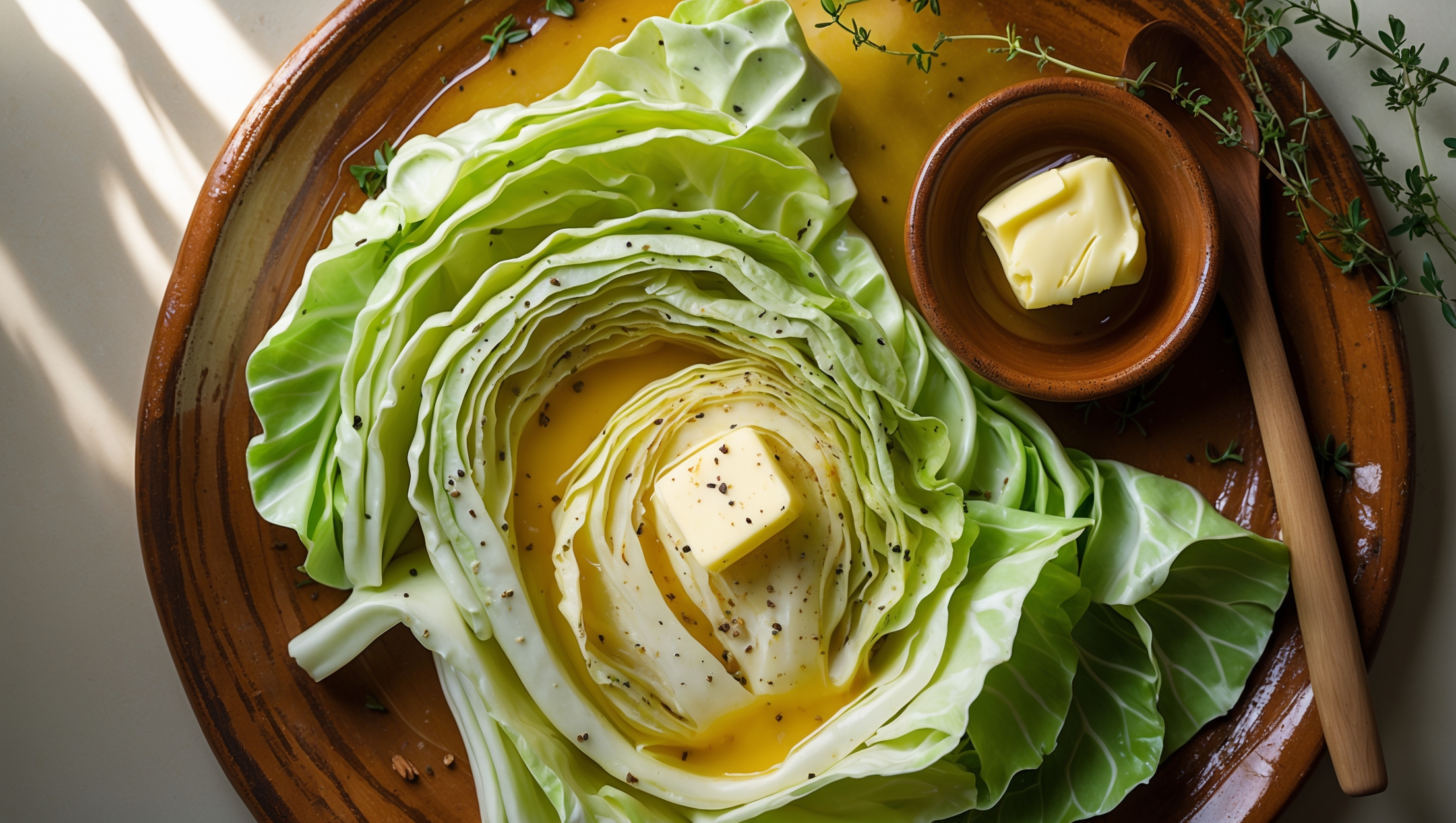
An overhead shot of glossy, emerald-green cabbage ribbons glistening with melted Irish butter on a rustic earthenware plate. Golden pools of butter collect in the natural folds of the cabbage, with tiny flecks of freshly cracked black pepper and sea salt crystals visible throughout. A wooden serving spoon rests alongside, partly submerged in the buttery cabbage. Soft natural light streams across the scene, highlighting the cabbage's silky texture against the warm ceramic background, while sprigs of fresh thyme provide subtle color contrast. A small ramekin of additional Irish butter sits nearby, beginning to soften in the warm glow.

Ingredients

<ul class="ingredients-main-list"><li class="ingredients-single-item">1 medium green cabbage (about 900g), cored and thinly sliced</li><li class="ingredients-single-item">85g Irish butter (Kerrygold or similar)</li><li class="ingredients-single-item">250ml vegetable stock or water</li><li class="ingredients-single-item">1 tsp sea salt</li><li class="ingredients-single-item">1/2 tsp freshly ground black pepper</li><li class="ingredients-single-item">1 tbsp fresh thyme leaves (optional)</li></ul>

Equipment

<ul class="equipment-main-list"><li class="equipment-single-item">Large heavy-bottomed pot with lid</li><li class="equipment-single-item">Sharp chef's knife</li></ul>
BAKE SMARTER

Kitchen Converter

Quickly switch between common baking units without leaving the recipe.

Convert
Result

Volume uses US cups, tablespoons, and teaspoons. Converting weight to volume depends on the ingredient.

Directions

<ol class="no-list-style"><li class="MethodStepper"><h4 class="step-title">Step 1</h4>Preheat your oven to 180°C (160°C fan). While a stovetop method is traditional, baking adds a gentle, even heat that helps the cabbage caramelize slightly while retaining its moisture.</li><li class="MethodStepper"><h4 class="step-title">Step 2</h4>Prepare your cabbage by removing the outer leaves, cutting it into quarters, and carefully removing the tough core. Then slice each quarter into thin ribbons about 1cm wide. Don't worry about perfect uniformity – the varied textures will create interest in the final dish.</li><li class="MethodStepper"><h4 class="step-title">Step 3</h4>In a large heavy-bottomed pot or Dutch oven that's oven-safe, melt 60g of the Irish butter over medium heat. The quality of the butter is crucial here – Irish butter has a higher butterfat content that provides exceptional richness and flavor to this simple dish.</li><li class="MethodStepper"><h4 class="step-title">Step 4</h4>Add the sliced cabbage to the pot and toss thoroughly in the melted butter to coat every piece. This initial coating helps the cabbage begin to soften and allows the butter flavor to penetrate deeply.</li><li class="MethodStepper"><h4 class="step-title">Step 5</h4>Pour in the vegetable stock or water, add the salt, and stir well. The liquid will create steam that helps tenderize the cabbage while preventing it from drying out in the oven.</li><li class="MethodStepper"><h4 class="step-title">Step 6</h4>Cover the pot with a tight-fitting lid and transfer to the preheated oven. Bake for 10 minutes, then remove from the oven and carefully stir the cabbage. The pieces should be beginning to soften but still have some bite.</li><li class="MethodStepper"><h4 class="step-title">Step 7</h4>Return the covered pot to the oven for another 5 minutes, until the cabbage is tender but not mushy. You're looking for a slight resistance when you bite into it – overcooking will result in a less appealing texture and diminished flavor.</li><li class="MethodStepper"><h4 class="step-title">Step 8</h4>Remove from the oven and add the remaining 25g of butter, allowing it to melt into the hot cabbage. This final addition of fresh butter creates a glossy finish and fresh butter flavor that elevates the whole dish.</li><li class="MethodStepper"><h4 class="step-title">Step 9</h4>Season with freshly ground black pepper and additional salt if needed after tasting. If using thyme leaves, gently fold them in now – the residual heat will release their aromatic oils without diminishing their fresh flavor.</li><li class="MethodStepper"><h4 class="step-title">Step 10</h4>Serve immediately in a warmed serving dish to maintain that beautiful buttery gloss. This simple yet luxurious side pairs perfectly with traditional Irish mains like corned beef, shepherd's pie, or roast lamb.</li></ol>
Nutrition Facts (per serving)

🍽️ Serving Size: 1 serving
🔥 Calories: 135 calories
🥑 Fat: 10 g
🧈 Saturated Fat: 6 g
🍞 Carbohydrates: 8 g
🍭 Sugar: 4 g
🍗 Protein: 2 g
🫀 Cholesterol: 25 mg
🧂 Sodium: 220 mg

Chef’s Notes

A few helpful details for making this recipe.

Why is Irish butter specifically recommended for cabbage dishes?

Irish butter has a significantly higher butterfat content (82% compared to standard butter's 80%) and comes from grass-fed cows, giving it a richer, more golden appearance and distinctly creamy flavour. These qualities transform simple cabbage into a luxurious side dish with exceptional depth of flavour.

Can I cook cabbage on the stovetop instead of the oven?

Yes, you can adapt this recipe for stovetop cooking. Simply melt butter in a large pot with a tight-fitting lid, add sliced cabbage and stock, then simmer over medium-low heat for approximately 12-15 minutes, occasionally stirring until tender but still slightly firm.

What traditional Irish meals pair well with buttered cabbage?

Buttered cabbage is a classic accompaniment to corned beef, Irish stew, shepherd's pie, bacon and cabbage, Dublin coddle, or roast lamb. It also complements boiled ham, colcannon, boxty (potato pancakes), and simple roasted meats for an authentic Irish dining experience.

Want to try something else in ...

More recipes you might like

Keep exploring with more recipes from What's Baking.