Directions
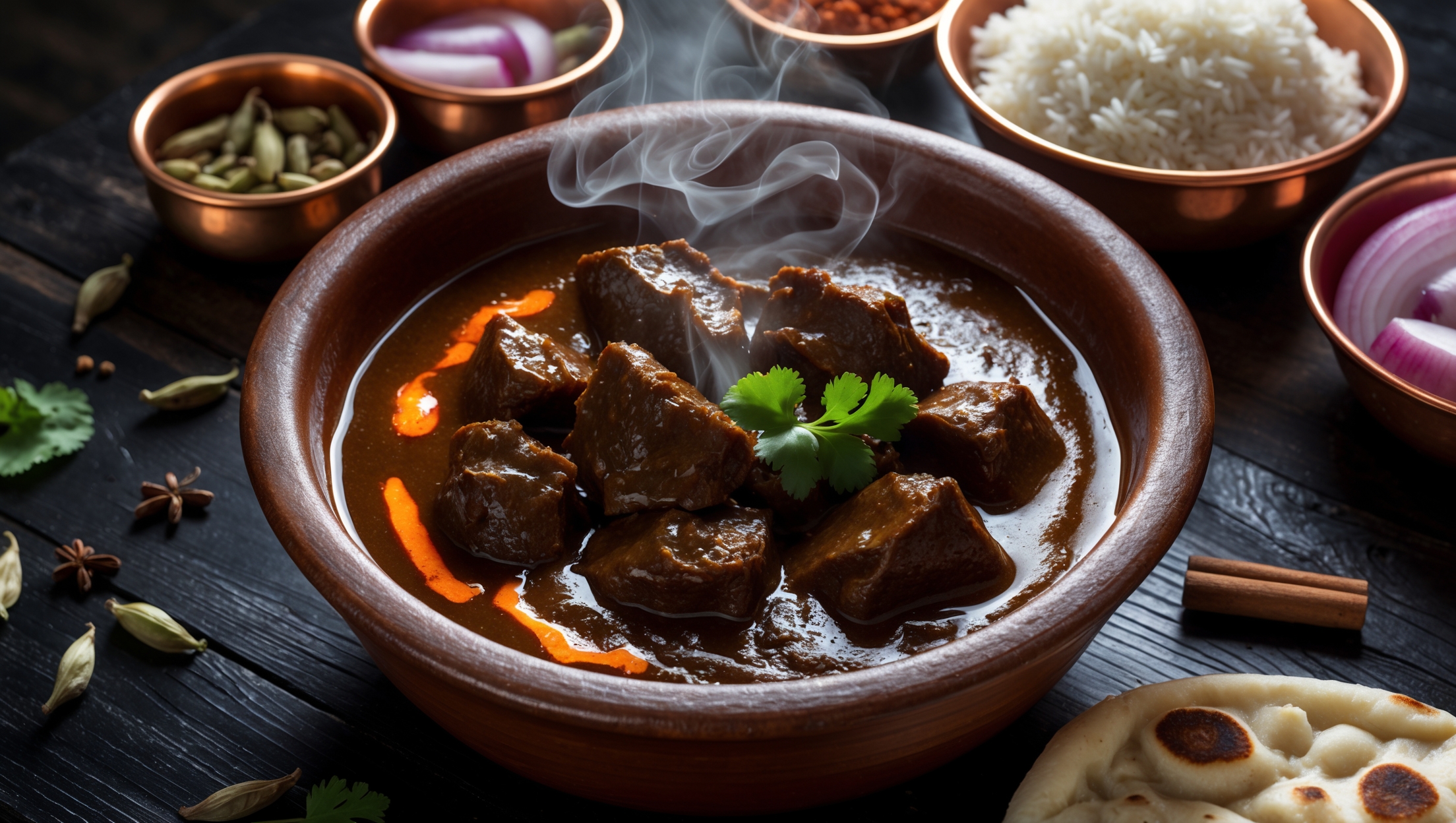
<ol class="no-list-style"><li class="MethodStepper"><h4 class="step-title">Step 1</h4>Prepare the goat meat by trimming any excess fat and cutting into 4cm chunks if not already done. Pat the meat dry with paper towels - this helps achieve better browning. Season generously with salt and set aside for 15 minutes at room temperature.</li><li class="MethodStepper"><h4 class="step-title">Step 2</h4>Heat the oil in a heavy-bottomed pot or Dutch oven over medium-high heat. Once hot, add the cinnamon stick, cardamom pods, cloves, and bay leaf. Sauté for 30 seconds until they release their aromatic oils, being careful not to burn them.</li><li class="MethodStepper"><h4 class="step-title">Step 3</h4>Add the diced onions to the pot and cook until they turn a rich golden brown, about 10-12 minutes. This slow caramelization is crucial for developing the curry's deep flavor base. Stir occasionally to prevent burning.</li><li class="MethodStepper"><h4 class="step-title">Step 4</h4>Add the minced garlic, grated ginger, and green chilies to the pot. Sauté for 2 minutes until fragrant. The moisture from these ingredients will help deglaze any browned bits from the bottom of the pot, which adds tremendous flavor to your curry.</li><li class="MethodStepper"><h4 class="step-title">Step 5</h4>Add the ground spices (coriander, cumin, turmeric, and red chili powder) and stir continuously for 1 minute. The spices should become fragrant but be careful not to burn them as they can become bitter. If the mixture seems too dry, add a splash of water.</li><li class="MethodStepper"><h4 class="step-title">Step 6</h4>Add the goat meat to the pot and brown on all sides, about 5-7 minutes. Don't rush this step - proper browning creates the deep, rich flavor through the Maillard reaction, where proteins and sugars transform to create complex flavor compounds.</li><li class="MethodStepper"><h4 class="step-title">Step 7</h4>Add the chopped tomatoes and tomato paste, stirring well to combine. Cook for 5 minutes until the tomatoes break down and the oil begins to separate from the masala. This separation is a key visual cue that your base is properly cooked.</li><li class="MethodStepper"><h4 class="step-title">Step 8</h4>Pour in the coconut milk and water or stock. Bring the mixture to a gentle boil, then reduce the heat to low. Cover and simmer for 1.5-2 hours, or until the meat is fork-tender. Goat meat contains collagen that breaks down slowly during cooking, transforming into gelatin that gives the curry its rich mouthfeel.</li><li class="MethodStepper"><h4 class="step-title">Step 9</h4>After the meat is tender, uncover the pot and increase the heat to medium. Simmer for an additional 15-20 minutes to reduce and thicken the sauce to your desired consistency. Remember that the curry will thicken slightly as it cools.</li><li class="MethodStepper"><h4 class="step-title">Step 10</h4>Stir in the garam masala and fresh lemon juice. These are added at the end to preserve their aromatic qualities, as extended cooking diminishes their impact. Taste and adjust the seasoning with salt as needed.</li><li class="MethodStepper"><h4 class="step-title">Step 11</h4>Turn off the heat and let the curry rest for 10 minutes before serving. This resting period allows the flavors to meld and the meat to reabsorb some of the sauce.</li><li class="MethodStepper"><h4 class="step-title">Step 12</h4>Garnish with fresh chopped coriander leaves just before serving. Your rich, aromatic goat curry is best enjoyed with steamed basmati rice, naan bread, or roti. The curry actually tastes even better the next day as the flavors continue to develop overnight!</li></ol>