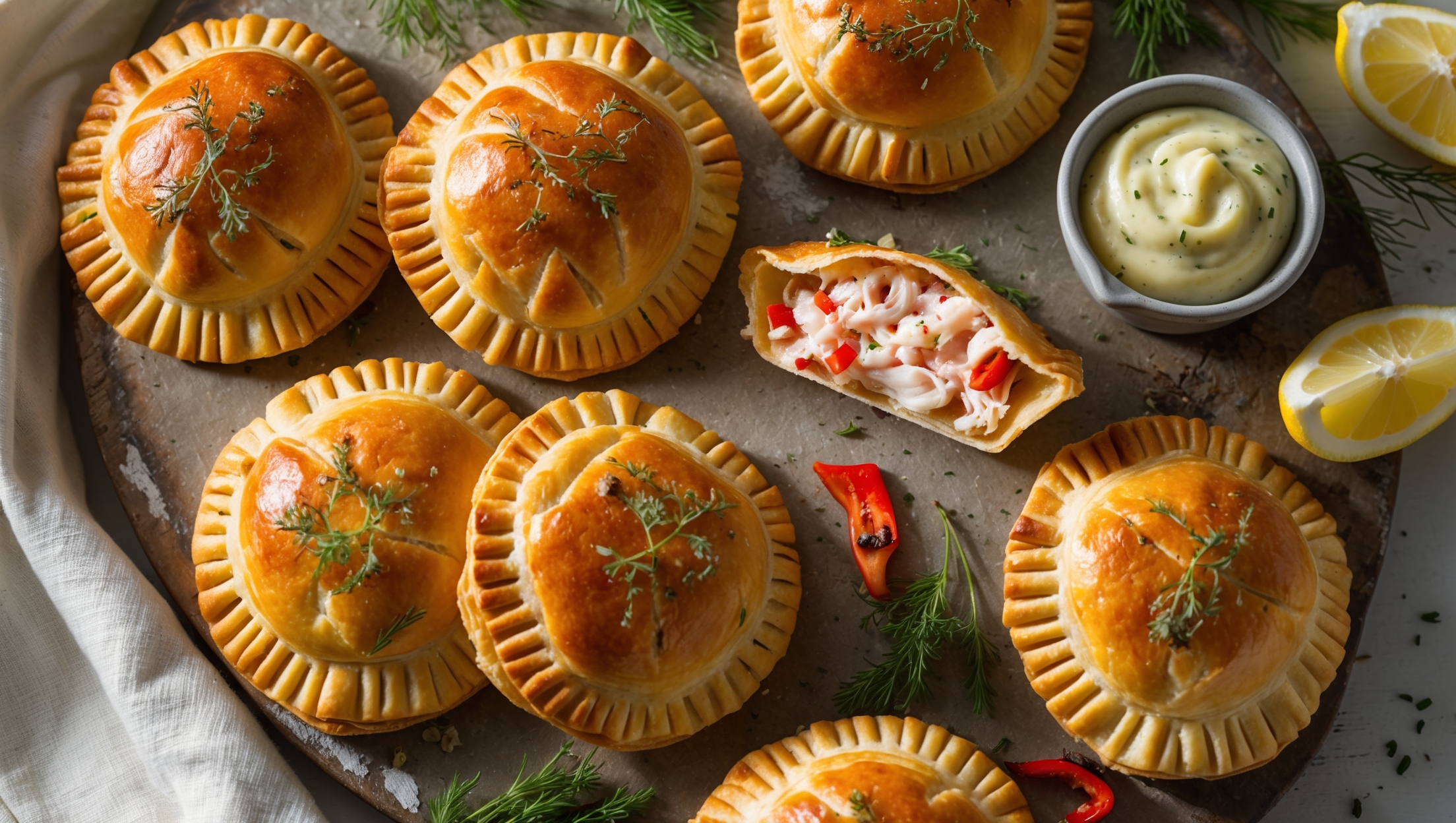
Directions
<ol class="no-list-style"><li class="MethodStepper"><h4 class="step-title">Step 1</h4>Begin by making the pastry dough. In a large bowl or food processor, combine flour, salt, and sugar. Add the cold cubed butter and pulse or use your fingertips to work it into the flour until the mixture resembles coarse breadcrumbs with some pea-sized butter pieces remaining. These butter pieces are crucial as they'll create steam pockets while baking, resulting in flaky layers.</li><li class="MethodStepper"><h4 class="step-title">Step 2</h4>Gradually add the ice-cold water, 1 tablespoon at a time, mixing gently until the dough just comes together. Be careful not to overmix or add too much water, which can make the pastry tough rather than tender. The dough should hold together when pinched but shouldn't feel wet or sticky.</li><li class="MethodStepper"><h4 class="step-title">Step 3</h4>Divide the dough into two equal portions, shape each into a flat disc, wrap in cling film, and refrigerate for at least 1 hour or up to overnight. Cold dough is essential for maintaining those butter pockets that create flakiness.</li><li class="MethodStepper"><h4 class="step-title">Step 4</h4>While the dough chills, prepare your crab filling. In a medium bowl, gently fold together the crabmeat, mayonnaise, beaten egg, Dijon mustard, lemon juice, diced bell pepper, green onions, panko breadcrumbs, Old Bay seasoning, Worcestershire sauce, parsley, salt, and pepper. Be gentle to keep the crab pieces intact—this preserves the luxurious texture in each bite. Cover and refrigerate for 30 minutes to allow the flavors to meld.</li><li class="MethodStepper"><h4 class="step-title">Step 5</h4>Preheat your oven to 200°C (400°F) and line two baking sheets with parchment paper. Working with one disc of dough at a time (keeping the other refrigerated), roll it out on a lightly floured surface to about 3mm (1/8 inch) thickness. Use your pastry cutter to cut out as many 10cm (4-inch) circles as possible.</li><li class="MethodStepper"><h4 class="step-title">Step 6</h4>Place about 2 tablespoons of crab filling in the center of each dough circle, being careful not to overfill—this can cause the filling to leak during baking. Leave about 1cm border around the edges to properly seal your pies.</li><li class="MethodStepper"><h4 class="step-title">Step 7</h4>Beat the remaining egg with 1 tablespoon of water to create an egg wash. Brush the edges of each filled dough circle with egg wash, then fold in half to create a semi-circle. Press the edges firmly together, then crimp with a fork to ensure a tight seal. This prevents any filling from escaping during baking and creates that characteristic hand pie look.</li><li class="MethodStepper"><h4 class="step-title">Step 8</h4>Transfer the sealed pies to your prepared baking sheets, spacing them about 5cm apart. Use a sharp knife to cut a small vent in the top of each pie to allow steam to escape during baking. Brush the tops with egg wash for a beautiful golden finish. The egg proteins will coagulate during baking, creating that attractive glossy sheen.</li><li class="MethodStepper"><h4 class="step-title">Step 9</h4>Bake in the preheated oven for 20-25 minutes, rotating the pans halfway through, until the pies are deeply golden brown and the pastry is completely cooked through. If your pies are browning too quickly, cover loosely with foil for the remaining bake time.</li><li class="MethodStepper"><h4 class="step-title">Step 10</h4>Allow the hand pies to cool on the baking sheets for 5 minutes before transferring to a wire rack. These are delicious served warm or at room temperature. If you're making them ahead, you can reheat in a 150°C (300°F) oven for 10 minutes to restore that delightful crispness. Serve with a small dish of lemon aioli or tartar sauce for dipping if desired.</li></ol>