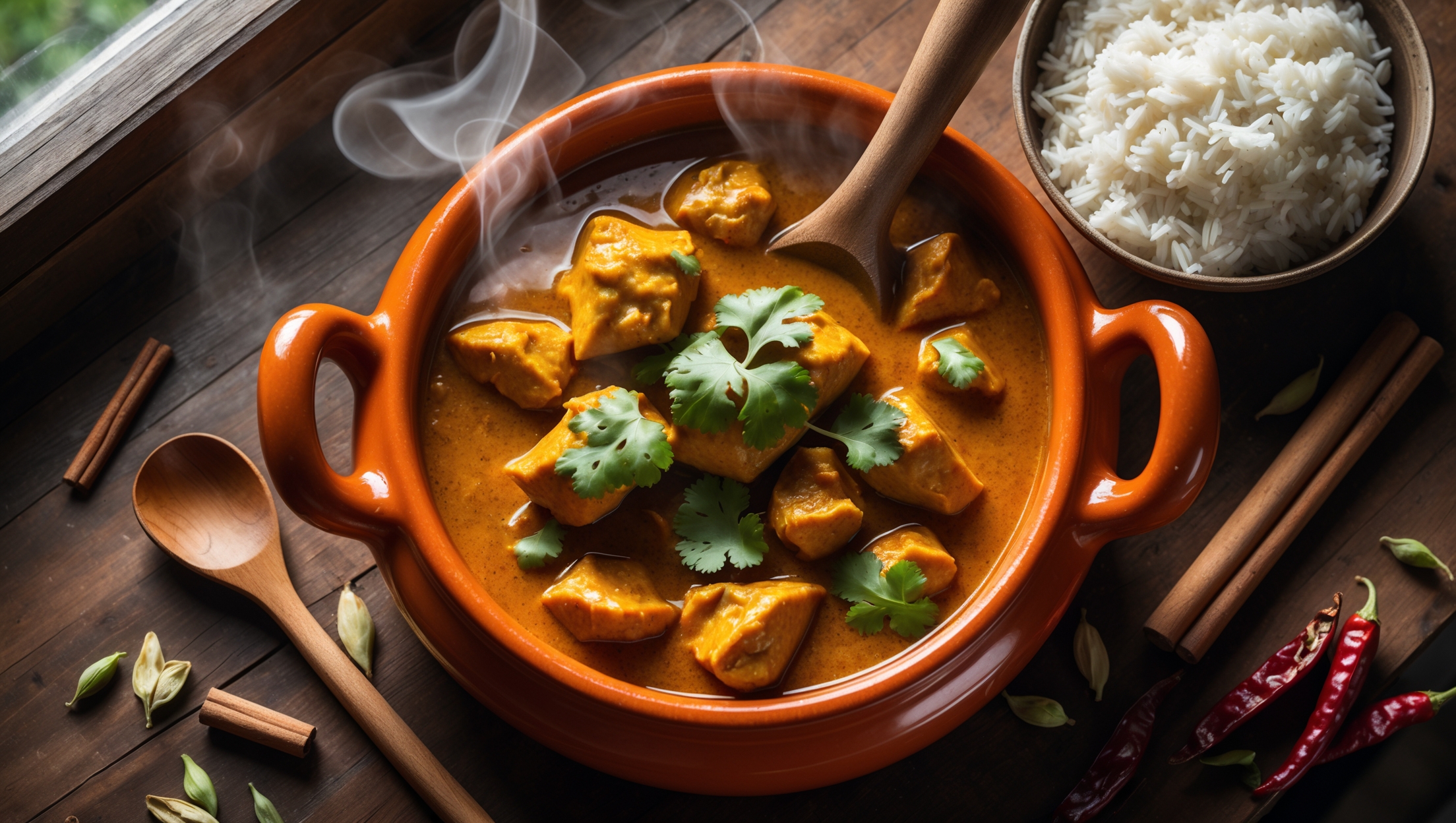
Directions
<ol class="no-list-style"><li class="MethodStepper"><h4 class="step-title">Step 1</h4>Pat the chicken pieces dry with paper towels. This crucial step ensures proper browning rather than steaming. Season generously with salt and set aside while you prepare other ingredients.</li><li class="MethodStepper"><h4 class="step-title">Step 2</h4>Heat oil or ghee in a large, heavy-bottomed pot over medium-high heat until shimmering. Add chicken pieces in a single layer without overcrowding (work in batches if needed). Brown for 3-4 minutes per side until golden but not cooked through. Remove to a plate and set aside.</li><li class="MethodStepper"><h4 class="step-title">Step 3</h4>In the same pot, reduce heat to medium and add onions. Cook for 8-10 minutes, stirring occasionally, until they soften and turn golden brown. This slow caramelization creates a sweet depth of flavor that forms the curry's foundation.</li><li class="MethodStepper"><h4 class="step-title">Step 4</h4>Add garlic and ginger, cooking for 1-2 minutes until fragrant. Your kitchen should now be filled with an irresistible aroma – this indicates the essential oils are being released into your curry base.</li><li class="MethodStepper"><h4 class="step-title">Step 5</h4>Add all dry spices (curry powder/garam masala, cumin, coriander, turmeric, and chili powder). Toast the spices for 30-60 seconds, stirring constantly to prevent burning. This blooming process enhances their flavors by releasing the aromatic compounds in the spices' oils.</li><li class="MethodStepper"><h4 class="step-title">Step 6</h4>Pour in chopped tomatoes, stock, coconut milk, and tomato paste. Stir well, scraping the bottom of the pot to incorporate any browned bits (called fond) – these contain concentrated flavors that enrich your sauce.</li><li class="MethodStepper"><h4 class="step-title">Step 7</h4>Return chicken and any accumulated juices to the pot. Bring the mixture to a gentle simmer, then reduce heat to medium-low. Cover and cook for 20-25 minutes until the chicken is tender and cooked through. The slow simmer allows the flavors to meld and the sauce to thicken naturally.</li><li class="MethodStepper"><h4 class="step-title">Step 8</h4>Taste and adjust seasoning, adding sugar and salt as needed. The sugar balances the acidity of the tomatoes, while salt heightens all the flavors. If the sauce is too thin, simmer uncovered for 5-10 minutes to reduce; if too thick, add a splash of water or stock.</li><li class="MethodStepper"><h4 class="step-title">Step 9</h4>Remove from heat and stir in most of the fresh coriander, reserving some for garnish. The residual heat will release the herb's aromatic oils without dulling its bright color.</li><li class="MethodStepper"><h4 class="step-title">Step 10</h4>Let the curry rest for 5 minutes before serving – this resting time allows the flavors to settle and fully integrate. Serve hot, garnished with remaining coriander and lemon wedges for squeezing over. The fresh citrus juice adds a bright finish that balances the rich, complex flavors of your homemade curry.</li></ol>