On this page
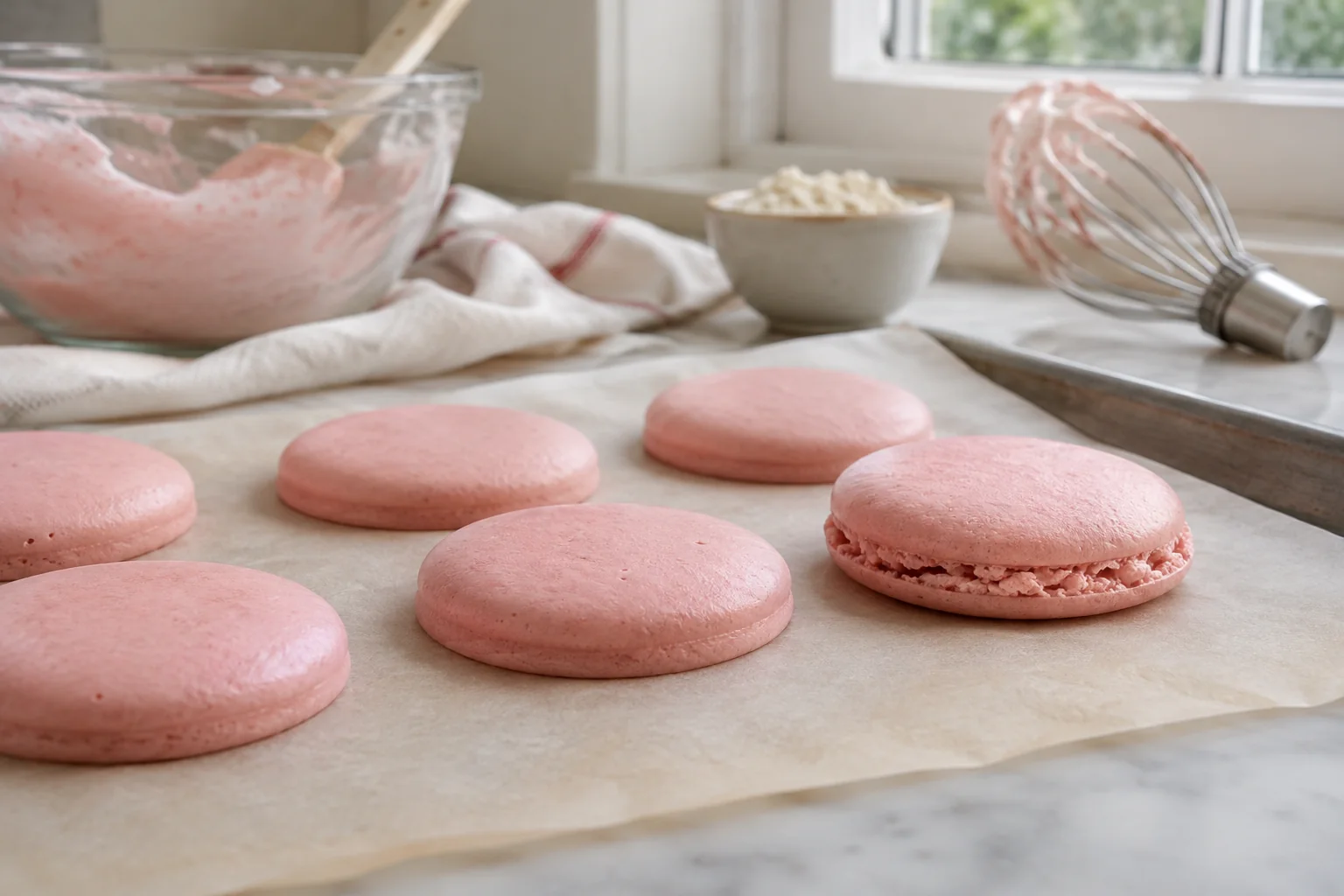
The delicate ruffled edge beneath a macaron shell is called its foot, one of the visual signatures of a well-baked French macaron. When shells come out flat and smooth along the base, something prevented the batter from lifting into its characteristic shape. The cause is rarely as simple as adding another minute of baking. Meringue strength, folding, drying, piping and oven conditions all influence whether a stable shell rises and forms feet.
What are macaron feet?
Feet are the narrow ruffled band that develops near the base when a macaron rises in the oven. A formed skin on the top can direct expansion toward the sides, while internal air and steam help the shell lift. The size and neatness of feet depend on the exact recipe and method.
Begin with the right macaron method
French, Italian and Swiss meringue macarons use different whipping and preparation sequences. A resting rule for French meringue should not automatically be imposed on every Italian method. Choose one tested recipe and follow it consistently before comparing advice from several tutorials.
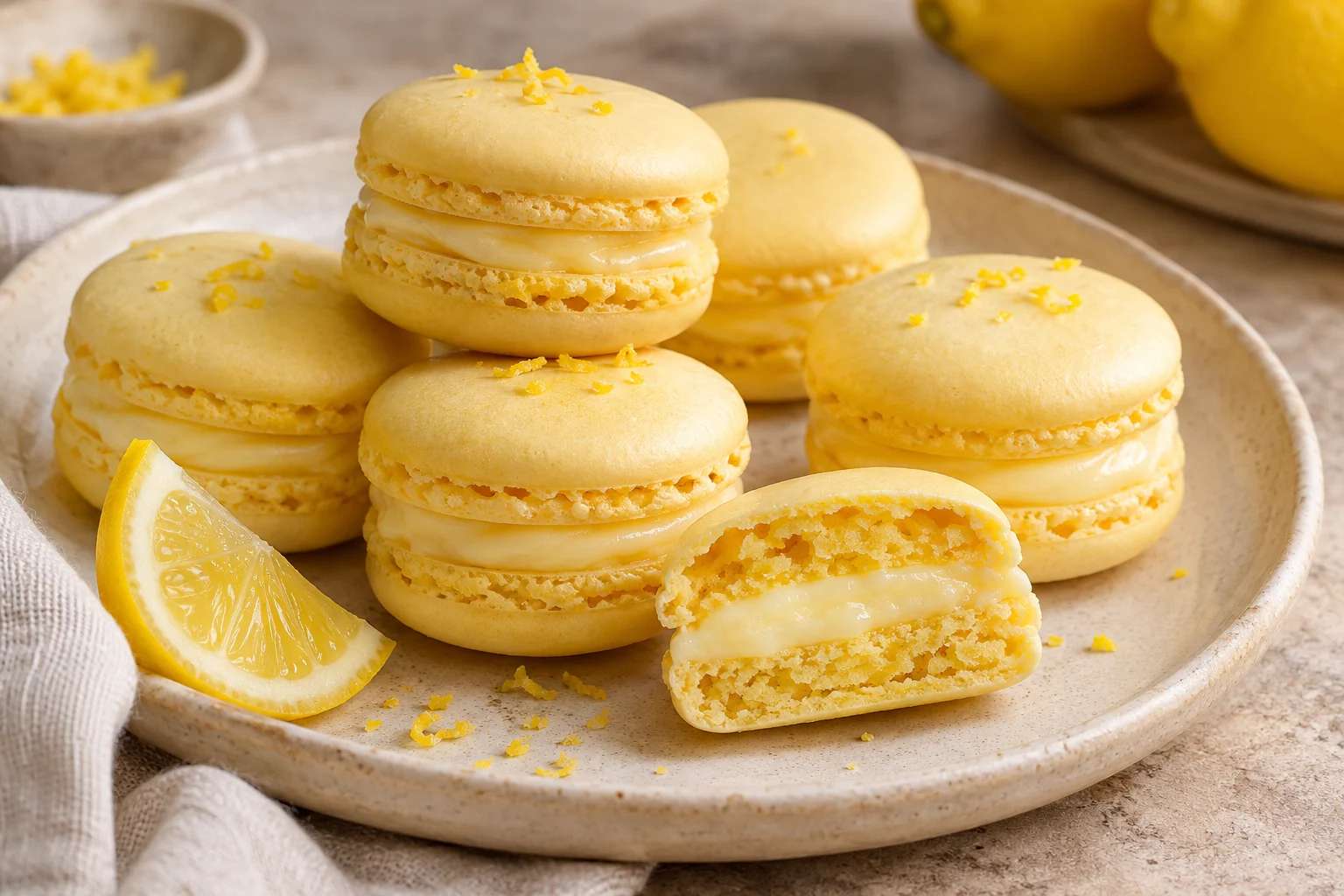
Recipe to try: Lemon Macarons. Follow this recipe’s own shell method, drying cues and filling instructions rather than mixing steps from different macaron methods.
Meringue strength is fundamental
Whipped egg whites need a stable network that can support almond flour and sugar as the batter is folded. An underwhipped meringue may collapse easily, leaving shells without enough expansion. Overwhipped dry clumpy whites can be difficult to incorporate smoothly and may create other surface defects.

Clean equipment matters
Fat and yolk contamination interfere with whipping egg whites. Use a clean bowl and whisk, separate eggs carefully and avoid greasy utensils. Don't use a cosmetic remedy like extra food colouring as a substitute for properly formed meringue.
Sugar addition must follow the method
Gradual sugar incorporation may help build a stable foam in French meringue; Italian meringue relies on a cooked sugar syrup added at the prescribed temperature and stage. Changing these steps can weaken the structure. Use measured grams rather than household approximations.
What is macaronage?
Macaronage is the controlled folding of almond-flour mixture into meringue until the batter flows to the recipe's intended consistency. Folding deflates some air by design. Too little folding leaves peaks and hollow-looking lumps; too much can collapse the batter into a thin liquid that spreads flat.
Overmixed batter is a common suspect
If piped rounds spread excessively and cannot hold their outline, the batter may have been folded too far. Flat disks often fail to lift into distinct feet. Watch the flowing-ribbon and settling cues from the recipe rather than counting a fixed number of folds.
Undermixed batter has its own problems
Stiff batter may retain sharp peaks, uneven surfaces and trapped air pockets. It can bake with distorted feet or cracks rather than smooth domes. Continue folding only until the proper fluidity is reached; beating aggressively at the end may cause a sudden overshoot.
Sifted dry ingredients
Large almond pieces and sugar lumps can interrupt the smooth shell surface and change batter consistency. Use finely ground almond flour and the sifting procedure in the formula. Avoid replacing a measured amount of almond flour with extra powdered sugar because of what remains in the sieve.
Piping evenly
Hold the bag perpendicular to the tray and pipe similarly sized rounds on a template. Release pressure before lifting the tip to avoid large peaks. Uneven sizes bake at different rates, making it harder to tell whether the method is working.
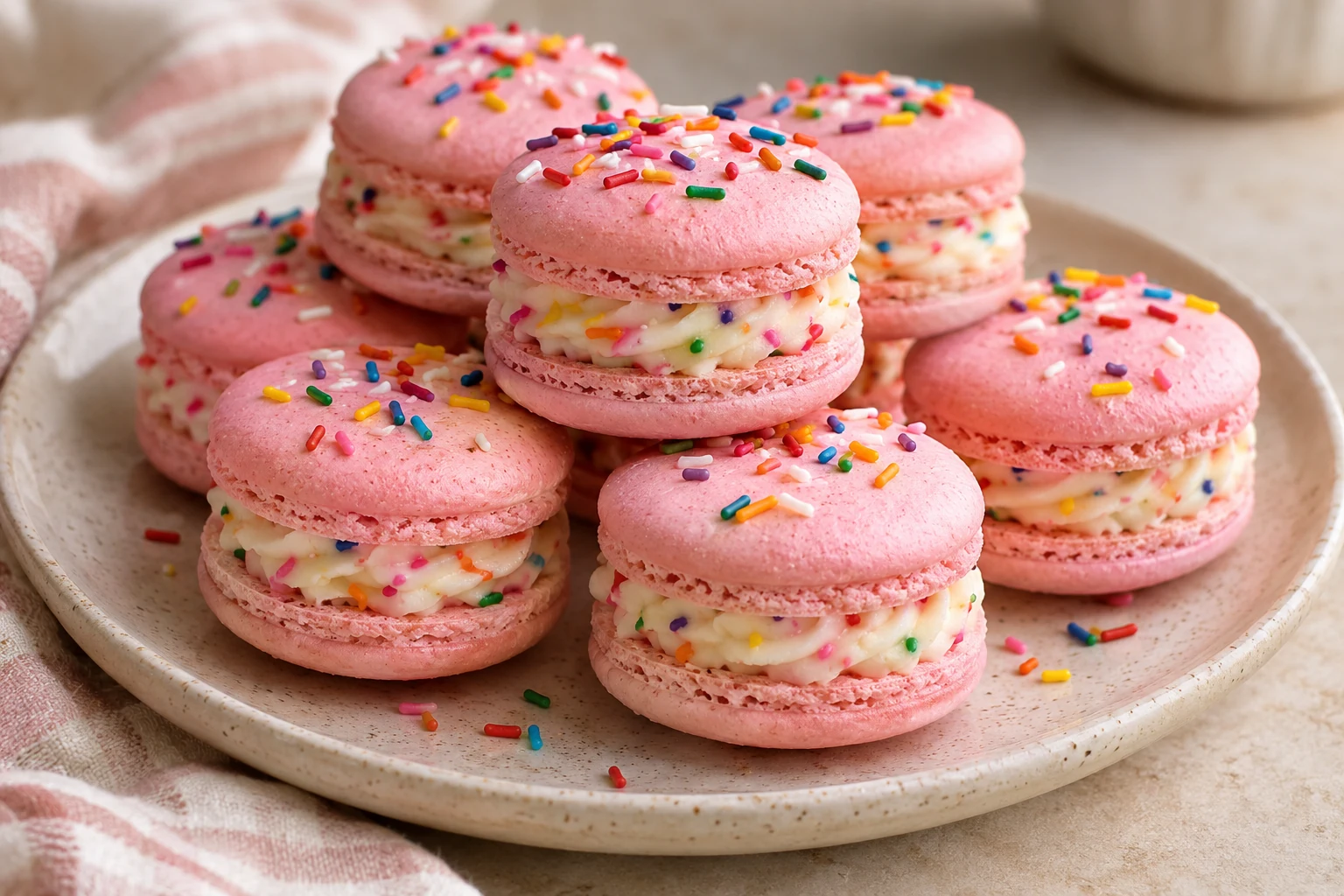
Recipe to try: Birthday Cake Macarons. Keep piping size and the recipe’s shell method consistent when comparing your results.
Tap out major bubbles
Many French macaron recipes tap the tray lightly after piping to release large trapped bubbles. Any visible large surface bubbles may be popped with a clean suitable tool. Tapping isn't a substitute for proper folding and should not flatten the piped rounds.
Resting and skin development
Some French macaron methods require piped shells to rest until their surfaces are no longer tacky before baking. A suitable skin can help guide expansion downward and outward, forming feet. Resting times depend heavily on humidity and recipe; the tactile cue matters more than an exact clock.
When humidity interferes
Humid kitchens slow surface drying. A fixed thirty-minute rest may not form the same skin on a rainy day as in a dry kitchen. Use the recipe's surface test and avoid improvised heaters that can partially cook or distort shells before baking.
Oven temperature too low
Insufficient oven heat can reduce the upward expansion needed for a defined foot, leaving flatter shells. It may also increase drying time without properly setting the structure. Verify actual oven temperature with a suitable thermometer and follow the macaron recipe's temperature range.
Oven temperature too high
Too much heat can cause rapid expansion, cracking or very tall spread-out feet. A hotter oven is not automatically the answer when no feet form. Change temperature only after checking meringue, macaronage and resting, preferably one variable at a time.
Silicone mats versus parchment
Different liners affect heat transfer and how the shell releases. A thick silicone mat may behave differently from parchment on the same metal sheet. Use the surface specified by the tested recipe before comparing your shell shape with a photograph made on another setup.
Baking sheet and rack position
Dark metal, doubled sheets and rack height change bottom heat. A macaron whose top dries while the base undercooks may release poorly and show weak feet. Follow the pan arrangement and rotate only when the formula says the shells have set enough.
Why feet may disappear after baking
An underbaked shell may appear to have risen, then collapse as it cools. Insufficient meringue strength or overly wet batter can produce similar results. Look at the interior and release from the mat, not only the early oven photograph.

What if the shells taste good?
Macarons with tiny or absent feet may still be edible when properly baked. The absence of feet is primarily a technical and presentation concern, not automatic proof of unsafe filling. A well-balanced ganache can make them enjoyable while you refine the process.
A controlled troubleshooting bake
Hold almond flour, egg whites, sugar, mat, pan and oven rack constant. Note meringue peaks, batter flow, resting surface and exact oven temperature. Change only the factor most likely responsible, then compare shells on the next tray.
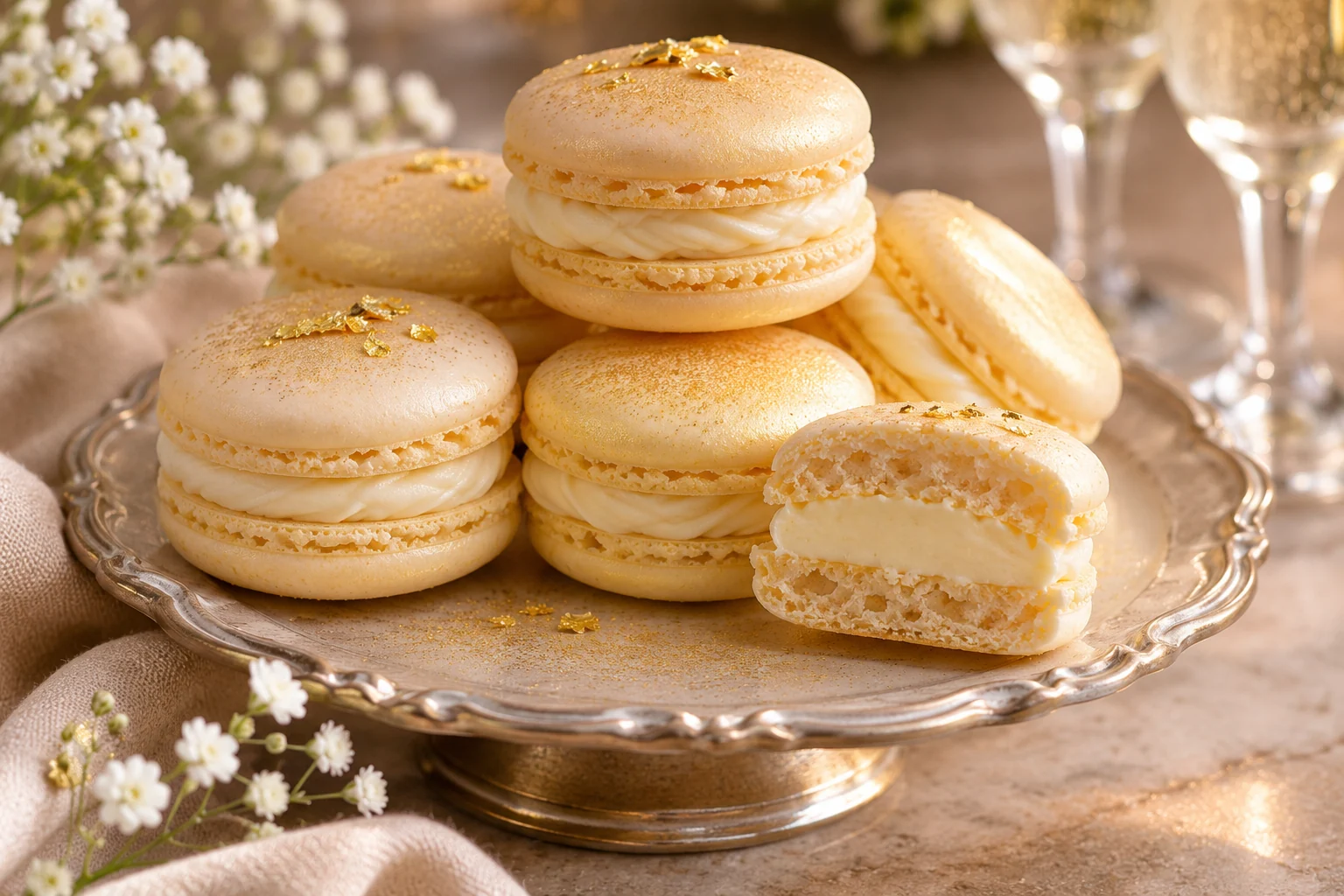
Recipe to try: Champagne Macarons. This is a separate flavoured macaron formula; keep its ingredient proportions and filling method together.
Frequently asked questions
Do all macarons need a long rest? No, methods differ. Is a hotter oven always better? No. Can overmixing remove feet? Yes. Will a different mat solve everything? Not if the batter is collapsed. Do small feet mean failure? Not necessarily when the texture is otherwise good.
Feet are evidence of a balanced process
Stable meringue, deliberate folding, appropriate shell preparation and predictable heat allow macarons to rise into their signature shape. Work systematically; the same approach also improves smooth tops and properly baked interiors.
IN PICTURES
From the baking notebook
FROM THE RECIPE BOX


