On this page
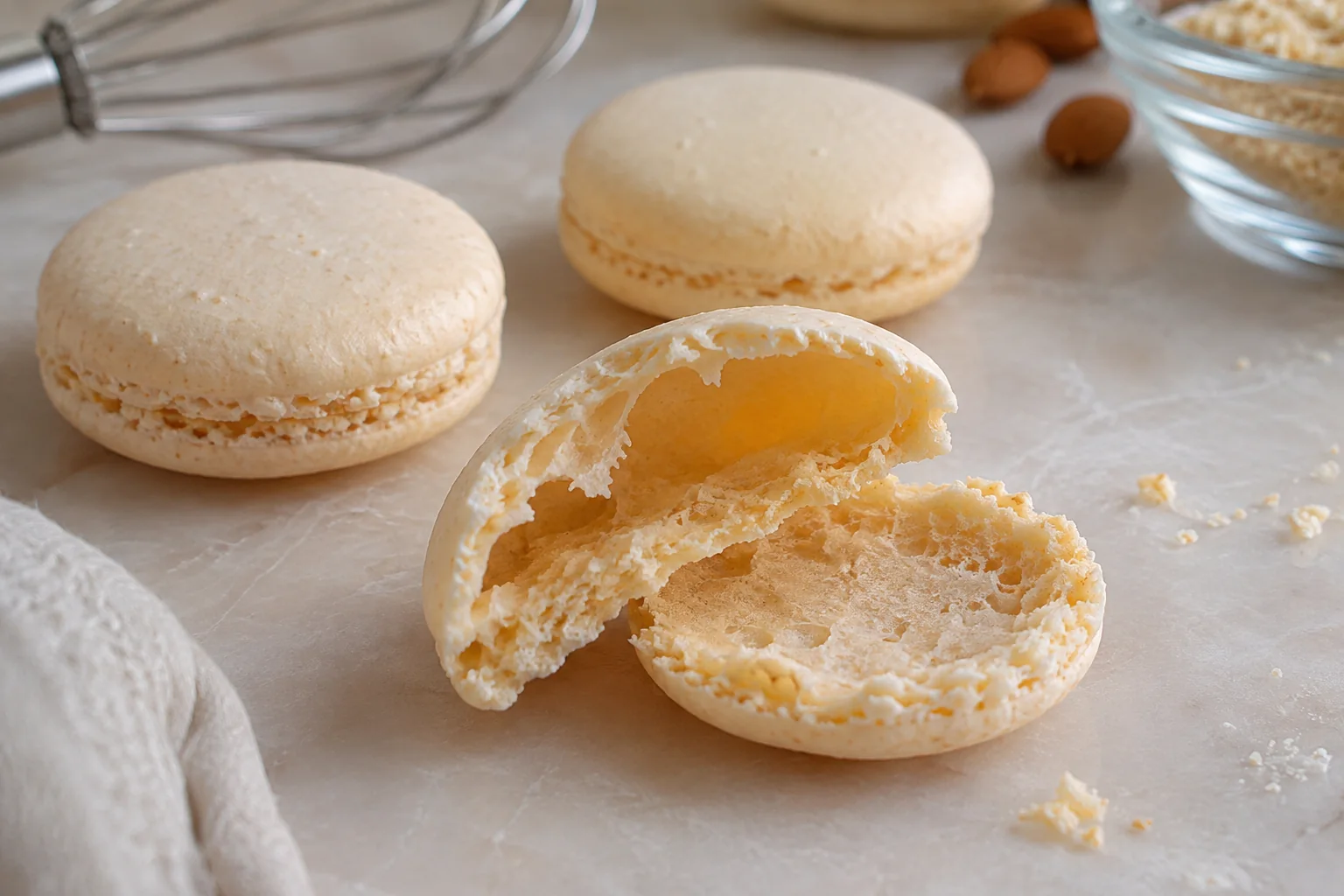
A tray of macarons may have smooth domes and pretty feet, yet every shell breaks open to reveal a huge empty cavity above a thin chewy base. Hollow macarons are one of the most frustrating defects because the outside can appear nearly perfect. The problem involves how the foam expands and sets during baking, and several different process errors can produce a similar cross-section. Start by looking at both shell structure and oven behaviour instead of changing every ingredient at once.
What is a hollow macaron?
A hollow shell has a noticeable gap between its upper dome and the crumb beneath. Some small internal air spaces are normal, but an almost empty roof over a compressed base may cause the shell to shatter or collapse when filled. A good macaron should have a delicate crisp exterior with an appropriately tender interior after maturation.
Why hollows are difficult to diagnose
The defect can result from underbaking, excessive aeration, an unstable meringue, batter folding, heat transfer or a combination of these. The same recipe may show hollow shells on one oven rack and fuller shells on another. That means an empty centre isn't proof that the almond flour or egg whites were bad.
Check whether the shells were fully baked
A shell can look golden and have well-defined feet but still contain a wet weak internal network. If the base sticks heavily to the liner or collapses immediately during cooling, it may need a different baking time under the recipe's instructions. Avoid simply lowering heat until the shell dries out without cooking properly.
Understand meringue structure
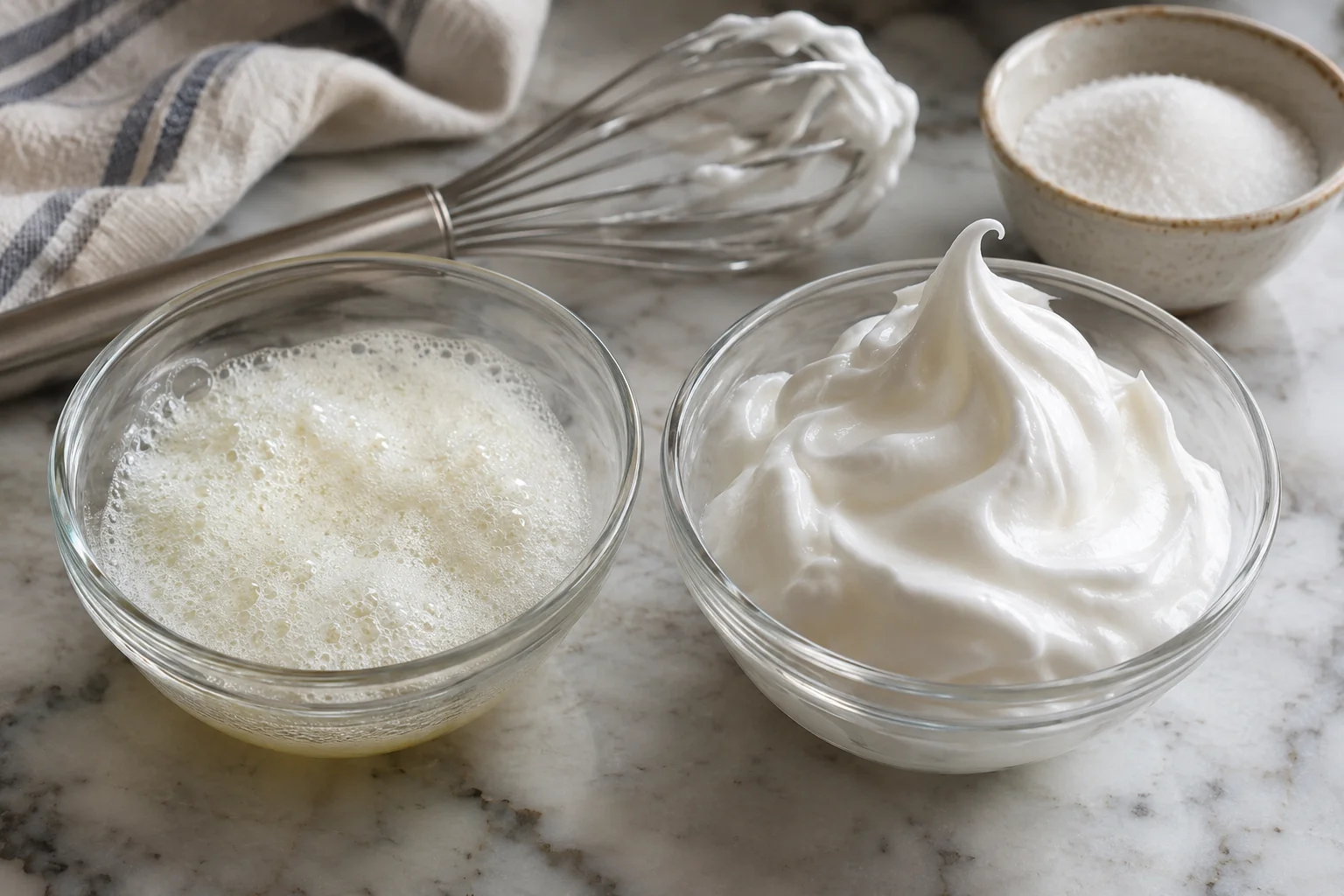
Whipped egg whites trap air, creating the primary foam that supports a French macaron. Underwhipped whites may lack strength, while very dry overwhipped meringue can become clumpy and difficult to fold evenly. Both can contribute to uneven expansion and interior defects.
Whip to the correct peak
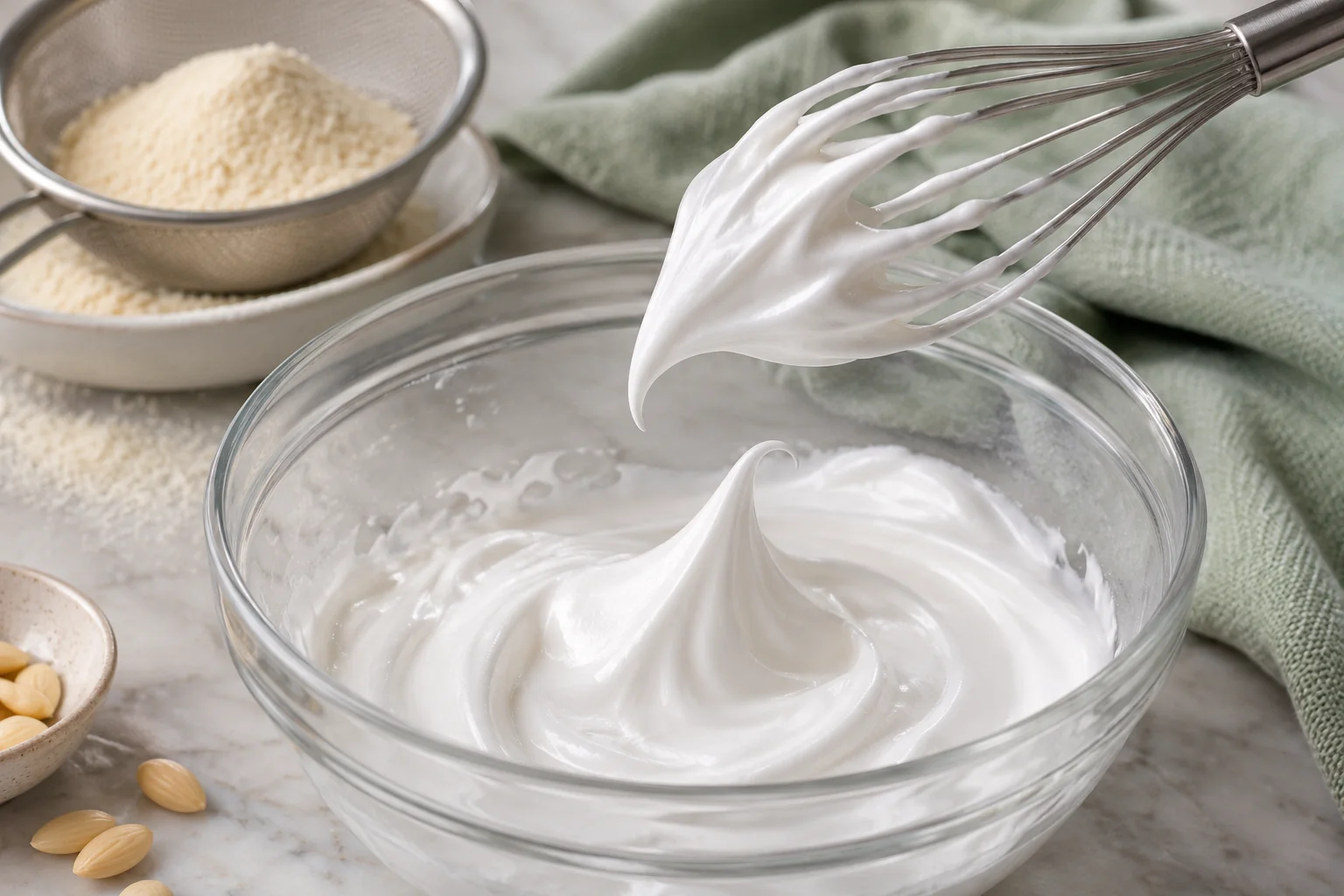
For French macarons, many tested recipes seek glossy firm peaks rather than a loose foamy mixture or broken dry clumps. The exact endpoint depends on whether the method is French, Swiss or Italian. Follow your recipe's visual cues instead of using the same number of mixer minutes for every kitchen.
Recipe to try: Lemon Macarons. Follow this recipe’s own shell method, drying cues and filling instructions rather than mixing steps from different macaron methods.
Keep bowls free from fat
Oil and accidental yolk can interfere with egg-white foaming. Clean, dry equipment makes the process more predictable. Do not add arbitrary vinegar or cream of tartar unless the formula calls for it; stabilizers influence the meringue's behaviour and should be balanced with other ingredients.
Why macaronage matters
Folding almond flour and sugar into meringue deliberately removes some air and creates a flowing batter. Too much folding collapses structure; too little leaves clumps and trapped pockets. A consistent ribbon and smooth settling pattern is usually more useful than counting folds.
Overmixed batter can flatten inside
Very fluid batter spreads widely and may create shells with thin tops and weak structure. Even if feet develop, the inside may not support the dome. If rounds run together after piping, check batter consistency before adjusting oven temperature.

Undermixed batter can trap large pockets
Stiff batter may retain peaks and uneven air cavities. During baking, expansion can exaggerate those pockets instead of distributing the interior evenly. Continue folding gently toward the method's target, recognizing that a few extra vigorous strokes can suddenly overshoot it.
The oven may be too hot
Rapid exterior expansion can build a tall dome before the internal network has fully set, leaving a gap as the structure contracts. Excessive heat may also produce spreading feet or cracked shells. Check actual oven temperature instead of trusting only the dial.
The oven may be too cool
Low heat can fail to cook the interior sufficiently, leaving a weak base that shrinks after cooling. The surface may look dry while the centre remains structurally underdone. Because both excessive and insufficient heat can contribute to hollows, use repeatable temperature trials rather than guessing.
Thermometer placement matters
An independent oven thermometer can reveal that the oven overshoots during preheat or runs cooler than indicated. Macarons are sensitive to relatively small shifts in heat. Test the rack position used by the recipe and allow the oven to stabilize before inserting the tray.
Baking trays and liners
A thick silicone mat, parchment, dark metal or doubled sheet alters bottom heat. Some formulas perform better on a specific liner. If the base consistently remains wet or hollow, test the recipe-approved alternative while keeping batter and oven conditions unchanged.
Resting piped shells
Many French-style methods ask for a dry surface before baking, allowing expansion to develop underneath. A very long rest may dry the shell differently, while inadequate rest can contribute to cracks or irregular feet. Rest according to the batter's surface cue and the method rather than a universal clock time.
Why very large shells are harder
Large piped rounds take longer to cook through than small uniform macarons. Their tops can set before the centres. Use a measured piping template and keep sizes consistent, then follow a recipe tested for that diameter.
Recipe to try: Birthday Cake Macarons. Keep piping size and the recipe’s shell method consistent when comparing your results.

Tap out only large bubbles
Gently tapping a filled tray and popping visible large bubbles can reduce isolated cavities. Extremely forceful tapping may spread the rounds and disrupt their shape. Tapping cannot compensate for a fundamentally weak meringue or excessively fluid batter.
Cooling before release
Freshly baked shells can be fragile and sticky while hot. Allow them to cool according to the recipe before lifting. Pulling a warm shell off the mat may tear away its bottom, creating an apparent hollow that is partly a release problem.
How fillings affect the perception
Macarons are often matured after sandwiching so moisture from ganache or buttercream softens the interior slightly. This can improve eating texture but doesn't rebuild a missing shell structure. A severely hollow shell may still taste pleasant but remain fragile.
A useful three-tray test
Hold the batter recipe, piping diameter, mat and rack constant. Bake small separate trays at controlled temperatures within the recipe's range, then cool and cut samples. Compare hollows, feet and release. This isolates oven performance more effectively than simultaneously changing meringue and baking time.
Recipe to try: Champagne Macarons. This is a separate flavoured macaron formula; keep its ingredient proportions and filling method together.

When only one tray is hollow
If the first tray is good but later trays are hollow, examine how the batter changes while it waits, whether the oven has fully recovered and whether the shells rested longer. A recipe that works once has useful evidence; don't immediately throw out the whole formula.
Frequently asked questions
Are hollow macarons always underbaked? No. Can high oven heat cause them? Yes. Does an Italian meringue guarantee no hollows? No. Can maturation fill a void? It softens texture but can't build missing cake. Should I add more almond flour? Not without a tested formula.
Look for a stable internal network
The best approach is consistent meringue, correct folding, uniform piping and an oven schedule that cooks the inside without forcing premature expansion. Cut a few test shells after cooling and use the cross-section to guide one measured change at a time.
IN PICTURES
From the baking notebook
FROM THE RECIPE BOX


