On this page
A teaspoon of vanilla can make a plain cake taste warmer, turn a simple custard into something memorable, or round out the flavour of chocolate chip cookies. But the baking aisle offers more than one way to add it. Should you reach for vanilla extract, vanilla bean paste, or a whole vanilla bean?
The good news: you do not need all three to bake delicious desserts. Pure vanilla extract is the everyday all-rounder; vanilla bean paste offers convenient, visible flecks; and whole beans are especially lovely when vanilla is the main event. The best choice depends on what you are making, how much time you have, and what you want to spend.
This guide explains how each ingredient works, when the differences matter, how to substitute one for another, and how to avoid wasting an expensive vanilla pod.
Vanilla extract, bean paste, and whole beans at a glance
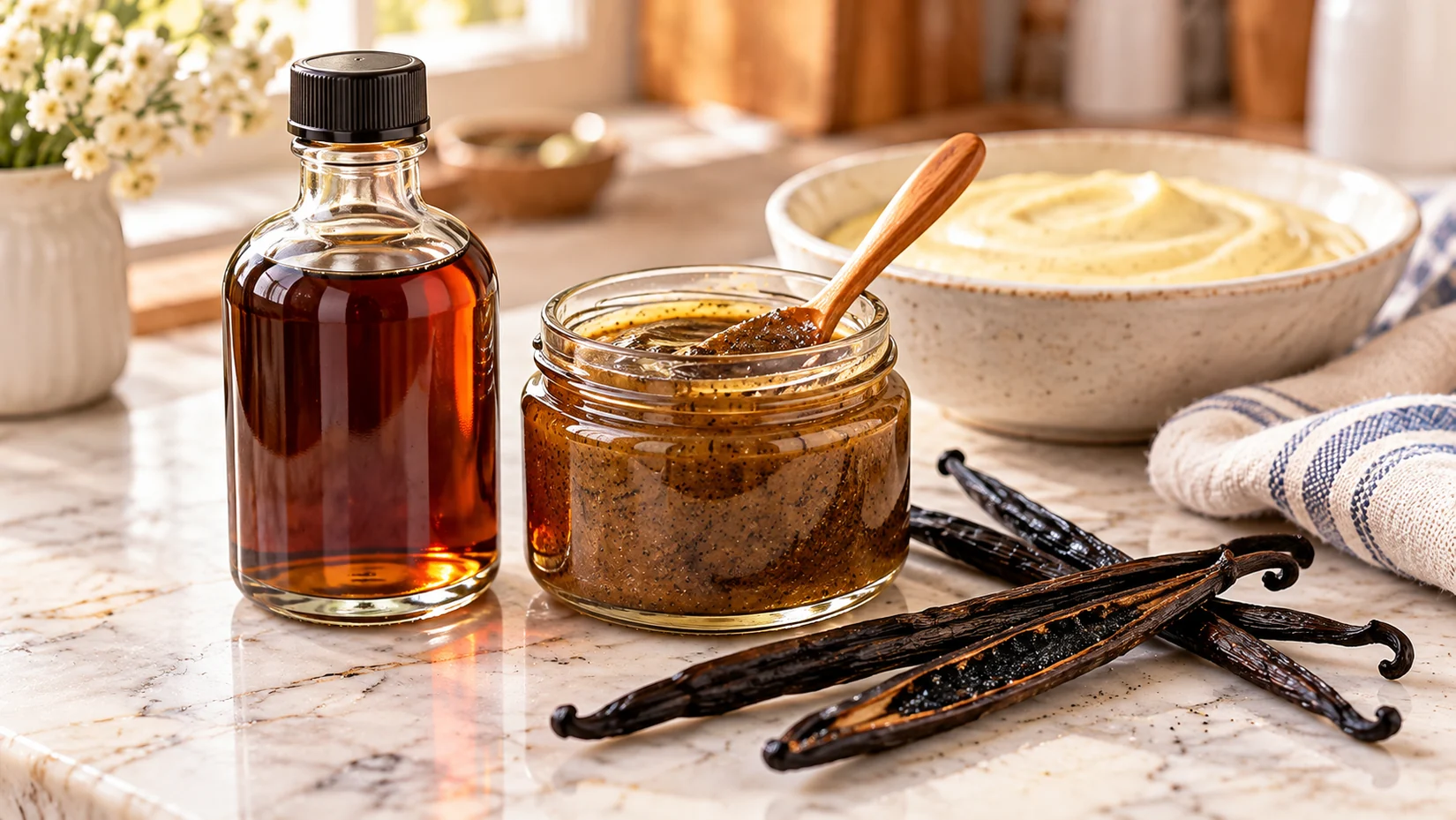
| Vanilla ingredient | What it is | Best for | What you'll notice |
|---|---|---|---|
| Pure vanilla extract | Vanilla flavour compounds extracted into a liquid, usually with alcohol and water | Cakes, cookies, brownies, muffins, everyday baking | Easy to measure; usually no visible flecks |
| Vanilla bean paste | A thick vanilla preparation, often containing extract, ground beans or seeds, plus a syrup or thickener | Frosting, pastry cream, ice cream, whipped cream | Pronounced vanilla aroma and decorative dark specks |
| Whole vanilla beans | Dried, cured vanilla pods containing aromatic seeds | Custards, crème brûlée, ice cream bases, special-occasion desserts | Scraped seeds and an aromatic pod you can infuse |
All three can deliver genuine vanilla flavour. Quality and concentration vary by brand, so a good extract can taste more appealing than a poorly made paste, and a fragrant bean is not automatically the best use of your budget in every recipe.
What is pure vanilla extract?
Pure vanilla extract is produced by extracting flavour from real vanilla beans into a liquid, commonly containing alcohol and water. That liquid disperses readily through cake batters, frostings and cookie dough. In the United States, the term vanilla extract has a legal standard of identity, but product names and rules vary elsewhere; always read the label if a specific ingredient matters to you.
Its great strength is consistency. When a recipe calls for a teaspoon or two of vanilla, measuring from a bottle is convenient, and the flavour mixes through the entire batch without leaving visible seeds. A good extract contributes rounded, sweet-smelling notes to everything from butter cookies to chocolate cake.
When vanilla extract is the best choice
Use pure vanilla extract when vanilla supports other flavours instead of being the main feature: chocolate chip cookies, banana bread, spiced cakes, chocolate brownies, and everyday cupcakes. It's also a sensible default when you're baking for a crowd or making several batches.
For a vanilla-forward treat, try it in sugar-cookie buttercream sandwich cookies. The cookie dough and filling both contain vanilla, so the flavour gets a chance to shine.
A note about alcohol: Standard pure extracts commonly contain alcohol. Baking can reduce some alcohol content, but it should not be assumed to disappear completely. If avoiding alcohol is important, choose a clearly labelled alcohol-free vanilla flavouring or suitable alternative rather than relying on oven time.
What is vanilla bean paste?
Vanilla bean paste is a spoonable, syrup-like vanilla product. Many brands combine vanilla extract with vanilla bean seeds or finely ground bean material, plus sugar or a thickener. The recipe varies: some pastes are runnier or sweeter than others, and some contain more visible specks.
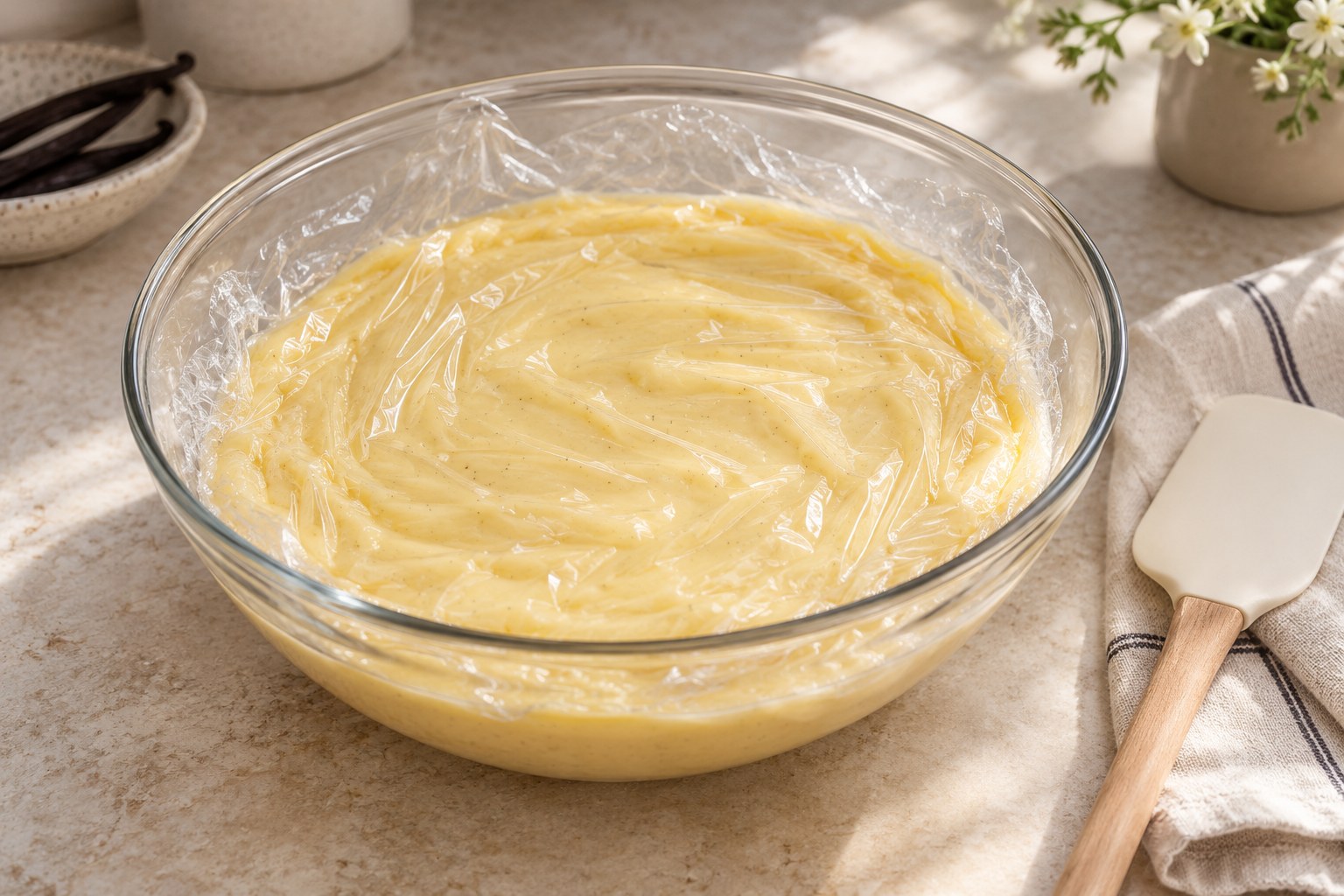
It is useful when you want the appearance of a scraped vanilla pod without the extra preparation. In pale buttercream, whipped cream, panna cotta, or pastry cream, the little black specks give a visual signal that vanilla is a central flavour.
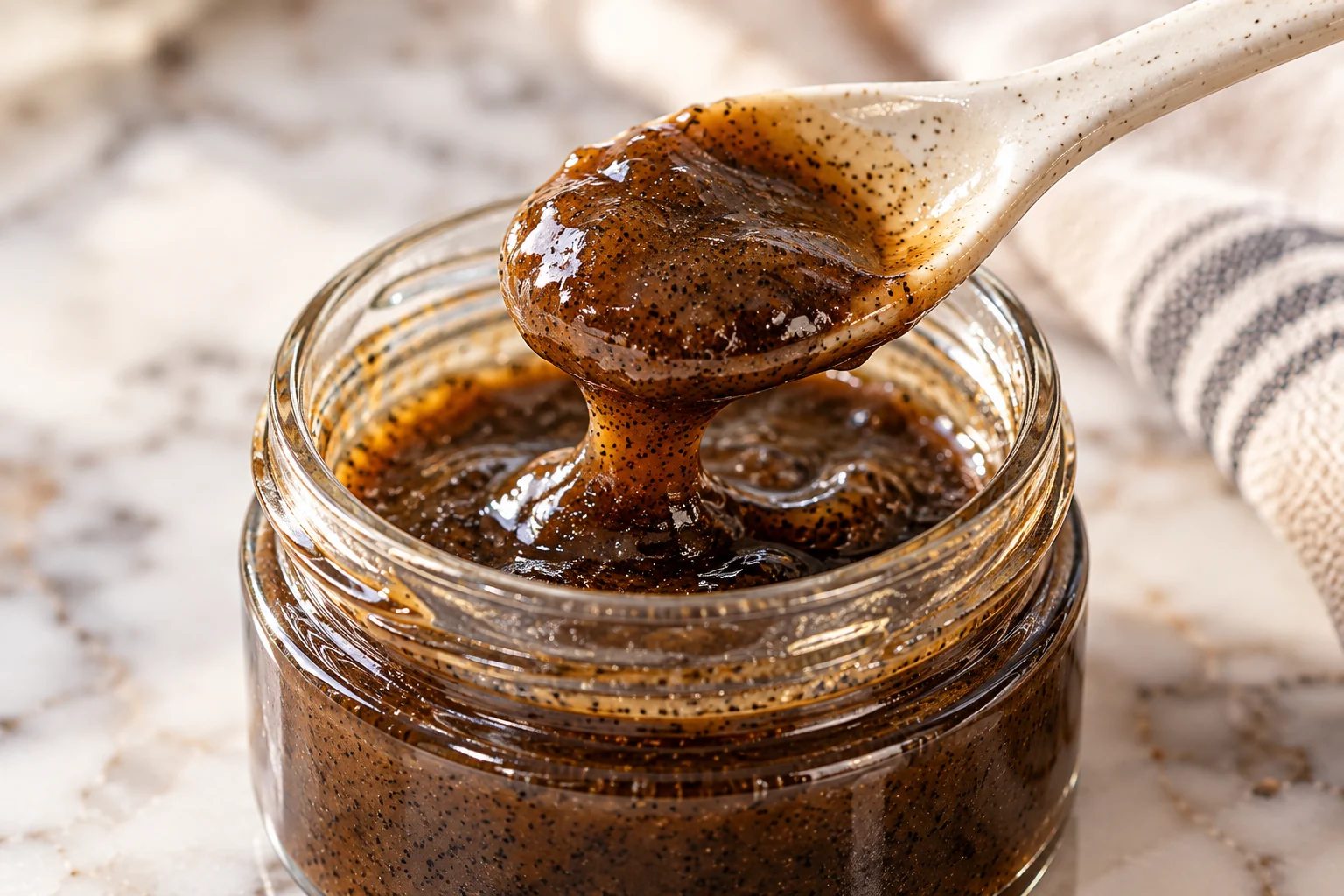
Where vanilla bean paste really earns its place
Choose paste for desserts where a gentle, creamy vanilla taste is front and centre. Think vanilla frosting, custard, pastry cream, ice cream, glaze, and the filling in a vanilla bean custard tart. You could also use it in plain sponge cake when you specifically want vanilla-bean flecks.
Does paste make everything taste stronger? Not necessarily. Some pastes are very aromatic, but strength depends on the brand and formulation. More visible flecks don't guarantee more concentrated flavour.
Will the sugar in vanilla paste change a cake? The small amount used in many recipes is unlikely to make a noticeable difference. For delicate low-sugar recipes or strict dietary needs, check the ingredient list and nutritional label.
What do whole vanilla beans add?
A vanilla bean is the cured pod of a vanilla orchid. Split it lengthwise and scrape along the inside with the blunt edge of a small knife to release its tiny sticky seeds. Those seeds give custards and creams their recognizable dark specks. The pod itself is aromatic too: it can be warmed in milk or cream to infuse flavour before being removed.
Using a whole pod feels special because you control both the seeds and the infusion. It is particularly rewarding in dairy-based desserts where vanilla has room to stand out, rather than competing with strong chocolate or spices.
How to use a vanilla bean without wasting it
- Lay the pod flat on a board. Carefully slit it lengthwise, stopping short of cutting the pod completely apart.
- Open the pod and scrape out the seeds using the back of a small knife.
- Stir the seeds into the mixture, or add them to a saucepan of milk or cream.
- For an infused custard, add the scraped pod as the dairy warms, then remove the pod before finishing the recipe.
- If you want to reuse the pod to scent sugar, first make sure it is clean and completely dry; keep the flavoured sugar in a clean, dry, sealed container.
The crème brûlée tart is one place to see this technique in context: its custard is infused with vanilla before baking.
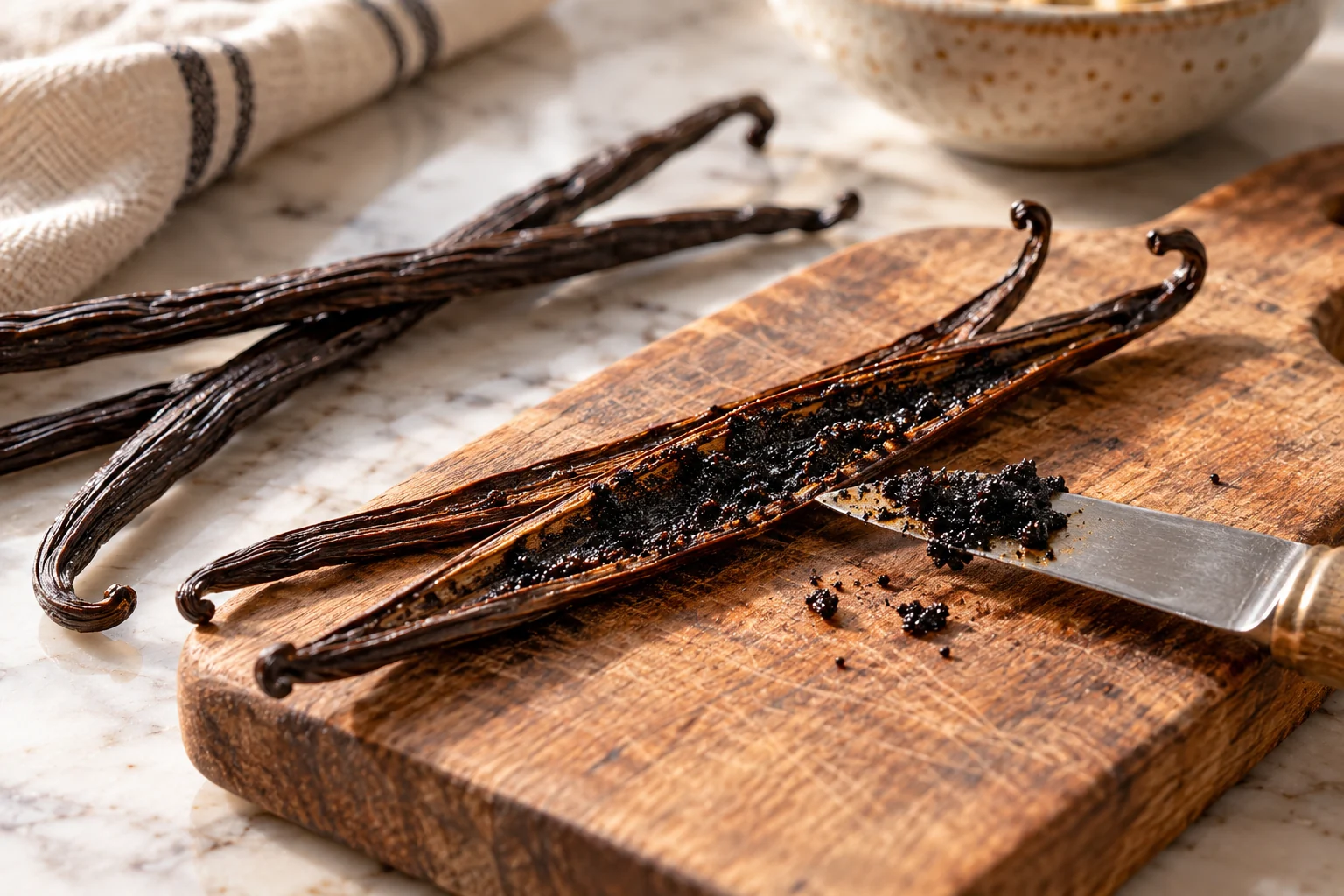
Are vanilla beans worth the extra cost?
They can be, especially when a special dessert depends on a clean, aromatic vanilla flavour. But for cookies, chocolate bakes and large everyday batches, a reliable extract is usually a more economical choice. Save your beans for the occasions when you'll appreciate their aroma and appearance most.
How to substitute vanilla extract, paste and whole beans
For many commercially made vanilla pastes, 1 teaspoon vanilla paste can replace 1 teaspoon vanilla extract. This is a common starting point, supported by manufacturer guidance, rather than a guarantee that every product has identical strength.
Whole beans are less straightforward: size, moisture, origin and potency vary. Some commercial charts equate one whole bean with about 1 tablespoon of extract or paste, but that reflects the strength of particular products. For delicate custards or another recipe with a prominent vanilla flavour, follow the recipe's guidance or the manufacturer's equivalency first and taste the mixture where food safety permits.
| If your recipe calls for… | Sensible starting substitution | Check before proceeding |
|---|---|---|
| 1 tsp vanilla extract | 1 tsp vanilla bean paste | Some pastes are sweeter or stronger |
| 1 tsp vanilla bean paste | 1 tsp pure vanilla extract | The dark bean flecks will be absent |
| 1 whole vanilla bean | Follow your paste or extract brand's bean equivalency; often around 1 tbsp | Bean size and product concentration vary |
| Paste in a light-coloured frosting | Extract at a similar volume | Flavour can be comparable, but no specks |
For a substitution in baked goods, add extract or paste wherever the recipe adds liquid vanilla. For whole beans, blend the seeds thoroughly into the wet ingredients so they don't clump. In a custard, the recipe may call for the seeds and the scraped pod to be infused in warm dairy. Do not replace that infusion step with an arbitrary amount without considering the recipe.
Which vanilla tastes best in different desserts?
Cookies and brownies: extract is usually plenty
In dark chocolate brownies or heavily spiced cookies, subtle differences can get lost among bigger flavours. A good pure extract is a practical option, and your cookies won't be missing something essential just because you didn't scrape a fresh pod.
Vanilla cupcakes and buttercream: paste or beans can be lovely
A delicate vanilla sponge and pale frosting offer a blank canvas for visible vanilla flecks. For example, vegan vanilla bean cupcakes use vanilla extract and seeds in the cake and frosting. Paste may be a convenient alternative if your specific recipe permits it.
Custard, pastry cream and crème brûlée: beans shine
Warm milk or cream makes it easy to infuse a split pod. Vanilla bean paste is also convenient here, particularly when you want the flecks but don't want to split and scrape a pod. Extract still works in many recipes—follow the recipe's timing and quantities.

Whipped cream and frosting: bean paste looks beautiful
Vanilla paste can give pale toppings a quietly elegant finish. A small spoonful is usually enough to see the flecks. For a smooth white frosting without specks, choose extract instead.
Chocolate cake and banana bread: save the expensive beans
Chocolate, banana and cinnamon have strong personalities. Vanilla rounds them out, but the visual value of the seeds is often less noticeable. An extract works well in these recipes.
Why vanilla can taste different even at the same amount
Vanilla doesn't have one single, uniform flavour. Beans from different growing regions and processing methods can have varied floral, creamy, fruity or woody notes. The extract maker's formulation also matters, as do the age and storage conditions of the product.
In a cold dessert, aromatic differences may be especially noticeable because you're tasting the vanilla without the distraction of browning and intense heat. In an oven-baked cookie, other ingredients may dominate. Neither format automatically produces a "better" result: you can use the one that suits your recipe and palate.
How to buy and store vanilla products
Extract: Choose a trusted product with a clear ingredient label and keep the bottle tightly capped in a cool, dark cupboard. Excess heat and light are unhelpful for its aroma.
Paste: Check whether it contains real bean seeds, how thick it is and whether it has added sugar. Close the jar promptly and use the storage directions on its label. A paste isn't necessarily shelf-stable in exactly the same way as another manufacturer's product.
Whole beans: Look for fragrant, reasonably pliable pods rather than brittle ones. Store them sealed, away from heat and direct sun, and monitor for signs of spoilage. Do not put whole beans in the refrigerator by default; many producers recommend cool room-temperature storage in an airtight container.
Avoid buying a large quantity of beans unless you'll use them while they're still aromatic. A modest jar of good extract is often a smarter starting point for a home baker.
Common vanilla mistakes to avoid
Thinking the black flecks prove quality. The seeds are lovely, but flavour depends on the entire product and its concentration. A paste with many specks can still be milder than a good extract.
Using a random one-to-one amount for a whole pod. Pods vary more than bottled products. When the recipe is delicate, use the specified amount rather than a universal conversion chart.
Expecting vanilla to fix a poorly balanced recipe. It adds aroma and warmth, but cannot correct too much baking soda, overbaking, or an overly sweet frosting.
Letting beans dry out. Poor storage reduces their pliability and aroma. Buy quantities you can use, and seal them carefully.
Assuming alcohol vanishes completely in baked goods. If that matters to your audience, choose an ingredient expressly made without alcohol.
Frequently asked questions
Is vanilla bean paste better than vanilla extract?
Not universally. Paste is especially useful for visible specks and vanilla-forward creams; extract is versatile, practical and excellent in most everyday baked goods. Compare ingredient labels and brand strength rather than assuming the thicker product is stronger.
Can I replace vanilla extract with vanilla bean paste in cake?
Often yes, using the same measured amount as a starting point. Check the paste manufacturer's directions and consider whether visible vanilla flecks fit your cake's appearance.
Is one vanilla bean equal to one teaspoon of extract?
Not as a universal rule. Bean size and strength vary. Some manufacturer's charts use one whole bean to roughly one tablespoon of extract or paste, but individual recipes may call for different amounts.
Can I use the scraped vanilla pod after removing its seeds?
Yes. The pod still holds aroma and can be infused in milk or cream, then removed. A clean, fully dried pod can also perfume sugar. Do not store a wet dairy-soaked pod in sugar.
Do I need vanilla bean paste for homemade custard?
No. Whole beans, paste and suitable extracts can all contribute vanilla flavour. Choose the ingredient and quantity that your recipe supports; bean paste is simply convenient when you want a speckled finish.
Match vanilla to the dessert, not just the price
Pure vanilla extract is easy to measure and especially practical where several flavours share attention. The Sugar Cookie with Buttercream Sandwich Cookies use vanilla extract in both cookie and filling. The flavour is important, but the cookie also tastes of butter and sugar, so whole vanilla beans are not essential to its identity.
By contrast, Vanilla Bean Custard Tart specifies two pods or two tablespoons vanilla paste in a milk-and-cream custard. When vanilla is the principal aromatic ingredient, the pod's infusion can be more prominent. The correct strength still depends on product concentration, so do not claim every tablespoon of paste equals every bean.
The Crème Brûlée Tart uses one pod or two teaspoons paste, demonstrating that conversion depends on the individual recipe. Meanwhile, Vegan Vanilla Bean Cupcakes combine extract with seeds from a bean, and their frosting may include additional seeds. There is no universal substitution ratio that can override all these individual ingredient lists.
How to use and store whole vanilla pods
Split a flexible bean lengthwise with a small knife and scrape out the tiny seeds. Infuse the seeds and, where the recipe directs, the split pod into milk or cream. This is particularly convenient for custards: the liquid can extract additional flavour before the pod is removed. Do not leave hard pod fibres inside a delicate finished tart unless the recipe explicitly calls for them.
Unused pods should be sealed against drying and stored according to the supplier's instructions. Avoid humid storage that encourages mould, and never assume a pod remains good indefinitely because it is expensive. A used pod can sometimes be dried and used to scent sugar, but one soaked in dairy should not be placed wet into a jar of sugar.
How to evaluate vanilla bean paste labels
Bean paste is a manufactured preparation, not simply the inside of a vanilla pod. Products can contain extract, ground beans, sugar syrup and stabilizers. Read the ingredient label if you need to avoid a particular sweetener, and check the manufacturer's substitution advice. The attractive dark specks are a visual cue, but they do not guarantee an intensely flavoured or higher-quality paste.
In a pale buttercream or custard, specks can make the vanilla identity obvious. In chocolate cake, the same flecks disappear visually, so using an expensive paste may have little aesthetic value. Choose the format that suits your budget and the role vanilla plays in the recipe.
Five common substitution situations
A butter-rich cookie: Extract is convenient and usually sufficient when vanilla complements butter and sugar. A pale frosting: Paste or scraped beans can add visible flecks if their flavour and formulation suit the recipe. A custard: A whole pod is useful when infused into warm dairy, but follow the custard's actual measurements. A strongly flavoured chocolate cake: Extract can round the flavour without the added cost of pods. A vegan cupcake: Check both the vanilla product and the plant-based frosting ingredients, particularly if there are alcohol or dietary concerns.
What vanilla cannot fix in a baking formula
More vanilla cannot repair an underbaked cake, a split custard or a dry cookie. Adding large quantities of liquid extract may also change flavour and liquid balance; some extracts contribute noticeable alcohol aroma before baking. Follow the recipe, taste at an appropriate safe stage, and use the product as an aromatic ingredient rather than a substitute for good technique.
More vanilla questions
Why are two pastes different?
Ingredients, concentration and added sweetener differ by producer. Use the label and the exact recipe rather than expecting all paste to have identical strength.
Does a vanilla speck mean the dessert tastes stronger?
No. Specks demonstrate the presence of visible bean material, but concentration and perceived flavour depend on the preparation and other ingredients.
Can I replace a pod with extract in custard?
Often yes when a recipe provides an alternative, but substitution quantities depend on the specific formula. An infusion using a whole pod and a simple teaspoon of extract may not yield an identical result.
Vanilla in custards, cakes and frosting: a practical comparison
For custard, a whole split vanilla pod can be infused into warm milk or cream and removed before the mixture is cooked or set. That is useful when vanilla is the central flavour. The Vanilla Bean Custard Tart recipe uses two pods or two tablespoons of paste; Crème Brûlée Tart uses one pod or two teaspoons of paste. Those differences show why it is misleading to declare that one teaspoon of every brand of paste is universally equivalent to one whole pod.
For cookies, vanilla extract is often convenient because its liquid form disperses through the dough without much extra effort. In Sugar Cookie with Buttercream Sandwich Cookies, vanilla works beside butter, flour and sugar rather than needing to be the dominant aromatic note. Extra visible specks might look beautiful, but they are not essential for a good finished cookie.
For cupcakes and buttercream, vanilla bean paste is attractive when the icing is pale and the specks remain visible. The Vegan Vanilla Bean Cupcakes recipe uses extract together with seeds from a pod, while the frosting can use additional seeds. This is an intentional combination, not evidence that extract is inferior. For a chocolate dessert with a much stronger main flavour, using pure extract can be a sensible way to control costs.
How to make one vanilla purchase work across several recipes
If you bake frequently, a suitable bottle of pure vanilla extract is a versatile starting point. It can be measured in small spoonfuls for cookies, muffins, cake batters and frosting. Vanilla bean paste adds convenience if you routinely make pale custards or buttercream and enjoy the visual detail. Whole pods can be reserved for occasional recipes that specifically call for an infusion.
Before buying expensive pods, check the full ingredient lists of your upcoming bakes. Two pods in a custard tart represent a different commitment from a teaspoon of extract in a batch of cookies. Plan the quantities rather than assuming a single pod will flavour several large desserts at the same intensity. Keep products in clean, appropriately sealed containers and follow manufacturer storage instructions for extract, paste and beans.
When a recipe offers two forms as alternatives, that is the most useful place to obtain a substitution. If no alternative is provided, consider the manufacturer's concentration advice and test the adjusted recipe. A syrup-rich paste may add small amounts of sweetener and moisture, and a pod infusion involves a different extraction method from simply stirring in liquid extract.
How vanilla can behave differently under heat
Vanilla aroma compounds are noticeable in baked goods as well as cold desserts, but perceived intensity can vary with heating, fat, sugar and competing flavours. A strongly spiced cake may hide delicate vanilla nuances, while an otherwise simple custard highlights them. Choosing expensive whole beans for a chocolate-and-coffee batter is a preference, not a guaranteed improvement over a good extract.
In dairy-based custards, the recipe may instruct you to heat milk and cream with a split vanilla pod before combining the liquid with eggs. Do not boil the custard aggressively just to increase vanilla flavour; overheated eggs can curdle. Remove pods when directed, and follow the actual custard recipe's heating and cooling instructions. With extract, some recipes add it at a later stage to preserve aroma, while others mix it into the batter before baking.
Vanilla-label mistakes to avoid
Pure extract, imitation vanilla flavouring, vanilla bean paste and whole pods are not identical retail products. A paste can include sugar syrup or stabilizers, and concentration varies across brands. Read the ingredient panel, particularly when avoiding specific sugars or alcohol. The word 'bean' on a package is not by itself a guarantee of a particular strength or quality.
Do not assume dark specks equal stronger flavour. Ground bean material may create an attractive visual appearance, but extraction methods, freshness and concentration affect the aromatic effect. Similarly, an extract without visible flecks can be a suitable ingredient for an excellent custard or frosting. Let the final recipe, not the prestige of the package, decide.
More frequently asked vanilla questions
Do all vanilla pastes use the same substitution ratio?
No. Brands can have different concentrations and added ingredients. Follow the recipe's stated equivalent or the manufacturer's guidance, then evaluate the dessert if making a substitution.
Can I use extract in a very pale buttercream?
Yes, provided it suits the recipe. It may not leave visible specks like paste or whole beans, but a clean vanilla flavour can still be the goal.
Will vanilla pods make a chocolate cake taste better?
They may add nuance, but cocoa and other flavours can dominate. A suitable extract is often an economical and effective choice, especially when vanilla plays a supporting role.
Can I reuse a spent pod?
Some cleaned and completely dried pods can be used to perfume sugar, but follow appropriate food handling. Do not place a damp dairy-soaked pod into a storage jar where moisture can cause problems.
Is vanilla paste the same as vanilla syrup?
No. Some pastes contain syrup, but products labelled vanilla syrup may be designed for drinks and have different concentrations. Read the actual ingredient list and usage instructions before substituting.
A practical vanilla shopping checklist
Before choosing extract, paste or whole beans, review the recipes you will bake. Is vanilla the main flavour or a background note? Will dark flecks improve the presentation? Does the source recipe specify a particular product or give tested alternatives? Read ingredient lists and manufacturers' concentration advice rather than assuming that all brands are identical.
Pure extract is practical for everyday cookies, muffins and cakes. Bean paste can be useful for pale frostings and custards where visual specks are attractive. Whole pods are well suited to recipes that deliberately infuse dairy or plant milk. Each form can produce delicious results, but the most expensive one is not automatically the best choice for every bake.
Store extract, paste and beans according to their packaging. Keep pods sealed and protected from excess humidity, use clean utensils with paste, and avoid exposing products to extreme heat. When substituting one form for another, measure carefully and test the recipe without changing several other ingredients at the same time. A consistent result matters more than the prestige of the label.
A little care in measuring, choosing and storing vanilla will usually make a greater difference than buying every available format.
The bottom line
If you buy only one kind of vanilla, pure vanilla extract is a dependable choice for cakes, cookies and everyday baking. Add vanilla bean paste when you want convenient spoonfuls and elegant specks in frostings and custards. Reach for whole vanilla beans when you want to infuse a special dessert and enjoy the flavour and ritual of a fresh pod.
The most delicious choice isn't always the most expensive. It's the one that makes sense for the recipe you're baking.
IN PICTURES
From the baking notebook
FROM THE RECIPE BOX