
On this page
Tangzhong and yudane appear in recipes for wonderfully soft, springy bread. Both treat part of the flour with heat so starches absorb water and behave differently in the final dough. But the processes aren't identical. Tangzhong is usually cooked as a smooth flour-and-liquid paste; yudane is generally made by pouring boiling water over flour and allowing the mixture to rest. Understanding the distinction helps you follow the recipe correctly and choose a technique without guessing at the amounts.
What the methods have in common
Both use heat and water to gelatinize some wheat starch before the final dough is mixed. The treated flour can help manage hydration and contribute to soft crumb characteristics. Neither technique adds leavening by itself: yeast or another leavening system must still ferment or raise the bread.
What is tangzhong?
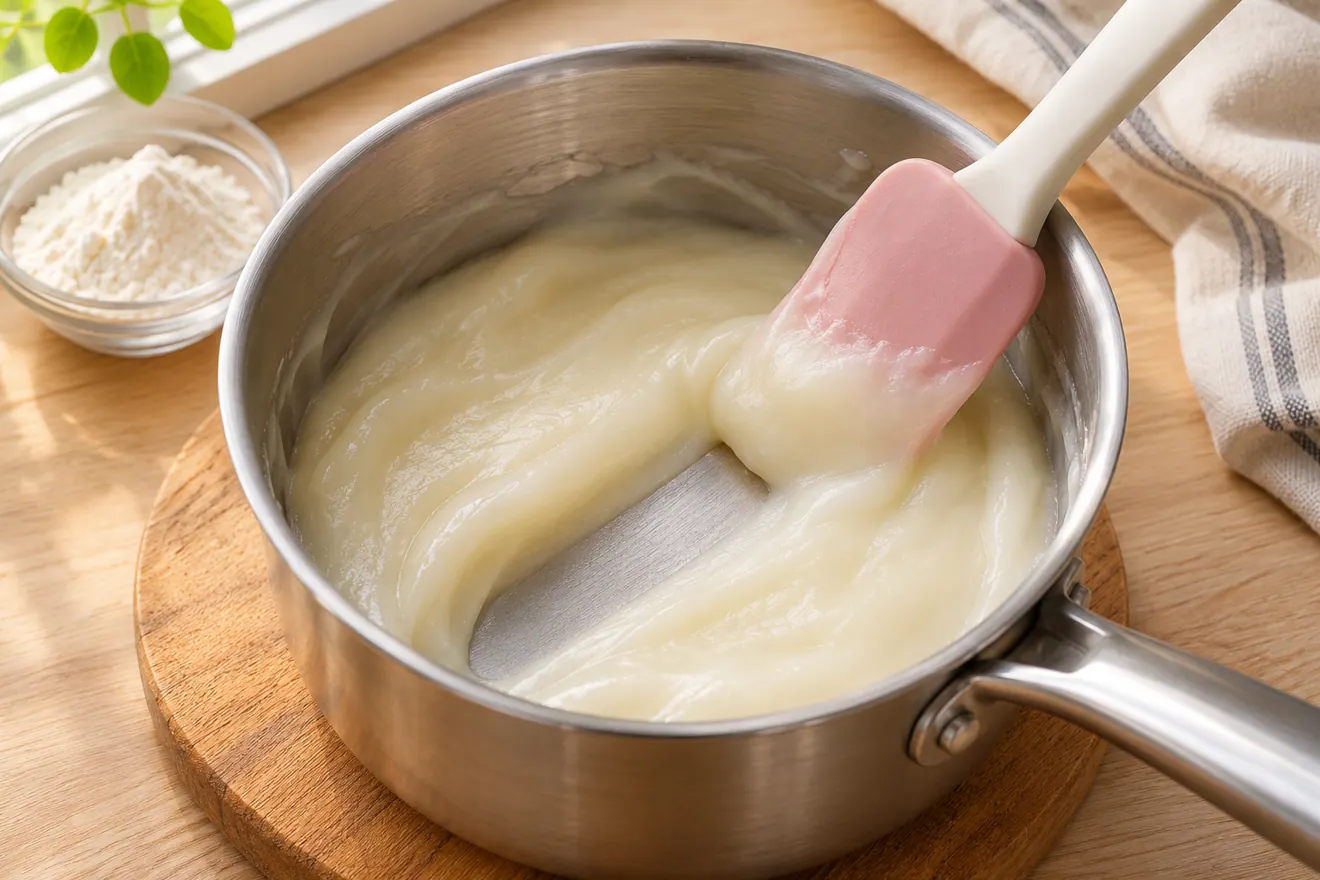
Tangzhong usually involves whisking flour and liquid together in a saucepan, then gently heating and stirring until a smooth, thick paste forms. After cooling to an appropriate temperature, the paste is mixed with the remaining dough ingredients. The paste's flour and liquid must be included in the total bread formula.
What is yudane?
Yudane typically means combining a measured portion of flour with boiling water, stirring to form a scalded mass and allowing it to rest before use. Unlike tangzhong, it is often not cooked over a burner as a loose paste. Many yudane recipes use a thicker dough-like mass, although formulas vary.
The main preparation difference
Tangzhong is heated while being stirred in a pan; yudane typically receives boiling water poured over the flour. Both require accurate weighing and safe handling of hot mixtures. The texture and cooling procedure follow from the method: tangzhong can be smooth and spreadable, while yudane may begin thick and relatively stiff.
Are the flour-to-water ratios the same?
Not automatically. A commonly cited tangzhong approach uses several parts liquid to one part flour, while some yudane formulas use roughly equal weights boiling water and flour. However, tested recipes use different ratios and proportions. A universal swap would change total hydration and the amount of scalded flour.
Why yudane is often rested
After scalding, many yudane methods hold the mixture for a specified time, sometimes overnight in the refrigerator. This allows the scald to hydrate and cool before incorporation. The duration is recipe-specific. Don't leave a warm moist mixture unrefrigerated overnight unless a validated method explicitly supports it.
Why tangzhong is often used sooner
Some tangzhong recipes use the cooled paste the same day. Others allow advance preparation with suitable storage. Because it is already cooked into a smooth mixture, it may blend readily with the other ingredients once it has cooled sufficiently.
What do both do to bread texture?
When correctly formulated, both can contribute to a tender, moist crumb and desirable keeping quality. The final texture also depends strongly on flour protein, total hydration, fat, sugar, milk, kneading and proofing. It is too simplistic to declare one method universally softer or better than the other.
Does one produce more moisture?
A recipe may contain a larger total water amount because the heated flour preparation can retain water differently. But comparing two unrelated recipes doesn't isolate the technique. To judge differences fairly, use a controlled test formula designed around both methods.
Are they only for Japanese milk bread?
No. Both methods are associated with soft bread traditions and can be adapted in well-tested sandwich loaves, rolls and other enriched breads. A crusty lean loaf isn't automatically improved by adding either technique; it may change the intended crumb and crust.
Which is easier for beginners?
Tangzhong offers a clear visual cue—a paste thickening in a pan—and is straightforward in tested milk bread recipes. Yudane avoids stovetop cooking but requires safe boiling-water handling and may involve a longer rest. Choose the method included in the recipe you want to make rather than switching based on convenience alone.
How to make tangzhong smoothly
Measure the flour and liquid, whisk to combine and heat gently while stirring. Stop when the mixture reaches the specified thickening stage. Transfer safely and cool according to the recipe. High heat can create lumps or burn the paste.
The tangzhong in Soft Milk Bread uses 20 g of bread flour and 100 mL of milk. Look for the paste to hold a line when you drag the spatula through it.
How to make yudane safely
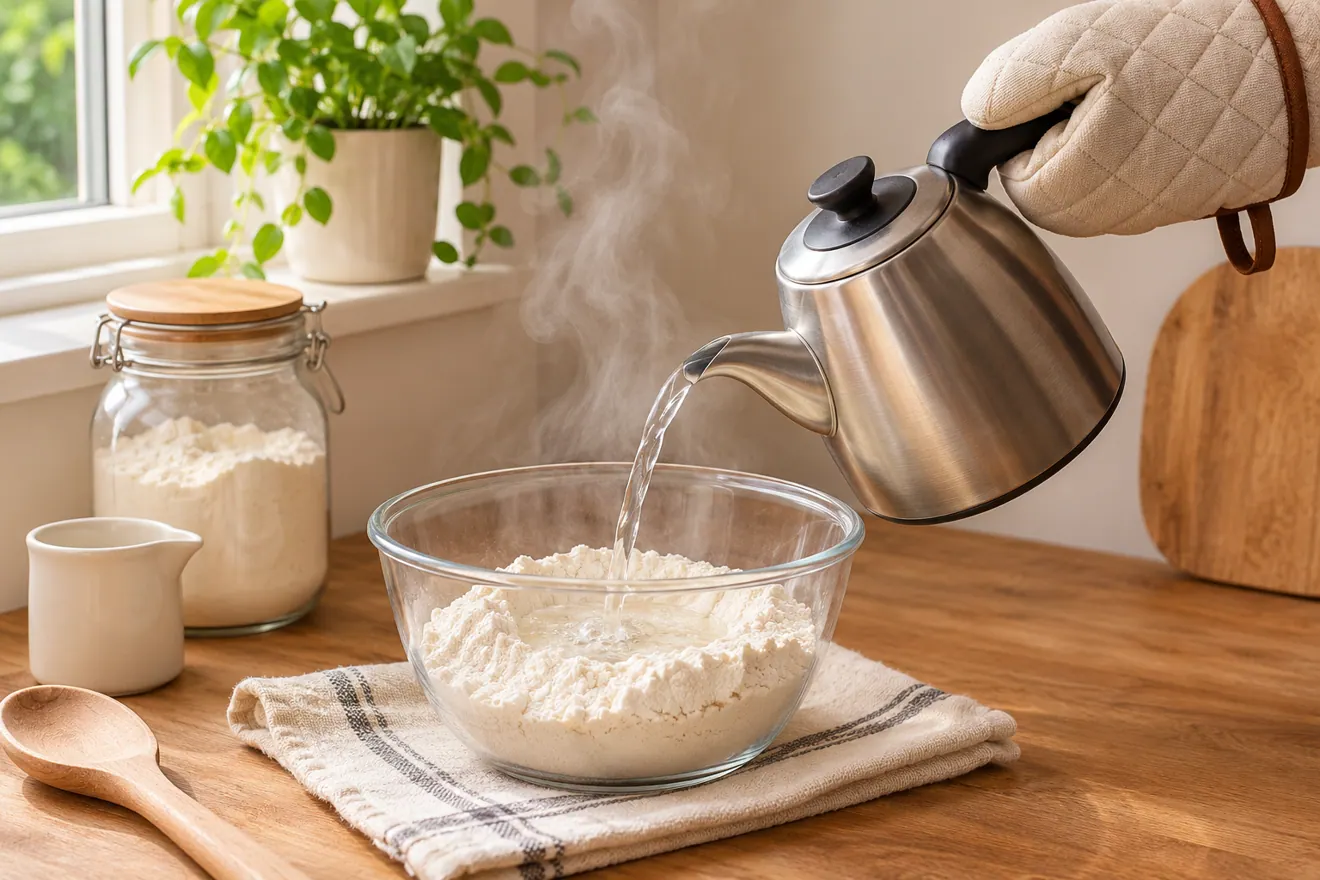
Place measured flour in a suitable heatproof container and add the recipe's specified boiling water, then mix carefully using a heat-safe utensil. The mass may be thick and steaming. Cool and rest according to the formula, protecting it from contamination and handling hot containers safely.
Set the heatproof bowl on a stable surface and hold the kettle away from your face while pouring. If the method calls for an overnight rest, cover and refrigerate the prepared paste as directed.
Wait until the bread is fully baked before tasting.
Why you shouldn't substitute one directly for the other
The water quantity, scalded flour percentage and preparation temperature influence the dough. A recipe that expects a thick yudane ball may become too wet with a loose tangzhong paste, while replacing tangzhong with a dryer scald changes hydration. Use a tested conversion when making the swap.
Flour percentage also matters
If only a small portion of a loaf's flour is pretreated, it may influence softness without dominating the dough. Treating a much larger fraction changes gluten development and structure. Both methods work as parts of complete formulas, so don't increase scalded flour simply because the loaf looks fluffy online.
How to knead the final dough
Kneading requirements depend on the full bread recipe, including whether butter or eggs are added later. The heated paste doesn't replace gluten development. Some soft bread doughs are tacky initially and become smoother after prescribed mixing, so avoid adding large amounts of extra flour too early.
Proofing still matters
Neither tangzhong nor yudane rescues weak yeast or poor fermentation. Dough that's under-proofed may bake dense; over-proofed dough may collapse. Follow the recipe's rise and proofing cues, which may differ from ordinary lean bread because enriched dough ferments differently.
Why bread may stay soft after cooling
Properly balanced scalded starch and enriched ingredients can affect water distribution and how the crumb firms over time. Wrapping after complete cooling also helps preserve quality. Softness isn't proof that a loaf is fully baked; check the actual recipe's doneness instructions.
Use Japanese Milk Bread Rolls as another tangzhong example. Compare the crumb only after the bread has cooled, when the texture is easier to assess.

Common mistakes
Using an untested flour-water ratio, mixing hot scald with yeast, guessing the resting time, omitting water from the total hydration calculation and cutting the finished loaf while very hot can all cause trouble. Choose one method and follow its complete recipe before experimenting.
Frequently asked questions
Is tangzhong the same as a roux? It's a cooked flour-and-liquid preparation but not a traditional fat-based roux. Does yudane use boiling water? Typically yes. Are they interchangeable? Not directly. Do they make bread gluten-free? No; ordinary versions use wheat flour. Can both be used in one loaf? Only in a tested formula.
Choose the formula, not a winner
Tangzhong and yudane share a purpose but take different routes. Both can support beautifully soft bread. The best choice is the one the recipe was developed for, with its measured hydration, cooling instructions and fermentation schedule preserved.
Related recipe: Soft Milk Bread.
Some images are AI-generated illustrations of the dishes and techniques described.
IN PICTURES
From the baking notebook
FROM THE RECIPE BOX


