On this page
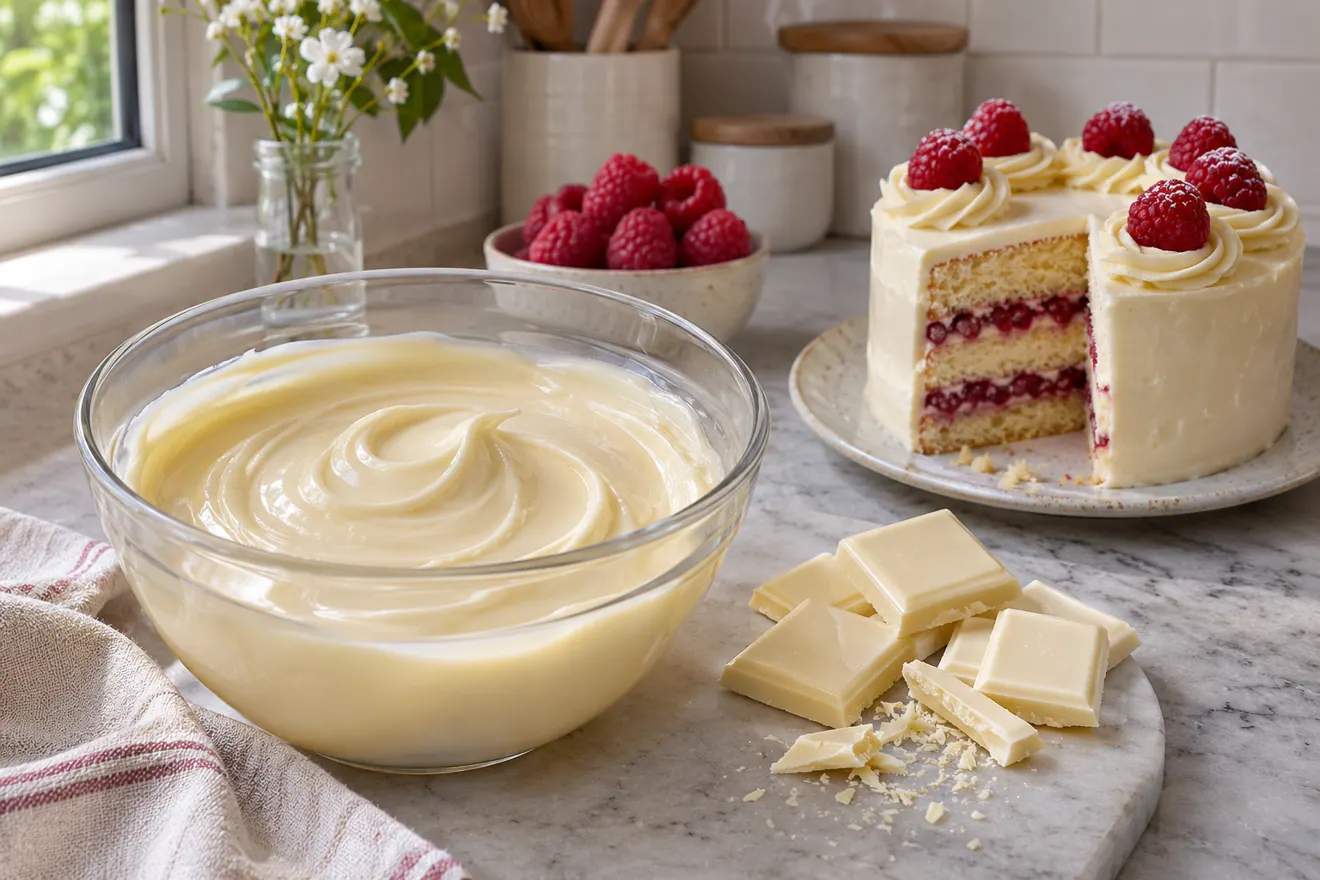
White chocolate ganache is one of those deceptively simple preparations that can transform a cake. Smooth, pale and delicately sweet, it works as a filling for vanilla sponge, a glossy glaze over cupcakes or a base for fruit-forward frostings. Yet it doesn't behave exactly like dark chocolate ganache, and using the wrong amount of cream can leave you with a sauce when you wanted a thick filling.
The secret is understanding the white chocolate you are using. Its cocoa butter, sugar and milk solids respond differently from the cocoa solids in dark chocolate. Once you account for that, the basic process is straightforward: weigh, warm, emulsify, cool and use at the right consistency.
What Is White Chocolate Ganache?
Ganache is a smooth emulsion traditionally made by combining chocolate with cream. White chocolate ganache uses real white chocolate, whose fat comes from cocoa butter, along with dairy components and sugar. Unlike dark chocolate, it contains no cocoa solids that give a deep brown colour and pronounced cocoa flavour.
A white ganache tends to taste sweeter and milder. It provides a neutral backdrop for vanilla, citrus, berries or other compatible flavourings, but it can also be too sweet if the chocolate and cake are both heavily sugared.
Real White Chocolate vs White Baking Chips
Choose the product specified by the recipe. Real white chocolate contains cocoa butter; some white baking chips and coatings use other vegetable fats and may melt, set or emulsify differently. Their appearance is similar, but their formulas are not necessarily interchangeable.
Check the ingredient list before measuring. If a ganache recipe names a particular couverture or white chocolate, that detail helps predict the finished texture.
Why White Chocolate Needs a Different Cream Ratio
Equal weights of white chocolate and cream can make a loose ganache. Use the measured example below as a starting point for a thicker filling, then test how firmly your chocolate sets.
The amount of liquid required depends on chocolate composition and the ganache's intended use. White chocolate generally needs less cream than many dark-chocolate formulas to reach a comparable thickness because its sugar, dairy solids and cocoa-butter balance are different.
Professional formulas can differ markedly by chocolate and application. Treat any ratio as a starting recipe, not a universal law.
A Small-Batch White Chocolate Ganache Example
For a relatively thick ganache intended to cool and become spreadable, a simple illustrative formulation is:
- 180 g good-quality real white chocolate, finely chopped
- 60 g heavy whipping cream, ideally about 35% fat
This 3:1 chocolate-to-cream example reflects a common thick-ganache starting ratio, but the exact chocolate brand affects the result. Test a small batch before using it for a large cake; it may set more or less firmly than you expect. For a runny glaze, a whipped frosting or a specific drip finish, use a recipe developed for that purpose rather than altering this formula blindly.
Equipment for Smooth Ganache
A digital scale is especially useful because white chocolate is sensitive to small shifts in liquid proportion. Use a heatproof bowl, small saucepan or microwave-safe cup, silicone spatula and a clean container for cooling. An immersion blender can help produce a fine emulsion when used carefully.
A thermometer isn't always essential, but it can help prevent overheating if your chocolate is melting unevenly.
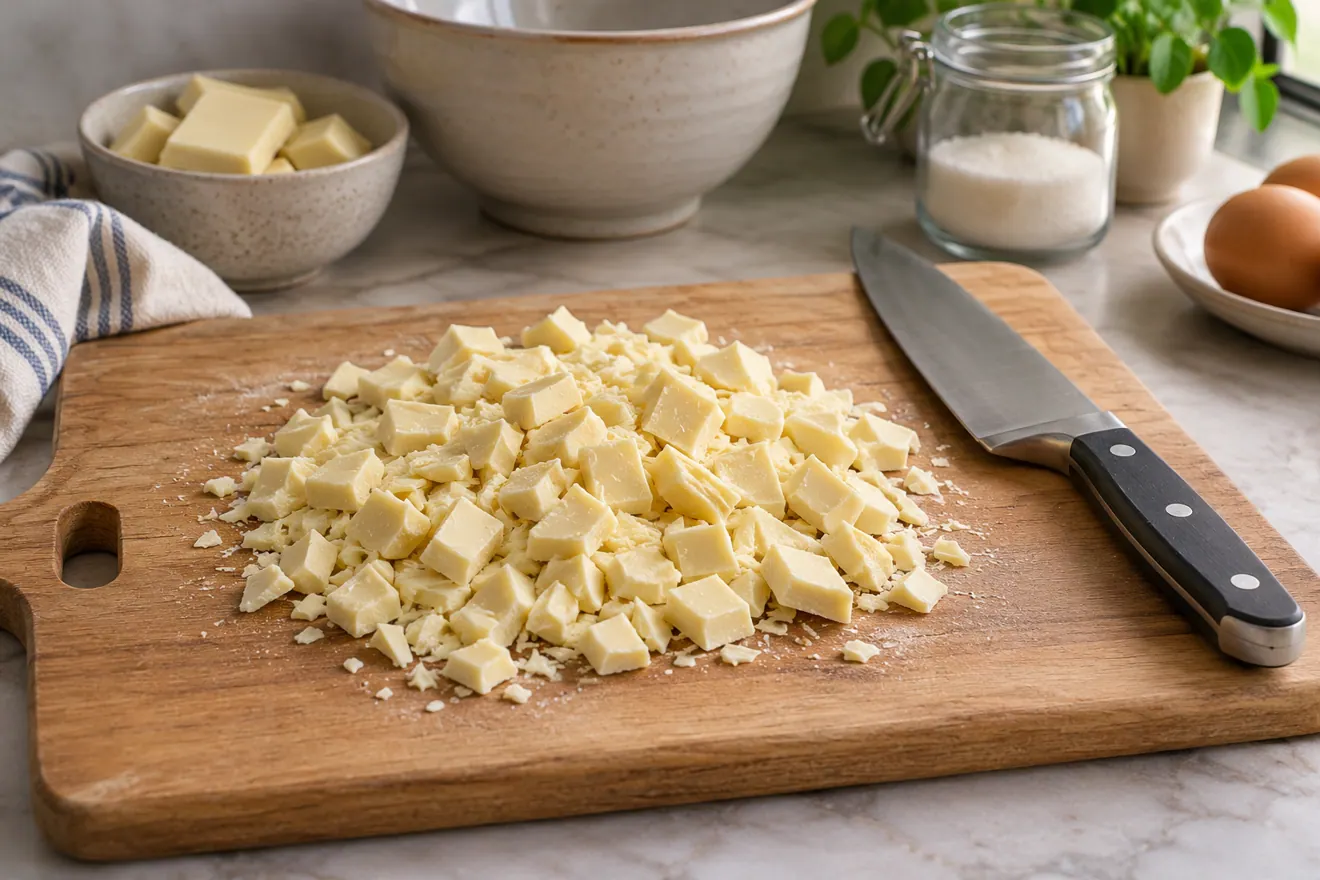
Step 1: Chop the White Chocolate Finely
Cut the chocolate into small, similar-sized pieces and put them in a dry heatproof bowl. Large blocks take longer to melt and can tempt you to overheat the mixture. If using small couverture callets, you may not need to chop them further.
Keep water droplets out of the bowl. A small accidental splash can cause partially melted chocolate to thicken abruptly before enough cream has been incorporated.
Step 2: Heat the Cream Gently
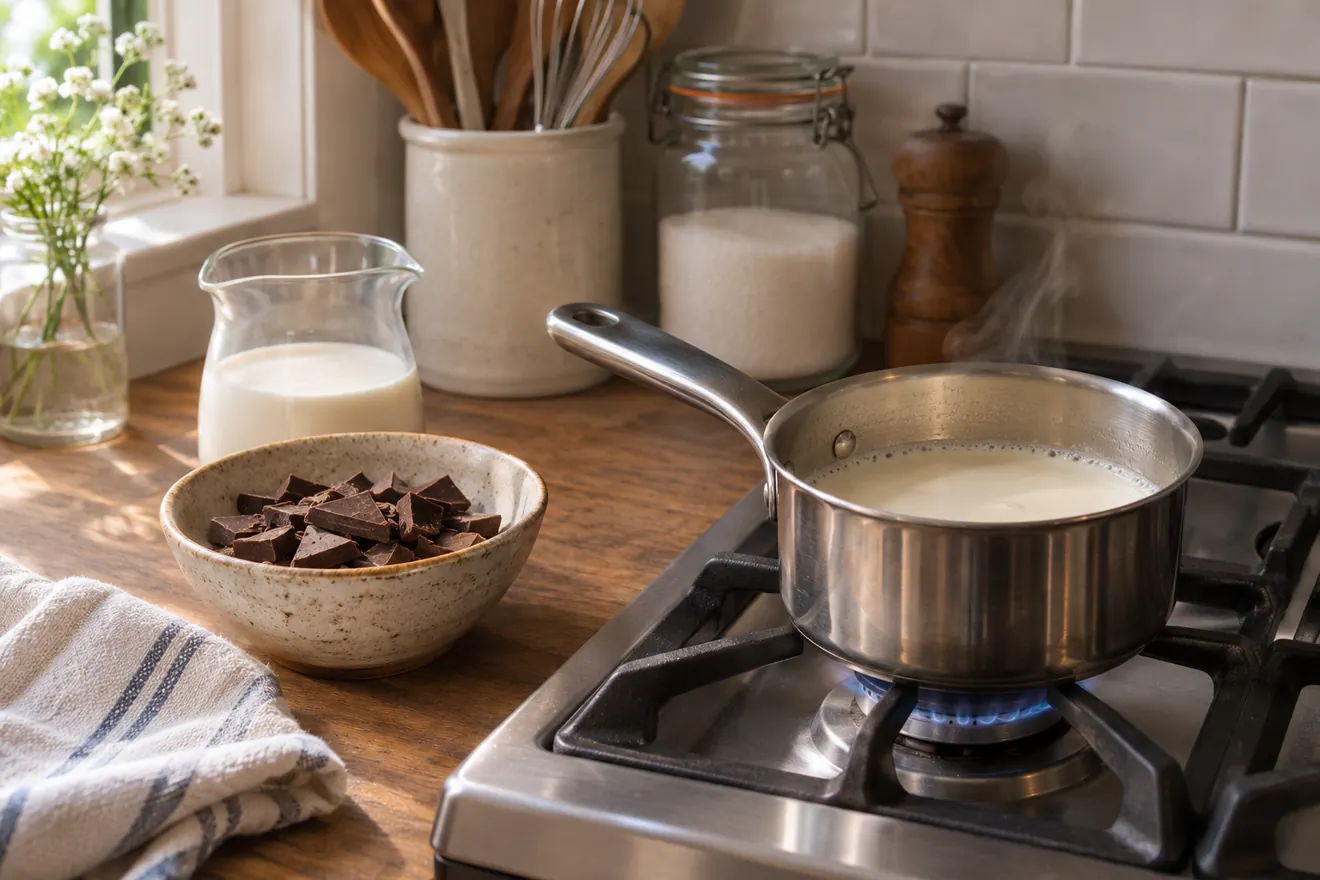
Warm the measured heavy cream until steaming, following your chosen recipe. Avoid a prolonged rolling boil, which can evaporate liquid and upset the intended ratio. Remove the saucepan from direct heat before combining if the method instructs it.
Because this is a small amount of cream, watch it closely. A shallow pan can bring it to a boil very quickly.
Step 3: Combine the Cream and Chocolate
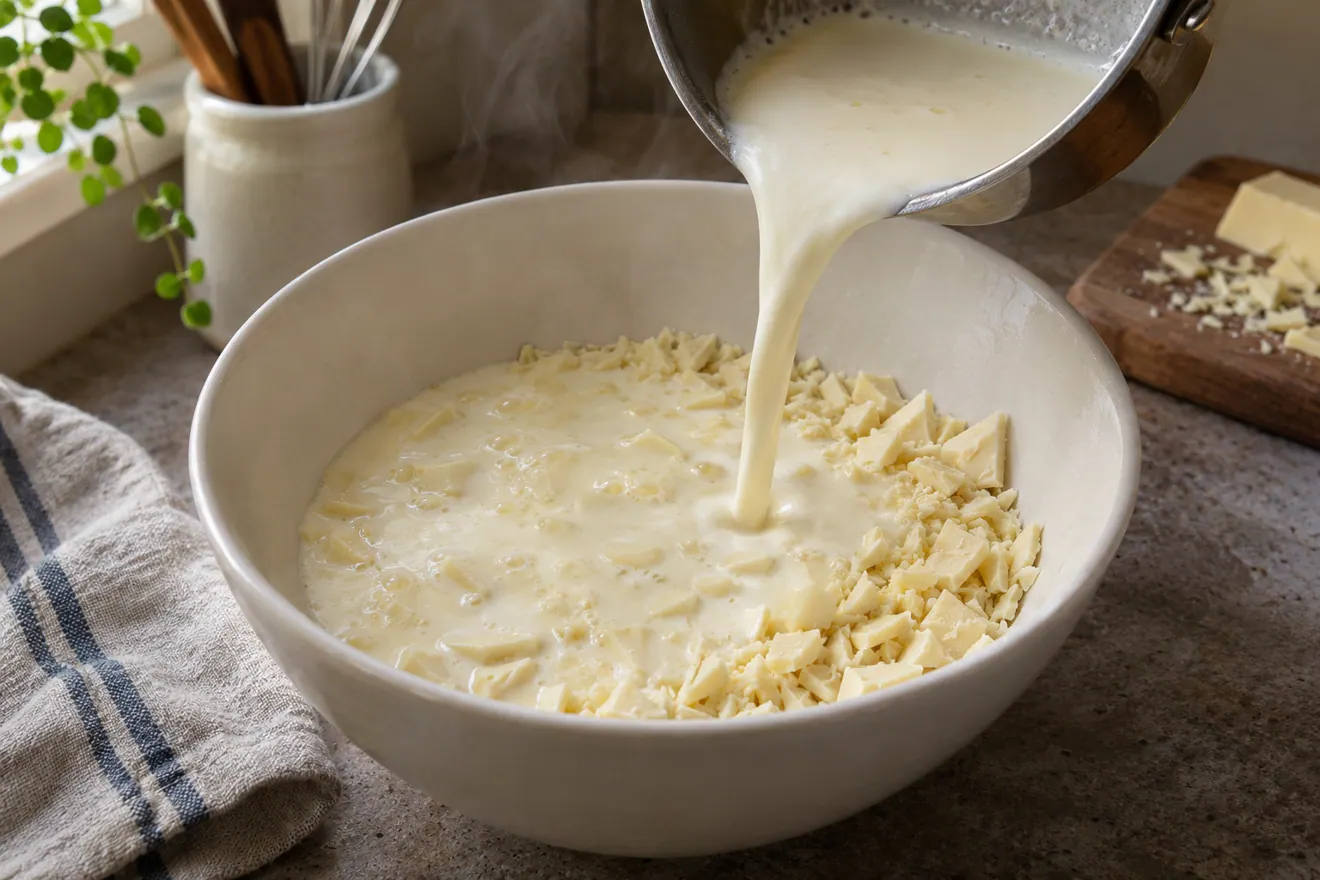
Pour the warmed cream over the chopped white chocolate or incorporate it in stages according to the recipe. Allow the heat to soften the chocolate briefly, then stir from the centre using small, controlled movements.
Professional methods sometimes add cream in several portions to establish a glossy emulsion. The mixture may initially look thick and uneven, then become smooth as the remaining liquid is worked in. Resist adding unmeasured cream just because the first few strokes look stiff.
Step 4: Emulsify Until Smooth
Stir until no visible pieces remain and the mixture looks uniform. If unmelted bits persist, apply very brief gentle heat according to a safe method, then stir again. Overheating can cause separation or make white chocolate grainy.
If using an immersion blender, keep the head submerged and avoid whipping in large bubbles. A smooth finish is more valuable than an aggressively aerated one at this stage.
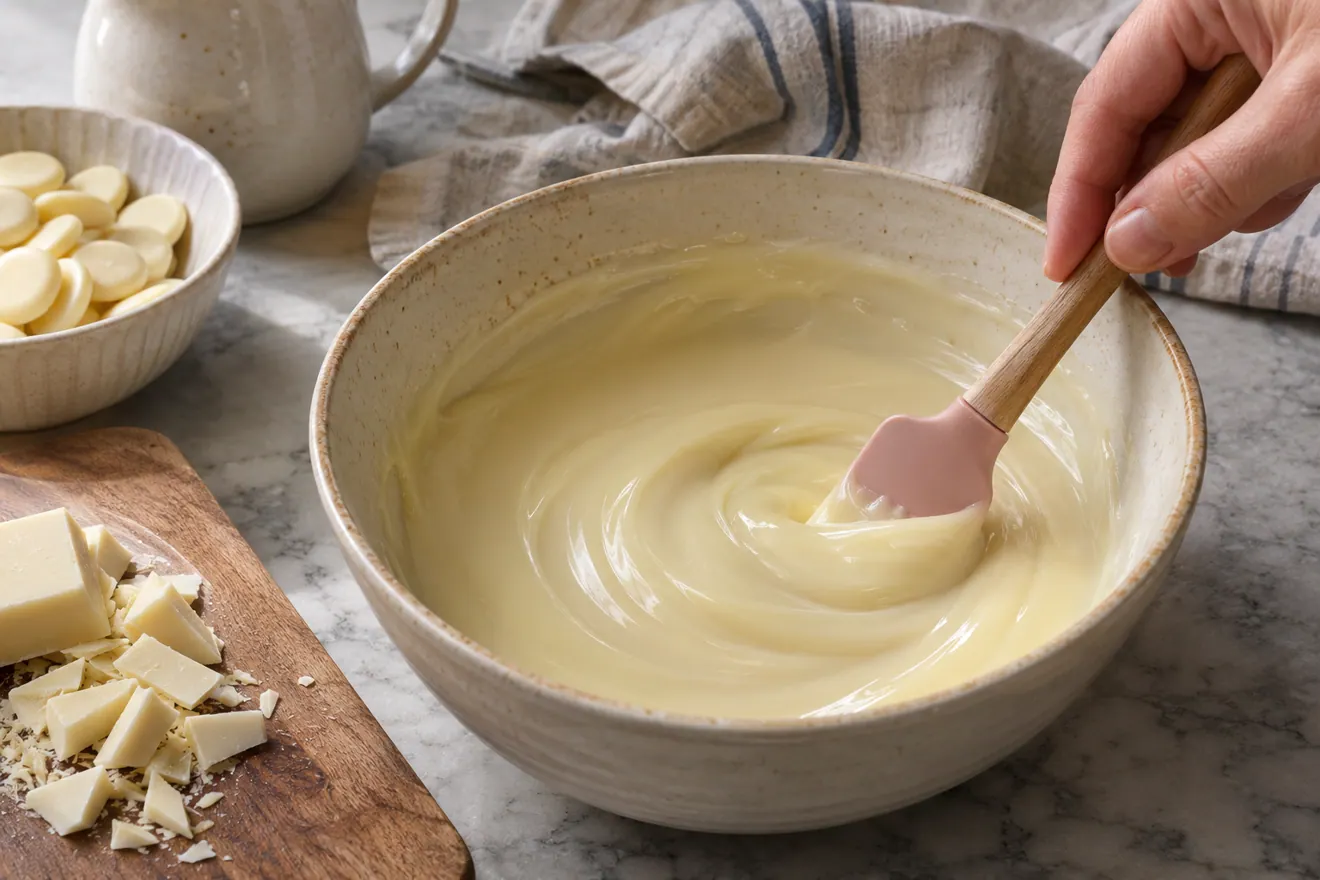
Stir in small circles at the centre until a shiny core forms and gradually widen the circles. Scrape the bowl so the emulsion incorporates any chocolate clinging to the sides.
Step 5: Cool to the Consistency You Need
Warm ganache is usually more fluid. As it cools, cocoa butter starts to crystallize and the mixture thickens. For a filling, allow it to set until it spreads without running between cake layers. For a glaze, use it earlier while it flows smoothly at an appropriate temperature.
Do not place hot ganache immediately onto a freshly frosted cake without testing. Heat can soften buttercream or create irregular drips.
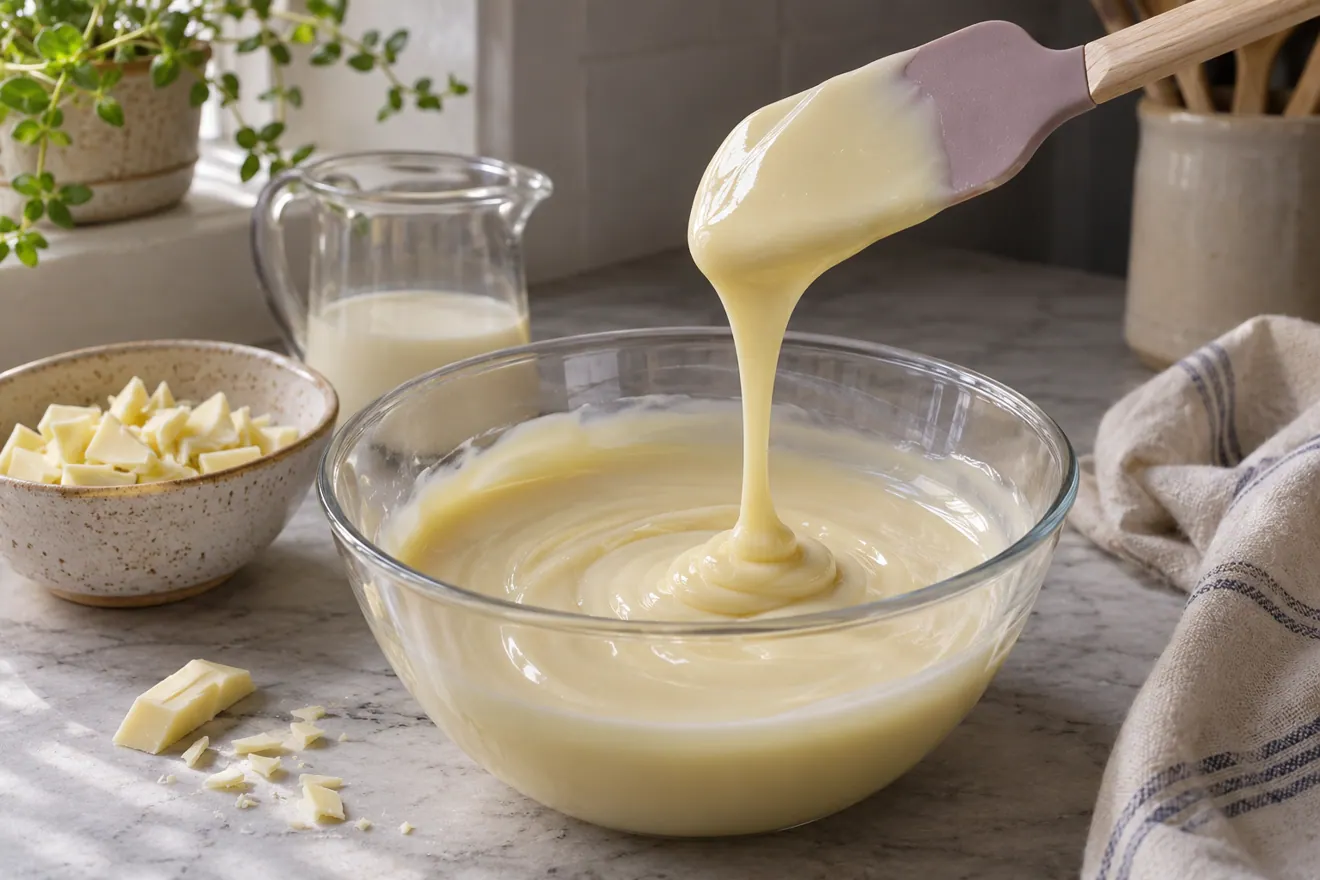
Lift the spatula to check the consistency as it cools. The photo shows ganache while it still flows. For a spreadable layer, let it cool further and test a dab on a plate.
How to Use White Ganache as a Cake Filling
For a layer cake, you need ganache that can hold its shape under the weight of the upper layers. Let it cool until spreadable, then fill evenly with a measured thickness. If the cake needs additional stability, use a recipe designed for structured fillings.
Ganache that is too soft may squeeze out at the edges. Refrigerating a perishable layered cake according to the recipe may help it set, but refrigeration cannot compensate for a severely unbalanced formula.
White Chocolate Ganache for a Drip Cake
A drip needs to be fluid enough to run a short distance down a cool cake but viscous enough to stop before reaching the bottom. A thick filling ganache at room temperature may not be suitable.
Use a dedicated white-chocolate-drip recipe and perform a test drip on a chilled cake before applying it all around the edge. White chocolate's setting behaviour and colour are different from dark chocolate, so a dark-chocolate drip ratio should not be reused automatically.
White Chocolate Ganache for Cupcakes
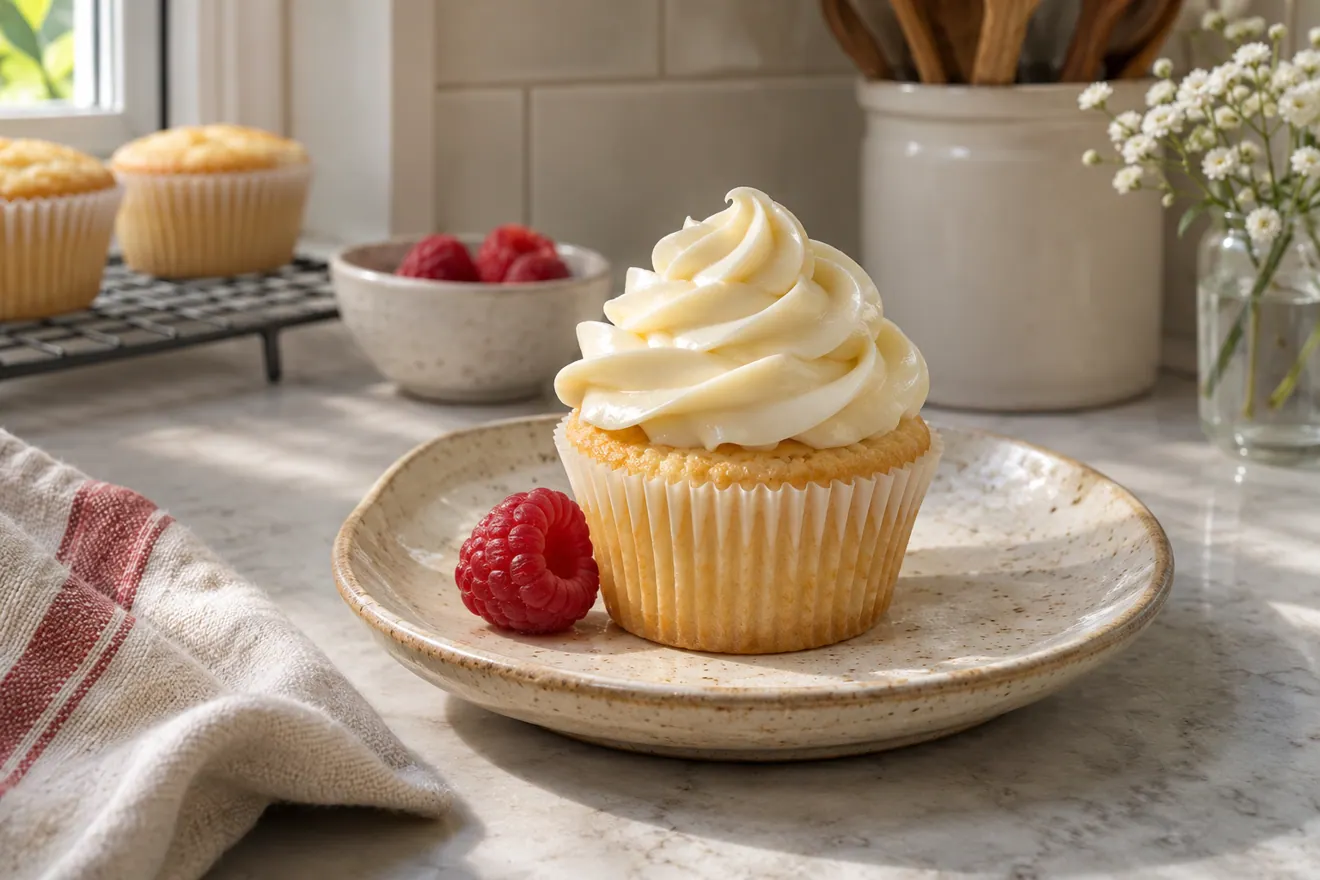
For cupcakes, a white ganache can work as a soft glaze or a thicker frosting once cooled. Choose the texture you want before making it. A pourable glaze and a piping ganache often require different ingredient ratios or finishing methods.
Apply glaze to cooled cupcakes so it doesn't simply soak into warm cake. If you want tall piped swirls, choose a whipped white ganache recipe developed for aeration rather than vigorously whipping any firm batch.
Can You Colour White Chocolate Ganache?
White ganache can be tinted for pastel or themed decorations, but choose food-grade colouring compatible with the formula. Adding large quantities of water-based colouring can change the emulsion or consistency.
For delicate pastel shades, a tiny amount of appropriate colouring may be enough. Test in a spoonful before colouring the full batch. Bright colours can be harder to achieve because white chocolate has a naturally warm ivory tint.
Flavoring with Vanilla
White chocolate is already sweet and vanilla-like, so strong artificial flavouring isn't always needed. A little vanilla can support the milk-and-cocoa-butter flavour, but use the amount specified in a tested variation.
If you add a liquid extract, account for its effect on the ganache. For intense flavour, a product designed to incorporate into chocolate may behave more predictably than extra watery extract.
Adding Citrus Flavor
Orange or lemon zest can provide a bright contrast to sweet white chocolate. Some recipes infuse cream with zest and then strain it, allowing the aroma to spread evenly through the mixture.
Lemon juice adds acidity and water, which can affect setting and separation. Choose a citrus ganache formula rather than pouring juice into finished ganache by instinct.
Pairing White Ganache with Fruit
Raspberry, passion fruit, strawberry and tart berries often balance white chocolate's sweetness. Fruit ganaches, however, are more complex than plain cream ganache because purées contribute water, sugar and acidity.
Use recipes calculated for the specific purée when making a fruit-flavoured filling. For a simpler approach, keep the plain ganache as one cake layer and add a separately prepared, recipe-approved fruit component.
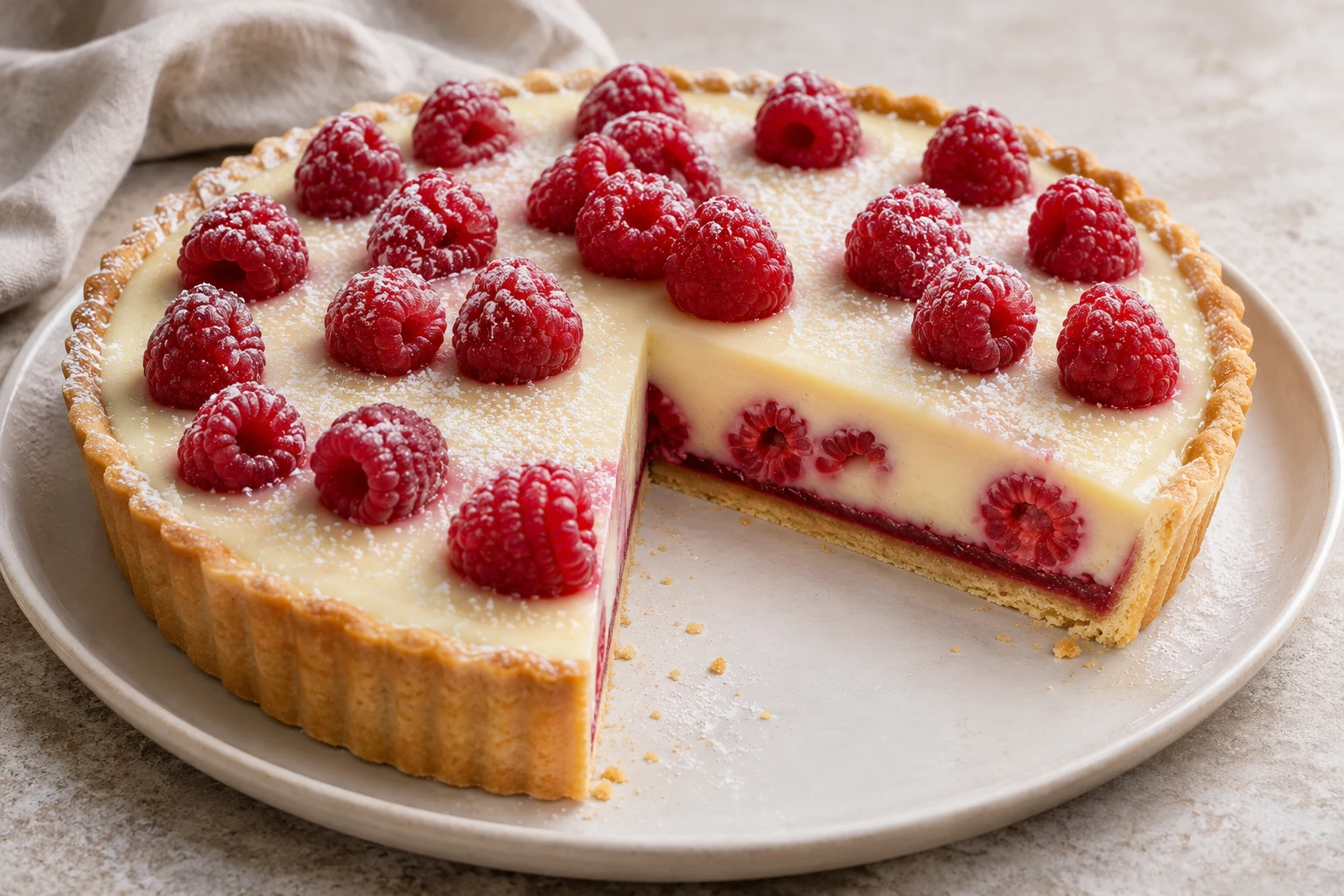
For a fruit-and-white-chocolate example where the filling sets in the fridge, see White Chocolate and Raspberry Tart.
Why White Chocolate Ganache Turns Grainy
Overheating can damage white chocolate's texture. A poorly incorporated emulsion, an unsuitable chip product or rapid temperature changes can also produce an uneven mixture.
Stop applying heat once the chocolate has melted. If the mixture is truly separated, use a tested emulsion-repair approach rather than adding extra butter, chocolate or cream at random.
Why the Ganache Is Too Thin
The mixture may simply be warm. Allow it to cool and set for the period specified before judging the final consistency. If it remains unusually loose after cooling, check whether you accidentally measured too much cream or used a different white chocolate product.
Don't blindly add chocolate to the hot mixture and expect an identical result. A controlled recipe adjustment or a new small batch can be more reliable.
Why the Ganache Is Too Thick
A higher chocolate-to-cream ratio creates a firmer mixture. Chocolate brand and temperature also affect thickness. Ganache that's set in the refrigerator can feel much firmer than the same mixture when warm.
For a glaze, gently warm according to the recipe and test its flow. For a stiff filling, choose a softer tested ratio next time rather than repeatedly overheating.
How to Avoid Air Bubbles
Whisking aggressively can introduce bubbles, particularly in a fluid glaze. Stir with controlled movements, keep any immersion blender submerged and allow bubbles to rise when the recipe permits resting.
For a smooth drip cake, a spoonful of bubble-filled ganache can leave pitted tracks on the frosting. Perform a test before covering the full cake.
Can You Freeze White Chocolate Ganache?
Some ganache formulas tolerate freezing, but texture and emulsion stability can change after thawing. The complete ingredients and application matter, particularly for whipped ganache and delicate drips.
Follow recipe-specific freezing and safe refrigerator-thawing guidance. Avoid relying on a general rule that all cream ganaches can be frozen and reheated repeatedly.
Refrigeration and Food Safety
Refrigerate homemade cream ganache and desserts filled or frosted with it at 4°C (40°F) or colder. Limit room-temperature handling and serving to a total of two hours. Divide large amounts into shallow clean containers to refrigerate promptly, and use the shortest storage time given for any component.
Frequently Asked Questions
Can I use the same ratio as dark chocolate ganache?
Usually not without checking the formula. White chocolate behaves differently and often needs less cream for a comparable thickness.
What is a common starting ratio for thick white ganache?
A three-to-one chocolate-to-cream ratio by weight is used in some simple formulations, but chocolate type and intended use determine the best proportions.
Why won't my white chocolate ganache set?
It may not be fully cooled, or the recipe may contain too much liquid for that chocolate. Check the formula and give it the specified setting time.
Can I whip it into frosting?
Yes, if you use a white whipped-ganache recipe. A firm truffle-style ganache does not necessarily make a light whipped frosting.
Can I colour it pink or blue?
Yes, with suitable food-grade colouring compatible with the emulsion. Start small and test the effect on consistency.
Let White Chocolate Set the Tone
Match the consistency to the finish. A cake filling should spread cleanly, a drip should flow slowly and a whipped topping needs its own formula. Make a small test before preparing enough for a whole cake.
Some images are AI-generated illustrations of the dishes and techniques described.
IN PICTURES
From the baking notebook
FROM THE RECIPE BOX


