On this page
The best streusel is a contrast: a tender blueberry muffin below and buttery, crisp crumbs above. But a topping that begins crunchy can sometimes turn into a smooth sugary film, melt into the batter or become soft overnight. The secret is not simply adding extra sugar. Streusel needs the right proportions, distinct crumbs, enough baking to dry and brown, and a cooling method that lets steam escape.
What is streusel?
Streusel is a crumbly mixture typically made from flour, sugar and butter. Some versions also include oats, nuts, spices or a pinch of salt. It can top coffee cake, fruit pies, muffins or quick breads. The texture varies by recipe: fine sandy crumbs make a delicate coating, while larger clusters provide substantial crunch.
What makes streusel crunchy?
Crispness comes from a balanced combination of fat, sugar and dry ingredients that browns and loses enough moisture in the oven. Flour and oats provide body, while butter helps clumps form and produces a rich bite. The topping can soften when it absorbs moisture from the cake or is stored in a humid environment.
A tested crunchy streusel starting point
It makes about three-quarters of a cup. The recipe directs bakers to mix the dry ingredients, work in the butter until coarse crumbs form, and sprinkle the mixture over the unbaked item.
Why flour belongs in streusel
Flour provides starch and some structure, keeping the topping from becoming merely a melted pool of sugar and butter. The quantity matters: too little dry material may spread or turn greasy, while an excessive amount can taste powdery and dry. Use the measured proportions from a tested recipe.
Brown sugar versus white sugar
Brown sugar adds flavour and moisture because it contains molasses. White sugar gives a different sweetness and often a crisper style in appropriate formulas. Neither automatically makes streusel better; the recipe's butter and flour ratios determine how the mixture bakes. Don't replace all the brown sugar in a tested topping without expecting some change.
The role of oats
Rolled oats can give streusel more texture and a pleasant toasted quality. Both old-fashioned and quick oats are used in some tested formulas, though their piece size differs. Steel-cut oats are harder and usually cannot be substituted directly into a topping written for rolled oats.
Why salt matters
A small measured pinch of salt makes butter and brown sugar taste fuller rather than one-dimensionally sweet. Use the quantity called for, particularly when changing from unsalted to salted butter. Large amounts may dominate the topping.
Softened butter versus melted butter
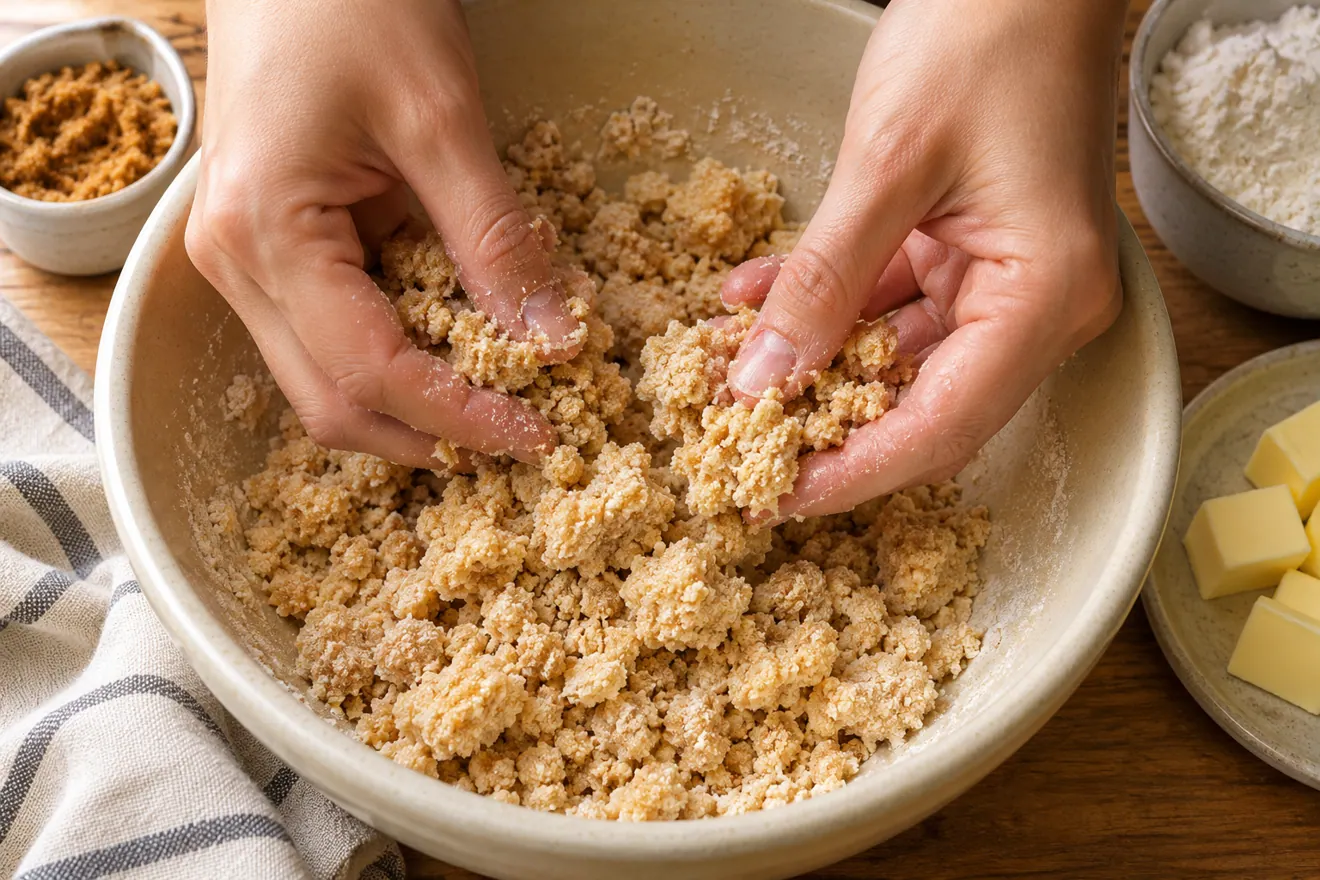
Some streusel formulas use firm room-temperature butter worked into dry ingredients to form coarse crumbs. Others deliberately use melted butter to make larger clusters. Both methods can succeed when the ingredient ratios and mixing technique are designed together. Do not switch the butter state in an unfamiliar recipe without testing.
Cold butter versions
Certain classic crumb toppings use cold cubes rubbed into flour and sugar. This may produce distinct pieces and a different finish from melted-butter streusel. Work efficiently so the butter doesn't become greasy before baking. Follow a recipe intended for cold butter rather than improvising temperature changes.
How to create larger clusters
Mix just until clumps form according to the recipe. If the mixture turns into a homogeneous paste, it may have been overworked or become too warm. Some recipes allow gently squeezing loose crumbs into clusters; others prefer coarse irregular bits. Use the texture directed by the developer.
Squeeze a small handful together, then break it back into uneven pieces. Leave room for some smaller crumbs to settle around the clusters.
Why streusel melts into muffin batter
A topping with too much butter or sugar relative to its dry ingredients can spread during baking. Excessively wet batter, very small crumbs or a thin coating may also make the streusel appear to disappear into the top. A tested formula and adequately portioned muffin batter provide a better chance of a distinct crunchy layer.
Why streusel tastes floury
It may not have browned or baked long enough, or the ratio may contain too much flour. A pale crumb topping can retain a raw-flour impression. Bake as the recipe directs until the topping is suitably browned and the muffin itself is fully cooked; don't extend the bake only to darken the topping if the muffin is becoming dry.
Why streusel burns before the muffin is done
Very small exposed sugar clusters can darken quickly, particularly when the muffin has a deep, moist centre. The oven temperature, rack position and topping size matter. For a thick quick bread, use a recipe designed for the longer baking time rather than applying an ordinary muffin streusel and hoping it survives.
How much topping should go on each muffin?
Use the amount assigned by the recipe. Too much topping can weigh down the crown, overflow the liner or form a large soft sugar layer. When the recipe specifies a tablespoon per muffin, measure consistently rather than loading only some cups. Press lightly if the method calls for it.
Should you add streusel before baking?
Most classic muffins and coffee cakes receive streusel on the unbaked batter. A separately baked crisp crumble can be sprinkled over finished desserts where the recipe permits it, particularly when you want to preserve maximum crunch. These are different serving styles with different textures.
Bake muffins through before tasting them. Wait until the muffins have baked through before tasting them.
A separately baked streusel technique
Cool completely before storing in an airtight container. This gives you a topping that can be added later to a dessert or yogurt.
Streusel on blueberry muffins
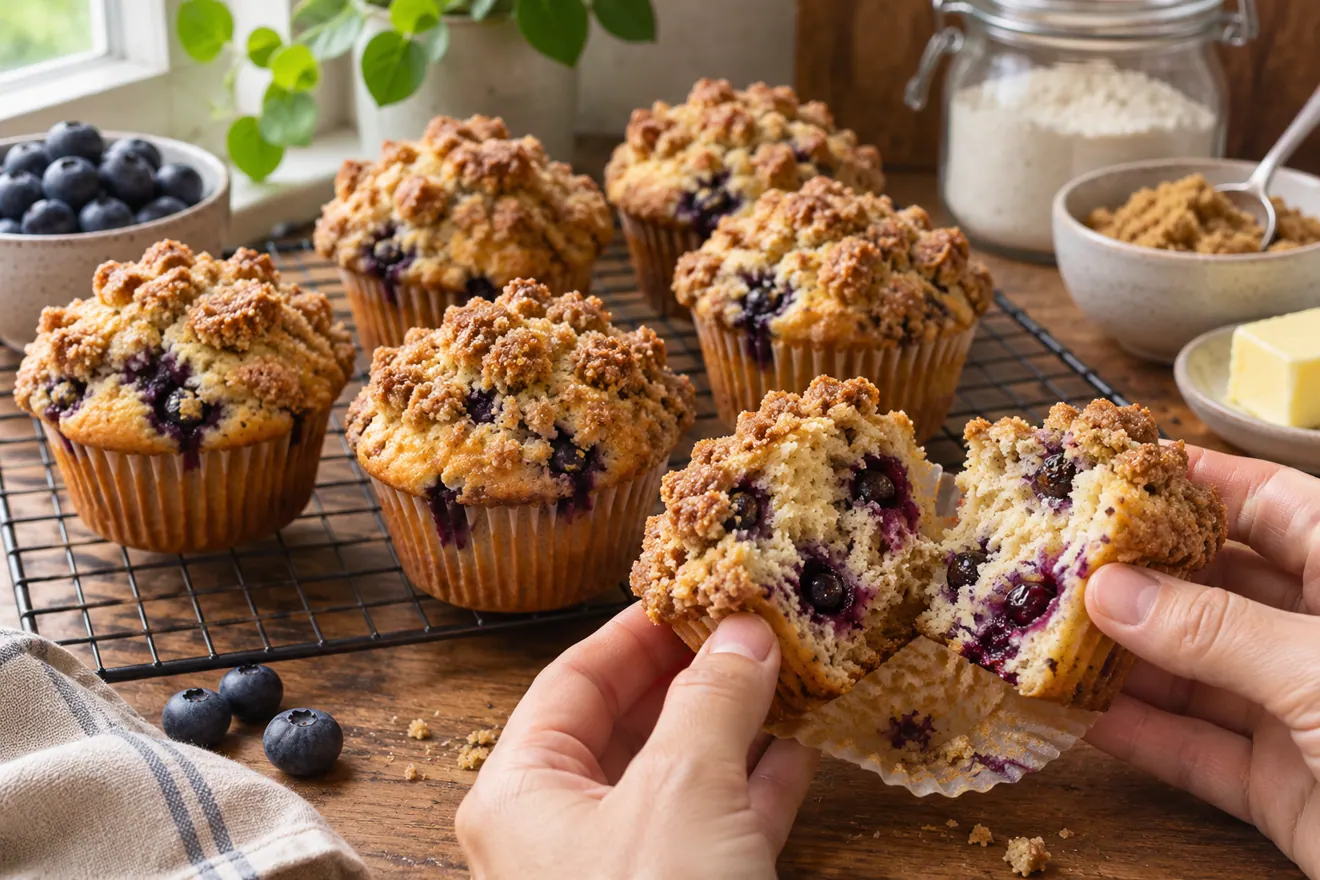
A buttery oat or cinnamon crumble pairs naturally with blueberries. Fold berries into the batter gently and follow the muffin recipe's streusel quantity. Excess berries or a very wet batter can send moisture into the topping as the muffin cools.
In Blueberry Streusel Muffins, cold butter is worked into flour and cinnamon sugar before the crumbs go onto the blueberry batter.

Streusel on banana bread
A deep loaf needs more baking time than a muffin, so a topping must be formulated to tolerate that schedule. Some banana-streusel loaves include a measured crumb layer with enough dry ingredients to hold shape. Choose a recipe specifically developed for a loaf instead of using an arbitrary muffin topping ratio.
Streusel on coffee cake
Coffee cake may use streusel both as a surface topping and as an interior cinnamon ribbon. The interior layer often softens during baking, which is appropriate. The crispest part is usually the exposed top. Don't judge a moist interior cinnamon filling by the same standard as a crunchy surface crumb.
Adding nuts to streusel
Chopped pecans or walnuts can add crunch and aroma in a topping formula that allows them. Nuts also contribute fat, so using a large unmeasured amount may alter texture. Toast only if the recipe calls for it; exposed nuts can darken further during baking. Clearly label tree nuts when serving others.
Cinnamon, cardamom and citrus
Spices can deepen the flavour without adding much liquid. Finely grated citrus zest can also be used in specific variations, but excess wet zest or juice may change the crumb texture. Introduce flavours conservatively.
How cooling affects crunch
Freshly baked muffins release steam as they cool. Leaving them trapped in a hot muffin tin or sealing them while warm allows moisture to condense against the topping. Follow the recipe's brief pan rest and transfer to a wire rack so air can circulate. The streusel may become more distinct as it cools.
The streusel in Pumpkin Muffins uses cold butter and brown sugar. Chopped pecans are optional. Set the baked muffins on a rack once you can lift them out intact.

Why streusel softens overnight
Even a properly baked topping can absorb moisture from a very tender muffin or humid storage air. That is a natural trade-off when a crunchy coating sits on moist cake. For the crispest serving, consider baking or refreshing the crumb topping separately when a tested method supports it.
Storing streusel-topped muffins
Follow the complete muffin recipe's storage window. Plain muffins may be kept in an appropriate covered container for a short period, but cream cheese or custard-filled muffins require refrigeration. Refrigeration and moisture can soften streusel, so cool and package thoughtfully and reheat only according to the recipe.
Can you freeze streusel?
Some unbaked crumb mixtures can be frozen and sprinkled over future muffins directly from the freezer, while certain finished streusel-topped muffins freeze as a complete product. The butter, oats and recipe method determine which approach works best. Use a tested formula and prevent moisture from entering the package.
Common streusel mistakes
Too much butter can make the topping greasy; too much flour can make it dusty; oversmall crumbs may vanish into the batter; an overly wet muffin can keep the topping soft; and sealing warm muffins traps steam. Change one variable at a time so you know what affects the next batch.
Frequently asked questions
How do I keep streusel from getting soggy? Use a tested formula, bake thoroughly and cool without trapping steam. Can I use melted butter? Only in a recipe designed for it. Why did my topping disappear? Ratio, wet batter and fine crumbs may contribute. Can I make it ahead? Some mixes and separately baked crumbles store well under recipe-specific instructions.
The best crunchy-streusel approach
Choose a balanced topping made from measured flour, sugar, butter and optional oats. Form distinct crumbs without overworking, apply the correct amount and allow the baked muffins to release steam while cooling. Crunch comes from good structure, proper baking and smart storage—not from piling more sugar on top.
Related recipe: Blueberry Streusel Muffins.
Some images are AI-generated illustrations of the dishes and techniques described.
IN PICTURES
From the baking notebook
FROM THE RECIPE BOX


