
On this page
A thin, glossy brownie crust that breaks into delicate flakes is one of the pleasures of a bakery-style brownie. It looks almost like a fragile sheet of chocolate-coloured meringue over the dense interior. The crust can appear even on a simple one-bowl recipe, but it isn't guaranteed by adding more cocoa or baking longer. Sugar dissolution, batter mixing and recipe formulation are the main things to understand.
What is the shiny brownie top?
The crackly layer is a thin sweet surface crust distinct from the brownie’s moist interior. It forms when components including dissolved sugar migrate or organize near the batter’s surface and dry during baking. Its exact appearance varies with the formula and method.
The role of dissolved sugar
King Arthur Baking's controlled brownie tests identify partial sugar dissolution as an important contributor to a shiny top. In some recipes, heating sugar gently with melted butter helps dissolve enough sugar to encourage a thin crust. This is not permission to melt the mixture until the sugar burns or caramelizes.
Why sugar must be measured accurately
The crust depends on the recipe's sugar-to-liquid-and-fat balance. Drastically reducing sugar can change the appearance and texture. A very high sugar addition can make brownies too sweet or sticky. Use a shiny-top formula rather than pouring extra sugar into any batter.

A useful melted-butter technique
Some recipes instruct you to warm butter and sugar together before mixing the remaining ingredients. King Arthur Baking's Fudge Brownies use this approach to encourage a crackly top. Heat only as directed and allow the mixture to reach the required temperature before adding eggs.
Sugar doesn't need to disappear completely
Not every brownie method requires heating until every crystal dissolves. The point is controlled partial dissolution and a properly balanced mixture. Boiling the fat-and-sugar mixture excessively can evaporate water, create hot spots and change the recipe.
What eggs contribute
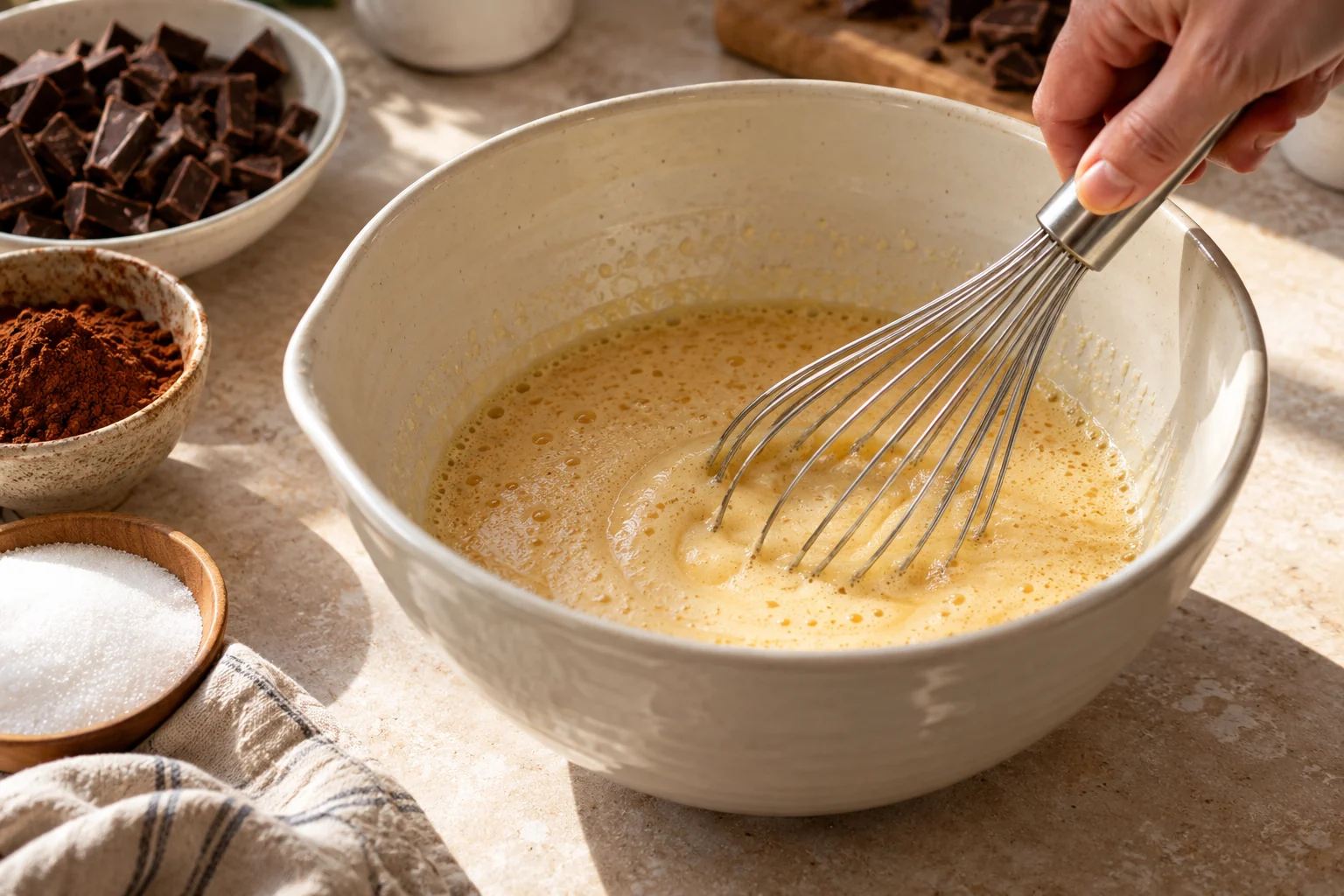
Egg proteins help the brownie structure set, and some explanations of the shiny crust involve a delicate egg-and-sugar layer near the surface. Recipes vary in whether eggs are simply stirred, whisked vigorously or beaten separately. Follow the formula's specified method.
Should eggs be whipped?
Some brownies achieve shiny tops with a deliberate egg-sugar beating stage; others use warm butter and sugar without extensive whipping. Whipping adds air and can alter the crumb. A shiny top and a fudgy centre are both achievable in a well-designed recipe, but switching mixing methods may change texture.

Why chocolate chips sometimes help
In King Arthur Baking's experiments, adding chocolate chips to a specific brownie formula improved the shiny crust. Extra chocolate can change how sugar and fat are distributed. The effect is recipe-dependent and not a guarantee that every brownie needs extra chips.
Can chopped chocolate replace chips?
Some recipes permit an equivalent weight of semisweet chopped chocolate. But pieces melt differently depending on size and formulation. Use the specified quantity and chocolate type rather than adding a second full portion of chocolate on top of an already balanced batter.
The importance of chocolate percentage
Dark and semisweet chocolates differ in sugar content and cocoa components. Substituting a very bitter bar for a sweeter one may change how the crust develops. If the recipe was tested with semisweet chips, begin there before changing brands.
Cocoa powder alone isn't the enemy
Cocoa-forward brownies can develop a shiny top when sugar and mixing are handled appropriately. Lack of melted chocolate is not automatically the cause of a dull crust. The formula and its method matter more.
Butter versus oil
Butter contains some water and milk solids as well as fat, whereas oil is nearly entirely fat. These differences can influence sugar dissolution and batter consistency. An oil-only recipe may have a different shiny-top strategy. Choose the fat the formula expects.
Mixing after adding flour
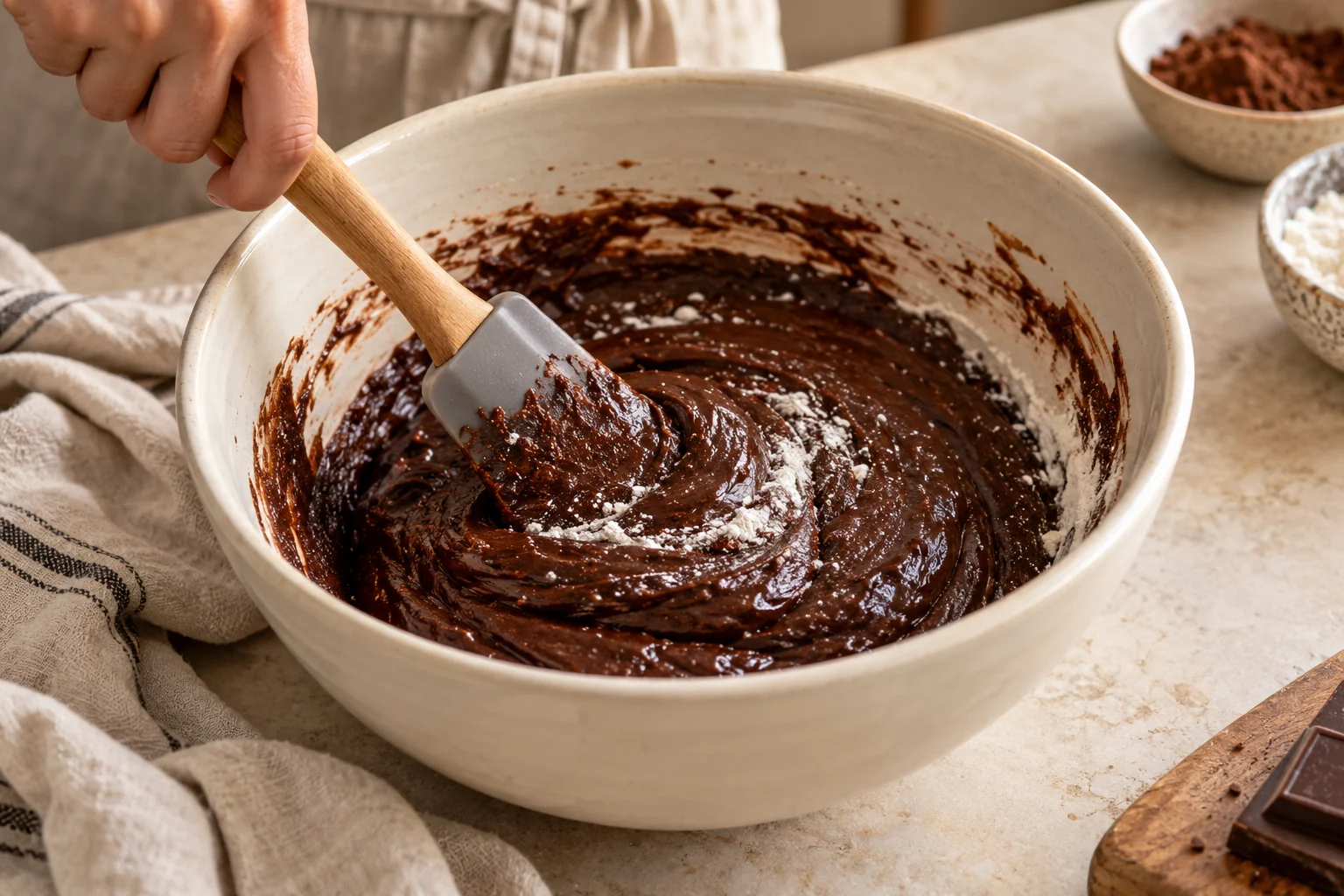
Once flour is incorporated, beat only as the formula instructs. Overworking can change the crumb and air structure, while undermixing can leave dry pockets. The stage intended for beating sugar and eggs is not necessarily the stage intended for vigorous flour mixing.
Does oven temperature create shine?
Baking dries and sets the top layer, but an excessively high oven can brown edges before the centre cooks. A shiny crust develops from a compatible formula and controlled baking schedule; temperature alone isn't a magic substitute for dissolved sugar.
Why some shiny tops crack dramatically
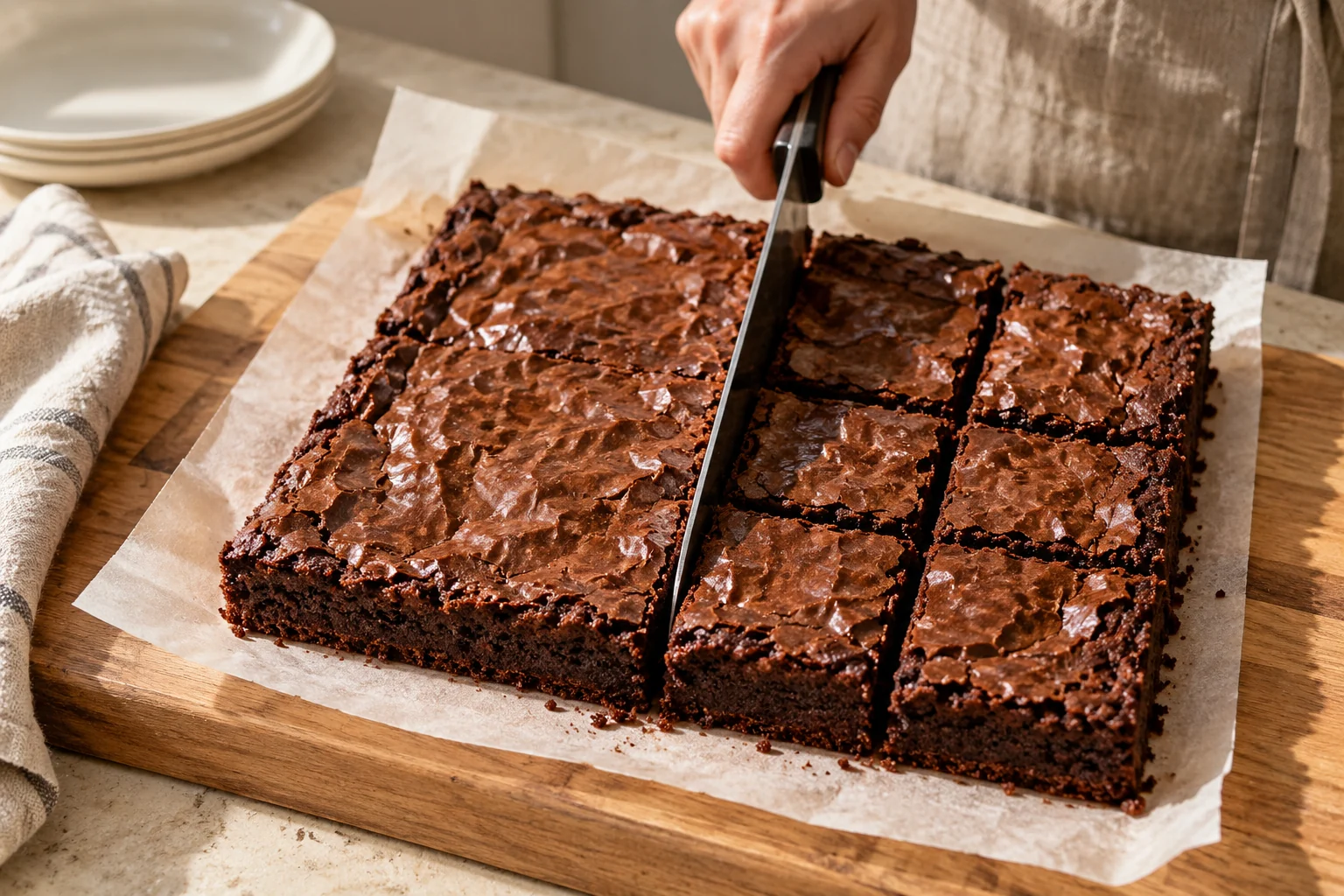
The very thin surface layer can fracture as the batter expands and contracts. Those delicate wrinkles are part of its appeal. Larger cracks may accompany a dramatic rise or an altered leavening balance; look at the underlying brownie texture as well.
Why the top is dull or matte
Sugar may not have been sufficiently dissolved for the chosen formula, the chocolate type may differ, or the recipe may simply be designed for a soft matte top. A dull surface is not a food-safety problem and does not imply the brownie tastes bad.
Why the crust is thick and hard
An extremely sugary or overbaked brownie can form a tougher surface than the desired tissue-thin layer. Check the sugar measurement, oven accuracy and bake time. Baking longer to increase shine is more likely to dry the centre than improve the crust.
How toppings affect appearance
Swirls of cream cheese, caramel or nut butter interrupt the sugar-rich upper layer. A swirled brownie may not develop uninterrupted sheen across the top. That's a stylistic consequence, not a defect.
Avoid adding sugar after mixing
Sprinkling granulated sugar across raw brownie batter doesn't recreate the same thin crust produced by dissolved sugar within the batter. It may create gritty or crunchy patches. Use the recipe’s mixing method instead of adding a separate surface layer.

Cool before judging
A shiny top can look fragile when hot and become more distinct as the slab cools. Cutting too soon may tear it. Let brownies cool according to the recipe, then lift carefully and cut with a sharp clean knife.
A reliable shiny-top experiment
Make a tested shiny-top brownie exactly as written, including sugar quantity, heating step and optional chocolate-chip instructions. Record the oven temperature, chocolate type and mixing time. Once you can repeat it, change only one factor at a time to understand the effect.
Frequently asked questions
Does shiny crust mean the brownie is done? No; check the centre. Do chocolate chips guarantee it? No. Is beating eggs required? Some recipes use that method; others don't. Can I reduce the sugar? A large reduction may remove the crust and alter texture. Is matte top a failure? No.
Start with the right brownie
The glossy, delicate top is a beautiful bonus. Its best route is a recipe designed around dissolved sugar and the proper chocolate balance, baked until the centre is set. Chase reproducible technique rather than surface shine at the cost of edible texture.
Technique reference: King Arthur Baking.
IN PICTURES
From the baking notebook
FROM THE RECIPE BOX


