On this page
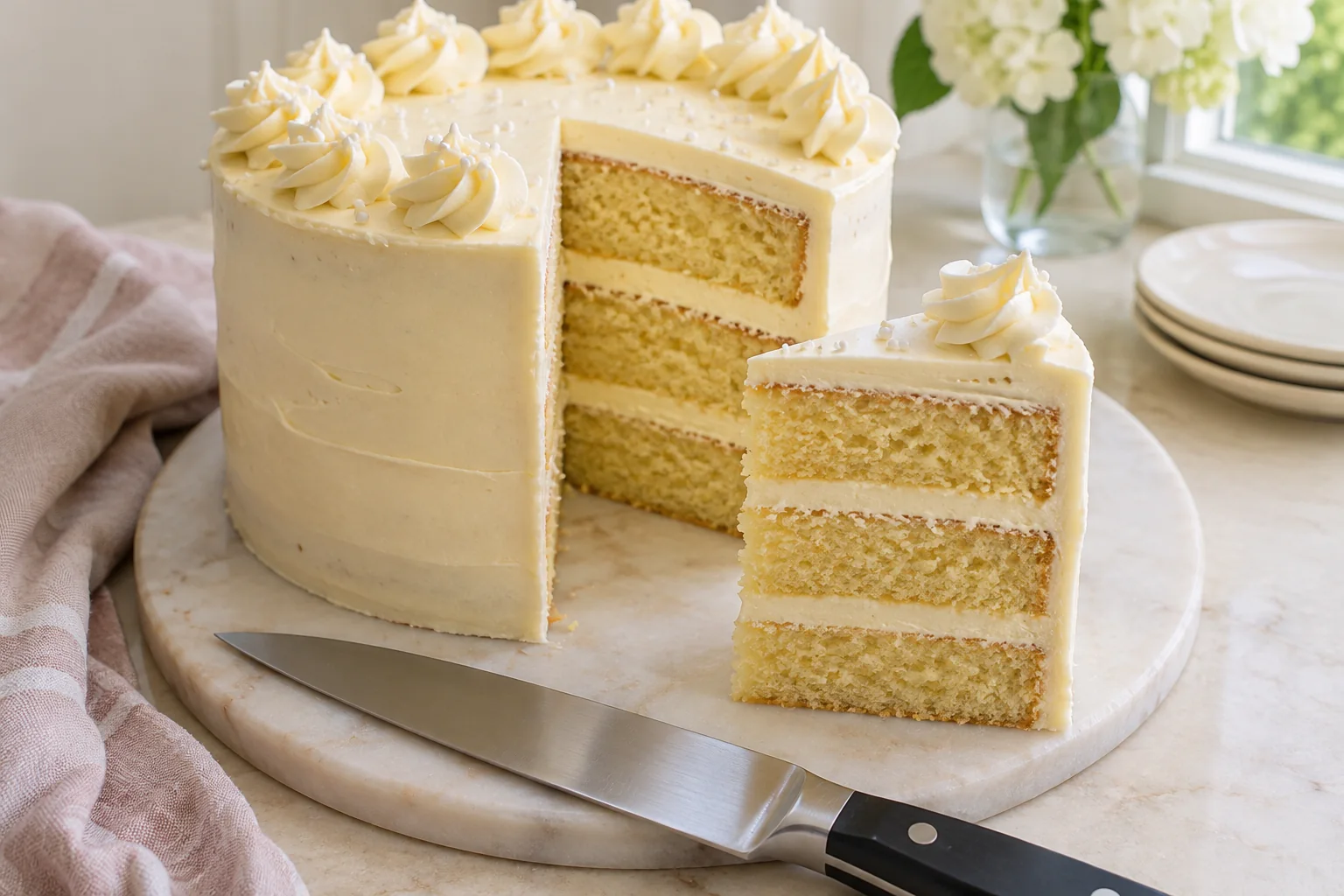
A tall celebration cake can be a beautiful centrepiece and a surprisingly awkward dessert to serve. Its layers of sponge, buttercream, curd or ganache can shift under the knife, and a standard triangular slice may topple before it reaches the plate. Cutting neatly starts long before the first incision: the cake needs stable filling, the appropriate serving temperature and a portion plan that respects its height.
Why tall cakes are difficult to cut
Height increases the length of the slice and the force needed to pass through the cake. Soft fillings may squeeze sideways, while thick chilled ganache can resist a blunt knife. A cake that hasn't been properly assembled may lean or slide even before cutting begins.
Start with a structurally sound cake
Layers should be reasonably level, frosting and filling appropriately firm, and any required supports installed under the design plan. Cutting cannot rescue a stack that is already slipping. If the cake tilts or bulges, address its assembly and chilling before serving.
Know what fillings are inside
Buttercream, whipped cream, jam, fruit curd and ganache require different storage and cutting conditions. A whipped-cream cake must be safely refrigerated, while a firmly chilled ganache cake may need slight recipe-approved tempering for smooth slicing. Use the most restrictive filling's safety requirements.
Chill when appropriate
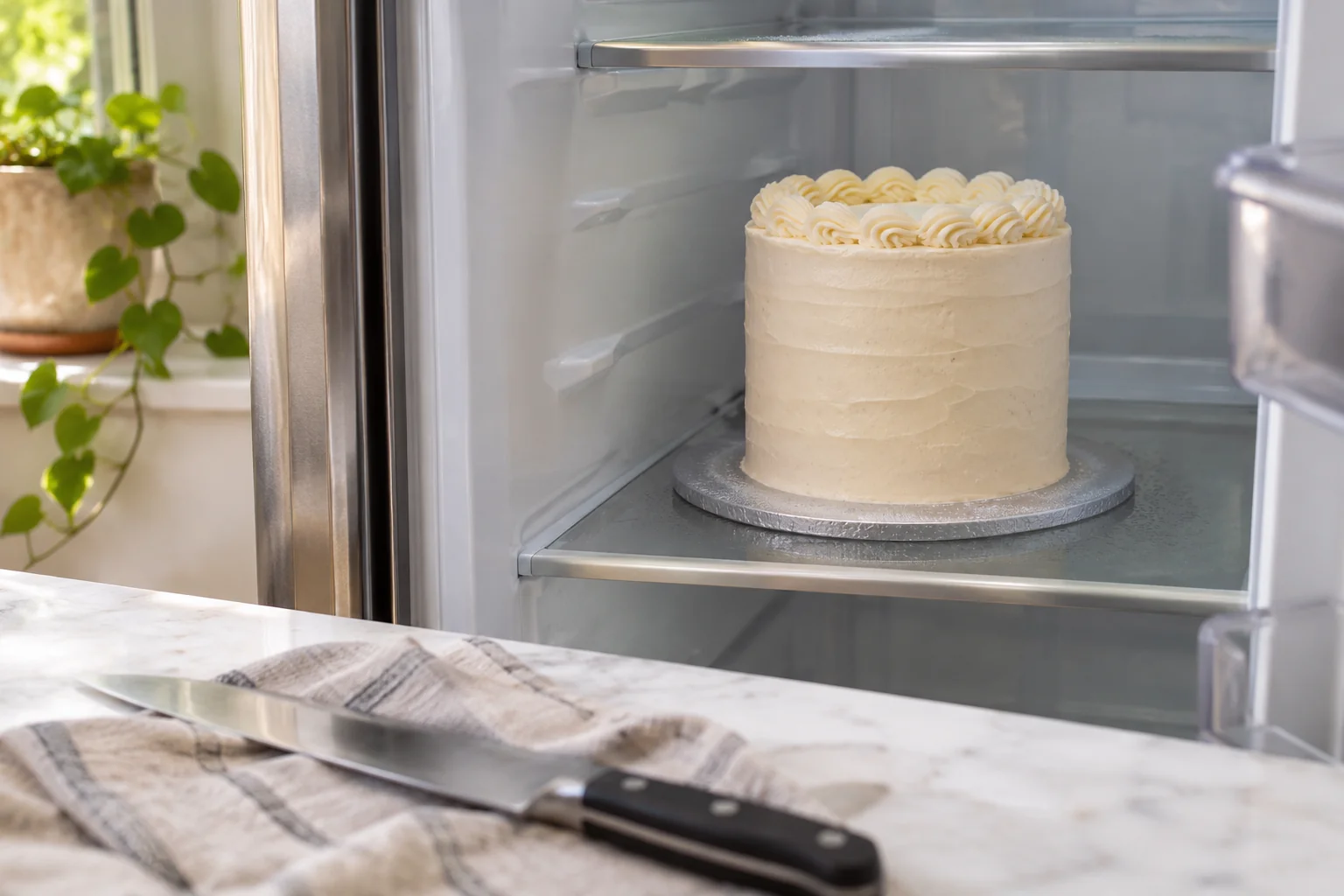
Chilling can help buttercream and suitable fillings firm for cleaner cutting. Use the cake recipe's storage directions and keep perishable fillings refrigerated. Cut with clean tools at a stable temperature; any brief tempering before eating must stay within safe serving limits.
Choose a long sharp knife
A blade that reaches through the entire cake height without excessive sawing makes cleaner edges. A sharp serrated knife may suit delicate sponge layers, while a smooth chef's knife may be better for a dense ganache coating. Use the tool the cake's recipe or designer recommends.
Clean after every cut
Cream and crumbs cling to the knife. Dragging that residue through the next slice smears frosting colours and distorts the layered pattern. Wipe thoroughly with a clean towel or paper between cuts. For dense chilled fillings, a gently warmed, completely dry blade may help.
Why the knife must be dry
A wet blade leaves streaks across buttercream and can add water to delicate sponge. If you warm the knife in water, dry it fully before touching the cake. Don't use dangerously hot utensils or handle a warm blade without safe precautions.
Decide between wedges and rectangular servings
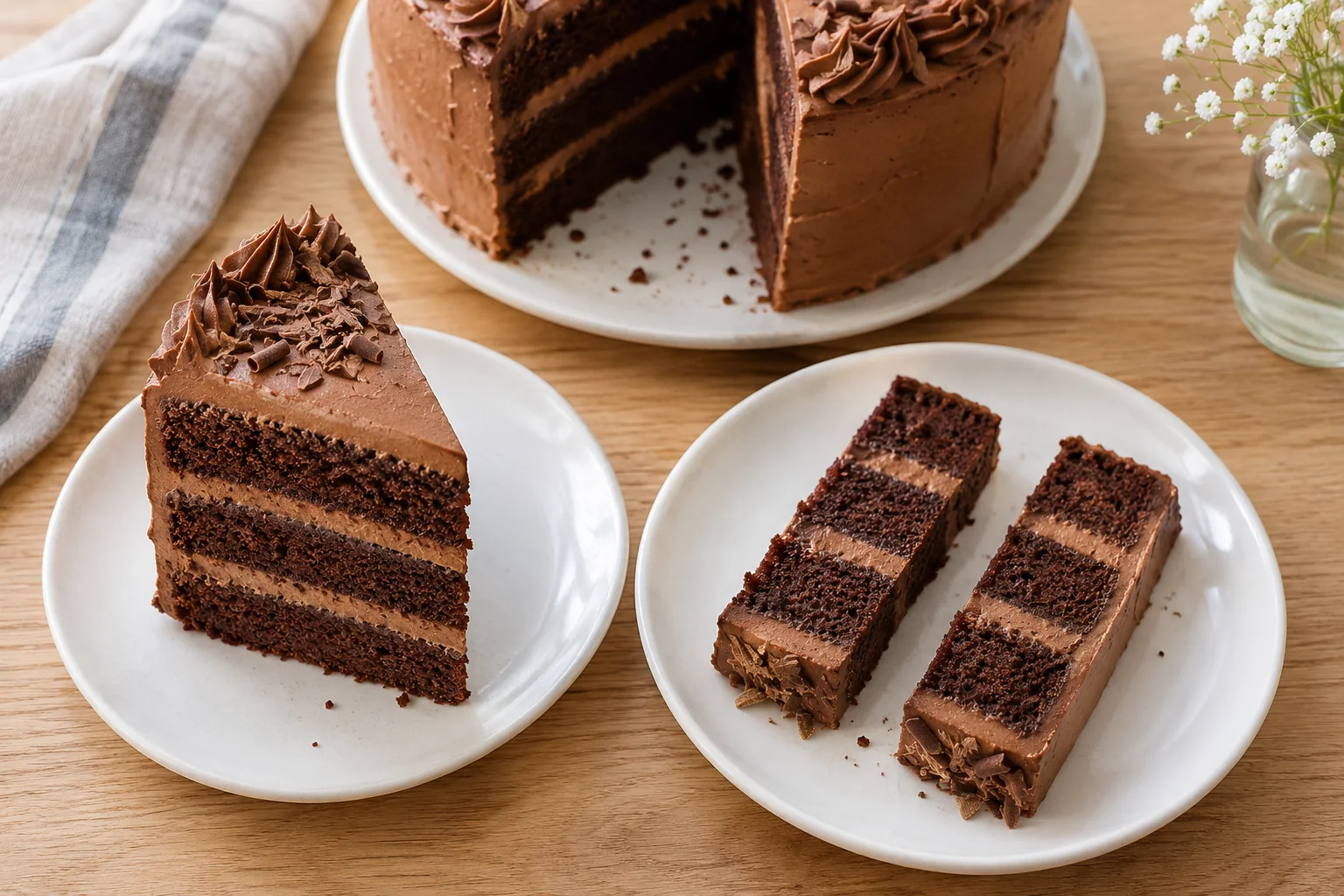
Moderately tall round cakes can be cut into familiar triangular wedges. Very tall tier-like rounds may serve more neatly as small rectangular portions, using an intentional ring-cutting or slab-serving method. The best choice depends on cake diameter and height.
Recipe to try: Classic Vanilla Layer Cake. A tender, moist three-layer vanilla cake with silky buttercream frosting that delivers pure, aromatic vanilla flavor in every delicate, buttery bite.
Plan serving counts realistically
A four-layer cake is often richer and taller than a two-layer cake of the same diameter. Portion width should reflect that. A small but tall piece may contain more cake than a standard broad wedge, so don't promise a serving count without checking the actual dimensions.
Cut an outer ring when appropriate
For large tall round cakes, some serving systems cut a ring a measured distance inside the edge, then divide the outer ring into manageable portions. The centre can be cut afterward. This can create portions with greater stability than a series of very long thin wedges, but use a method suitable for the cake's design.
Try a cutting board for very tall sections
Professional-style serving may involve removing a stable slab or section to a board and dividing it into smaller portions. This requires proper support and a food-safe transfer method; don't lift a fragile tall section unsupported and hope it stays intact.
Use a broad cake server
A thin, sturdy server supports the bottom layer as you move a slice. The tool should extend beneath enough of the slice to keep the centre from folding. Avoid grasping the decorated sides with your fingers, which leaves dents and can break the crumb.
Handle fruit layers gently
Whole strawberries and large fruit pieces may resist the knife or slide out of a soft filling. Use a sharp clean blade and cut through fruit deliberately. For future cake assembly, thin evenly distributed pieces tend to serve more neatly than an uneven mound at one edge.
Recipe to try: Strawberry Layer Cake. A tender, three-tiered vanilla sponge cake filled with fresh strawberry compote and frosted with light strawberry buttercream for the perfect balance of sweet berry flavor and delicate crumb.

How to cut cakes with ganache
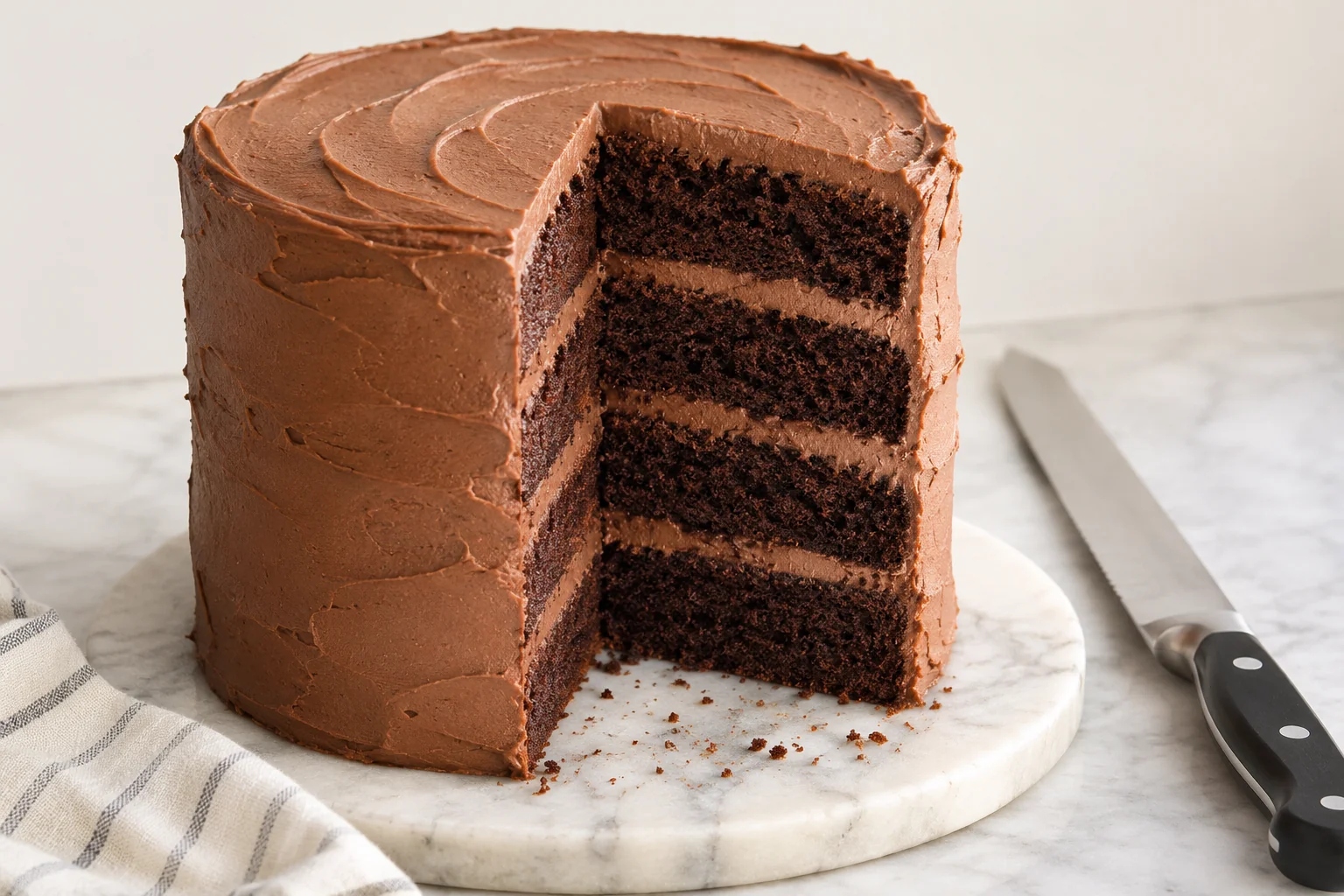
Cold ganache may become firm and resist the first cut; overly warm ganache can smear. Follow the dessert's serving-temperature guidance. A clean dry slightly warm knife may produce a smoother chocolate edge, particularly in layered entremets.
Recipe to try: Chocolate Layer Cake. Rich, decadent chocolate layers enveloped in silky frosting create a celebration-worthy cake with deep cocoa flavor and melt-in-your-mouth texture.

Whipped cream cakes are delicate
Stabilized whipped cream can still compress under heavy knife pressure. Keep the cake appropriately chilled and cut with minimal dragging. Work in small batches for a buffet, returning unused portions to refrigeration rather than leaving the entire cake warm.
What about fondant decorations?
Fondant may require a separate cutting approach because it can stretch or resist a knife. Remove non-edible decorations and supports according to the cake's construction plan before slicing. Never serve hidden wooden dowels, wires or decorative picks inside a portion.
Tiered cakes need disassembly
A true stacked tiered cake may contain internal supports and boards. Remove the upper tier safely and expose its board before portioning. Follow the design's support map. Never cut blindly through dowels or cake boards as if every tall cake were one continuous edible block.
Neat plates matter
Transfer portions to simple plates, clean frosting smears and place any sauce beside rather than under a fragile slice if that would make it slide. A well-cut small portion can look more elegant than a collapsing giant wedge.
What if the filling squeezes out?
The cake may be too warm, filling too loose or layers insufficiently supported. Refrigerate safely when appropriate and use a sharper blade with less downward force. For future cakes, use a frosting dam and suitable filling thickness.
What if the frosting cracks when cut?
Very cold stiff coating can fracture. A brief recipe-approved tempering period may help, but don't leave a perishable cake out for hours. Use a clean knife and assess whether the outer coat is too thick for the cake's texture.
Frequently asked questions
Should I freeze a cake before slicing? Usually not necessary; chilling is often enough. How can I cut tiny party portions? Use a measured ring or slab approach. Why do layers slide? Soft filling or poor assembly may be involved. Can I use hot water on the knife? Yes for some dense coatings, but wipe completely dry.
Serve the structure you've baked
A properly chilled and supported cake, a deliberate portion plan and a clean sharp knife make tall cakes manageable. Work slowly, support each portion and keep the filling's storage requirements front of mind.
IN PICTURES
From the baking notebook
FROM THE RECIPE BOX


