On this page
A fruit pie smells irresistible when it leaves the oven, but slicing immediately can send the filling spilling across the plate. Cooling isn't wasted time: hot thickened fruit fillings continue settling and firming as their temperature drops. Custard and cream pies follow different rules and often need prompt refrigeration after an initial safe cooling period. The best serving time depends on what is actually inside your pie.
Why cooling changes a pie
Fruit releases juice during baking, and starch thickeners bind some of that liquid as the filling cooks. The filling remains very fluid when hot; it gains body as it cools. Pie crust also becomes easier to cut after steam has dissipated. A warm slice can taste lovely, but it usually holds its shape less neatly.
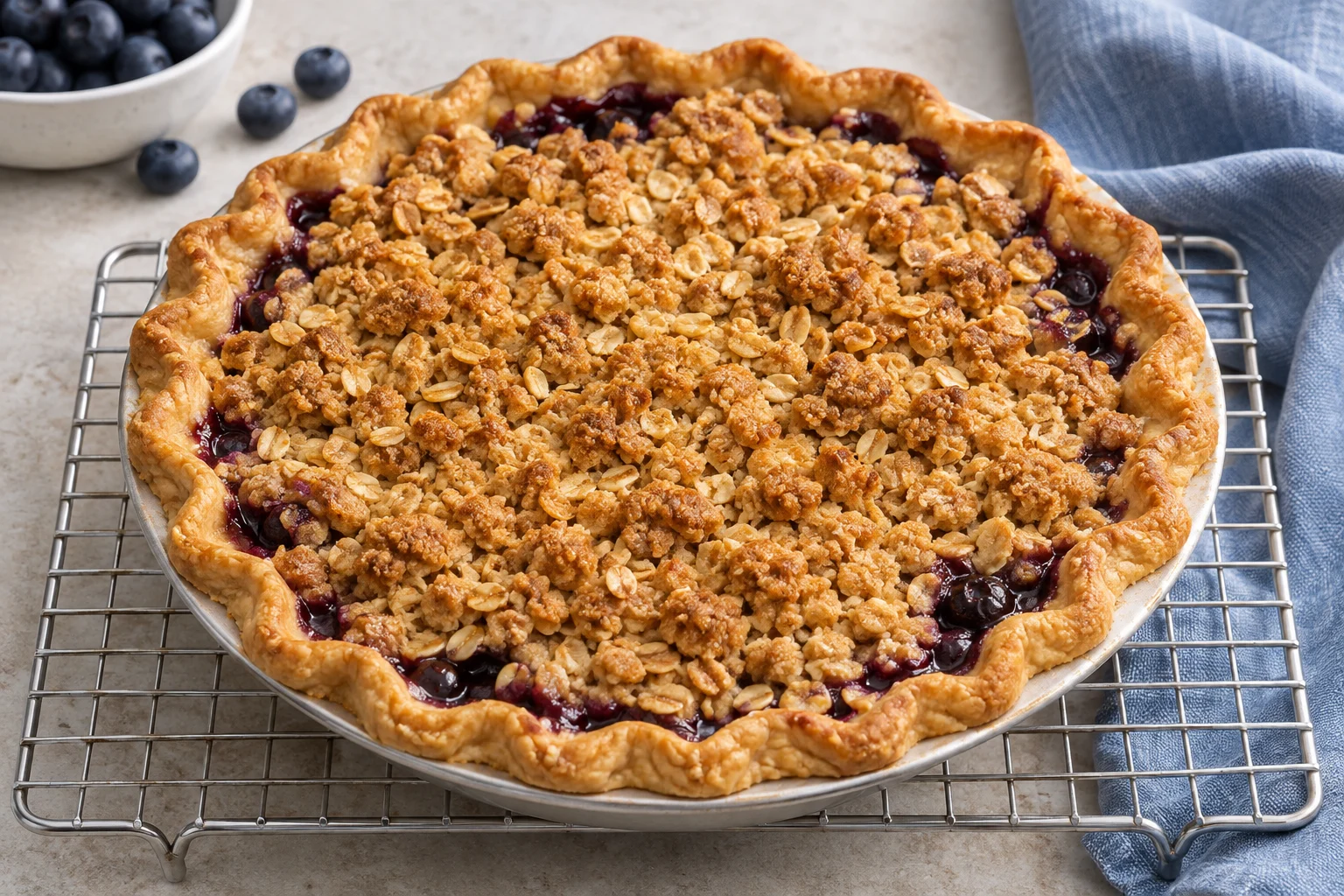
A fruit-filled example is our Blueberry Crumble Pie. Use its own cooling and serving directions rather than assuming the timing for a custard or cream pie will be the same.
Fruit pies often need several hours
Its pie-thickener guidance explains that even a correctly thickened filling can slump when served warm. The actual cooling interval depends on the filling, dish depth and room conditions.
Allow at least three hours of cooling for Blueberry Crumble Pie, as the recipe directs. Plan for more time when the centre still feels warm.
A minimum time isn't a universal guarantee
The depth of the filling, its temperature and the thickener affect when the pie slices cleanly. Use the cooling time in your recipe as a starting point. If the centre still feels warm, allow more time for a plain fruit filling to set.
What happens when fruit pie is cut hot
The filling's hot juices have not reached their final thickness. Cutting creates an opening where liquid can flow, leaving later slices with less sauce and a soggier crust. If you want impressive slices for photography or a party, patience usually produces a cleaner presentation.
Can you reheat a cooled slice?
Yes, when the recipe supports reheating. Allow the whole baked pie to cool and set first, cut a slice, then warm the individual portion briefly using an appropriate method. This can give a warm dessert without sacrificing the structure of the entire pie.
Apple pie versus berry pie
Different fruits release different amounts of juice, and the recipe's thickener changes the final set. Apples with moderate moisture may behave differently from soft berries or rhubarb. A berry pie with a high proportion of juice may need additional time to cool neatly, even when perfectly baked.
Lattice versus covered fruit pie
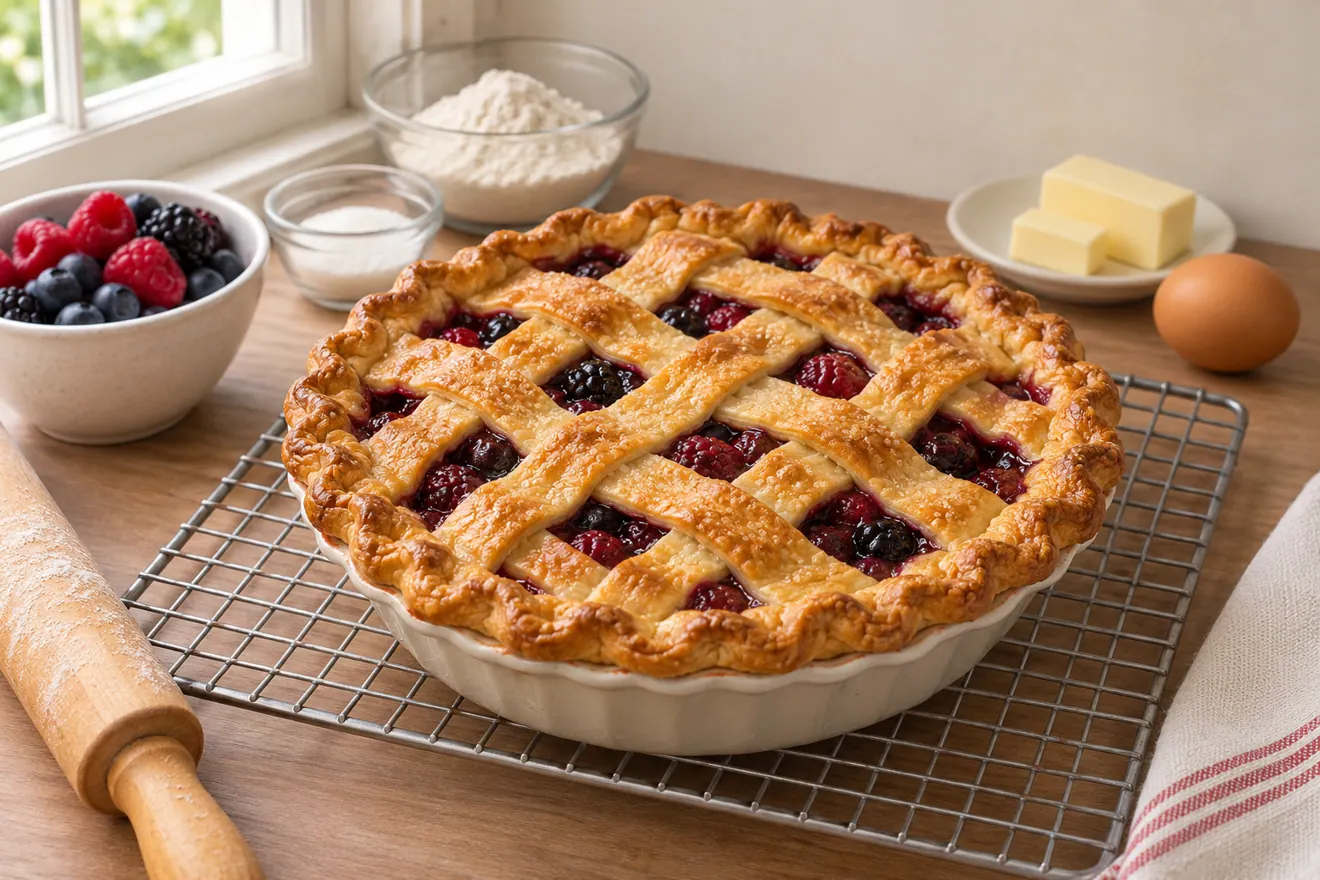
A lattice allows steam and some moisture to escape during baking; a solid top traps more of it until the vents release pressure. The filling's quantity and thickener are still central. Don't assume lattice pies can always be sliced sooner; test cooling based on the actual recipe.
How to tell whether a fruit pie is ready to slice
The pan should be cool enough for safe handling and the filling no longer visibly fluid when gently moved. For clean edges, cool fully as the recipe recommends. Don't repeatedly poke the filling with a spoon, because that disrupts the surface and can make it harder to judge.
Use a sharp pie knife and wipe it between slices. If filling runs from the first cut, give the remainder more time to cool.
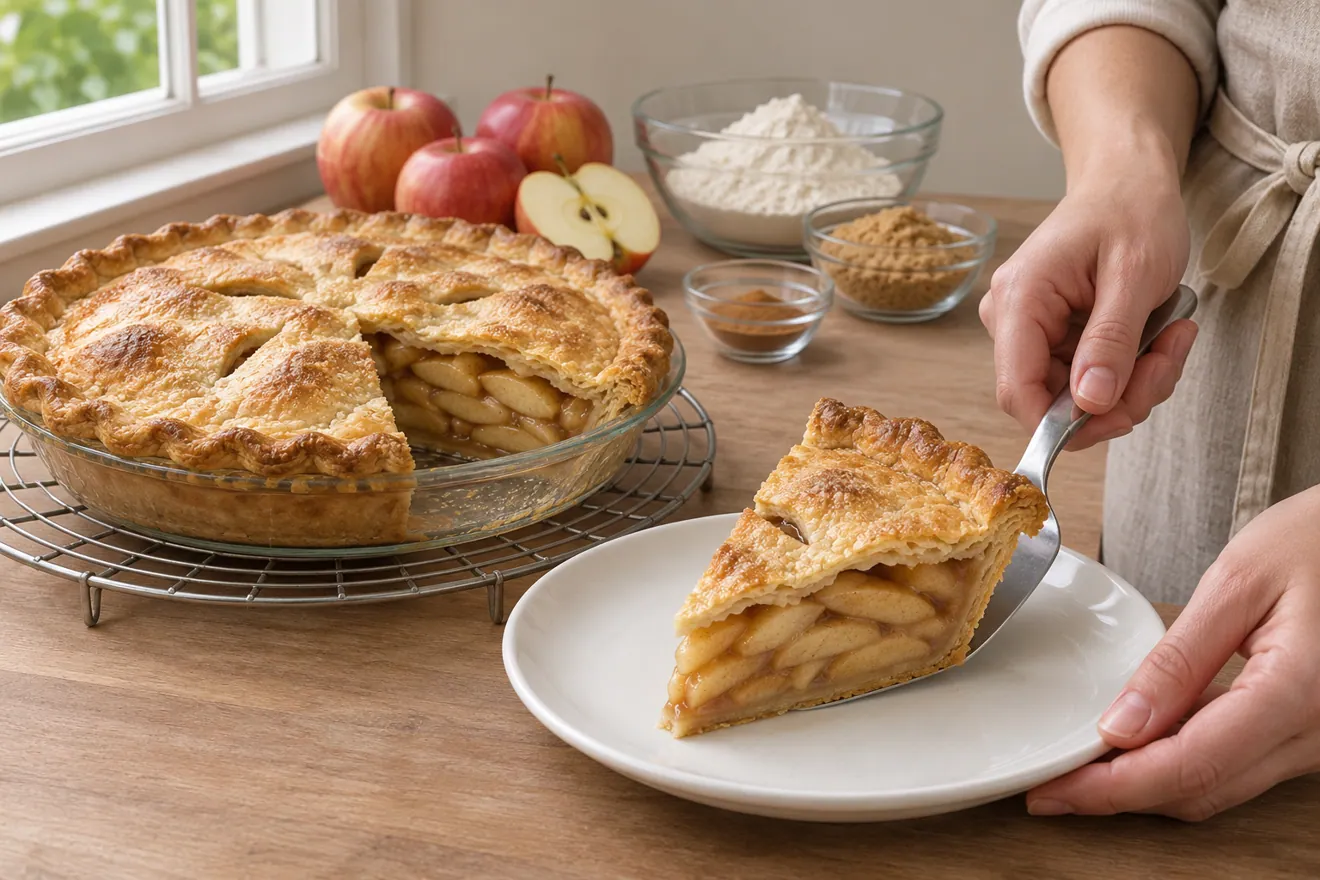
In Classic Apple Pie, plan for the full two- to three-hour cooling period before serving if you want a neat slice.
Custard pies are different
Homemade pumpkin and other egg-custard pies need the doneness cues and chilled rest given by a reliable recipe. Refrigerate within two hours of baking and finish cooling in the refrigerator as needed. Use a pie dish that tolerates the temperature change.
Cream pies need cold storage
Pastry-cream, whipped-cream and many pudding pies are perishable. Follow the recipe's chilling time and keep refrigerated at 4°C/40°F or colder. Don't leave a cream pie at room temperature for several hours merely because a fruit pie can cool on a rack.
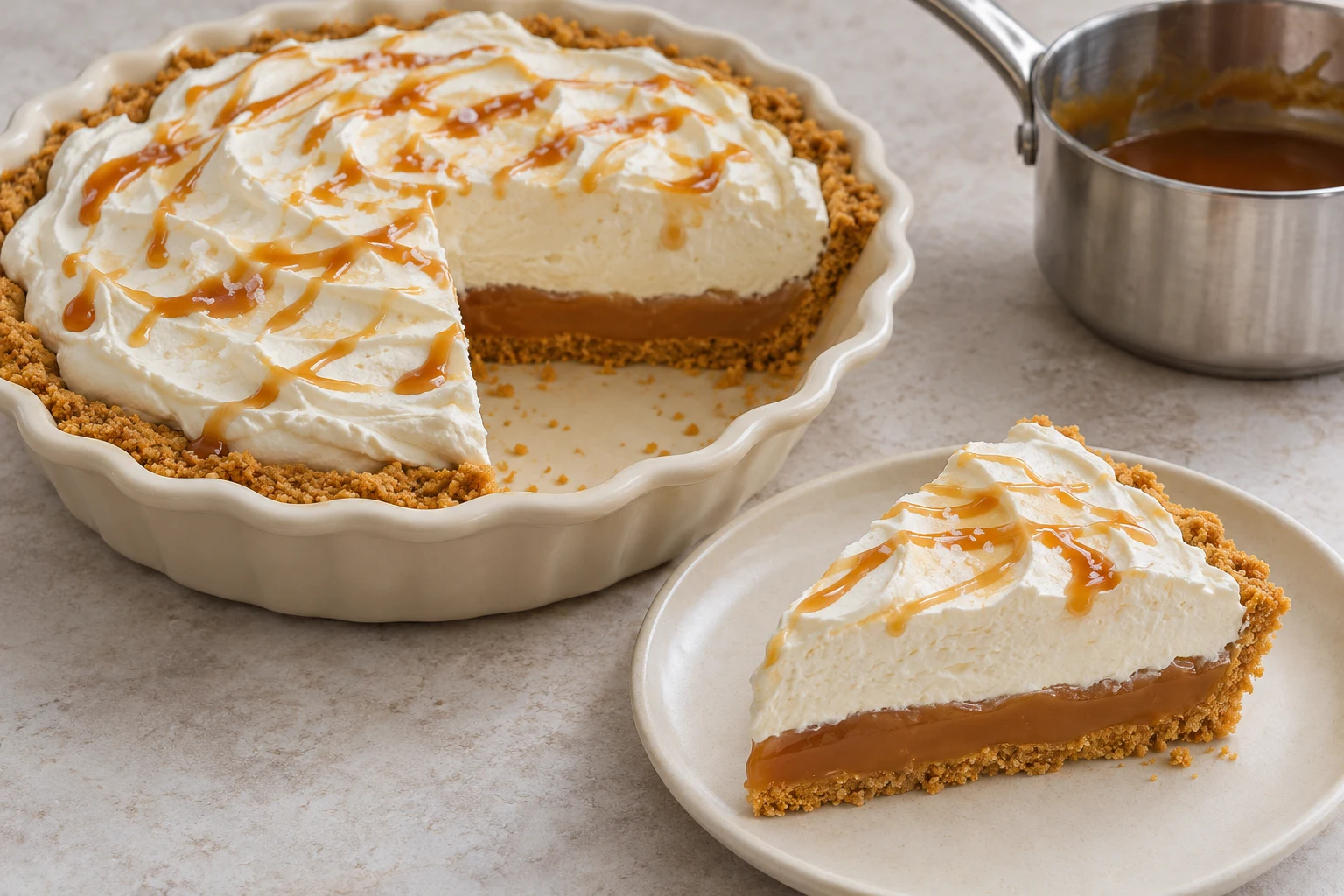
In Salted Caramel Cream Pie, the caramel chills to set before the cream layer goes on. Plan a separate refrigerated rest for the cream layer before serving.
Cheesecake has its own schedule
A cheesecake may need controlled oven cooling, then further refrigeration to develop a firm slice. Its centre is usually still soft when it first leaves the oven. Follow the tested cheesecake formula rather than borrowing a fruit pie's cooling period.
Where to place the hot pie
Set the pan on a sturdy heat-safe rack with airflow underneath, away from children and drafts that may be inappropriate for the dish. Keep hot glass or ceramic away from icy countertops and other sudden temperature changes. Never put a hot glass dish straight into cold water.
What if you're serving at a fixed time?
Bake a fruit pie earlier in the day, or the previous day when the recipe supports that schedule. Leave adequate cooling time before transporting. For custard and cream pies, plan refrigerator space and chilling time in advance.
Why a runny pie may stay runny after cooling
If the filling wasn't sufficiently heated, contained too much liquid or had too little suitable thickener, cooling may not fully correct it. The problem isn't always impatience. Use a tested thickener ratio and bake fruit pies until the specified bubbling or other endpoint is reached.
Why slices sometimes look gelatinous
Too much starch or a poorly suited thickener can make a filling rubbery, opaque or pasty. Waiting longer won't undo that texture. Choose the type and quantity recommended for the particular fruit rather than adding an arbitrary spoonful to every pie.
Safe storage after serving
Refrigerate egg custard, cream pies and cheesecake at 4°C (40°F) or colder. Count cooling and serving toward a total of two hours at room temperature. Follow the dish manufacturer’s temperature limits and use refrigerator-safe bakeware.
Follow the recipe’s storage window for plain fruit pie and for any ingredients added when serving.
Frequently asked questions
Can I slice pie after thirty minutes? Some formulas allow a messy warm portion, but a clean fruit slice usually needs longer. Why did the filling run? It may be too hot or underthickened. Should pumpkin pie be refrigerated? Follow its perishable custard storage requirements. Can I refrigerate a hot glass dish immediately? Follow the dish manufacturer's thermal-shock guidance.
Give the filling time to finish its job
A fruit pie can be fully baked yet not ready for neat slices. Cooling gives the thickened juices a chance to settle and protects the crust. For custard and cream pies, prioritize the prescribed chilled set and safe refrigeration. Plan the serving time as part of the recipe, not an afterthought.
Some images are AI-generated illustrations of the dishes and techniques described.
IN PICTURES
From the baking notebook
FROM THE RECIPE BOX


