On this page
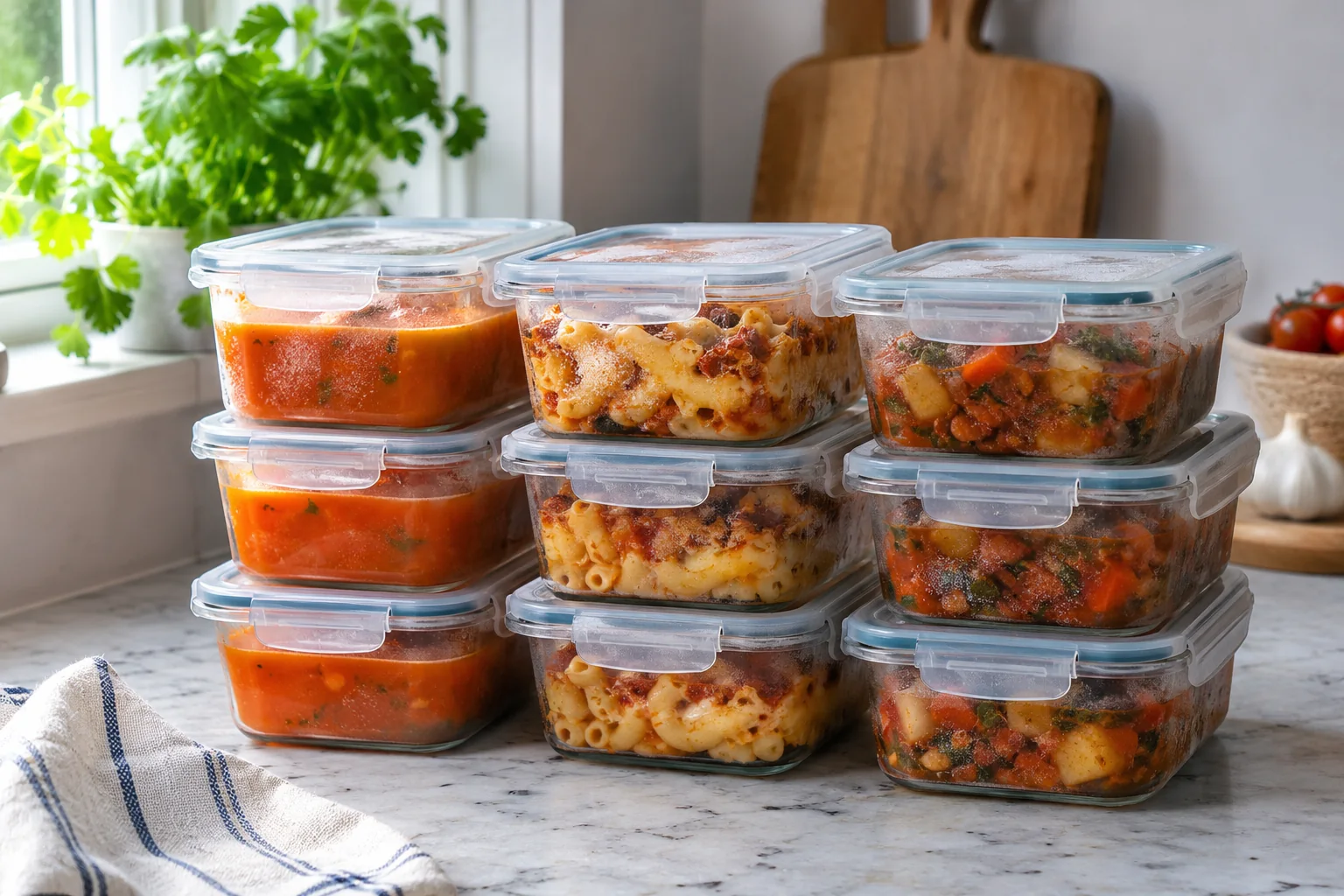
A well-stocked freezer can be the difference between a calm weekday dinner and an expensive last-minute scramble. Not every meal freezes equally well, though: bean soups and tomato sauces often survive beautifully, while fresh lettuce, crisp toppings and delicate creamy sauces may lose their texture. The best freezer cooking prepares meals with an actual thaw-and-reheat plan rather than simply placing leftovers in the coldest compartment.
Choose recipes designed for freezing
Start with tested freezer-friendly soups, stews, casseroles, sauces or cooked components. They should be fully cooked or clearly labelled as unbaked, with appropriate cooking instructions later. A raw frozen casserole and a cooked frozen casserole need different handling; they aren't interchangeable just because they fit the same pan.
Tomato sauce is a versatile first batch
A large pot of simple tomato sauce can become pasta, bean soup, pizza topping or shakshuka-style eggs. Freeze in small measured portions so you thaw only what you need. Add fresh herbs or cream after reheating when the recipe recommends it.
Bean soups and lentil stews
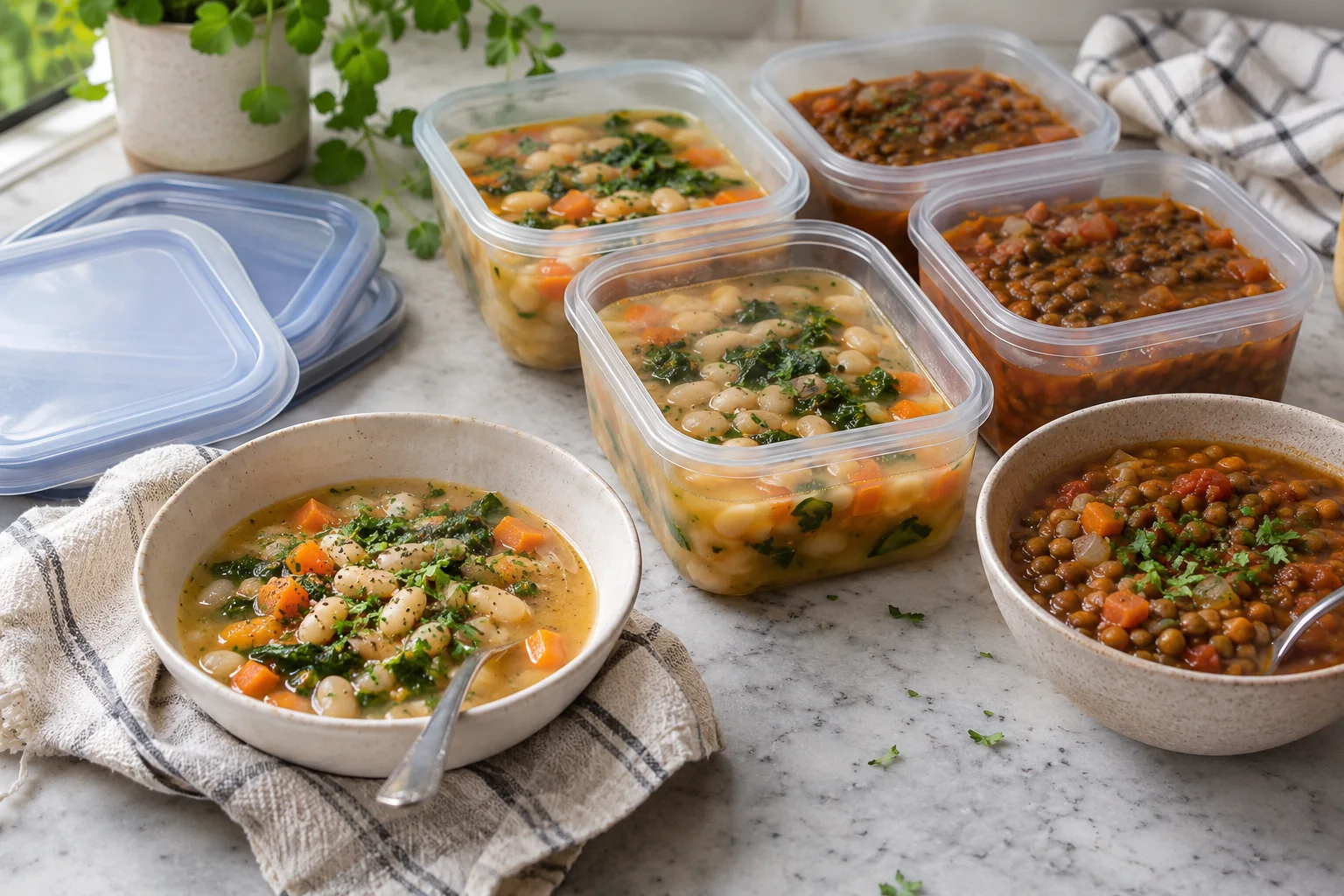
Lentils and many beans handle freezing well in suitable soup formulas. The texture may thicken on standing, so a little broth or water can restore the intended consistency during safe reheating. Avoid freezing very large deep pots that cool slowly; divide into shallow containers first.
Recipe to try: White Bean Soup. Use this complete recipe and its own storage directions. Freeze it only with a suitable cooling, packaging and reheating plan; the serving photo shows the finished dish.
Chili for a future dinner
Vegetarian or meat chili is a useful freezer meal because its bold flavours hold up during reheating. Cook all meat to the required safe temperature before freezing a finished chili. Divide into family-size and individual portions, labelling whether the dish contains meat, soy or dairy.
Curry and sauce-based meals
Some tomato-based chickpea curries freeze well. Coconut-milk and dairy-rich sauces may separate depending on the recipe; a tested formula should specify whether to add cream or yogurt later. Freeze the protein and sauce separately from rice where that improves texture.
Baked pasta considerations
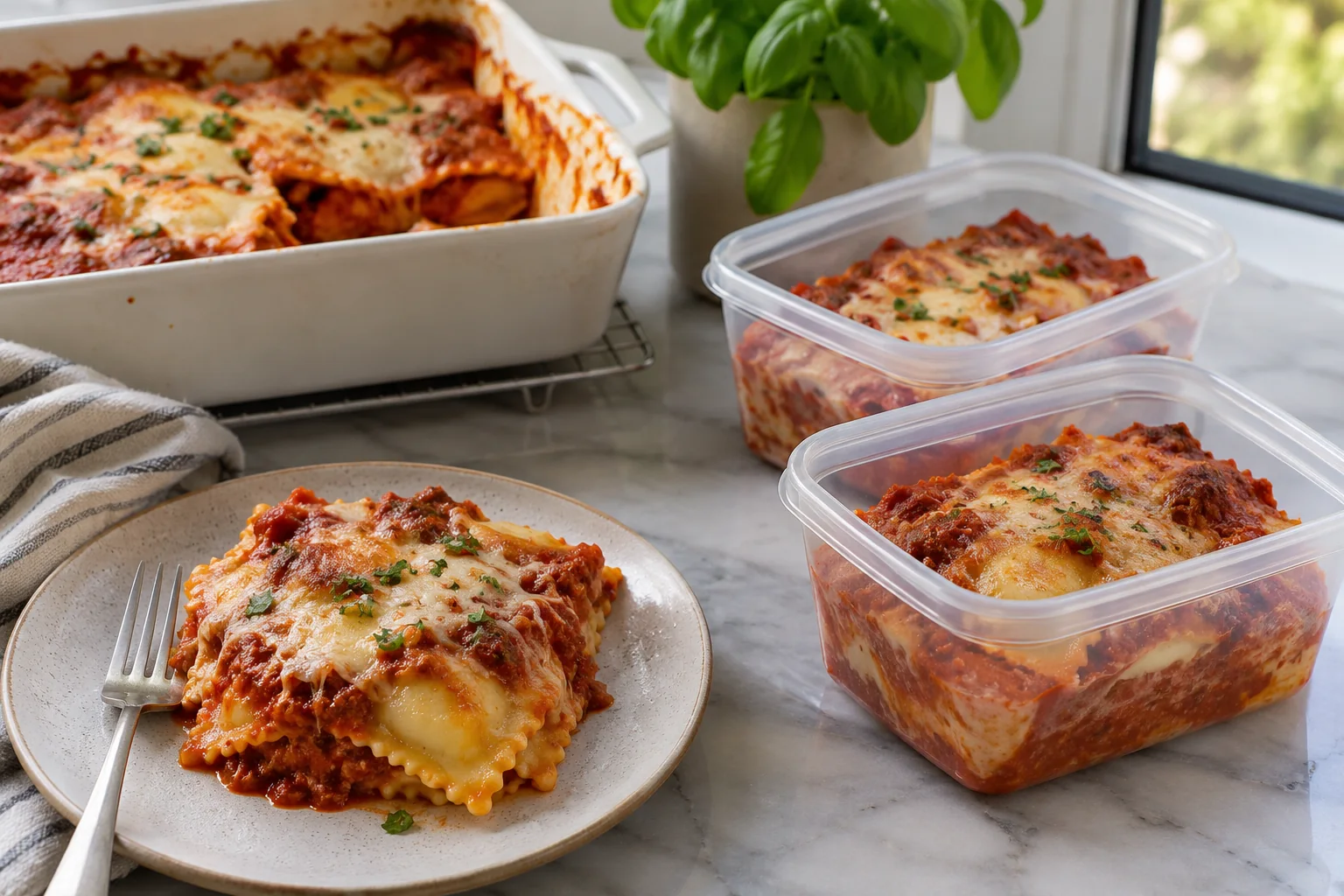
A lasagna or baked ziti can be frozen when the formula provides instructions, either before or after baking. Pan size, dairy filling and pasta hydration affect reheating. A deeply frozen unbaked lasagna may need a much longer bake than a refrigerated one, so follow a validated schedule and verify centre doneness.
Recipe to try: Ravioli Lasagna Bake. Use this complete recipe and its own storage directions. Freeze it only with a suitable cooling, packaging and reheating plan; the serving photo shows the finished dish.
Shepherd's pie and mashed-potato toppings
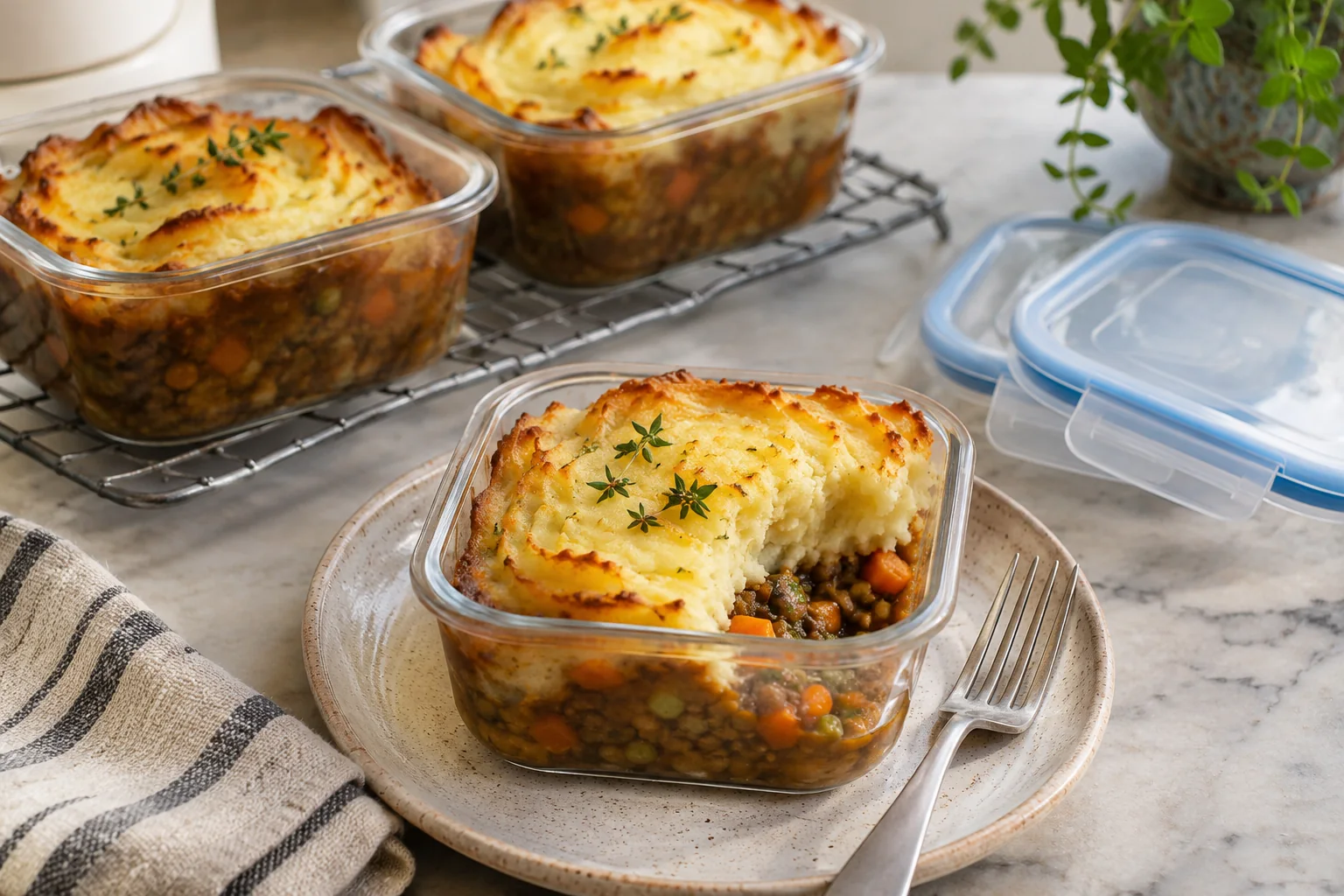
A savoury bean, lentil or meat filling beneath mashed potatoes often suits portioned freezing. Cool properly, package and label. Potato texture can change after thawing depending on fat and moisture level; a recipe developed for freezing generally gives the best result.
Recipe to try: Vegan Shepherd's Pie. Use this complete recipe and its own storage directions. Freeze it only with a suitable cooling, packaging and reheating plan; the serving photo shows the finished dish.
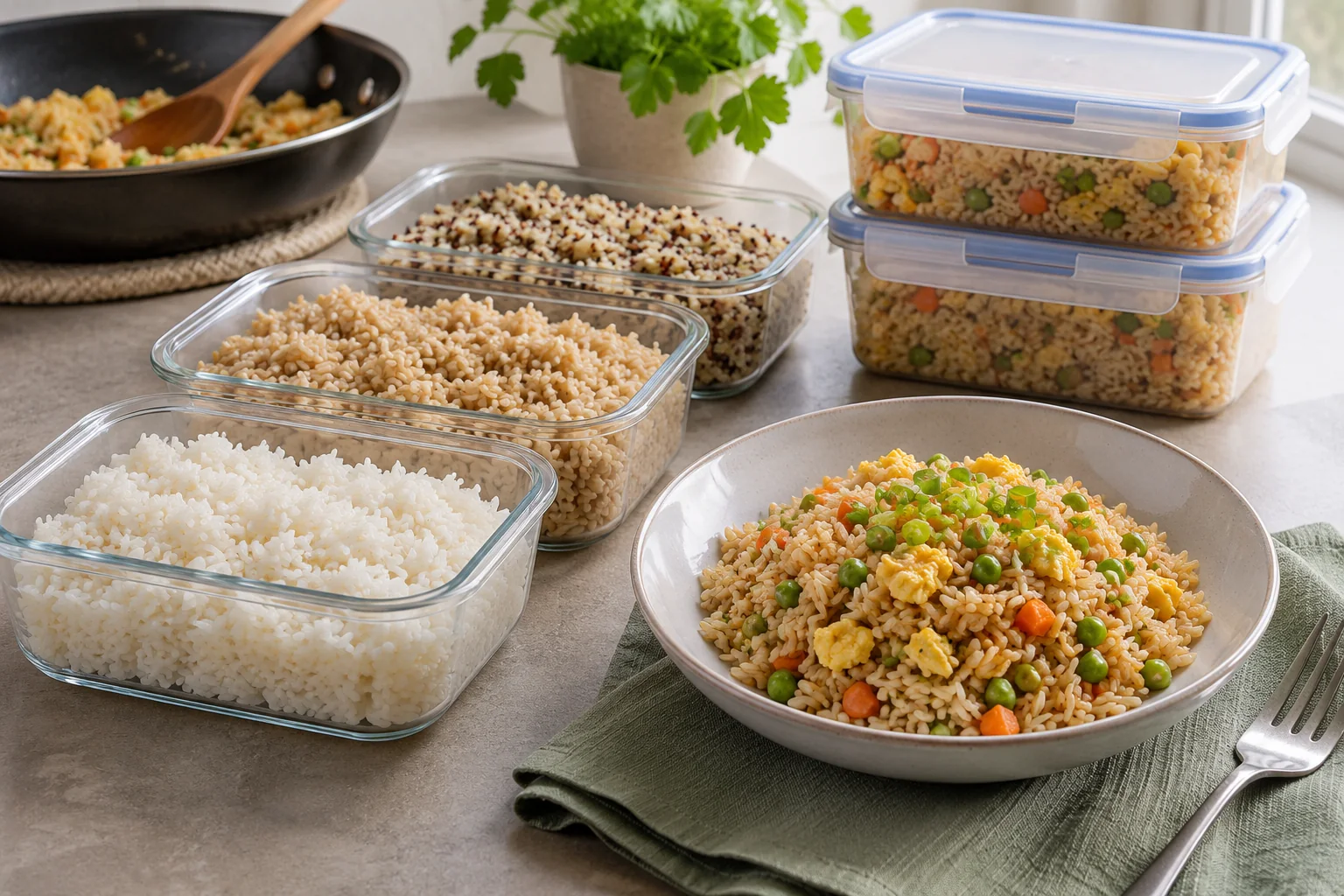
Cooked rice and grains
Safely cooked and rapidly chilled rice or quinoa can be divided into portions and frozen. Rice must not stand at room temperature for hours before packaging. Reheat thoroughly under the appropriate method, and don't serve grains that were mishandled before freezing.
Recipe to try: Egg Fried Rice. Use this complete recipe and its own storage directions. Freeze it only with a suitable cooling, packaging and reheating plan; the serving photo shows the finished dish.
Roasted vegetables
Some roasted carrots, squash or cauliflower work well in soups, sauces and grain bowls after freezing, even if they lose a crisp exterior. Their high water content can make them softer on thawing. Freeze them for a second use that welcomes softness rather than expecting perfect freshly roasted edges.
Breakfast components
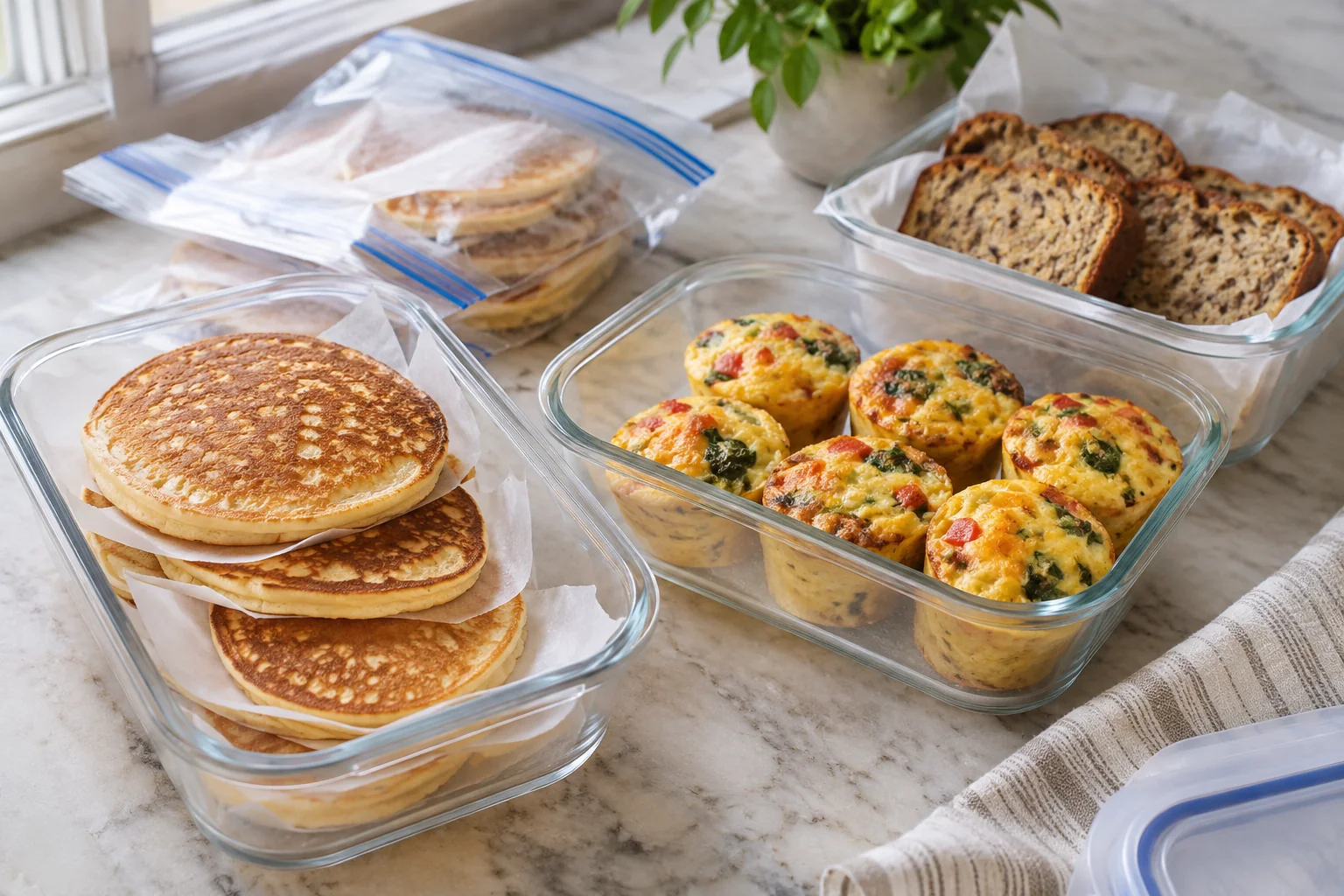
Some baked egg muffins, pancakes and waffles may be frozen under recipe-specific directions. Eggs and dairy need safe refrigeration and thawing, while waffles often reheat more crisply in a toaster or oven than in a microwave. Don't freeze raw egg dishes without a tested freezing plan.
Recipe to try: One-Bowl Pancakes. Use this complete recipe and its own storage directions. Freeze it only with a suitable cooling, packaging and reheating plan; the serving photo shows the finished dish.
Freeze food in realistic portions
Use single-serve containers for work lunches and larger family portions for dinner. A giant frozen block of chili takes longer to thaw and encourages reheating more than needed. Portion sizes should match how the food will be eaten.
Cool rapidly before freezing
Divide large amounts into shallow containers and refrigerate promptly so heat can escape. Avoid stacking deep, tightly sealed hot containers. Never leave stew out overnight and then try to make it safe by freezing it.
Use freezer-rated packaging
Rigid containers, appropriate freezer bags and tightly wrapped portions protect against air exposure and drying. Allow suitable headspace for liquids that expand as they freeze. Label each item with the contents, cooking date and any special ingredients or allergens.
Keep the freezer cold
The recommended freezer temperature is -18°C (0°F) or colder. Use an appliance thermometer when possible. A freezer protects food only when the product was handled safely before freezing and kept at appropriate temperature; it doesn't make spoiled leftovers safe.
Understand best-quality periods
Freezer quality depends on the dish, packaging and steady temperature. Follow the recipe’s category-specific storage guidance and label each portion with its cooking date. Freezing slows deterioration but does not reverse unsafe handling before the food entered the freezer.
Thaw in the refrigerator
Refrigerator thawing is a dependable method for many frozen meals, especially large portions. Some recipes permit reheating directly from frozen or using an approved microwave defrost setting. Don't thaw perishable containers on the counter all day to save a few minutes.
Reheat to a safe temperature
Heat leftovers throughout to 74°C (165°F), checking the centre with a food thermometer. Bring soups and sauces to a rolling boil while stirring. A bubbling edge does not establish that a frozen centre has reheated safely.
Reheat only what you'll eat
Avoid repeatedly warming and chilling the entire container. Take out one portion, heat it thoroughly and leave the rest safely frozen. This preserves texture and limits handling. If you thaw a container in the refrigerator, follow its remaining storage window rather than resetting the clock.
What doesn't freeze particularly well?
Uncooked lettuce, cucumber, watery raw tomatoes and many crisp garnishes become limp after thawing. Some custards, dairy emulsions and delicate cream sauces separate. Freezing the cooked base and adding fresh garnish afterward often produces a better finished meal.
Make a three-dinner freezer set
Start with one tomato-and-bean soup, one casserole or chili and one cooked sauce. Portion and label them. Add a bag of frozen vegetables and a shelf-stable grain so each frozen component can become a complete meal without another grocery trip.
Schedule freezer meals strategically
Use a frozen dinner on the nights your calendar is fullest, not only when you're already exhausted. Move a suitable portion to the refrigerator in advance for safe thawing, or choose one with tested cook-from-frozen directions. A little planning makes freezer cooking feel intentional.
Rotate the inventory
Keep older labelled packages near the front, review the freezer monthly and record meals you'll enjoy making again. Mystery containers are rarely appealing. A simple list with name, portion count and date prevents forgotten freezer leftovers.
Don't freeze unsafe food
A dish left outside safe holding temperatures too long isn't rescued by freezing. Discard food that has been mishandled or contaminated, even if it smells normal. Proper freezing begins with food that was cooked and cooled safely.
Prepare now, enjoy later
Choose sturdy recipes, divide them into useful servings, chill and freeze promptly, label clearly and reheat according to the tested method. A few good frozen meals give your future self more options without sacrificing safety or texture.
Related recipe: Creamy Tuscan Chicken Casserole.
IN PICTURES
From the baking notebook
FROM THE RECIPE BOX


