
On this page
Both evaporated milk and sweetened condensed milk are sold in cans of concentrated dairy, yet swapping one for the other can ruin a filling. Evaporated milk is usually unsweetened concentrated milk. Sweetened condensed milk contains substantial added sugar and becomes thick, sweet and syrupy. They solve different baking problems and produce very different custards, sauces and cakes.
Evaporated milk in simple terms
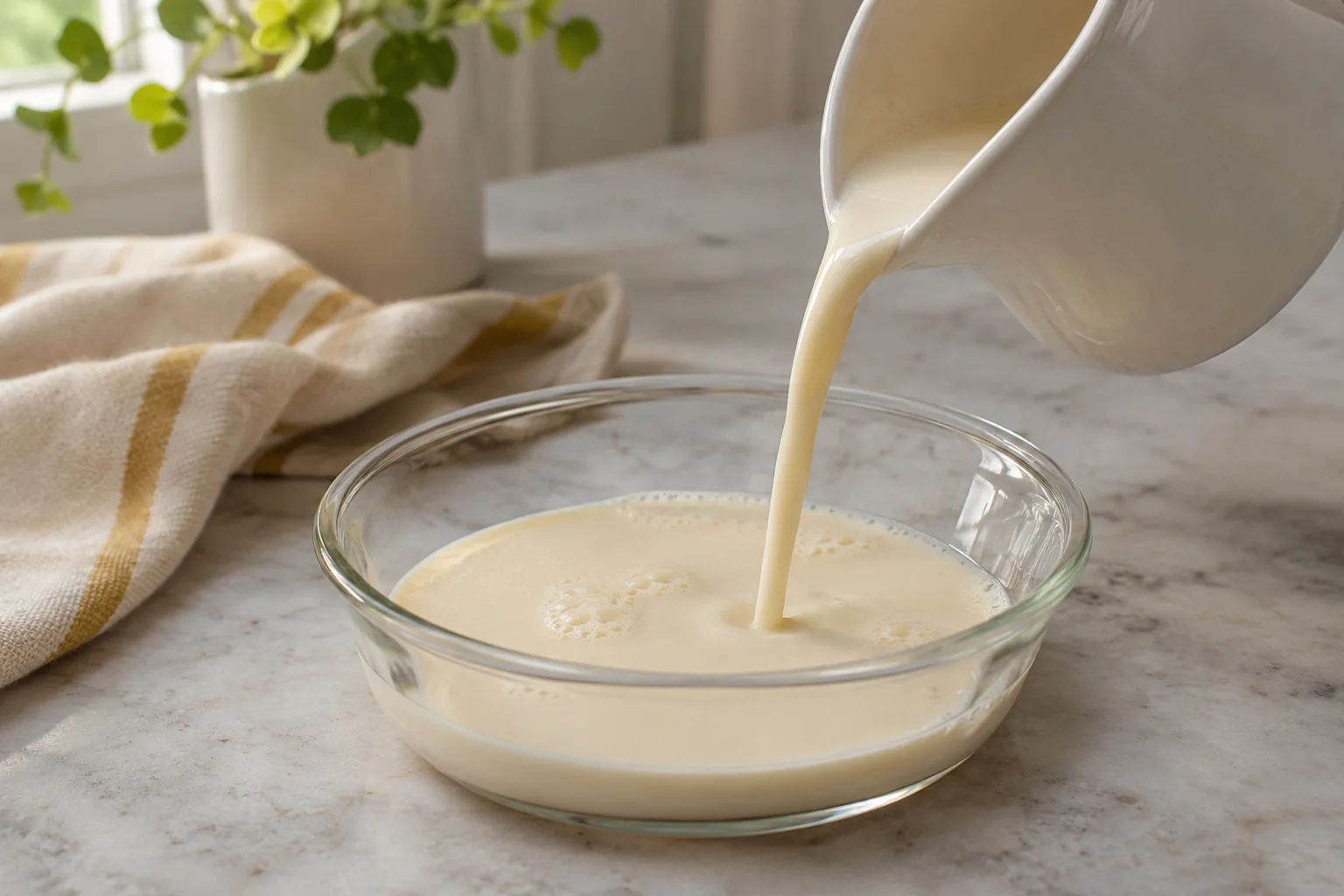
Evaporated milk is dairy milk that has had a substantial portion of its water removed through processing, followed by heat treatment and packaging. It is generally sold without added sugar, though the label should always be checked. Its cooked dairy flavour and concentrated solids can enrich pumpkin pie, sauces and certain custards.
Sweetened condensed milk in simple terms
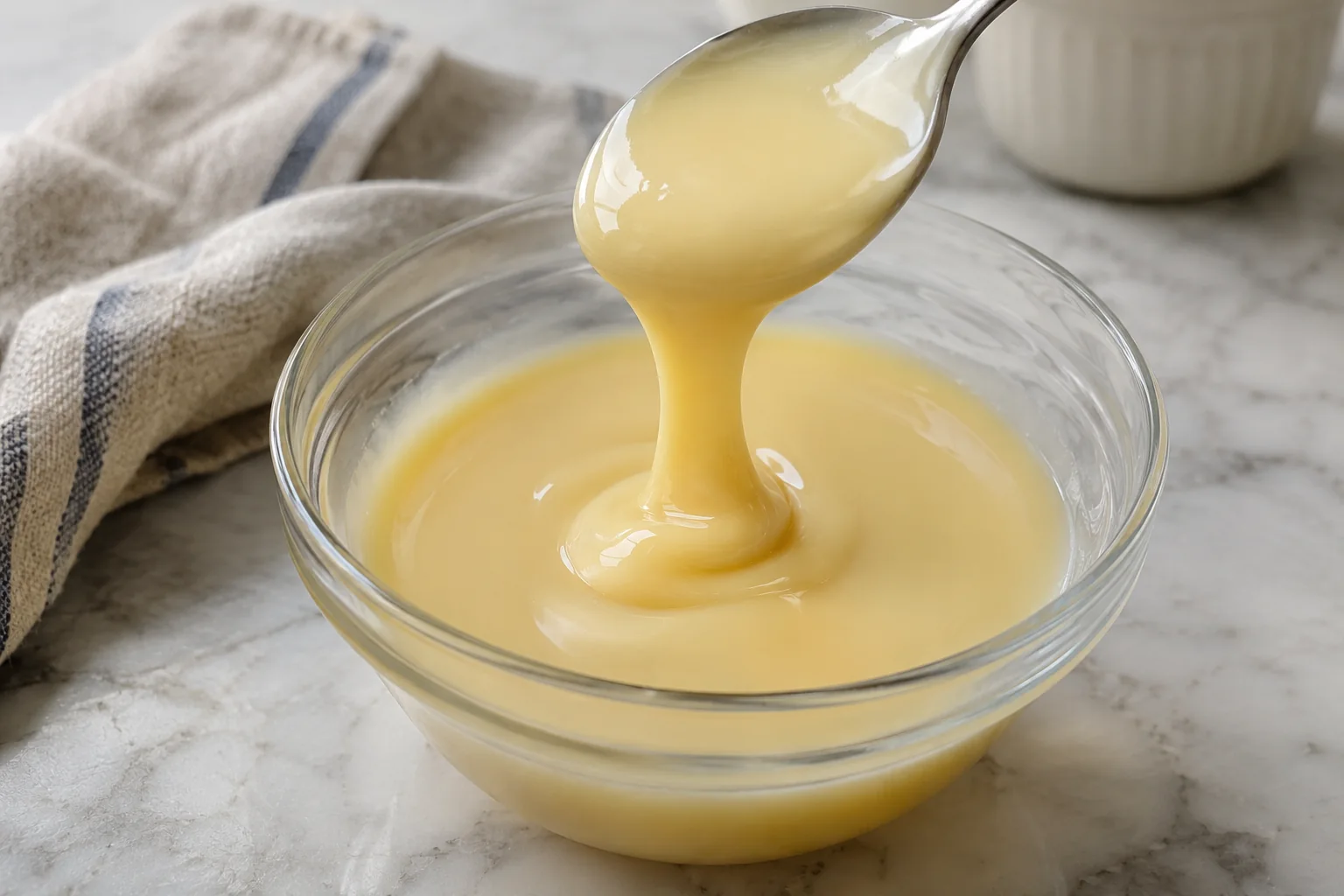
Sweetened condensed milk also starts with milk concentrated through water removal, but contains a large quantity of added sugar. That changes sweetness, viscosity and shelf stability while unopened. It is a principal ingredient in key lime pie, some fudge and many no-bake or minimally cooked desserts.
Why the names are confusing
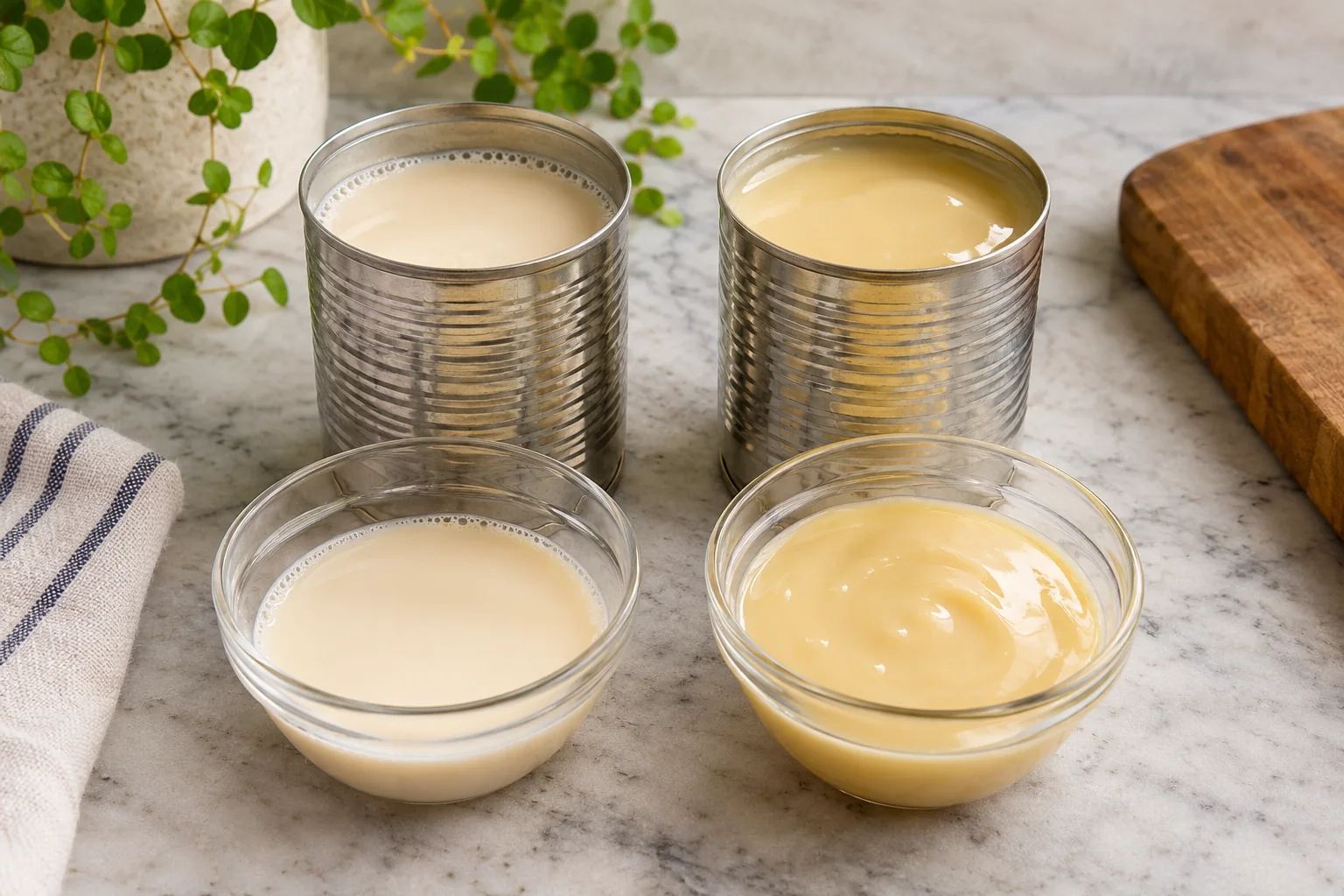
Both are concentrated milk products in shelf-stable cans. In some regions, condensed milk commonly means the sweetened product, while evaporated milk is labelled separately. Never infer the contents from can size or appearance alone; look for the word sweetened.
The main difference is sugar
Evaporated milk can contribute dairy richness without dramatically increasing sweetness. Sweetened condensed milk is itself a major sweetening ingredient. A recipe balanced for one cannot accept the other without a complete reformulation of sugar, liquid and often eggs.
How thick are they?
Evaporated milk is generally pourable, somewhat richer than ordinary milk. Sweetened condensed milk is much thicker and syrupy because its high sugar concentration changes viscosity. Neither behaves exactly like heavy whipping cream or ordinary liquid milk in every recipe.
Pumpkin pie commonly uses evaporated milk
Traditional pumpkin custard formulas frequently use evaporated milk alongside pumpkin purée, sugar, eggs and spices. Its concentrated dairy solids help create a rich filling. Using sweetened condensed milk instead without reducing sugar and adapting the method can produce an overly sweet or differently set pie.
Recipe to try: Pumpkin Pie. Rich, silken pumpkin custard spiced with cinnamon, nutmeg, and cloves baked in a buttery, flaky crust that embodies the essence of autumn comfort.

Some pumpkin pies use sweetened condensed milk
A separate family of tested pumpkin pie recipes deliberately uses sweetened condensed milk and adjusts other ingredients accordingly. Both styles can be excellent. The lesson is not that one ingredient is forbidden in pumpkin pie but that each belongs to a particular formula.
Key lime pie often uses condensed milk
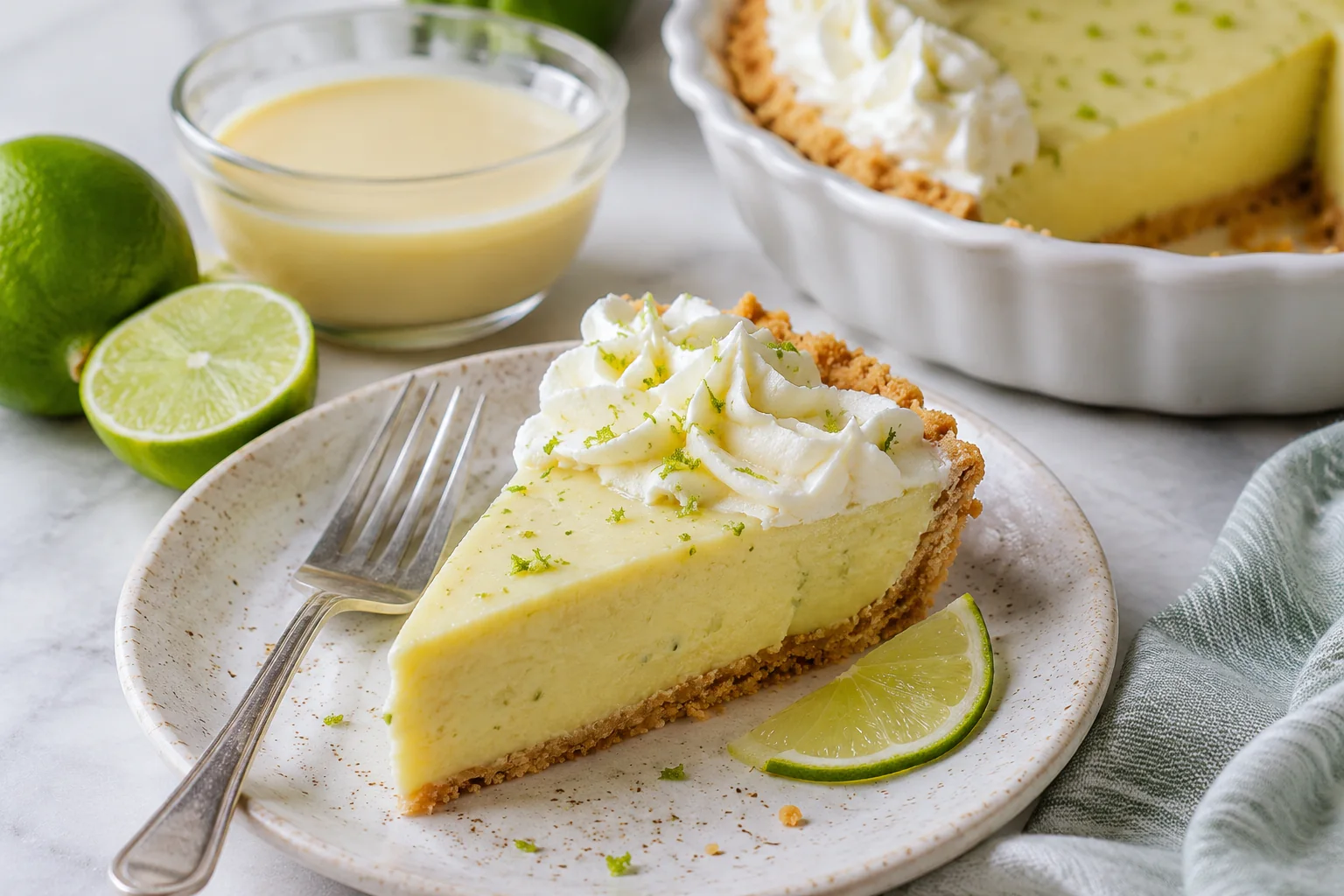
Many key lime pie recipes combine sweetened condensed milk with citrus and egg yolks or another setting system. The sugar and milk solids help determine texture and sweetness. Replacing it with evaporated milk without a developed recipe won't produce the same thick filling.
Recipe to try: Key Lime Pie. Tangy key lime filling nestled in a buttery graham cracker crust, topped with billowy whipped cream for a refreshing, perfectly balanced sweet-tart dessert.
Condensed milk in fudge
Some shortcut fudge formulas rely on sweetened condensed milk for a specific balance with chocolate. Its sugar content and reduced water influence the final set. Unsweetened evaporated milk may work in a different stovetop fudge method, but isn't an equivalent swap.
Evaporated milk in sauces
Evaporated milk can lend body and a cooked dairy character to some sauces and puddings. It is useful in recipes where sweetness should be controlled separately. If the formula wants a highly sweet condensed-milk base, evaporated milk will taste comparatively bland and may be much thinner.
What about dulce de leche?
Dulce de leche is a cooked milk-and-sugar confection, sometimes made using sweetened condensed milk in a tested safe method. Never heat a sealed unopened can in boiling water or an oven; pressure and heat can make it dangerous. Use a safe open-container recipe developed for caramelized dairy.
Milk fat differs by product
Evaporated milk and condensed milk are available in different fat levels, including some low-fat versions. Read the label and avoid assuming all cans have the same fat or protein concentration. Product variations may change the texture of custards or fudge.
Can one replace heavy cream?
Neither canned milk acts exactly like heavy whipping cream, because fat and water balances differ. Evaporated milk may work as a cooking substitute in certain tested sauces, while condensed milk contains too much sugar for many savoury or neutral recipes. Neither reliably makes ordinary whipped cream.
Can you thin condensed milk?
Adding water can reduce viscosity but does not remove the added sugar. Thinned sweetened condensed milk remains sweet and won't become true evaporated milk. For a dessert formulated around unsweetened dairy, buy the correct ingredient rather than trying to dilute away sweetness.
Can you sweeten evaporated milk?
You can combine evaporated milk with sugar in a recipe, but a spoonful of sugar stirred into a can won't necessarily reproduce commercial sweetened condensed milk's concentration or consistency. Use an actual tested homemade condensed milk recipe if needed.
How heat treatment affects flavour
Evaporated milk often has a noticeable cooked milk taste, and condensed milk can taste caramel-like even before additional cooking. The processing of lactose, milk proteins and sugars contributes to these flavours. Some recipes embrace them, while others prefer fresh milk or cream.
Using the right measuring unit
Cans may carry fluid volume and net weight, which aren't interchangeable measurements. A recipe calling for a 300-mL can of evaporated milk is not necessarily asking for the same weight as a similarly sized condensed milk can. Follow the specific product and quantity stated.
Storage before opening
Both may be shelf-stable when unopened and stored according to manufacturer guidance. Inspect cans for swelling, leakage or severe damage. Shelf stability depends on commercial processing and packaging, not permission to leave the opened product on the counter.
Storage after opening
Transfer leftovers to an appropriate clean container and refrigerate at 4°C (40°F) or colder according to the product label. Sweetened condensed milk can remain viscous and sugary in the refrigerator but still requires appropriate handling after opening.
Ingredient substitutions and allergies
Both products contain dairy milk proteins and are unsuitable for people with milk allergies. Coconut condensed milk and other plant-based alternatives have distinct sugar and fat formulas. Choose a dessert recipe developed for the specific alternative rather than assuming all cans behave the same way.
Frequently asked questions
Is evaporated milk sweetened? Usually no. Is sweetened condensed milk the same as evaporated milk with sugar? Not exactly. Can I replace one with the other in pumpkin pie? Only via a tested different recipe. Is either heavy cream? No. Can I boil a sealed can for caramel? Do not heat sealed cans.
Read the word before opening the can
Use evaporated milk where a recipe wants concentrated unsweetened dairy, and sweetened condensed milk where both milk solids and abundant sugar create the dessert's structure. Their similar packaging hides a substantial technical difference.
Recipe to try: Tres Leches Sheet Cake. This moist, sweet sponge cake soaked in three different milks delivers a velvety texture and rich flavor that melts effortlessly on your tongue.
IN PICTURES
From the baking notebook
FROM THE RECIPE BOX


