On this page
There is a particular moment when sugar changes from ordinary white crystals into something extraordinary: a pool of amber caramel with a deep, almost toasted aroma. Getting there can feel intimidating, especially when one batch turns beautifully golden and the next crystallizes or burns. The first decision is deceptively simple: should you start with sugar alone or sugar and water?
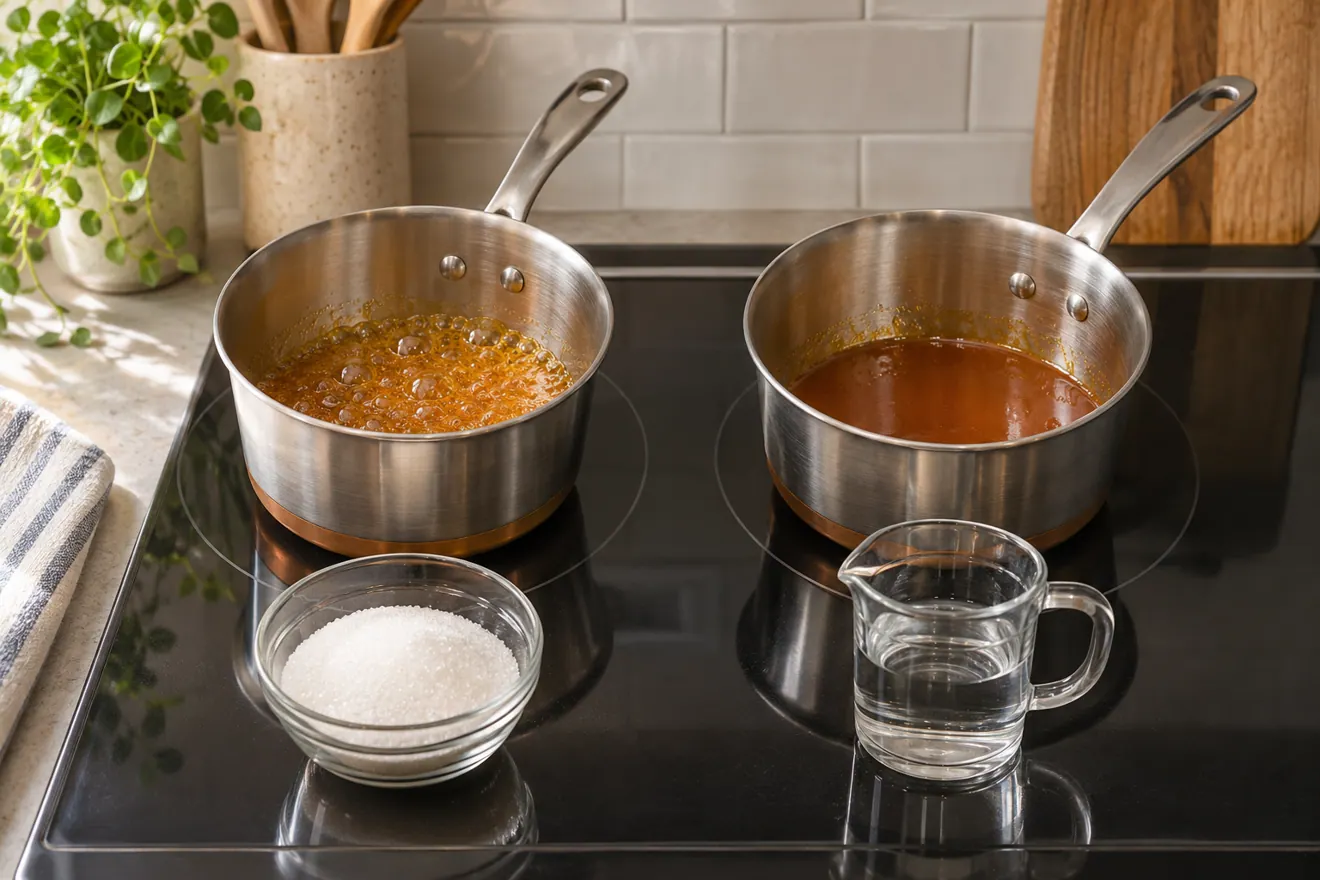
Dry caramel and wet caramel reach the same essential goal through different starting methods. Neither is automatically more professional or more delicious. What matters is how evenly the sugar heats, when you stop cooking, and what you intend to make with the caramel afterward.
Dry Caramel vs Wet Caramel: The Short Answer
Dry caramel starts with granulated sugar placed directly into a saucepan. The sugar gradually melts and browns as it heats. Wet caramel starts by dissolving sugar in water; the water then boils away before the concentrated syrup becomes hot enough to caramelize.
Both methods can create a smooth amber caramel for sauces, decorations and other confections. The water in a wet caramel is primarily a processing aid at the beginning, not a guarantee that the finished caramel will remain thin. Final texture depends on how you finish the caramel, its temperature and any later ingredients such as cream or butter.
Why Does Sugar Turn Brown?
Caramelization is a series of chemical changes that occur when sugar is heated strongly enough. Sugar molecules break down and react, creating new flavour and colour compounds. A light golden caramel tends to taste sweet and relatively delicate, while deeper amber caramel develops more toasted and bittersweet notes.
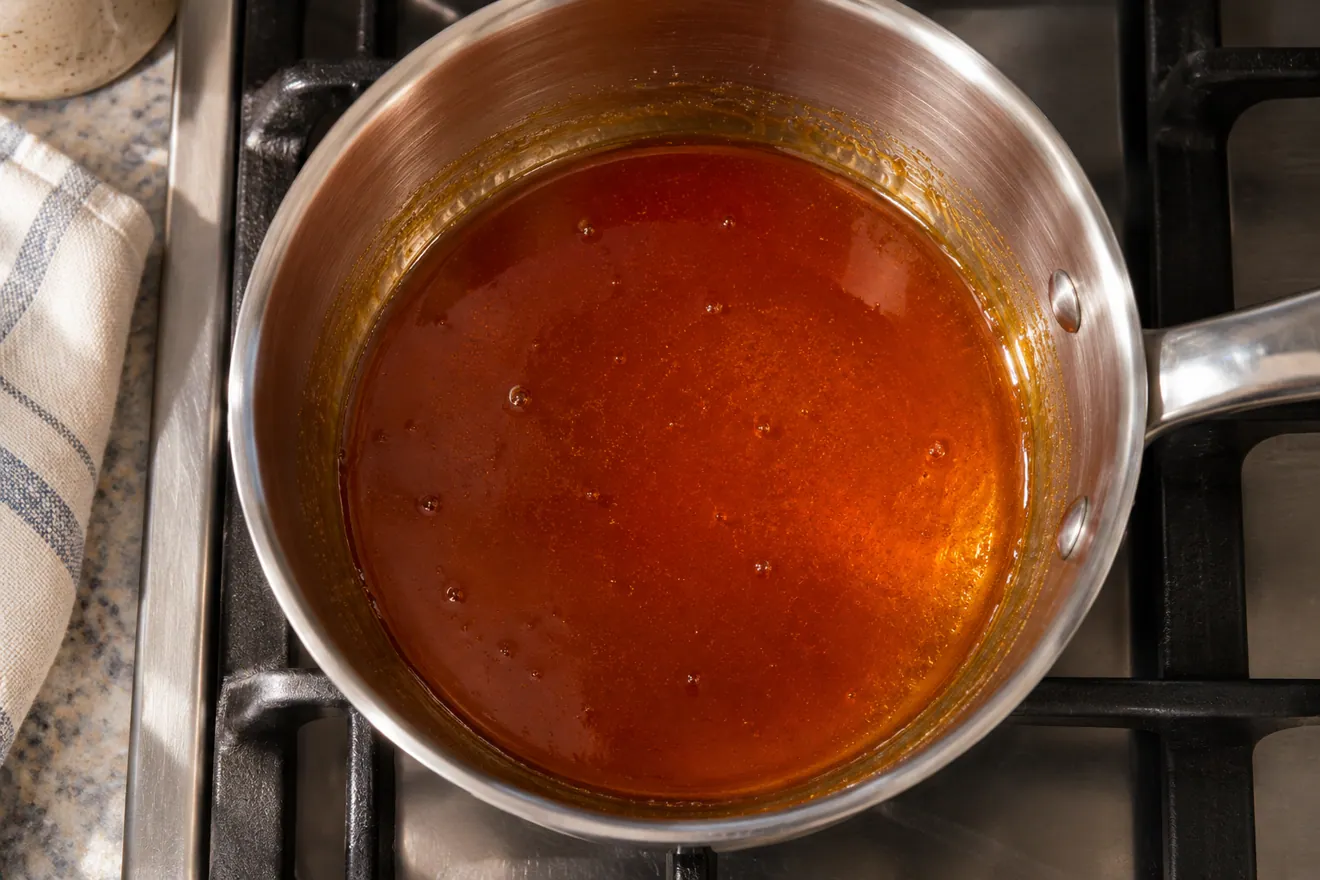
Colour progresses quickly toward the end of cooking. An amber caramel can become scorched in a surprisingly short time, and the hot pan continues transferring heat even after you've removed it from the burner. Have your next step ready before the sugar reaches the colour you want.
What You Need Before Starting
Use a clean, heavy-bottomed saucepan with enough depth to manage bubbling. A pale-coloured interior can make the caramel's colour easier to judge than a dark pan. Have a heat-resistant spatula or suitable utensil, a clear work area and a safe surface ready for the hot pot.
Wear appropriate clothing and keep children and pets away from the cooking zone. Caramel is extremely hot and sticky, so contact can cause serious burns. Never taste it from a spoon while it's cooking, and never add a splash of cold liquid without following a tested caramel recipe's safety instructions.
How Dry Caramel Works
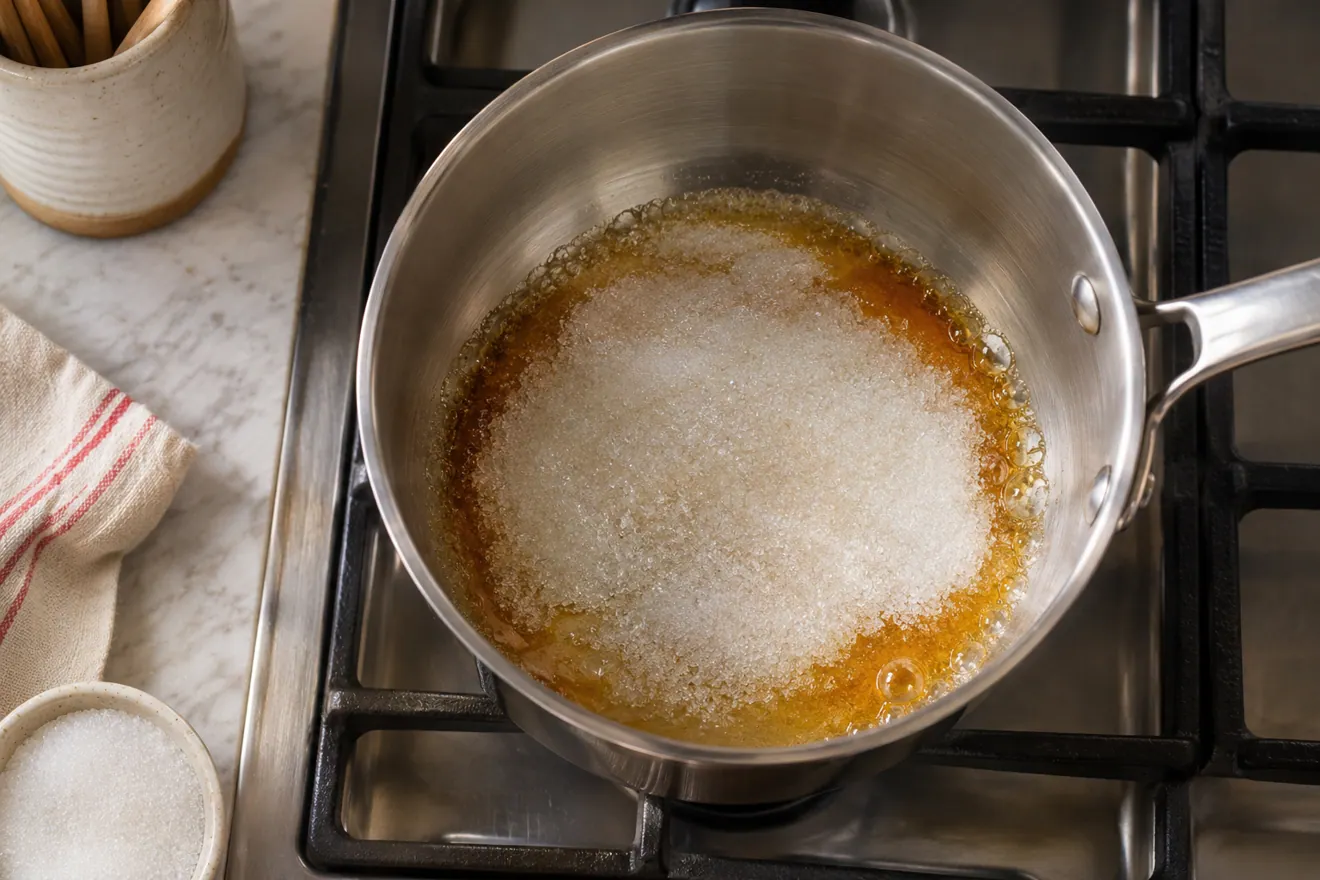
For a dry caramel, sugar is spread in an even layer in a suitable saucepan and warmed over controlled heat. Some techniques add the sugar gradually as earlier sugar melts; others begin with the full amount. Follow the particular recipe's method rather than combining instructions from different sources.
As the edges begin to melt, use the gentle movement recommended by the recipe to encourage even melting without flinging crystals onto the cooler walls. A mound of sugar over very high heat can burn at the bottom while dry granules remain above it.
Spread the sugar into an even layer so the edges and centre heat more evenly. For a first attempt, a small batch gives you more time to see how the melting patches join.
Why Choose Dry Caramel?
Dry caramel can be relatively quick because you don't spend time boiling off an initial quantity of water. It is useful in small batches and in methods where you want a direct view of the sugar melting and changing colour.
The trade-off is a narrower window for reacting. Hot spots can develop, and the sugar may move from golden to dark quickly. If you are new to caramel, the wet method can be easier to manage.
How Wet Caramel Works
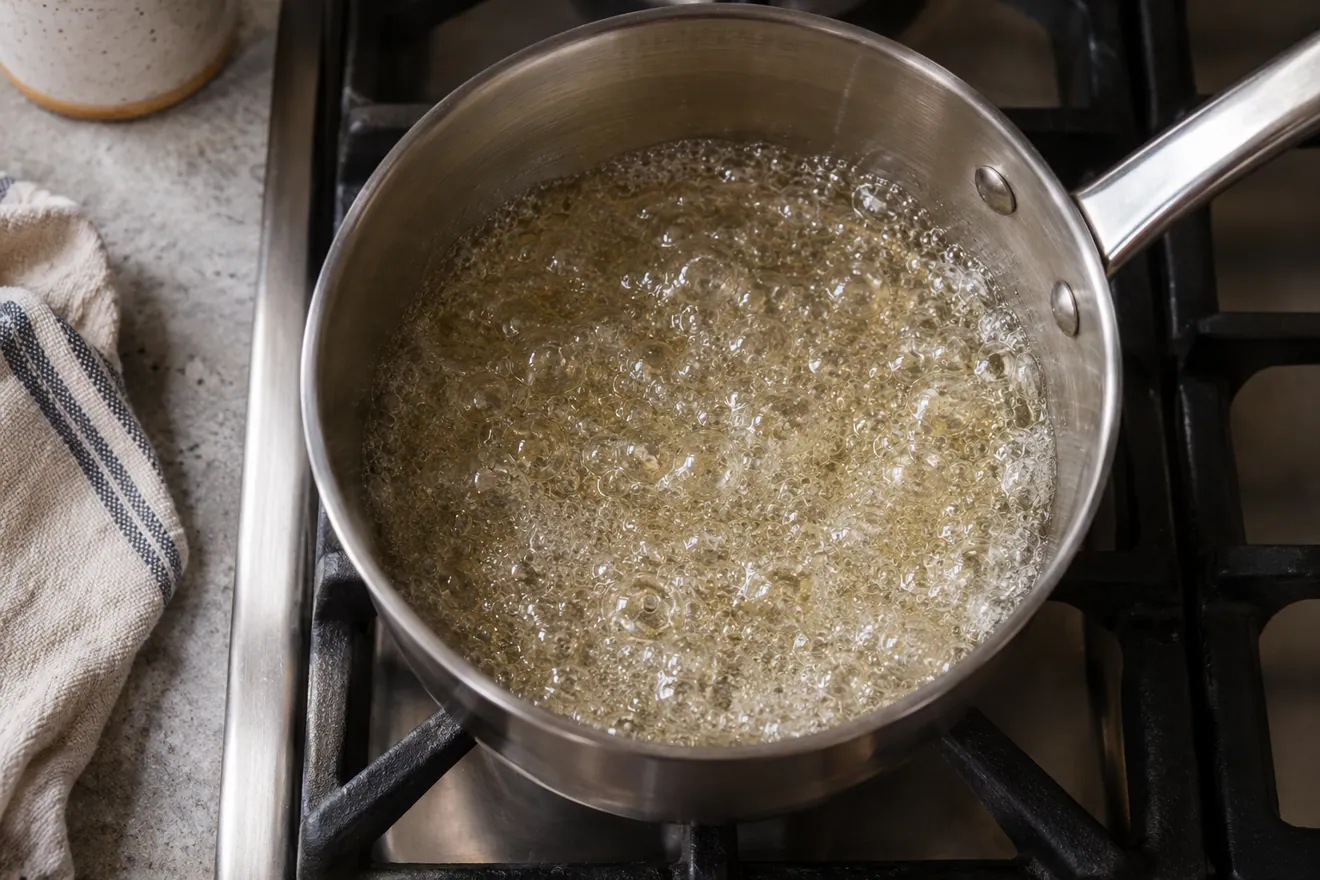
In the wet method, granulated sugar and the recipe's measured water are heated together until the sugar dissolves. Once the syrup boils and the crystals have dissolved, many methods advise stopping stirring and gently swirling the pan as needed.
Steam escapes, the syrup becomes more concentrated and the temperature eventually rises into caramelization. The water gives the sugar time to dissolve and distribute more evenly before browning begins, which can make the process feel less abrupt.
Why Choose Wet Caramel?
Wet caramel is often friendlier for beginners because the dissolved sugar heats more evenly. It can be useful when the recipe calls for a carefully controlled syrup before caramelization or includes ingredients intended to discourage crystallization.
It usually takes longer to reach amber than dry caramel. Wet caramel also has a particular failure mode: stray sugar crystals or excessive agitation after boiling can encourage the syrup to crystallize.
Which Method Is Better for Caramel Sauce?
Either method can produce an excellent sauce when the recipe is designed for it. Sauce texture comes largely from the proportions of finished caramel, cream, butter and any other ingredients, as well as the cooking and cooling process.
If you're making caramel sauce for the first time, a well-tested wet caramel recipe with clear instructions may be a good choice. Don't take the sugar quantities from a dry recipe and the cream quantities from another sauce recipe; the full formula matters.
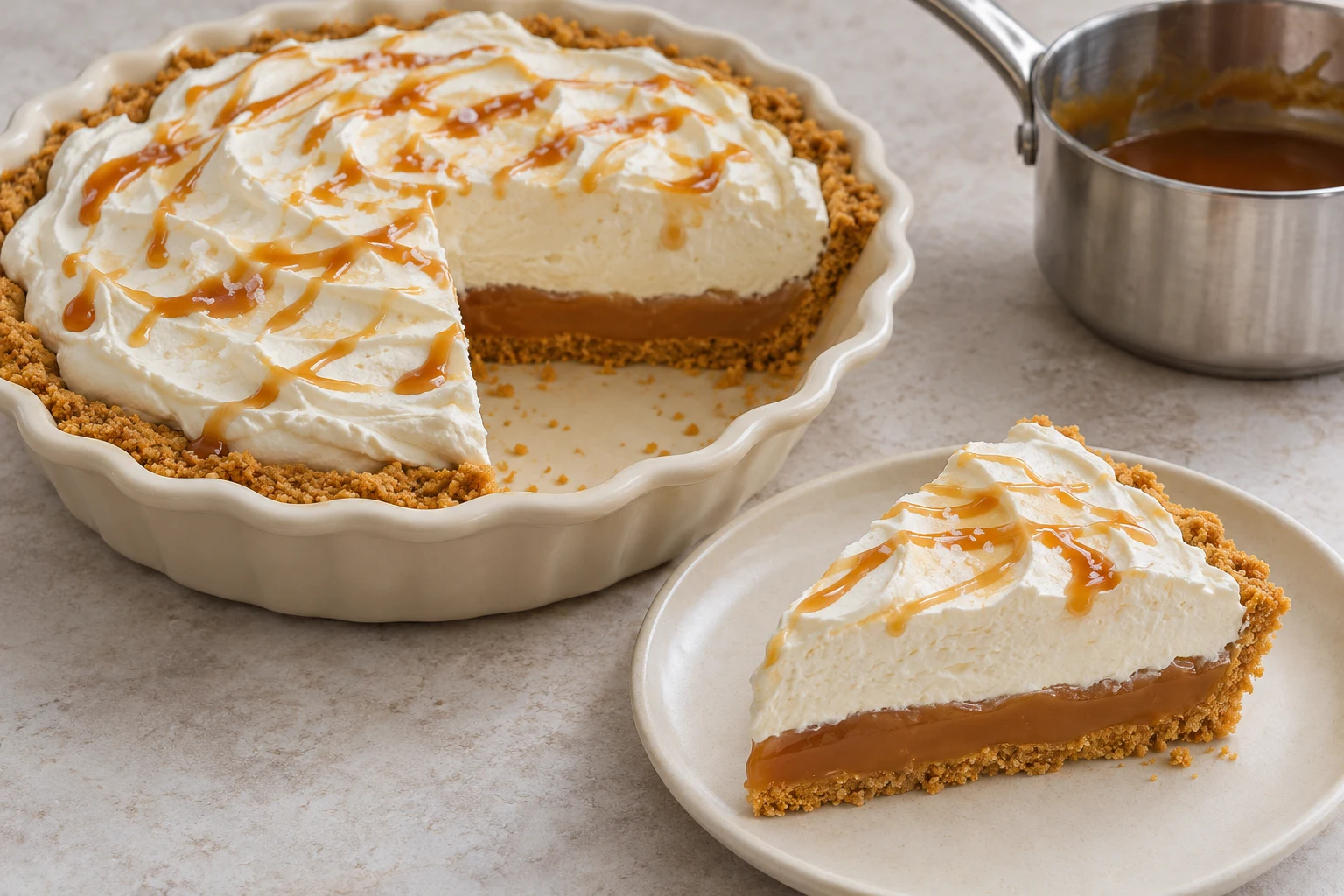
Try Salted Caramel Cream Pie for a dry caramel made by melting sugar before adding butter and cream. It sets into a layer beneath a chilled cream topping.
Which Method Works for Decorations and Sugar Work?
Some recipes for spun sugar, caramel shards or decorative sugar use the dry method, while others begin with a syrup. The correct approach depends on the target temperature, colour, humidity and final form.
Decorative caramel can harden very quickly and is dangerously hot while being shaped. These projects are not appropriate for unsupervised children or an improvised first attempt. Work from a detailed tested recipe and use suitable protective equipment.
Why Wet Caramel Sometimes Turns Grainy
Graininess is often related to crystallization. Sugar crystals remaining along the side of the saucepan can fall back into the syrup and encourage other dissolved sugar molecules to form crystals. Aggressive stirring after the syrup is boiling may create a similar problem in susceptible recipes.
To reduce risk, begin with a clean pan, dissolve sugar completely as instructed, and avoid scraping dry crystals from the side into the boiling syrup. Some recipes recommend brushing the sides with water or briefly covering the pan so condensation washes crystals down.
What Do Corn Syrup or Cream of Tartar Do?
Some wet caramel recipes include a little corn syrup, glucose or acid to help discourage unwanted crystallization. These ingredients can interfere with the orderly formation of large sucrose crystals, giving the syrup more stability.
They are not required for every caramel method and should not be added by guesswork. Use the specific type and quantity supplied by the recipe. A small amount of acid can affect flavour and sugar chemistry, so the formula matters.
Why Dry Caramel Sometimes Clumps
If sugar melts unevenly, some granules can become coated in sticky melted sugar while others remain dry. That may produce hard lumps rather than one smooth pool. Very high heat increases the chance that caramelized patches burn before the remaining granules melt.
For the next batch, lower the heat, use a suitable wide pan and follow the recipe's gradual movement or sugar-addition instructions. Be cautious about trying to break hard caramel lumps with a tool near splattering hot sugar.
How to Judge Caramel Colour
Look for colour changes in the liquid sugar rather than the foam or bubbles alone. Light amber is usually sweeter and more delicate; medium amber has a fuller toasted flavour; very dark caramel can become sharply bitter and eventually burnt.
For certain applications, a tested recipe may provide a thermometer target. A thermometer is helpful, but don't rely on one universal temperature for every caramel sauce or confection, since the full recipe and desired stage determine the correct endpoint.
How to Stop the Cooking
Removing the pot from direct heat slows the process, but the heavy pan retains considerable heat. Follow the recipe's directions for stopping or finishing the caramel. For a sauce, that often means carefully incorporating designated ingredients at the correct temperature.
Adding cream or butter to hot caramel can cause vigorous bubbling and steam. Use a deep enough pan and keep hands and face away from the pot. Don't improvise with an extra splash of water to correct a dark batch.
Can Burnt Caramel Be Saved?
Once caramel tastes strongly burnt or acrid, adding cream, vanilla or salt won't reverse the chemical changes. A slightly deep caramel may suit a deliberately bittersweet recipe, but truly scorched sugar is better discarded after safe cooling.
Do not taste molten caramel to check. Judge colour and aroma from a safe distance, and allow the pot to cool before cleaning.
How to Clean a Caramel-Covered Pan
Hardened sugar can look impossible to remove, but it dissolves in water. Once the cookware can be handled safely, follow its manufacturer's cleaning guidance; simmering water in a suitable saucepan can help dissolve stuck caramel without aggressive scraping.
Never pour cold water into a dangerously hot pot or handle hardened caramel before it has cooled enough to be safe.
Quick Comparison
| Factor | Dry caramel | Wet caramel |
|---|---|---|
| Starting ingredients | Sugar | Sugar plus water |
| Early stage | Granules melt directly | Crystals dissolve before water evaporates |
| Typical speed | Often faster | Usually slower initially |
| Main challenge | Uneven melting and fast browning | Unwanted crystallization |
| Beginner appeal | Requires closer control | Often more forgiving |
| Possible uses | Caramel sauces and sugar work | Caramel sauces and sugar work |
Frequently Asked Questions
Does wet caramel taste less rich than dry caramel?
Not inherently. Both caramelize sugar, and flavour is closely tied to how far browning develops. The initial water largely evaporates before caramelization; the finished sauce or candy recipe determines other flavour differences.
Should I stir caramel while it cooks?
Follow the specific method. Wet caramel recipes often call for stirring to dissolve sugar and then avoiding stirring once the syrup boils. Dry caramel may use controlled stirring or gentle movement to melt evenly.
Is dry caramel always faster?
It often reaches caramel colour sooner because no initial water needs to evaporate, but actual timing depends on the sugar amount, pan and heat.
Why did my caramel become bitter?
The sugar may have cooked too dark or burned. Watch the colour carefully near the end and remove from the heat according to the recipe's target.
Can I switch the methods in a recipe?
Not without understanding the full formula and endpoint. It is safer to follow a recipe specifically written for the method you're using.
Which Method Should You Try First?
Start with wet caramel if you’re learning to recognize the colour stages or following a sauce recipe. Once you’ve seen the colour move from pale gold to amber, try a tested dry caramel so you can compare how quickly the sugar melts and darkens.
Some images are AI-generated illustrations of the dishes and techniques described.
IN PICTURES
From the baking notebook
FROM THE RECIPE BOX


