On this page
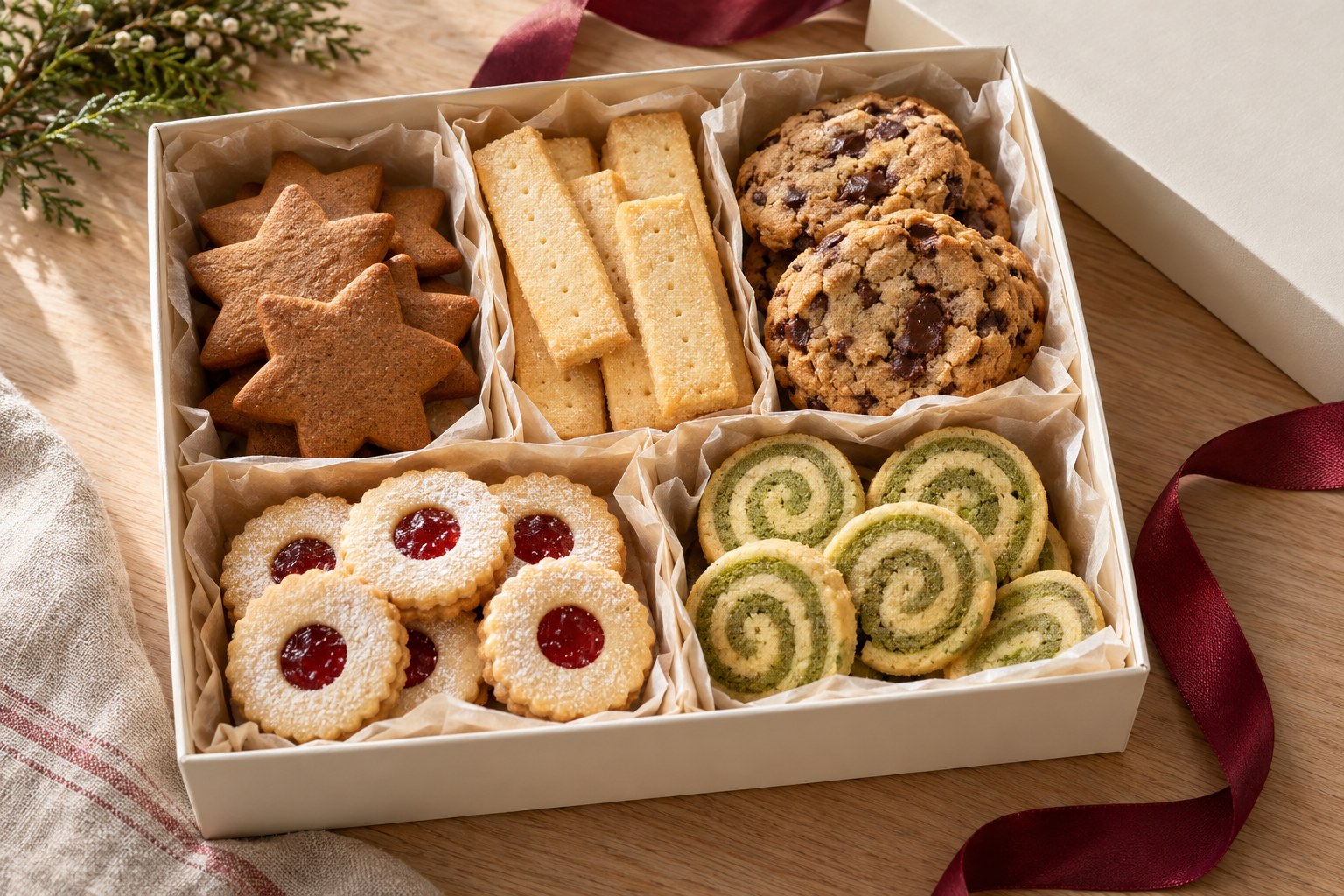
A homemade Christmas cookie box feels generous and personal, but it does not need to contain a dozen different recipes. The easiest boxes are planned around contrast: a few cookies with different flavors, textures, colors and shapes, all packed so they stay fresh and arrive looking intentional.
If you need recipe inspiration first, start with our 16 Christmas Cookie Recipes to Bake This Holiday Season, then narrow the list to the four to six cookies that work best for your box.
Start with 4 to 6 Cookie Varieties
Four to six varieties are usually enough to make a box feel abundant without turning holiday baking into a production line. Try to balance the selection instead of choosing several cookies that all taste or look alike.
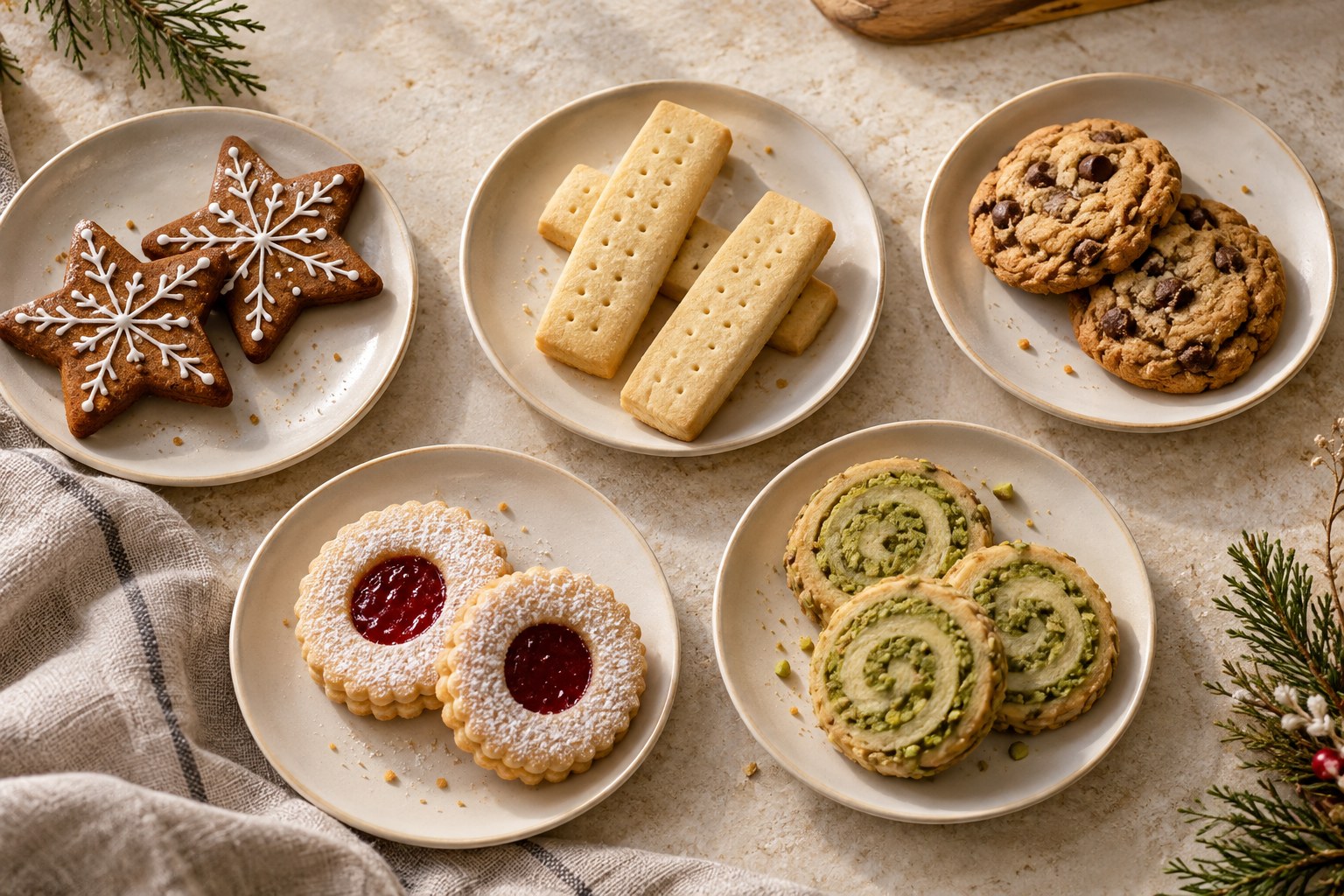
- One classic: gingerbread or shortbread.
- One chocolate cookie: a chocolate chip or chocolate-mint style cookie.
- One fruit-filled cookie: jam adds color and acidity.
- One nut-based cookie: pistachio or peanut butter brings another flavor and texture.
- One showpiece: pinwheels or decorated sandwich cookies give the box visual impact.
A Simple 5-Cookie Christmas Box
Gingerbread Cookies
A recognizable Christmas classic with warm spice and a sturdy shape that packs well.

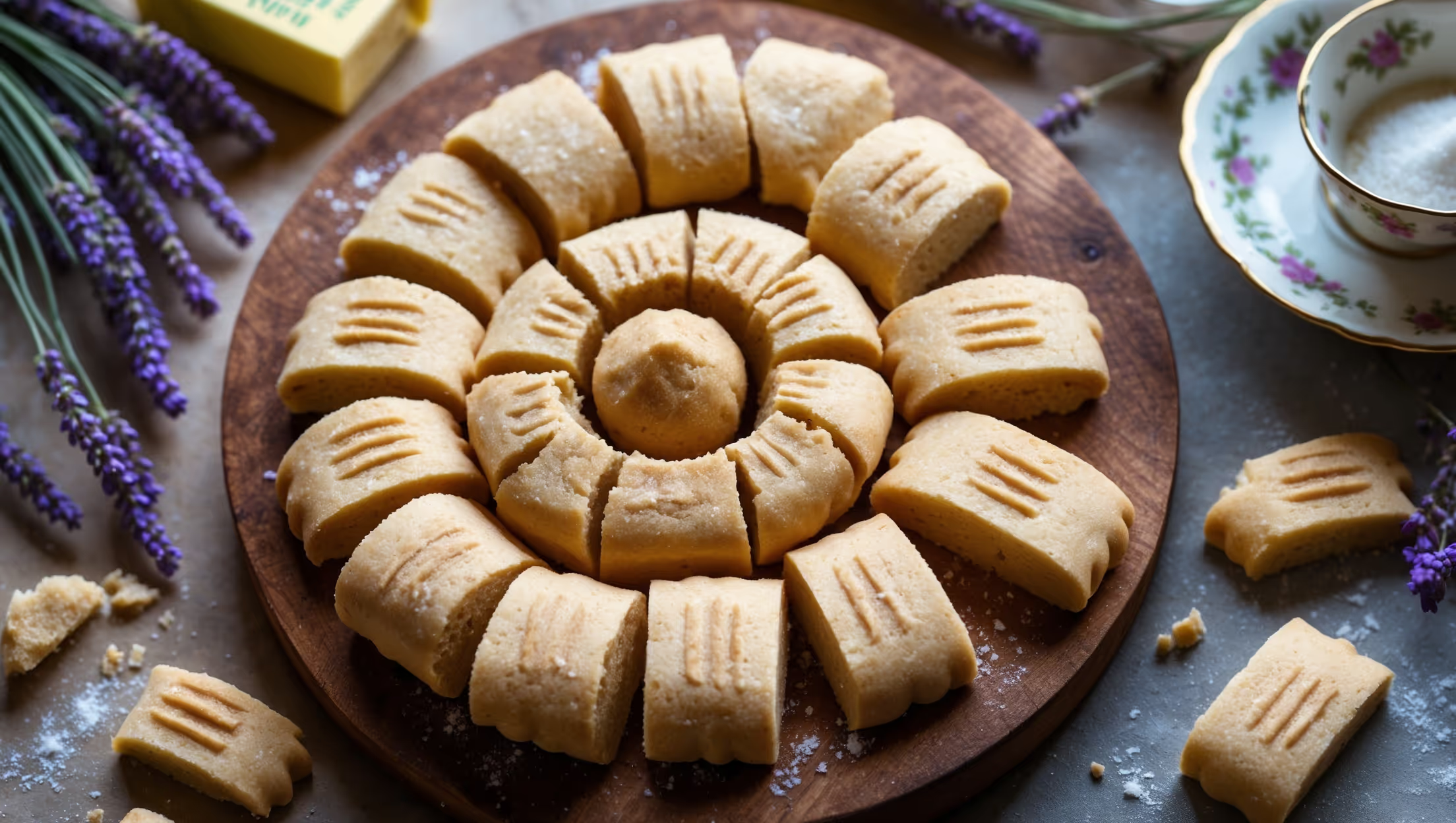
Vegan Shortbread Cookies
Buttery-tasting, crisp and simple enough to balance richer cookies in the same box.
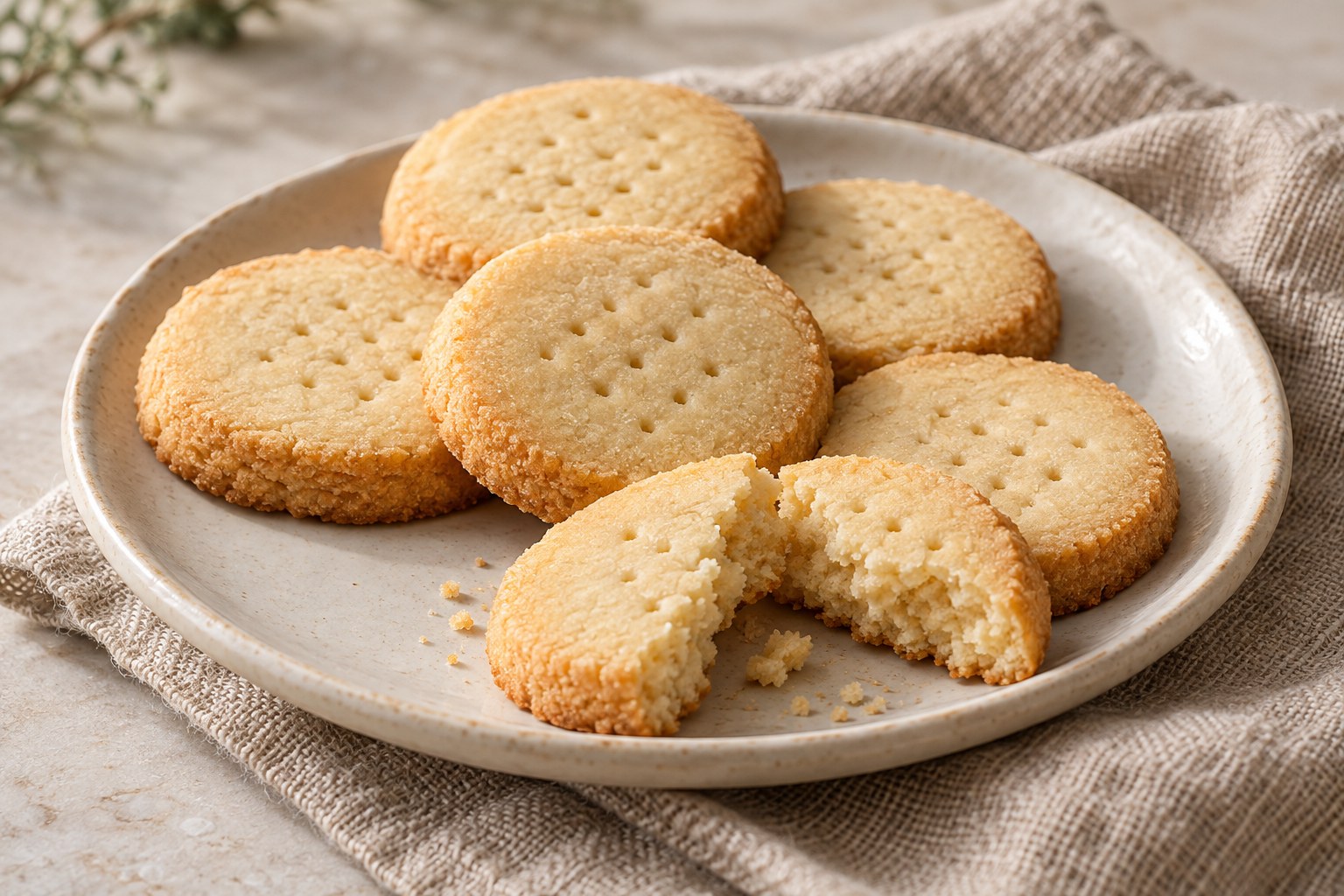
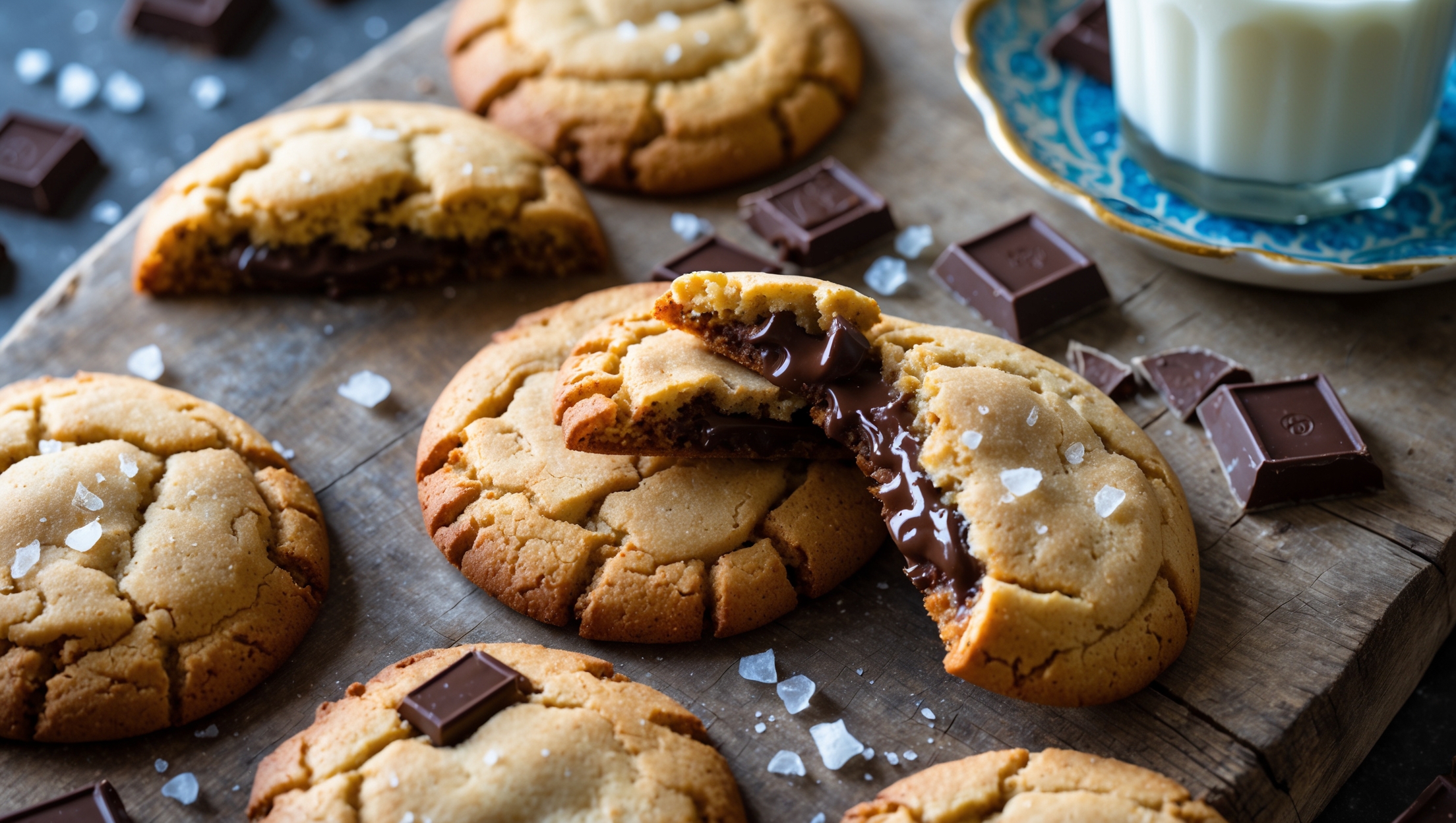
Brown Butter Chocolate Chip Cookies
A familiar favorite with deeper caramel and nutty notes from browned butter.
Jam Sandwich Cookies
The bright jam center adds color and a fruit-forward contrast to chocolate, spice and nuts.
Pistachio Pinwheels
The green spiral gives the box a naturally festive showpiece.
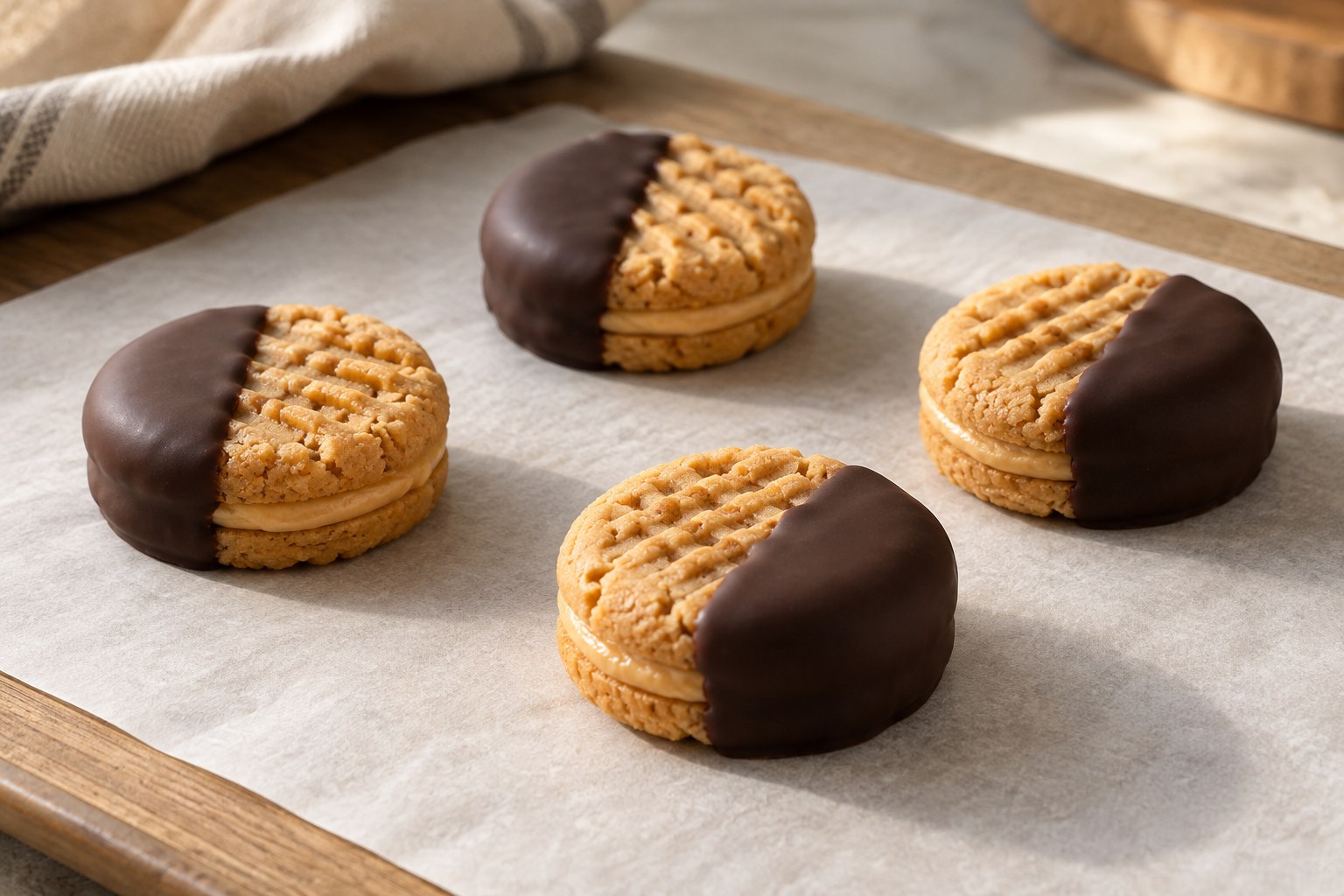
Optional sixth cookie: Dipped Peanut Butter Sandwich Cookies if you want another rich, gift-worthy cookie.
How Many Cookies Do You Need?
Work backward from the number of boxes instead of baking first and hoping the quantities work out. For example, eight boxes with 12 cookies each require 96 cookies. If you are making four varieties, that is about 24 cookies of each variety before allowing a small buffer for breakage, tasting and uneven recipe yields.
If you are using five or six varieties, divide the total more loosely. The box does not need an identical number of every cookie; visual balance matters more than mathematical symmetry.
When to Start Baking
1 to 2 Weeks Before
Choose the recipes, count your boxes, buy packaging and ingredients, and prepare any dough that is specifically suitable for freezing. If you want a more detailed freezer plan, use our Make-Ahead Christmas Cookies guide.
A Few Days Before
Bake the sturdier cookies and prepare components that keep well. Shortbread, firmer gingerbread and robust drop cookies are useful early bakes because they are easier to store and pack.
1 to 2 Days Before
Bake or assemble the softer and filled cookies, finish decorations, and make sure every component has enough time to cool and set before packing.
Packing Day
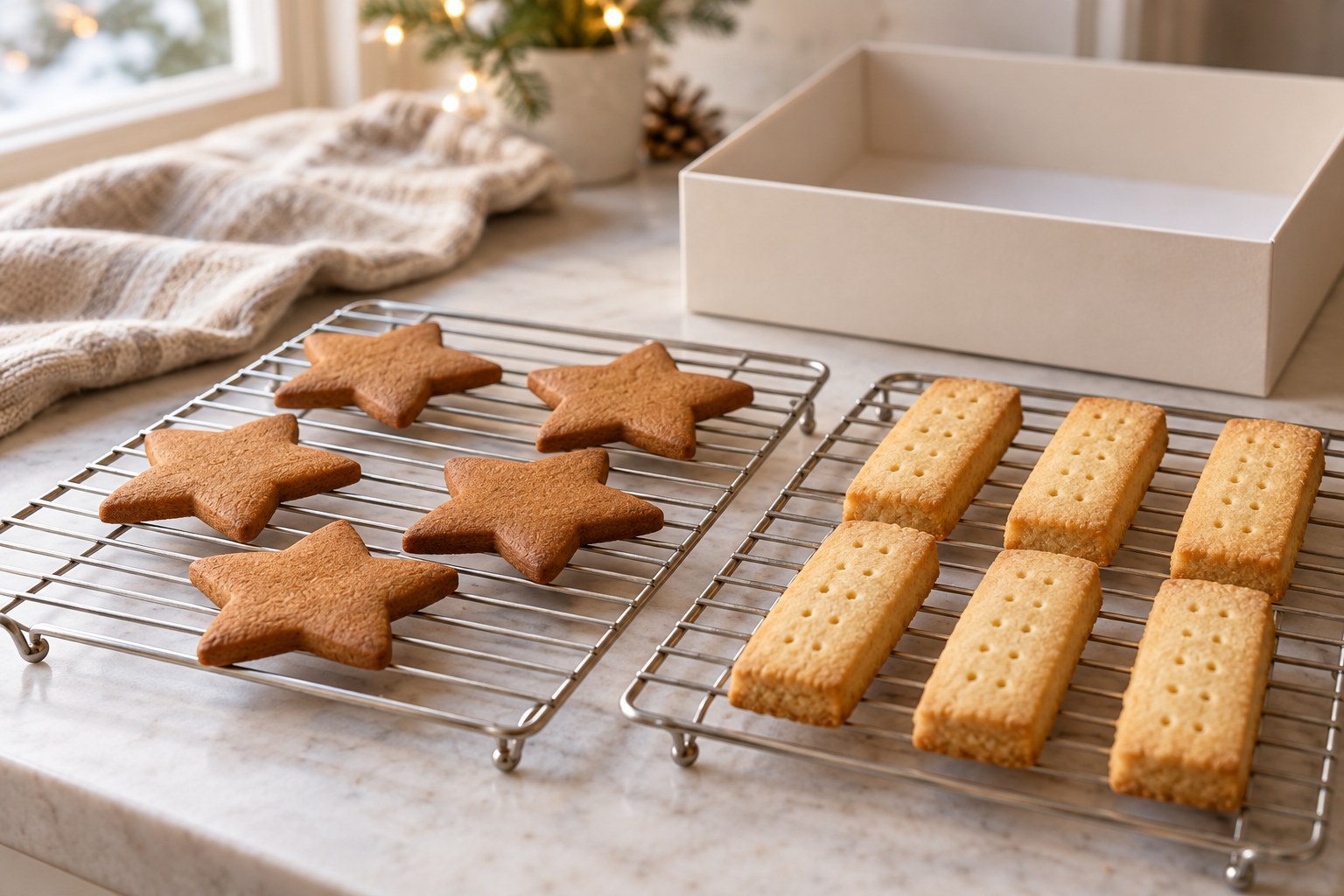
Only pack cookies once they are completely cool. Warm cookies create condensation, which can soften crisp cookies and damage decorations.
How to Pack a Christmas Cookie Box
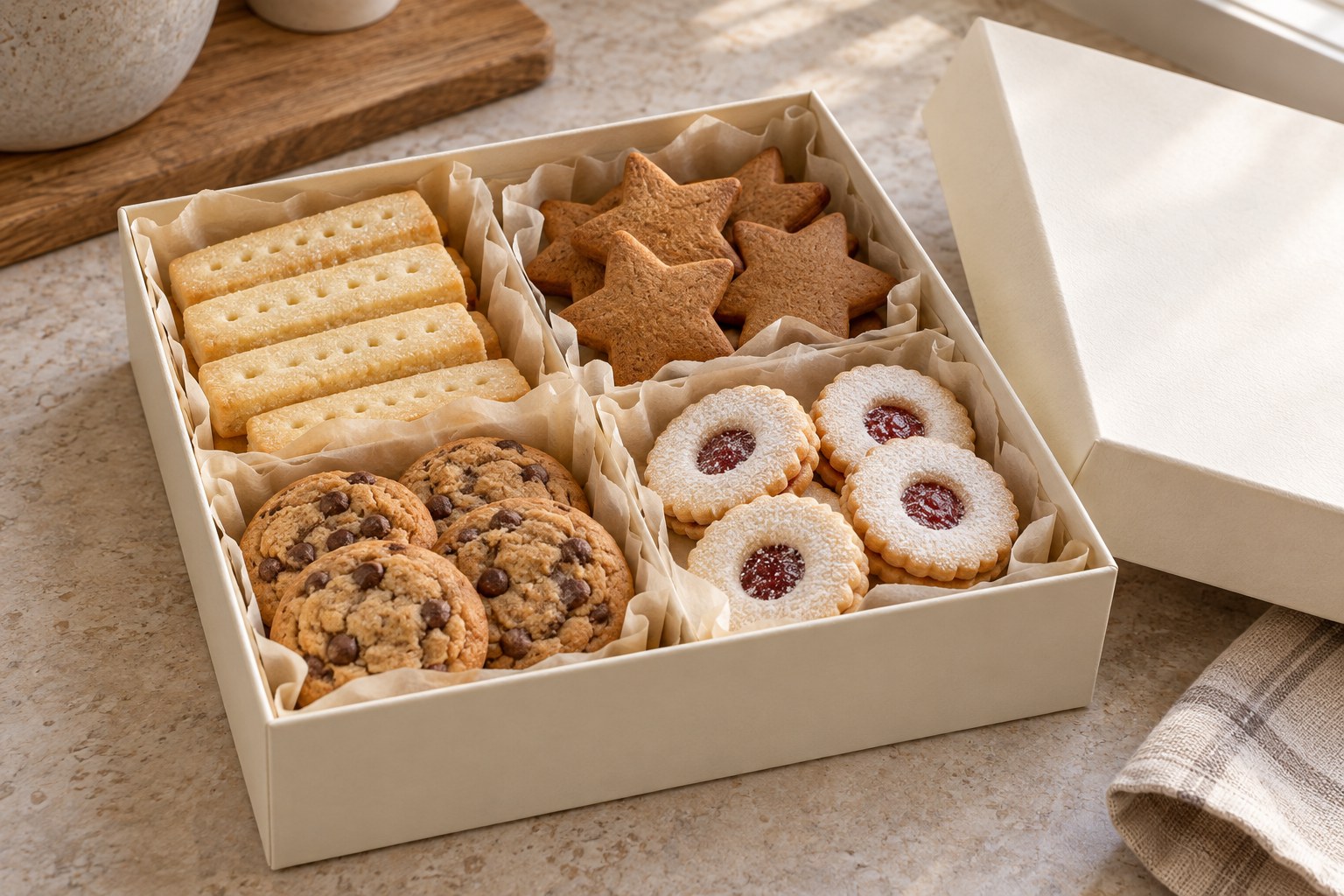
Use a rigid box or tin and line it with parchment. Place sturdy, heavier cookies toward the bottom and delicate, tall or decorated cookies closer to the top.
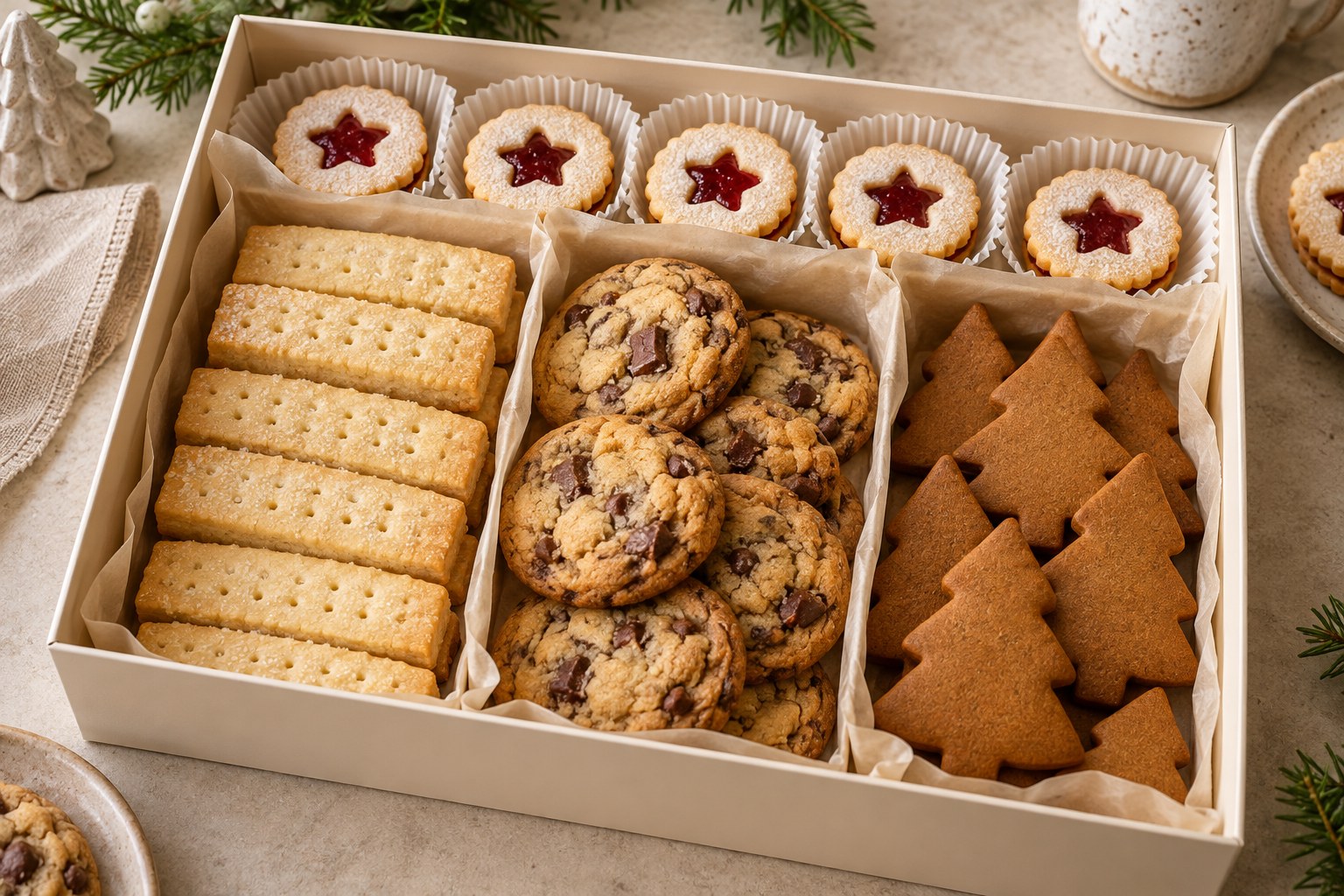
- Use parchment, small baking cups or dividers between different cookies.
- Fill large gaps so cookies cannot slide around in transit.
- Separate very soft cookies from very crisp cookies when possible.
- Keep strongly flavored cookies away from mild cookies if the box will sit for several days.
- Do not stack delicate sandwich cookies under heavier drop cookies.
Hand-Delivery vs. Mailing
A hand-delivered box can include softer, filled and more delicate cookies because it will spend less time being moved around. Mailed boxes should lean toward sturdy shortbread, firmer gingerbread and robust drop cookies, with extra cushioning and a protective outer shipping box.
Remember Allergens
If your box contains peanuts, pistachios or other nuts, label them clearly. A vegan cookie is not automatically safe for someone with a food allergy because ingredients may still be processed with allergens and cross-contact can occur in a home kitchen.
Make the Box Look Finished
You do not need elaborate packaging. A clean box, parchment, a few paper baking cups and a simple label or ribbon are enough. Arrange cookies by color and shape, keep the tallest pieces from being crushed, and leave just enough breathing room that the box looks full without being packed too tightly.

Plan a Cookie Box Around the Person Receiving It
A beautiful cookie box begins with the recipient, not with a perfectly symmetrical cookie arrangement. Ask whether the gift is intended for a family, a neighbour, a teacher, a coworker or a whole office. A box of twelve generously sized cookies suits a different occasion from a tray of two dozen small decorated biscuits. Think about how much the recipient is likely to eat, whether the box will be shared, and how the cookies will travel.
A balanced box offers contrast in texture, flavour and colour. Try a crisp butter-style cookie, a chewy chocolate option, a warm spice cookie, a fruit-centred cookie and, when appropriate, a colourful nut-based design. Not every box needs all five. Four varieties carefully chosen are usually more appealing than twelve varieties made in a rush.
Choose Five Cookies That Look and Taste Different
Gingerbread: The spiced foundation
The Gingerbread Cookies recipe yields about 24 cookies and combines molasses, ginger, cinnamon, nutmeg and cloves. They add warmth and traditional holiday shapes. If decorating, allow icing to set fully before putting a lid on the box; wet lines and raised decorations can transfer to nearby cookies.
Vegan shortbread: A quiet, crisp contrast
Vegan Shortbread Cookies use vegan block butter, flour, sugar and cornstarch. Their simpler flavour creates a welcome break between intensely spiced and chocolate-rich cookies. The recipe yields approximately 18. Vegan does not mean wheat-free or safe for every allergy, so include the actual ingredient information.
Brown-butter chocolate chip: The familiar favourite
Brown Butter Chocolate Chip Cookies have caramel-like toasted butter notes and chunks of chocolate. The card yields roughly 18 and requires a dough chill of at least two hours. The visual simplicity of these cookies makes them a useful anchor in a box full of decorated shapes.

Jam sandwiches: The fruit accent
Jam Sandwich Cookies add bright fruit colour. The published yield is approximately 18 completed sandwiches. Because each sandwich needs two baked halves, calculate quantities from the finished yield and avoid stacking them under heavy cookies. A parchment cup helps keep the jam filling from rubbing against crisp neighbouring biscuits.

Pistachio pinwheels: The green showpiece
Pistachio Pinwheels create a green spiral with cardamom and pistachio filling. Their published yield is about 24. Include them when the recipient can eat tree nuts, keep the nut-containing cookies clearly labelled, and separate them appropriately where required.

Calculate Cookie Quantity Before You Start Baking
Imagine you want to prepare eight gift boxes containing a dozen cookies each. That means 96 finished cookies. If you want four varieties, an even distribution is 24 cookies of each. This is only a planning example: some cookies are larger, some are fragile and some are sandwiches, so the finished number may be slightly uneven. Add a modest buffer for broken cookies and tasting.
Using the example recipes, one batch of gingerbread (24), one batch of pistachio pinwheels (24), one batch of vegan shortbread (18), one batch of brown-butter chocolate chip cookies (18), and one batch of jam sandwiches (18) would produce roughly 102 finished cookies if your sizes and yields match the recipe cards. That may be enough for eight twelve-cookie boxes with a few spares. If you omit the pistachios or swap another recipe, recalculate instead of trusting the same total.
For an individual gift, a box of six to twelve cookies may look generous when the cookies are large. For a family, a larger box with 18 to 24 smaller pieces may be more practical. Choose packaging that fits the cookies rather than deliberately squeezing the contents into an undersized box.
Build a Practical Shopping List
Collect all recipe ingredient lists before buying anything. Group common ingredients such as flour, butter or vegan butter, eggs, sugars, vanilla and chocolate. Then add speciality items such as molasses, pistachios, jam and parchment. Do not forget that decorative icing, buttercream fillings and chocolate dipping require extra ingredients beyond the cookie dough.
Packaging belongs on the list too. Food-safe parchment, paper baking cups, rigid tins or boxes, stickers and ingredient labels are more useful than elaborate ribbons that take too much space. If the cookies will be shipped, you also need cushioning and an outer shipping carton to protect the food box.

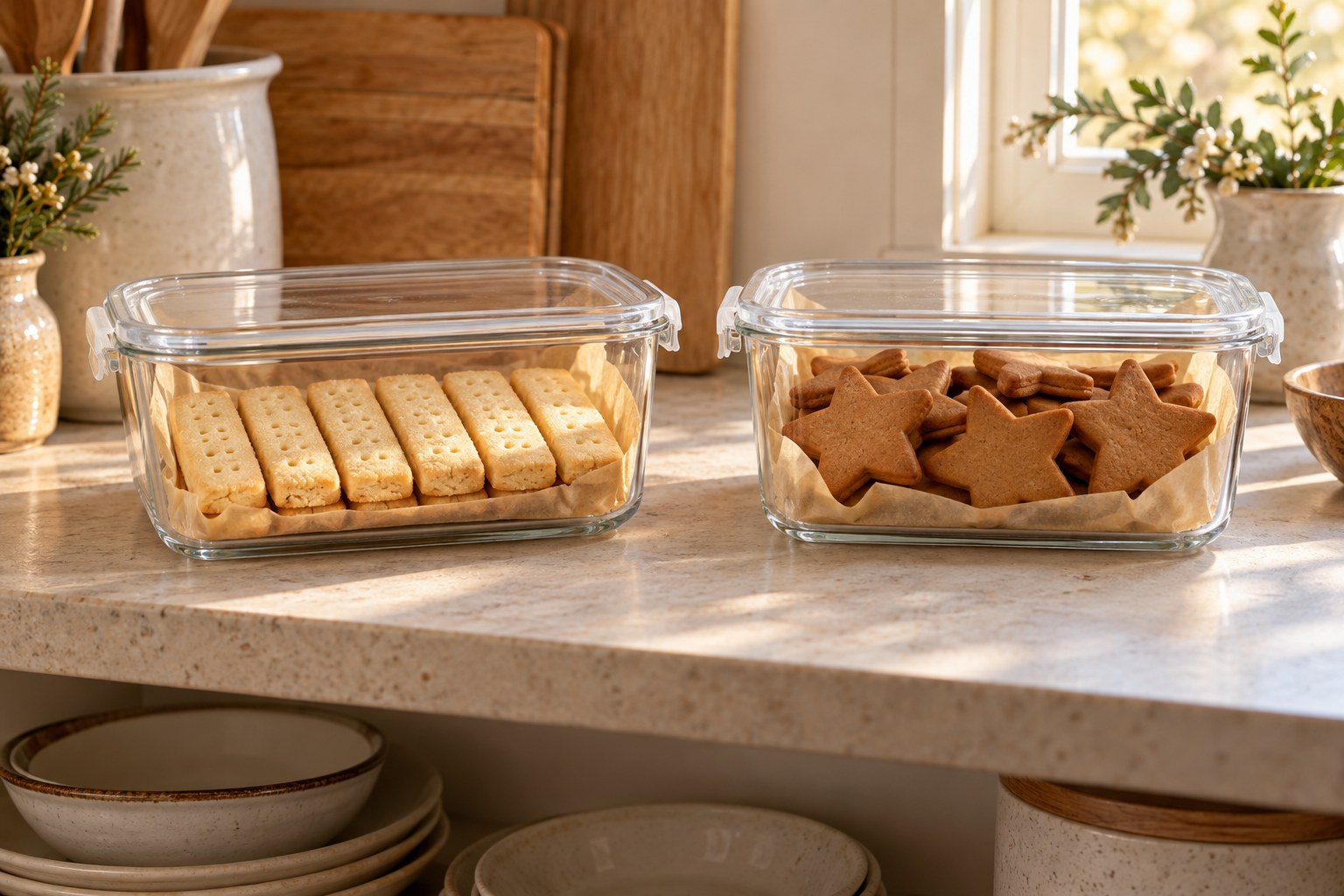
Decide where the cookies will be prepared and stored. One large airtight tin for every variety can lead to flavour transfer and crushed edges. Separate storage containers make it easier to keep cookies fresh until the moment you assemble the gift.
A Cookie Box Assembly Method That Protects Delicate Bakes
Start with the box
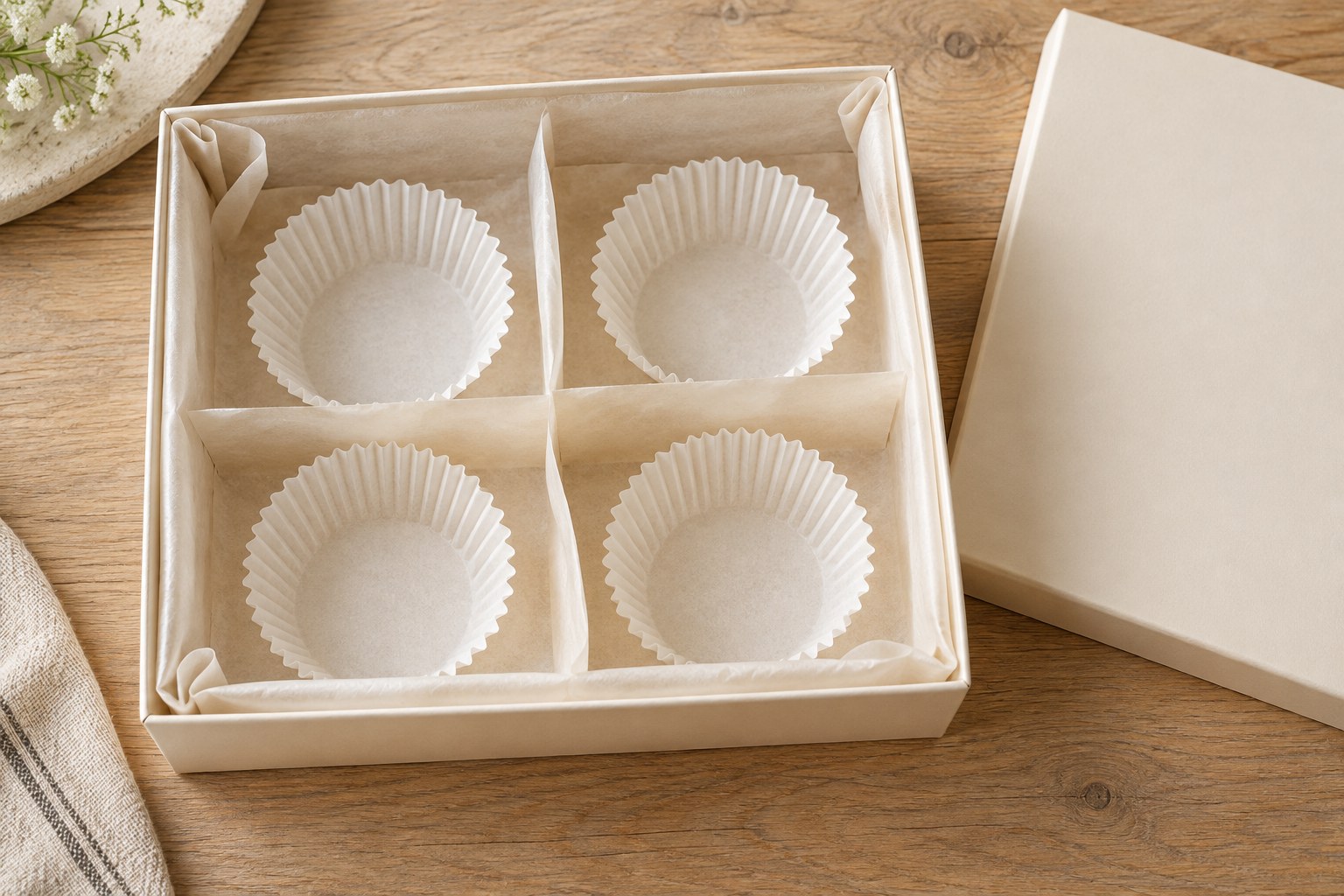
Use a clean, rigid food-safe container large enough to hold the planned cookies without forcing the lid down. Line the bottom with parchment or food-safe paper. Avoid direct contact between cookies and decorative materials not intended for food use.
Separate flavours and textures
Put individual varieties into parchment-lined sections or small paper cups. Gingerbread and mint can transfer their aroma to shortbread when tightly packed together. Crisp cookies can soften when stored against moist fillings. A divider will not solve every storage problem, but it helps keep the arrangement orderly and prevents some direct contact.
Arrange from sturdy to fragile
Start with relatively firm cookies that can support their own weight. Add chocolate-chip cookies without squashing their centres. Place jam sandwiches, chocolate-dipped pieces and highly decorated biscuits where they will not be crushed. Leave enough space for the recipient to remove a cookie without breaking the others.
Check the lid and movement
Before closing the package, gently inspect the space above the tallest cookie. Do not push the lid into icing or stacked sandwiches. Fill excessive gaps with appropriately placed food-safe dividers so cookies do not slide around. A cookie box should look abundant while still allowing movement-free transport.
Hand Delivery, Road Trips and Mailing
A hand-delivered box gives you more control over time, temperature and handling. It is still important to use the correct storage conditions for any perishable fillings. Keep boxes away from sunny car windows and heat sources, and hand them to the recipient as close to the planned serving time as is practical.
For a package sent by mail, favour cookies that stay sturdy and appropriate without refrigeration, such as suitable shortbread, plain gingerbread and robust drop cookies. Package each type securely, place the cookie box inside a larger shipping carton, and protect all sides from impacts. Avoid fragile cream-filled or refrigerated desserts in an ordinary unrefrigerated parcel.

Check local carrier rules and delivery conditions. During hot weather, chocolate coatings may melt; during cold weather, condensation on thawing packages can harm decorations. Mailing is more reliable when the cookies can tolerate the expected journey, not just when the cardboard box is attractive.
Allergen Labels Are Part of the Gift
At a minimum, consider ingredients containing wheat, milk, egg, peanuts and tree nuts. Pistachio pinwheels contain tree nuts, while peanut butter sandwich cookies contain peanuts. Chocolate and decorative ingredients may introduce further allergens. A vegan cookie may still contain wheat or be subject to cross-contact with nuts.
For gifts, include a concise ingredient note for each variety, especially when the recipient did not see the preparation. Be transparent about shared kitchen equipment when a serious allergy is involved. If the recipient needs stringent allergen avoidance, do not promise that home-baked cookies are safe without appropriate ingredient and cross-contact controls.
A Two-Week Cookie Gift Project
Two weeks out
Decide on recipients, box sizes, cookie varieties and allergens. Count the recipes required and buy tins, packaging and nonperishable ingredients. Prepare freezer-friendly dough according to the published recipe. If you're including gingerbread, check the ingredients and preparation instructions in our Gingerbread Cookies recipe before scheduling that batch.
One week out
Bake sturdy cookies that keep well according to their recipe's storage instructions, or prepare and freeze additional dough. Wash and dry packaging, print labels and verify the cookie count. Make sure filled cookies and decorations have a separate assembly window.
One or two days out
Bake the remaining cookies, let them cool completely, add the fillings and decorations according to the recipe, and give chocolate and icing enough time to set. Keep perishable filled cookies under appropriate refrigeration, not mixed into ambient-storage tins.

Packing and delivery day
Prepare a clean packing surface and arrange one cookie variety at a time. Check the number of finished cookies, place sturdy pieces first and protect fragile pieces with dividers. Add a clear ingredient card and a short note about any required refrigeration or prompt consumption.
Troubleshooting a Cookie Box Before It Leaves the Kitchen
My box has too many gaps
Use a smaller box, choose a different arrangement or add paper baking cups to organize the contents. Do not overfill with loose scraps that make the presentation untidy. A smaller thoughtful selection looks better than a large half-empty box.
Some cookies have already softened
Check for condensation, warm packing, moist neighbours and the effect of fillings. Fully cool cookies before storage; consider packing crisp and soft varieties in separate sections. If a cookie has a perishable filling and has been mishandled, focus on food safety rather than appearance.
The chocolate coating is smudging
Allow the coating to set completely before packing, and use liners or dividers to prevent rubbing. Chocolate-dipped cookies may need special temperature handling, so choose a simpler uncoated variety if the gift will travel in heat.
My recipient has a nut allergy
Do not substitute another nut cookie or merely remove the nuts from the top. Choose a recipe and preparation process suitable for the person's requirements, verify every packaged ingredient and account for cross-contact. Ask the recipient about their needs rather than guessing.
Can I pack cookies while warm?
No. Steam trapped in a closed container can cause condensation and soften the cookies. Cool thoroughly and wait until glazes or decorations are set before packing. If there is not enough time, finish fewer varieties instead of compromising the texture of the entire box.
Three different cookie boxes for three different occasions
A simple thank-you gift
A small box for a teacher, colleague or neighbour can feel generous with two or three carefully chosen varieties. Try a crisp shortbread, familiar chocolate chip cookie and a neatly decorated gingerbread. The contrast makes a smaller selection look intentional. Avoid including perishable cream-filled cookies if the recipient may leave the package on a desk or carry it home for several hours without refrigeration.
Size the box to the cookies. Six large cookies arranged neatly may be better than twelve packed so tightly that their edges crumble. Use food-safe parchment and make it easy to lift a cookie out without handling all the others.

A family holiday gift
A family may appreciate a larger mix of firm gingerbread, shortbread, chocolate chip cookies, jam sandwiches and pistachio pinwheels if there are no nut-allergy concerns. Use separate cups or dividers for the filled pieces. Give the recipients a short list of flavours and note which types should be eaten first or stored chilled according to their actual filling.
A fourteen- to twenty-four-cookie gift may be appropriate depending on the family and cookie sizes, but let your own recipe yields and packaging guide the final count. The goal is a balanced assortment people will enjoy, not hitting an arbitrary number that leaves the cookies crushed.

A mailed cookie gift
For shipping, prioritize sturdy cookies that are appropriate for travel without refrigeration. Shortbread and firm gingerbread often travel better than delicate jam sandwiches or a soft buttercream filling. Place each variety in a protective inner wrapping or compartment, then use a rigid cookie tin or box cushioned inside a larger shipping carton. The package should withstand normal handling without the cookies sliding into one another.
Consider seasonal heat, moisture, shipping duration and carrier rules. Do not assume a buttercream-filled or fresh-cream cookie can travel safely merely because the weather is cool at your home. If refrigerated transport cannot be guaranteed, choose a different recipe for the mailed box.
Design the box so the cookies stay beautiful
Start by arranging empty paper cups and dividers in the chosen container. This lets you estimate the space before you bake dozens of cookies. Put the tallest or widest pieces into position first, then organize smaller ones around them without pressure. A small gap is preferable to forcing the lid against a decorated cookie.
Visual contrast is useful: a dark chocolate cookie next to pale shortbread, a bright jam centre beside gingerbread, and a green pistachio swirl can make the box look festive without artificial colours or elaborate decoration. But contrast should not override allergen separation or suitable storage. When a recipient has a nut allergy, replace pistachio and peanut varieties with confirmed appropriate alternatives rather than placing them in a different paper cup in the same shared container.
Packaging details most bakers forget
Condensation: Warm cookies packed into a closed tin release moisture. Cool every biscuit completely, and wait for chocolate or icing to set. A foggy lid or tacky surface is a warning that the cookies were packed too soon.
Aroma transfer: Strong ginger, mint and peanut butter flavours can affect mild vanilla biscuits when stored together. Use separate liners or packaging where appropriate; for long storage, keep varieties in separate airtight containers until gifting day.
Fragile pieces: Jam sandwiches and intricately decorated cut-outs should never support the weight of thick chocolate chip cookies. A rigid divider or small paper cup can stop neighbouring cookies from grinding against each other during transport.
Labels: List each cookie variety and the main ingredients or allergens, including wheat, milk, eggs, peanuts and tree nuts. A friendly handwritten card can still provide the essential details. Include instructions for refrigeration where needed rather than claiming every homemade cookie can be stored on the counter.
Packaging waste: Choose the smallest sturdy package that fits the intended gift and reuse tins where appropriate. Decorative tissue is not necessarily food-safe; line the actual food-contact surfaces with suitable parchment.
How to estimate your baking workload
Suppose you plan twelve boxes with eight cookies each. That means ninety-six finished cookies before extras. If you choose four varieties and aim for an even mix, you need twenty-four of each. The gingerbread and pistachio pinwheel recipes each yield around twenty-four, but brown butter chocolate chip cookies yield about eighteen, and jam sandwiches yield approximately eighteen completed sandwiches. You will need to adjust batches accordingly.

Sandwich cookies require two baked pieces for each finished cookie. A yield of twelve sandwiches means twenty-four separate halves, plus enough filling. Recording the finished number avoids a common surprise when assembly begins. For decorated cookies, consider how long the icing must set and how much working space the trays will occupy.
What to do when the gift plan changes
If a recipient tells you about an allergy after you've begun baking, do not simply remove the visible nuts and present the remaining cookies as allergen-free. Review the actual ingredient packages and cross-contact in your kitchen. If suitable safe preparation is not possible, consider a different gift.
If you run out of time, reduce the number of varieties instead of packing warm cookies or skipping essential chill periods. Two beautifully made cookies are more enjoyable than an assortment of damaged, under-cooled ones. If you suddenly need more boxes, calculate from the remaining finished-cookie count rather than relying on how many raw dough pieces are left in the fridge.
If delivery is delayed, store each variety according to its actual recipe and filling. Keep perishable items refrigerated, and reassess the suitability of mailing or hand-delivering the finished box. Good gifting is thoughtful planning, not a reason to ignore safe food handling.
Build the Box for the Person Receiving It
The best cookie box is not necessarily the one with the most varieties. If the recipient loves chocolate, include two chocolate-forward cookies. If they prefer classic flavors, lean into gingerbread, shortbread and jam. A smaller box chosen thoughtfully will usually feel more special than a large box filled only for quantity.
Three cookie-box combinations for different recipients
A classic family box
Choose gingerbread, vegan shortbread, brown butter chocolate chip cookies and jam sandwiches. The collection offers spiced, crisp, chewy chocolate and fruit-filled flavours. Place jam sandwiches in small parchment cups to prevent smearing. The presence of one vegan cookie does not mean the full box is vegan or dairy-free: check the ingredients of each variety.
A festive colour-focused box
Use pistachio pinwheels, gingerbread, chocolate chip cookies and jam sandwiches to combine green spirals, warm brown shapes and bright fruit centres. Pistachios are tree nuts, and other recipes contain dairy, eggs or wheat. Check with recipients about allergies before baking, and do not represent a shared kitchen as allergen-free without proper controls.
A sturdy box for travel
Choose suitable shortbread, firm gingerbread and sturdy unfilled drop cookies for a journey without refrigeration. Secure the assortment in a rigid container lined with food-safe parchment. For mailing, cushion the cookie tin inside an outer box and consider shipping duration and temperature. Avoid sending cookies with perishable cream fillings in unrefrigerated conditions.

A final packing checklist
- Confirm quantities and use the published finished-cookie yields.
- Choose rigid boxes that fit without pressing the lid against the cookies.
- Cool every cookie and allow fillings or coatings to set.
- Use food-safe dividers and protect delicate sandwiches.
- Keep strongly flavoured cookies separate where practical.
- Include labels for wheat, milk, eggs, peanuts, tree nuts and other relevant allergens.
- Provide clear storage instructions for any refrigerated filling.
- Deliver the boxes without unnecessary exposure to heat or physical damage.
Questions before gifting
Can all cookies sit at room temperature?
No. Storage depends on the specific cookie and filling. Some cream, custard or other dairy fillings require refrigeration. Follow the recipe and ingredient handling instructions rather than assuming the box makes every cookie shelf stable.
How many varieties look best?
Four to six is a practical range for a larger assortment, but two or three carefully chosen recipes can make a lovely smaller gift. Contrast matters more than quantity: choose different shapes, colours and textures rather than several nearly identical cookies.
What if I cannot finish decorating on time?
Finish fewer cookies carefully and give icing time to set before packing. Warm biscuits and wet decoration create moisture and smudging, so compressing the cooling and setting steps is not a reliable shortcut.
Make the gift personal without making packing complicated
A short handwritten note or simple recipe-name card can make a modest cookie box feel memorable. It is useful to identify the different flavours, especially when chocolate, nut and spice cookies look similar once arranged in a tight box. Include storage and allergen information where appropriate rather than relying on decorative labels alone.
If the gift is being delivered to a household, choose varieties that suit the people who will share it. A recipient who prefers crisp cookies may enjoy more shortbread or gingerbread, while a chocolate lover may prefer extra brown butter chocolate chip cookies. That choice can be made without creating additional recipes or buying unnecessary ingredients.
For several identical gifts, build a sample finished box before packing all the others. Check whether the lid closes cleanly, the cookies stay in place and the intended count fits without crushing. Once the arrangement works, repeat the same placement for the remaining gifts, keeping varieties in separate containers until packing time.
Choose Fillings That Suit Transport
For a box that will be mailed or carried without cooling, choose cookies without perishable fillings. Cream cheese, fresh cream and custard require refrigeration; do not assume every buttercream is suitable for unrefrigerated gifting. Check the exact filling and storage instructions before packing.
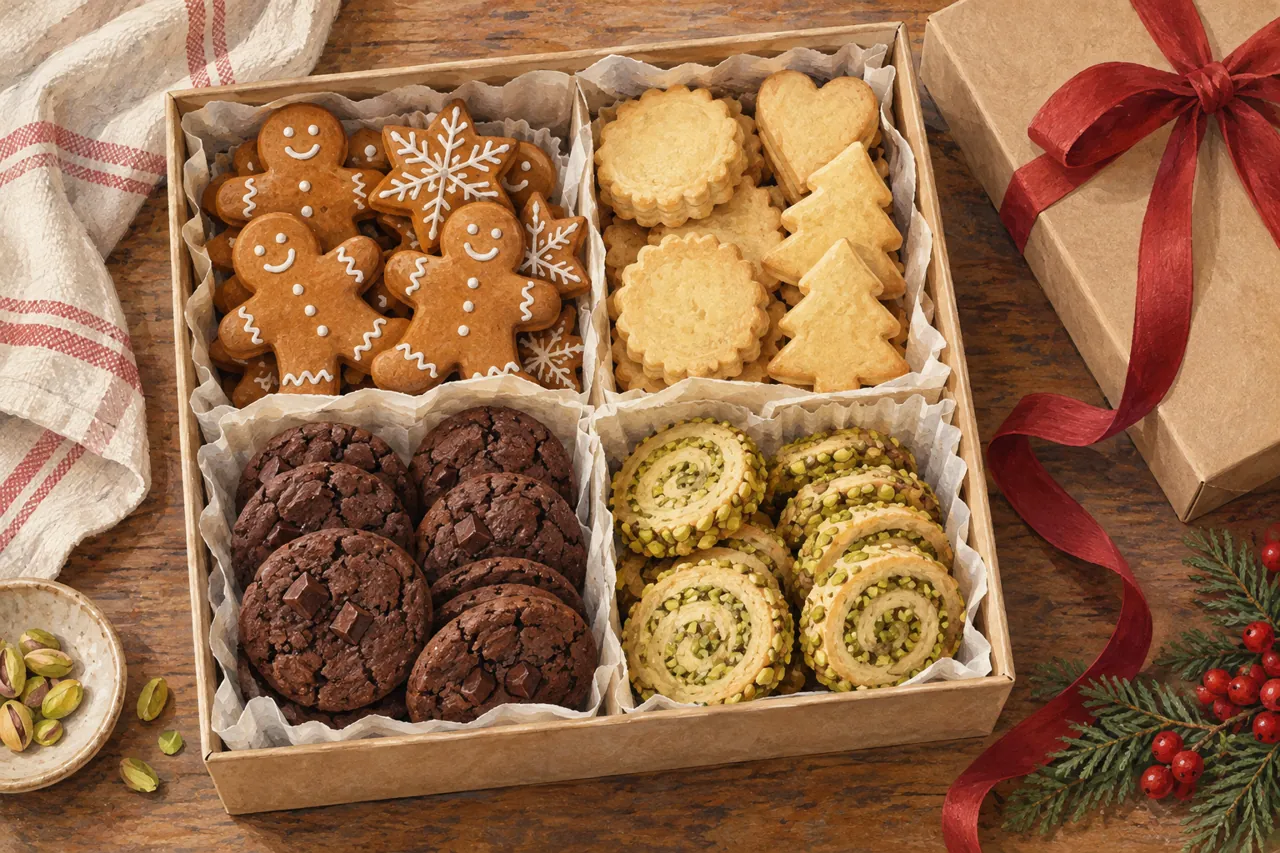
AI-generated editorial illustration. The food represents serving or preparation ideas rather than documented recipe-test results.
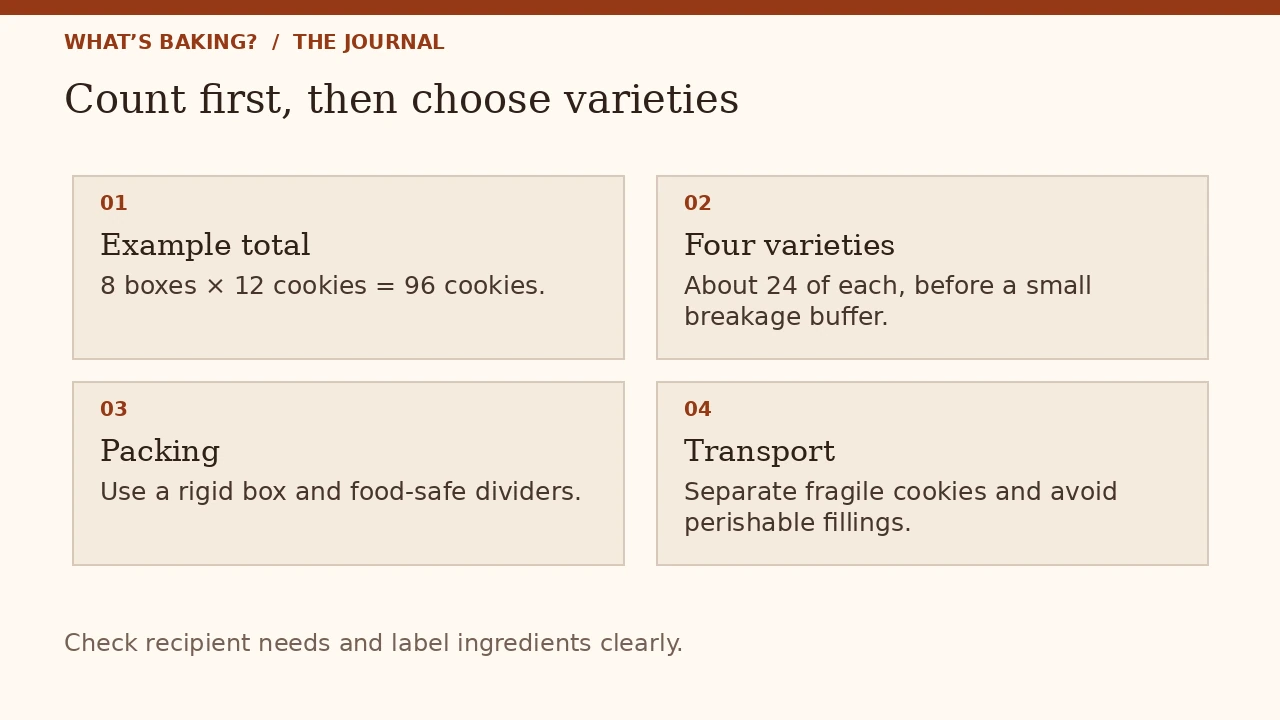
Original editorial quick-reference graphic. Follow the article and each linked recipe for the full instructions.
IN PICTURES
From the baking notebook
FROM THE RECIPE BOX