On this page
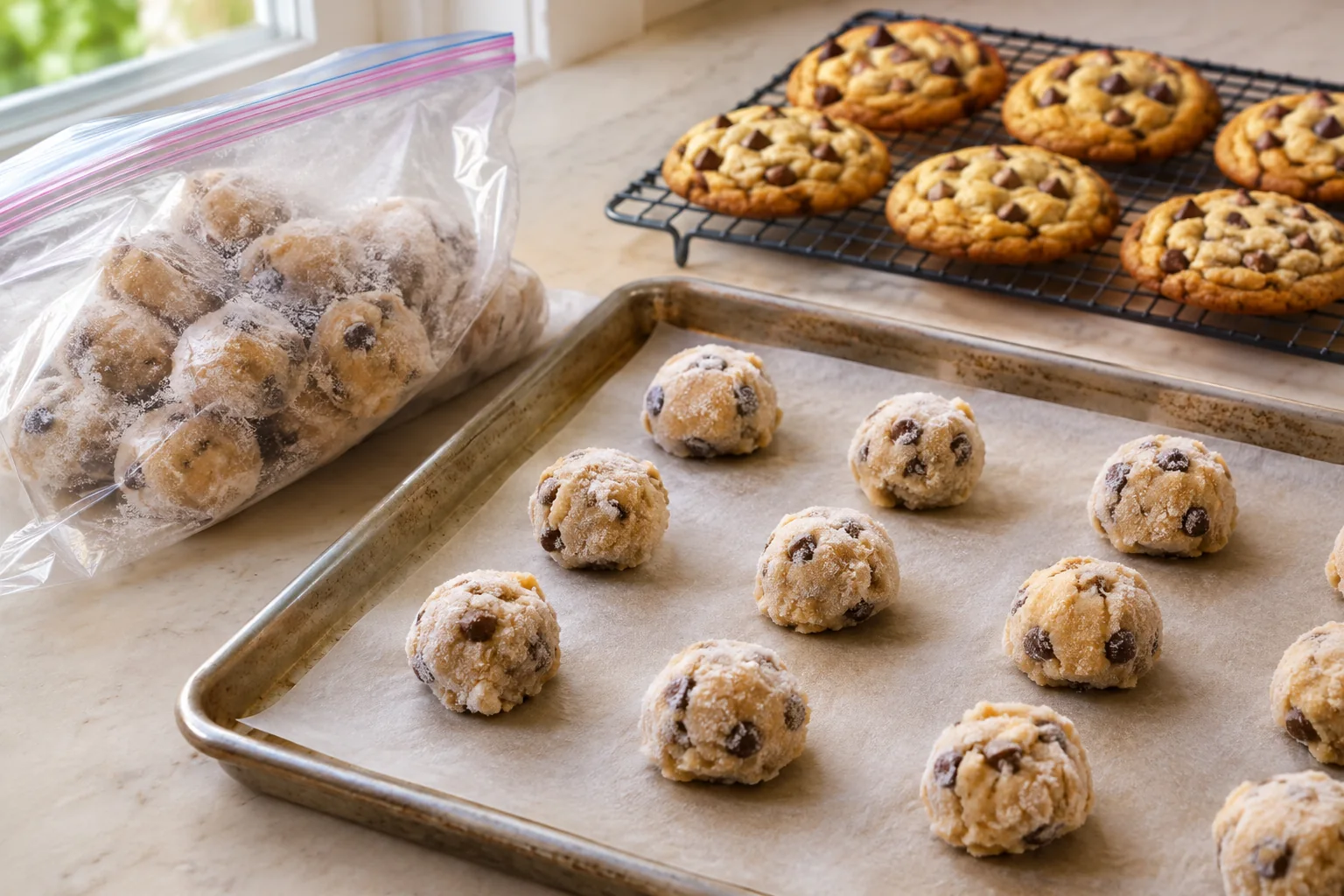
You don't need to thaw every scoop of frozen cookie dough before you can enjoy a warm cookie. Many drop-cookie recipes are designed to bake successfully from frozen, which is one of the easiest ways to prepare small batches on demand. The important detail is using the dough size and oven method intended for that recipe. A frozen ball may spread more slowly and need a different baking time from room-temperature dough.
The linked cookie recipes provide dough and texture examples. Bake a particular dough from frozen only when its own instructions support that method; this article is not a frozen-baking conversion for every recipe.
The short answer
Many pre-portioned drop-cookie doughs can be baked directly from frozen when the recipe provides that method. Freeze portions at the intended size, then use the specified oven temperature and doneness cues. Other doughs need thawing or different shaping, so there is no single frozen-baking rule for every cookie.
Why pre-portioning is useful
Trying to scoop a frozen solid block of dough is difficult and can be unsafe for utensils or hands. Portion while soft, freeze the scoops on a tray, then bag them when firm. That lets you take out two or three matching cookies rather than thawing an entire batch.
Not every cookie dough is the same
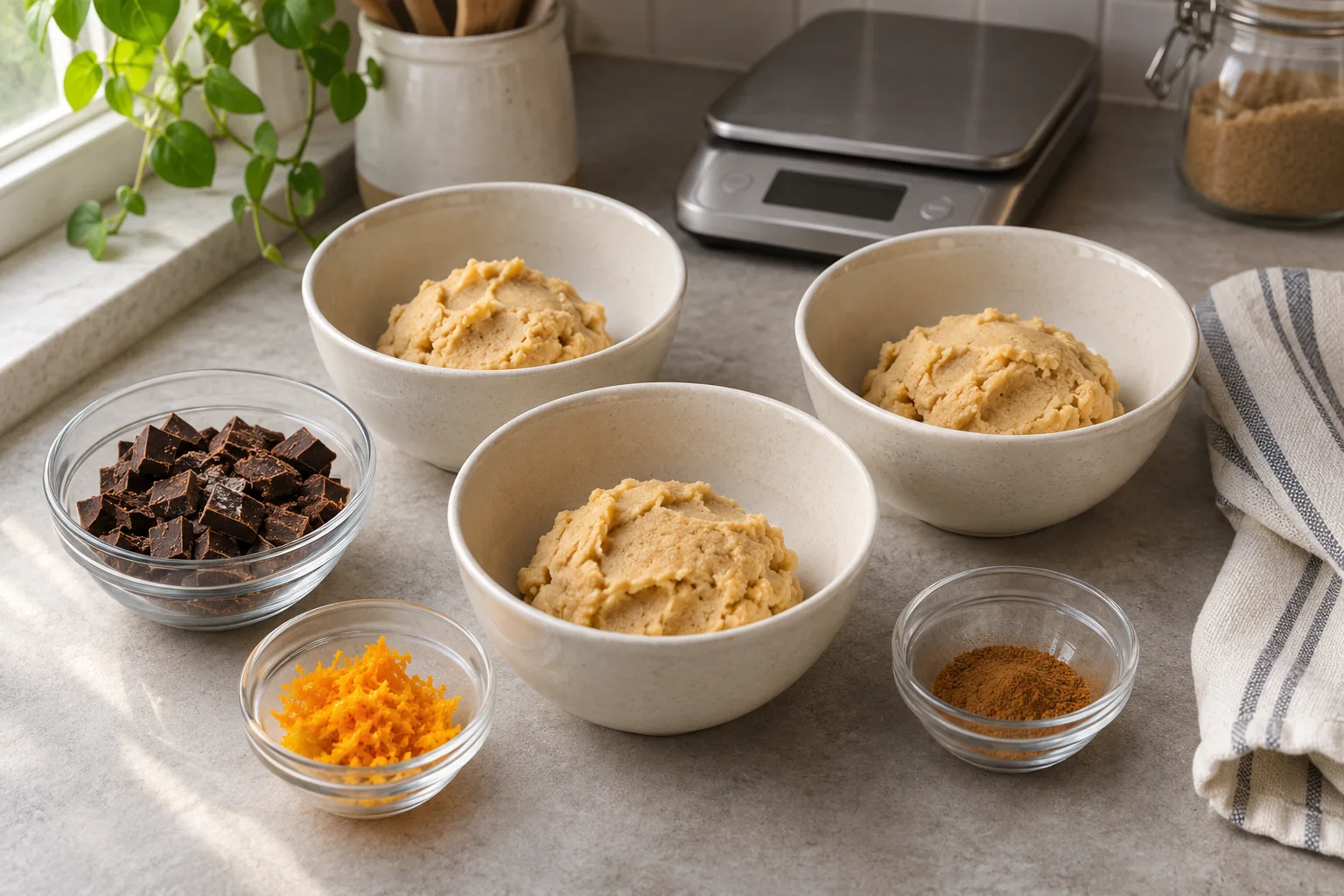
Thick chocolate chip, oatmeal and some peanut butter doughs are well suited to frozen portions. Rolled sugar cookies, icebox shortbread, filled cookies and delicate meringue batters may use different thawing or baking methods. Follow the recipe's exact freezing guidance.
Use the original scoop weight
A frozen 30-gram dough ball and a 90-gram bakery-style mound need very different heating. Consistent weight ensures the centres reach proper doneness while the edges brown. Don't bake assorted sizes together using a single timing guess.
Recipe to try: Classic Chocolate Chip Cookies. Use this recipe’s stated dough size and bake method. A frozen start needs explicit support in the recipe’s instructions.

Preheat completely
Frozen dough enters the oven at a much lower temperature than fresh dough. A properly heated oven helps it begin baking predictably. Inadequate preheating can allow unusual spread or prolong the bake while the exterior dries.
Should you raise the oven temperature?
Not automatically. Many freeze-and-bake methods use the original temperature and adjust time if needed. Raising heat sharply can brown the outside before the frozen centre becomes fully cooked. Use the tested formula's specific frozen-baking schedule.
How much longer should cookies bake?
The extra time varies by dough size, sugar and fat content, oven and recipe. Some small scoops bake in essentially the usual interval, while thick cookies need a little longer. Start with the documented range and check the cookie's actual edge and centre cues.
Should you flatten frozen dough?
Some formulas specify a flat disk or puck before freezing so the dough can spread and bake evenly. Others freeze tall rounds. Trying to smash a hard frozen ball may crack it or create uneven thickness. Prepare the shape before freezing whenever possible.
Why frozen cookies may be thicker
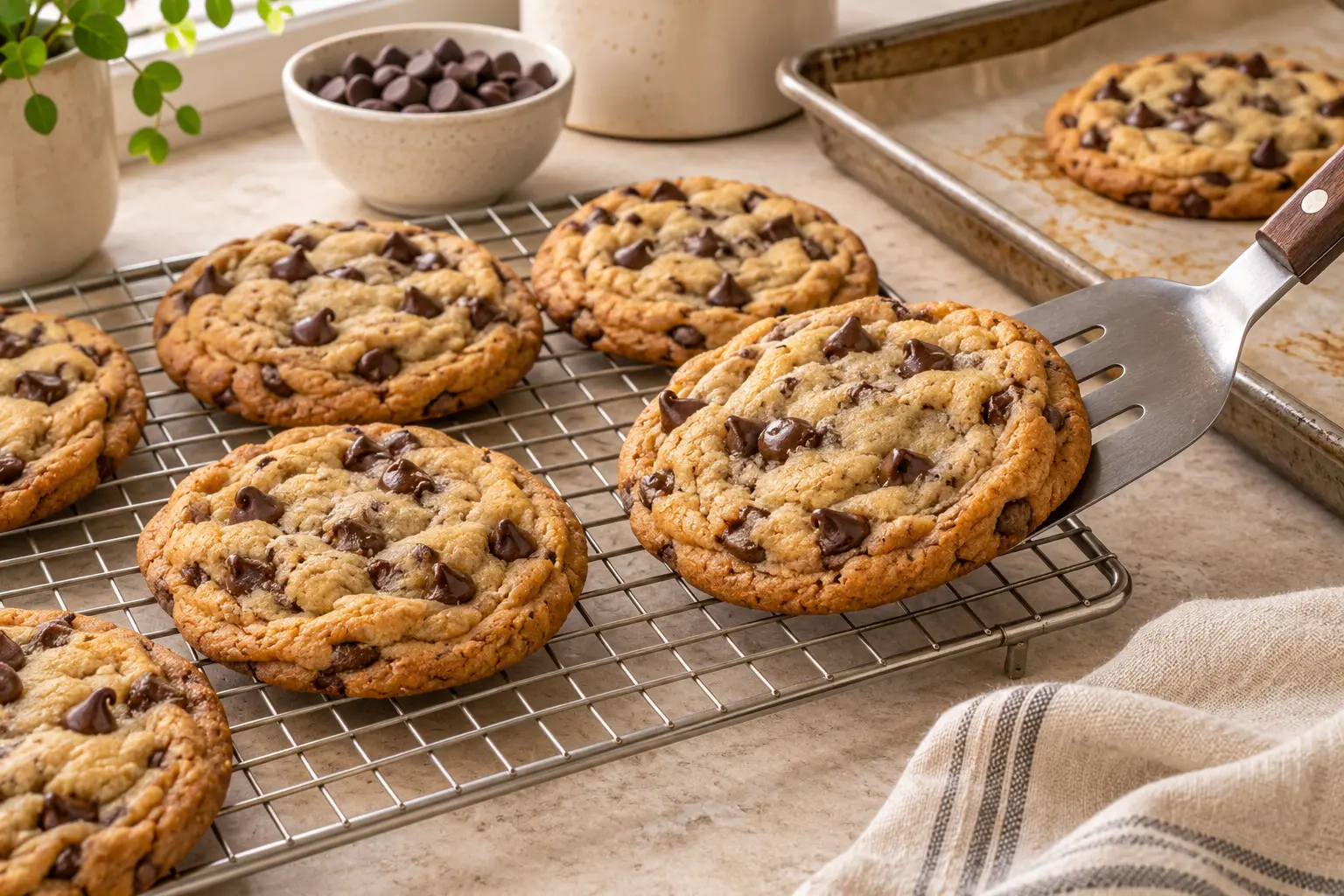
Cold fat softens more slowly at the beginning of baking, which can limit early spread in some butter-based doughs. The result may be a taller cookie than a fresh portion. This isn't guaranteed across every recipe; sugar balance, leavening and oven heat still matter.
Recipe to try: Chewy Chocolate Chip Cookies. Use this recipe’s stated dough size and bake method. A frozen start needs explicit support in the recipe’s instructions.
Why some frozen cookies don't spread
A dough with little moisture, substantial flour or a shape intended for flattening may remain domed. Check whether the recipe tells you to press the portions before freezing or baking. Don't compensate by raising oven temperature until the centre turns dry.
Choose the correct baking sheet
Use the surface recommended for the cookie, often a parchment-lined light metal sheet. Dark pans can brown the bottom quickly; an already hot pan from an earlier batch can cause unexpected spread. Cool the sheet between batches when the formula expects it.
Leave room for expansion
Frozen scoops appear compact, but they can expand significantly in the oven. Space them like regular cookies according to the recipe. Unlike the initial freezing tray, the baking tray must allow full spread.
How to check doneness
A cookie may look set at the perimeter while its centre is still too cold or raw. Use the recipe's colour, texture and timing cues. Many chewy cookies continue firming during the prescribed rest on the baking sheet, but the flour-and-egg dough must be properly baked.
What if the outside browns too soon?
The portion may be too large for the chosen frozen-baking schedule, the oven too hot or the sheet too dark. Do not keep serving a raw centre. For the next attempt, use a tested conversion and the correct portion size.
What if the cookie stays pale?
Check oven temperature, dough composition and how far it has spread. Some vanilla cookies are intended to remain relatively pale. The correct cooked texture is more important than a universally dark golden colour.
Recipe to try: Crispy Chocolate Chip Cookies. Use this recipe’s stated dough size and bake method. A frozen start needs explicit support in the recipe’s instructions.
Baking stuffed cookies from frozen
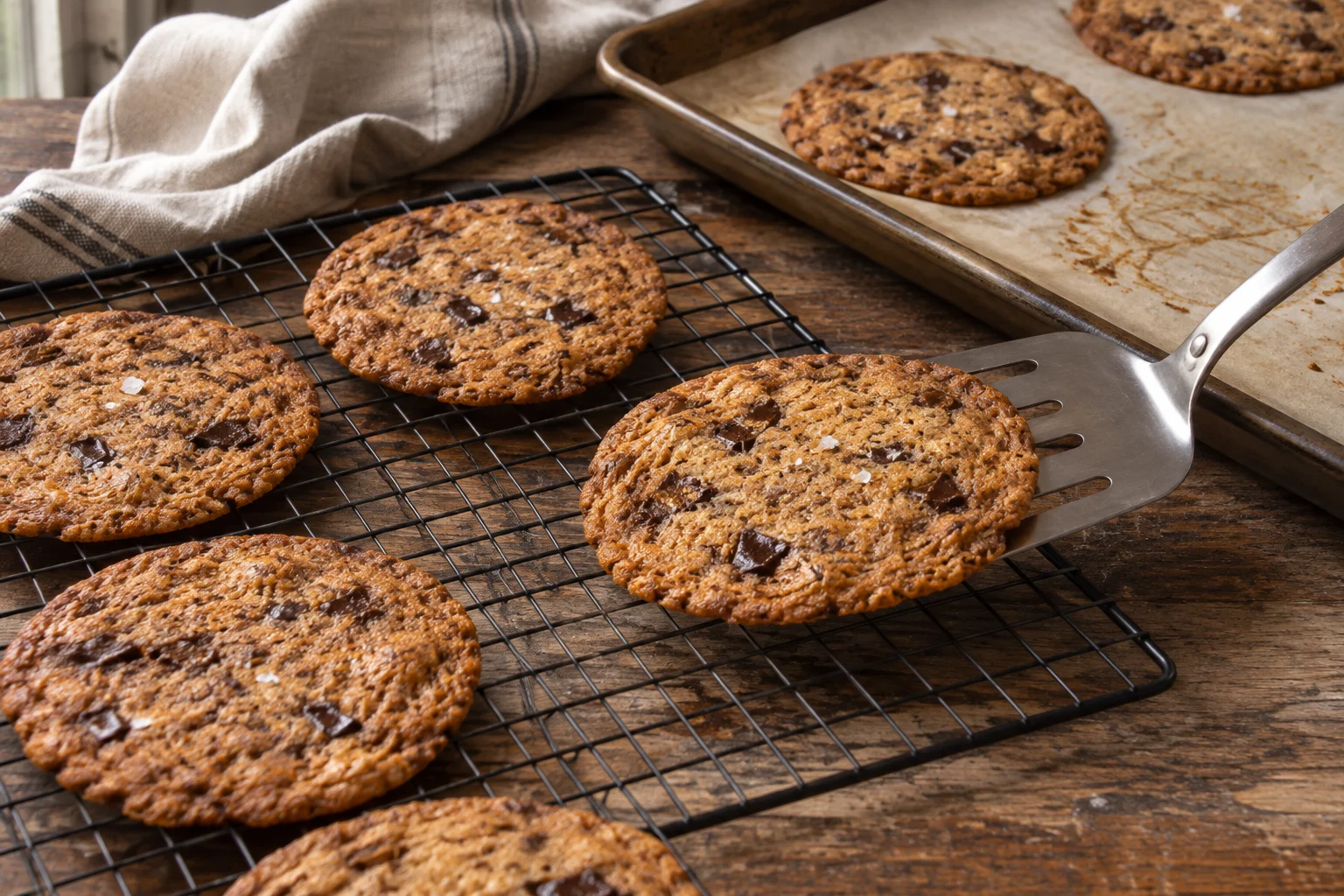
A frozen centre of cream cheese, caramel or chocolate can change heating significantly. Use only recipes that approve baking the complete assembled cookie from frozen. Dairy fillings may have specific safety and storage requirements beyond an ordinary chocolate chip dough.
Food safety during portioning
Cookie dough may contain raw flour and eggs, so do not taste it. Keep the handling area and utensils clean, freeze portions promptly and maintain safe freezer conditions. Baking from frozen must still reach the recipe's complete cooked endpoint.
How to bake just two cookies
Remove two labelled scoops from the bag, place them on the prepared sheet with enough space, and return the rest to the freezer promptly. Bake using the recipe's frozen schedule and cool as directed. A large sheet can still work for a two-cookie batch.
What if dough is covered in frost?
Excessive ice crystals may indicate exposure to air or temperature cycling. Inspect packaging and quality, and consider whether the stored dough is still suitable. Ice on the surface can create uneven moisture or spread when baking.
How long to rest after baking
Leave finished cookies on the sheet for the method's specified interval so delicate centres firm, then transfer to a rack when appropriate. A frozen-start cookie may appear soft when hot, but cooling isn't a substitute for adequately baking the middle.
Frequently asked questions
Do I have to thaw dough balls? Many drop-cookie recipes say no. Do I need a hotter oven? Usually follow the original tested temperature. Will they spread less? Sometimes. Can I bake a frozen log whole? Not under an ordinary sliced-cookie method. Is raw frozen dough safe to eat? No.
Fresh cookies on your schedule
Portion and label dough before freezing, use a fully preheated oven, and follow the formula's frozen-baking cues. You can bake exactly the number you want without compromising the cooked centre or the texture.
IN PICTURES
From the baking notebook
FROM THE RECIPE BOX


