On this page
A homemade frozen fruit pie can be an excellent holiday shortcut: assemble it ahead, protect it in the freezer and bake closer to serving. But the method depends on what you froze, which dish holds it and whether the filling is fruit, custard or cream. A frozen unbaked apple pie is a different project from a baked custard pie or a pie frozen in a fragile glass plate.
Yes, some fruit pies bake straight from frozen
Many tested apple, berry and other fruit pie recipes permit assembling an unbaked pie and baking it without thawing. The cold centre requires additional heating time, and the crust may brown before the filling begins bubbling. Use a recipe that explicitly offers a frozen-baking schedule.
Not every pie follows the same plan
Custard pies, meringue pies, cream pies and some filled pastries may not freeze or bake successfully as raw assembled desserts. Eggs, dairy, fillings and toppings respond differently to freezing. Choose a freezing method written specifically for that style rather than applying frozen apple pie directions.
Freeze before or after baking?
For many conventional fruit pies, freezing unbaked can preserve the just-baked crust experience. Other bakers successfully freeze already baked pies for later reheating. Each option has a different schedule; reheating a baked pie is not the same as cooking raw frozen dough and fruit.
The recipe for Blueberry Pie gives a baked-pie freezing option. Use separate instructions designed for an unbaked pie if you want to bake it directly from frozen.

Choose a freezer-to-oven-safe pan
Metal pie pans often suit frozen unbaked fruit pies when the recipe recommends them. Glass and ceramic can crack from sudden temperature changes, especially if taken from a freezer into a hot oven. Do not place a frozen glass or ceramic dish in a preheated oven unless its manufacturer explicitly permits the exact temperature transition.
Why a frozen centre takes longer
The oven must heat the pastry and filling through freezing and then continue cooking the fruit and thickener. The top can reach a golden colour before the centre is hot enough to bubble and thicken. Don't remove the pie solely because the crust appears browned.
Follow the recipe's oven temperature
Some frozen-fruit-pie formulas use a particular high-temperature start and a lower finishing temperature; others use one consistent temperature. These methods aren't interchangeable. Increasing heat dramatically to shorten baking may burn the crust while leaving the filling frozen.
Prepare the pie for freezing
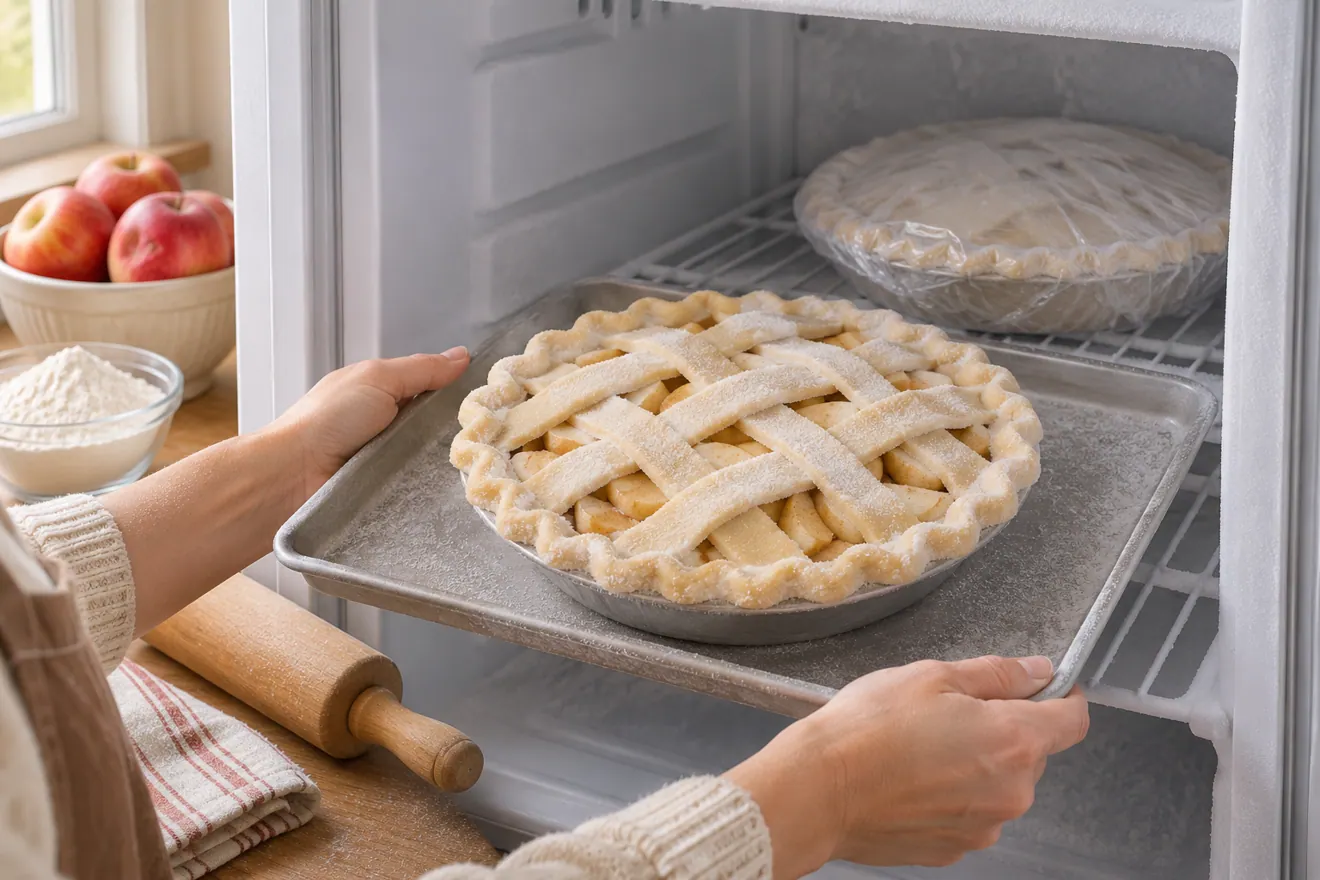
Assemble according to the tested formula, including the right thickener and sugar. Freeze until solid on an appropriate level shelf, then wrap and label to protect the dough from drying and freezer odours. Leave vents or plan to add them safely as instructed; don't try to carve hard frozen pastry recklessly.
Vent the top appropriately
A double-crust pie needs a steam path. Some recipes cut vents before freezing; others specify a method for lattice or top decoration. Follow the assembly method instead of assuming steam can escape through an unbroken top.
Use a pan underneath for drips
Fruit pies can bubble over as filling cooks. A rimmed baking sheet can catch overflow when the recipe recommends it. Consider how that sheet affects bottom heat, and never place a non-oven-safe pan or an unsuitable cold dish directly on a hot stone.
How to protect a browning crust
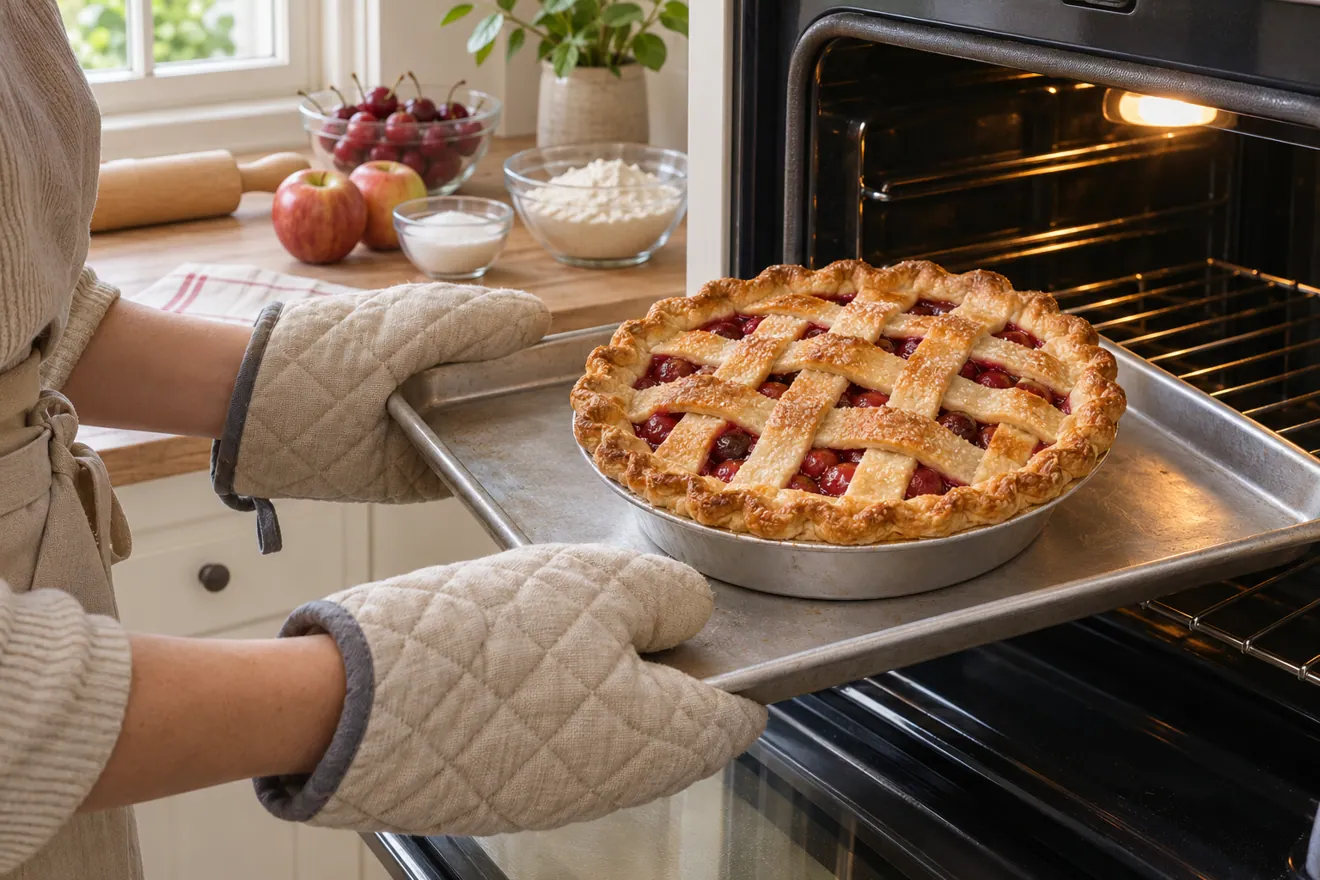
If the pastry develops enough colour before the fruit is properly cooked, a loose foil shield or edge guard may help, as directed by the recipe. Don't seal the entire pie tightly, trapping steam and softening the crust. Handle foil and hot metal carefully.
How to determine doneness
For many fruit pies, look for the specified bubbling through centre vents or lattice openings along with a fully baked crust. A filling that bubbles only around the rim may still be cooler in the centre. Follow the recipe's time and doneness cues rather than guessing from surface colour alone.
Does frozen fruit require more thickener?
Fruit releases moisture as ice crystals melt, and some varieties shed considerable juice. A recipe designed for frozen pie may adjust starch type or amount. Don't add random cornstarch at assembly or again at baking; select a well-tested filling formula.
Can you thaw first?
Only when the chosen recipe directs it. Thawing an assembled unbaked pie can soften the dough and release fruit juices before the oven sets the crust, possibly increasing sogginess. A formula written to bake from frozen should generally be followed as such.
Can you bake a frozen pie crust with no filling?
Some recipes freeze an empty pie shell briefly before blind baking to limit shrinkage. This is different from a fully frozen fruit pie. Use the crust recipe's pan, lining and blind-baking instructions and don't assume every glass dish tolerates an abrupt freezer-to-oven transfer.
Can you freeze cream pie?
Whipped cream, pastry cream and gelatin or starch-based fillings may change texture after freezing. Some speciality frozen desserts are designed to be eaten cold, but that doesn't make a conventional banana cream pie a good candidate for raw freezing or oven baking. Follow a tested make-ahead plan.
How to cool the finished pie
Even when baked from frozen, fruit pie filling needs time to set after it reaches its baking endpoint. Cool according to the recipe before slicing; otherwise the still-hot filling may run out. Use appropriate refrigeration for any perishable additions.
For the final cooling stage, see Classic Apple Pie. Its baking instructions start with a freshly assembled pie. Use a tested freezer-to-oven schedule for a frozen one.

Food and storage safety
Keep frozen pie at −18°C (0°F) or colder and label the package with the date and its bake instructions. A recipe designed for a frozen fruit pie can tell you when to add vents, whether to remove packaging before baking and how the filling should look when done.
Refrigerate egg custard, cream pies and cheesecake at 4°C (40°F) or colder. Count cooling and serving toward a total of two hours at room temperature. Follow the dish manufacturer’s temperature limits and use refrigerator-safe bakeware.
Frequently asked questions
Can I put a frozen fruit pie directly in the oven? Yes, when the formula and pan are appropriate. Will it take longer? Usually. Is frozen glass safe in a hot oven? Not unless explicitly rated for that transition. Can I use the normal baking time? No, use frozen-specific instructions. Should I slice immediately? Fruit filling benefits from cooling.
Make-ahead pie should stay straightforward
Freeze a recipe designed for it, choose safe equipment and bake until the filling—not just the crust—is fully cooked. A good frozen pie plan saves work on serving day without creating new uncertainty about the centre or the baking dish.
Related recipe: Classic Apple Pie.
Some images are AI-generated illustrations of the dishes and techniques described.
IN PICTURES
From the baking notebook
FROM THE RECIPE BOX


