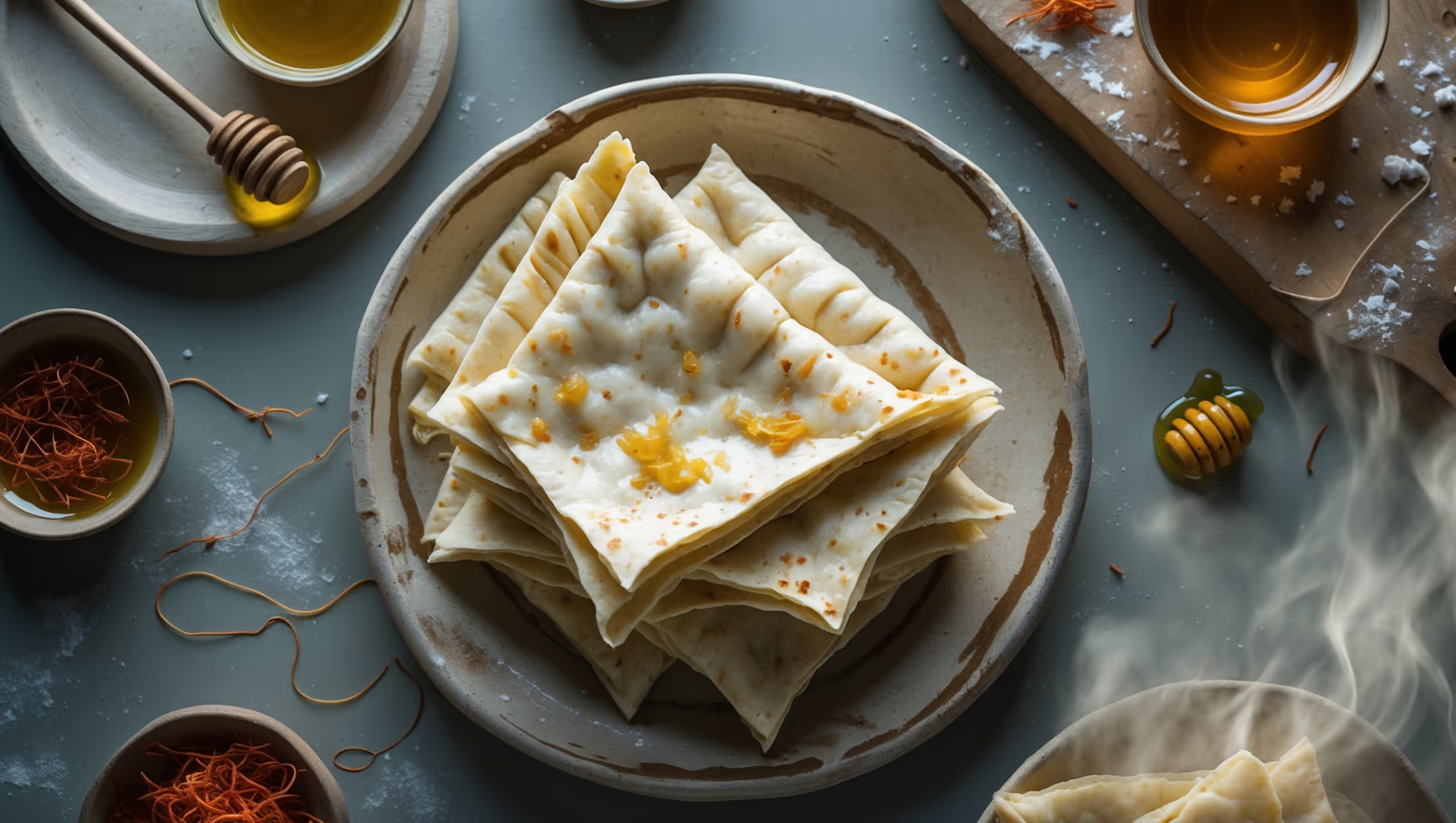
Directions
<ol class="no-list-style"><li class="MethodStepper"><h4 class="step-title">Step 1</h4>Begin by preparing the saffron milk. Warm 125ml milk until it's just hot to touch (not boiling). Add the saffron strands and sugar, stirring until the sugar dissolves. Let this mixture steep for 15-20 minutes - you'll notice the milk turning a beautiful golden-orange color as the saffron infuses. This infusion is crucial for both flavor and the signature color of authentic Sheermal.</li><li class="MethodStepper"><h4 class="step-title">Step 2</h4>In a large mixing bowl, combine the flour, instant yeast, and salt. Make a well in the center of this dry mixture. The yeast doesn't need pre-activation as we're using the instant variety, which saves time while ensuring proper rise.</li><li class="MethodStepper"><h4 class="step-title">Step 3</h4>Pour the saffron milk mixture, melted ghee, and beaten egg into the well. Begin mixing with a wooden spoon until the dough starts coming together. Gradually add warm water as needed - you may not need all 60ml, so add slowly until the dough forms. The dough should be soft and slightly tacky, but not sticky.</li><li class="MethodStepper"><h4 class="step-title">Step 4</h4>Turn the dough out onto a lightly floured surface and knead for 8-10 minutes until smooth and elastic. A properly kneaded dough will spring back when gently pressed with your finger. The gluten development from this kneading is essential for the characteristic soft yet structured texture of Sheermal.</li><li class="MethodStepper"><h4 class="step-title">Step 5</h4>Place the dough in a lightly oiled bowl, cover with a damp cloth or plastic wrap, and allow to rise in a warm, draft-free spot for about 1-1.5 hours, or until doubled in size. This slow fermentation develops flavor and ensures the perfect texture.</li><li class="MethodStepper"><h4 class="step-title">Step 6</h4>Once risen, gently punch down the dough to release excess air bubbles. Divide it into 6 equal portions and shape each into a smooth ball. Cover with a kitchen towel and let rest for 10 minutes to relax the gluten, which will make the dough easier to roll out.</li><li class="MethodStepper"><h4 class="step-title">Step 7</h4>Roll each ball into a circle about 15-18cm in diameter and approximately 1cm thick. Using the back of a fork, create a decorative pattern by gently pressing lines or cross-hatches on the surface - this is not just decorative but helps the bread cook evenly. If using, sprinkle a few nigella seeds over the top and press them gently into the dough.</li><li class="MethodStepper"><h4 class="step-title">Step 8</h4>Heat a cast iron skillet or heavy-bottomed pan over medium heat. Place one flatbread in the dry skillet and cook for about 2-3 minutes until the bottom begins to turn golden brown with small bubbles forming on the surface.</li><li class="MethodStepper"><h4 class="step-title">Step 9</h4>Flip the flatbread and brush the cooked side with melted ghee. Cook for another 2-3 minutes until the second side is golden brown and the bread is cooked through. The internal temperature should reach about 90°C and the bread should sound hollow when tapped.</li><li class="MethodStepper"><h4 class="step-title">Step 10</h4>Transfer the cooked Sheermal to a plate lined with a clean kitchen towel and cover to keep warm while you cook the remaining flatbreads. Brush each Sheermal with a little more melted ghee while still warm for extra richness and shine.</li><li class="MethodStepper"><h4 class="step-title">Step 11</h4>Serve your Sheermal warm alongside rich curries, kebabs, or simply enjoy with a cup of hot chai. These flatbreads are best enjoyed fresh but can be stored in an airtight container for up to 2 days. To reheat, warm briefly in a skillet or microwave for 15-20 seconds.</li></ol>