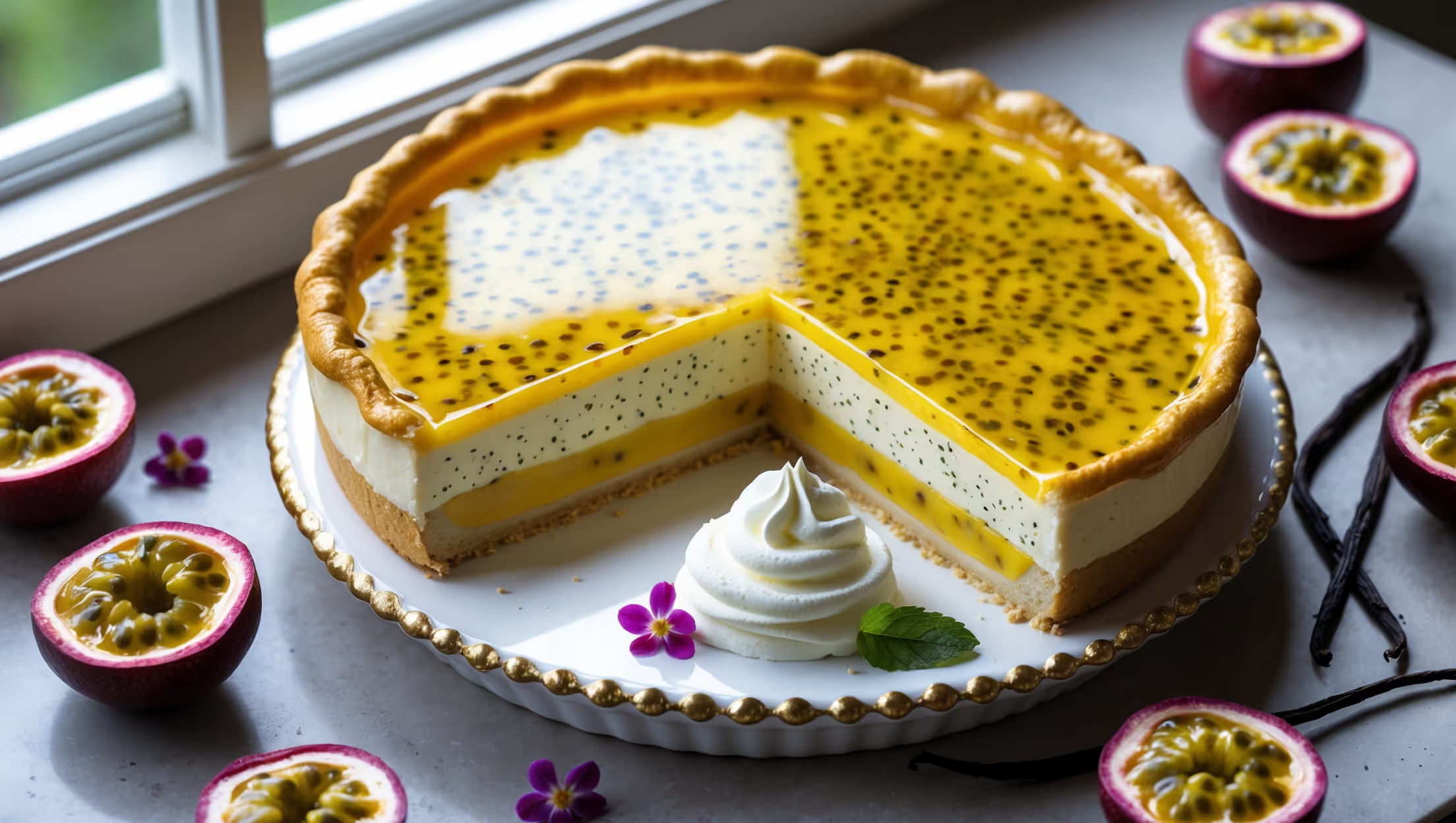
Directions
<ol class="no-list-style"><li class="MethodStepper"><h4 class="step-title">Step 1</h4>Start with the shortcrust pastry. In a food processor, pulse the flour, powdered sugar, and salt to combine. Add the cold cubed butter and pulse until the mixture resembles coarse breadcrumbs (this keeps the pastry flaky). Add the egg yolk and 2 tbsp of ice-cold water, pulsing until the dough just starts to come together - it should hold when pressed between your fingers. Add the remaining water only if needed. Shape into a disc, wrap in plastic, and refrigerate for at least 30 minutes to relax the gluten.</li><li class="MethodStepper"><h4 class="step-title">Step 2</h4>Preheat your oven to 180°C. Roll the chilled pastry on a lightly floured surface to about 3mm thickness, making it large enough to line your tart pan. Carefully transfer to the pan, pressing gently into the corners. Trim excess dough, leaving a slight overhang to account for shrinkage. Prick the base with a fork, then freeze for 15 minutes to prevent shrinking.</li><li class="MethodStepper"><h4 class="step-title">Step 3</h4>Line the chilled pastry case with parchment paper and fill with baking beans or pie weights. Blind bake for 15 minutes, then remove the parchment and weights and continue baking for another 8-10 minutes until the base is golden and fully cooked. The pastry should sound crisp when tapped. Cool completely on a wire rack.</li><li class="MethodStepper"><h4 class="step-title">Step 4</h4>For the vanilla bean pastry cream, heat the milk with the vanilla bean seeds and pod (or vanilla bean paste) in a saucepan until just simmering. Meanwhile, in a heatproof bowl, whisk together the egg yolks and sugar until pale, then whisk in the cornstarch until smooth. Remove the vanilla pod from the milk if using. Gradually pour the hot milk into the egg mixture, whisking constantly to prevent curdling.</li><li class="MethodStepper"><h4 class="step-title">Step 5</h4>Return the mixture to the saucepan and cook over medium heat, whisking continuously until thickened. This will happen suddenly around 82-85°C, so be vigilant! The pastry cream should coat the back of a spoon and hold a clear line when you run your finger through it. Immediately push through a fine-mesh sieve to remove any lumps, then whisk in the butter pieces until melted and incorporated. Cover with plastic wrap directly on the surface (to prevent a skin forming) and refrigerate until cold, at least 2 hours.</li><li class="MethodStepper"><h4 class="step-title">Step 6</h4>For the passion fruit curd, whisk together the passion fruit pulp, sugar, and eggs in a heatproof bowl. Place over a pan of simmering water (ensure the bowl doesn't touch the water) and whisk constantly until the mixture thickens enough to coat the back of a spoon (around 82°C). This should take about 8-10 minutes - be patient for that perfect silky texture! Remove from heat and whisk in the butter pieces until completely melted. Strain through a fine sieve to remove seeds and any cooked egg bits. Cover with plastic wrap directly on the surface and chill until set, at least 2 hours.</li><li class="MethodStepper"><h4 class="step-title">Step 7</h4>To assemble the pie, spread the vanilla bean pastry cream evenly in the cooled tart shell, leaving about 1cm from the top. Carefully spread the passion fruit curd over the pastry cream in an even layer. Refrigerate while you prepare the mirror glaze.</li><li class="MethodStepper"><h4 class="step-title">Step 8</h4>For the mirror glaze, first bloom the powdered gelatin in 40ml cold water for 5 minutes (or soak gelatin sheets in cold water until soft). In a small saucepan, combine the passion fruit juice, sugar, and 50ml water. Bring to a simmer, stirring until the sugar dissolves. Remove from heat and stir in the bloomed gelatin until completely dissolved. Let cool to 32-35°C - this temperature is crucial for the glaze to set properly without melting your filling. If using, stir in a tiny amount of yellow food coloring for a vibrant finish.</li><li class="MethodStepper"><h4 class="step-title">Step 9</h4>When the glaze has cooled to the right temperature, remove the pie from the refrigerator. Ensure the curd layer is firm enough to pour the glaze over. Slowly pour the glaze over the center of the pie, allowing it to spread naturally to the edges. If needed, use an offset spatula to guide it, working quickly but gently. The beauty of mirror glaze is in its smooth, undisturbed surface.</li><li class="MethodStepper"><h4 class="step-title">Step 10</h4>Return the pie to the refrigerator and chill for at least 2 hours or preferably overnight to allow the glaze to fully set. When ready to serve, carefully remove the tart from the pan by pushing up from the bottom. Slice with a sharp knife dipped in hot water and wiped clean between each cut for pristine, showcase-worthy slices. The pie is best enjoyed within 2 days for optimal texture and flavor.</li></ol>