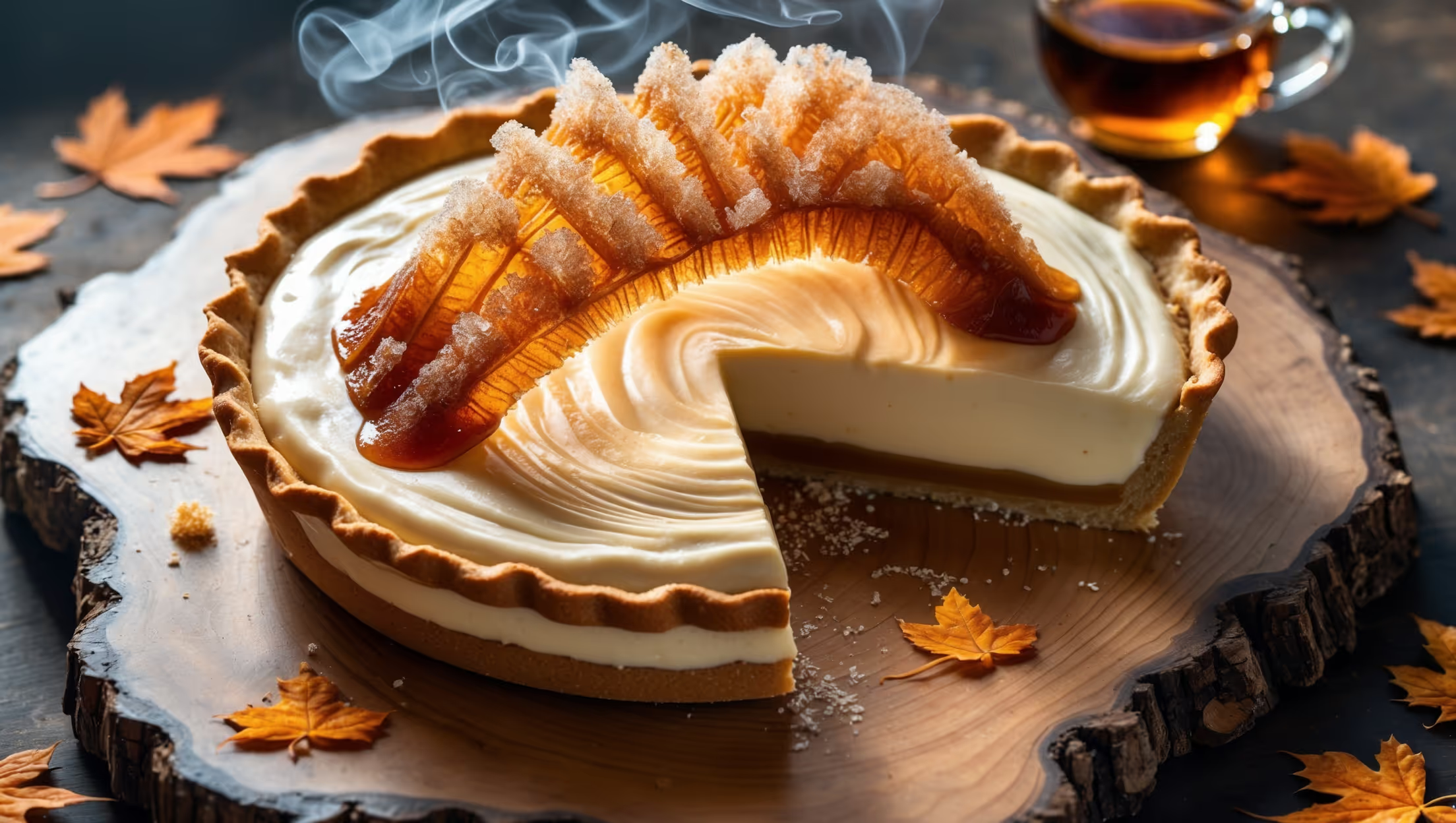
<ol class="no-list-style"><li class="MethodStepper"><h4 class="step-title">Step 1</h4>Begin with the pastry crust. Place the flour, salt, and cold cubed butter in a food processor and pulse until the mixture resembles breadcrumbs (or rub the butter into the flour using your fingertips). The cold butter creates pockets of fat that will steam during baking, creating flaky layers.</li><li class="MethodStepper"><h4 class="step-title">Step 2</h4>Add the caster sugar and pulse briefly to combine. Mix the egg yolk with 2 tablespoons of ice-cold water and drizzle over the flour mixture while pulsing until the dough just begins to come together. If needed, add the remaining tablespoon of water, but be careful not to overwork the dough as this develops gluten and toughens the crust.</li><li class="MethodStepper"><h4 class="step-title">Step 3</h4>Turn the dough onto a lightly floured surface, form into a disc, wrap in plastic, and refrigerate for at least 30 minutes. Chilling relaxes the gluten and firms the butter, ensuring a tender, flaky crust.</li><li class="MethodStepper"><h4 class="step-title">Step 4</h4>Preheat your oven to 190°C (170°C fan/375°F). Roll the chilled dough to 3-4mm thickness and line your tart tin, pressing gently into the fluted edges. Trim any excess and prick the base with a fork. Return to the refrigerator for 15 minutes to prevent shrinkage during baking.</li><li class="MethodStepper"><h4 class="step-title">Step 5</h4>Line the chilled pastry case with parchment and fill with baking beans. Blind bake for 15 minutes, then remove the beans and parchment and bake for a further 5-8 minutes until the base is golden and crisp. The initial blind baking with weights prevents the pastry from puffing up. Cool completely before filling.</li><li class="MethodStepper"><h4 class="step-title">Step 6</h4>For the maple-smoked filling, whisk the egg yolks, sugar, cornflour, and salt in a heatproof bowl until pale and thick. The cornflour will help stabilize the custard, preventing it from curdling during cooking.</li><li class="MethodStepper"><h4 class="step-title">Step 7</h4>In a medium saucepan, combine the cream, maple syrup, and vanilla seeds. Heat until just below simmering point - you'll see small bubbles forming around the edges (about 80°C/175°F if using a thermometer). Heating the dairy mixture before adding to the eggs allows for better temperature control and smoother custard.</li><li class="MethodStepper"><h4 class="step-title">Step 8</h4>Gradually pour about one-third of the hot cream mixture into the egg mixture, whisking constantly to temper the eggs (preventing them from scrambling). Then pour the tempered egg mixture back into the remaining cream in the saucepan, whisking continuously.</li><li class="MethodStepper"><h4 class="step-title">Step 9</h4>Return the saucepan to medium-low heat and cook, stirring constantly with a heatproof spatula, until the mixture thickens enough to coat the back of a spoon and reaches about 82°C (180°F). This temperature ensures the eggs are safely cooked while maintaining a silky texture.</li><li class="MethodStepper"><h4 class="step-title">Step 10</h4>Remove from heat and stir in the liquid smoke. Start with a smaller amount and taste, adding more if desired - the smoke flavor should be subtle and complement the maple, not overwhelm it. Pass the custard through a fine-mesh sieve to ensure silky smoothness.</li><li class="MethodStepper"><h4 class="step-title">Step 11</h4>Pour the maple-smoked custard into the cooled pastry case and smooth the top. Cover the surface directly with plastic wrap to prevent a skin from forming. Refrigerate for at least 4 hours or overnight until completely set.</li><li class="MethodStepper"><h4 class="step-title">Step 12</h4>For the crystallized sugar cage, prepare your workstation before beginning as you'll need to work quickly. Line a baking sheet with a silicone mat or parchment paper. Have your oiled bowl or dome (for shaping) and tools ready.</li><li class="MethodStepper"><h4 class="step-title">Step 13</h4>In a clean, heavy-bottomed saucepan (any impurities can cause crystallization), combine the sugar, water, and cream of tartar. The cream of tartar is acidic and helps prevent unwanted crystallization as the sugar cooks.</li><li class="MethodStepper"><h4 class="step-title">Step 14</h4>Heat the mixture over medium heat without stirring (stirring can trigger crystallization). Once the sugar dissolves, increase the heat and boil until the syrup reaches 149-154°C (300-310°F) or the hard crack stage. The mixture will turn amber; add food coloring if using. You can test by dropping a small amount into cold water - it should form hard, brittle threads.</li><li class="MethodStepper"><h4 class="step-title">Step 15</h4>Remove from heat and allow the bubbles to subside. Working quickly but carefully (the sugar is extremely hot), dip the back of a wooden spoon or whisk into the syrup and drizzle thin strands over your prepared surface or directly over the oiled bowl, creating intersecting patterns. If the syrup thickens too much, briefly return it to low heat.</li><li class="MethodStepper"><h4 class="step-title">Step 16</h4>For a cage effect, drizzle over and around an oiled, inverted bowl. Once the sugar hardens slightly but is still pliable (about 30 seconds), carefully lift and mold it. If creating separate decorative pieces, allow them to harden completely on the silicone mat before gently removing.</li><li class="MethodStepper"><h4 class="step-title">Step 17</h4>Allow the sugar work to cool and harden completely, then carefully place it on top of the chilled pie just before serving. The contrast between the crisp, amber sugar and the smooth custard creates a stunning presentation.</li><li class="MethodStepper"><h4 class="step-title">Step 18</h4>For best results, assemble the pie with its sugar cage no more than 2 hours before serving, as the sugar cage will begin to soften in humid environments. Serve chilled, cutting with a sharp knife dipped in hot water between slices for the cleanest presentation.</li></ol>