On this page
There is nothing disappointing about a blueberry muffin until you cut it open and discover almost every berry has collected at the bottom. The top looks golden and inviting, but the base is streaky, damp, and packed with fruit while the rest of the muffin barely has any.
The quick fix: Start with a muffin batter thick enough to hold berries in place, measure your ingredients carefully, and fold the fruit in gently. A light coating of flour can help, but it is not a substitute for the right batter consistency. With frozen blueberries, add them straight from the freezer rather than thawing them first.
You do not need an elaborate technique or special equipment. You need to understand why berries move through batter, then make a few small adjustments that suit your particular muffin recipe.
Why do blueberries sink to the bottom of muffins?
Blueberries are heavier than the surrounding muffin batter, so they can drop toward the base before the batter sets in the oven. The thinner or more fluid the batter, the easier it is for the fruit to move. A sturdy, scoopable batter offers more resistance, helping berries remain throughout the muffin instead of settling in a single layer.
This is why the very same blueberries may stay suspended in one recipe but sink in another. The difference often comes down to the structure and consistency of the batter, not whether you stirred the fruit in clockwise or used a particular muffin pan.
A few common contributors make sinking more likely:
- Excess liquid: Extra milk, oversized eggs, very wet fruit, or inaccurate measuring can create a looser batter.
- An unsuitable batter: A thin pancake-like mixture usually will not hold a generous quantity of whole blueberries as effectively as a thick muffin batter.
- Too many berries: Overloading a small batch with fruit makes it harder to distribute the berries evenly.
- Uneven mixing or scooping: Fruit can gather in one part of the mixing bowl and end up concentrated in the last muffin cups.
- Frozen fruit that has thawed: The released juice can thin and stain the batter, even though thawing is not necessarily the sole reason berries sink.
A few berries on the bottom are normal and do not mean your muffins failed. The aim is a more even distribution, not a mathematically perfect pattern.
1. Start with thick, properly measured muffin batter
This is the most important place to begin. A well-made blueberry muffin batter should typically be thick enough to scoop rather than pour like a drink. It can be slightly lumpy and still bake into a tender muffin.
Use the flour and liquid amounts called for by a tested recipe. If the recipe gives flour by weight, use a kitchen scale; scooping flour loosely into a measuring cup and packing it tightly are not equivalent. Follow the recipe's mixing method rather than trying to fix a thin batter by adding handfuls of flour at the end.
Also check the ingredient choices. Swapping a thick dairy ingredient for a thinner one, using watery homemade fruit purée, or adding extra milk can change the batter's texture. A recipe developed for a certain amount of blueberries is usually a more reliable starting point than adding twice as many berries to a plain muffin base.
What to look for: When you lift a scoop of batter, it should fall back into the bowl slowly in thick mounds. Not every muffin recipe is equally thick, so use the original recipe as your main guide.
2. Lightly coat the blueberries with flour
Flouring blueberries is the classic recommendation, and it can help. King Arthur Baking recommends tossing berries in the flour mixture for some muffin recipes; Sally's Baking likewise suggests a little flour when berries tend to sink. The important nuance is that a dusting of flour helps but does not guarantee success if the batter is very thin.
To try it:
- If using fresh berries, gently rinse them if needed and dry them thoroughly with a clean towel.
- Place the berries in a small bowl, then toss them with roughly 1 tablespoon of flour for a standard 12-muffin batch, or use the quantity specified by your recipe.
- Shake off obvious excess. You want a light dusting, not thick white clumps.
- Fold the coated berries into the finished batter just before portioning.
Alternatively, for recipes that instruct you to add fruit to the dry ingredients, tossing it in the dry flour mixture can serve the same purpose. Do not add large extra amounts of flour without considering the recipe's balance.

Does coating blueberries in flour really work?
It is a helpful supporting technique, not a magic trick. Some bakers find that their berries remain evenly suspended without flour because the batter is already thick. Others still experience sinking after flour-coating when their batter is too loose. Prioritize the batter first, then use flour as a small additional safeguard.
3. Fold the fruit in gently—and distribute it evenly
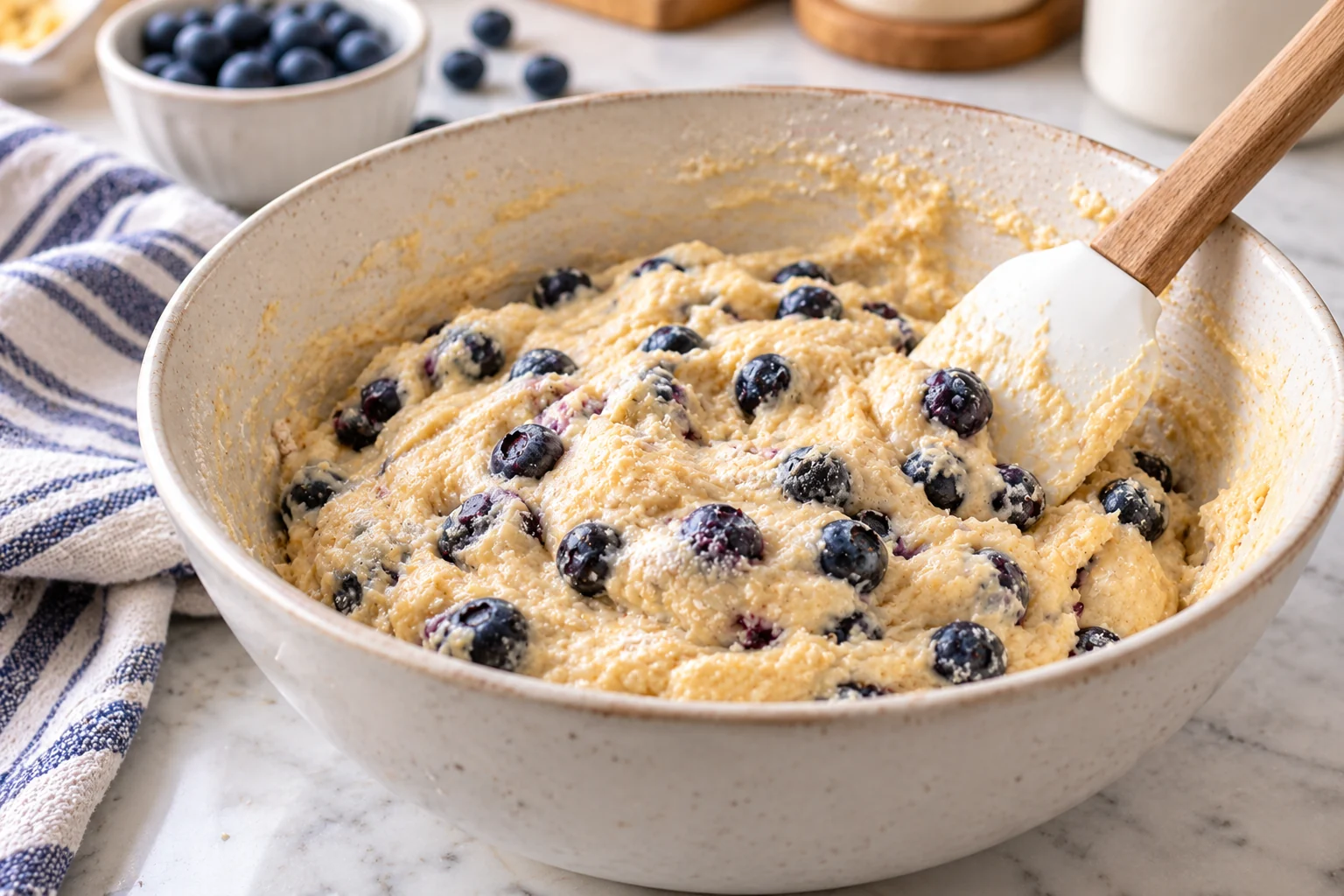
Add blueberries near the end of mixing and use a spatula to make a few broad, gentle folds. Scrape from the bottom of the bowl so berries are not stranded in one corner. Stop once the fruit is reasonably distributed.
Overmixing after the flour is hydrated develops more gluten, which can make muffins tougher. Vigorous stirring also breaks fresh berries, streaking the batter purple and creating wet pockets.
If your last two muffin cups always seem to contain most of the fruit, pause and redistribute the batter gently before scooping. Even distribution in the bowl matters just as much as distribution within each muffin.
For a particularly berry-heavy recipe, you can reserve a small spoonful of plain batter before adding the fruit and place it at the bottom of each liner. Then portion the berry batter above it. That creates a fruit-free buffer at the base; it is an optional visual and textural trick, not a requirement for every recipe or a fix for runny batter.
4. Handle fresh and frozen blueberries differently
Fresh blueberries
Fresh berries are easy to fold into muffin batter without causing much color bleed, provided they are firm and dry. Discard soft, leaking or moldy berries. If you wash them, let excess water drain and pat them dry before flour-coating or mixing.
Frozen blueberries
Use frozen berries straight from the freezer unless your recipe specifically says otherwise. Thawing tends to release purple juice, which can tint and loosen the batter. Frozen berries may make the mixture look stiffer or colder at first, and some blue streaking is normal.
Measure the berries before adding them and fold them in promptly. Bake according to your recipe, checking doneness rather than assuming the timing will match fresh fruit exactly. Depending on the recipe, frozen fruit can require a slightly longer bake.
For more detail on texture and color, keep this guidance separate from our planned article on How to Add Frozen Berries to Muffins; that more specialized guide can explore the frozen-berry method without duplicating this troubleshooting article.
5. Fill the muffin cups evenly and bake promptly
Once the berries are folded in, portion the mixture evenly into a lined muffin tin. A spring-loaded scoop helps, but a large spoon works too. Keep the fruit distributed across the cups instead of leaving a heap of blueberries at the bottom of the bowl.
Use the fill level and oven setting from your particular recipe. Some bakery-style muffins are filled close to the top, while others use less batter to avoid overflow. There is no single fill line that suits every muffin formula.
Preheat the oven fully before mixing the final batter, and avoid leaving filled tins on the counter unnecessarily. Proper heat allows the batter to bake and set as intended. Do not increase the oven temperature simply to keep berries afloat; high-heat starts are a separate muffin-rise technique and must suit the recipe.
Quick troubleshooting guide
| What you notice | Likely reason | What to try next time |
|---|---|---|
| Most berries collect at the bottom | Batter too thin or very berry-heavy | Use the tested flour/liquid ratio and avoid extra berries |
| Batter turns purple-gray | Frozen berries thawed or fresh berries were crushed | Add frozen berries directly, fold gently |
| Bottom feels wet around berries | Juice pockets or too many berries near the base | Distribute berries evenly; bake until the batter is set |
| Muffins are tough but berries are evenly spread | Batter overmixed | Stir only until combined |
| Only the last few muffins have lots of berries | Fruit settled in the mixing bowl | Redistribute gently before scooping |
| Blueberries sink despite flour coating | The flour dusting cannot compensate for a loose batter | Address batter thickness and accurate measuring first |
Try the technique with these blueberry muffin recipes
The best test is to follow a complete muffin recipe instead of changing several ingredients at once. These recipes are already available on What's Baking?:
- Blueberry Muffins Recipe: an approachable blueberry muffin with fresh or frozen fruit and a crisp sugar topping.
- Tim Hortons Copycat Blueberry Muffins Recipe: a streusel-topped version for a bakery-style treat.
- Bakery-Style Jumbo Muffins Recipe: useful when you want a larger muffin and need to follow jumbo-pan baking guidance.
Note that several recipes may give different flour-coating amounts or mixing instructions. Follow the chosen recipe's ingredient quantities, then apply the principles in this guide when troubleshooting.
Frequently asked questions
Can I put blueberries on top instead of mixing them in?
Yes. Pressing a few berries gently into the top of each filled cup gives an attractive surface and ensures visible fruit on top. For blueberry flavor throughout the muffin, fold most of the berries into the batter and reserve only a few for decoration.
Should I cut large blueberries in half?
Usually not. Cutting releases juice, which can cause more staining and wet pockets. Choose a recipe suited to your berries, and leave firm, whole blueberries intact unless the instructions say otherwise.
Is it better to use fresh or frozen blueberries in muffins?
Either can work. Fresh berries often give cleaner-looking batter and less color bleed. Frozen berries are convenient year-round; add them still frozen and expect possible purple streaks. The right choice often depends on the recipe and what's available.
Can I add more flour if my batter looks runny?
Avoid guessing. First check whether you measured flour and liquids correctly, whether a substitution caused the change, and what the recipe says its batter should look like. Adding lots of extra flour late in mixing can make muffins dry or dense.
Why are blueberries sinking even after I toss them in flour?
The batter may be too fluid, the proportion of berries may be too high, or the berries may be unevenly distributed in the bowl. Flour-coating is a minor aid, not a structural replacement for the correct recipe formula.
Does this method also help chocolate chips or raspberries?
The underlying principle—using a batter capable of holding the mix-ins—applies broadly. However, softer raspberries break more easily than blueberries, and chocolate chips behave differently from fruit, so the gentlest handling method may vary.
How three muffin recipes handle blueberries
The Blueberry Muffins recipe uses 250 g flour and 250 g blueberries in twelve muffins, beginning at 190°C. The Tim Hortons Copycat Blueberry Muffins use 280 g flour, 300 g berries, buttermilk and a streusel topping; their method also calls for a tablespoon of flour to coat the berries. The Bakery-Style Jumbo Muffins use a thicker formula designed for six jumbo portions, with 200 g optional mix-ins and a 220°C starting temperature. These batters are not identical and should not be treated as though a single extra spoonful of flour will always prevent sinking.
A reliable fruit-folding sequence
Measure the correct flour and liquids, preheat the oven fully, and prepare the pan before mixing. Dry freshly rinsed berries or keep frozen fruit frozen when the recipe allows it. Fold berries into batter gently with a spatula; prolonged vigorous stirring can burst them and streak the crumb purple. Divide the batter evenly so the first wells do not receive almost all the fruit.
Coating the berries very lightly with flour can be helpful in some batters, particularly where the recipe specifies it. However, the coating is not a substitute for the right thickness, and too much extra flour can make muffins dry. Do not change the fruit amount, milk amount and flour coating simultaneously when troubleshooting.
Fresh and frozen berry differences
Fresh blueberries should be sound and relatively dry when folded in. Frozen berries can release coloured liquid as they thaw; a recipe permitting frozen berries without thawing usually expects them added directly to the batter. Cold fruit may slightly affect the bake, so check the crumb's doneness rather than relying on a rigid promise of identical minutes.
With a streusel muffin, keep the topping quantity as written. Excessive topping can obscure the appearance of the dome and weigh down the batter. If the muffin top looks golden but the base is wet, check whether the surrounding crumb has baked properly and whether berries pooled at the bottom.
Why fruit placement changes in the oven
Before the muffin sets, heavy berries can move through thin batter. The rate depends on fruit size, batter viscosity and how quickly the structure develops in the oven. Smaller, evenly distributed berries may behave differently from oversized fruit. The goal is a muffin with fruit throughout, not perfect geometric spacing: a few berries at the bottom are ordinary in homemade baking.
Practical troubleshooting
If all berries gather near the base, check flour measurement, liquid quantities and the time between mixing and baking. If the crumb is streaky purple, berries may have burst during mixing or frozen berries may have thawed. If the centre is soggy, check the source recipe's doneness cues before adding flour or extending the bake blindly. Keep a simple test-batch record to identify the actual cause rather than guessing.
Frequently asked berry questions
Will coating berries always stop sinking?
No. It is one supporting method. Batter structure and oven timing are more important than a coating alone.
Can I add more berries for extra flavour?
Only as a deliberate tested variation. More fruit increases weight and moisture; follow the specified amount for a first attempt.
Is purple batter a problem?
Not necessarily. It can be an aesthetic effect of berry juice. Check the fully baked crumb and flavour rather than assuming colour means the muffins have failed.
Three muffin batters to compare before baking
The site’s classic Blueberry Muffins use 250 g flour with 250 g blueberries for twelve servings. The Tim Hortons Copycat Blueberry Muffins use 280 g flour with 300 g berries plus a streusel topping. The Bakery-Style Jumbo Muffins use 350 g flour with approximately 200 g mix-ins in six jumbo portions. These proportions, pan sizes and temperatures differ; one flour-dusting rule cannot guarantee that berries remain suspended in all three.
The copycat blueberry formula already contains a tablespoon of flour specifically for coating fruit. Use the published quantity rather than adding several extra tablespoons. In the classic blueberry formula, the fruit-to-flour proportion is high enough that the amount of moisture released during baking deserves attention. In the jumbo formula, the larger portions can take longer to set at the centre even though the method starts at a higher temperature.
How to fold fresh berries without crushing them
Wash berries and drain or dry them appropriately before mixing. Fragile or already split fruit can release juice and colour the batter. Use a large spatula and turn the mixture gently from the bottom of the bowl. The aim is even distribution, not beating the fruit into the batter until the mixture becomes uniform purple.
If berries cluster near the bottom of the mixing bowl, give the batter a gentle fold before portioning each few cups. Scooping the fruit-rich portion into the first wells and the fruit-poor portion into the remaining wells can create inconsistent muffins even when the batter's texture was correct. Consistent portion sizes also support even baking.
What to do with frozen blueberries
When the recipe expressly permits frozen berries without thawing, add them while still frozen. Thawing first can release coloured juice that stains the crumb and can create wetter patches in the batter. Handle the fruit quickly and fold gently, then transfer the filled pan to a fully preheated oven. The cold fruit can change how the muffin centre heats, so check for properly baked surrounding crumb rather than relying solely on the timer.
If the package contains a large frozen clump, avoid forcibly stirring it into the batter. Separate fruit only in a way consistent with safe handling and the recipe instructions. An unfamiliar frozen fruit product may bake differently from the fresh berries specified by the author; a small test batch can identify the difference.
How to evaluate blueberry placement after baking
Cut one muffin lengthwise after an appropriate cooling period. Ideally, berries will appear in different portions of the crumb without creating a wet layer at the base. A few fruit pieces at the bottom are normal and do not mean the entire batch failed. The important questions are whether the surrounding crumb is baked through, the fruit tastes pleasant and the texture is tender.
When nearly all berries sit at the base, consider whether the batter was too thin, the recipe's fruit quantity was exceeded or the tray waited too long before baking. When the muffin is purple throughout, consider whether berries burst during mixing or released liquid after thawing. When the base is damp, also review pan-cooling time and the actual doneness, not just the fruit's position.
A baker's troubleshooting checklist
- Verify the correct recipe and pan size before mixing.
- Weigh flour and fruit where the recipe provides grams.
- Preheat the oven fully before combining wet and dry ingredients.
- Dry fresh berries or keep permitted frozen berries unthawed.
- Use only recipe-specified flour coating.
- Fold fruit gently and portion the batter evenly.
- Bake promptly under the published temperature and timing guidance.
- Inspect the centre after cooling rather than judging the muffin only from its crust colour.
Additional questions
Is blueberry sinking a food-safety problem?
Not by itself. A concentrated layer may affect texture and can make some areas wetter, so check that the surrounding batter baked thoroughly. Raw or undercooked batter is a separate concern.
Should I remove the large berries?
Not automatically. Use the fruit size and quantity the recipe was designed for. If large berries cause problems in your particular formula, test a different variety or size without changing several other ingredients at once.
Do all muffin recipes benefit from coating the fruit?
No. Some may specify a light coating, while others rely on batter structure. The published source recipe is more reliable than a blanket rule.
What berries can tell you about batter consistency
If berries remain fairly evenly distributed when the batter is scooped but collect at the bottom during baking, the structure may have set too slowly for the size and quantity of fruit. If they begin sinking in the mixing bowl, the batter may be thinner than intended. Both are clues, but neither justifies adding unmeasured flour. Start by checking the source recipe and whether the actual measured ingredients match it.
The classic blueberry muffin formula uses approximately equal masses of flour and blueberries. That is a generous fruit ratio, so gentle folding and careful portioning matter. The copycat muffin formula includes more berries and a designated tablespoon of flour for coating. The jumbo formula, meanwhile, uses much larger portions and a different temperature scheme. These distinctions should guide troubleshooting instead of a one-size-fits-all internet tip.
How to distribute fruit evenly into a dozen muffin cups
After folding blueberries into batter, gently move the spatula around the bowl to lift fruit from the base. Use a scoop to divide the batter, alternating between different parts of the bowl so one row of muffin cups does not receive all the berries. Check whether each cup has a reasonable mixture of batter and fruit before placing the tin in the oven. Do not press all the berries beneath the surface in an attempt to hide them; the goal is a balanced crumb.
You may reserve a few berries for visual decoration on top if the recipe supports that choice. Those surface berries will not prevent the rest from sinking, however, and their juices may create coloured patches on the crown. A muffin's interior is more important than a perfectly arranged photograph.
Why oven timing matters
Chemical leaveners create gas that expands under heat, while the batter's structure firms. If the mixed tray waits a long time on the counter because the oven was not preheated, the result can differ from the intended method. Have the pan lined and oven ready before combining wet and dry ingredients, then portion and bake without avoidable delay.
Do not swap the jumbo muffin's high starting temperature into the standard blueberry recipe as an automatic fix. The recipes differ in portion size and composition. An excessively hot oven may colour the exterior while leaving a large fruit-filled centre undercooked. Use the published temperature and check for a properly set crumb.
Questions about watery blueberry muffins
Can a muffin be done if blueberry juice is visible?
Berry juice can leave moist coloured streaks even when surrounding batter is baked. Test a section of crumb away from a large berry, following the recipe's doneness cues. Raw batter is different from a juicy fruit pocket.
Should I reduce the milk to keep berries suspended?
Not without a tested recipe adjustment. Reducing liquid changes the entire batter, not just the fruit distribution. Measure the original formula accurately first.
Can a coating of cornstarch replace flour?
Some recipes use starch as part of a tested method, but substitution ratios and results can differ. Use the flour coating specified by the copycat recipe unless deliberately testing a variation.
Why are berries uneven in only some muffins?
Portioning can be inconsistent, especially if berries settle in the bowl between scoops. Gently redistribute before filling the remaining wells and keep portion size consistent.
A repeatable test for better blueberry muffins
For your next batch, record the exact recipe, the quantity and condition of the berries, any flour used to coat them and the pan size. Note the oven temperature, actual bake time and how the muffins looked when removed. After cooling, cut one open and check whether berries are evenly distributed and the surrounding crumb is properly set.
If berries still collect heavily at the base, make one targeted change next time: improve flour measurement, dry fresh berries more thoroughly, or ensure gentler and more even folding. Avoid adding flour, changing baking temperature and reducing fruit simultaneously. A controlled test tells you more than a collection of improvised tricks.
Remember that a few blueberries near the bottom are normal in fruit-rich muffins. A soft, evenly baked crumb and pleasant berry flavour matter more than perfect fruit placement. Use the individual recipe's doneness and storage guidance before serving or gifting the muffins, especially where fresh fruit adds extra moisture.
Above all, make sure the muffins taste good and their crumb is baked through. Beautifully distributed berries are welcome, but freshness, tenderness and food safety matter too. Consistent measuring and gentle folding are worth practicing with every batch.
The takeaway
For blueberry muffins with fruit in every bite, start with a thick, well-measured batter, fold in the berries gently, and divide the mixture evenly before baking. A small dusting of flour is worth trying, especially if you have had trouble with sinking berries, but it is not the whole solution. With frozen blueberries, add them straight from the freezer and follow the recipe's baking instructions.
A little unevenness is part of homemade baking. If your muffins are tender, properly baked and full of berries, a few blueberries near the bottom are nothing to worry about.
IN PICTURES
From the baking notebook
FROM THE RECIPE BOX