On this page
A good brunch menu does not need a long list of dishes. The easiest way to make brunch feel complete is to give each item a job: one dish anchors the meal, another adds contrast, something fresh keeps the table from feeling too heavy, and drinks finish the menu.
This approach works for a casual weekend brunch, a birthday, a family gathering or any time you want the meal to feel thoughtful without cooking six things that all compete with each other.
Use a Simple Brunch Formula
For most small and medium gatherings, start with:
- 1 main dish
- 1 sweet or savory contrast
- 1 fresh element
- Drinks
For a larger group, add one bread or pastry. That is usually enough to create variety without turning brunch into a buffet of duplicate dishes.
Start With One Main Dish
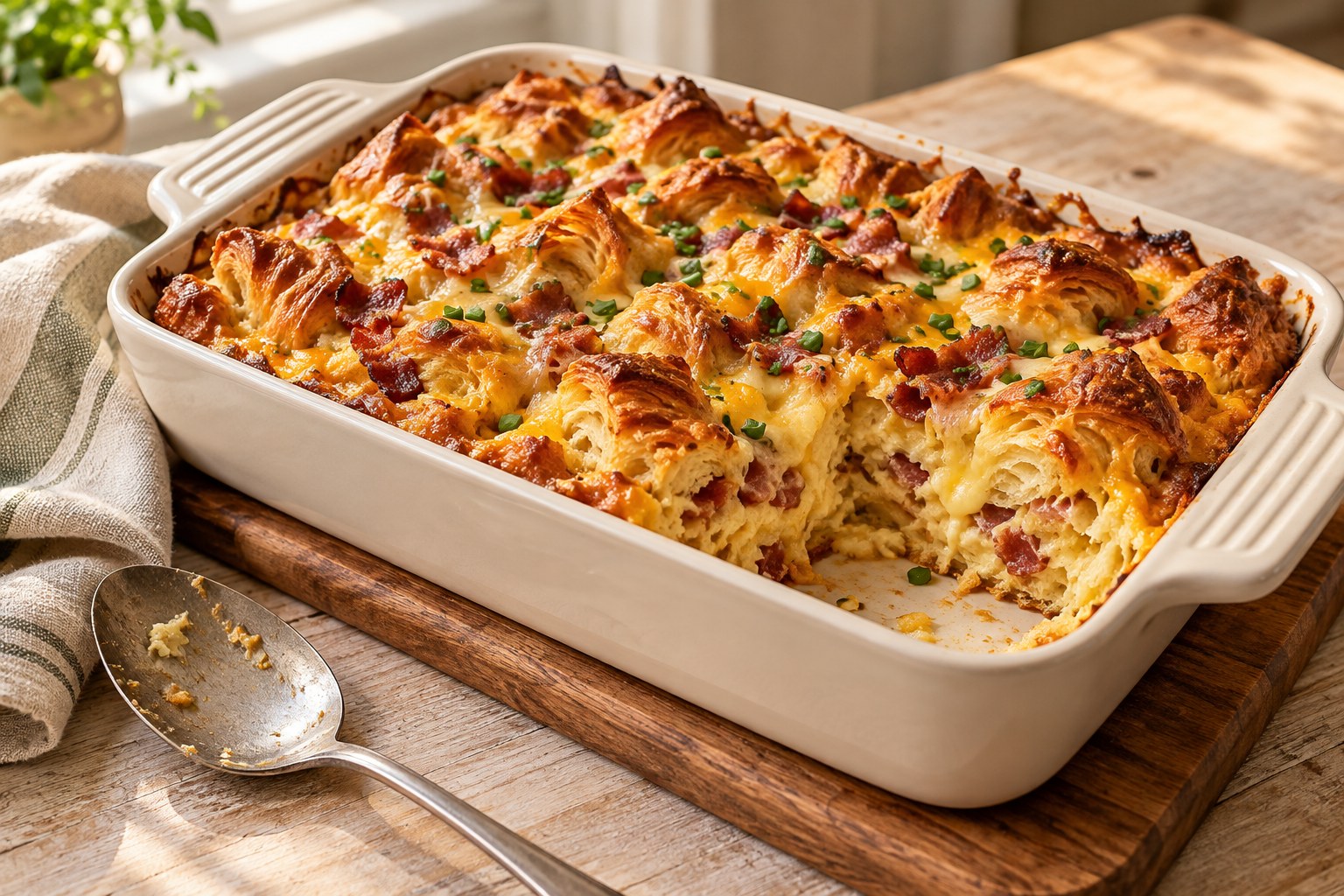
Your main dish should be the most filling item on the table and the one everything else is chosen around. A casserole, quiche or substantial baked breakfast works well because it can be sliced and served without last-minute individual cooking.
The Croissant Breakfast Casserole, for example, is rich and savory. Once that is the centerpiece, the rest of the menu should become lighter rather than adding another equally rich egg-and-cheese dish.
Add Contrast, Not a Duplicate
Ask what the main dish is missing. If the centerpiece is savory and rich, add something lighter or slightly sweet. If the centerpiece is sweet, add a savory dish instead.
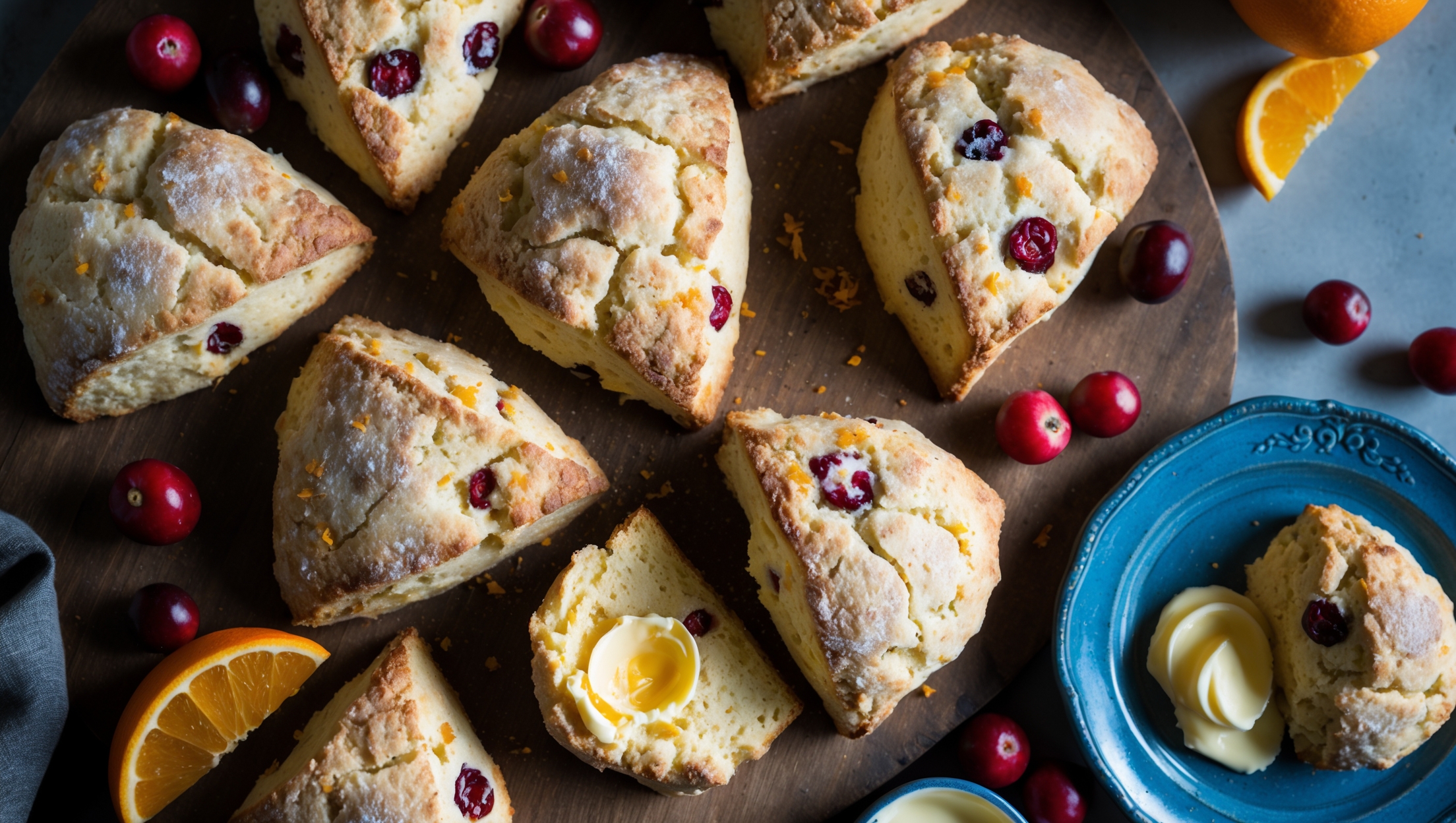
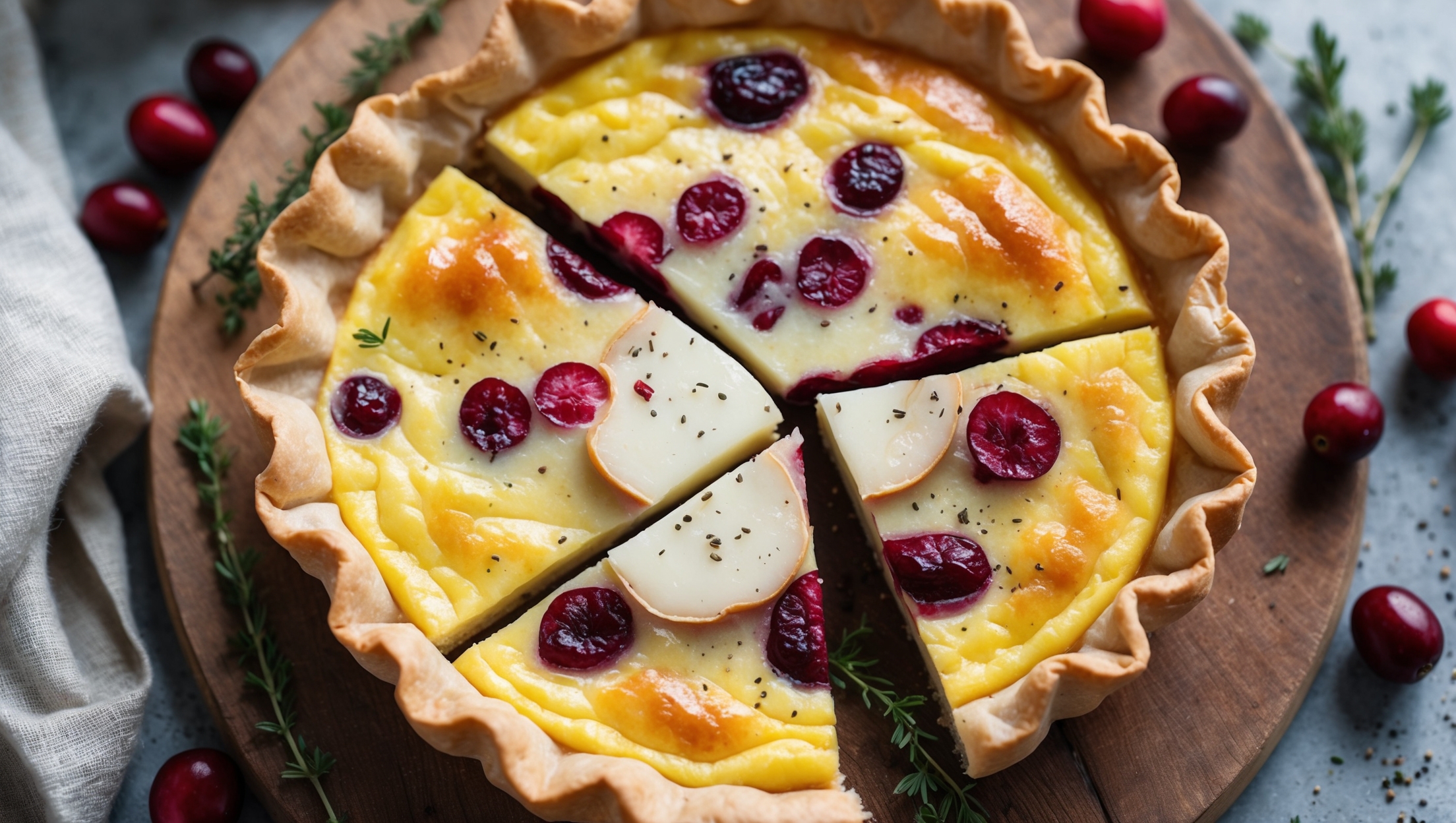
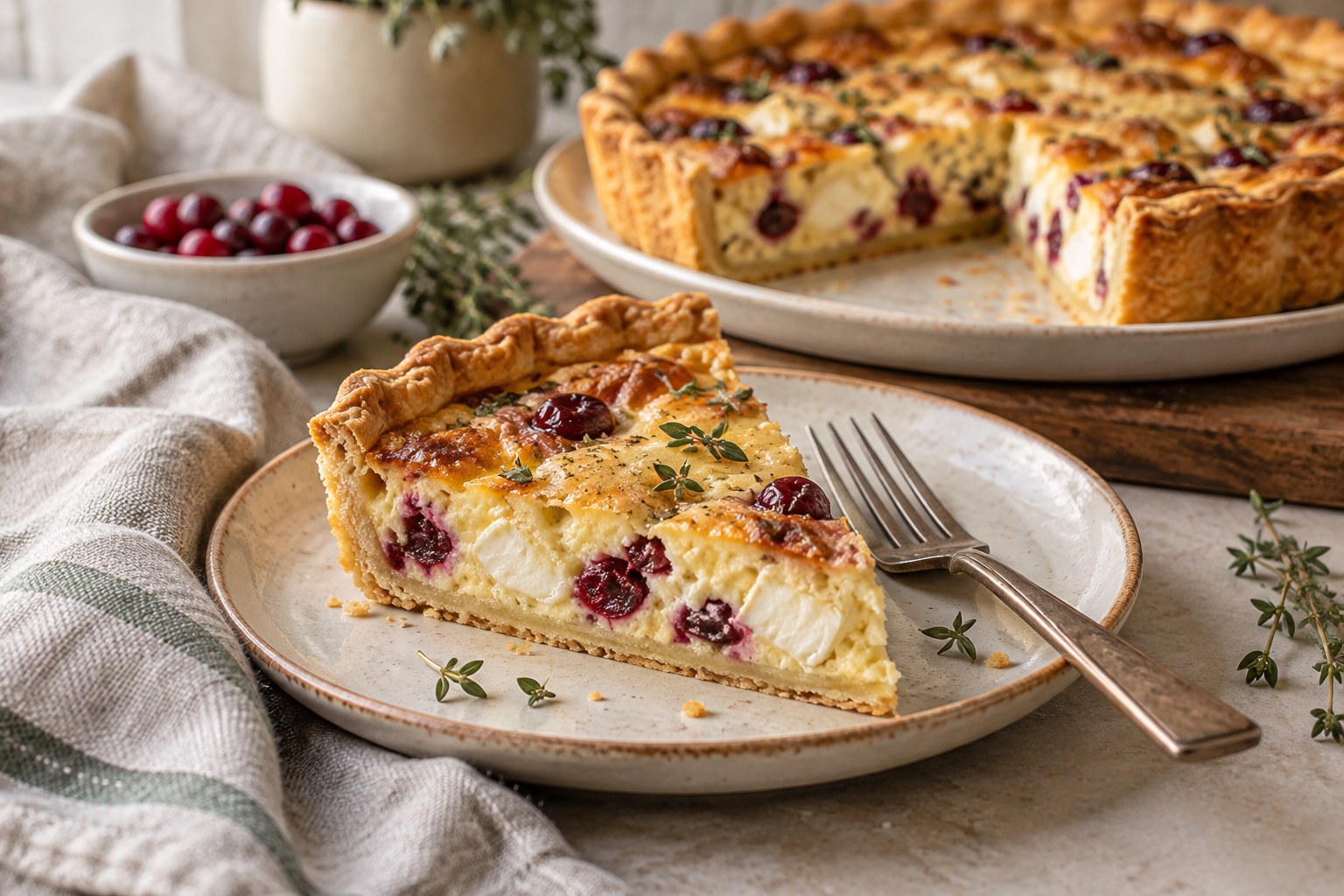
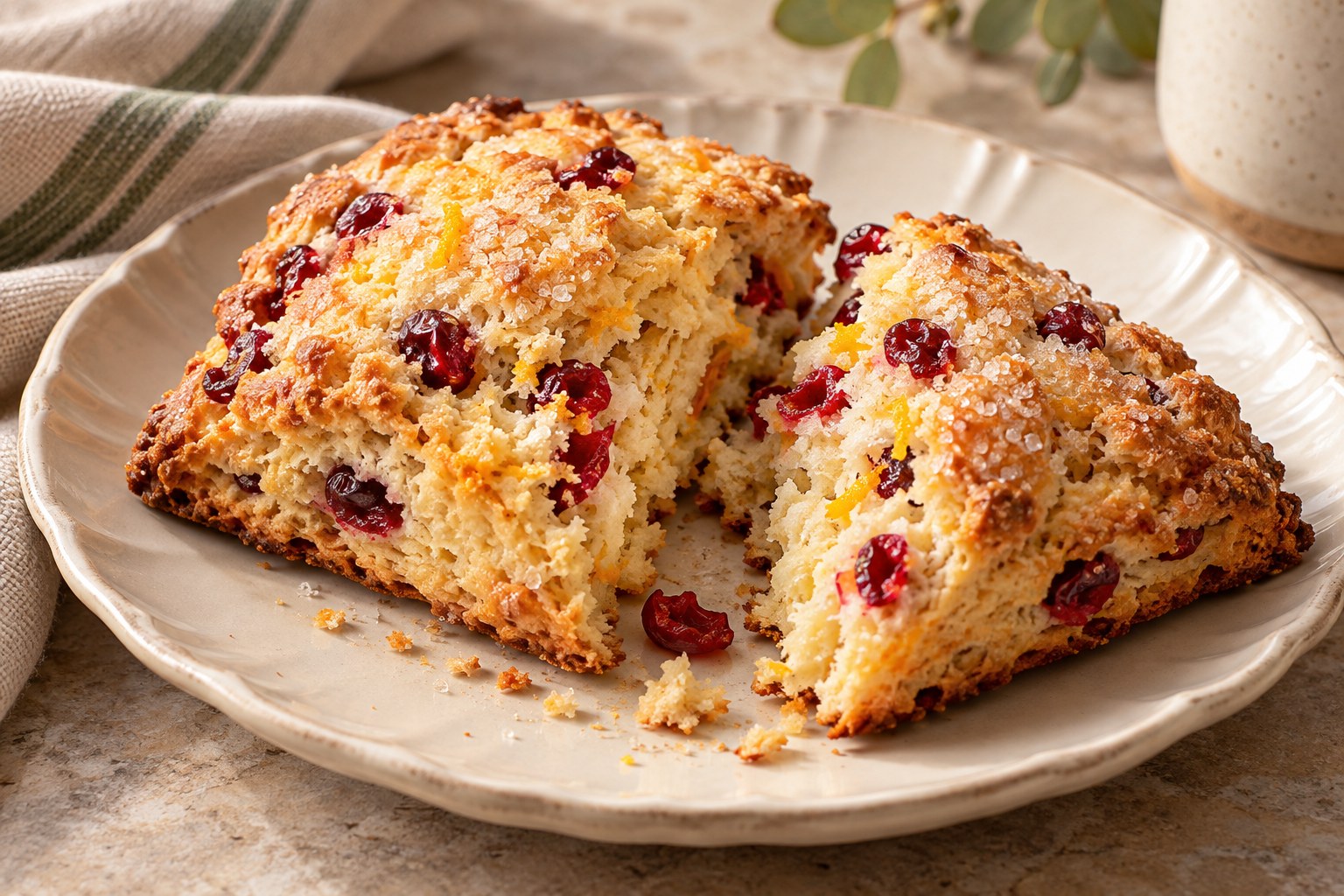
Cranberry Orange Scones can bring a bright, fruit-forward pastry element beside a savory casserole. If your main dish is sweet, a slice of Brie and Cranberry Quiche can provide the savory balance.
Balance Sweet and Savory
Brunch becomes tiring when every dish lands on the same side of the menu. A table of pancakes, muffins, cinnamon buns and sweet drinks may look abundant, but every bite plays the same role. The same problem happens with several rich egg dishes.
Instead, choose one clear sweet element and one clear savory element, then let the rest of the menu support them.
Balance Rich and Fresh
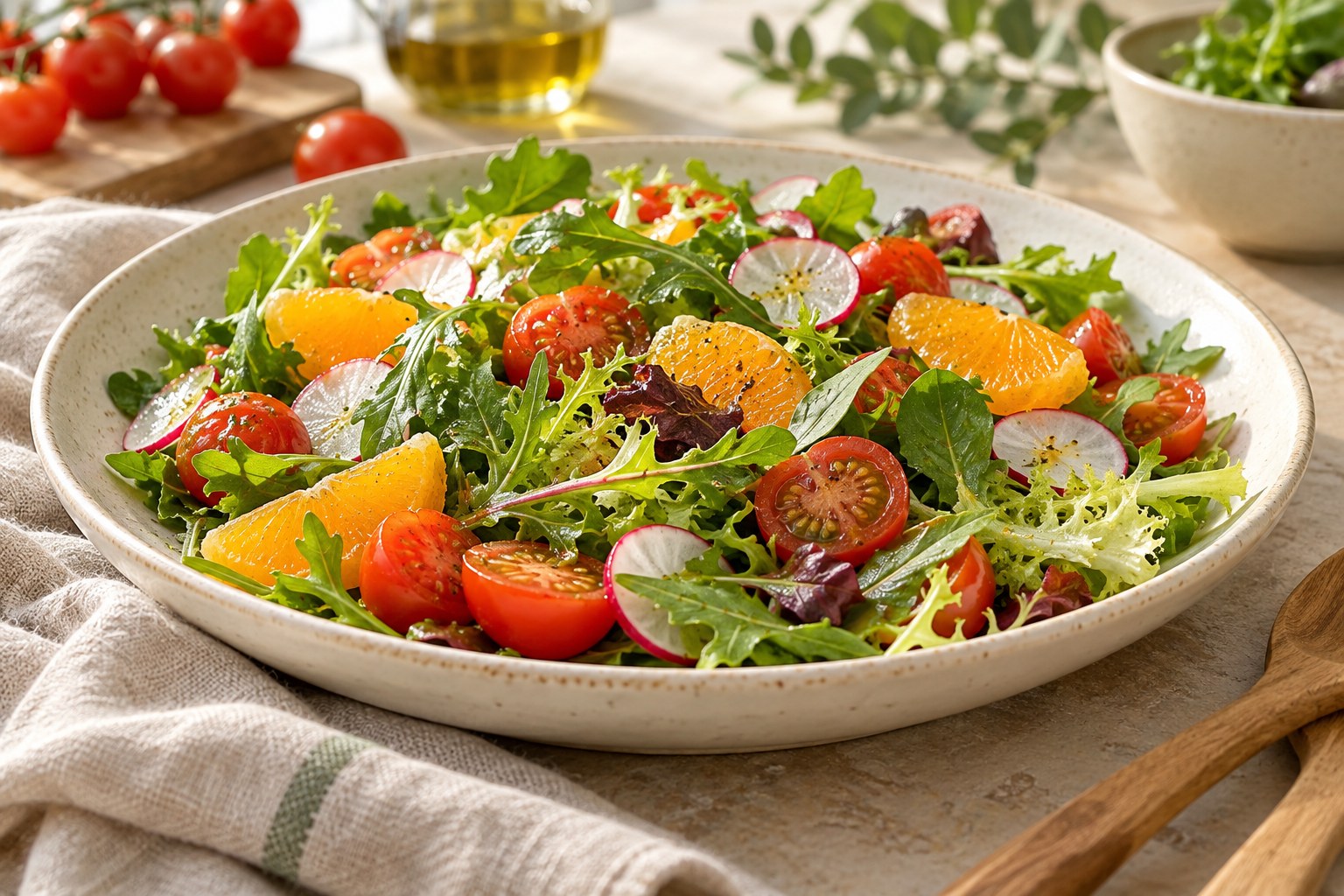
Rich baked dishes benefit from something fresh beside them. A simple fruit plate, berries, sliced citrus, tomatoes, greens or lightly dressed vegetables can make the entire menu feel more balanced without adding another complicated recipe.
The fresh element does not need to be elaborate. Its job is to add acidity, color, temperature contrast and a break from butter, cheese, pastry or eggs.
Think About Texture Too
A balanced menu is not only about flavor. Try not to serve several soft dishes with no contrast. If the centerpiece is custardy or creamy, add something with crisp edges, flaky pastry or fresh crunch.
Likewise, if most of the table is bread and pastry, add a softer dish or fresh component so every bite is not dry or crumbly.
Do Not Let Every Dish Fill the Same Role
Before adding another recipe, ask whether it contributes something new. Two breakfast casseroles, two sweet breads and two quiches may all be good recipes, but together they create repetition rather than variety.
A shorter menu with clearly different roles often feels more generous because guests can actually notice the contrast between dishes.
A Simple Example Brunch Menu
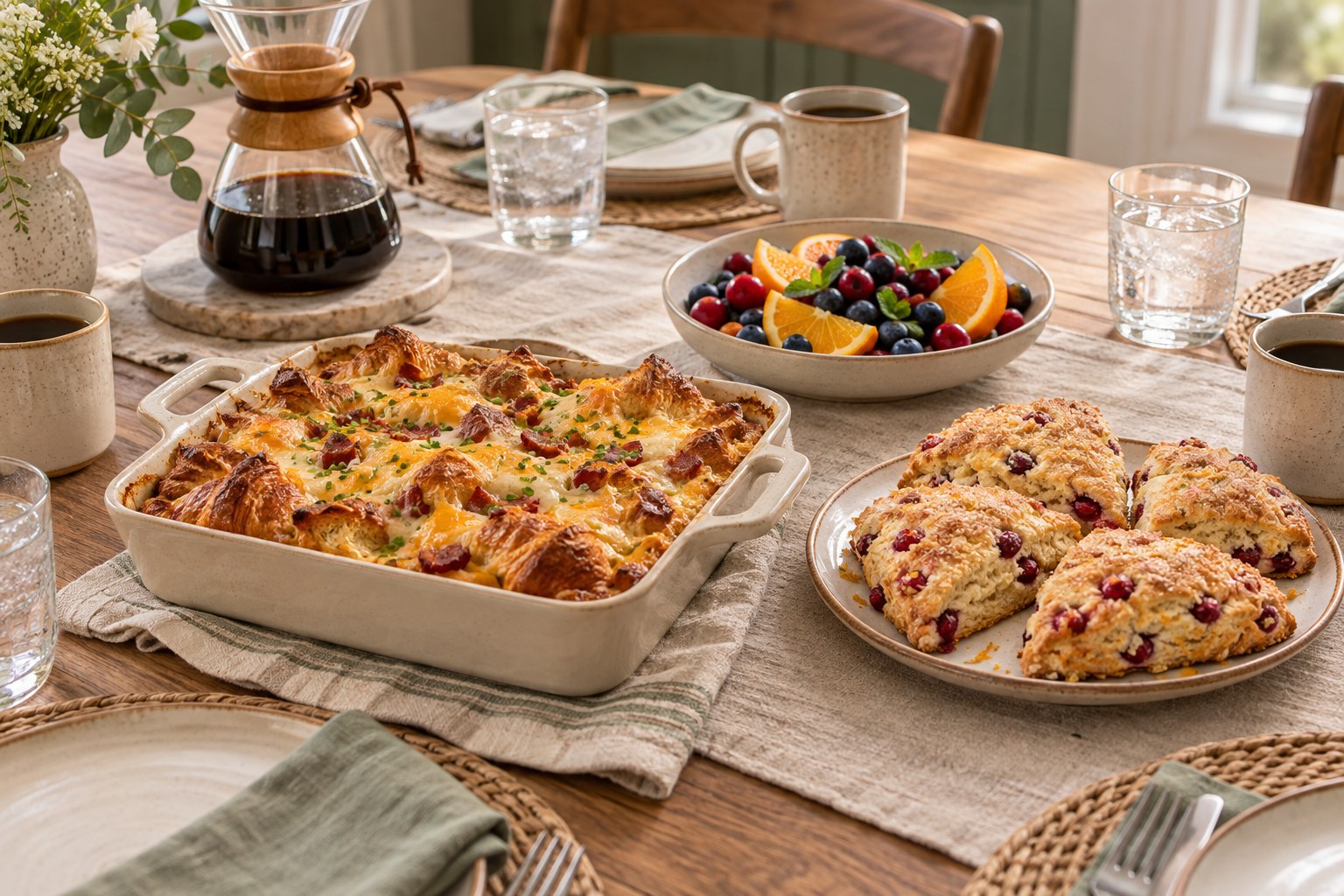
- Main: Croissant Breakfast Casserole
- Contrast: Cranberry Orange Scones
- Fresh element: a fruit plate or simple fresh produce
- Drinks: coffee, tea and water
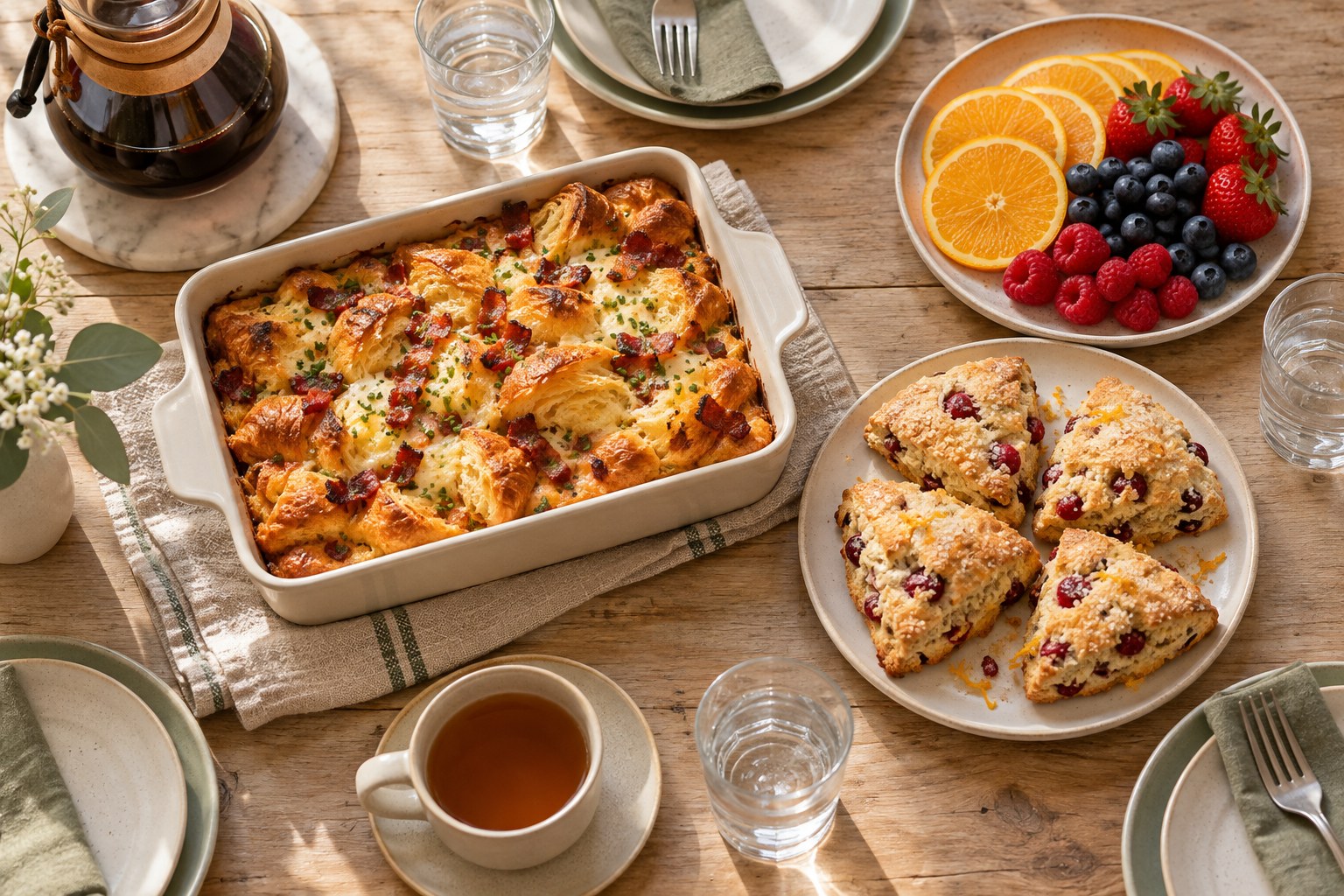
For a larger table, add the Brie and Cranberry Quiche or another bread/pastry only if it adds a genuinely different role.
Plan for the Guests You Actually Have
A balanced menu also considers who is eating. If several guests prefer savory food, do not build the entire meal around sweet pastries. If children are joining, include at least one familiar option. If someone has dietary restrictions, make sure there is a meaningful dish they can eat rather than a token side.
How Much Food Is Enough?
You do not need a full serving of every dish for every guest. People usually take smaller portions when several foods are available. Build the menu around one substantial main, then make the supporting dishes smaller.
Keep Brunch Relaxed
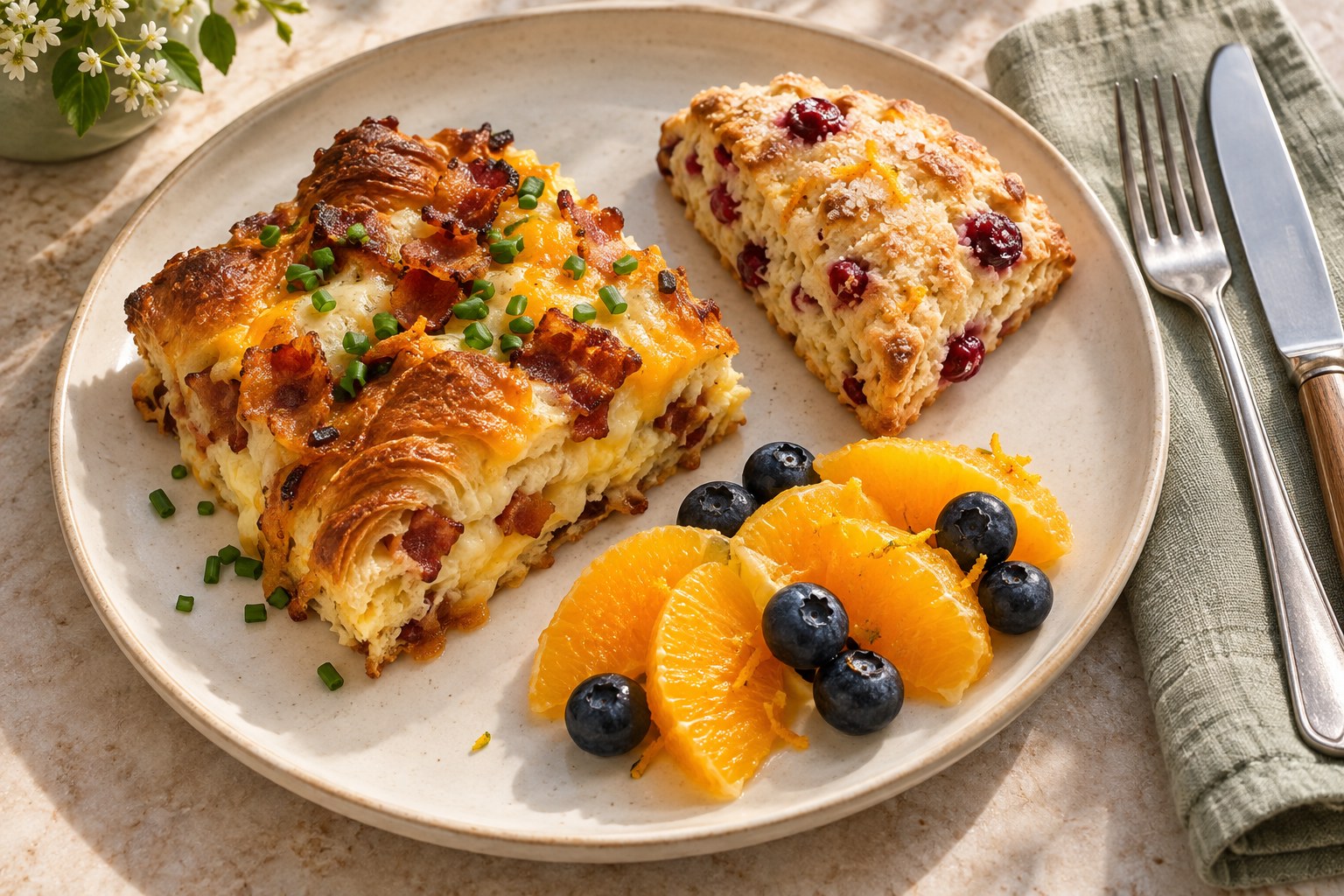
The goal is not a perfect table. Choose one anchor dish, create contrast around it, add something fresh and keep the drinks simple. When each item has a purpose, the menu feels complete with less cooking, less waste and less stress.
For a serve-yourself pastry selection, see our Holiday Pastry Board Ideas. Use the same menu principle: choose a few complementary items and avoid adding another bake that does the same job.
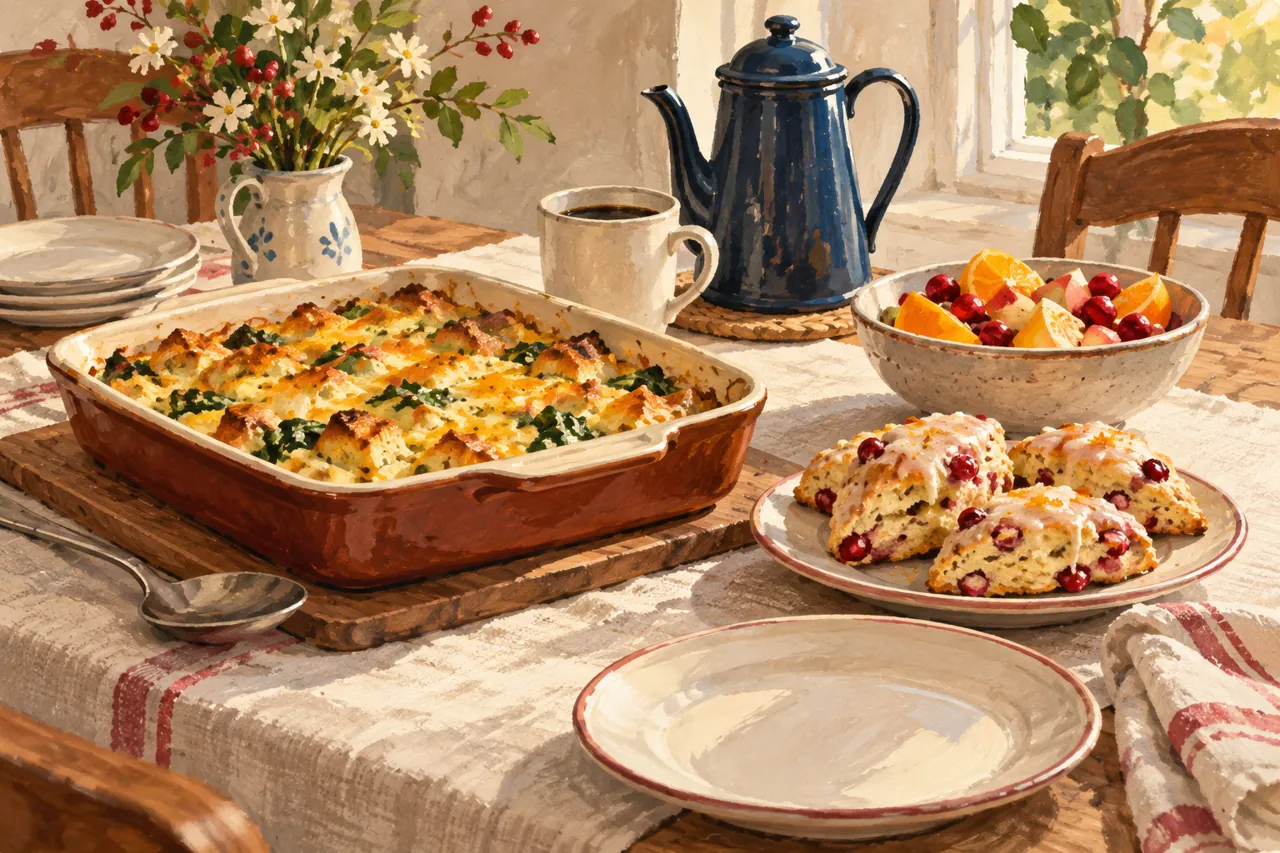
AI-generated editorial illustration. The food represents serving or preparation ideas rather than documented recipe-test results.
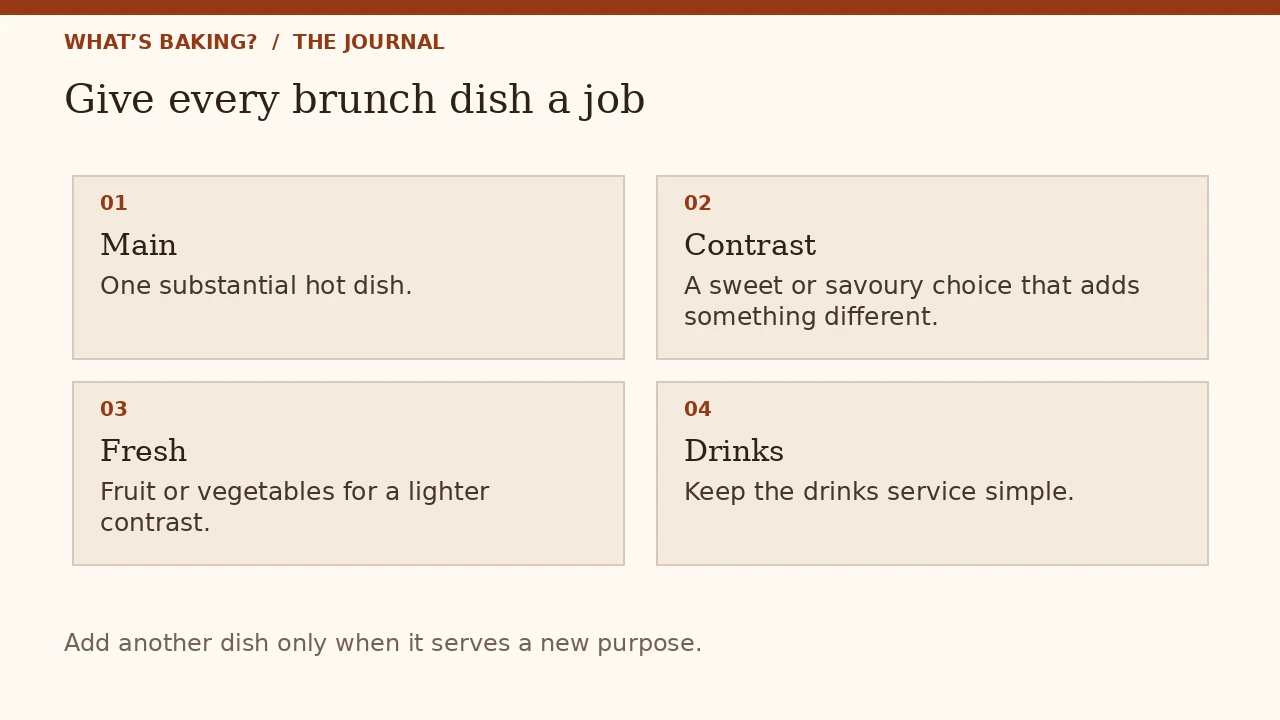
Original editorial quick-reference graphic. Follow the article and each linked recipe for the full instructions.
IN PICTURES
From the baking notebook
FROM THE RECIPE BOX