On this page
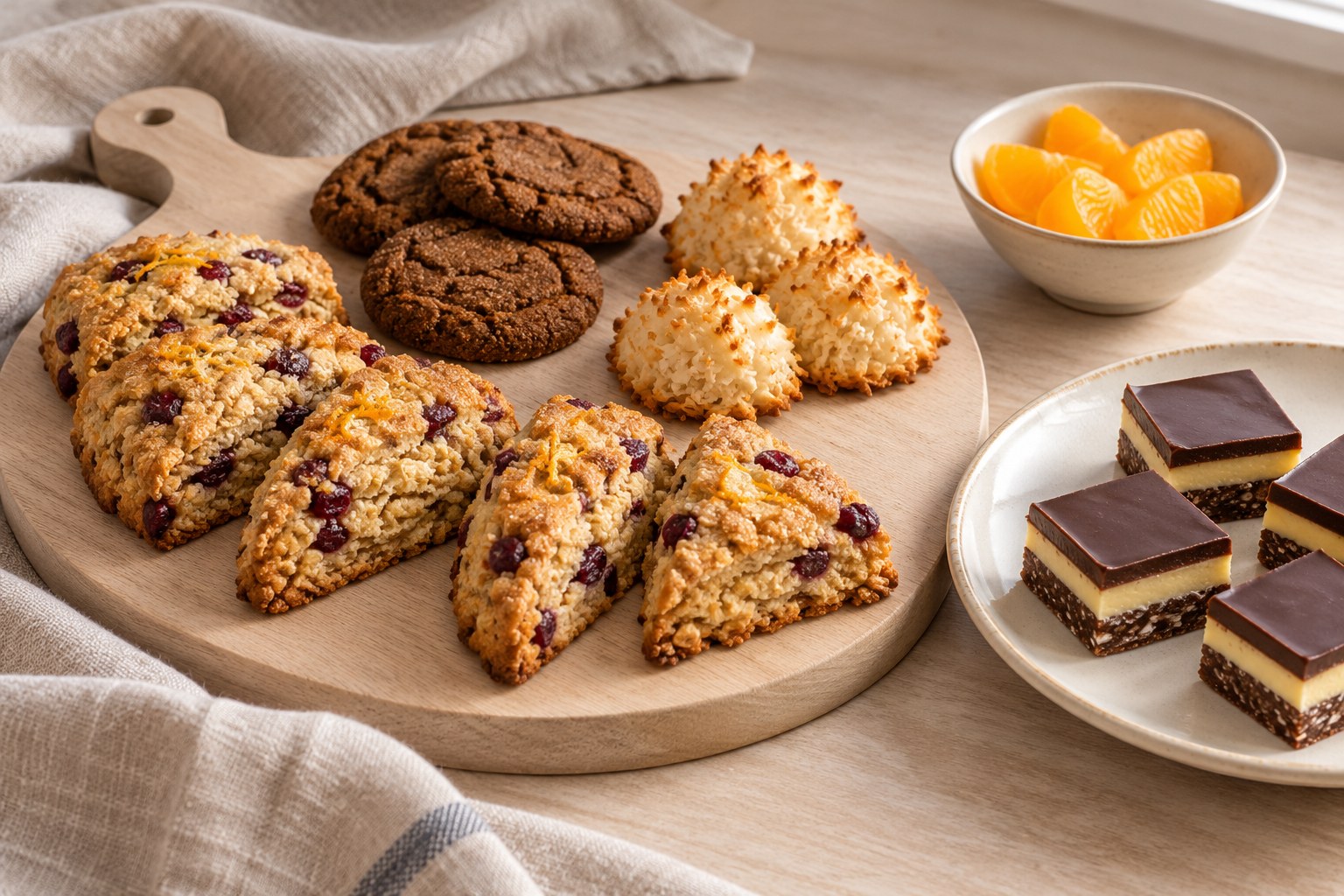
A holiday pastry board can make a table feel generous before anyone takes a bite. There is a little of everything: a cranberry-orange scone to share over coffee, a square of rich Nanaimo bar, a soft ginger cookie, and perhaps a savoury quiche wedge to balance the sweetness. The arrangement is part of the invitation. Guests can choose one small taste, return for another, and discover several flavours without committing to an oversized dessert.
The secret is not to bake every festive recipe you can find. It is to choose a manageable combination of textures, flavours and serving temperatures, then build a board that looks lovely and works as food service. A good holiday pastry board allows guests to see what is available, pick pieces up neatly, understand important allergens, and enjoy perishable foods while they are still safely chilled or hot.
This guide uses real recipes from the What’s Baking? collection. It distinguishes recipes that are naturally suited to small portions from full-sized quiches and cakes that would require an untested miniature adaptation. It also explains how to organize the work over several days, create an inviting arrangement for different gatherings, and avoid misleading gluten-free or nut-free claims. Think of it as both an editorial styling guide and a realistic holiday-hosting plan.
What makes a holiday pastry board different from a dessert platter?
A conventional dessert platter might contain only cookies and cake squares. A pastry board uses a more varied rhythm: one flaky or crumbly element, one chewy piece, one soft baked item, one chocolate-rich choice, and—if you are serving it before or alongside a meal—one or two savoury pieces. That mix matters because guests rarely want twelve equally sweet bites in a row. A savoury quiche wedge or a slice of rosemary roll provides a pleasant pause between richer sweets.
A board also tells a visual story. Red cranberries and pomegranate seeds, chocolate browns, pale vanilla icing, citrus zest, and a few fresh rosemary sprigs can look festive without excessive decorations. You do not need special moulds, glitter sprays, or a forest of cocktail picks. Neat cuts, comfortable spacing, and repeat shapes do most of the visual work.
Finally, unlike a single cake, a board invites grazing. That makes food safety and replenishment part of the design. Dry cookies and plain scones can often sit out more comfortably than quiches, custards, whipped cream, or cheesecake. Instead of filling the whole board early and leaving it on the counter all afternoon, display modest quantities and replenish perishable dishes from the fridge using clean platters.
Start with a menu, not with the serving board
Before shopping, decide how the gathering will work. Is this a coffee-and-dessert table after a large dinner, a holiday open house where guests arrive gradually, a brunch buffet, or a small giftable assortment? The answer changes what belongs on the board.
For dessert after dinner, four sweet recipes plus fruit can be plenty. Consider Nanaimo bars, ginger cookies, coconut macaroons, and a citrus scone. For a late-afternoon open house, include a savoury quiche or roll, and put perishable items on their own chilled serving pieces. For a family brunch, focus on scones, pumpkin muffins, and savoury egg dishes, with small chocolate bites for contrast. If the goal is edible gifting, choose sturdy cookies and bars rather than custard-filled pastries or frosted cakes that need refrigeration.
Avoid the tempting assumption that every individual item needs to be a miniature version of the full recipe. Baking times, filling-to-crust ratios, and moisture loss can change when a full-sized quiche is baked in a muffin tin. If the What’s Baking? recipe specifies a full-sized dish, make it according to the card and cut sensible serving portions. Treat any conversion to mini portions as a separate kitchen test, not as a proven instruction.
How many different pastries should you offer?
For a small gathering of six to eight people with other food available, three or four types can create a lovely board. For twelve or more guests, five or six types provide more range without requiring an exhausting baking marathon. This is a planning suggestion, not a universal quantity formula: appetites, event length, other courses, and dietary needs all change the amount required.
One useful approach is to prepare a hero bake, two familiar crowd-friendly bakes, a small chocolate item, and a savoury option. A hero bake might be homemade cranberry-orange scones or a carefully presented tray of quiche wedges. Ginger cookies and coconut macaroons make an approachable supporting pair; Nanaimo bars add richness; a slice of rosemary olive-oil roll offers a break from sugar.
Plan portions around the richness of the food. A generous triangle of pastry might be satisfying as one portion, while a small Nanaimo bar square gives the same sense of indulgence without overwhelming the plate. If you have children attending, keep picks and hard decorative pieces age-appropriate, and follow household allergy restrictions before deciding which nuts or toppings to offer.
Six sweet recipes that belong on a festive board
1. Cranberry Orange Oat Scones: A bright, crumbly anchor
The published Cranberry Orange Oat Scones use all-purpose flour, rolled oats, orange zest and juice, dried cranberries, cold butter, heavy cream, and an egg. That ingredient combination makes them an appealing coffee-table bake: citrus cuts through the richness, the cranberries add little pops of tart sweetness, and the oat texture offers a change from soft cake.
These are not gluten-free as written because the recipe contains all-purpose wheat flour, and the oat ingredient would also require careful sourcing for anyone avoiding gluten. They are not dairy-free or egg-free either. Describing them accurately gives guests confidence and helps the host avoid risky assumptions.

For an attractive display, arrange scones in a curved row rather than stacking them high. They are easiest to pick up when their edges remain visible. A little bowl of jam can sit nearby if appropriate, but do not smear preserves directly onto every scone hours before serving. Moist spreads soften the exterior, particularly when a board sits for a while.
For a small party, bake the published size and let guests break or share pieces if that suits the event. If you want smaller scones, test a smaller cut with its own adjusted baking time instead of stating that the original timing will work automatically. Scones are especially sensitive to overworking and overbaking; cold butter, gentle mixing, and a properly heated oven are more important than making them perfectly identical.
2. Nanaimo Bars: A distinctly Canadian chocolate centrepiece
The Nanaimo Bars are a natural choice for an Edmonton holiday table: a cocoa-graham base, creamy custard-powder middle, and glossy chocolate top offer three distinct textures in a single slice. The published ingredient list includes butter, sugar, cocoa, egg, graham crumbs, desiccated coconut, almonds, heavy cream, custard or pudding powder, and dark chocolate.
The bars are not nut-free, egg-free, or dairy-free as written. Graham crumbs commonly contain wheat, so do not assume they are gluten-free. Follow the linked recipe instructions for preparing the egg-containing base rather than sampling uncooked mixtures. As Health Canada cautions, raw eggs in unbaked batter can pose a food-safety risk.
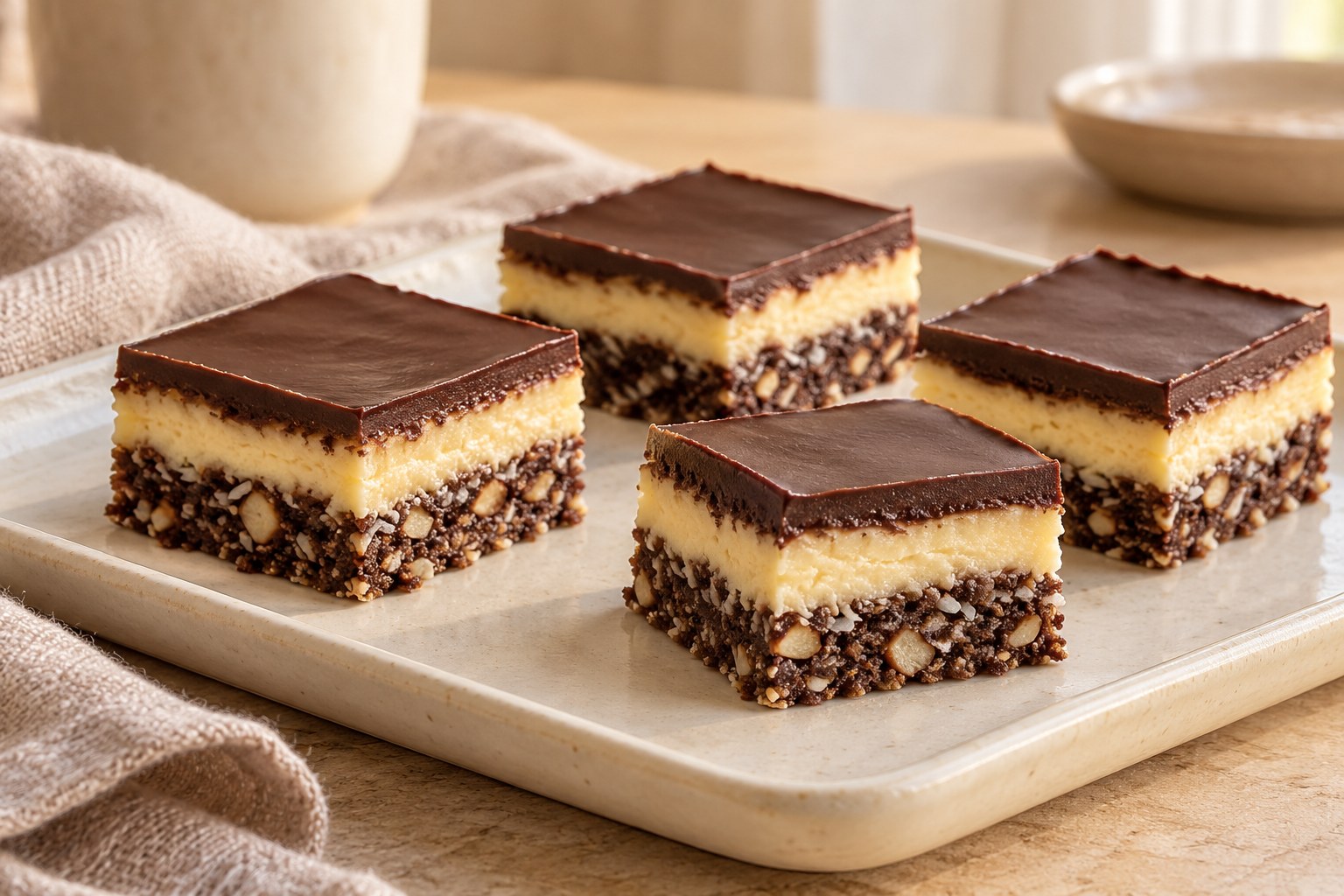
Nanaimo bars are rich, so small squares are usually more practical on a shared board than thick bakery-sized portions. Chill until the layers are set, use a sharp knife, and wipe the blade between cuts. If the chocolate topping cracks, the pieces can still taste excellent, but a clean presentation improves the overall board. Place these bars in a shallow separate dish or on a cool serving tile to make transferring them easier.
Unlike plain dry cookies, a creamy layered bar deserves attention to temperature. Bring out only what will be served soon and keep the rest appropriately refrigerated. A second chilled plate ready in the fridge is often more useful than trying to fit every portion on the initial board.
3. Molasses Ginger Cookies: Warm spice and a softer bite
The Molasses Ginger Cookies contain wheat flour, butter, egg, molasses, ginger, cinnamon, cloves, and sugar. They contribute the warm spice notes many guests associate with winter baking. Their dark colour contrasts beautifully with pale scones and coconut treats, so they can define one side of the board without any extra decoration.
To keep a board varied, choose a cookie with a different texture from your other sweets. Ginger cookies make a good counterpoint to creamy Nanaimo bars and delicate macaroons. Let baked cookies cool completely before packing or stacking; residual warmth trapped in a container can soften their surface and encourage condensation.
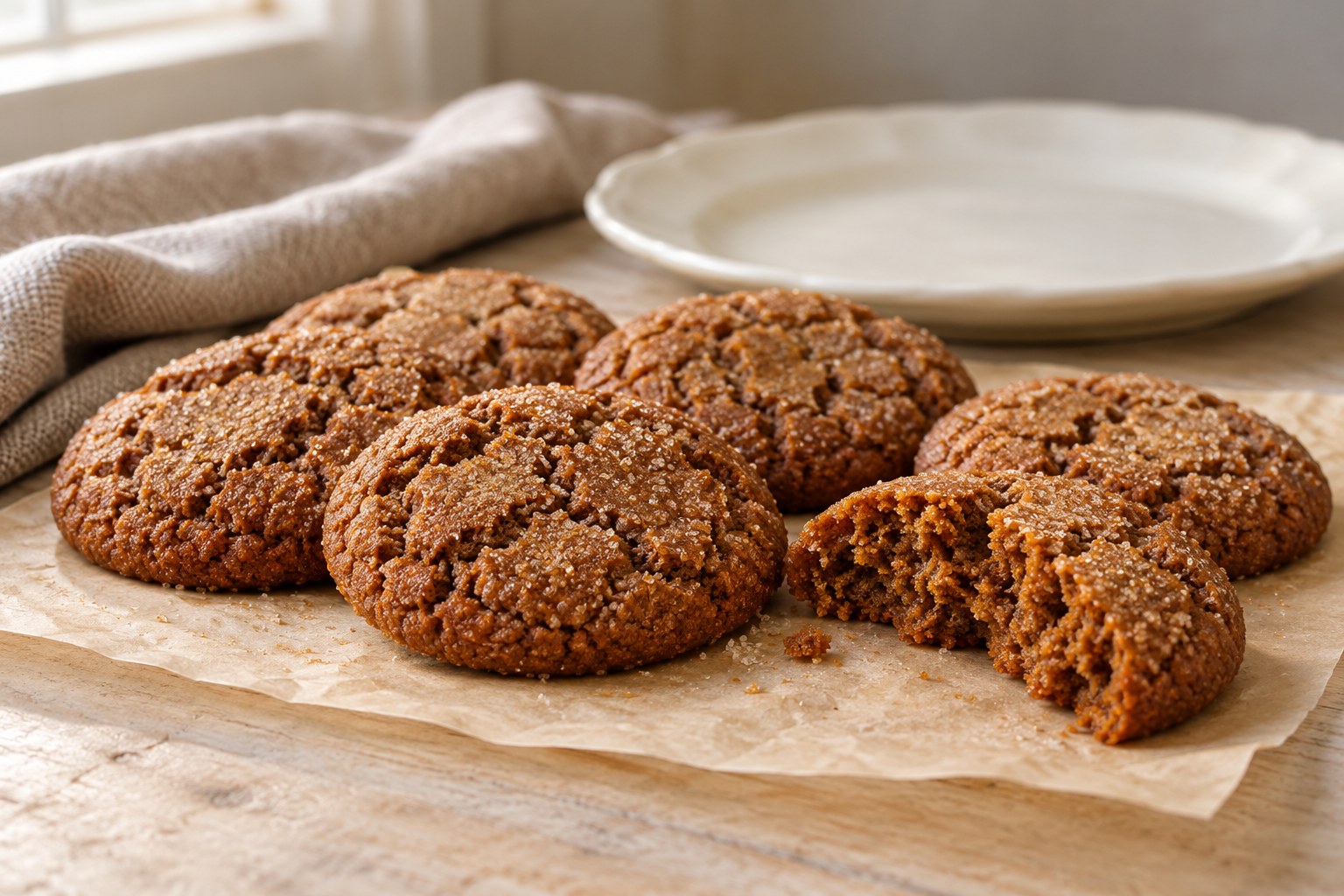
These cookies also work well for gifts because they do not depend on a perishable cream filling. Pack them separately from very moist cakes, and use parchment between layers when needed. A tiny ribbon around the box is charming; a clear ingredient note identifying wheat, egg, and milk is more helpful than a decorative label alone.
4. Vegan Coconut Macaroons: Light, chewy variety
The Vegan Coconut Macaroons are not the same as the conventional condensed-milk coconut macaroon recipe. The What’s Baking? vegan version uses aquafaba, cream of tartar, sugar, vanilla, desiccated coconut, and coconut flour or an optional almond-flour alternative. It may be dipped in vegan dark chocolate.
This is a useful plant-based choice when you follow the published ingredient requirements and check that the chocolate is genuinely dairy-free. But vegan does not automatically mean allergen-free or gluten-free. The optional almond flour introduces tree nuts. If serving a guest who has an allergy or medically required restriction, confirm each packaged ingredient and prevent cross-contact during preparation.

A small mound of these macaroons can create visual height without towering stacks. A partial chocolate dip makes them especially decorative, while leaving some plain provides variety. Place them on a clean parchment-lined section away from damp fruit; moisture can interfere with the crispness of the outside.
5. Vegan Vanilla Bean Cupcakes: A soft celebration element
The Vegan Vanilla Bean Cupcakes use plant milk, vinegar, wheat flour, cornstarch, sugar, oil, applesauce, vanilla, and vegan butter-based frosting. This recipe is vegan as written when the specified vegan ingredients are used. It is not gluten-free, however, because the published batter contains all-purpose flour.
Cupcakes add a soft, light-coloured element to a board that might otherwise consist mainly of cookies and bars. The original recipe is written for cupcake portions. If you want mini cupcakes, note that the pan size and baking time require testing. Until that has been done, follow the published recipe and give the cakes adequate space or display them on a separate stand rather than cramming them among heavy bars.

Frosting can be crushed or smeared when a crowded board is passed around. For a casual home gathering, keep cupcakes on a small plate beside the main board and let them visually connect through matching colours and garnishes. Pale vanilla frosting, a modest citrus garnish, or a few seasonal sprinkles can feel festive without making the dessert excessively elaborate.
6. Spiced Pumpkin Buckwheat Muffins: A useful autumn-to-winter bridge
The Spiced Pumpkin Buckwheat Muffins combine pumpkin purée, buckwheat flour, all-purpose wheat flour, warm spices, brown sugar, maple syrup, eggs, milk, oil, and pumpkin seeds. Their earthy colour and warming scent work beautifully alongside chocolate, orange, and cranberries.
The title mentions buckwheat, but the published muffins are not gluten-free because the ingredient list also includes wheat flour. The name of one flour should never be used as evidence that an entire recipe meets a dietary restriction. The muffins also contain eggs and may contain dairy depending on the milk chosen.

For the board, keep the paper cases in place until serving so guests can lift the muffins without touching the crumb. If you prefer a smaller format, test mini muffins separately; the full-size method does not guarantee the same timing in a smaller pan. These muffins make a softer, less chocolate-heavy option, useful for breakfast-themed gatherings or guests who prefer spice to icing.
Three savoury dishes to balance the sweets
7. Chorizo and Manchego Quiche: A bold option for omnivorous guests
The Chorizo and Manchego Quiche has a wheat-and-butter crust and a filling of chorizo, Manchego cheese, eggs, double cream, milk, vegetables, and seasoning. It is not vegetarian, vegan, dairy-free, or gluten-free as written. That is fine—provided the food is labelled clearly and guests know what it contains.
Serve modest slices or wedges of the published quiche, rather than claiming the existing recipe is a tested mini-quiche formula. For a mixed-diet gathering, keep a separate savoury choice available to guests who do not eat meat. If you adapt the recipe into tartlet tins, that conversion needs a tested cook time and an assessment of whether the egg custard is properly set.

Because this is an egg-and-dairy dish, it should not sit at room temperature throughout a long party. Keep it hot with appropriate warming equipment or cold until shortly before service; replenish from a protected tray instead of placing every portion out at once.
8. Spinach and Ricotta Quiche: A vegetarian alternative with real ingredients
The Spinach and Ricotta Quiche combines spinach, ricotta, Parmesan, eggs, cream, onion, garlic, and optional pine nuts in a wheat-and-butter pastry. It is vegetarian in the everyday culinary sense when suitable cheeses are selected, but if a strict vegetarian guest avoids animal rennet, verify the cheese label. It is not vegan, dairy-free, or gluten-free as written.
Its green spinach filling introduces useful colour and gives guests a savoury choice without meat. As with the chorizo quiche, make the published format unless you have tested a smaller pan version. Slice it in the kitchen, transfer pieces with a spatula, and use a small plate rather than leaving a large pie on an overcrowded wooden board.

Quiche wedges should be displayed with serving tongs or a small spatula and with enough room that neighbouring cookies do not pick up filling or crumbs. For guests with allergies, provide separate utensils and avoid promising complete safety when multiple allergens are present on the same shared board.
9. Crustless Quiche: No pastry, but not automatically allergy-friendly
The Crustless Quiche uses eggs, milk, Gruyère or cheddar, spinach, tomatoes, onion, garlic, and herbs. It has no flour-based crust in its published ingredient list, making it a potential wheat-free ingredient approach for someone avoiding wheat. That is not the same as certification or a blanket gluten-free safety guarantee; ingredient labels, utensils, and preparation surfaces still matter.
Crustless quiche can be cut into neat wedges or squares after it has set and rested. It makes a helpful counterpoint to pastry-heavy items and avoids adding another buttery crust to the same board. Yet it still contains both egg and dairy, so label it accordingly and apply the same chilled or hot buffet precautions used for other quiches.
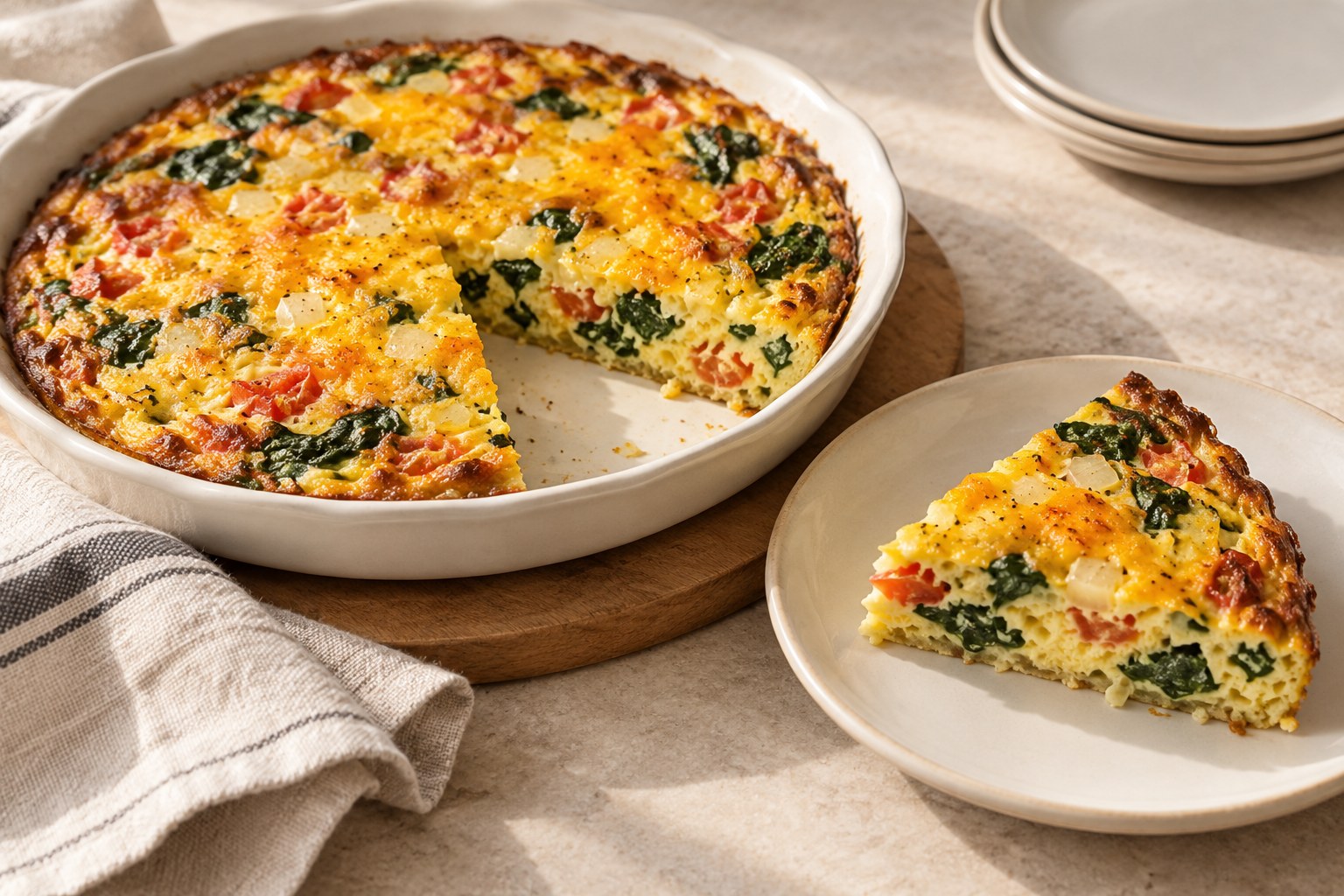
Do not describe the published crustless quiche as 'veggie egg muffins' unless you have actually tested it in muffin tins. Changes in depth can alter how the centre sets, so a miniature conversion deserves its own tested directions.
The right garnishes do more than fill gaps
Fresh colour can come from thin orange slices, pomegranate arils, a few winter berries, clean rosemary sprigs, and little bowls of preserves. These make the board look seasonal without adding a long new baking project. Use garnishes sparingly and wash produce appropriately. If whole raw cranberries are included purely for decoration, keep them separate from the ready-to-eat food; many guests would not enjoy them as a casual raw snack.
The board does not need bowls filled with every nut mentioned in your recipe collection. Pistachios, pecans and walnuts are major allergens, and their crumbs spread easily. A person with a nut allergy may not be able to safely take a cookie from a shared board sprinkled with nuts. Serve nut-containing items and garnishes separately, clearly identified, with dedicated utensils when appropriate—and discuss severe allergies with guests before promising accommodations.
For herbs, a simple rosemary sprig can evoke winter greenery. Do not present twigs, artificial ornaments, or non-food floral materials as edible. Edible flowers require confident food-safe identification and sourcing, not just a pretty appearance. Keep decorations purposeful: the guest should be able to pick up food without first removing an obstacle course of inedible objects.
Choosing the board and serving pieces
Start with a board or platter large enough to create visible divisions. Wood looks warm and rustic; stone or marble can feel polished; clean ceramic platters are especially practical for chilled desserts or items with sticky toppings. Whatever you choose, confirm that the surface is food-safe, clean, in good condition, and suitable for the intended temperature.

A board is not a substitute for correct food storage. Marble may feel cool to the touch, but it does not keep custards and quiches refrigerated for hours. A shallow plate that fits over a safe ice bath can be more useful than a large decorative slab for those items. Put any wet garnishes in bowls so they do not soak the base of cookies or the pastry edges of quiche.
Use small bowls to create anchors—one for jam, another for separated nuts if appropriate, another for a creamy spread held at safe temperature. Then place the large pastries first, move to medium-sized pieces, and fill remaining open spaces with cookies or bar squares. Leave a little negative space. Guests need room to reach each item without touching everything around it.
A step-by-step arrangement that looks effortless
Step 1: Place bowls and temperature-sensitive dishes first
Set down any dishes that require ice, warming, or separation from the rest of the board. If you are serving Nanaimo bars and quiche, consider keeping them on small companion platters rather than insisting that everything touch the same wood surface. This protects textures and makes refrigeration easier.
Step 2: Define the focal points
Add the scones, a cluster of pumpkin muffins, or a fan of sliced quiche wedges. Position substantial items at opposite ends so the arrangement feels balanced. Avoid making one corner a heavy tower that blocks guests from seeing the smaller treats.
Step 3: Arrange cookies in deliberate curves
Lay the ginger cookies in a shallow overlapping line, then place coconut macaroons in a contrasting group. Repeating shapes creates a designed look without requiring identical colours. Bars look clean when arranged in aligned rows; cookies look softer when their edges vary slightly.

Step 4: Add a small colour accent
A few orange segments, pomegranate arils in a small bowl, or fresh rosemary can connect the sweet and savoury parts visually. Red and green are not the only festive colours: cocoa brown, warm oat, pale vanilla, and pumpkin gold also read beautifully as a winter palette.
Step 5: Give guests the information they need
Set out small cards with the recipe names and significant allergens, or provide a short written menu beside the serving area. For example, 'Nanaimo bars—contain egg, milk, almonds and wheat-containing crumbs' is genuinely useful. Avoid casual shorthand such as 'safe for everyone' or 'gluten-free' unless the recipe and preparation conditions support the claim.
Step 6: Add serving tools and backup trays
Provide tongs, cake servers, napkins and small plates. Set out fresh utensils for replenishment. Keep spare pieces properly stored so the board can be refreshed during the event rather than sitting overcrowded from the moment the first guest arrives.
Build a cohesive colour palette without making the food artificial
A holiday spread naturally contains deep brown from chocolate, amber from molasses, cream from vanilla frosting, burgundy from cranberries, and soft green from herbs. Work with these real colours. A neutral linen cloth and a few clean ceramic bowls can make the food look polished, even if the host has no professional styling experience.
Choose one strong accent colour instead of adding every seasonal decoration at once. Red cranberries and orange zest create an appealing winter palette. A green-and-gold version could emphasize herbs, pumpkin muffins, and pale scones. For a more formal evening board, chocolate-topped Nanaimo squares, ginger cookies, and small pastries against dark stone can look elegant.

Beware of decorating food with ingredients that change flavour dramatically. Whole cloves, sharp rosemary leaves, or strongly flavoured extracts can make a small pastry unpleasant if guests encounter them unexpectedly. Use the recipe's intended garnishes first. For additional visual interest, change serving height and platter shapes rather than changing an untested recipe.
A realistic three-day holiday pastry-board schedule
Three days before: Make decisions and check restrictions
Confirm the guest count, timing, relevant dietary requirements, and whether the board is dessert, brunch, or an open-house snack. Choose the actual recipe links and read the ingredient lists before shopping. Check whether you have enough fridge space for layered bars, dairy desserts, and quiches. A long chilled cake pan cannot magically fit into a fridge already packed with a holiday meal.
Shop for pantry items, fresh fruit, parchment, and ingredients that need specialty sourcing. If using vegan dark chocolate for macaroons, confirm the label. If serving an allergy-conscious guest, avoid assumptions about oats, dairy alternatives, and shared equipment.
Two days before: Prepare sturdy bakes
Consider making ginger cookies or the layers of Nanaimo bars according to their recipe and storage instructions. Allow everything to cool or set fully before cutting and packing. Freeze suitable unfilled baked components when the recipe and your testing support it. Keep different textures in separate airtight containers; a crisp cookie stored beside a moist muffin may soften.

This is also a good moment to label storage containers so nobody accidentally serves the intended gifts at breakfast. Record which items need refrigeration and which can be displayed briefly. Leave any raw vegetables, garnishes and delicate fresh elements for closer to service.
The day before: Finish the main bakes
Bake the scones or pumpkin muffins, prepare the coconut macaroons, and make any planned quiches with enough time to cool and store safely. If a recipe is best served fresh, prepare its ingredients instead and bake it on the day. Do not overload the oven with several pans at once unless its heat circulation and each recipe's needs have been tested.
Cut bars after the layers set; reserve the cleanest pieces for the visible board and save irregular pieces for home snacking. Wash and dry serving trays, choose labels, and clear a place in the fridge for replenishment plates. The goal is to make the final hour about arranging, not emergency baking.
Party day: Arrange in waves
Reheat savoury pastries according to the actual recipe and safe temperature guidance, or keep them chilled until serving if appropriate. Prepare a small first board and replenish as guests arrive. Remove cold-sensitive dishes only for service, not for the entire decorating session. Keep spare pastries covered, and use separate serving pieces so flavours and allergens do not transfer unnecessarily.
Twenty minutes before guests arrive, arrange sturdy cookies and plain pastries. Add the temperature-sensitive pieces closer to serving. Adjust garnishes last. Leave a clean side surface for plates, napkins, and utensils; guests should not have to reach over a crowded board to find a fork.
Holiday buffet safety: The two-hour rule matters
According to Health Canada's holiday food-safety guidance, the food-safety danger zone lies between 4°C and 60°C, and perishable food should be discarded if it has sat at room temperature for more than two hours. The guidance also recommends keeping cold foods cold, hot foods hot, and using a clean dish when replenishing buffet items.
For this kind of board, that matters most for quiches, custards, cheesecake, and other egg-or-dairy-rich components that require temperature control. Do not rely on appearance or smell to decide whether an item left out all afternoon is safe. Place these foods on separate trays that can be chilled or heated properly, and bring out smaller quantities at a time.
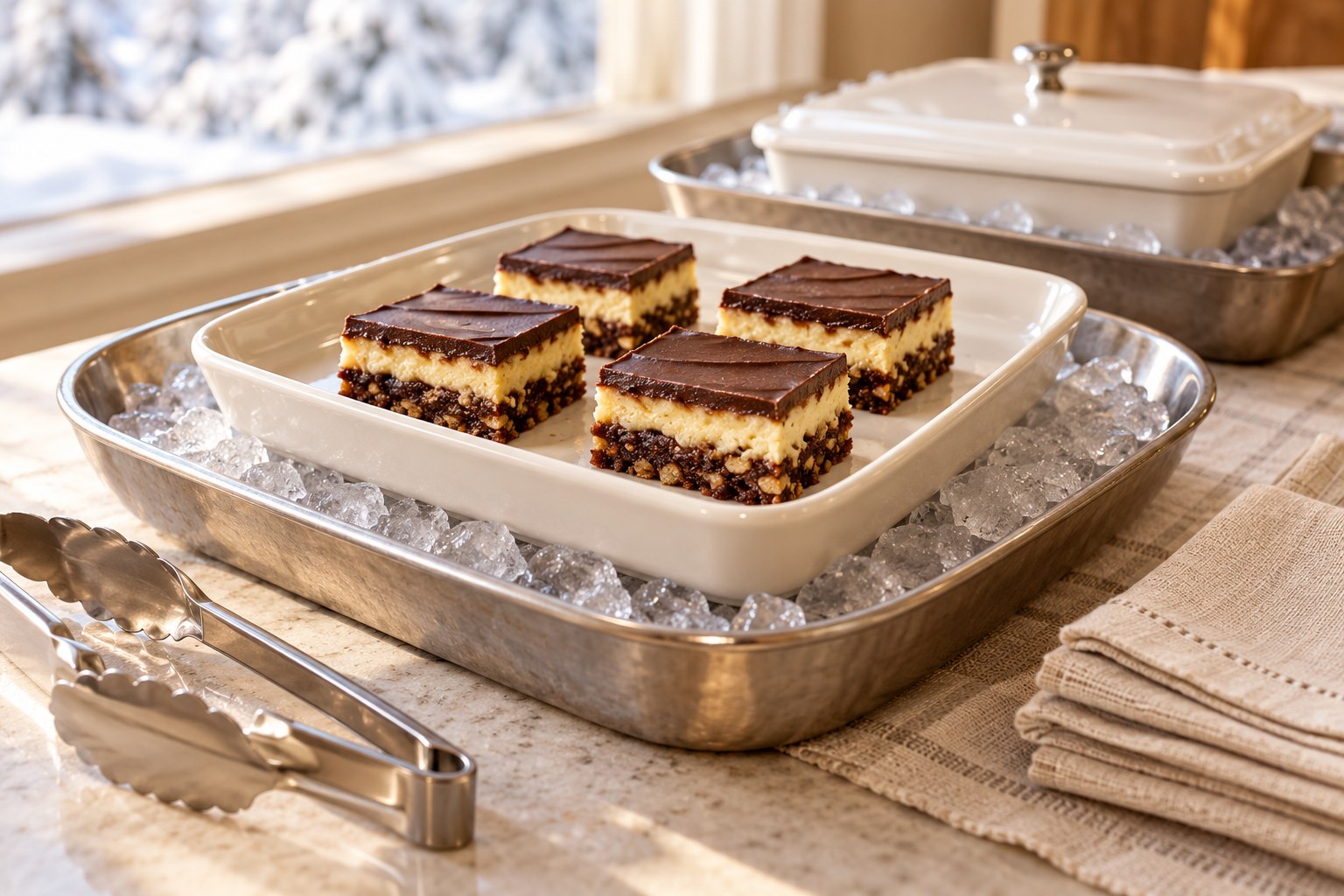
A decorative board may also contain components with different storage needs. Ginger cookies and Nanaimo bars should not automatically be treated alike because both are 'baked treats'. Read each linked recipe's instructions and store the most sensitive item according to its own needs. When hosting vulnerable guests, be particularly careful with chilling, handwashing, and preventing contact between cooked food and raw ingredients.
How to offer allergy-aware choices without misleading guests
Dietary descriptions should be specific. 'Vegan Coconut Macaroons' describes a recipe prepared without animal ingredients; it does not promise nut-free preparation. 'Spiced Pumpkin Buckwheat Muffins' includes wheat flour despite the word buckwheat. 'Crustless Quiche' avoids a traditional pastry shell but still contains eggs and milk. None of those names replaces an ingredient check.
Use Canadian Food Inspection Agency guidance on food allergens when reading packaged labels. An ingredient that was safe last holiday might have changed its formulation, and 'may contain' warnings are relevant for guests with allergies. Where serious food allergies are involved, discuss safe preparation and cross-contact directly; a shared pastry board with scattered nuts may not be suitable.
Separate tongs or spatulas are useful, but they cannot undo cross-contact that already happened during baking or transport. If a guest needs a carefully controlled allergy-safe portion, prepare and store it separately before the communal board is assembled, using ingredient and equipment practices suitable to their needs. Avoid promising that a shared board is safe for every dietary requirement.
Include a vegetarian savoury option—and label the cheese
Mixed gatherings benefit from one savoury choice without meat. Spinach and ricotta quiche or herb-flecked bread are good examples, but ingredient details still matter. Cheese may use different coagulants, and strictly vegetarian guests can have different requirements. Ask rather than assume, and label the actual ingredients used.
You can also serve Rosemary Olive Oil Rolls as a bread element. Their published recipe contains bread flour, yeast, olive oil, rosemary and honey or sugar. If a guest avoids honey, choose the explicitly offered sugar option and confirm all other ingredients. These rolls are not a pastry substitute, but a nice savoury support alongside cheese or quiche when the board is functioning as a substantial snack.

Give savoury foods their own visual space. The last thing a guest expects is quiche filling smeared across the glaze of a cupcake. Even if the dishes share a large table, their serving utensils and temperature requirements should remain distinct.
A holiday pastry board that suits different gatherings
For a Christmas coffee morning
Choose cranberry-orange scones, molasses ginger cookies, vegan coconut macaroons, and a small bowl of fruit. A warm spiced tea or good coffee completes the experience. The point here is approachability; most people need a satisfying selection, not a formal seven-course dessert.
For a Canadian winter open house
Make Nanaimo bars your chocolate centrepiece, add pumpkin buckwheat muffins and ginger cookies, then supply a savoury tray of quiche wedges. Keep perishable foods temperature-controlled and replenish in smaller batches. Include plenty of napkins and a clear menu of allergens.
For a New Year's Eve dessert table
Use clean-cut Nanaimo bar squares, vanilla cupcakes, and contrasting coconut macaroons with a simple seasonal fruit garnish. Avoid excessive decorations that guests must remove before eating. If adults are already enjoying cocktails, provide water and tea as well as dessert so the table feels welcoming to everyone.
For a holiday brunch with children
Keep the flavours familiar: pumpkin muffins, scones, a few chocolate squares, and a savoury egg dish. A few smaller portions can be easier to manage, but adjust for children's ages and chewing abilities; hard nuts, sharp skewers, and other choking hazards are not appropriate for every child. Follow household school or food-allergy restrictions as needed.
For a vegetarian-friendly afternoon gathering
Consider spinach-and-ricotta quiche using appropriately sourced cheese, rosemary olive-oil rolls, cranberry-orange scones, and vegan coconut macaroons. This menu still contains wheat, egg, and dairy in several items. If guests need vegan or allergen-safe food, plan separate appropriate dishes rather than labeling the entire board vegetarian or 'free from' anything.
How to turn board components into thoughtful edible gifts
A festive food gift should travel well and be straightforward to store. Ginger cookies, selected macaroons, and certain firm bars make more reliable gift candidates than a quiche or custard tart. Choose items that can be packaged cleanly, avoid thick wet frostings, and allow every component to cool completely before closing the box.
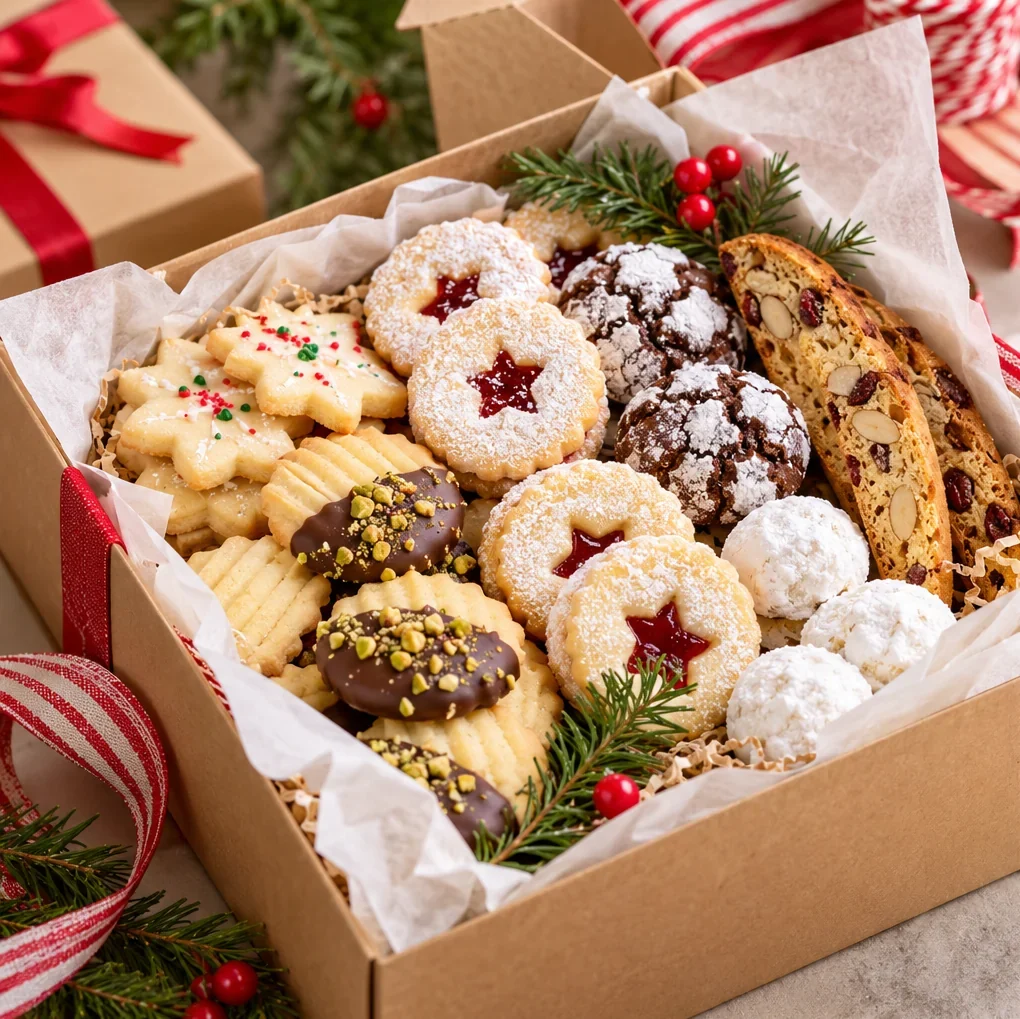
Line a sturdy box with food-safe parchment and group similar textures. Separate strongly spiced cookies from delicately flavoured treats when practical. Add a card stating the item names, ingredients or known allergens, the preparation date, and sensible storage guidance. If shipping, consider temperature, travel time, breakage, and whether the recipe is suitable for unrefrigerated transport. Do not mail perishable quiche or cream-rich desserts in an ordinary box and assume they will remain safe.
A restrained package often looks better than a heavily decorated one. Twine, a simple label, and tidy layers communicate care. What the recipient will appreciate most is food that arrived intact, a clear description of what is inside, and reliable instructions for storage.
Common holiday-board mistakes and quick fixes
Mistake: Trying to fit every recipe onto one board
The result is crowded, hard to serve, and difficult to keep safe. Move high-moisture or temperature-sensitive items to coordinated smaller platters. A board can still feel cohesive when it is a group of dishes rather than one overflowing slab.
Mistake: Cutting everything the morning of the party
This creates unnecessary stress and often leads to messy chocolate or crumbly edges. Plan a sequence: cool baked goods, allow chilled bars to set, then cut with appropriate tools. Keep a few irregular pieces for tasting rather than trying to salvage a perfectly straight row from every batch.
Mistake: Calling a full-sized quiche a mini-quiche recipe
Changing pan size can change cooking and setting behaviour. Use the actual published quiche instructions and slice the result. If you want verified mini quiches, develop and test a separate recipe with the correct volume and bake time.
Mistake: Assuming a recipe is gluten-free because of one ingredient
Buckwheat muffins in this collection also use wheat flour; the oat scones use all-purpose flour. Always review the complete list and preparation method before making a dietary claim. Do the same for nut-free, egg-free, and dairy-free descriptions.
Mistake: Leaving perishable food out for the whole event
A grazing board is not an all-day storage system. Use cold or heated holding equipment as appropriate, follow the two-hour limit for perishables at room temperature, and refill with clean platters. Food safety should determine the service schedule, not just the photography plan.
Mistake: Overdecorating with unsafe garnishes
Use washed edible produce and small food-safe accents. Avoid non-edible glitter, sprayed foliage, sharp picks for small children, and decorations that could be mistaken for food. If you are uncertain whether a botanical decoration is edible, keep it off the food surface.
Mistake: Ignoring guest flow
When a platter is pressed against a wall, guests cannot reach the back without leaning over food. Give the serving table space, position plates and utensils conveniently, and leave clear zones for guests who are choosing between sweet and savoury bites.
Frequently asked questions
Can I build a holiday pastry board the night before?
You can prepare many components ahead, but assembling the whole board overnight is usually not ideal. Moisture migrates between foods, cookies can soften, and chilled items need their proper storage. Prepare each item separately and make the final arrangement closer to service.
What should I bake first if I only have one oven?
Begin with sturdy cookies and components that store well. Reserve the shortest-lived items for closer to serving, and respect their specific cooling and storage requirements. The best order depends on the recipes, the number of pans, and the amount of fridge space.
How can I make the board look full on a budget?
Repeat a few affordable items instead of buying many specialty ingredients. Neatly arranged ginger cookies, modest scone portions, seasonal fruit, and one small chocolate item can look abundant. Use smaller bowls and a right-sized board so there are deliberate spaces rather than vast empty gaps.

Are the Cranberry Orange Oat Scones gluten-free?
No. The published recipe includes all-purpose wheat flour. Anyone requiring a gluten-free bake should choose a recipe explicitly formulated for that need and account for ingredient sourcing and cross-contact.
Are Spiced Pumpkin Buckwheat Muffins gluten-free?
No. The published recipe contains both buckwheat flour and all-purpose wheat flour. The presence of buckwheat does not cancel the wheat ingredient.
Are Nanaimo bars safe for guests with nut allergies?
Not the published version: it contains chopped almonds. It also contains egg, dairy, and likely wheat from the crumbs. A guest with a nut allergy needs a separate suitable option prepared with appropriate safeguards.
Can I make the quiches as mini muffin bites?
Perhaps, but the linked recipe cards are not presented as tested miniature formulas. Smaller cups change depth and cooking behaviour. Follow the published recipe or test a separate mini version before presenting it as reliable advice.
Is a marble board enough to keep cheesecake or quiche cold?
No. A board that feels cool cannot replace refrigeration or appropriate cold-holding equipment. Follow food-safety guidance and serve temperature-sensitive dishes in controlled batches.
Can I mix sweet and savoury pastries on the same board?
Yes, if textures, flavours, allergens, utensils, and storage needs are considered. Small separate platters can protect quiche from touching cookies and let you maintain different temperatures more effectively.
What if guests arrive at different times?
Arrange a smaller first presentation and replenish during the event with clean dishes. Keep backups at safe temperatures instead of loading everything onto the board early. Ask someone to help with refills if you are hosting a large group.
Are dried rosemary branches or raw cranberries edible decorations?
Herbs sold for culinary use can be used thoughtfully, but woody stems are not pleasant to chew. Raw cranberries are very tart, so use them sparingly or as visual accents away from the ready-to-eat portions. Never use unknown plants or florist-sprayed foliage as edible garnishes.
How far ahead can I pack cookies as gifts?
That depends on the cookie and its filling. Dry sturdy cookies often travel better than moist or cream-filled desserts, but follow each recipe's storage instructions. Cool fully, use airtight food-safe packaging, note allergens, and account for the delivery conditions.
Final thoughts: Beautiful is useful
The most memorable holiday pastry boards are inviting rather than complicated. Choose a small menu of genuinely good bakes, let their real colours and textures do the styling, and leave enough room for guests to take a piece without disturbing everything else. Build around truthful recipe descriptions: Cranberry Orange Oat Scones, Nanaimo Bars, Molasses Ginger Cookies, and a properly served Spinach and Ricotta Quiche can make a balanced starting point.
If you prepare ahead, label allergens clearly, hold perishables safely, and arrange items with a little breathing room, the board becomes what it should be: a generous, relaxed way of sharing the baking you love. Guests remember the flavours and the welcome far longer than they remember whether every cranberry was perfectly positioned.


IN PICTURES
From the baking notebook
FROM THE RECIPE BOX


