On this page
The easiest holiday baking schedule starts by deciding what does not need to happen during Christmas week. Freezer-friendly dough, sturdy cookies, packaging and shopping can all be handled earlier, while delicate fillings, fresh breads and final assembly stay closer to serving.
This timeline pulls together the Christmas baking guides on What's Baking so you can plan the season as one manageable project instead of several last-minute baking days.
If you want a serve-yourself spread, our Holiday Pastry Board Ideas can help you choose its components before assigning baking days.
4 Weeks Before Christmas: Choose the Plan
Decide what you are actually baking before buying ingredients. Pick the recipes for cookie boxes, breakfast, dessert and any gifts, then remove duplicates. You probably do not need three rich cakes, four sandwich cookies and two sweet breakfast breads at the same gathering.

Useful planning guides:
- 16 Christmas Cookie Recipes
- Christmas Desserts
- Christmas Breads, Buns & Sweet Rolls
- Vegan Christmas Baking
3 Weeks Before: Start Freezer-Friendly Baking
Prepare only recipes whose individual instructions confirm they can be frozen successfully. Portion dough before freezing when that will make baking easier later, and label every container with the recipe name, date and baking instructions.
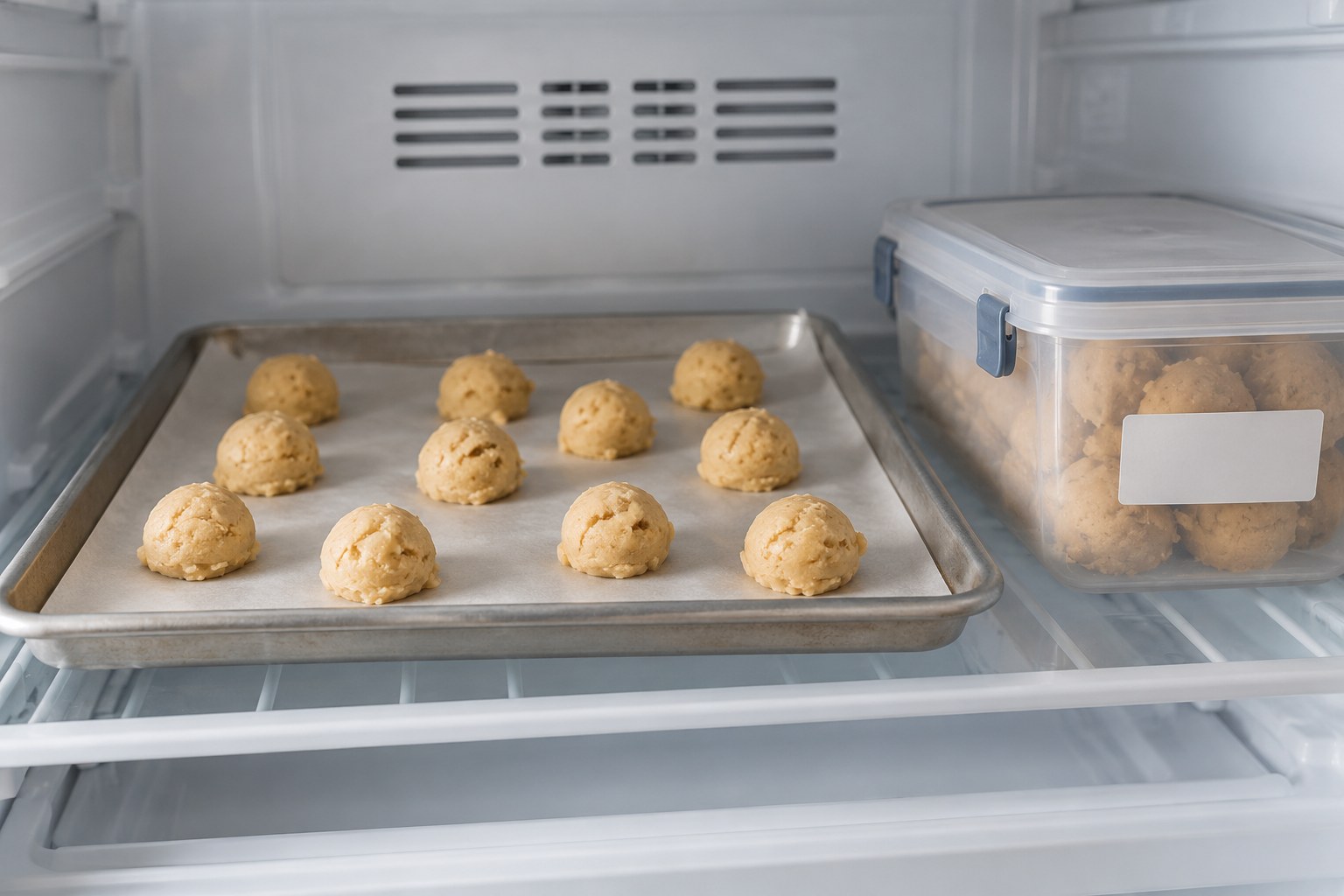
Use our Make-Ahead Christmas Cookies guide for the detailed cookie plan.
2 Weeks Before: Organize Packaging and Pantry Ingredients
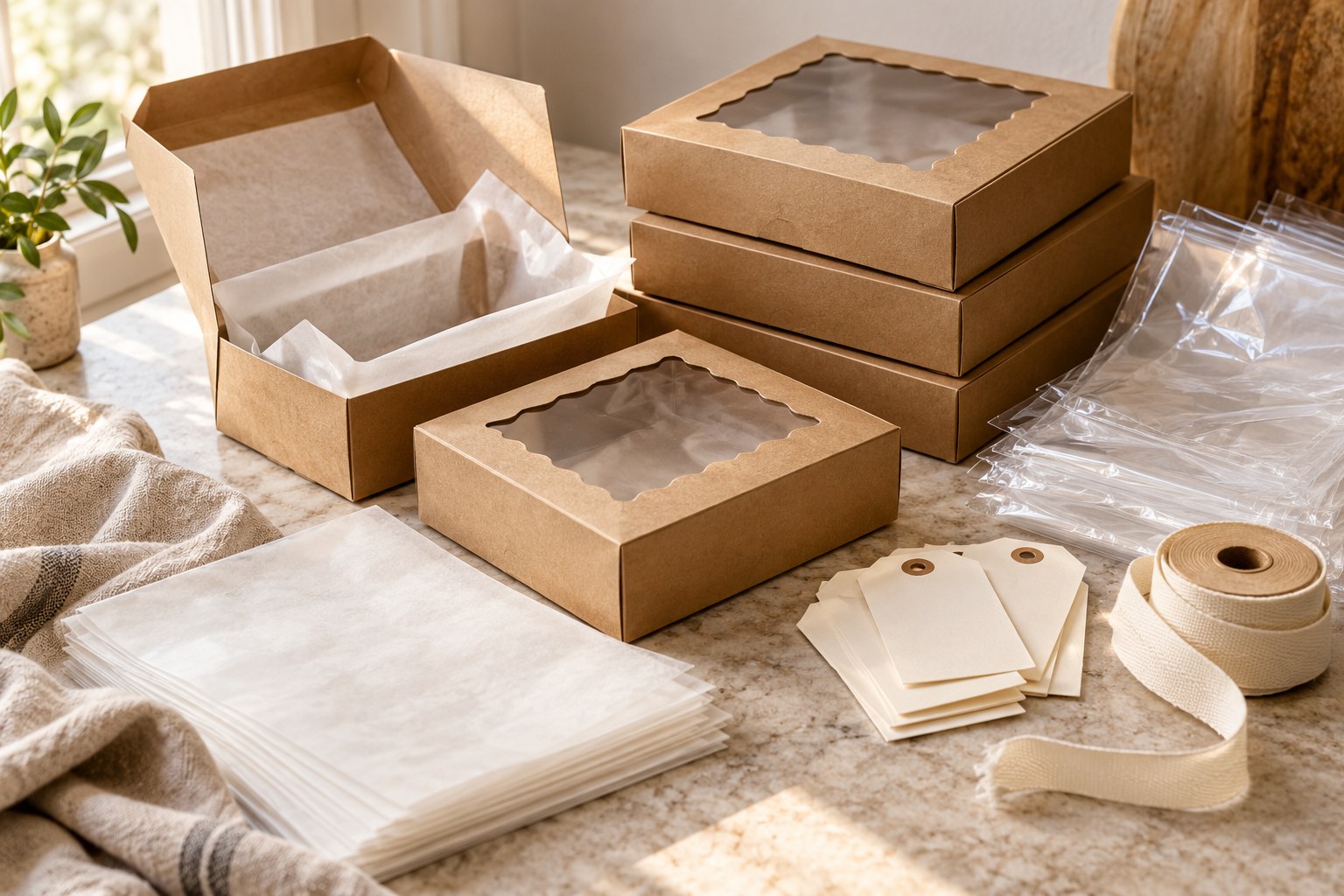
Buy or gather cookie boxes, parchment, labels, ribbon and food-safe bags before the baking rush. Check flour, sugar, spices, chocolate, butter or plant-based alternatives, eggs or substitutes, nuts, dried fruit and decorating ingredients against the recipes you actually chose.
If you are making school treats, confirm the classroom policy now rather than after you bake. Our Christmas Treats for School guide covers the school-policy and allergy considerations.
1 Week Before: Bake the Good Keepers
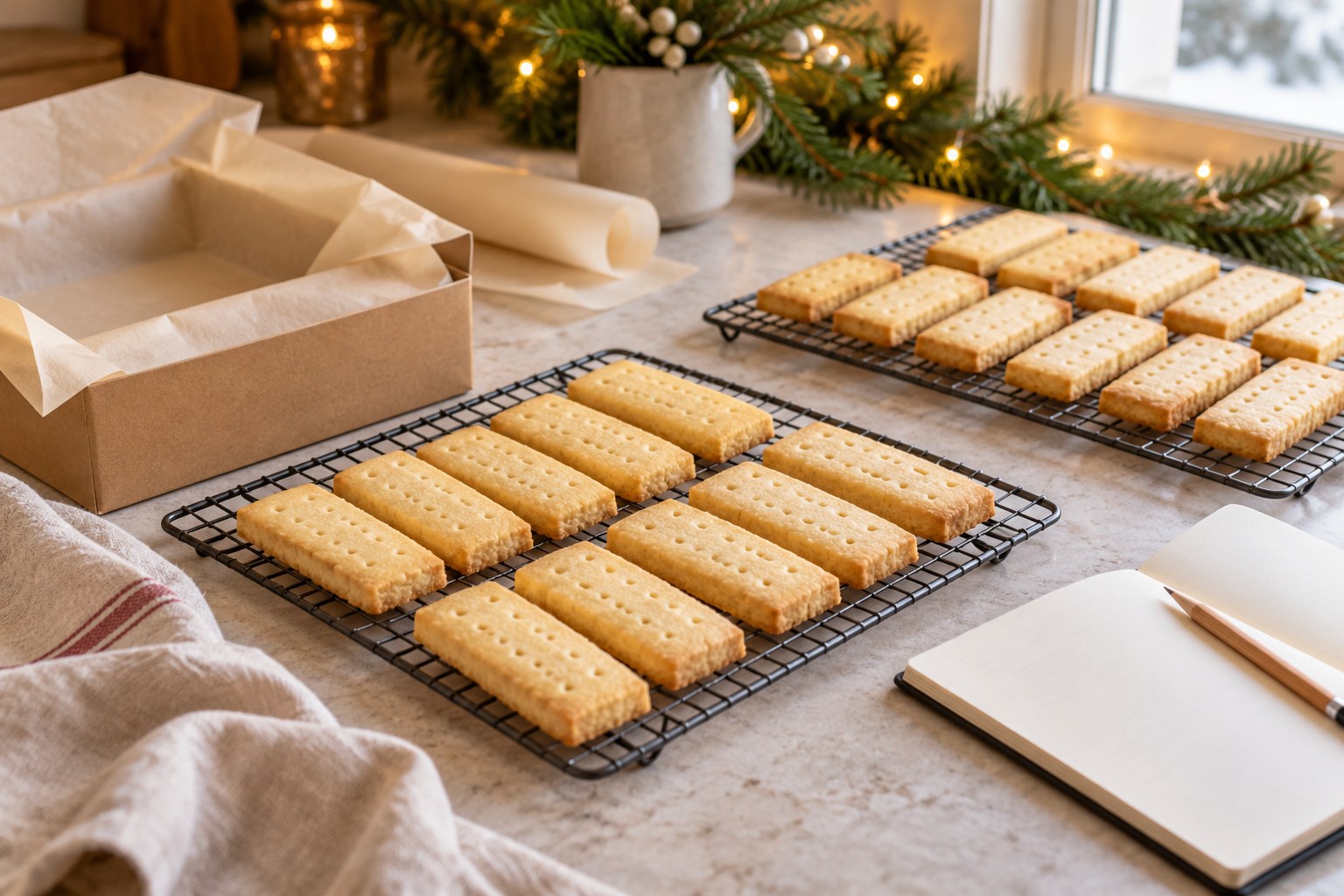
Sturdy cookies and recipes with confirmed room-temperature storage can move into this week. Shortbread is especially useful because it can be baked before the final rush when the recipe's storage directions allow it. For example, review the storage instructions in our Vegan Shortbread Cookies before placing it in your schedule.

This is also a good time to make sure your gift list and quantities are realistic. Use the Christmas Cookie Box Guide to calculate how many cookies you actually need.
3 to 4 Days Before: Bake Sturdy Cookies and Components
Bake cookies that travel well and prepare components that can be stored safely. Avoid assembling soft-filled cookies too early if their texture is best closer to serving.
If gingerbread is part of the plan, use Gingerbread Recipes for Christmas to decide whether you are making cookies, muffins, cake or pie rather than repeating the same flavor in every format.
2 Days Before: Desserts and Breakfast Prep
Prepare desserts whose individual recipes allow advance storage, and bake breakfast items that are meant to be made ahead. Set out serving dishes and decide which foods need refrigerator space.
For Christmas morning, use the Make-Ahead Christmas Breakfast & Brunch guide so overnight casseroles, buns and baked-ahead items are coordinated.
Christmas Eve: Assemble, Chill and Set Up
Fill or decorate cookies that are best finished close to serving. Shape and refrigerate overnight breads or buns when the recipe calls for it. Set the breakfast table, organize coffee or tea, and make sure the next morning's oven order is clear.

Christmas Morning: Bake Only What Needs to Be Fresh
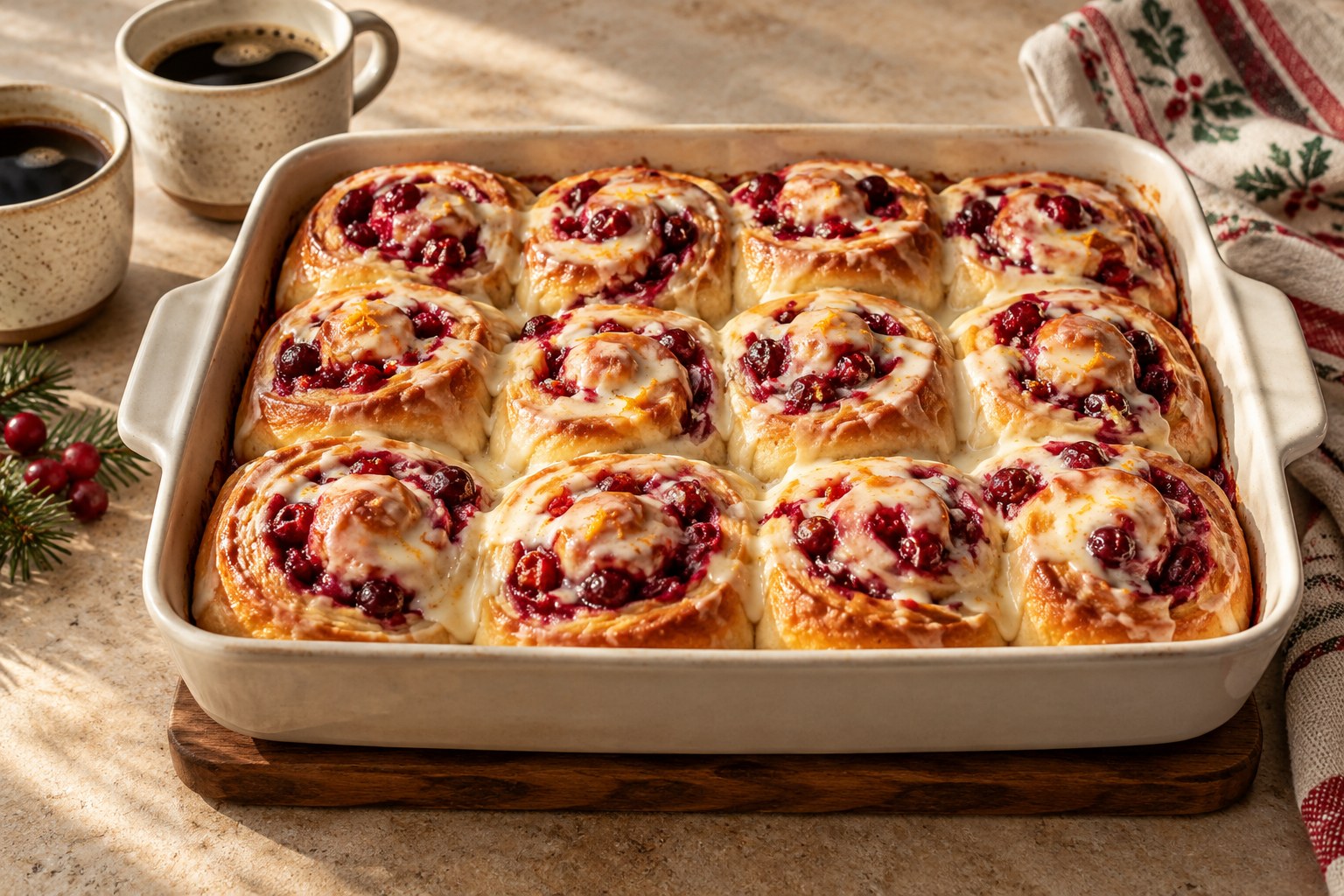
The goal is not to start from scratch. Bake overnight buns or casseroles, warm prepared items, add fruit and drinks, and leave the rest of the morning open.
Before Guests Arrive: Finish the Dessert Table
Bring chilled desserts out according to their serving needs, add cookies to trays, and slice only what benefits from being cut just before serving. Keep the table balanced by mixing textures instead of putting every dessert you baked on display at once.
The four-week holiday baking master plan
A calm Christmas kitchen begins with an inventory. Write down everything you want to serve, then separate recipes that can be prepared well ahead from those that need fresh baking, filling or refrigeration. Record which dishes use the oven, mixer, refrigerator and freezer. A long recipe list is not yet a schedule; you need to know which appliances and storage spaces are available on each day.
Four weeks before: make decisions
Select a manageable menu of cookies, cakes, pastries, breakfast dishes and desserts. Check each recipe's ingredient list and make-ahead advice and identify any allergies or dietary restrictions among guests. Buy or reserve baking tins, freezer containers, labels and gift packaging. This is also the time to decide whether you will make an elaborate pastry board or a simpler assortment.
Three weeks before: prepare suitable freezer components
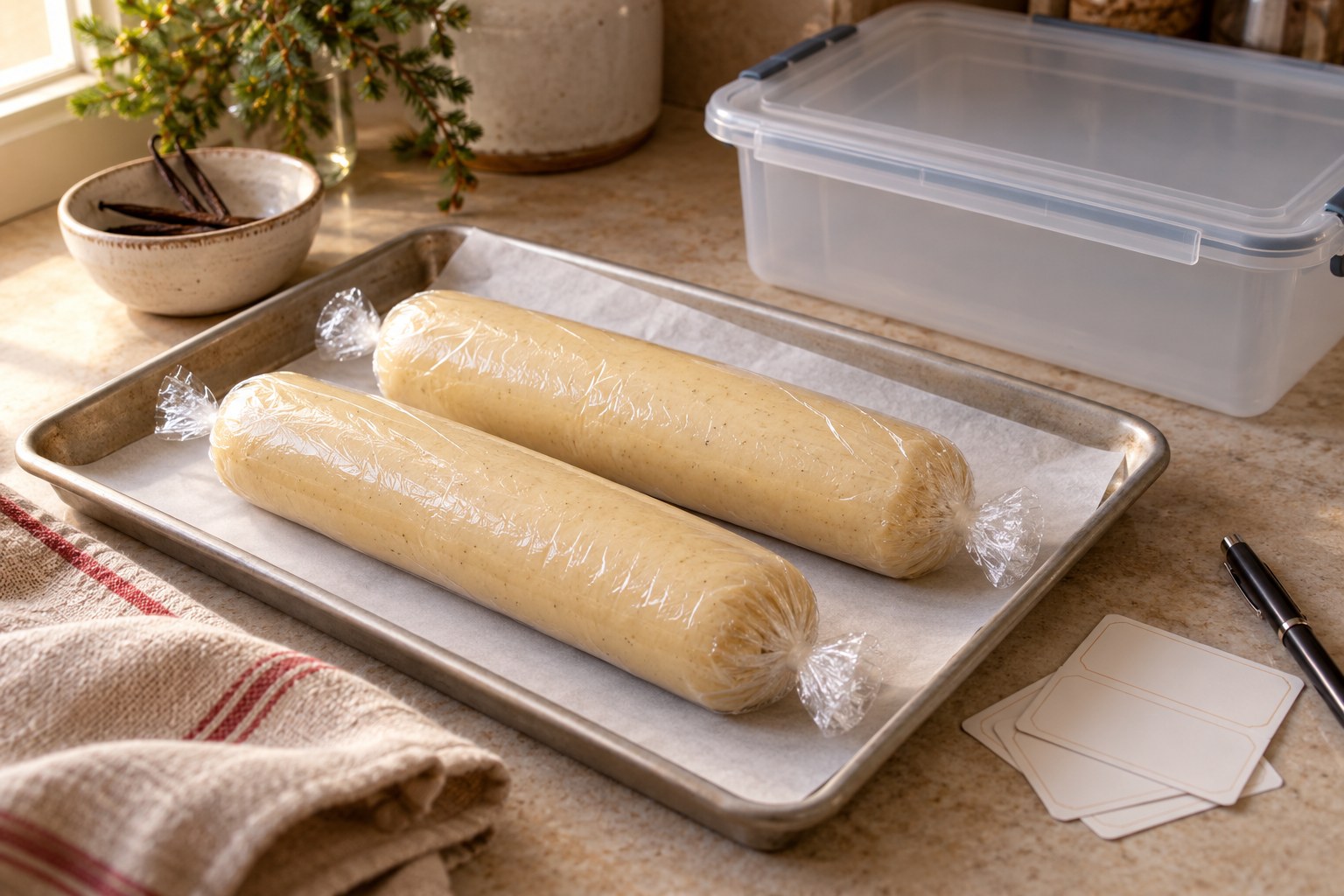
Portion and freeze drop-cookie dough that the recipes permit you to freeze. Shape icebox-cookie logs, wrap them tightly and label every package with the recipe, date and baking directions. Do not assume all cookie doughs, unbaked pastries and assembled desserts share one freezer life or one baking-from-frozen procedure.
Two weeks before: test and organize
Try a small test bake from frozen dough and record the result. Inventory pantry ingredients, wrapping materials and the refrigerator and freezer space that will be required closer to Christmas. Confirm the number of guests and any food allergies. If hosting a larger gathering, create a baking-day schedule that avoids needing the oven for multiple dishes at once.
One week before: bake suitable keepers
Some firm shortbread and other recipes can be baked in advance and stored airtight when their individual instructions permit it. Vegan Shortbread Cookies are an example with a published airtight-storage recommendation. Do not preassemble highly perishable cream-filled desserts merely because plain cookie shells or cake layers can be prepared early.
Three days before: complete sturdy desserts
Bake additional sturdy cookies, prepare suitable pie crusts or cake layers, and organize serving boards. Cool everything properly before wrapping. If you are planning a holiday pastry board, count serving pieces and decide which pastries will be placed out shortly before guests arrive rather than several hours early.
Christmas Eve: assemble, refrigerate and label
Prepare fillings and frostings only according to their storage instructions. Assemble dishes that can be safely refrigerated overnight and finish decorations that need time to set. Label any containers that contain major allergens. Make room in the refrigerator before you begin stacking finished desserts.
Christmas morning: focus on fresh food
Reserve the morning for bread, breakfast pastries or dishes that genuinely benefit from fresh baking. Let frozen dough and chilled desserts follow their prescribed method; do not rush thawing at room temperature merely to free the oven sooner. Keep a final checklist for reheating, setting the table and serving guests.
Organizing the oven and baking equipment
Write down recipe temperatures and approximate oven occupancy, including preheating and cooling periods. Two recipes that both bake at 180°C may be convenient to schedule together, but that does not guarantee they use identical racks or times. Avoid overcrowding the oven if the recipes depend on airflow or even browning. Plan sufficient worktop space for cookies cooling on racks while another batch bakes.
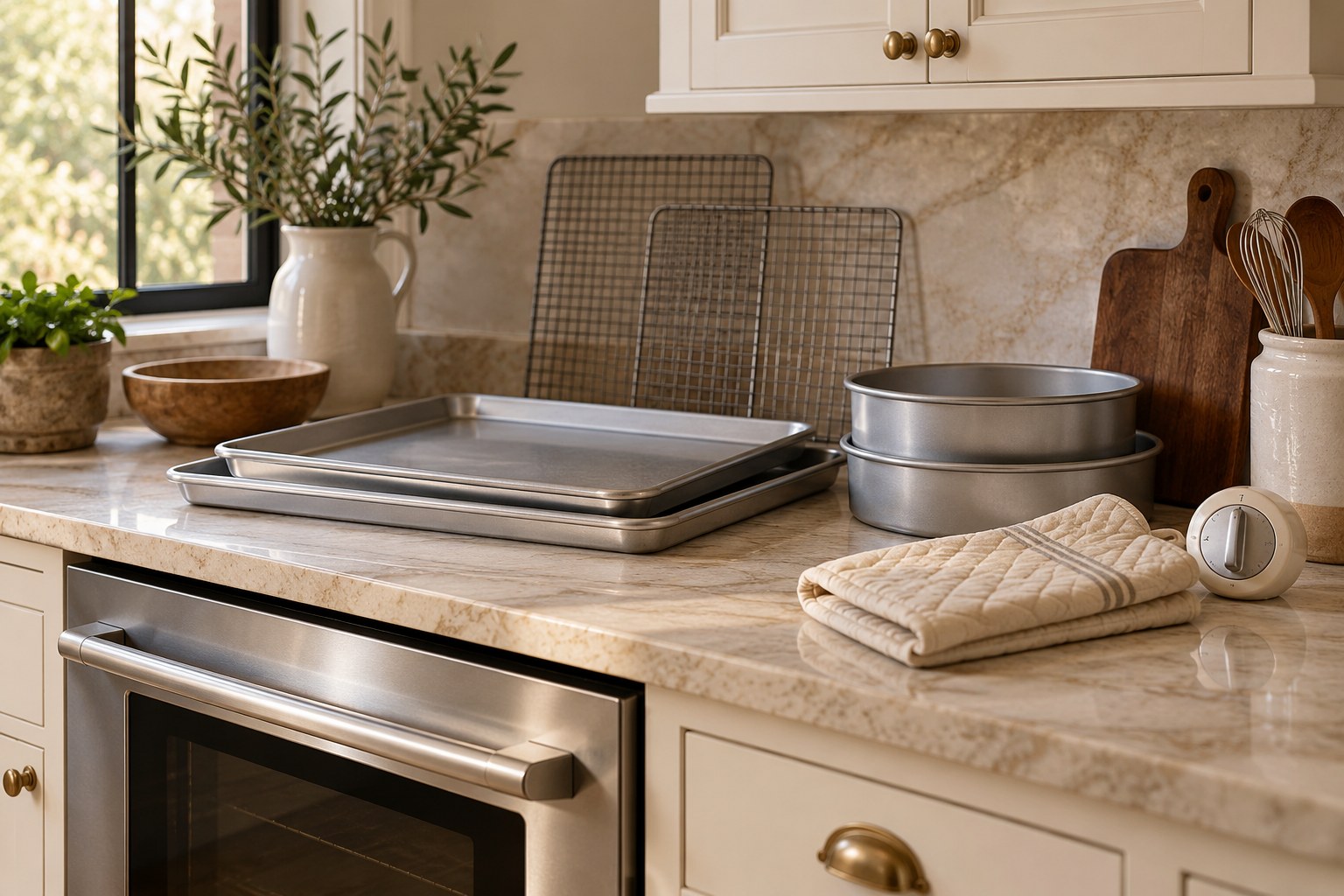
Keep a separate list for mixers and food processors. Preparing dough in advance helps only if the bowl and attachments are clean and available when needed. Where allergens are a concern, clean equipment between recipes and do not promise allergen-free results from a shared kitchen without proper controls.
Holiday storage is part of the schedule
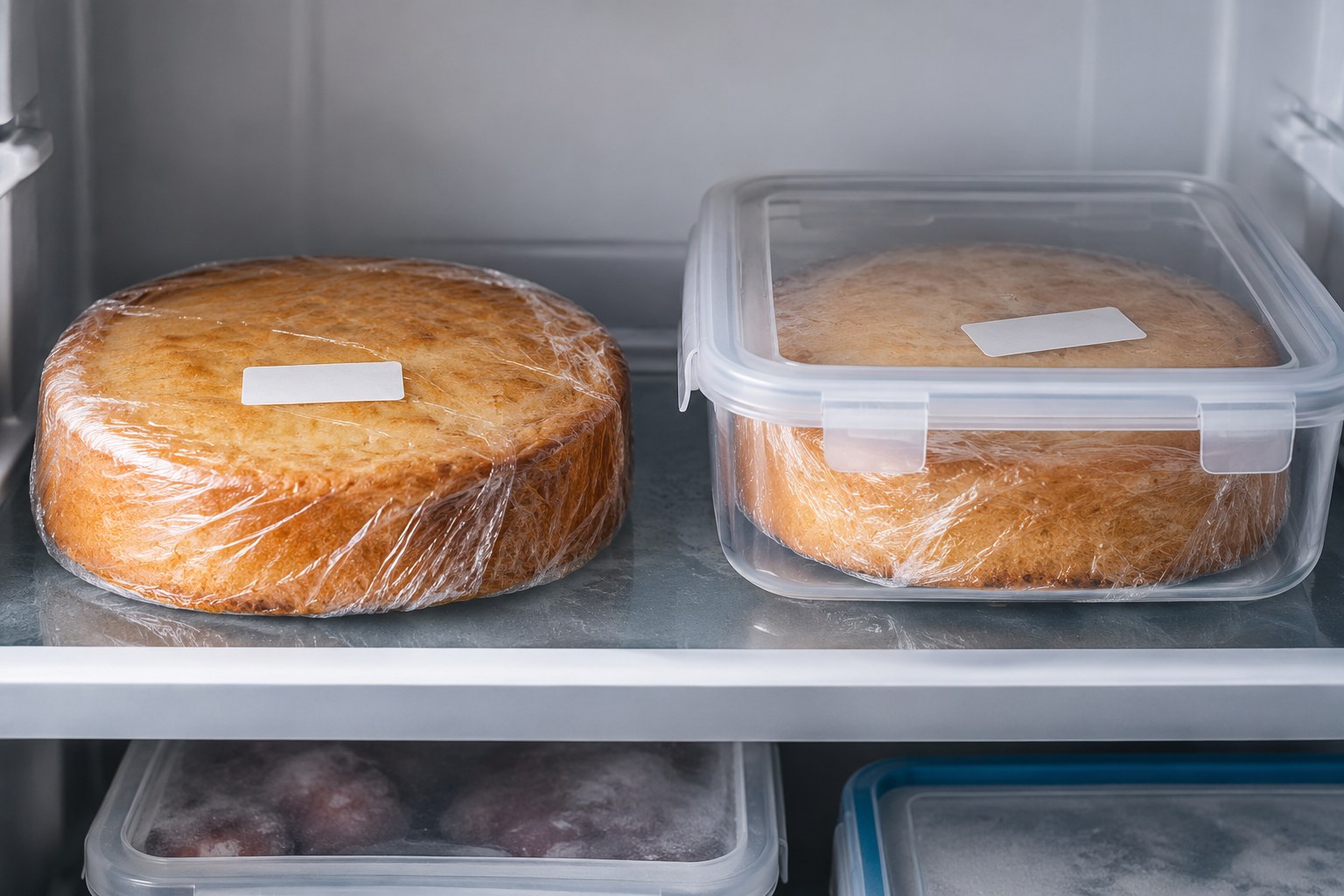
Freezer space can be more limiting than oven time. Pack dough or cake layers in labelled containers and protect them from crushing. Refrigerate perishable custards, cream desserts and egg-based dishes promptly. A finished pastry board may need several components held cold until just before service, and those dishes should not be left unrefrigerated for convenience.
Use Health Canada's food-safety information for appropriate refrigeration and handling guidance. The fact that a dessert is homemade or festive does not make it exempt from safe temperature controls.
A sample menu for a manageable Christmas
A practical plan might include one gingerbread cookie, one shortbread, one chocolate cookie, one simple cake, one fruit dessert and one breakfast bake. The goal is to create variety without requiring a dozen separate recipe projects. Assign each to a preparation day based on the actual recipe's resting, baking and storage needs. If time becomes tight, reduce the number of components rather than shortening essential cooking or cooling stages.
Holiday baking FAQs
Should I bake all cookies in advance?
No. Some cookies keep well for several days; others are most appealing when baked closer to serving. Freeze appropriate dough and check the individual recipe's tested directions.
Can I prepare a cream pie several days early?
Only according to the actual recipe and safe refrigeration guidance. Cream and custard desserts should not be treated like plain dry biscuits.
How do I avoid an overloaded oven?
Choose a smaller menu, make suitable freezer components early, and use a written schedule with bake temperatures and realistic preparation times. Keep some oven capacity available for unexpected delays.
Scheduling by refrigerator and freezer capacity
A holiday baking schedule fails when the refrigerator fills with finished custards just as raw dough needs to chill. Before choosing recipes, list each item's required cold-storage space and how long it must stay there. Reserve shelves for refrigerated cream, egg-based desserts and any filling that needs temperature control. Keep raw ingredients in suitable sealed containers away from ready-to-eat food.
The freezer can help distribute work over several weeks, but only if wrapped dough and cake layers have safe, flat storage space. Label every package clearly so it is not opened repeatedly to identify the contents. Cake layers should be protected from crushing; cookie dough portions need enough room to freeze separately before bagging. A well-planned freezer shelf is more useful than a vague promise to make everything ahead.
If a dish needs oven time and then cooling time before refrigeration, count both stages on your schedule. A cake baked at noon may not be ready to frost immediately; a filled cookie baked on Christmas Eve still needs time to cool before packing. Leave a little flexibility for delays instead of assigning every minute to a new tray.
Turn a recipe list into an achievable oven schedule
Write every recipe on a planning sheet with its prep time, resting or chilling periods, oven temperature, bake time, cooling time and required storage. This reveals conflicts that are easy to miss when reading individual recipe cards. A shortbread dough may need chilling before baking, a cake layer may need several hours of cooling, and a custard pie may require refrigeration after baking. These steps cannot all happen in the same thirty-minute window just because the recipes look short.

Plan the oven around compatible tasks while still respecting rack position and airflow instructions. Two recipes at the same temperature may be scheduled consecutively, but their baking sheets, depth and timing can differ. Avoid overcrowding, and allow the oven to reach the correct temperature after making adjustments. Reserve time for cleaning and switching from raw dough preparation to handling fully baked foods.
A practical menu for a four-person holiday dinner
Choose one make-ahead cookie, one simple dessert and one breakfast bake rather than requiring several pastries, cakes and pies. For example, prepare suitable shortbread early, make a cake or fruit dessert according to its storage instructions, and reserve Christmas morning for a fresh bread or pastry. This provides seasonal variety without occupying every oven hour.
For a larger family gathering, scale quantities from the actual recipe yields and consider preparation space, not merely ingredient amounts. Doubling a recipe may require two baking dishes and multiple oven rounds. A mixer bowl that fits one batch might not safely hold three batches at once, and a crowded freezer can damage unprotected cake layers.
Keep a separate cold-storage checklist
List everything requiring refrigeration, including cream pies, custards, fillings and prepared savoury dishes. Know where those containers will go before they are ready. Keep a refrigerator thermometer available, and follow appropriate safe storage temperatures and food-handling practices. A dish that was chilled overnight still needs appropriate serving and leftover handling.

Do not treat freezing as a universal solution for any dessert. Some decorative finishes, fresh fruit and cream fillings change texture after thawing. For cake layers, wrapping and freezing plain unfrosted sponges may be appropriate; for a completed custard cake, follow recipe-specific safe storage instead of borrowing the sponge method.
How to recover when your holiday plan slips
The oven is running an hour behind
Identify which recipe can safely be delayed or removed from the menu. Do not shorten minimum cooking stages for custards or egg-based dishes. Serve fewer types of cookies if needed, or use appropriate already-prepared components instead of rushing unfinished dough into the oven.
The freezer is full
Prioritize properly wrapped items that benefit most from freezing and do not overload the shelves. Consider baking suitable sturdy cookies close to serving and storing them airtight rather than freezing every dough. Make room for plain cake layers only if they can lie flat without being crushed.
A guest reports an allergy
Review every selected recipe, ingredient label and preparation surface. Do not assume you can make a complex cookie assortment allergy-safe by removing visible nuts at the last moment. A simpler approved alternative may be necessary, and guests should be able to identify the ingredients in each dish.
A dessert needs refrigeration but the fridge is full
Make room or replace that dessert with a suitable option. Leaving cream, custard or other perishable foods unrefrigerated is not an acceptable way to solve a capacity problem. Plan the cold-storage space before buying ingredients.
Frequently asked holiday planning questions
Can I freeze everything four weeks before Christmas?
No. Freezer compatibility varies by recipe, and some fillings or toppings are best prepared close to serving. Use the individual tested method for each component.
How many desserts should I plan?
Choose a menu appropriate to the number of guests, available equipment and time. Two or three thoughtfully chosen desserts may be more enjoyable than an oversized assortment with inconsistent quality.
What deserves fresh baking?
Items with a distinctive freshly baked crust or texture may be worth reserving for the final day, provided the rest of the menu can be prepared safely ahead of time.
Create a work-back plan from Christmas Day
Start with the intended serving time. If dessert will be served on Christmas evening, identify when every component must be fully baked, cooled, filled and decorated. Work backward through those steps rather than choosing a baking date based only on convenience. A cake that needs chilling after frosting may not be ready if the cake layers leave the oven shortly before dinner.
For breakfast pastries, note which items should be served freshly baked and which can be reheated safely according to the recipe. An overnight dough may be practical, but it still needs fridge space and a morning baking slot. Reserve enough time to preheat the oven and finish any fillings or toppings without rushing.
Set up a household baking task board
List each recipe as a separate task with an owner, required equipment, ingredients and completion date. Use simple statuses such as not started, ingredients ready, dough prepared, baked, cooling, filling prepared, packaged and ready to serve. These stages are useful because a cake can be baked but not ready to frost, while a cookie can be fully cooled but still awaiting its filling.
If several people are helping, assign work that can happen without competing for the oven. One person can label containers while another measures dry ingredients, for example. Clean shared equipment between raw and finished foods and between recipes with allergens. Keep a separate list for perishable foods so they are not accidentally left on the counter after preparation.
Three menu sizes and how to choose
Small household Christmas
Consider one cookie, one centrepiece cake or pie and one fresh breakfast item. Select recipes you know rather than learning several challenging techniques on a crowded holiday morning. A smaller menu can still feel festive when everything is fresh and well presented.
Family dinner with guests
Add a second dessert offering a different flavour or texture, perhaps a fruit dish beside a chocolate cake. Plan servings based on expected guests, but remember that not everyone eats a full portion of every dessert. Prepare suitable components ahead and keep the most delicate finishes for the last day.
Large holiday gathering
Choose a small number of reliable recipes that scale predictably and use multiple batches where necessary. Check oven capacity, pan availability and refrigerator space before increasing quantities. An enormous batch may not mix or bake the same way as the original recipe; following documented batch sizes can be more dependable than improvised large-scale adjustments.
Keep quality checks on the calendar
For each recipe, identify a clear sign that the item is ready: dough rested for the prescribed period, cookie edges and centres baked as intended, cake layers fully cooled, custard stored correctly, or icing dried enough for packing. These checks prevent an unfinished item from being marked complete simply because it left the oven.

Hold back time for the unexpected. Ingredients may be missing, the oven may run hot, or a dessert may need longer to cool. The simplest recovery is often to drop a less important item from the menu rather than rush something that affects food safety or the quality of the meal.
Build a countdown using realistic tasks
A reliable holiday schedule includes far more than the minutes printed as 'cook time' on a recipe. Add shopping, ingredient temperature, dough mixing, resting, pan preparation, preheating, baking, cooling, filling, decorating and storage. For a cookie box, some recipes require a long chill and others have buttercream assembly after cooling. For a celebration cake, the layers may cool for hours before they can be wrapped or frosted. Mark each dependency so one missed step does not stall the entire day.
Work backward from Christmas dinner or breakfast. Choose the final serving time, then identify which desserts must be ready the night before and which genuinely need morning baking. Put refrigerated food in the schedule as soon as it requires chilling; don't leave storage as an afterthought.
A realistic Christmas Eve checklist
- Confirm the menu, portion counts and any dietary requirements of expected guests.
- Check that the oven, refrigerator and freezer have space for planned work.
- Review which cookie doughs or cake layers should be transferred for recipe-appropriate thawing.
- Mix or bake only the recipes assigned to this day.
- Allow baked items to cool fully before wrapping or decorating.
- Prepare fillings under the food-safety and refrigeration instructions for the actual recipes.
- Set up clean serving trays, food-safe covers, labels and utensils.
- Keep perishable foods refrigerated until the appropriate serving stage.
- Write a short morning checklist so breakfast tasks are not forgotten.
- Leave time for unexpected delays instead of assigning every available minute to baking.
Using prepared components without losing freshness
Make-ahead baking works best when the component chosen for early preparation actually stores well. Sturdy cookies can often be stored airtight within their quality window, while certain doughs can be frozen and baked later. Unfrosted cake layers may be wrapped and frozen according to their recipe, leaving frosting and assembly for a different day. Delicate pastries, custard toppings and cream fillings may need to be finished much closer to serving.
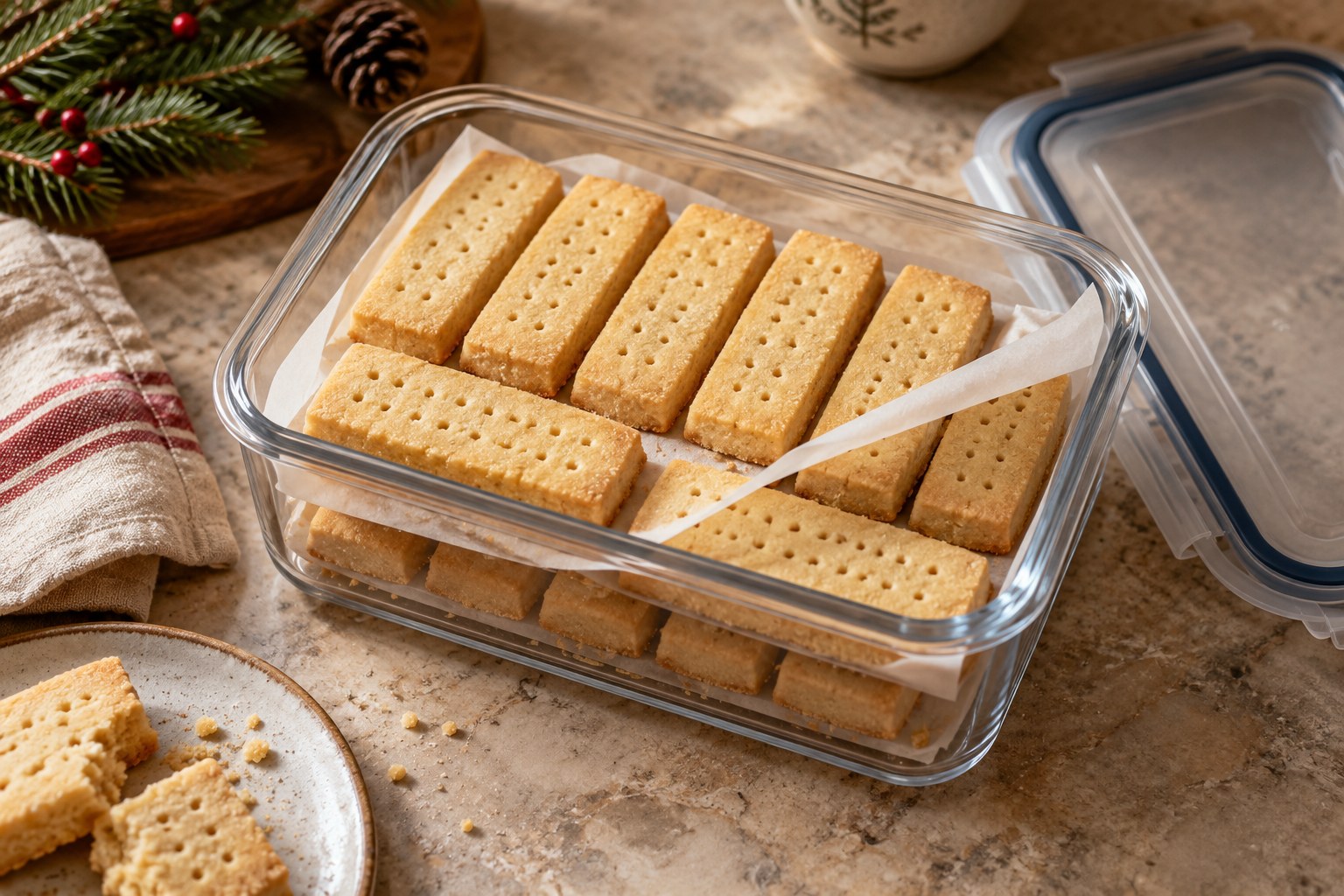
Do not force a component into a make-ahead strategy merely because your calendar looks crowded. A smaller dessert menu that fits available storage is safer and often tastes better than a collection of dishes held under unsuitable conditions.
Preparing for a holiday baking helper
If a friend or family member offers to help, assign tasks with clearly written directions. Measuring dry ingredients, lining pans, labelling containers and setting out packaging can be useful jobs. Keep oven handling and temperature-sensitive foods under appropriate supervision, and check allergies before sharing utensils among recipes. A simple division of labour can free up the baker to manage timing without creating confusion about which dough belongs to which recipe.
What to leave for Christmas morning
Fresh breakfast buns, pastries or other items that benefit from a newly baked crust may deserve oven time in the morning. Plan these around the actual instructions: a dough that needs overnight fermentation or an early thaw must have been prepared the previous day. Keep the morning menu modest so the oven is not overloaded while guests arrive.
When something must be reheated, use the original recipe's safe reheating and serving instructions. Not every chilled dessert should be warmed, and a pastry board may include items that need to stay cold until just before serving. The written menu should indicate which components are served chilled, at room temperature or freshly baked.
Plan the desserts around the actual number of guests
Before buying ingredients, count the people expected for breakfast, dinner and dessert. Not everyone will eat a full serving of every dessert, so plan a mixture rather than multiplying each recipe to feed the entire guest list. A small group may enjoy one cake and one cookie assortment; a large gathering might benefit from a few sturdy recipes made in repeatable batches. Follow the published yields and adjust the number of batches thoughtfully.
A holiday pastry board creates a beautiful centrepiece, but its components have different storage needs. Plain cookies may be suitable for a covered platter, while pastries with custard, whipped cream or other perishable fillings need refrigeration until appropriate serving. Arrange chilled items as close to serving as possible and return leftovers to safe storage rather than leaving everything out through the evening.
Use a final two-hour preparation window wisely
Just before guests arrive, concentrate on tasks that can be completed safely and calmly: setting out serving utensils, preparing a clean cake knife, checking the dessert portions, labelling allergens and confirming the correct temperature for chilled foods. Avoid starting a complex raw batter that will occupy the oven when dinner needs reheating. If a dessert is behind schedule, a simpler presentation can be better than hurried, incomplete baking.
The purpose of planning is to have time to enjoy the gathering. A modest menu prepared accurately, cooled properly and served under suitable conditions is preferable to an extensive one in which every tray and dessert is rushed at the last minute.
The final review before Christmas morning
Check the prepared food inventory on Christmas Eve. Confirm that every frozen package is identified, every refrigerated dessert has enough cold storage space, and the morning oven tasks have appropriate starting times. Put out clean utensils and dishes, but keep perishable foods chilled until the actual serving window.
For breakfast, confirm which recipe needs fresh baking and which components can be served after recipe-appropriate reheating. For dinner desserts, make sure cakes are cooled or frosted as planned and pastry boards will be assembled at suitable temperatures. Do not begin an optional extra recipe when the essential items still require chilling or finishing.
The best holiday timeline is flexible. If the oven runs behind or a filling takes longer to set, reduce the number of optional dishes rather than risking underbaking or unsafe storage. Fewer properly prepared desserts are preferable to an elaborate spread made in a rush.
One helpful strategy is to designate a small backup dessert that requires little last-minute work, such as an already-prepared suitable cookie assortment. That way unexpected guests or kitchen delays do not force you into an untested recipe. Keep track of its actual storage window and allergens, and remove it from the menu if it cannot be served safely.
A Simple Holiday Baking Rule
Work backward from serving day. Freeze only recipes that freeze well, bake sturdy items first, assemble delicate items later, and do not add another recipe unless it has a clear purpose.
Holiday Baking Checklist
- 4 weeks before: choose recipes and quantities.
- 3 weeks before: freeze confirmed freezer-friendly dough or baked goods.
- 2 weeks before: buy packaging and pantry ingredients.
- 1 week before: bake good keepers.
- 3–4 days before: bake sturdy cookies and components.
- 2 days before: desserts and breakfast prep.
- Christmas Eve: assemble, chill and set up.
- Christmas Day: bake or warm only what needs to be fresh.
Keep Chilled Dishes Cold
Keep cream pies, custard desserts and egg-based breakfast dishes refrigerated at 4°C or colder when they are being stored. Return perishable leftovers to refrigeration within two hours. Plan cooler space as carefully as oven space; a make-ahead dish still needs safe storage.

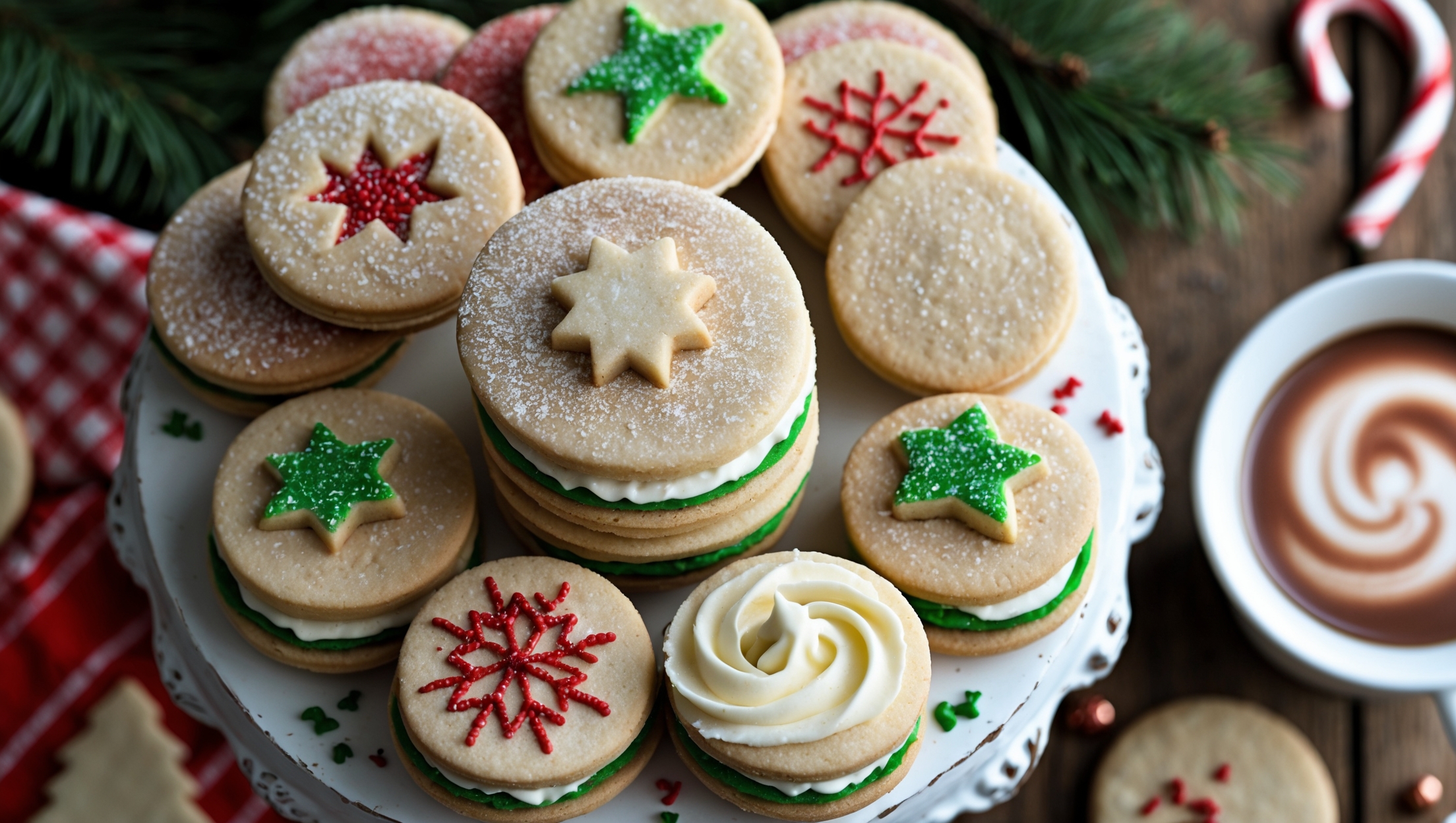
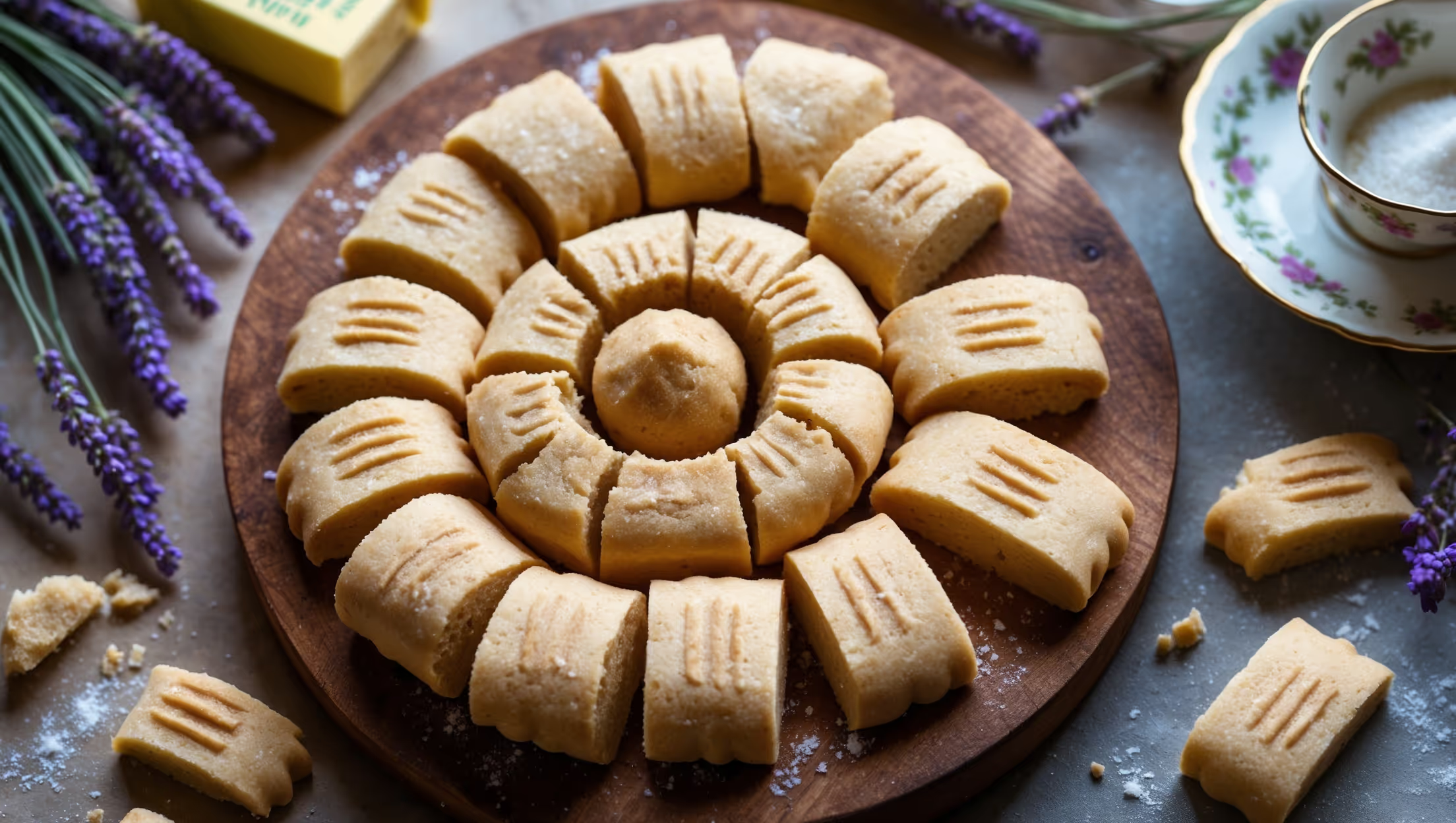
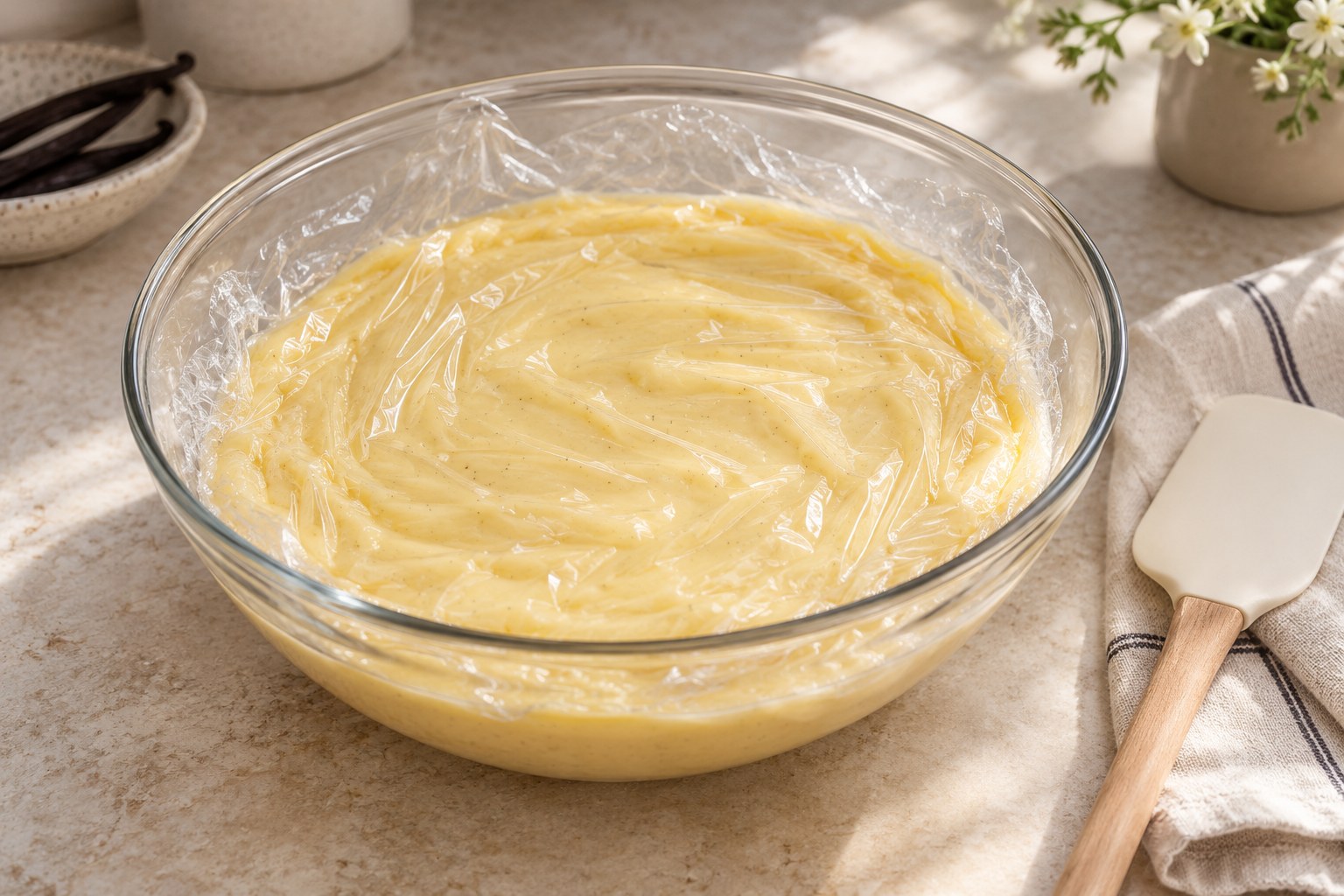
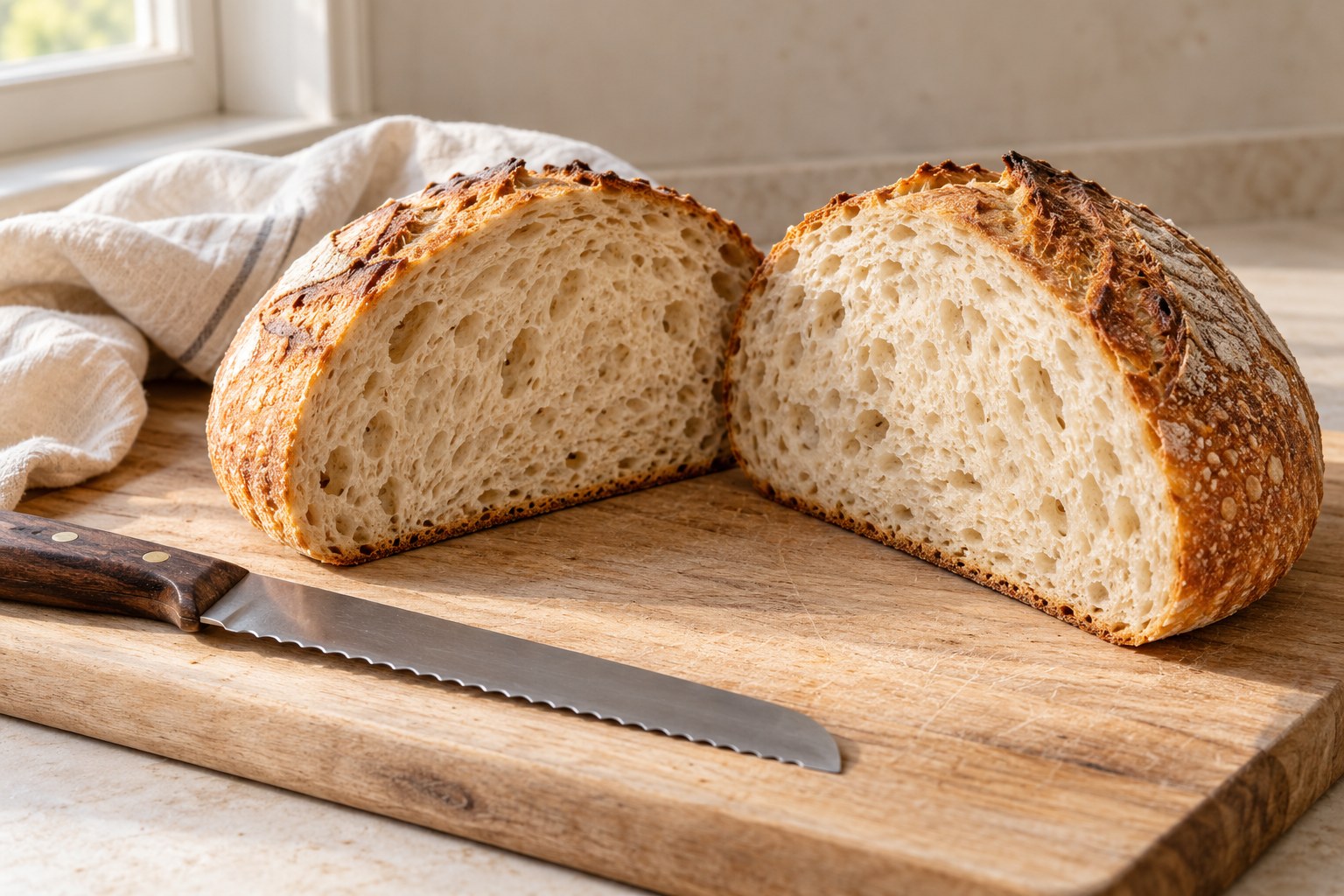
AI-generated editorial illustration: plan the work before the busy baking week. This does not depict a documented recipe test.
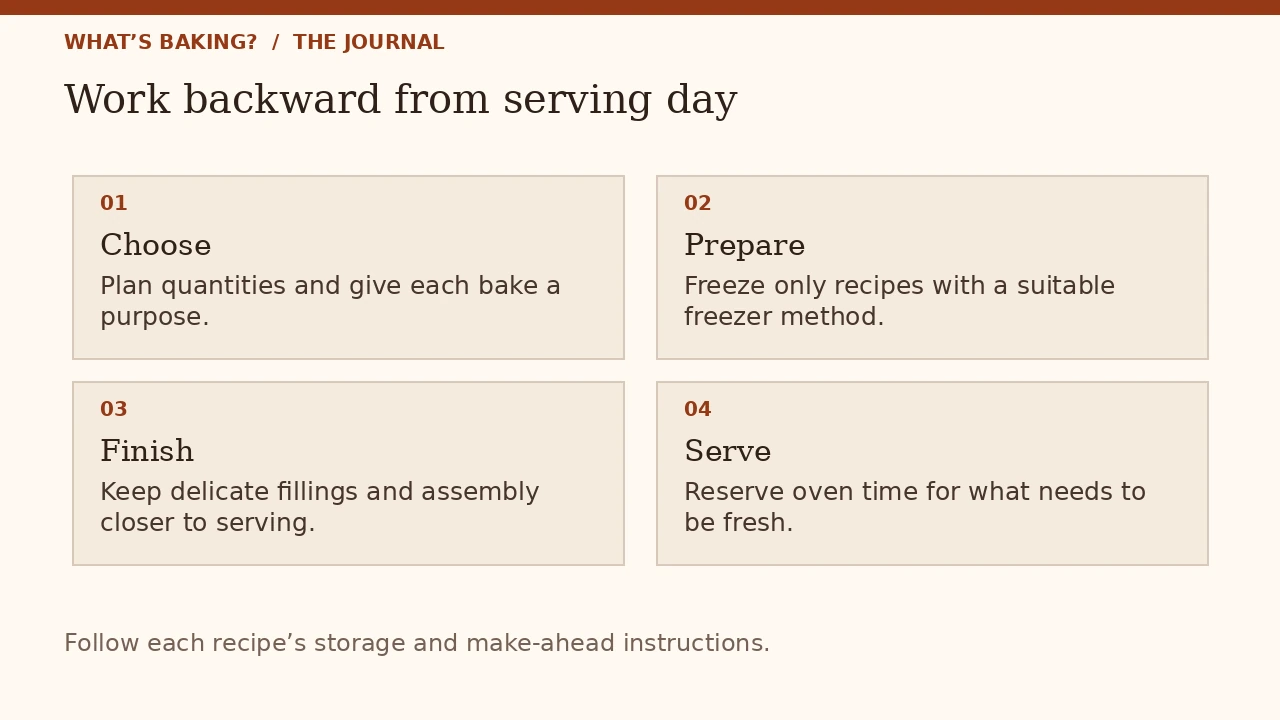
A quick planning guide. Follow each recipe’s storage and make-ahead instructions.
IN PICTURES
From the baking notebook
FROM THE RECIPE BOX