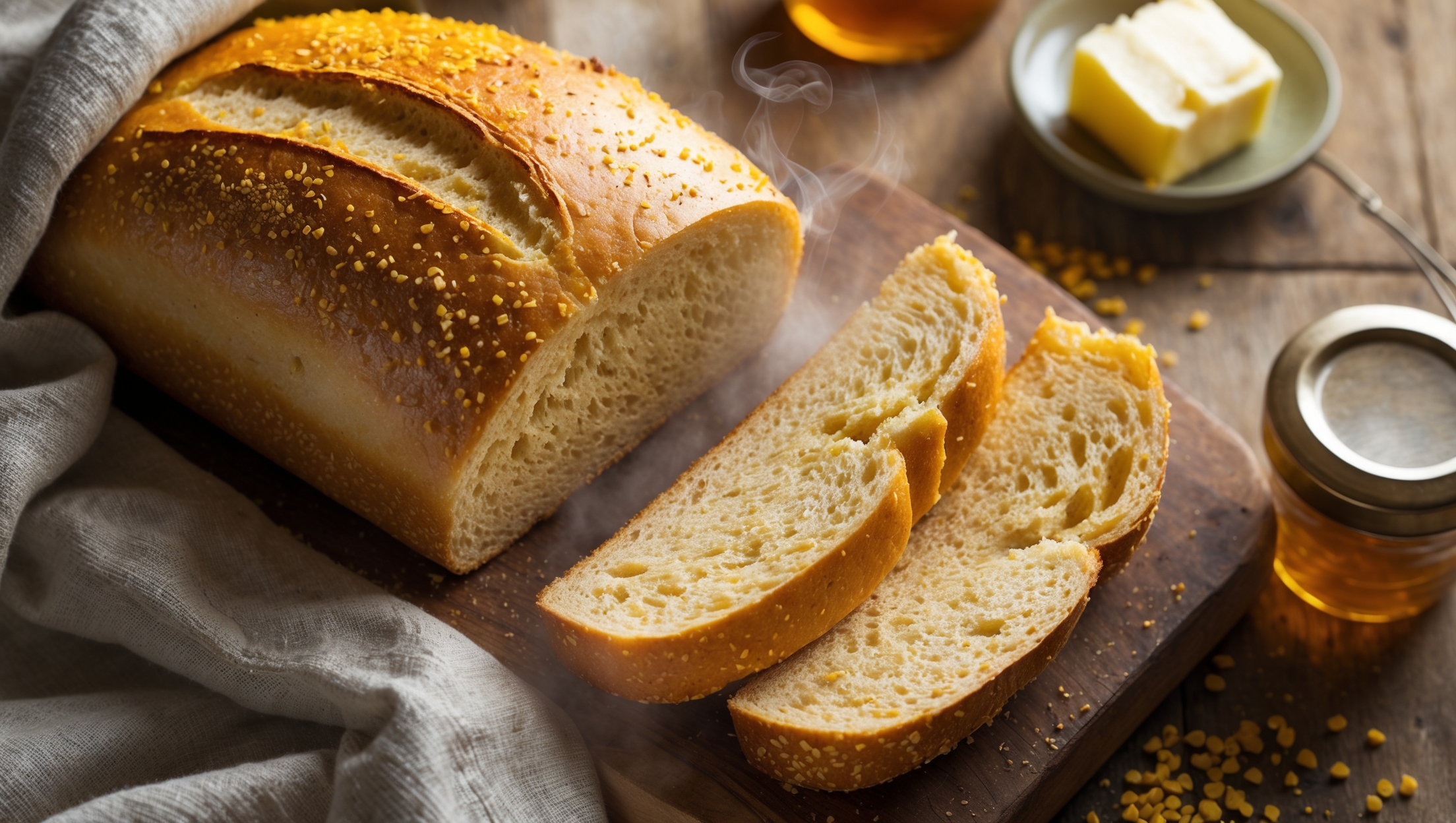
Directions
<ol class="no-list-style"><li class="MethodStepper"><h4 class="step-title">Step 1</h4>Start by preparing the tangzhong paste. In a small saucepan, whisk together 25g bread flour and 125ml water until no lumps remain. Cook over medium-low heat, stirring constantly with a spatula, until the mixture thickens to a paste that holds a line when you draw your spatula through it (about 60-65°C). This typically takes 3-4 minutes. Remove from heat and let cool to room temperature. This pre-gelatinized starch mixture will give your bread exceptional softness and moisture retention.</li><li class="MethodStepper"><h4 class="step-title">Step 2</h4>In the bowl of your stand mixer (or a large mixing bowl if kneading by hand), combine 350g bread flour, 40g sugar, 7g instant yeast, and 6g salt. Mix the dry ingredients thoroughly, keeping the salt and yeast on opposite sides of the bowl as direct contact can inhibit yeast activity.</li><li class="MethodStepper"><h4 class="step-title">Step 3</h4>Create a well in the center of your dry ingredients and add the cooled tangzhong, warm milk (38°C is ideal to activate yeast without killing it), and egg. Mix with the dough hook on low speed until the ingredients come together, about 2-3 minutes. The dough will look shaggy at this point.</li><li class="MethodStepper"><h4 class="step-title">Step 4</h4>Add the softened butter in small pieces while the mixer runs on medium-low speed. Continue mixing for 8-10 minutes until the dough becomes smooth, elastic, and pulls away from the sides of the bowl. The dough should pass the "window pane test" - when a small piece can be stretched thin enough to see light through without tearing. This indicates proper gluten development.</li><li class="MethodStepper"><h4 class="step-title">Step 5</h4>Shape the dough into a ball and place in a lightly greased bowl. Cover with plastic wrap or a damp kitchen towel and let rise in a warm place (about 24-27°C) until doubled in size, approximately 60-90 minutes. The slow rise allows flavor development and proper structure.</li><li class="MethodStepper"><h4 class="step-title">Step 6</h4>Once doubled, gently punch down the dough to release air bubbles. Transfer to a lightly floured surface and pat into a rough rectangle. Fold the dough like a business letter (fold the top third down, then the bottom third up). Turn 90 degrees and roll into a tight log the length of your loaf pan. Pinch the seam and ends to seal.</li><li class="MethodStepper"><h4 class="step-title">Step 7</h4>Place the shaped dough seam-side down in a greased 9×5 inch (23×13 cm) loaf pan. Cover loosely with plastic wrap and allow to rise again until the dough crests about 2.5 cm above the rim of the pan, approximately 45-60 minutes. Meanwhile, preheat your oven to 180°C.</li><li class="MethodStepper"><h4 class="step-title">Step 8</h4>When the dough has risen properly, gently brush the top with beaten egg white, being careful not to deflate the dough. Sprinkle generously with sesame seeds, ensuring even coverage. The egg wash will give your bread a beautiful shine while helping the seeds adhere to the surface.</li><li class="MethodStepper"><h4 class="step-title">Step 9</h4>Bake in the preheated oven for 30-35 minutes until deeply golden brown. The bread should sound hollow when tapped on the bottom, and an instant-read thermometer inserted into the center should register at least 88°C. If the top browns too quickly, tent loosely with aluminum foil for the remaining bake time.</li><li class="MethodStepper"><h4 class="step-title">Step 10</h4>Remove from the oven and immediately turn out onto a wire cooling rack. Allow the bread to cool completely before slicing, at least 1 hour. This resting period allows the crumb structure to set and prevents the bread from becoming gummy when cut. Once cooled, store in an airtight container at room temperature for up to 3 days, or freeze sliced for longer storage.</li></ol>