Directions
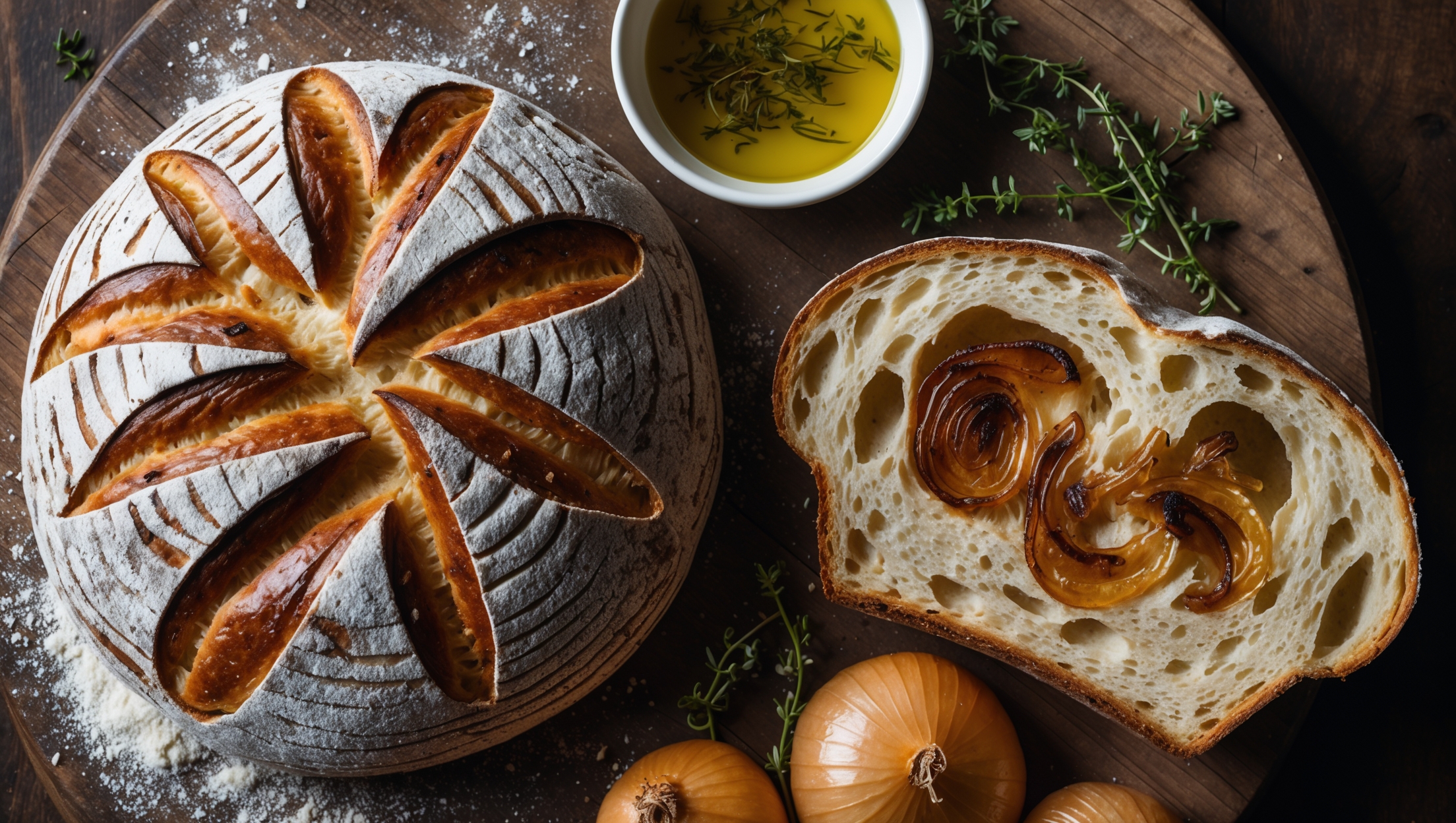
<ol class="no-list-style"><li class="MethodStepper"><h4 class="step-title">Step 1</h4>Begin by caramelizing the onions. Heat the olive oil in a large skillet over medium-low heat. Add the thinly sliced onions and cook for 5 minutes until they begin to soften. Sprinkle with brown sugar, add a pinch of salt, and continue cooking for 25-30 minutes, stirring occasionally, until the onions turn a deep golden brown and become sweet and jammy. This slow caramelization process creates complex sugars that will give your bread incredible depth of flavor. In the last minute, add the thyme leaves, stir to combine, then remove from heat and let cool completely.</li><li class="MethodStepper"><h4 class="step-title">Step 2</h4>In a large mixing bowl, combine the bread flour, salt, and yeast, keeping the salt and yeast on opposite sides initially (salt can inhibit yeast activity if they come into direct contact). Make a well in the center and add the softened butter.</li><li class="MethodStepper"><h4 class="step-title">Step 3</h4>Pour in the room temperature beer gradually while mixing with a wooden spoon or your hands. The beer not only adds flavor but also provides sugars that feed the yeast and carbon dioxide that helps with the initial rise. Mix until you have a slightly sticky dough with no dry flour remaining.</li><li class="MethodStepper"><h4 class="step-title">Step 4</h4>Turn the dough onto a lightly floured surface and knead for 8-10 minutes until smooth and elastic. The dough should pass the windowpane test – when a small piece is stretched, it should become thin enough to see light through without tearing.</li><li class="MethodStepper"><h4 class="step-title">Step 5</h4>Gently fold in the cooled caramelized onions, distributing them as evenly as possible throughout the dough. Be careful not to overwork the dough at this stage – you want to preserve the gluten structure you've developed.</li><li class="MethodStepper"><h4 class="step-title">Step 6</h4>Form the dough into a ball and place in a lightly oiled bowl. Cover with plastic wrap or a damp cloth and let rise in a warm place until doubled in size, about 1.5-2 hours. The fermentation not only increases volume but develops flavor compounds that will complement the beer and onions.</li><li class="MethodStepper"><h4 class="step-title">Step 7</h4>Once doubled, gently deflate the dough by pressing down lightly, then transfer to a lightly floured surface. Fold the dough over itself a few times to redistribute the yeast, then shape into a tight round boule (ball) by pulling the edges into the center and pinching to seal.</li><li class="MethodStepper"><h4 class="step-title">Step 8</h4>Place the dough seam-side up in a floured proofing basket or a bowl lined with a well-floured kitchen towel. Cover and let rise again until nearly doubled, about 45-60 minutes. Meanwhile, place your Dutch oven or baking stone in the oven and preheat to 230°C (450°F) for at least 30 minutes to get properly hot.</li><li class="MethodStepper"><h4 class="step-title">Step 9</h4>When ready to bake, carefully flip the dough onto a piece of parchment paper (seam-side down). Score the top with a bread lame or sharp knife – this controls where the bread expands during baking and creates an attractive finish. A simple cross or curved slashes work well.</li><li class="MethodStepper"><h4 class="step-title">Step 10</h4>Using the parchment paper as a sling, carefully lower the dough into the preheated Dutch oven. Cover with the lid (this traps steam, creating a better crust) and bake for 30 minutes. Then remove the lid and bake for another 10-15 minutes until the crust is deep golden brown and the bread sounds hollow when tapped on the bottom. The internal temperature should reach about 95°C (205°F) for a perfectly baked loaf.</li><li class="MethodStepper"><h4 class="step-title">Step 11</h4>Transfer to a wire rack and let cool completely before slicing, at least 1 hour. This resting period is crucial – cutting too soon will result in a gummy texture as the starches haven't had time to set.</li></ol>