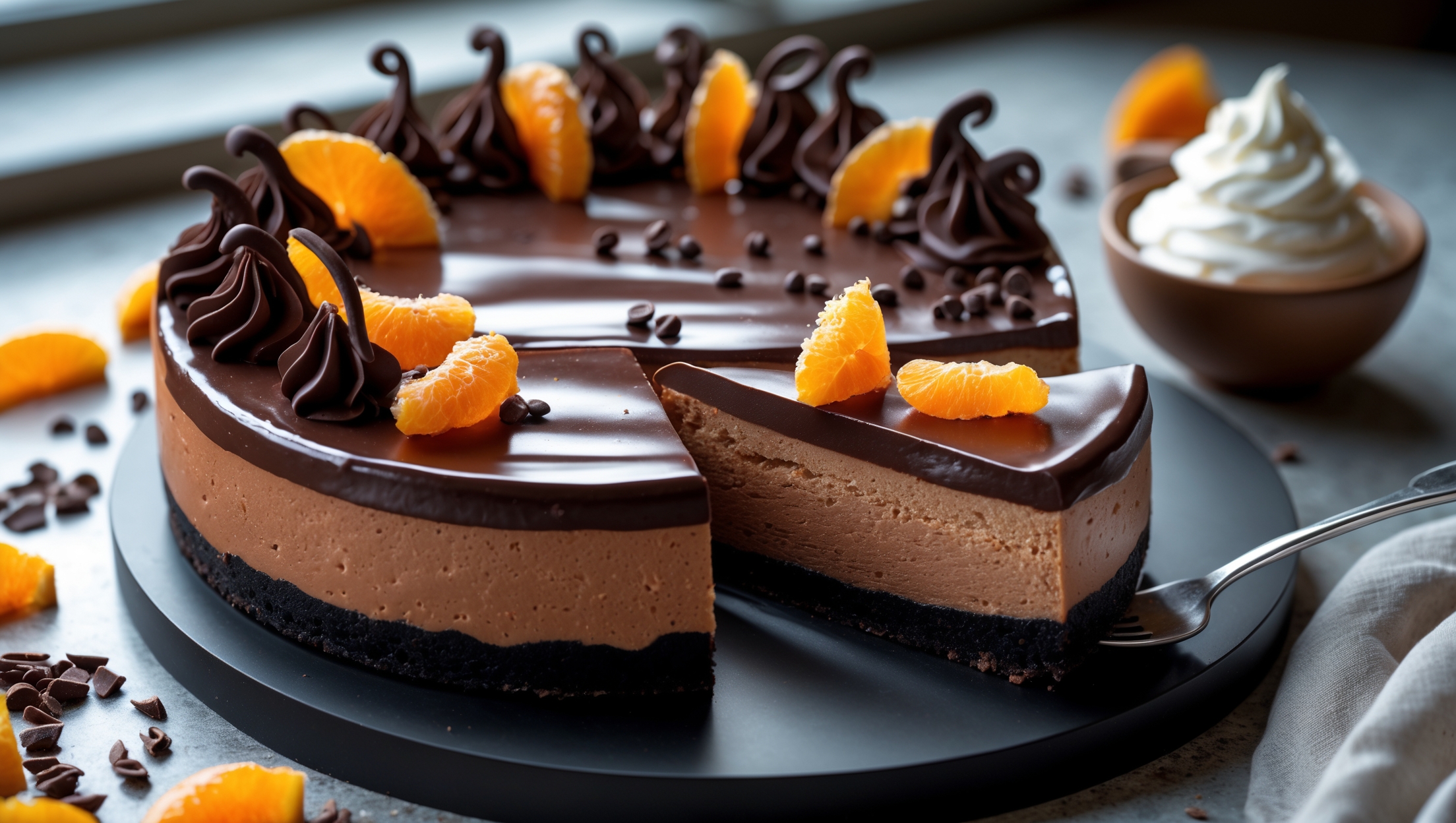
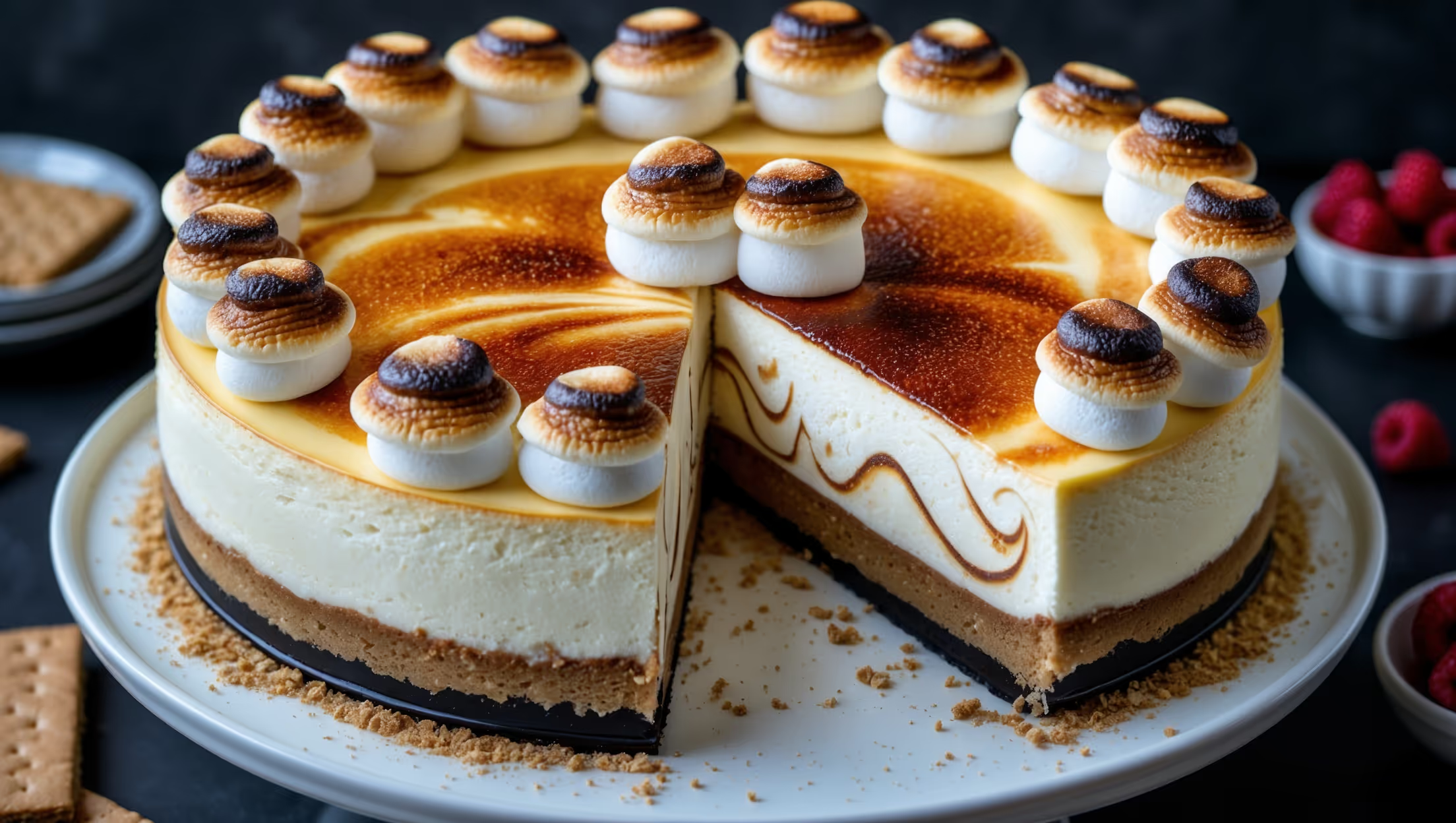
Directions
<ol class="no-list-style"><li class="MethodStepper"><h4 class="step-title">Step 1</h4>Place the raisins in a small bowl and pour the rum over them. Cover and let soak for at least 2 hours, preferably overnight. The raisins will plump up as they absorb the rum, intensifying both their flavor and texture. When ready to use, drain through a sieve, reserving 2 tablespoons of the rum for the filling.</li><li class="MethodStepper"><h4 class="step-title">Step 2</h4>Preheat your oven to 160°C. Wrap the outside of a 23cm springform pan with a double layer of heavy-duty aluminum foil, making sure it comes at least 5cm up the sides. This creates a waterproof barrier for the water bath, which is essential for achieving that perfectly smooth, crack-free cheesecake texture.</li><li class="MethodStepper"><h4 class="step-title">Step 3</h4>Crush the graham crackers in a food processor until finely ground. Alternatively, place them in a zip-top bag and crush with a rolling pin. Mix the crumbs with the melted butter until they resemble wet sand. The butter acts as the binding agent for your crust, so ensure every crumb is coated.</li><li class="MethodStepper"><h4 class="step-title">Step 4</h4>Press the crumb mixture firmly into the bottom and about 2.5cm up the sides of your springform pan. Use the flat bottom of a measuring cup to compress the crust – this compression prevents a crumbly crust when slicing. Bake for 10 minutes until slightly golden, then remove and cool completely.</li><li class="MethodStepper"><h4 class="step-title">Step 5</h4>Reduce oven temperature to 150°C. In a stand mixer fitted with the paddle attachment, beat the cream cheese on medium-low speed until completely smooth, about 2 minutes. It's critical to start with room temperature cream cheese to avoid lumps in your filling, which cannot be fixed later.</li><li class="MethodStepper"><h4 class="step-title">Step 6</h4>Gradually add the sugar and continue beating until smooth and creamy. Scrape down the sides and bottom of the bowl frequently during mixing to ensure everything is incorporated evenly. The mixture should be silky and without any grainy texture from undissolved sugar.</li><li class="MethodStepper"><h4 class="step-title">Step 7</h4>Add eggs one at a time, beating just until each is incorporated. Overbeating after adding eggs can incorporate too much air, which can cause cracks during baking. Add the sour cream, vanilla extract, the 2 tablespoons reserved rum, flour, cinnamon, and nutmeg, mixing on low speed until just combined.</li><li class="MethodStepper"><h4 class="step-title">Step 8</h4>Gently fold the drained rum-soaked raisins into the batter using a spatula. Distribute them evenly throughout the mixture but be careful not to overmix, which can affect the cheesecake's texture. Some bakers like to toss the raisins in a teaspoon of flour first to prevent them from sinking, but this isn't strictly necessary.</li><li class="MethodStepper"><h4 class="step-title">Step 9</h4>Pour the filling into the cooled crust. Place the springform pan in a large roasting pan, then place on the oven rack. Carefully pour hot water into the roasting pan until it reaches about halfway up the sides of the springform pan. This water bath creates a gentle, humid environment that prevents cracking and ensures even baking.</li><li class="MethodStepper"><h4 class="step-title">Step 10</h4>Bake for 65-70 minutes. The cheesecake is done when the edges are set but the center still has a slight wobble when gently shaken – it should jiggle like firm jelly. Don't be tempted to bake until completely set, as the residual heat will continue cooking the cheesecake.</li><li class="MethodStepper"><h4 class="step-title">Step 11</h4>Turn off the oven, crack the door open slightly, and let the cheesecake cool in the oven for 1 hour. This gradual cooling prevents the dramatic temperature change that can cause cracks. Then remove from the water bath, peel off the foil, and cool completely on a wire rack.</li><li class="MethodStepper"><h4 class="step-title">Step 12</h4>Refrigerate the cheesecake for at least 6 hours, preferably overnight. The flavor develops and deepens with time, making this the perfect make-ahead dessert. When ready to serve, run a thin knife around the edges before releasing the springform pan. For the cleanest slices, dip your knife in hot water and wipe clean between cuts. Serve with a light dusting of powdered sugar or a dollop of rum-spiked whipped cream if desired.</li></ol>