Directions
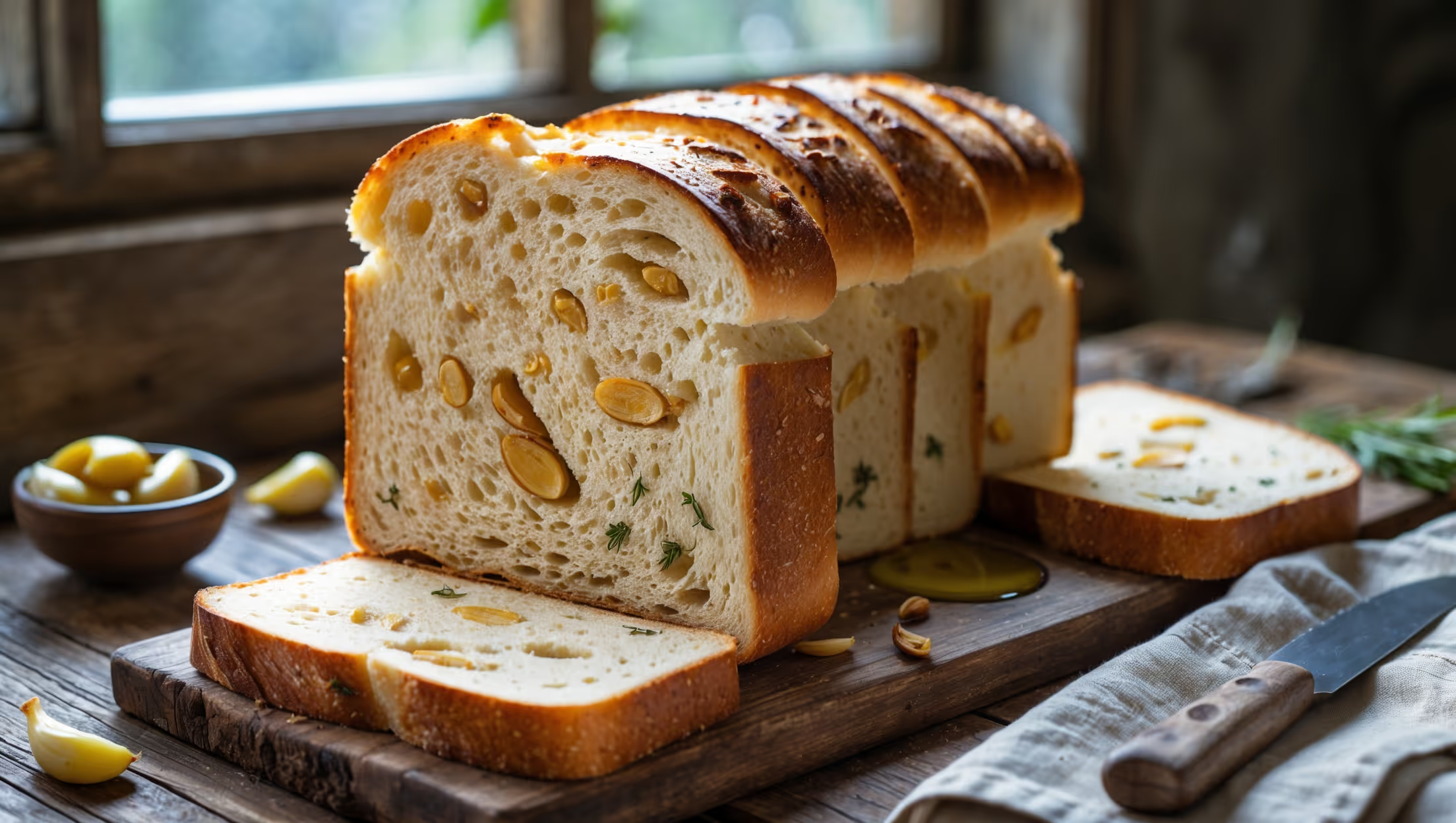
<ol class="no-list-style"><li class="MethodStepper"><h4 class="step-title">Step 1</h4>Preheat your oven to 200°C. Cut the tops off the garlic bulbs to expose the cloves, place them on a piece of aluminum foil, drizzle with olive oil, and wrap tightly. Roast for 30-35 minutes until the garlic is golden and soft. Allow to cool completely before squeezing the soft, caramelized cloves out of their skins. This roasting process transforms the sharp, pungent garlic into sweet, mellow morsels that will flavor your bread beautifully.</li><li class="MethodStepper"><h4 class="step-title">Step 2</h4>In a large mixing bowl or the bowl of your stand mixer, combine the bread flour, instant yeast, salt, and sugar. Keep the salt and yeast on opposite sides of the bowl initially, as salt can inhibit yeast activity if they come into direct contact before being mixed with other ingredients.</li><li class="MethodStepper"><h4 class="step-title">Step 3</h4>Add the softened butter, lukewarm water, roasted garlic cloves (mashed with a fork), and chopped herbs to the dry ingredients. Mix until a shaggy dough forms, then knead for 8-10 minutes by hand on a lightly floured surface or 5-6 minutes with a stand mixer on medium speed. The dough should be smooth, elastic, and slightly tacky but not sticky. If too dry, add a tablespoon of water; if too wet, add a little more flour.</li><li class="MethodStepper"><h4 class="step-title">Step 4</h4>Form the dough into a ball and place in a lightly oiled bowl, turning once to coat. Cover with a damp cloth or plastic wrap and let rise in a warm place (about 24°C) for 1-1½ hours, or until doubled in size. The slow rise develops flavor and structure in your bread, so be patient and resist the urge to rush this step.</li><li class="MethodStepper"><h4 class="step-title">Step 5</h4>Once doubled, gently punch down the dough to release the air bubbles. Turn onto a lightly floured surface and shape into a rectangle roughly the length of your loaf tin. Fold the long sides toward the center, then roll the dough into a tight log, pinching the seam and ends to seal. Place seam-side down in a greased 9×5 inch loaf tin.</li><li class="MethodStepper"><h4 class="step-title">Step 6</h4>Cover the tin loosely with oiled plastic wrap and let the dough rise again for about 45-60 minutes, or until it has risen about 2.5cm above the rim of the tin. This second rise (proofing) is critical for achieving the perfect texture – if under-proofed, your bread will be dense; if over-proofed, it may collapse during baking.</li><li class="MethodStepper"><h4 class="step-title">Step 7</h4>While the dough is on its second rise, preheat your oven to 220°C. When ready to bake, dust the top of the loaf lightly with flour and score the top with a sharp knife or razor blade, making a few shallow diagonal slashes. This allows the bread to expand properly during baking.</li><li class="MethodStepper"><h4 class="step-title">Step 8</h4>Bake for 15 minutes at 220°C, then reduce the temperature to 190°C and continue baking for 20-25 minutes more. The bread should be golden brown and sound hollow when tapped on the bottom. If the top browns too quickly, cover loosely with foil.</li><li class="MethodStepper"><h4 class="step-title">Step 9</h4>Remove the bread from the tin immediately and cool completely on a wire rack before slicing. This cooling period allows the starches to set and prevents a gummy texture. Your patience will be rewarded with perfectly sliceable bread that won't tear or crumble.</li><li class="MethodStepper"><h4 class="step-title">Step 10</h4>Once completely cool (at least 2 hours), slice with a serrated knife and enjoy! This bread makes exceptional sandwiches, toast, and garlic bread. Store in an airtight container at room temperature for up to 3 days, or freeze slices for up to 3 months.</li></ol>