Directions
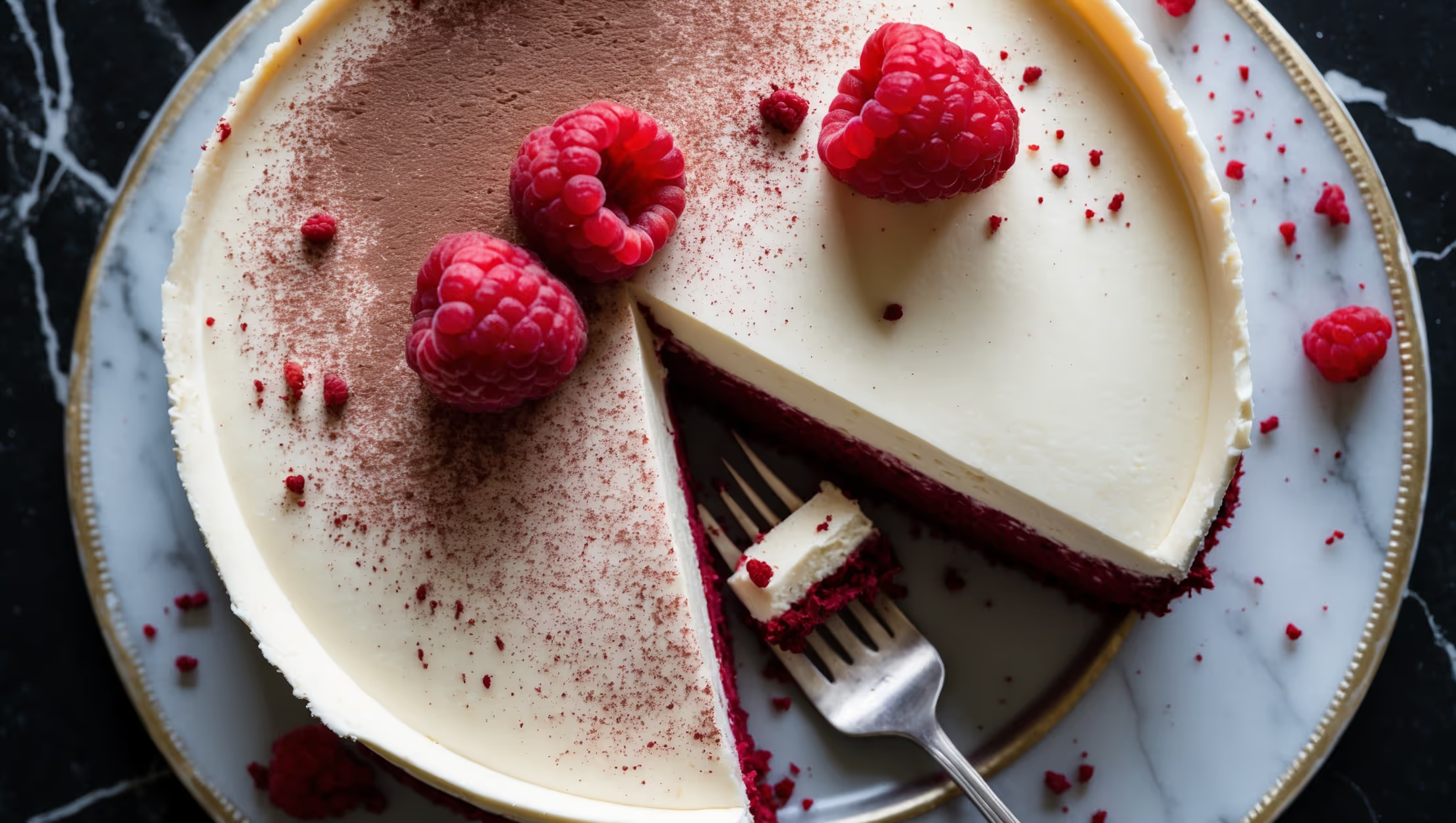
<ol class="no-list-style"><li class="MethodStepper"><h4 class="step-title">Step 1</h4>Preheat your oven to 175°C (350°F). Thoroughly grease your springform pan and line the bottom with parchment paper. Wrap the outside of the pan with two layers of heavy-duty aluminum foil, making sure to cover all the way up the sides (this prevents water from seeping in during the water bath baking).</li><li class="MethodStepper"><h4 class="step-title">Step 2</h4>For the red velvet base, sift together the flour, cocoa powder, baking soda, and salt in a medium bowl. Sifting is crucial here as it prevents any cocoa lumps and ensures an even red color throughout the cake.</li><li class="MethodStepper"><h4 class="step-title">Step 3</h4>In your stand mixer with the paddle attachment, cream the butter and sugar on medium-high speed for 3-4 minutes until light and fluffy. This extended beating incorporates air into the mixture, giving your cake a lighter texture. Scrape down the bowl occasionally to ensure even mixing.</li><li class="MethodStepper"><h4 class="step-title">Step 4</h4>Add eggs one at a time to your butter mixture, beating well after each addition. Mix in the red food coloring and vanilla extract until the batter becomes a vibrant red. Don't be alarmed by the intense color – it will mellow slightly during baking.</li><li class="MethodStepper"><h4 class="step-title">Step 5</h4>Gradually add the dry ingredients to the wet ingredients in three additions, alternating with the buttermilk (beginning and ending with dry ingredients). Mix just until combined after each addition. In a small bowl, combine the vinegar with 1/2 teaspoon of the batter, then fold this mixture back into the main batter. The vinegar helps activate the baking soda and enhances the red color.</li><li class="MethodStepper"><h4 class="step-title">Step 6</h4>Pour the red velvet batter into the prepared springform pan, spreading it evenly. Bake for 25-30 minutes until a toothpick inserted in the center comes out with a few moist crumbs (not wet batter). The cake will rise but don't worry if it doesn't completely fill the pan – it's just the base. Allow to cool in the pan for 10 minutes, then run a knife around the edges but don't remove it from the pan.</li><li class="MethodStepper"><h4 class="step-title">Step 7</h4>Reduce the oven temperature to 160°C (325°F). While the cake base cools, prepare your cheesecake layer. Beat the cream cheese in your cleaned stand mixer on medium speed until completely smooth, about 4 minutes. It's absolutely crucial that your cream cheese is at room temperature and that you beat until no lumps remain – this is the secret to a silky-smooth cheesecake texture.</li><li class="MethodStepper"><h4 class="step-title">Step 8</h4>Gradually add the sugar to the cream cheese, beating until completely incorporated and slightly fluffy. Add the eggs one at a time, mixing on low speed just until each is incorporated. Overmixing after adding eggs can incorporate too much air, which may cause cracks during baking.</li><li class="MethodStepper"><h4 class="step-title">Step 9</h4>Fold in the sour cream and vanilla extract with a spatula. The sour cream adds a lovely tanginess that balances the sweetness. Finally, gently fold in the flour – this small amount helps stabilize the cheesecake without making it dense.</li><li class="MethodStepper"><h4 class="step-title">Step 10</h4>Carefully pour the cheesecake batter over the cooled red velvet base. Place the foil-wrapped springform pan in a large roasting pan. Fill the roasting pan with hot water until it reaches halfway up the sides of the springform pan. This water bath provides gentle, even heat and humidity that prevents the cheesecake from cracking.</li><li class="MethodStepper"><h4 class="step-title">Step 11</h4>Bake for 60-70 minutes until the edges are set but the center still has a slight jiggle (like set gelatin). The cheesecake will continue to set as it cools. Turn off the oven, crack the door open, and let the cheesecake cool in the oven for 1 hour – this slow cooling prevents dramatic temperature changes that can cause cracks.</li><li class="MethodStepper"><h4 class="step-title">Step 12</h4>Remove from the water bath, peel away the foil, and let the cheesecake cool completely at room temperature. Once cooled, cover and refrigerate for at least 6 hours, but preferably overnight. Patience is key here – this resting time allows the flavors to meld and the texture to set perfectly.</li><li class="MethodStepper"><h4 class="step-title">Step 13</h4>When ready to serve, carefully run a warm knife around the edges of the springform pan before releasing. For the cleanest slices, dip your knife in hot water and wipe dry between cuts. Garnish with whipped cream, reserved red velvet crumbs, or fresh berries if desired. Your stunning two-layered creation is ready to impress!</li></ol>