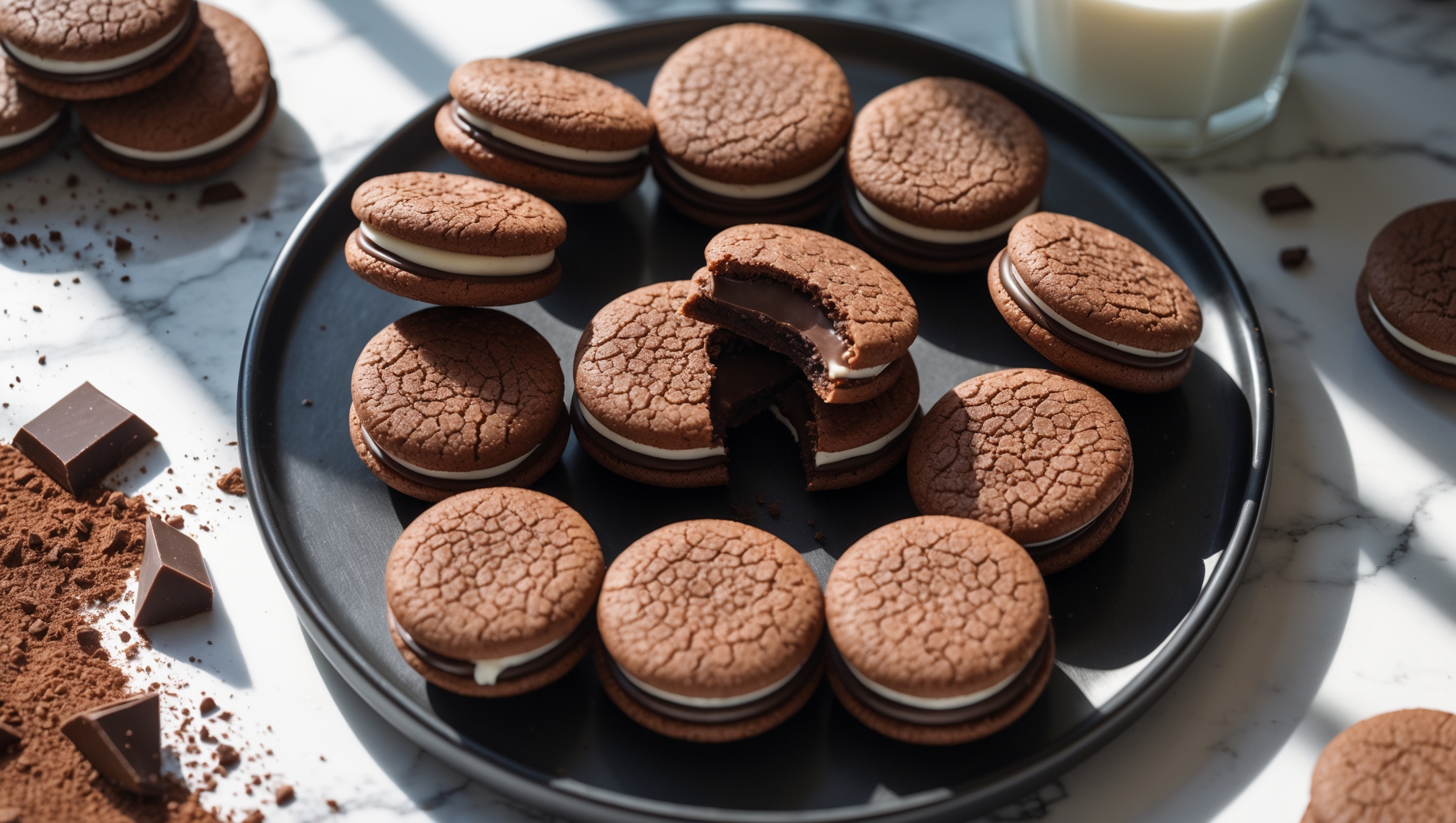
Directions
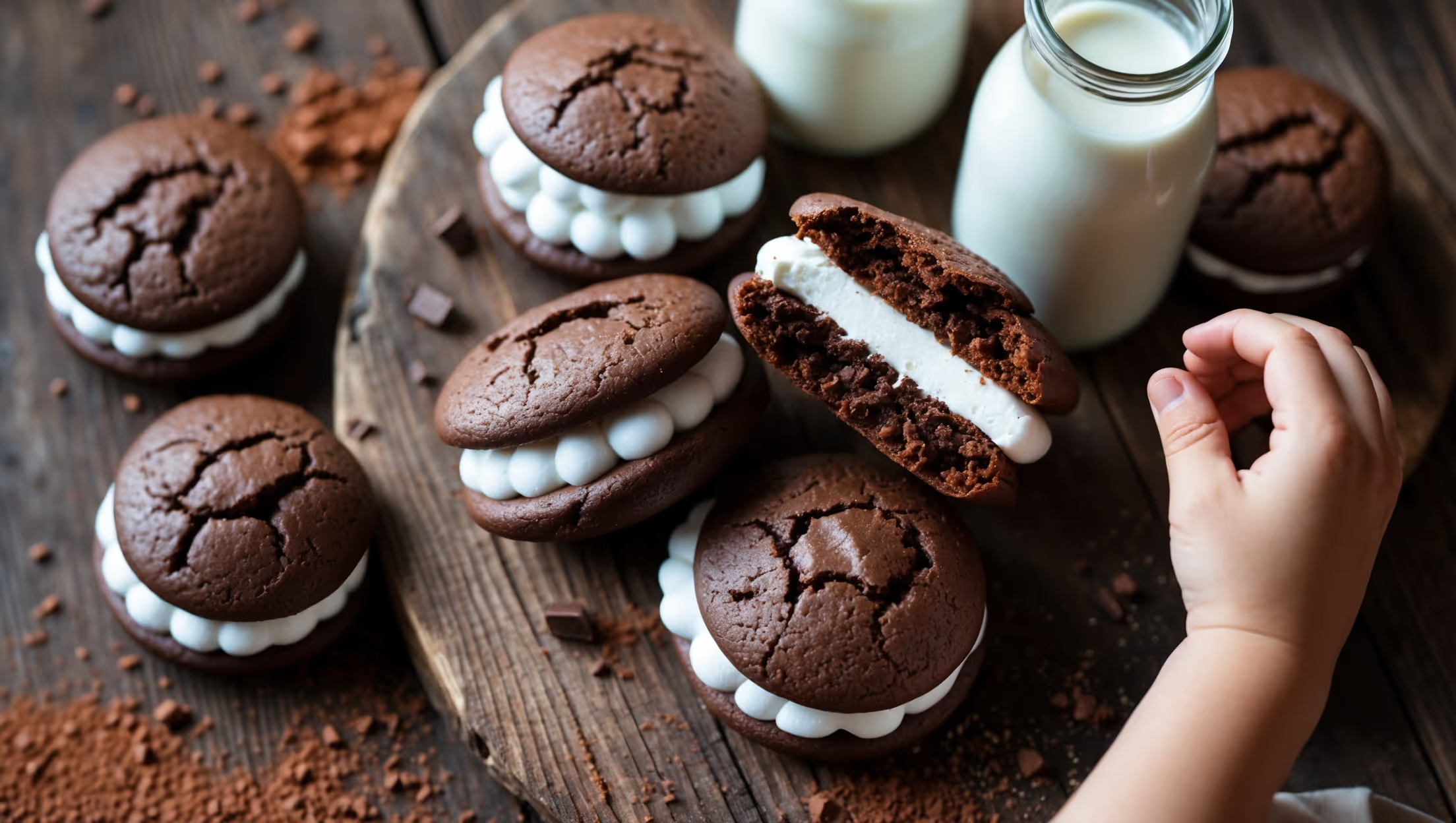
<ol class="no-list-style"><li class="MethodStepper"><h4 class="step-title">Step 1</h4>Preheat your oven to 180°C and line two baking sheets with parchment paper. In a medium bowl, whisk together the flour, cocoa powder, baking soda, baking powder, and salt until completely combined, ensuring no cocoa powder lumps remain.</li><li class="MethodStepper"><h4 class="step-title">Step 2</h4>In the bowl of your stand mixer fitted with the paddle attachment, cream the butter and sugar until light and fluffy, about 3 minutes. This incorporates air into the mixture, creating tender cookies with a cake-like texture. Scrape down the sides of the bowl as needed.</li><li class="MethodStepper"><h4 class="step-title">Step 3</h4>Add the egg and vanilla to your butter mixture, beating until fully incorporated. The mixture should look smooth and slightly glossy. Don't rush this step – proper incorporation ensures even distribution of fat and moisture throughout your batter.</li><li class="MethodStepper"><h4 class="step-title">Step 4</h4>With the mixer on low speed, alternately add the dry ingredients and buttermilk in three additions, starting and ending with the dry ingredients. Mix only until just combined after each addition – overmixing will develop too much gluten, resulting in tough cookies rather than tender cake-like ones.</li><li class="MethodStepper"><h4 class="step-title">Step 5</h4>Using a 5cm cookie scoop or a heaping tablespoon, drop rounded portions of batter onto prepared baking sheets, spacing them about 5cm apart. The batter should be thick but slightly soft – it will spread during baking to form perfect domes. For the most professional-looking results, try to keep your scoops consistent in size.</li><li class="MethodStepper"><h4 class="step-title">Step 6</h4>Bake for 12-15 minutes, until the tops spring back when lightly touched and a toothpick inserted into the center comes out clean. The surface should have a slight dome with tiny cracks – this is exactly what you want! Allow the cookies to cool on the baking sheets for 5 minutes before transferring to wire racks to cool completely.</li><li class="MethodStepper"><h4 class="step-title">Step 7</h4>For the marshmallow filling, beat the room temperature butter in a clean mixer bowl until creamy. Add the marshmallow fluff and vanilla, beating until smooth and well combined. The mixture should be light and fluffy – the air incorporated here will give your filling its signature pillowy texture.</li><li class="MethodStepper"><h4 class="step-title">Step 8</h4>Gradually add the powdered sugar, about 60g at a time, mixing well after each addition. Add the milk and salt, then increase speed to medium-high and beat for 3 minutes until the filling is very light and fluffy. If the filling seems too stiff, add additional milk a teaspoon at a time; if too loose, add more powdered sugar.</li><li class="MethodStepper"><h4 class="step-title">Step 9</h4>To assemble, match cookies of similar size into pairs. Using a piping bag fitted with a large round tip (or simply a spoon), pipe or spread about 2 tablespoons of filling onto the flat side of one cookie from each pair. Gently press the second cookie, flat side down, onto the filling to create a sandwich.</li><li class="MethodStepper"><h4 class="step-title">Step 10</h4>For the authentic old-fashioned whoopie pie experience, wrap each sandwich cookie individually in plastic wrap and refrigerate for at least 1 hour before serving. This allows the flavors to meld and the filling to set to the perfect consistency. Your whoopie pies will keep in an airtight container in the refrigerator for up to 5 days – if they last that long!</li></ol>