Directions
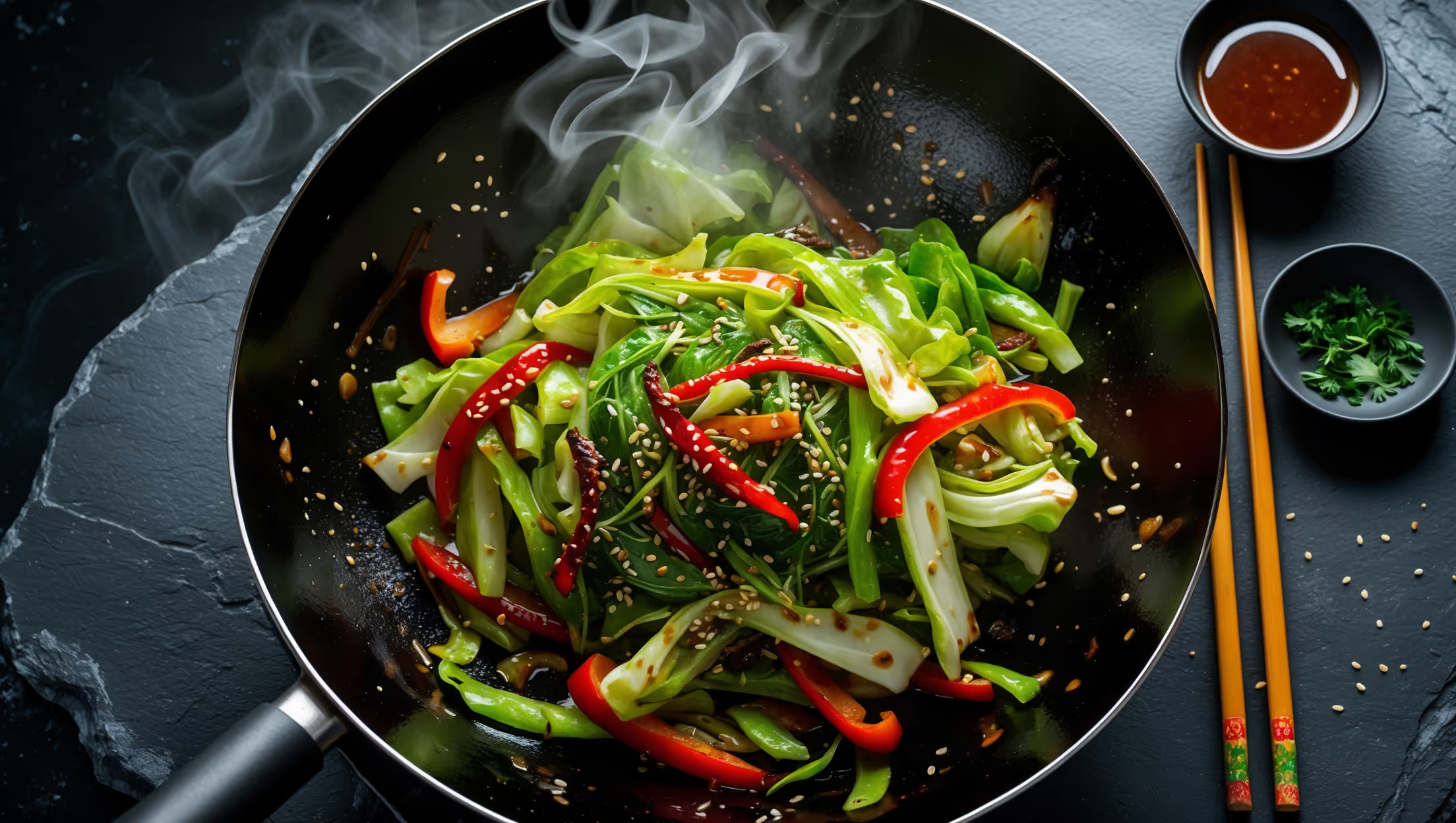
<ol class="no-list-style"><li class="MethodStepper"><h4 class="step-title">Step 1</h4>Prep all your vegetables before you begin cooking. Thinly slice the cabbage (about 5mm thick strips), ensuring you remove the tough core. Slice the bell pepper into thin strips, mince the garlic, grate the ginger, slice the mushrooms, and cut the spring onions diagonally. Having everything ready is essential as stir-frying moves quickly.</li><li class="MethodStepper"><h4 class="step-title">Step 2</h4>In a small bowl, whisk together the tamari sauce, rice vinegar, and erythritol until the sweetener dissolves completely. This creates a balanced sauce that will caramelize slightly when cooked, enhancing the umami flavors without adding carbs.</li><li class="MethodStepper"><h4 class="step-title">Step 3</h4>Heat a large wok or heavy-bottomed frying pan over high heat until very hot. Add the sesame oil and swirl to coat the surface. The oil should shimmer but not smoke – if it smokes, your pan is too hot and the oil may become bitter.</li><li class="MethodStepper"><h4 class="step-title">Step 4</h4>Add the minced garlic and grated ginger to the hot oil and stir constantly for about 30 seconds until fragrant but not browned. Browning will create a bitter taste, so keep the ingredients moving in the pan.</li><li class="MethodStepper"><h4 class="step-title">Step 5</h4>Add the sliced mushrooms to the pan and cook for 2 minutes, stirring frequently until they begin to release their moisture and brown slightly. Mushrooms contribute a meaty texture and umami flavor that makes this dish satisfying without adding carbs.</li><li class="MethodStepper"><h4 class="step-title">Step 6</h4>Add the bell pepper strips and cook for another minute, still maintaining high heat. The pepper should soften slightly but retain some crispness for textural contrast.</li><li class="MethodStepper"><h4 class="step-title">Step 7</h4>Add the cabbage to the wok in batches if necessary, tossing constantly with tongs or two wooden spoons. The high heat will help quickly evaporate the moisture from the cabbage, preventing it from becoming soggy. Cook for about 3-4 minutes or until the cabbage is crisp-tender.</li><li class="MethodStepper"><h4 class="step-title">Step 8</h4>Pour the sauce mixture over the vegetables and toss quickly to coat everything evenly. The sauce will sizzle and begin to reduce almost immediately, creating a glossy coating on the vegetables.</li><li class="MethodStepper"><h4 class="step-title">Step 9</h4>Add the spring onions and chili flakes if using, and toss for another 30 seconds until the onions are just wilted but still bright green.</li><li class="MethodStepper"><h4 class="step-title">Step 10</h4>Season with salt and pepper to taste, then remove from heat. The residual heat in the pan will continue to cook the vegetables slightly, so it's best to stop cooking when they're still slightly crisper than you want them to be.</li><li class="MethodStepper"><h4 class="step-title">Step 11</h4>Transfer to a serving dish and sprinkle with toasted sesame seeds for a nutty flavor and pleasant crunch. Serve immediately for the best texture and flavor. This dish is delicious on its own or as a base for protein like grilled chicken, beef, or tofu for a complete keto meal.</li></ol>