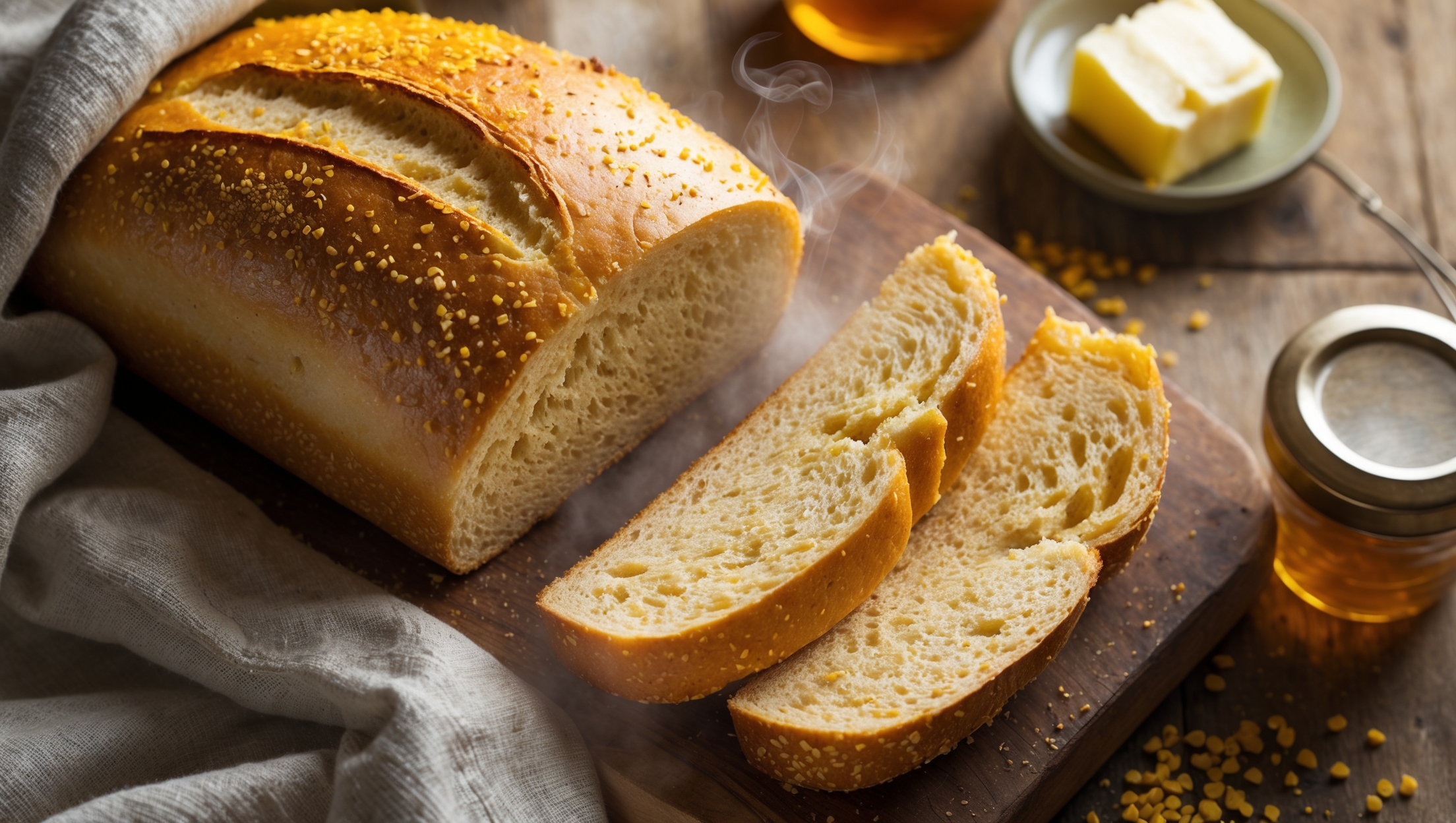
Directions
<ol class="no-list-style"><li class="MethodStepper"><h4 class="step-title">Step 1</h4>In a large mixing bowl, combine the bread flour, instant yeast, salt, and sugar. Keep the salt and yeast on opposite sides of the bowl initially, as direct contact with salt can inhibit yeast activity. Make a well in the center.</li><li class="MethodStepper"><h4 class="step-title">Step 2</h4>Add the softened butter and lukewarm water to the well. The water should feel just warm to the touch - around 38°C (100°F) - as this is the optimal temperature for activating yeast without killing it. Mix everything together with a wooden spoon until no dry flour remains.</li><li class="MethodStepper"><h4 class="step-title">Step 3</h4>Turn the dough onto a lightly floured surface and knead for 8-10 minutes until smooth and elastic. The dough should pass the "window pane test" - when a small piece is stretched between your fingers, it should become thin enough to see light through without tearing. This indicates that the gluten has developed properly, which will give your bread structure.</li><li class="MethodStepper"><h4 class="step-title">Step 4</h4>Gently fold in 150g of the grated cheddar cheese and the diced jalapeños until evenly distributed throughout the dough. Don't worry if some pieces are poking out - this will create beautiful flecks of color in your finished bread. Save the remaining 25g of cheese for topping.</li><li class="MethodStepper"><h4 class="step-title">Step 5</h4>Place the dough in a lightly oiled bowl, cover with a damp cloth or plastic wrap, and let it rise in a warm, draft-free place for 1-1.5 hours, or until doubled in size. The ideal temperature for rising is around 24-27°C (75-80°F). You'll know it's ready when you gently press a finger into the dough and the indentation remains.</li><li class="MethodStepper"><h4 class="step-title">Step 6</h4>Once risen, gently punch down the dough to release any air bubbles. Turn it out onto a lightly floured surface and shape into a rectangle roughly the length of your loaf tin. Fold the long sides into the middle, then roll the dough into a tight log, pinching the seam closed. This creates tension on the surface of the dough, which helps it rise upward rather than outward.</li><li class="MethodStepper"><h4 class="step-title">Step 7</h4>Place the shaped dough seam-side down in a greased and lined loaf tin. Cover again and allow to rise for another 45-60 minutes, until the dough has risen about 2.5 cm (1 inch) above the edge of the tin. Meanwhile, preheat your oven to 200°C (390°F).</li><li class="MethodStepper"><h4 class="step-title">Step 8</h4>When the dough has finished its second rise, brush the top gently with beaten egg and sprinkle with the remaining 25g of grated cheddar. The egg wash will give your bread a beautiful golden, glossy crust.</li><li class="MethodStepper"><h4 class="step-title">Step 9</h4>Bake in the preheated oven for 30-35 minutes, then reduce the temperature to 180°C (350°F) and bake for a further 10-15 minutes. The bread is done when it's golden brown on top and sounds hollow when tapped on the bottom. If the cheese is browning too quickly, cover loosely with foil.</li><li class="MethodStepper"><h4 class="step-title">Step 10</h4>Remove from the oven and allow to cool in the tin for 10 minutes before transferring to a wire rack to cool completely. This rest period allows the crumb structure to set. Though it's tempting to slice into warm bread, waiting until it's fully cooled (at least 1 hour) will give you cleaner slices and prevent the bread from becoming gummy.</li></ol>