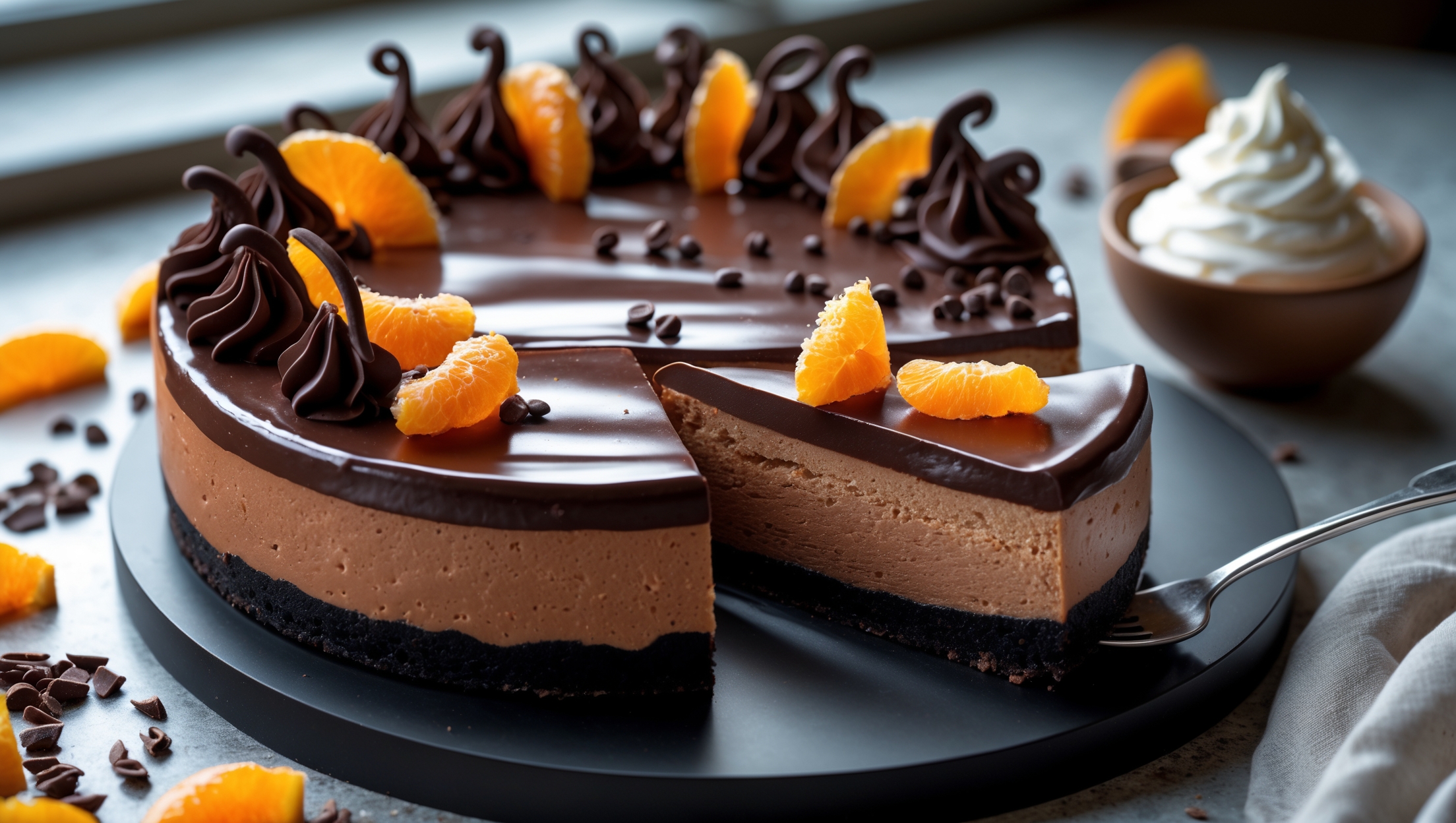
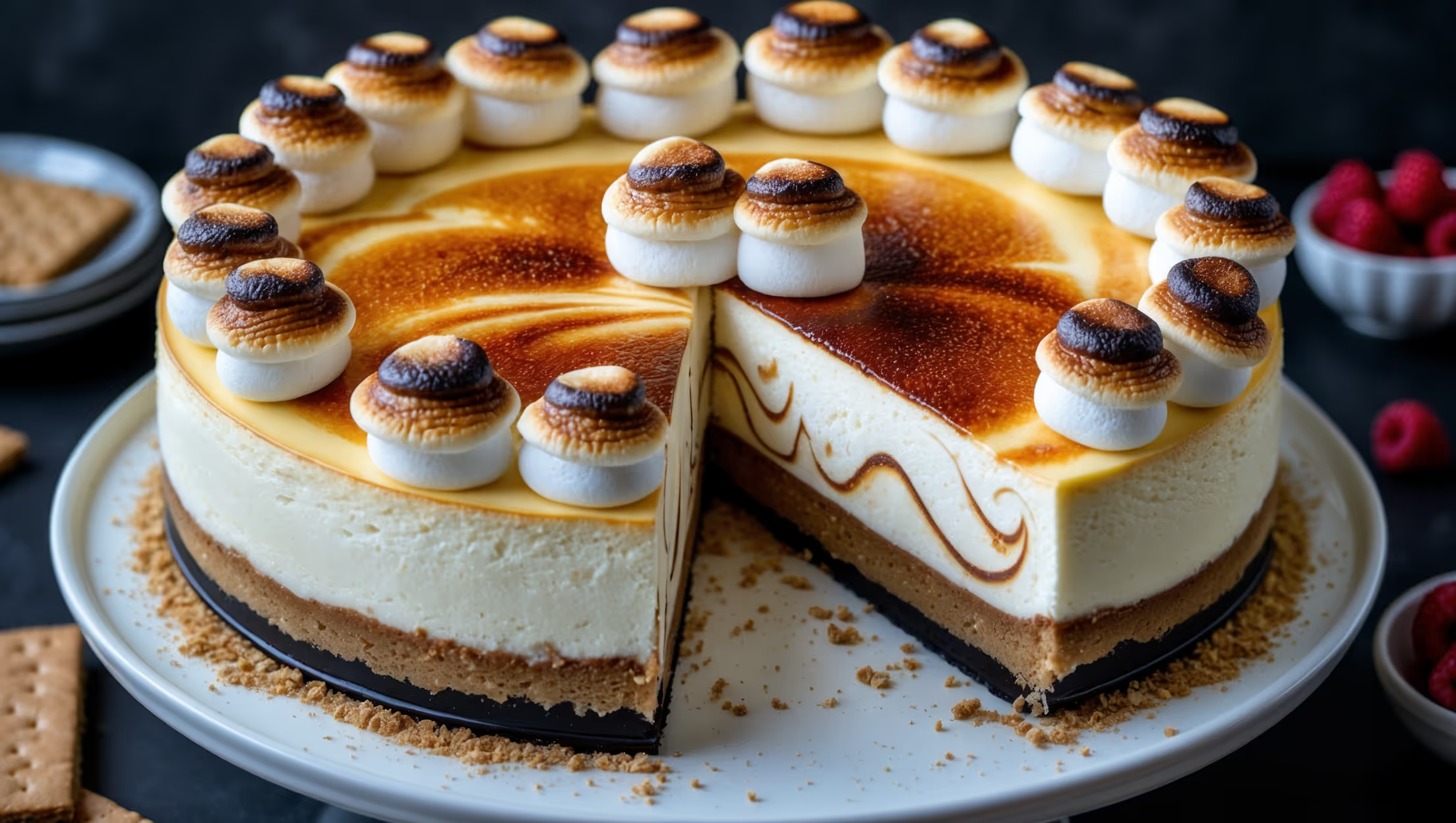
Directions
<ol class="no-list-style"><li class="MethodStepper"><h4 class="step-title">Step 1</h4>Preheat your oven to 160°C (325°F). Place a rack in the middle position. Wrap the outside of a 23cm springform pan with two layers of heavy-duty aluminum foil, making sure it comes at least 5cm up the sides. This prevents water from seeping in during the water bath baking process.</li><li class="MethodStepper"><h4 class="step-title">Step 2</h4>For the crust, pulse graham crackers in a food processor until finely ground. Add sugar and salt, then pulse to combine. With the processor running, drizzle in melted butter until the mixture resembles wet sand. (This butter-coated crumb texture ensures your crust will hold together perfectly when sliced.)</li><li class="MethodStepper"><h4 class="step-title">Step 3</h4>Press the crumb mixture firmly into the bottom and about 2.5cm up the sides of your prepared springform pan. Use the bottom of a measuring cup to compact the crust, creating a smooth, even layer. Bake for 10 minutes until lightly golden and set. Remove and let cool while preparing the filling.</li><li class="MethodStepper"><h4 class="step-title">Step 4</h4>Reduce oven temperature to 150°C (300°F). In the bowl of a stand mixer fitted with the paddle attachment, beat cream cheese on medium-low speed until completely smooth with no lumps, about 3 minutes. Scrape down the bowl frequently during this process – smooth cream cheese is the foundation of a perfect cheesecake texture.</li><li class="MethodStepper"><h4 class="step-title">Step 5</h4>Gradually add sugar to the cream cheese while mixer is running on low, then increase to medium speed and beat until light and fluffy, about 3 minutes. The sugar crystals create tiny air pockets in the cream cheese, helping achieve that perfect creamy texture.</li><li class="MethodStepper"><h4 class="step-title">Step 6</h4>Add eggs one at a time, beating on low speed just until each is incorporated. Over-beating after adding eggs can incorporate too much air, leading to cracks during baking. Add heavy cream, vanilla extract, and dissolved espresso, mixing gently until combined. The mixture should be silky smooth with a rich coffee color.</li><li class="MethodStepper"><h4 class="step-title">Step 7</h4>Gently fold in the chocolate chips by hand using a rubber spatula. Coating the chocolate chips lightly in flour before adding can help prevent them from sinking to the bottom during baking. Pour the filling over the cooled crust, smoothing the top with a spatula.</li><li class="MethodStepper"><h4 class="step-title">Step 8</h4>Place the foil-wrapped springform pan in a large roasting pan. Place in the oven and carefully pour hot water into the roasting pan until it reaches halfway up the sides of the springform pan. This water bath creates a gentle, humid environment that prevents the cheesecake from cracking and helps it bake evenly.</li><li class="MethodStepper"><h4 class="step-title">Step 9</h4>Bake for 1 hour to 1 hour and 15 minutes, or until the edges are set but the center still has a slight jiggle when gently shaken – about a 7.5cm (3-inch) wobbly circle in the center is perfect. The internal temperature should reach about 65-70°C (150-160°F) if you're using a thermometer. The cheesecake will continue to set as it cools.</li><li class="MethodStepper"><h4 class="step-title">Step 10</h4>Turn off the oven, crack the door open slightly, and let the cheesecake cool slowly in the oven for 1 hour. This gradual cooling prevents the dramatic temperature change that can cause cracks. After an hour, remove from the water bath and place on a cooling rack.</li><li class="MethodStepper"><h4 class="step-title">Step 11</h4>For the optional topping, whisk together sour cream, sugar, and espresso powder. Spread gently over the top of the slightly cooled cheesecake and sprinkle with additional chocolate chips. This adds another dimension of flavor and helps cover any minor imperfections on the surface.</li><li class="MethodStepper"><h4 class="step-title">Step 12</h4>Once the cheesecake reaches room temperature, cover loosely with plastic wrap and refrigerate for at least 8 hours, preferably overnight. The patience required here is rewarded with the perfect texture – chilling allows the flavors to meld and the structure to set properly.</li><li class="MethodStepper"><h4 class="step-title">Step 13</h4>To serve, run a thin knife around the edge of the pan before releasing the springform clasp. For the cleanest slices, dip your knife in hot water and wipe dry between cuts. Serve chilled, allowing the cheesecake to sit at room temperature for about 20-30 minutes before serving for the fullest flavor experience. The espresso notes will be more pronounced at a slightly cool rather than cold temperature.</li></ol>