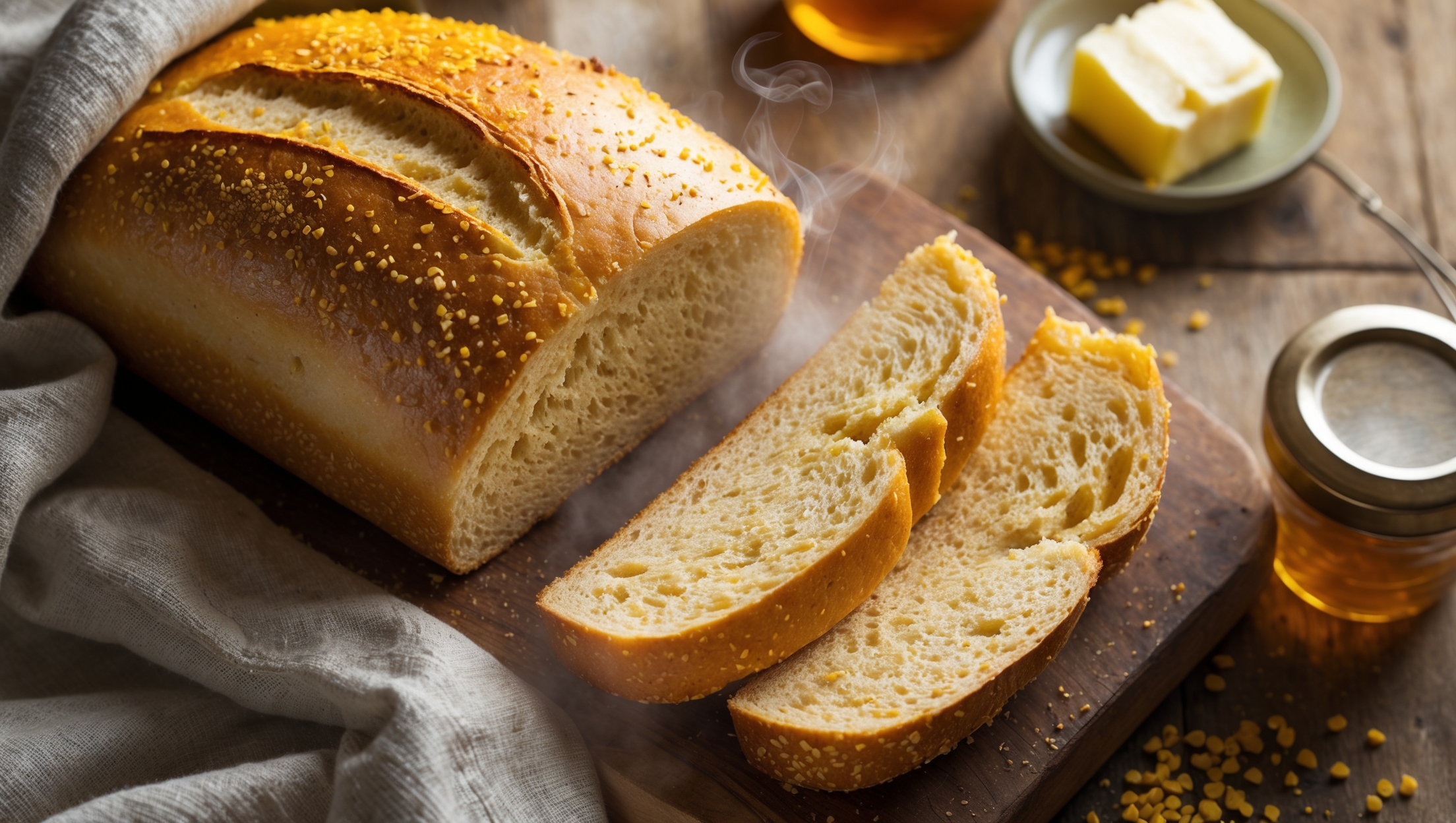
Directions
<ol class="no-list-style"><li class="MethodStepper"><h4 class="step-title">Step 1</h4>In a large mixing bowl, combine the bread flour and salt, mixing well to distribute the salt evenly. In a separate small bowl, dissolve the yeast in the lukewarm water and let it sit for 5 minutes until it becomes frothy – this ensures your yeast is active and ready to work.</li><li class="MethodStepper"><h4 class="step-title">Step 2</h4>Make a well in the center of your flour mixture and pour in the yeast mixture and add the softened butter. Using a wooden spoon or your hands, mix everything together until it forms a shaggy dough. The butter will not fully incorporate at this stage, which is perfectly fine.</li><li class="MethodStepper"><h4 class="step-title">Step 3</h4>Turn the dough out onto a lightly floured surface and knead for 8-10 minutes until smooth and elastic. The dough should pass the windowpane test – when you stretch a small piece thinly, it should become translucent without tearing. This lengthy kneading develops the gluten structure that will give your bread a wonderful texture.</li><li class="MethodStepper"><h4 class="step-title">Step 4</h4>Place the dough in a lightly oiled bowl, cover with a damp cloth or plastic wrap, and let it rise in a warm place for about 1 hour or until doubled in size. The slow rise develops flavor in your bread, so be patient!</li><li class="MethodStepper"><h4 class="step-title">Step 5</h4>Once risen, gently punch down the dough to release excess air bubbles. On a lightly floured surface, flatten the dough into a rectangle roughly the length of your loaf tin. Scatter 200g of the grated cheddar evenly over the surface, leaving a 2cm border around the edges.</li><li class="MethodStepper"><h4 class="step-title">Step 6</h4>Roll the dough up tightly from the short end, like a swiss roll, pinching the seam and ends firmly to seal in the cheese. This rolling technique creates beautiful cheese swirls throughout your finished loaf. Place the dough seam-side down in your greased loaf tin.</li><li class="MethodStepper"><h4 class="step-title">Step 7</h4>Cover again and allow to prove for another 45-60 minutes, or until the dough has risen to about 2cm above the rim of the tin. Toward the end of proving time, preheat your oven to 200°C (180°C fan/gas mark 6).</li><li class="MethodStepper"><h4 class="step-title">Step 8</h4>Gently brush the top of the loaf with milk and sprinkle with the remaining 50g of grated cheddar. The milk helps the cheese adhere and promotes browning, while the cheese creates a deliciously crispy, golden top.</li><li class="MethodStepper"><h4 class="step-title">Step 9</h4>Bake in the preheated oven for 35-40 minutes until golden brown and hollow-sounding when tapped on the bottom. If the cheese on top starts to brown too quickly, loosely cover with foil for the remaining baking time.</li><li class="MethodStepper"><h4 class="step-title">Step 10</h4>Remove from the oven and allow to cool in the tin for 10 minutes before transferring to a wire rack to cool completely. This resting period allows the crumb structure to set and makes slicing easier. Resist the temptation to cut into it while still hot, as this can make the bread gummy!</li><li class="MethodStepper"><h4 class="step-title">Step 11</h4>Once completely cooled, slice with a serrated knife and enjoy in sandwiches, toasted with butter, or alongside soups and stews. Store in an airtight container for up to 3 days, or freeze sliced for up to 3 months for maximum freshness.</li></ol>