On this page
Baking a layer cake for a birthday, holiday dinner, or another big occasion? You don't have to bake, fill, and decorate it all on the same day. Freezing unfrosted cake layers is one of the easiest ways to spread the work over several days—provided you protect the cake from air, freezer odors, and excess moisture during thawing.
The essential method is simple: cool completely, wrap each layer separately, freeze flat, and thaw gently before decorating. Here's how to do each step so your cake tastes like cake, not like the freezer.
Can you freeze cake layers?
Yes. Most standard butter cakes, oil-based cakes, chocolate cakes, and many sponge-style layer cakes can be frozen successfully. The layers should be baked through, cooled completely, and wrapped before they spend much time exposed to dry freezer air.
A delicate cake may need gentler handling than a sturdy butter cake. Layers containing especially fragile fillings or toppings are a different project: this guide is about plain, unfrosted cake layers, not an assembled cake containing whipped cream, fresh fruit, or custard.
If your recipe provides its own make-ahead and storage directions, follow those first.
What you'll need
- Fully cooled, unfrosted cake layers
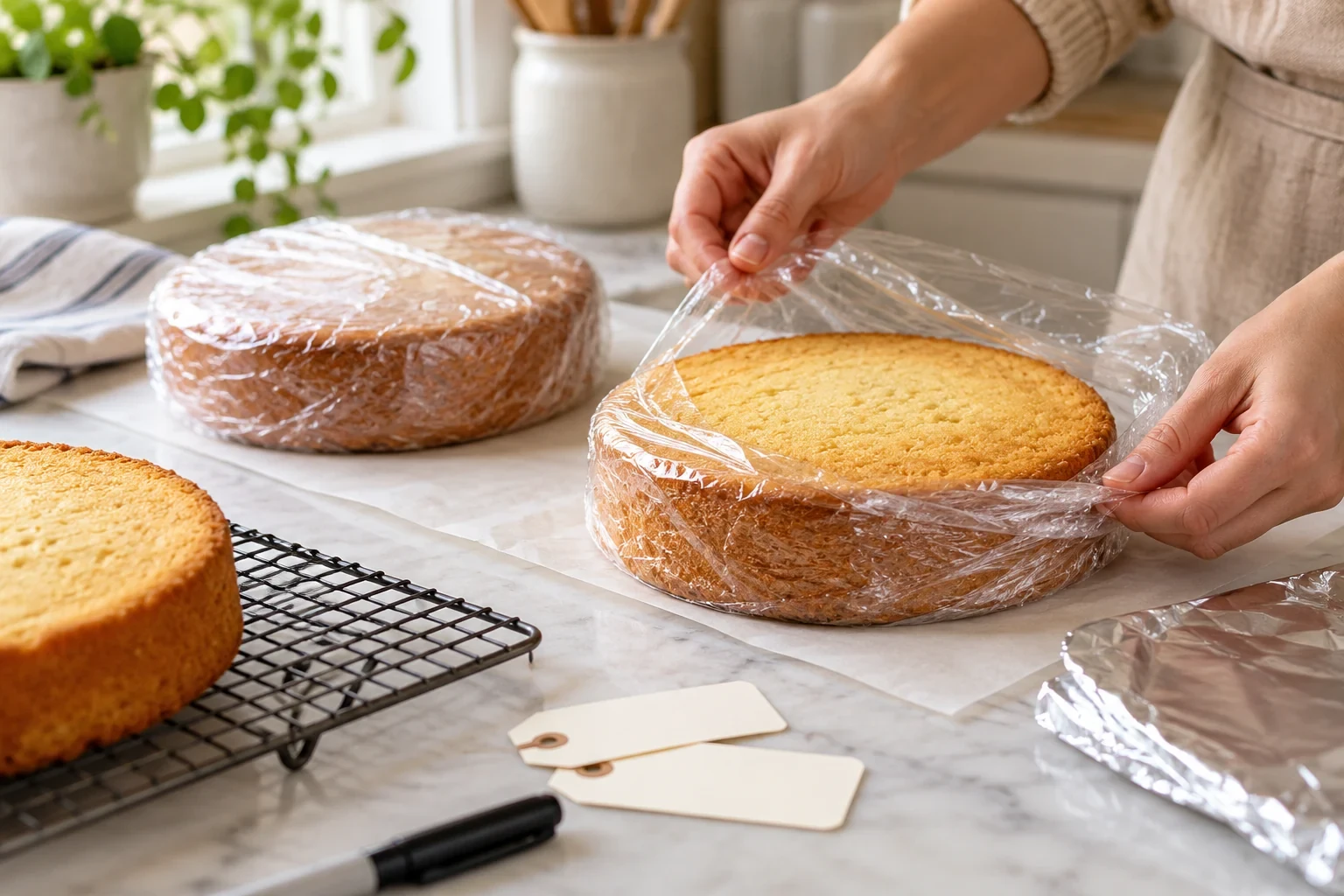
- Food-safe plastic wrap or another freezer-safe airtight wrap
- Aluminum foil or a large freezer-safe bag/container for extra protection
- A marker and freezer labels
- A flat tray or shelf with room for the layers
The extra outer layer isn't just tidy packaging. It reduces contact with air and protects a soft cake from the odors and bumps of a busy freezer.
How to freeze cake layers step by step
1. Let each cake layer cool completely
After baking, allow the cake to rest in its pan for the time your recipe recommends, then transfer it to a wire rack. Wait until the top, sides, and underside feel fully cool before wrapping.
Wrapping a warm cake can trap steam and moisture against the surface, increasing the chance of a sticky or soggy exterior after thawing. Don't mistake slightly warm for fully cooled, especially with a deep cake layer.
2. Wrap each layer separately
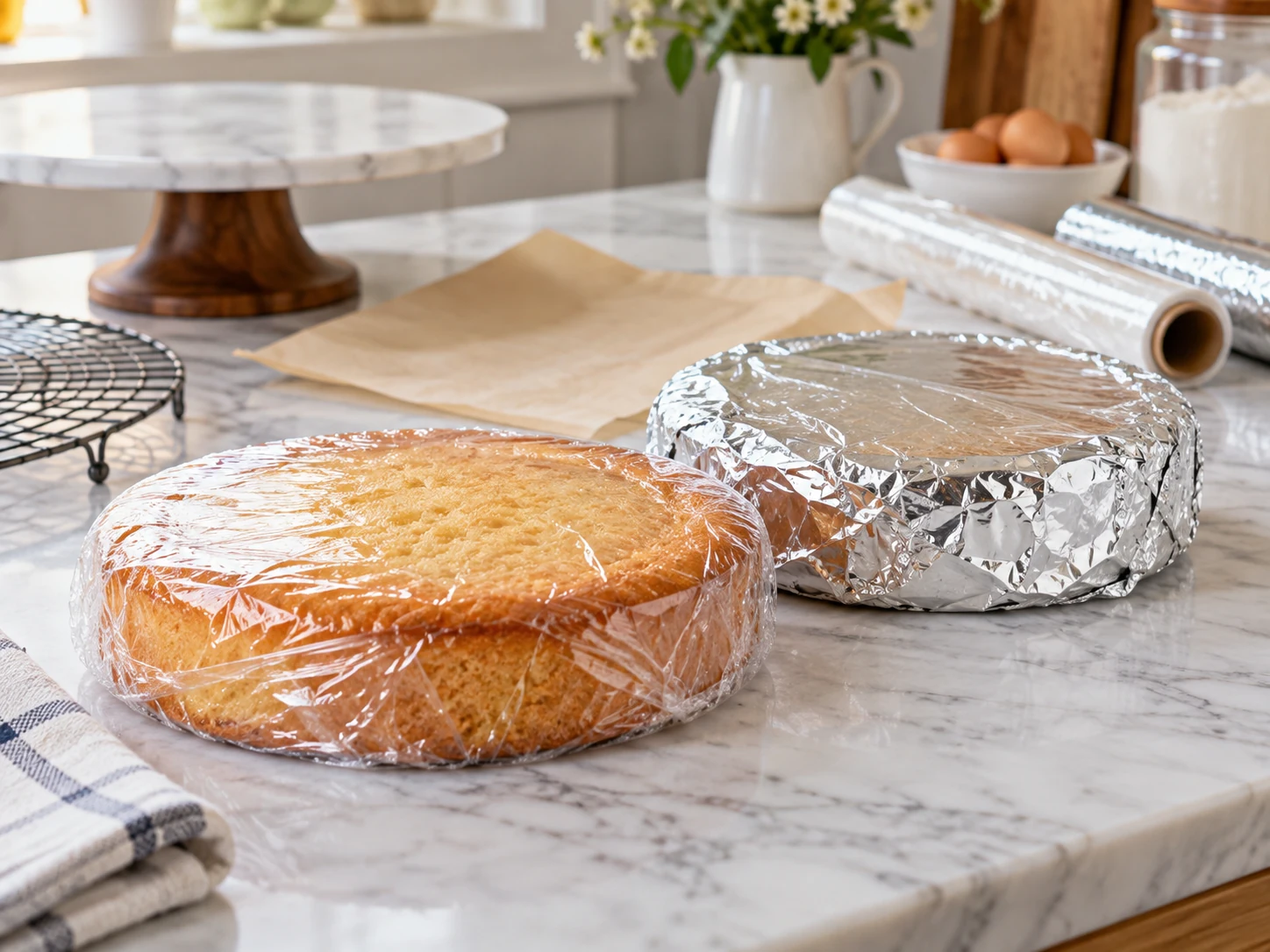
Set one layer on a clean surface. Wrap it snugly in plastic wrap so the top, bottom, and sides are covered, without squeezing hard enough to compress the crumb. Overlap the seams and add a second layer of wrap when needed to seal gaps.
Separate wrapping matters. Two unwrapped layers stacked together can stick, tear when separated, or leave large exposed surfaces in the freezer.
3. Add a protective outer layer
Wrap the plastic-covered layer in foil, or put it inside an appropriately sized freezer-safe bag or airtight container. Remove excess air from the bag gently, without crushing the cake.
Foil is especially helpful when storing layers near other freezer items. A rigid container is useful for thin or delicate layers that might bend or break.
4. Label the cake
Write down the cake flavour, the layer size, and the freezing date. If you have different sizes for a tiered cake, mark each package clearly.
For example: Chocolate cake / 8-inch layer / Frozen Oct. 25.
A clear label makes it easier to decorate later and avoids unwrapping the cake just to remember what it is.
5. Freeze flat
Place wrapped layers in a single layer on a flat freezer shelf or tray until firm. Keep heavy containers away from the cake. Once completely firm, you can organize the packages more compactly as long as they won't be crushed.
Freezing on a level surface helps prevent soft or thin layers from developing a bend that makes stacking more difficult.
How long can you freeze cake layers?
For special-occasion cakes, aim to use well-wrapped layers within about a month for especially dependable flavour and texture. Wilton recommends roughly one month for individually wrapped, unfrosted layers. King Arthur Baking notes that many cakes can remain pleasant for longer—often three to four months at their best—when properly protected. These are quality guidelines, not a universal safety deadline. The recipe, freezer conditions, and wrapping all matter.
If you're planning ahead for a celebration, freezing for a few days or a couple of weeks is a convenient place to start. Longer storage calls for especially careful airtight packaging.
How to thaw frozen cake layers without getting them soggy
The most predictable approach is to transfer the wrapped cake layers to the refrigerator and let them thaw gradually, often overnight for standard layers. Thicker layers may require more time. Keep the layers protected while they thaw, so they don't sit uncovered in a drying refrigerator or collect condensation directly on the crumb.
When they're thawed, remove the wrapping carefully and inspect the surface. If moisture has collected on the wrapping, lift it away gently rather than dragging it across the cake. Allow the cake to reach an appropriate decorating temperature according to your recipe and frosting instructions.
Some cake decorators work with chilled or partially firm cake because it's less crumbly, but don't force an ice-hard cake into an assembled stack. Layers and frosting can crack or shift when they're too cold to handle.
Should you frost cake layers while they're frozen?
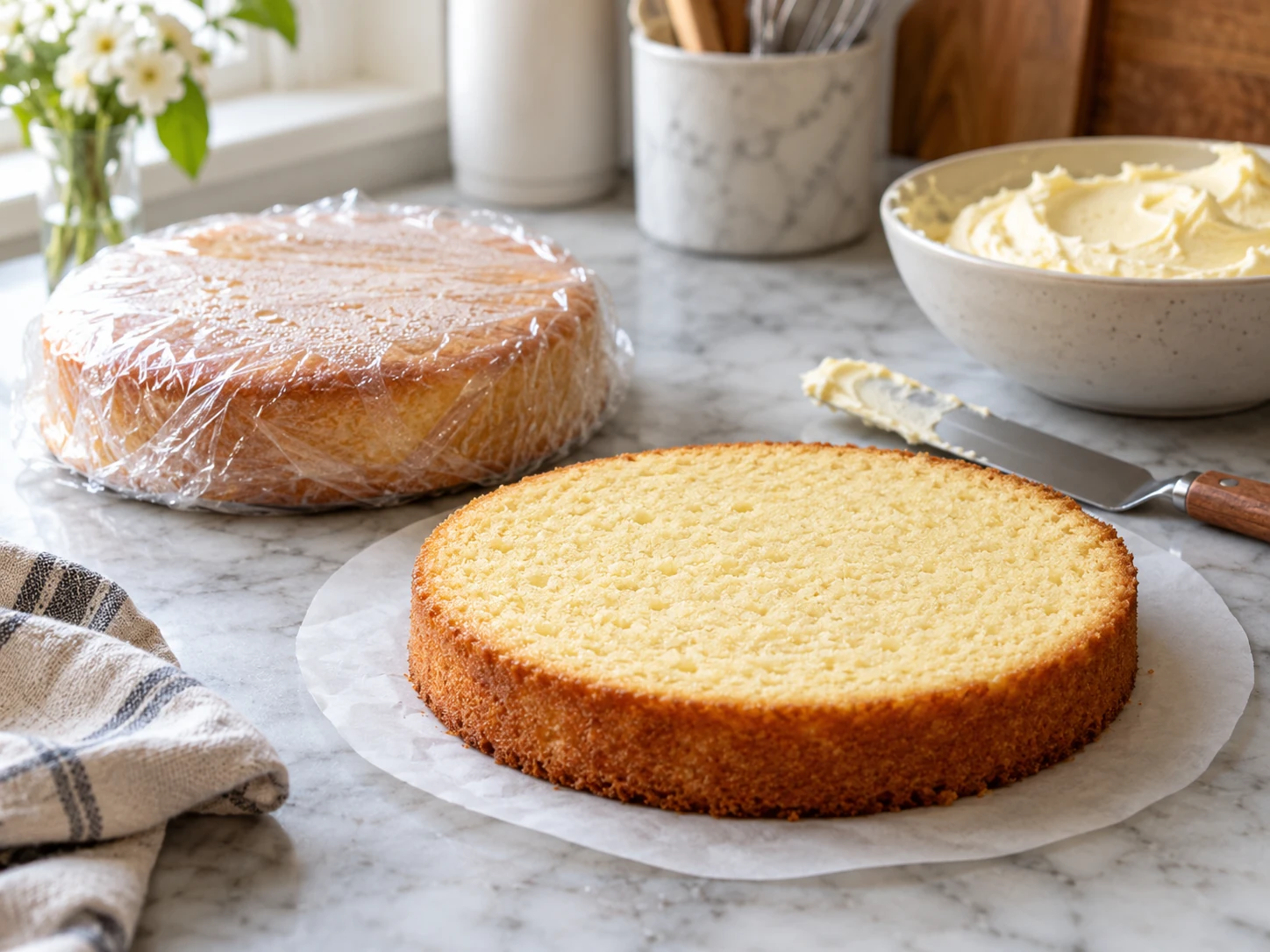
Chilled and fully frozen are not the same thing. A cool, firm layer can be easier to level, fill, and crumb-coat. A fully frozen layer may create condensation as it warms and can make fillings or frosting behave unpredictably.
For a beginner-friendly schedule, thaw in the fridge first, then assemble and decorate once the cake is firm but workable. Check your frosting recipe, particularly if it contains whipped cream, cream cheese, or other refrigerated ingredients.
Six mistakes that make frozen cake dry or difficult to use
Wrapping it while warm
Residual heat creates moisture inside the package. Wait until the whole layer has cooled, including the underside.
Leaving it uncovered in the freezer
Even a short stay in dry freezer air can leave the exposed surface vulnerable to dehydration and freezer odors. Seal each cake layer properly.
Using only loose foil
Foil is a good outer barrier, but loose seams can allow air inside. Start with a snug, food-safe airtight layer underneath.
Crushing layers during storage
Thin layers are easy to bend or dent. Freeze flat and place them above heavier items or inside a suitable protective container.
Freezing a filled cake as though it were plain cake
Whipped cream, fresh fruit, pastry cream, and other fillings have their own storage, texture, and food-safety requirements. Check the complete cake recipe before freezing an assembled dessert.
Forgetting to label the packages
A date and flavour label prevent guesswork, particularly when you're preparing several cakes for a busy holiday week.
An easier make-ahead cake schedule
Here is one practical way to prepare for a Saturday celebration:
- Sunday or Monday: Bake the cake layers, cool fully, wrap, label, and freeze.
- Thursday evening: Transfer the wrapped layers to the fridge to thaw, adjusting for layer thickness.
- Friday: Prepare the frosting and any fillings; assemble and decorate once the layers are suitably thawed and firm. Refrigerate cakes that require cold storage.
- Saturday: Finish decorations and serve according to the cake and filling's storage instructions.
This schedule is an example rather than a rule. Your recipe may need a different thawing time or a shorter interval between filling and serving.
Planning a winter celebration? The same method can make the cake portion of our Gingerbread Maple Layer Cake easier to prepare ahead. Follow that recipe's specific instructions for its cream-cheese frosting and assembled-cake storage.
Frequently asked questions
Can you freeze a cake the same day you bake it?
Yes, as soon as the baked layers are completely cool. Don't rush the cooling stage: a cake that feels cool on top may still be warm at the centre or underneath.
Is it better to freeze cake before or after frosting?
For a straightforward make-ahead layer cake, freezing the unfrosted layers is usually simpler. Decorated cakes can sometimes be frozen too, but the method and thawing instructions depend on the frosting, filling, and decorations.
Does freezing make cake more moist?
Freezing doesn't add moisture to a cake. Tight wrapping helps preserve the moisture it already contains by limiting drying during storage.
How can you tell if cake has freezer burn?
Look for noticeably dry or discoloured patches and pay attention to stale or freezer-like odours after thawing. Freezer burn is primarily a quality problem, but it can spoil the flavour and texture you want for a special cake.
Do all cakes freeze equally well?
No. Standard unfrosted layers are often easier to freeze than cakes with delicate whipped fillings, fruit toppings, or highly fragile textures. Test-freezing a small batch is wise before relying on a large celebration cake.
Match the freezing method to the type of cake
Butter cake: Traditional vanilla or chocolate butter cakes generally have enough structure to wrap and stack once completely cool. Freezing individual layers instead of a whole assembled cake makes it easier to level, fill and decorate them later. Wrap the entire surface carefully, especially the cut sides if you levelled the cake first.
Oil-based cake: Many oil-based sponges stay supple when chilled. That does not make them immune to freezer drying, though: apply the same tight inner wrap and protective outer bag or container. If the cake is particularly soft, freezing it flat on a tray before reorganizing the freezer helps keep its shape.
Delicate sponge: Airy sponge cakes may compress beneath a heavy package. Rest them on a cake board or in a rigid freezer-safe container, separate them carefully and avoid stacking weight on top. Freeze one trial layer before committing an elaborate event cake to the same process.
Carrot, banana or fruit-containing cakes: These may freeze successfully as unfrosted layers, but added fruit, nuts and varying moisture can affect the thawed texture. Use the individual cake recipe's freezing recommendations first. Do not assume its cream cheese frosting or fresh fruit filling belongs in the same storage category as the plain layer.
What actually causes freezer dryness?
Frozen food remains subject to moisture loss, particularly when it is exposed to moving, cold, dry air. Loosely wrapped layers can develop dry edges, stale flavours and the discoloured surface patches commonly described as freezer burn. The preventive strategy is practical rather than magical: limit air exposure, create a continuous wrapping seal, and keep the freezer at a steady appropriate temperature.
The cake's original composition matters too. A lean sponge and a rich butter cake may behave differently after thawing, even when both are well wrapped. Freezing does not turn a dry, overbaked cake into a moist one. Start with a cake baked to the recipe's intended doneness and cooled appropriately.
Packaging can help protect against freezer odours. Strong-smelling frozen foods stored beside an exposed cake are one more reason to use an outer bag or container in addition to a snug inner wrap. If the cake already smells strongly of the freezer after thawing, adding vanilla buttercream will not necessarily disguise it.
A practical two-day cake assembly plan
Day one: Bake, cool and freeze
Measure and bake the recipe exactly as written. After the prescribed pan-cooling period, transfer layers to wire racks. When every side is completely cool, wrap each layer twice where necessary, label the package and freeze flat. Do not leave the finished cake uncovered on a freezer shelf while you work on other preparations.
Day two: Plan the frosting and assembly
Prepare the buttercream, ganache or other filling following its own storage instructions. If the cake will be levelled, make sure you have a stable board and a sharp serrated knife. Some decorators prefer to work with slightly chilled layers because their crumbs are easier to handle, but the appropriate stage depends on the cake and frosting rather than one universal rule.
Transfer frozen layers to the refrigerator to thaw gradually while still wrapped, following the recipe's guidance. Avoid putting an unwrapped frozen cake into a very humid room; condensation can develop on cold surfaces. Once the cake has thawed enough for safe handling, unwrap it carefully, inspect the crumb, level if necessary and assemble with a suitable filling.
Serving day: Finish without rushing
Finish decorating when the cake layers and frosting are at workable temperatures. Cream cheese, whipped cream, pastry cream, custard, and fresh fruit fillings require their own refrigeration controls; a plain cake-layer freezing guide is not a substitute for handling those foods safely. Plan enough time for a chilled decorated cake to reach the recipe's recommended serving condition.
Problems you can fix before the cake is frosted
My cake has condensation on the outside of the package
Moisture forming on the outer wrapping does not necessarily mean the cake is ruined. Keep the protective packaging in place during a controlled thaw and check the cake surface when it is ready to unwrap. Excessive surface dampness or a sticky crumb suggests moisture was trapped or the package was opened too early.
The cake feels firmer or less tender than expected
Cold fats and starches can make a properly stored cake feel firmer immediately after removal from refrigeration. Allowing the unfrosted layer to approach an appropriate working temperature may restore its usual tenderness. However, obvious dry edges or stale flavours indicate a quality problem that time alone may not solve.
The layer has a cracked edge
A crack caused by handling is different from a completely dried-out cake. A small crack can sometimes be repaired during assembly with a compatible filling or frosting, but a severely broken or fragile layer may require replacing. Prevent damage by moving the cake on a flat board and never lifting a large frozen layer from just one side.
Can I slice or level the cake while it is frozen?
Very hard cake can be difficult to cut neatly and may chip or split. Many decorators level layers when they are cool or slightly chilled rather than rock-hard. Follow the original recipe where it gives specific instructions; use a stable work surface, and do not force a knife through a frozen solid layer.
Food safety is separate from freezing quality
While a properly functioning freezer prevents microorganisms from growing in frozen food, freezing does not eliminate every potential hazard, and thawing makes handling important again. Plain cake layers typically raise different concerns from assembled cakes with dairy fillings, eggs, whipped cream or fruit. Follow the baking recipe and food safety requirements for those additional ingredients rather than assuming the entire finished cake can be treated like a wrapped sponge.
Label packages with the date, use good freezer hygiene, and keep raw meat or leaking packages away from ready-to-eat baked goods. If the freezer loses power and cake packages thaw, assess food safety based on the ingredients and how they were stored instead of relying solely on how the cake looks or smells.
Frequently overlooked details
- Use a real freezer-safe bag: Thin grocery bags and loosely covered plates do not offer the same protection as snug wrap and an outer freezer-safe barrier.
- Separate layers: A cake board or parchment separator helps protect delicate surfaces, but each layer still needs its own airtight covering.
- Allow for the whole schedule: Baking, complete cooling, wrapping, freezing, thawing, filling and decorating all take time; the freezer merely redistributes some of that work.
- Follow the original recipe: Some cakes are best decorated fresh, and a tested recipe may give specific freezing instructions that are more reliable than a generic guideline.
- Label more than the date: Include flavour, pan diameter, layer count, and any allergy-relevant ingredients so frozen chocolate and spice layers are not confused later.
Freezing cake layers for a tiered or multi-flavour cake
If you're planning a two-tier celebration cake or preparing several flavours, organisation matters just as much as airtight wrapping. A chocolate layer and a spice layer may look surprisingly similar through foil, particularly if they were baked in identical pans. Write the flavour, pan diameter, layer count, the freezing date and any dietary or allergen notes on each package. Keep all layers belonging to the same tier together in a clearly labelled part of the freezer.
Freeze layers flat and avoid balancing heavy ice packs, containers or meat packages on top. If freezer space is limited, make room before you begin baking rather than trying to wedge a delicate sponge into a curved opening. Thin layers are especially vulnerable to bending while soft. A rigid tray underneath each wrapped layer can be useful until the cake is firm.
Plan your decorating day around the actual number and thickness of layers. Three thin layers may thaw and become workable differently from a single deep cake, and there is no universal two-hour timetable. Give yourself more time than you expect for safe, gentle thawing, levelling, stacking and crumb coating, following the recipe's storage advice.
Can you freeze flavoured cake layers with a soak or syrup?
Plain, unfrosted cake layers are the easiest starting point because their moisture and wrapping needs are straightforward. If you plan to add a flavoured soak, fruit filling or syrup, follow the particular cake recipe's instructions about when those components should be added. Applying too much liquid before freezing can alter texture, and a wet cake is harder to wrap and handle without damaging the surface.
A syrup that contains alcohol does not make a layer immune to freezer damage or eliminate the storage requirements of dairy- or egg-based fillings. Store prepared cake components separately when that is what the recipe recommends. If you are testing a new filling or cake formula for a special event, freeze a small sample first rather than assuming it will behave the same as a familiar butter cake.
What to check after the layers thaw
Before decorating, unwrap the layers carefully and examine the tops, sides and undersides. A little surface moisture from condensation can be normal, but the cake should not have a distinctly off smell, heavy freezer odour or visible signs of mishandling. If a thin layer has shifted or cracked, consider whether it can still be supported securely in the finished cake; don't hide serious structural damage under thick frosting.
When a cake seems dry, additional frosting does not automatically solve the problem. It is better to prevent freezer air exposure in the first place by wrapping the layers completely, freezing them promptly and keeping them protected during storage. When serving a cake with cream, custard or fresh fruit, follow appropriate refrigeration guidance regardless of whether the plain sponge was previously frozen.
Frequently asked questions about preparing layers in advance
Should cake layers be wrapped in plastic and foil?
Two suitable protective layers can help limit exposure to dry freezer air and protect against accidental knocks. Plastic wrap followed by foil or a freezer-safe airtight container is a useful approach, but the exact packaging needs to fit the cake. A loose, poorly sealed outer layer cannot compensate for large exposed areas.
Can I freeze one large layer and slice it after thawing?
Some firm cakes can be levelled or split once suitably chilled, but a soft or delicate cake can tear when handled. Follow the cake recipe and use a long, sharp knife or a cake leveller when the layer is stable. Do not force a deeply frozen cake through a knife if doing so risks slipping or breaking it.
How should I organize multiple cakes in one freezer?
Label each package with flavour, diameter and date, group the layers for each cake together, and keep weight off delicate surfaces. This avoids unwrapping cakes just to identify them and makes the decorating schedule more predictable.
Adjust the plan for the cake's final decoration
A smooth buttercream finish
If the final cake needs perfectly straight sides and a thin crumb coat, freeze unfrosted layers so you can separate baking from filling and decorating. After the wrapped cakes thaw according to the recipe, trim domes as needed and assemble them on a stable board. A lightly chilled layer may shed fewer crumbs while you spread buttercream, but be mindful of frosting that firms too much against a very cold surface. A coat that looks smooth while icy can become uneven as the cake changes temperature.
Prepare the frosting and tools before the cake is unwrapped. Use an offset spatula or scraper, keep crumbs out of the clean frosting bowl, and chill the crumb coat only for the time appropriate to the recipe. An assembled cake with a perishable filling has different storage rules than the plain unfrosted cake you originally froze.
A chocolate ganache finish
Ganache depends on the relationship between chocolate and cream and on temperature. If the cake is too cold, ganache may set before it spreads smoothly; if the cake is too warm, the coating may flow too quickly. Thaw and assemble the cake in line with its recipe, then prepare the ganache to a workable consistency. Do not assume that thawing overnight automatically puts the sponge at the right decorating temperature for every ganache.
Choose where you will set the finished cake before pouring or spreading. Moving a large layered cake repeatedly after decorating creates unnecessary handling risk. If ganache contains cream, follow its storage and food safety guidance rather than relying on the freezing history of the plain cake.
A cake that will be transported
Make-ahead freezing is useful for event cakes because the baking can be completed before decoration day. However, a frozen layer is not a substitute for a stable cake board, suitable box and careful transport. Assemble the cake on firm support, keep the filling and frosting at appropriate temperatures, and allow enough time for any outer finish to set as directed.
For a tall or tiered cake, check the structural requirements of the design. Frozen sponges can still crack during stacking or transport, particularly if they have been crushed by heavy freezer items. Freezing is about convenient scheduling and quality protection, not making a delicate cake structurally indestructible.
Small checks that prevent large freezer mistakes
Before you finish wrapping, take a photograph of the labelled packages or write a simple inventory with the cake size, flavour, number of layers and date. This is especially useful if you are baking different flavours for one celebration. No one wants to unwrap four identical foil parcels just to find a vanilla layer among chocolate ones.
Double-check the freezer space. A cake resting flat on a tray is less likely to bend than a soft layer wedged diagonally between rigid containers. Keep the wrapped layers away from leaking raw food packages and strong odours. If a package has torn or developed a loose edge, repair the barrier promptly rather than leaving the cake exposed for weeks.
On decorating day, inspect the surface after the cake thaws. A slightly firm chilled crumb may be fine, but severely dry, freezer-scented or soggy surfaces will not necessarily improve under frosting. Be realistic about quality: for a particularly important event, replacing a badly affected layer can be more dependable than covering the damage with thick buttercream.
When to skip freezing altogether
Freezing is not essential if you have time to bake and assemble a cake fresh and the recipe is easy to handle. Some very delicate or unusually moist cake styles may be better treated with recipe-specific instructions. Similarly, a cake that must be served almost immediately after baking may not benefit from the added wrapping and thawing steps.
Think of the freezer as one tool in your schedule. If freezing lets you bake on Saturday and decorate on Sunday without rushing, it is a good candidate. If your cake is already baked and you are serving it the same afternoon, choose appropriate cooling and assembly instead. Either way, the goal is a cake with the right texture, safe handling, and a finish that suits the occasion.
The takeaway
If you remember one thing, make it this: cool completely, wrap tightly, and thaw with care. Freezing cake layers can give you a calmer decorating day without sacrificing the soft crumb you're hoping for. A little protection before they enter the freezer makes all the difference when you're ready to build your cake.
IN PICTURES
From the baking notebook
FROM THE RECIPE BOX