On this page
The quick answer: For banana bread and muffins, peel ripe bananas, mash or portion them in the amount your recipe needs, and seal them in a freezer-safe container. If you want individual pieces, freeze peeled slices or chunks on a parchment-lined tray first, then transfer them to a freezer bag. Thaw before adding them to most baking batters, and measure the banana itself—not just the liquid left in the container.
You know the moment: the bananas looked perfect two days ago, and now they are covered in brown freckles. They're past their best for lunchboxes, but right on time for banana bread. If you don't have time to bake today, freezing them is an easy way to save that sweetness for another weekend.
Freezing bananas for baking is slightly different from freezing them for smoothies. A smoothie can use rock-hard frozen pieces straight from the bag; banana bread usually needs soft, mashable fruit that blends evenly into the batter. The trick is to decide how you'll bake with them before you pack the freezer.
Which bananas should you freeze for baking?
Choose bananas that are fully ripe, with plenty of brown spots, for most cakes, muffins and quick breads. Their softer flesh is easier to mash and brings a fuller banana flavour. Yellow bananas are fine for freezing if that's what you have, but they won't magically continue ripening after they are frozen.
Dark skins alone are not a problem. A banana with a brown peel and fragrant, soft flesh can be a good candidate. Do not freeze or bake with fruit that shows visible mould, has an off or fermented smell, or is otherwise spoiled. Freezing preserves the fruit you put in; it does not rescue rotten fruit.
For a classic loaf, start with the amount the recipe actually needs. For example, What's Baking's Classic Banana Bread uses 280 g of ripe banana, which is much more reliable than guessing from the number of fruits in a bunch.
The best way to freeze bananas for baking: mash and portion
If you mainly make banana bread, this method saves the most effort later.
- Peel the ripe bananas. Remove any stringy fibres or damaged spots.
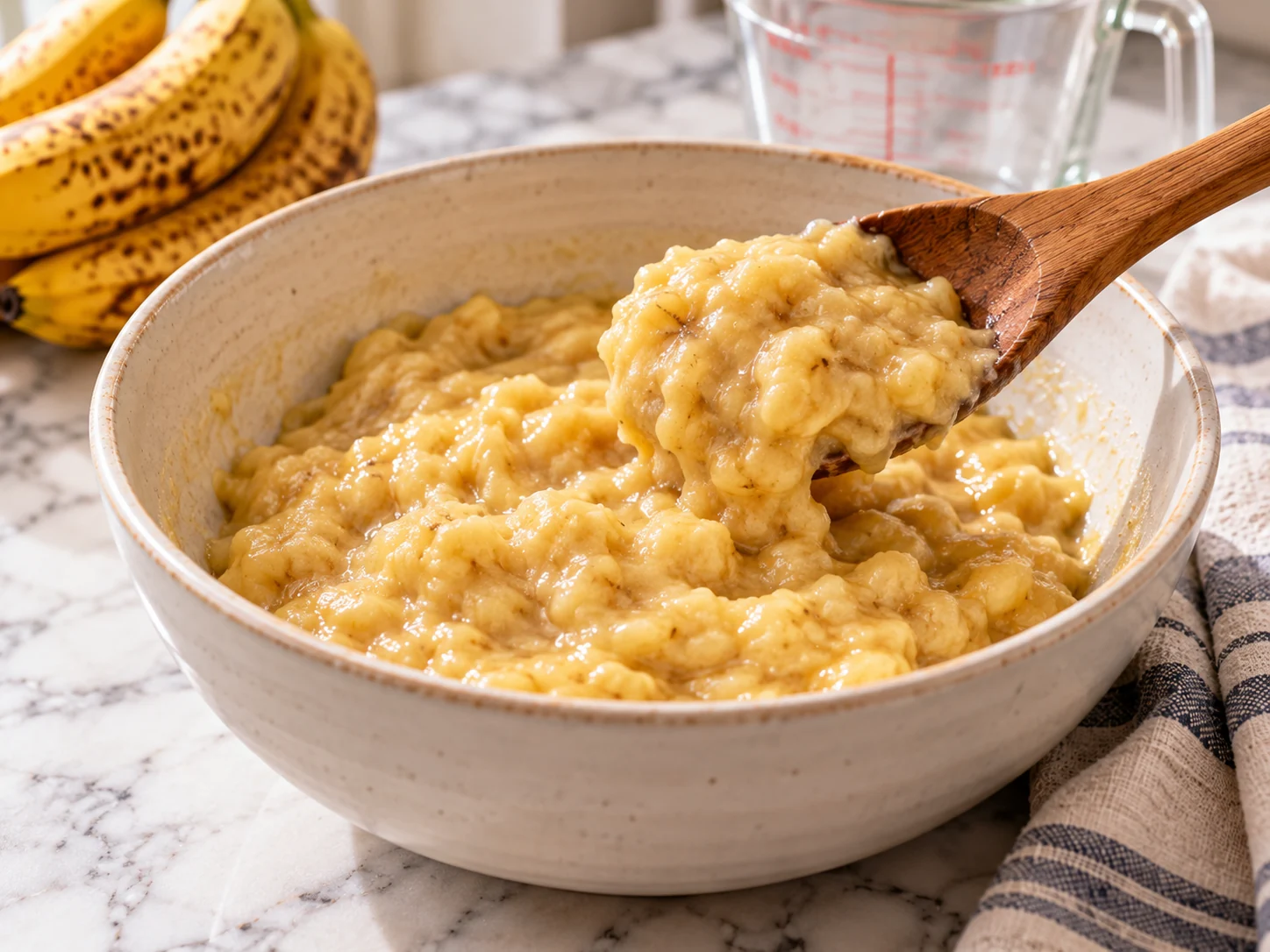
- Mash with a fork. A few small lumps are fine for most quick breads; don't blend unless the recipe calls for a smooth purée.
- Measure the portions. Weigh what you need for your go-to recipe, or use clearly marked cup measurements if the recipe uses volume.
- Pack tightly. Spoon the mash into freezer-safe containers or sturdy resealable bags. Leave a little room for expansion, press out excess air, and close securely.
- Label and freeze. Write the weight or volume, date, and the intended recipe—for example, “280 g mashed banana — banana bread.” Freeze promptly in a freezer maintained at −18°C / 0°F or colder.
Flat-packed portions stack neatly, thaw faster than a solid block, and mean you never have to defrost four bananas when you only need two.
How to freeze banana slices or chunks
Slices are best if you use bananas for more than one kind of baking—or sometimes want a smoothie. Freezing them separately first keeps them from forming one large, icy block.
- Peel the ripe fruit and cut it into thick slices or chunks.
- Line a tray that fits your freezer with parchment.
- Arrange the pieces in a single layer without touching.
- Freeze until firm, usually about 1–3 hours, depending on piece size and your freezer.
- Move the firm pieces into an airtight freezer-safe bag or container. Remove excess air, date the package, and return it to the freezer.

For banana bread, thaw the amount you need, then mash. For smoothies, use the pieces frozen if your blender can manage them.
Can you freeze whole bananas with the peel on?
Yes, but peeled bananas are easier to work with. Whole, unpeeled bananas can be placed in a freezer-safe bag, but their peels darken dramatically and may be awkward to remove after freezing. Once thawed, the fruit will be soft and wet. That's suitable for many baked goods, but not for neat fresh-fruit toppings.
If you already have whole frozen bananas, thaw them enough to peel safely and scrape the fruit into a bowl. Don't assume that one banana equals a fixed weight: weigh or measure the peeled flesh for your recipe.
How long do frozen bananas last?
For best flavour and texture, aim to use properly packed bananas within about 2–3 months. They may remain safe longer when kept continuously frozen at a suitable temperature, but quality gradually declines through freezer burn, oxidation and odour transfer. The date on the bag helps you rotate your stash.
A freezer bag with lots of air, or one that is repeatedly opened and closed, gives you less protection. Smaller recipe-sized portions usually keep their quality better in everyday use.

How to thaw frozen bananas for banana bread and muffins
The most convenient method is overnight in the refrigerator, in a covered bowl or container that catches the liquid. If you're in a hurry, use your microwave's defrost setting in short bursts and use the fruit promptly, following your recipe's instructions. Avoid overheating it into a hot, cooked purée unless that is specifically what the recipe needs.
Thawed bananas will look much softer than fresh ones. They may be brown, watery or almost liquid. This is normal for properly frozen bananas: ice crystals damage the cell structure, so the fruit loses its shape as it defrosts.
Important: Don't pour the banana juice down the sink automatically. That liquid contains banana flavour and moisture. However, adding a large amount of separated liquid can change a batter that wasn't designed for it. For the most consistent result, follow the recipe's own guidance about thawed bananas and whether to include or drain liquid. When no guidance is given, weigh or measure the thawed fruit together with the liquid you plan to include, and keep the total at the amount of banana called for by the recipe. Do not add extra thawing liquid on top of a measured banana quantity.
Can you substitute frozen bananas for fresh bananas in baking?
Usually, yes—once thawed, particularly when a recipe calls for mashed banana. You can often use thawed frozen banana in banana bread, muffins, snack cakes and similar batters. But the exchange works best by weight or measured mashed volume, not by the number of bananas.
Two common situations need extra care:
- Recipes that depend on fresh banana slices or structure. Frozen-and-thawed fruit is too soft for neatly layered toppings or firm chunks that should keep their shape.
- Batters sensitive to extra moisture. A thin batter can become heavy or underbaked if you add thawing liquid beyond the amount of banana the formula expects. Use the recipe's tested instructions whenever possible.
If you already have measured frozen banana portions, try them in What's Baking's Sourdough Banana Bread or Protein Banana Oat Muffins, adjusting to those recipes' individual ingredient requirements rather than assuming every batch uses the same quantity.
Three mistakes that make freezer bananas harder to use
1. Freezing before the bananas are ripe
Freezing stops further ripening. If you want the deep flavour of a well-spotted banana in a cake, let it develop on the counter first—provided the fruit remains sound.
2. Freezing everything in one giant bag
A kilogram of mashed banana is much less useful when you only need 280 grams for a loaf. Portion before freezing or tray-freeze pieces so you can remove exactly what you need.
3. Guessing the banana amount after thawing
A “medium banana” varies in size, and a thawed banana may release liquid. Following the recipe's weight makes your cake more predictable. If you freeze mashed portions, label the exact amount while you can still measure easily.
FAQ: freezing bananas for baking
Do frozen bananas turn brown?
Yes. Both skins and exposed flesh can darken, especially after freezing and thawing. Colour change alone does not mean the fruit is spoiled; assess it for mould and off odours as you would other stored food.
Can I bake with frozen bananas without thawing them?
For recipes that call for mashed banana, thawing is usually the better approach. Frozen chunks can make the batter uneven and harder to mix. A frozen banana used for smoothies is a different situation.
Should I freeze bananas with lemon juice?
You don't need lemon juice for most banana bread. It may reduce some browning, but it also introduces flavour and liquid that your recipe might not expect. Tightly sealed packages and prompt freezing are a simpler choice.
How many frozen bananas equal one cup mashed?
The count varies with fruit size and ripeness. For accuracy, thaw and mash the bananas, then measure one cup—or use the gram weight specified in your recipe. If you bake the same loaf often, freeze that exact portion in advance.
Can I refreeze thawed banana mash?
For the best quality, freeze in recipe-sized portions so you don't need to. If the banana was thawed safely in the refrigerator and remains properly handled, refreezing may be possible, but repeated thawing and freezing worsens texture. Discard fruit that has been left out too long or shows signs of spoilage.
Three recipes that benefit from measured frozen bananas
Classic banana bread
The Classic Banana Bread on What’s Baking? uses 280 g mashed ripe banana, approximately three medium bananas, with flour, butter, sugar, eggs and milk. Its loaf bakes at 175°C (350°F), with about sixty minutes of cooking listed on the card. Weighing and freezing the 280 g banana portion makes that recipe much more convenient later, because the necessary fruit is already prepared and measured.
If the bananas are very ripe when frozen, the flavour and sweetness can be appropriate for a loaf. Thaw in the refrigerator when needed, retain or handle any separated banana liquid according to the tested recipe, then stir the fruit before measuring. Do not add a large amount of extra thawing liquid on top of a measured banana portion. The goal is to restore a usable banana ingredient, not to dilute the batter.
Sourdough banana bread
The Sourdough Banana Bread calls for approximately 350 g peeled banana, along with 100 g active starter, flour, butter and eggs. That fruit amount differs from the classic recipe, so identical freezer bags would be unhelpful unless you label the weight. A package containing 280 g fruit does not automatically supply the quantity needed for this sourdough variation.
For this recipe, keep the measured banana quantity clear and follow the method's ingredient sequence. Adding banana from a frozen bag does not remove the need for a suitable sourdough starter or the correct flour and leavener amounts. Banana contributes moisture and flavour, but starter also contributes water and flour. Those proportions were balanced together in the original formula.
Protein banana oat muffins
The Protein Banana Oat Muffins use about 350 g mashed banana, rolled oats, whole wheat flour, protein powder, eggs, oil and milk. The published recipe makes twelve muffins. Because oats and protein powder absorb moisture differently from ordinary all-purpose flour, adding excess thawing liquid can change the batter texture. Use the amount of banana specified and judge the finished mix by the original instructions rather than guessing at extra water.
It is useful to freeze banana portions for these three recipes separately: 280 g for classic banana bread and 350 g for each of the other two. Label them with weight rather than just writing “three bananas,” since bananas vary significantly in size. This also prevents wasting fruit when a recipe needs only a smaller portion.
Which ripeness stage is best for freezing?
For banana breads, very ripe bananas with a yellow peel covered in dark freckles are often attractive because they mash easily and have a developed banana flavour. They should still be wholesome, not mouldy or spoiled. A fully blackened peel may reflect ripeness, cold damage or deterioration; the peel colour alone is not a food-safety test. Inspect the actual fruit, smell and storage history before deciding to use it.
For smoothies, less ripe banana can work when a firmer, less sweet taste is desired, but that is a different goal from baking a naturally sweet banana loaf. If the recipe calls for “very ripe” fruit, freezing underripe bananas will not magically ripen them while frozen. Let sound fruit ripen before peeling and freezing whenever practical.
If a bunch contains bananas at different stages, sort them. Freeze the properly ripe fruit intended for baking and reserve firmer bananas for eating. Avoid opening several packages simply to combine fruit later; a digital scale and labelled portions keep the project organized.
How to peel and mash bananas for the freezer
Wash your hands and use clean utensils. Peel the bananas and remove any unwanted stringy pieces. Place the fruit in a bowl and mash with a fork to the texture your usual recipe requires, either fairly smooth or with a few small pieces. Weigh the mashed fruit, then transfer recipe-sized portions to clean food-safe freezer containers or bags. A flat bag is convenient for stacking and can thaw more evenly than a thick frozen lump.
Press out excess air without forcing puree out of the closure, and seal the package securely. Write the date, weight and intended recipe on the label before the bag becomes slippery with condensation. Leave suitable space for expansion if using a rigid container; frozen fruit contains water and may expand during freezing.
Keep food-safe bags flat on a tray while they initially freeze, so they form tidy packages. Once fully frozen, they can be stored together in a labelled section. Avoid putting heavy packages on soft bags before they have frozen, as that may create leaks or awkward lumps.
When slices are a better option than mashed banana
For snacks or smoothies, banana slices may be more convenient. Cut peeled fruit into even rounds, arrange in a single layer on parchment and freeze until firm before storing in a freezer-safe bag. The separated slices let you measure smaller amounts without thawing an entire banana.
For baking, a recipe that expects mashed banana may require you to thaw the slices before mashing. Cold hard pieces can be difficult to distribute evenly through a quick bread batter and may create uneven patches. Use slices when your planned recipe needs pieces; use measured mashed portions when the recipe specifies mashed banana by weight.
Whole peeled bananas are possible to freeze, but they become very soft after thawing and are less convenient to measure precisely. Keeping the peel on can make removal awkward, especially when frozen solid. If the purpose is easy banana bread later, peeling and portioning first saves extra work.
Thawing: handle the liquid thoughtfully
Banana cells are damaged by ice crystals during freezing, so thawed fruit may be much softer and release liquid. That is expected, not necessarily evidence that the fruit has spoiled. Thaw under appropriate refrigerated conditions, and check that the package remained sealed. Stir and mash if needed before adding to batter.
Different recipes may expect the full mass of banana, including its natural liquid, or may advise draining extra liquid when a very watery purée is used. The key is to follow the recipe's measurement and consistency guidance. Do not automatically discard every drop of liquid or pour extra water into the batter. Either extreme can change the original ratio of wet and dry ingredients.
Measure the banana as the recipe specifies, including whether the weight is before or after peeling. If you froze 350 g of mashed banana, try to use that amount as the banana component rather than replacing it with a small number of unweighed slices. Repeatable weighing is especially useful when testing sourdough banana bread or oat muffins where liquid balance matters.
Why frozen bananas sometimes turn brown
Banana colour can change after peeling, freezing or thawing because of oxidation and cell damage. Darker mashed banana may still work for a richly flavoured bread, but appearance alone cannot establish safety. If you notice mould, an unusual odour or evidence of improper storage, do not use the fruit. Frozen storage protects quality only when the fruit was sound when frozen and has been handled appropriately afterward.
You can minimize unnecessary browning by packaging promptly and limiting air exposure. A flat sealed container or freezer-safe bag is a useful approach. Adding lemon juice changes acidity and flavour and is not necessary for every banana bread recipe. Do not change the acid balance of a quick bread without considering its leavening system.
Batch planning for a weekend banana bake
Imagine planning one classic banana bread and one dozen protein banana oat muffins. The published banana requirements are 280 g and approximately 350 g, a combined 630 g peeled ripe banana. If your freezer holds two pre-weighed bags matching those amounts, you can thaw only the required fruit. This avoids guessing whether five or six bananas will produce enough mashed fruit.
The evening before, move the sealed packages to the refrigerator for appropriate thawing. The next day, preheat the oven, prepare pans and other ingredients, and use the fruit under the recipe's instructions. Keep banana intended for muffins separate from the banana for the loaf, especially when one recipe contains different allergens or protein ingredients.
When the baking is finished, let the bread and muffins cool according to their recipes. Freezing raw banana and freezing the completed baked product are two distinct steps with their own storage and texture implications. Do not assume that a loaf made with frozen banana is automatically suitable for indefinite room-temperature storage.
Common banana-freezing problems
The freezer bag leaked while thawing
A poorly sealed package may release banana liquid. Put sealed packages inside a clean tray or covered container during refrigerated thawing so liquid does not spread onto other food. If the bag was open and food may have been contaminated, assess its safety instead of simply scraping up the liquid and using it.
My mashed banana is watery
Some liquid separation is normal. Stir and assess the amount the recipe expects. If a particular recipe recommends draining watery banana, follow that method; otherwise, weigh accurately and avoid uncontrolled extra liquid.
My banana bread baked gummy
Frozen banana may have contributed extra free moisture, but underbaking, excessive banana, incorrect flour and overmixing can also affect crumb. Check the recipe's required fruit weight and the loaf's doneness before blaming the freezing process alone.
I froze bananas before they were ripe
Freezing pauses ripening rather than improving it. Those bananas can still be useful for some applications, but they may not provide the flavour and texture that a recipe expecting very ripe fruit was designed around.
Questions about banana portions
Can I freeze exactly three bananas for a recipe?
Yes, but weight is more reliable than count. Three medium bananas may yield very different peeled weights. Use 280 g for the site's classic banana bread and about 350 g for the sourdough banana bread or protein oat muffins, as each recipe specifies.
Should I add frozen mashed banana directly to cake batter?
Unless the recipe directs otherwise, thaw appropriately first so the fruit can mix evenly with the other ingredients. A solid frozen block changes temperature and mixing and may prevent an even batter.
Can I freeze overripe bananas with mould?
No. Freezing does not make spoiled fruit suitable to eat. Select wholesome bananas and freeze them promptly.
Keep thawing and baking separate from freezer storage
A freezer-safe package protects the banana while it is frozen, but you still need a suitable plan for thawing and using it. Transfer the required measured portion to the refrigerator in a clean covered container so any liquid remains contained. When sufficiently thawed, stir gently and inspect the fruit before incorporating it into the recipe.
Follow the recipe's preparation and doneness instructions rather than assuming that baking with frozen bananas makes the batter identical to one made with fresh fruit. The fruit contributes moisture and flavour, and small variations can change quick-bread texture. Keep notes on which portions produced your favourite result so that you can prepare them the same way next time.
If you plan several bakes, prepare separate labelled portions rather than thawing all the banana puree together. This reduces waste and means the bananas intended for muffins do not need to be mixed into the loaf recipe just because they were thawed at the same time.
Three complete banana-baking plans
Plan A: One classic banana loaf
Prepare a freezer bag containing 280 g of peeled, mashed ripe bananas. Mark the date and the words “classic banana bread.” When baking day arrives, thaw safely in the refrigerator, gather 210 g all-purpose flour, 115 g butter, sugar, eggs, milk and the other ingredients from the published recipe. Preheat the oven to its stated 175°C (350°F), prepare the loaf pan and follow the original mixing sequence. Once baked, allow the loaf to cool before slicing or storing it.
Plan B: Sourdough banana bread
Use a separately labelled portion of about 350 g banana. This recipe also contains 100 g sourdough starter, so it is important not to substitute a classic banana-bread batter and simply add starter on top. The flour, leavening and liquid balance are different. Prepare the starter and other ingredients exactly as written, and compare the finished loaf only after the normal cooling stage. The measured banana portion helps make this more repeatable.
Plan C: Protein banana oat muffins
Freeze approximately 350 g of peeled ripe banana for the published twelve-muffin recipe. Its oats, whole wheat flour and protein powder absorb moisture differently from the ingredients in a simple all-purpose-flour loaf. After the banana is appropriately thawed, weigh the portion and incorporate it into the batter according to the muffin recipe. Use the prescribed muffin tin and oven temperature rather than transferring the bake time from banana bread.
When freezing banana slices is preferable
Measured puree is efficient for recipes that call for mashed banana, but slices are useful when the fruit will be blended into a smoothie or used as separate pieces. Freeze peeled slices in a single layer so they do not form a solid mass, then transfer to suitable labelled containers. If a future recipe requires mashed bananas, thaw the slices as appropriate and weigh the mash; do not assume that a handful of rounds is equivalent to one medium banana.
Keep sliced and mashed banana in separate packages. Clear labels help you decide which to use without repeatedly thawing the wrong fruit. The freezer is a useful baking pantry when its contents are identifiable, portioned and handled safely.
Final freezer checklist
Choose ripe and wholesome bananas, remove their peels and decide how the fruit will be used. Mash or slice with clean utensils, then weigh and label freezer-safe portions. A 280 g portion suits the site's classic banana loaf, while approximately 350 g suits its sourdough loaf or protein banana oat muffins. Add the freezing date and recipe name to each bag, and store the sealed packages neatly.
When baking day arrives, thaw safely, inspect the fruit, and use the correct measured quantity under the recipe's mixing instructions. Keep separated banana liquid in mind, but do not alter the formula without a tested reason. Freezing saves preparation time; it does not improve spoiled fruit or correct inaccurate measurements. A few clear labels, a clean scale and an organized freezer can make the next banana bake far easier and much more repeatable.
A small freezer habit that pays off later
Next time your bananas become deeply freckled, don't feel pressured to bake immediately. Peel them, measure a few portions, and label the bags. The next time you want to make banana bread, half the preparation is already done—and those overripe bananas have a delicious second life.
IN PICTURES
From the baking notebook
FROM THE RECIPE BOX