On this page
A cake's finish can change the whole experience. Cover a layer cake in vanilla buttercream and you get a soft, creamy bite with plenty of room for swirls and decorative borders. Coat it in chocolate ganache and you get a richer, chocolate-forward finish that can be glossy, smooth, or even whipped.
The short answer: choose buttercream when you want easy piping, flexible flavours, or a soft frosting. Choose ganache when chocolate flavour, a sleek coating, or a dramatic drip is the goal. Neither is universally better for hot weather or every cake design—the recipe and serving conditions matter.
If you're deciding between ganache and buttercream for a birthday cake, layer cake, drip cake, or special occasion, here's how to pick the finish that suits it best.
Ganache vs buttercream at a glance
| Feature | Buttercream | Chocolate ganache |
|---|---|---|
| Main ingredients | Butter and sugar, sometimes egg whites or syrup | Chocolate and cream in a classic ganache |
| Flavour | Buttery; sweetness depends on type | Rich chocolate; sweetness depends on chocolate |
| Texture | Creamy, fluffy, or silky | Pourable warm, spreadable as it cools, firmer chilled |
| Decorating strengths | Borders, rosettes, flowers, colours | Drips, sleek coatings, rich fillings |
| Colour options | Easily tinted, especially pale styles | Naturally chocolate-coloured; white chocolate versions vary |
| Biggest challenge | Temperature control and getting a smooth finish | Chocolate-to-cream ratio and working temperature |
| Best beginner use | Simple American buttercream | A basic chocolate glaze or drip |
You can also use both on the same cake. Buttercream underneath with a controlled ganache drip is a particularly useful combination.
What is buttercream?
Buttercream is a family of frostings, not one recipe. The most familiar home-baking version, American buttercream, is made by beating butter with powdered sugar and flavourings. It tends to be relatively sweet, quick to prepare, and convenient for piping.
Swiss meringue buttercream uses heated egg whites and sugar, whipped into a meringue before butter is incorporated. It has a smooth, silky feel and generally tastes less sugary than American buttercream. Italian meringue buttercream uses hot sugar syrup to make the meringue and requires careful temperature control. Other styles, including French and ermine frosting, have their own character.
That variety is buttercream's biggest advantage. You can add vanilla, coffee, citrus, spices, or appropriate chocolate flavourings; tint lighter buttercreams for birthdays; and change the look from rustic swoops to crisp piped patterns.

Why choose buttercream?
Buttercream excels when the design needs fine control. An offset spatula can create soft textured sides or a smooth coating, while a piping bag makes rosettes, borders, and lettering more straightforward. For a colourful children's birthday cake or a floral celebration cake, a dependable buttercream recipe is usually the more flexible choice.
The trade-off is that all-butter frostings soften as they warm. Different recipes handle heat differently, so chilling, transport, and the room where you serve the cake still matter.
What is chocolate ganache?
Classic chocolate ganache is a mixture of chocolate and cream. When they are combined properly, the result is smooth and glossy. You can use it while fluid as a glaze, cool it to a spreadable consistency for frosting or filling, or prepare a version suitable for whipping into a softer texture.
A fundamental difference from buttercream is how much the chocolate type, chocolate-to-cream ratio, and temperature control the texture. More chocolate generally produces a thicker, firmer mixture once it cools. Dark, milk, and white chocolate do not behave identically, so one recipe's ratio shouldn't automatically be transferred to another chocolate.
King Arthur Baking's ganache guidance is a useful reminder: a mixture that seems thin while warm may thicken considerably as it cools. Let it reach the texture you need before attempting a smooth coat or drip.

Why choose ganache?
Ganache makes sense when you want the cake to taste unmistakably chocolaty. It gives a simple chocolate cake a luxurious finish without elaborate piping, and it can create a polished drip on a chilled, frosted layer cake.
Its limits are important: warm ganache can run too far, cool ganache can be difficult to spread, and a ganache made with less chocolate or with milk or white chocolate may set softer than expected. Ganache is not automatically heatproof.
Which tastes better: ganache or buttercream?
Think of the cake as a whole rather than judging the frosting in isolation.
- Ganache suits a chocolate-lover's cake, espresso sponge, chocolate-hazelnut combination, or dessert where a little intense topping balances the crumb.
- Buttercream suits a vanilla birthday cake, citrus cake, spice cake, or any design that needs flavour variations or generously piped decoration.
- Sweetness isn't guaranteed by the name. American buttercream is commonly sweeter than ganache made with dark chocolate, but white chocolate ganache can be very sweet, and Swiss meringue buttercream may taste less sugary than many other frostings.
For a recipe starting point, explore What's Baking?'s Chocolate Layer Cake. Its existing chocolate frosting is part of that recipe; use it as written unless you're intentionally adapting and testing a variation.
Which cake finish is better for decorating?
Use buttercream for piping and colour
Choose buttercream when the design calls for flowers, lettering, rosettes, borders, or coloured ombré effects. A piping-friendly consistency can hold definition, and a light-coloured frosting makes bright or pastel shades possible.
For a tidy coat, first add a thin crumb coat, chill until set, then apply the final layer. A slightly warmed, dry offset spatula can help smooth the outside, provided the frosting isn't becoming too soft.
Use ganache for chocolate drips and sleek coatings
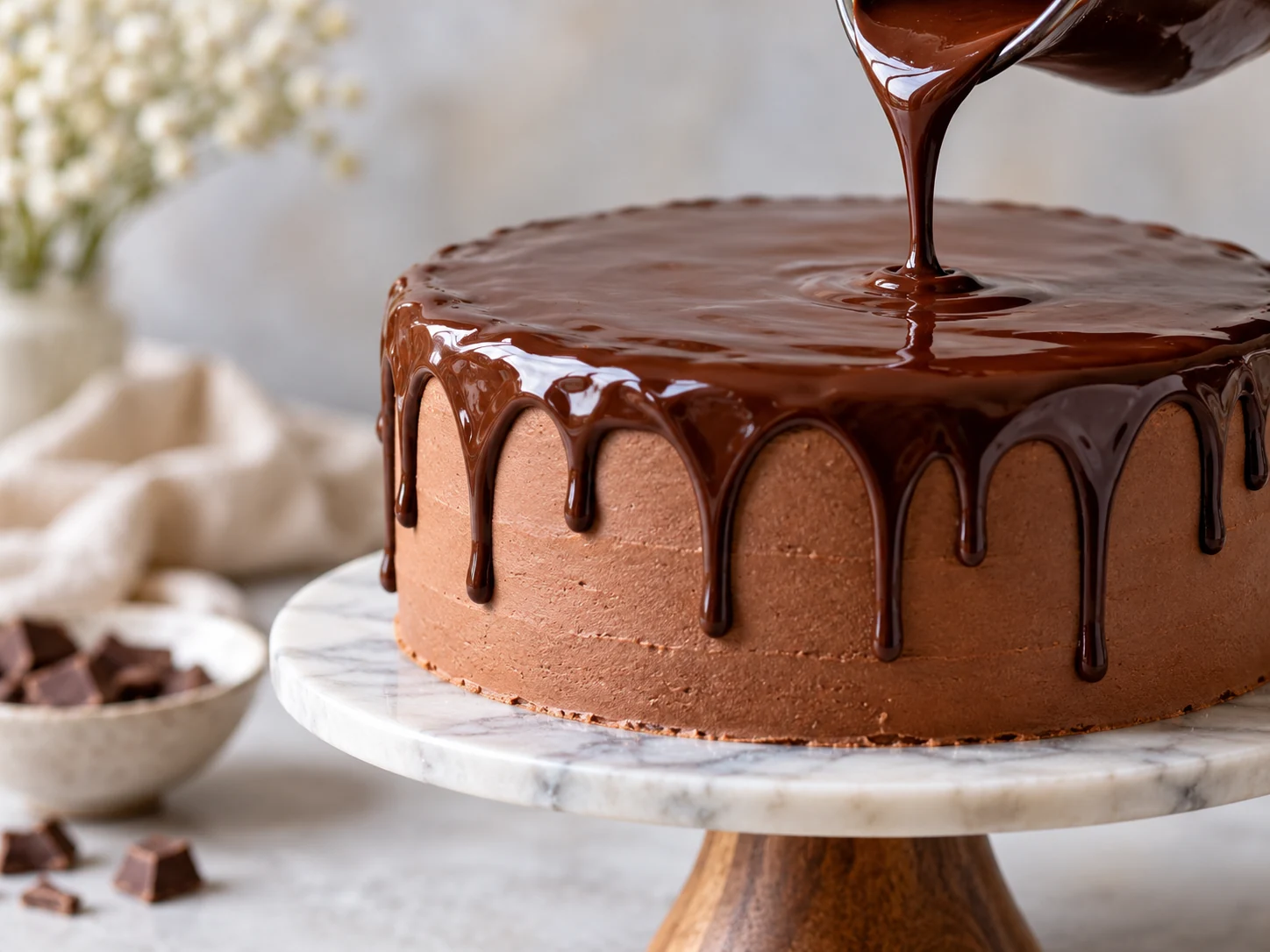
A glossy ganache can transform a simple frosted cake, but a good drip needs the right contrast between a chilled cake and a ganache that is pourable, not hot. Test one drip along a small section of the edge before pouring the rest.
If the drip races to the cake board, the ganache may be too warm or too thin. If it barely moves, let it warm gently or adjust it according to a tested recipe. Never assume one drip formula works for all types of chocolate.
Which is better for filling layer cakes?
Both can work beautifully; choose based on the texture you want in each slice.
Buttercream filling gives a creamy, easy-to-spread layer. It works especially well with vanilla and spice cakes or when you want the filling and exterior to taste similar. Ganache filling brings a denser chocolate note and can be useful between sturdy, fully cooled layers.
Don't make the filling so thick or soft that it slides out when you stack the cake. Level completely cooled cake layers, apply a consistent filling thickness, and chill as your particular recipe directs.
For a festive cake with an existing tested frosting formula, see our Gingerbread Maple Layer Cake. Its maple cream-cheese frosting is a separate category; the recipe is useful as a flavour pairing example, not as a ganache or buttercream substitution guide.
Is ganache more stable than buttercream?
There isn't a single winner. A firm dark-chocolate ganache can provide a structured coating, while some buttercream formulas hold piped details very well. But both change with temperature. A softer milk-chocolate ganache may behave differently from a high-chocolate-ratio dark ganache, just as American buttercream behaves differently from Swiss meringue buttercream.
If you're transporting a cake or serving it at an event, consider the cake's height, supports, filling, travel time, ambient temperature, and recipe-specific refrigeration requirements. Don't rely on frosting alone to secure a heavy stacked cake, and don't treat a sturdy-looking finish as permission to leave perishable cake out indefinitely.
What about fondant?
Some decorators prefer a cooled, firm ganache layer under fondant because it provides a smooth surface. Buttercream can also serve as a base when prepared and chilled correctly. Your working temperature, cake shape, and preferred method matter more than a blanket rule.
Ganache versus buttercream for different occasions
| You're making… | A sensible first choice | Why |
|---|---|---|
| Colourful birthday cake | Buttercream | Easy to tint and pipe |
| Minimalist chocolate cake | Ganache | Strong chocolate flavour and polished appearance |
| Cake with chocolate drip | Buttercream plus ganache | Decorated base with dramatic chocolate finish |
| Piped floral cake | Buttercream | Easier to create defined flowers and borders |
| Rich chocolate layer filling | Spreadable ganache | Dense, chocolate-forward layer |
| Cake for warm-weather travel | Depends on tested recipes | Neither finish guarantees heat stability |
Can you use ganache and buttercream together?
Absolutely. In fact, combining them often gives you the most freedom. Frost a cake with buttercream, chill it, and finish with a suitably cooled ganache drip. Or fill a cake with spreadable ganache while keeping the outside covered in vanilla buttercream for a lighter, decorative finish.
The key is choosing compatible consistencies: a runny filling will escape, and an excessively warm drip can soften the frosting underneath.
Common mistakes to avoid
Pouring hot ganache over buttercream
Ganache that is too hot can damage a buttercream coating or create drips that run all the way down. Cool the mixture to the consistency recommended by your drip recipe and test before committing.
Treating all buttercreams as equally sweet
American, Swiss, and Italian buttercreams do not taste or behave identically. If a previous buttercream tasted too sweet, try a different style rather than assuming every buttercream will be the same.
Assuming a thick coating will protect a cake from heat
Temperature affects chocolate, butter, fillings, and the cake itself. Keep cakes cool during transport and follow storage directions for the actual ingredients, particularly dairy- or egg-based fillings.
Using the same ganache ratio for every chocolate
Dark chocolate, milk chocolate, and white chocolate set differently. Follow a formula developed for the chocolate you plan to use, preferably using weights instead of volume measures.
Decorating before the cake is cool
Warm sponge can melt buttercream and interfere with ganache setting. Allow cake layers to cool completely; chill if your chosen decorating method calls for it.
Frequently asked questions
Is ganache sweeter than buttercream?
It depends. Ganache made with bittersweet chocolate often tastes less sweet than American buttercream, but white or milk chocolate ganache can be much sweeter. Swiss meringue buttercream is also often less sugary than American buttercream.
Can I pipe chocolate ganache?
Yes. A properly cooled, suitably thick or whipped ganache can be piped, though it won't behave exactly like a piping buttercream. The right consistency depends on the chocolate, cream ratio, and temperature.
Can I use chocolate ganache instead of buttercream between cake layers?
Often, yes, but don't substitute cup-for-cup without checking the cake's design and a suitable ganache formula. Ganache can set firmer and feel richer, which changes both the texture and the amount of filling you'll want.
Can ganache be coloured?
White chocolate ganache can be coloured with suitable ingredients, but it isn't a simple substitute for pale buttercream in every decorating project. Standard dark chocolate ganache will remain dark.
Does a ganache-covered cake need refrigeration?
Storage depends on its exact recipe, fillings, ingredients, and intended holding time. Chocolate ganache contains cream, and cakes may have other perishable fillings. Follow your chosen recipe's refrigeration directions and food-safety guidance rather than assuming all ganache cakes are shelf-stable.
Compare the two finishes using real layer cakes
Our Chocolate Layer Cake is built around a cocoa-rich chocolate frosting made with butter, cocoa, powdered sugar and cream. It illustrates how buttercream can reinforce chocolate flavour while remaining suitable for spreading and decorative texture. The Gingerbread Maple Layer Cake uses cream cheese, butter, powdered sugar and maple syrup in its frosting. That filling has different sweetness, texture and refrigeration considerations from a simple American buttercream.
Ganache is typically a combination of chocolate and cream whose texture changes with proportion and temperature. A warm pourable ganache can create a glossy coating; a cooler version can be spread; and some recipes whip a properly prepared ganache into a lighter finish. A drip that looks beautiful on one cake may run completely off another if the ganache is too warm or too thin.
Which finish is better for a birthday cake?
If the cake will carry colourful lettering, rosettes or detailed piping, a suitable buttercream may be easier to tint and shape. If the goal is a deep chocolate taste and a sleek coating, ganache is an attractive option. A mixed design might use buttercream for the main finish and a small amount of appropriately cooled ganache for drips. Test compatibility before preparing a special event cake.
Neither product is inherently stable in all hot weather. Butter-based frostings can soften, while ganache depends on chocolate type, cream ratio and surrounding temperature. Both can contain perishable ingredients, and the cake's filling can require refrigeration regardless of the outer coating.
How to avoid a split or grainy finish
When preparing ganache, follow the recipe's guidance for warming cream, melting chocolate and stirring into a smooth emulsion. Overheating chocolate or handling a mixture at unsuitable temperatures can create an oily or grainy texture. Different chocolates require different ratios, so do not exchange dark, milk and white chocolate at the same quantity without a tested formula.
With buttercream, properly softened butter and gradual incorporation of sugar and liquids can support a smooth finish. If a buttercream looks curdled or grainy, its temperature or ingredient mixing stage may be at fault. Avoid automatically adding large amounts of liquid or heating all types of buttercream; egg-based buttercreams have different methods and safety requirements.
Planning a layered cake finish in stages
First cool or thaw the cake layers according to the recipe. Next prepare the chosen frosting or ganache, considering the filling's storage requirements. Assemble on a firm cake board, fill evenly, and give the crumb coat an appropriate setting period before finishing. Do not spread a hot ganache over a cold buttercream without understanding how the temperatures affect each layer.
Finally, account for serving conditions. A cake with cream cheese frosting or another perishable filling should be kept under appropriate refrigeration. A beautiful outer finish does not protect perishable inner ingredients from unsafe holding temperatures.
Common questions about combining finishes
Can I pipe ganache?
Some cooled or whipped ganaches can be piped, provided their consistency has been prepared for the purpose. A warm pourable ganache is not equivalent to a stable piping formula.
Can I colour ganache as easily as buttercream?
Chocolate colour and fat-based composition affect colour choices. Use methods and colourings suitable for the specific ganache rather than copying a water-based tinting technique.
Can ganache replace frosting in every recipe?
No. The desired sweetness, texture, filling stability and serving temperature all matter. Choose a tested variation suited to the cake rather than substituting by appearance alone.
How to decide on frosting before you bake the cake
Think about the cake's flavour, shape, decorating style and serving location. A simple birthday cake with coloured lettering usually benefits from a frosting that can hold piped decorations. A chocolate torte with a rich smooth finish may be better suited to ganache. A layered gingerbread cake might pair naturally with maple-flavoured cream cheese frosting, as in the site's Gingerbread Maple Layer Cake recipe. These are choices about the finished eating experience, not a contest with one universally superior coating.
Read the complete recipe, including storage requirements, before deciding. Buttercream has multiple styles, and egg-white-based buttercreams are prepared differently from a basic butter-and-sugar frosting. Ganache ratios vary with the type of chocolate and intended final texture. A dark chocolate drip cannot always be replicated with the same weights of white chocolate and cream.
Ganache temperatures and consistency
A freshly prepared ganache may be fluid enough for a thin pour. As it cools, it generally thickens and may become suitable for spreading. Refrigeration can firm it further, sometimes beyond the consistency you want for decorating. The right working point depends on the chocolate, cream and other ingredients and the temperature of the cake beneath it.
Test a small drip along the edge of a properly prepared cake before pouring the entire mixture over the top. If it runs too far, the ganache may need to cool or be adjusted according to its specific tested recipe. If it stops almost immediately, it may be too firm or the cake may be very cold. Do not solve every problem by adding unmeasured cream or reheating until the chocolate separates.
Buttercream textures and piping
Basic American-style buttercream is made with butter and powdered sugar, usually with a little liquid and flavouring. It is a practical choice for many coloured decorations but can taste quite sweet. Other buttercream styles use egg whites, sugar syrups or different emulsions, giving a different balance of sweetness and texture. Treat each as its own recipe.
To pipe rosettes, borders or lettering, start with frosting at a workable temperature. Frosting that is too cold may tear the cake or pipe roughly, while frosting that is too warm may droop. Make a small test decoration on a plate or parchment before putting a permanent design onto a special cake. If a buttercream contains a perishable component, follow its storage guidance.
A layer-cake assembly sequence
First ensure cake layers are properly baked and cooled. If they were frozen for make-ahead preparation, thaw as the specific recipe recommends. Level layers where needed and place the first on a firm cake board. Spread a suitable filling without pushing it all the way beyond the edges. Stack carefully, check alignment and apply a crumb coat before attempting an immaculate final finish.
For a buttercream-coated cake, chill or set the crumb coat only as the recipe advises before spreading the last layer of frosting. For ganache, prepare the cake surface and the coating so their temperatures are compatible. A very cold cake with warm ganache can behave differently from a cake at a milder temperature. Plan the timing rather than improvising after the chocolate is melted.
Combining chocolate ganache and buttercream
You can use buttercream as a main finish and a small ganache drip as decoration, when the two recipes are compatible. The contrast can be attractive: a coloured cake with dark glossy chocolate around the rim, or a chocolate cake with a soft buttercream centre and thin ganache shell. But using both increases temperature management and decorating stages, so test the drip before making an entire large cake.
Decide whether the cake will be transported. A finish that looks elegant in a cool kitchen may soften in a hot car or at an outdoor celebration. Plan the cake box, support board and safe serving conditions, especially for cream, cheese or egg-based fillings. Ganache is not automatically safe at room temperature just because chocolate becomes firm when cooled.
Ganache and buttercream troubleshooting
Why did ganache split?
Overheating, unsuitable ratios or poor emulsification can contribute to a greasy, grainy mixture. Follow the specific recipe's temperature and mixing directions rather than adding more cream at random.
Why is my buttercream grainy?
Sugar texture, temperature or insufficient mixing may be relevant. Check whether powdered sugar was sifted if required and whether the butter was in the intended condition before mixing.
Can I leave a ganache cake on the counter overnight?
Do not assume that is safe. Storage depends on the ganache formulation, cake ingredients, other fillings and temperature. Follow the tested recipe and food-safety requirements.
Five questions to choose the right cake finish
What should be the main flavour? A rich chocolate-forward cake may suit ganache, while a delicate vanilla or spice cake may benefit from the flavour flexibility of buttercream. Do you need piping? Borders and floral decorations often work well with an appropriately prepared buttercream. Will the cake have a shiny drip? Ganache can create that effect when made and cooled to the correct consistency.
How will the cake be stored? Both types can contain ingredients requiring refrigeration. The filling is just as important as the coating, especially with cream cheese frosting or custard. Will the cake travel? Transport introduces movement and temperature changes; a beautifully glossy finish in a cool kitchen may not remain identical in a warm vehicle.
The role of chocolate type in ganache
Dark, milk and white chocolate have different amounts of cocoa solids, sugar, milk and cocoa butter. A recipe's ganache ratio depends on those properties and the desired texture. Replacing dark chocolate with white chocolate by weight while leaving cream unchanged can create an unexpectedly runny mixture. Begin with a tested formulation for the chocolate you actually own.
When preparing ganache, heat and combine ingredients as directed. Use an appropriate mixing method to make a smooth emulsion rather than beating aggressively and incorporating unnecessary air into a glossy drip. If the mixture is grainy or oily, review the recipe's temperatures and ratio before deciding whether it can be repaired.
Buttercream as a decorating material
Buttercream can range from quite sweet American-style frosting to softer or more silky styles made using eggs or cooked sugar. These are not interchangeable recipes. An American buttercream often supports simple piping and bright colour, while an egg-based buttercream has a different preparation method and food-safety considerations. Use the buttercream appropriate for the desired design and your own baking experience.
Colour and decoration also affect the final choice. Dark ganache is naturally brown and is not as straightforward to make into a bright pink border as pale buttercream. If the design needs vivid colour, a frosting that accepts suitable colouring may be more practical. If the cake needs a restrained glossy chocolate finish, ganache may provide the desired visual without extensive piping.
Layer cakes: texture matters between the sponges
A rich ganache filling can make a chocolate cake feel denser and more intensely cocoa-forward. Buttercream creates a softer creamy layer whose sweetness depends on its formula. Both can be attractive, but the amount matters. An excessively thick filling can cause layers to slide or make every bite dominated by the frosting instead of cake. Follow the assembly recipe's measurements and use an appropriate cake board.
For the Chocolate Layer Cake and Gingerbread Maple Layer Cake referenced above, the fillings are part of the tested flavour combinations. Changing to ganache would alter the intended sweetness and texture. That can be enjoyable, but it should be treated as a variation rather than an equivalent result.
Decorating and storage questions
Is ganache always stronger in warm weather?
No. Chocolate type, cream ratio, temperature and cake structure all matter. Neither ganache nor buttercream is universally safe or stable in heat.
Can buttercream go beneath a ganache drip?
Yes, when the recipes and temperatures are compatible. Test one small drip first and do not pour a very hot mixture directly over a delicate chilled frosting without evaluating the result.
Which is more economical?
It depends on local ingredient prices and recipe amounts. Chocolate and cream may cost more than butter and powdered sugar, but high-quality butter or specialized frostings can also be expensive. Calculate from a specific recipe rather than assuming one is always cheaper.
Test your cake finish before a special occasion
If you are using an unfamiliar ganache or buttercream, prepare a small trial quantity. Taste it, check how it spreads and observe how its texture changes after chilling or warming. For ganache drips, try one small drip on a test surface before covering the whole cake. For buttercream, pipe a simple rosette or border to see whether the mixture holds the design.
Plan the finished cake's assembly, transport and storage. A frosting that looks stable in a cool kitchen may soften in a warm car or at an outdoor gathering. Cream cheese, whipped cream, egg-based fillings and some other ingredients require their own food-safety precautions. Neither a ganache coat nor a buttercream shell makes a perishable cake automatically safe to leave at room temperature.
The best choice for your cake
Pick buttercream for colourful designs, classic piping, flexible flavours, and a soft frosting texture. Pick ganache for rich chocolate flavour, a glossy drip, or an elegant, smooth coating. And when you want decorative flexibility and chocolate drama at once, combine the two with tested recipes and sensible temperature control.
The best finish is the one that matches the cake you're actually baking—not simply the one that looks prettiest in a photograph.
IN PICTURES
From the baking notebook
FROM THE RECIPE BOX