On this page
Five-ingredient dinners are appealing because they promise an easier shopping list and less chopping. But counting ingredients honestly matters. A recipe that claims five ingredients and then assumes six spices, two sauces and a jar of pesto isn't always as convenient as advertised. The most useful short-list dinners rely on ingredients that already carry flavour—tomato paste, good sausage, seasoned beans, lemon, herbs or a prepared sauce—while keeping the method simple.
Decide what counts as an ingredient
For this guide, salt, black pepper, water and a small amount of neutral cooking oil are treated as ordinary pantry basics; everything else counts. If your kitchen doesn't normally have those basics, add them to the actual shopping list. When using prepared sauces, read their allergens and sodium rather than assuming they are neutral one-ingredient shortcuts.
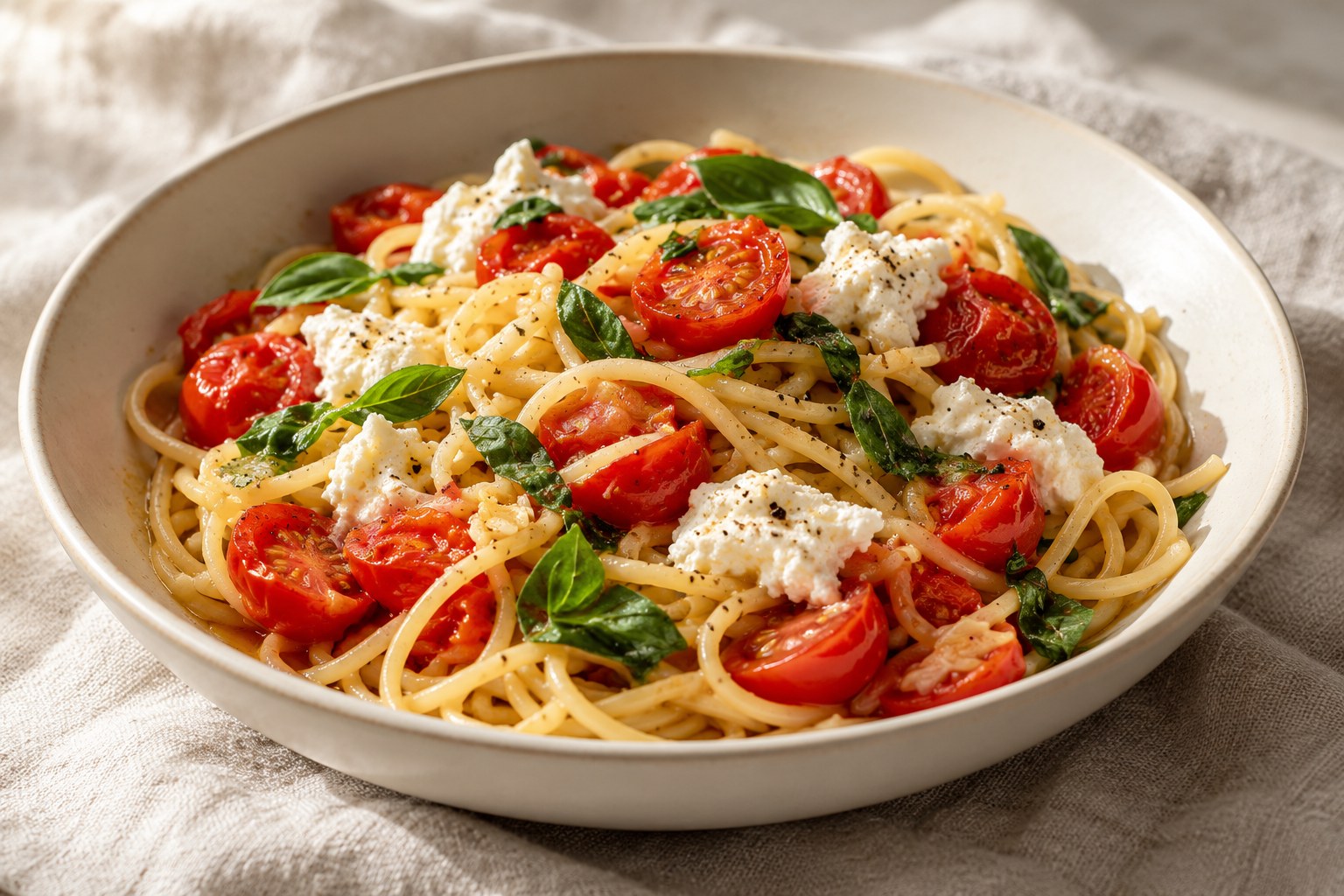
1. Cherry tomato and ricotta pasta
Use pasta, cherry tomatoes, ricotta, garlic and basil. Cook pasta and reserve some starchy cooking water. Warm halved tomatoes and garlic in oil until the tomatoes soften, toss with pasta and a splash of cooking water, then spoon ricotta and torn basil over the top. It is a fresh, creamy dish without requiring a long simmered sauce.
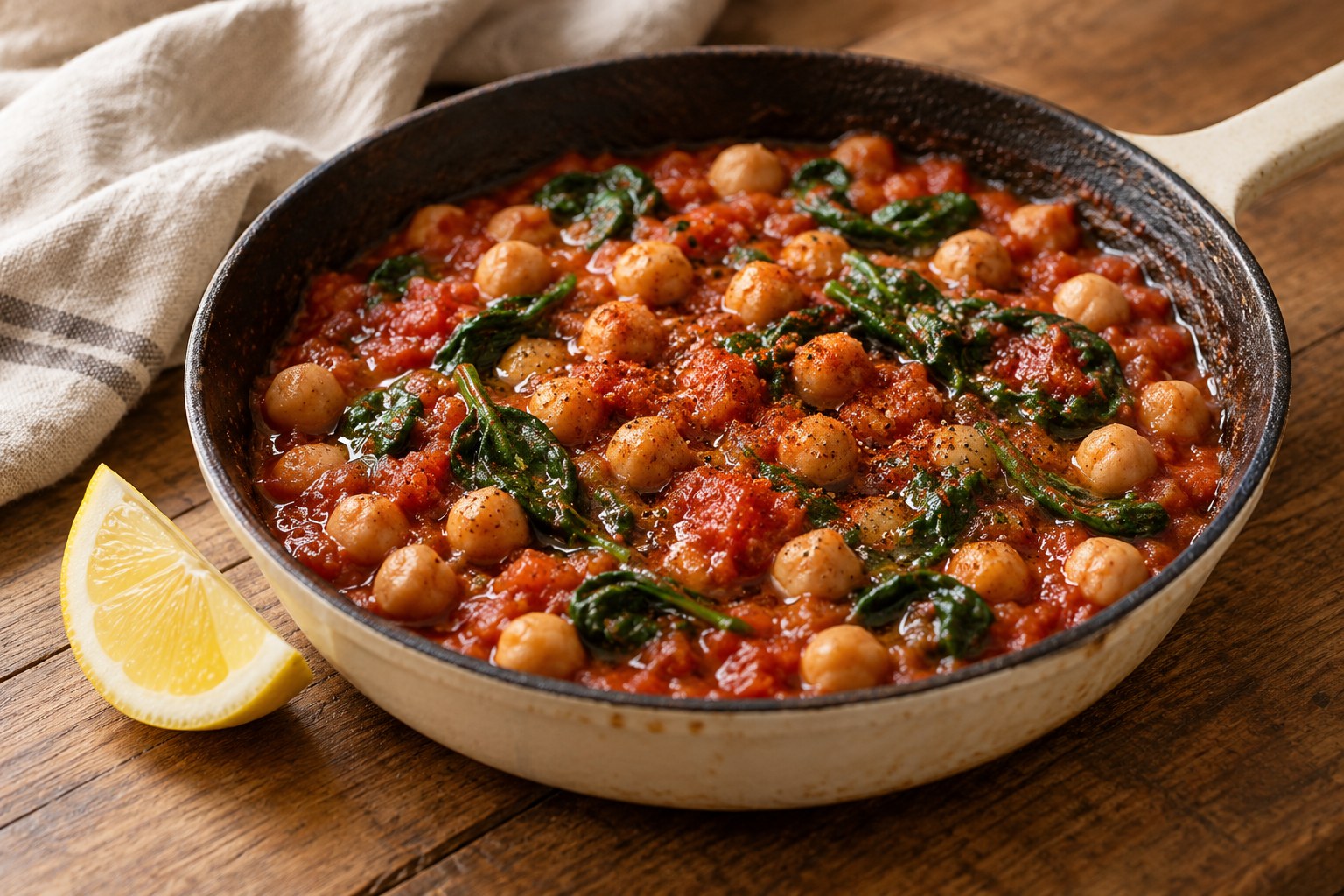
2. Chickpea spinach tomato skillet
Use canned chickpeas, canned crushed tomatoes, baby spinach, smoked paprika and lemon. Heat drained chickpeas with tomatoes and paprika, simmer briefly and wilt spinach into the sauce. Add lemon at the end. Spoon over toast if you have it, noting that the bread becomes an additional ingredient.
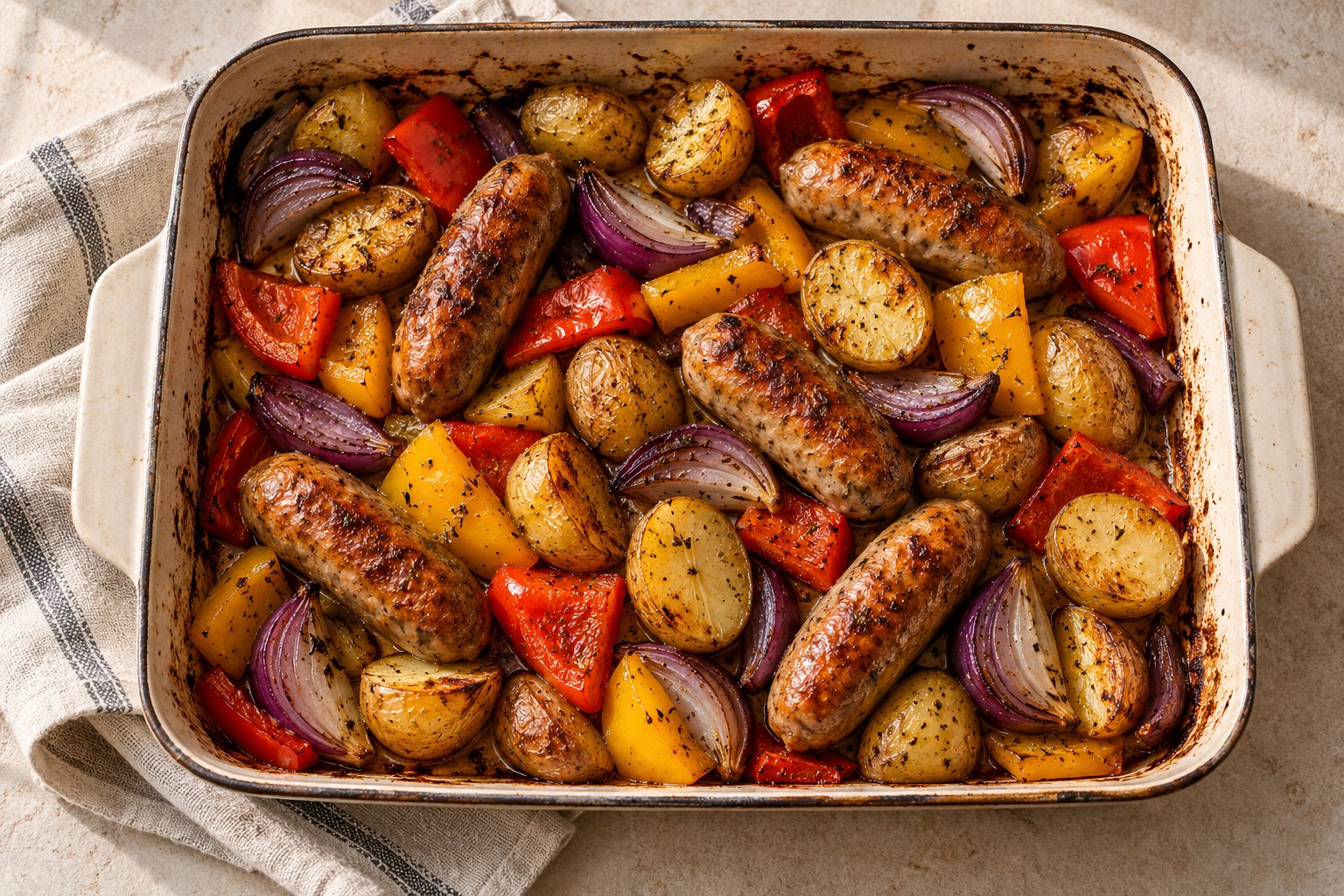
3. Sausage, potato and pepper tray
Use sausage, baby potatoes, bell peppers, red onion and dried Italian herbs. Roast prepared vegetables on a suitable tray, adding the sausage at the stage required for safe cooking. Raw sausage must reach the applicable safe internal temperature; different meats and links need different timing. The vegetables should be tender and browned, not left half raw to meet a twenty-minute claim.
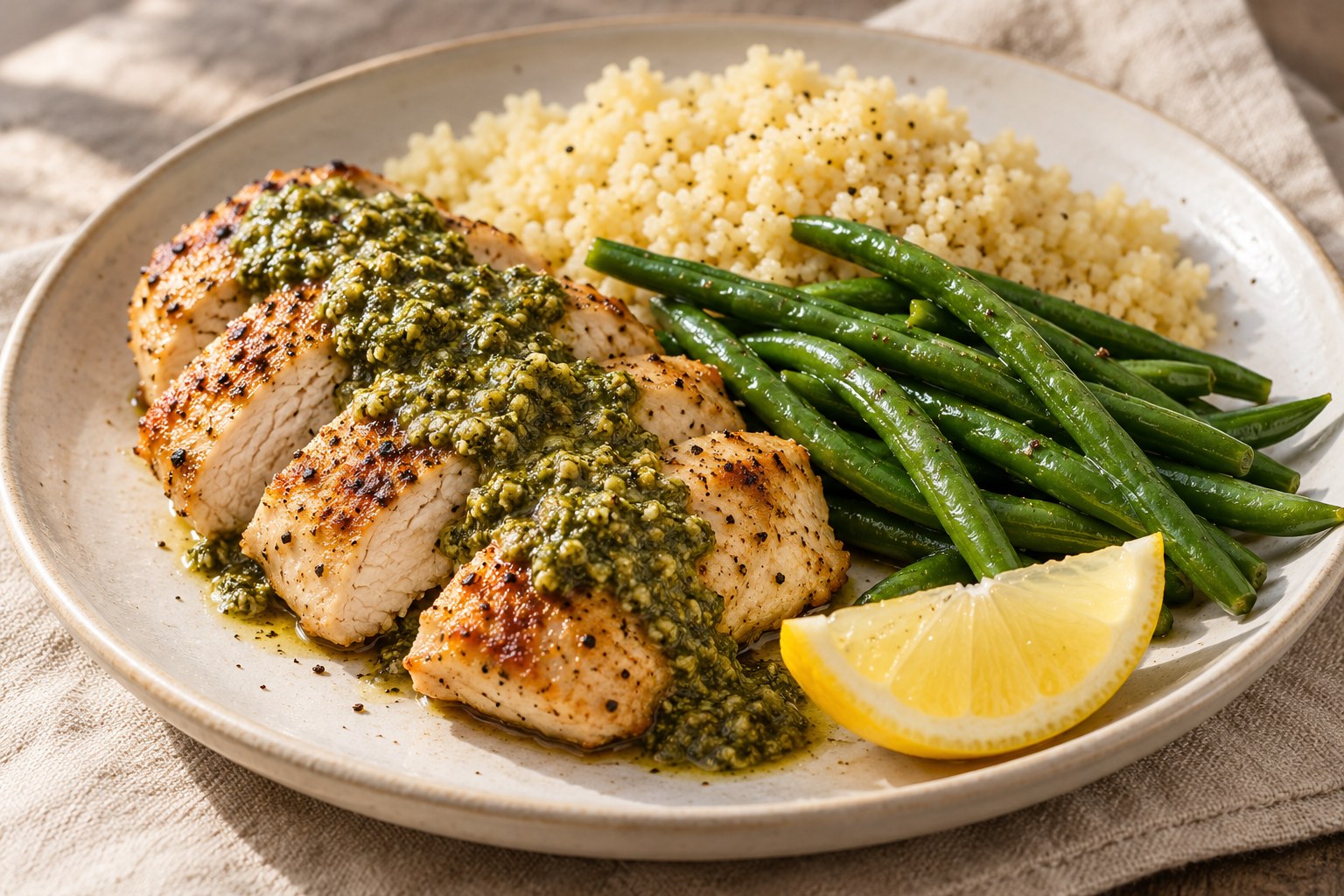
4. Pesto chicken with green beans
Use two chicken portions, prepared pesto, green beans, lemon and a grain such as couscous. Cook chicken thoroughly to 74°C (165°F) and warm beans while couscous hydrates. Spoon pesto over the cooked chicken and finish with lemon. Prepared pesto may contain nuts, dairy and significant salt, so check labels before serving guests.
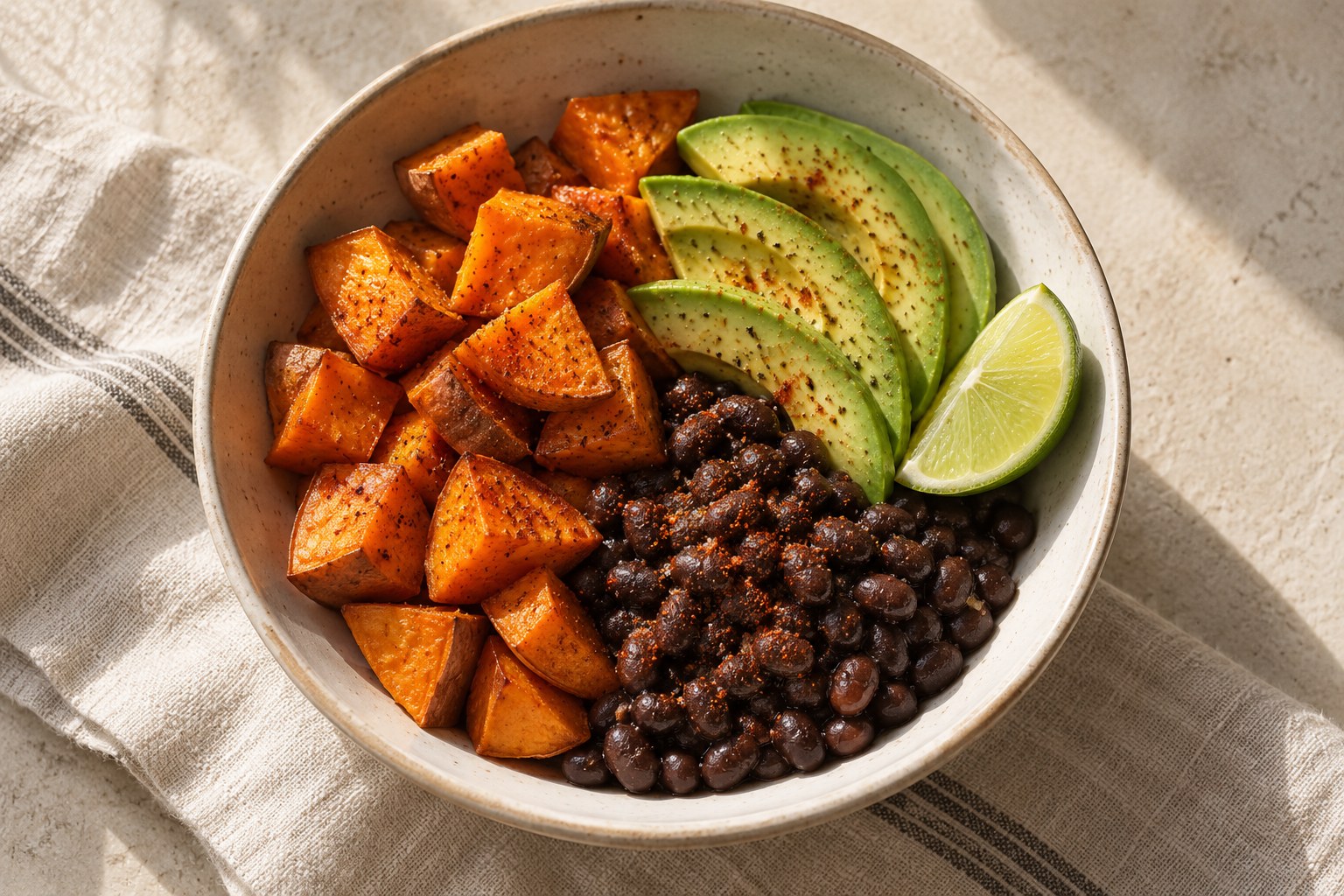
5. Black bean sweet potato bowls
Use sweet potatoes, canned black beans, avocado, lime and chili powder. Roast or microwave the potatoes according to a tested method until tender; warm rinsed beans with chili powder. Serve with avocado and lime. Add salsa if desired, but then count it as a sixth ingredient.
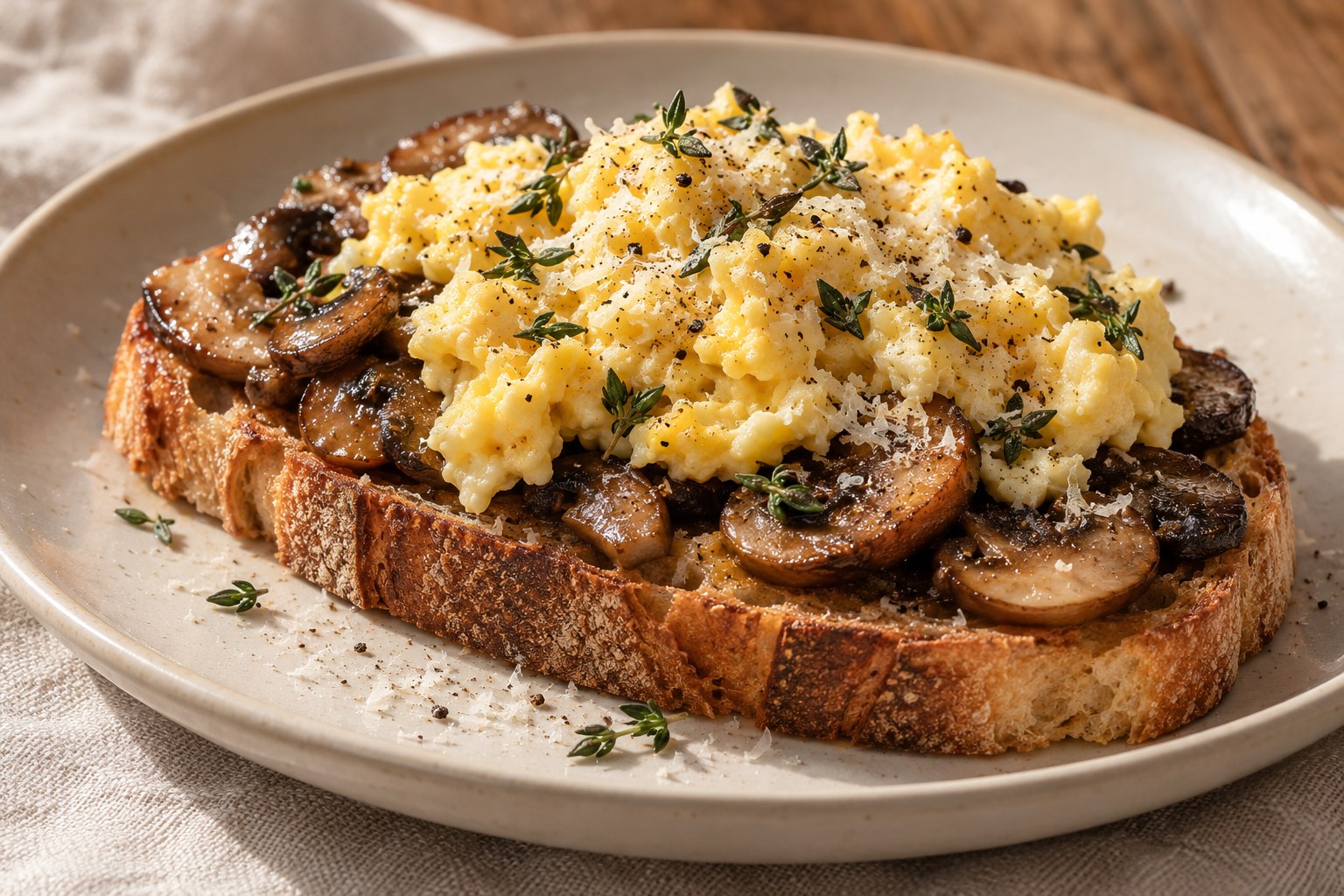
6. Mushroom egg toast
Use mushrooms, eggs, sourdough, thyme and parmesan. Sauté mushrooms until their moisture evaporates and the edges brown. Cook eggs safely to the intended endpoint and set over toast, finishing with thyme and parmesan. This is a satisfying breakfast-for-dinner option with a short shopping list.
7. Salmon with mustard potatoes
Use salmon fillets, baby potatoes, Dijon mustard, green beans and lemon. Give potatoes a head start using a suitable cooking method, then cook the fish and green beans. Brush a modest amount of mustard onto salmon and finish with lemon. Check fish doneness with a thermometer according to local guidance.
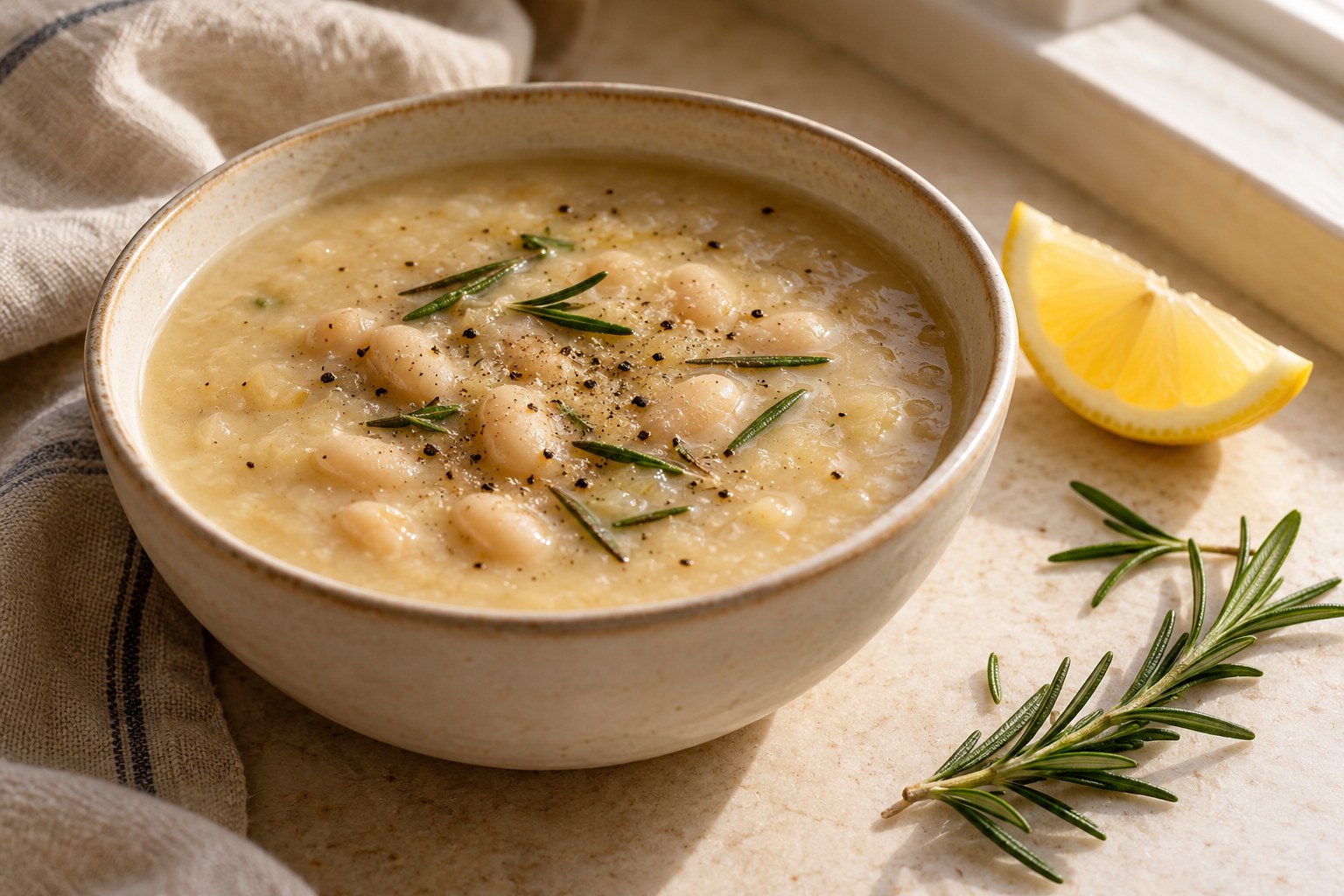
8. Creamy white-bean soup
Use cannellini beans, vegetable broth, onion, rosemary and lemon. Soften chopped onion, add beans and broth and simmer. Blend a portion to create creaminess without dairy, then finish with rosemary and lemon. The soup becomes richer with a drizzle of olive oil, counted here as the usual cooking fat.
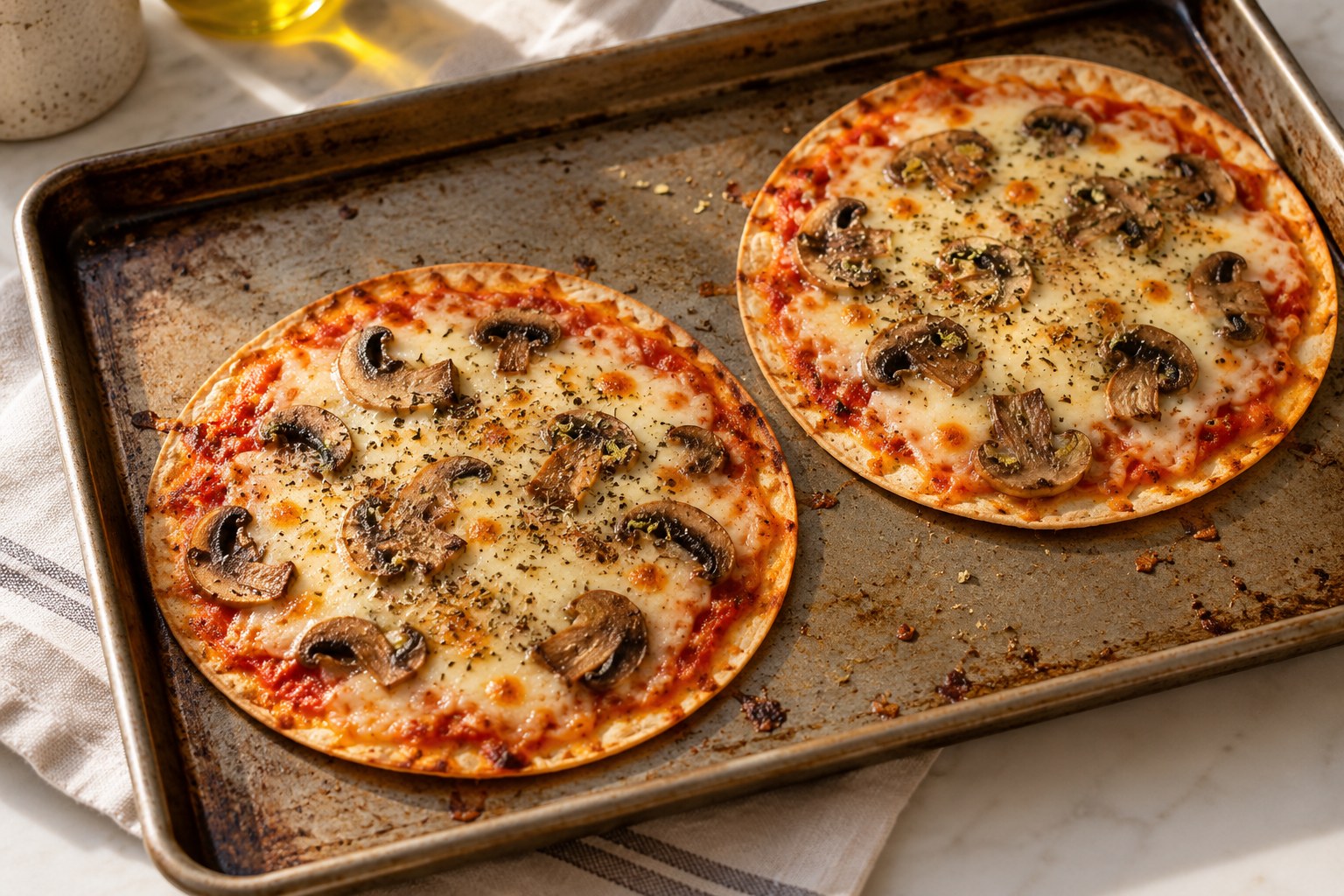
9. Tortilla pizzas
Use tortillas, tomato sauce, mozzarella, mushrooms and oregano. Spread a thin layer of sauce over tortillas, scatter mushrooms and cheese, and bake under a recipe-tested method until the edges are crisp and the topping is fully heated. Don't overload wet vegetables or the bases may stay limp.
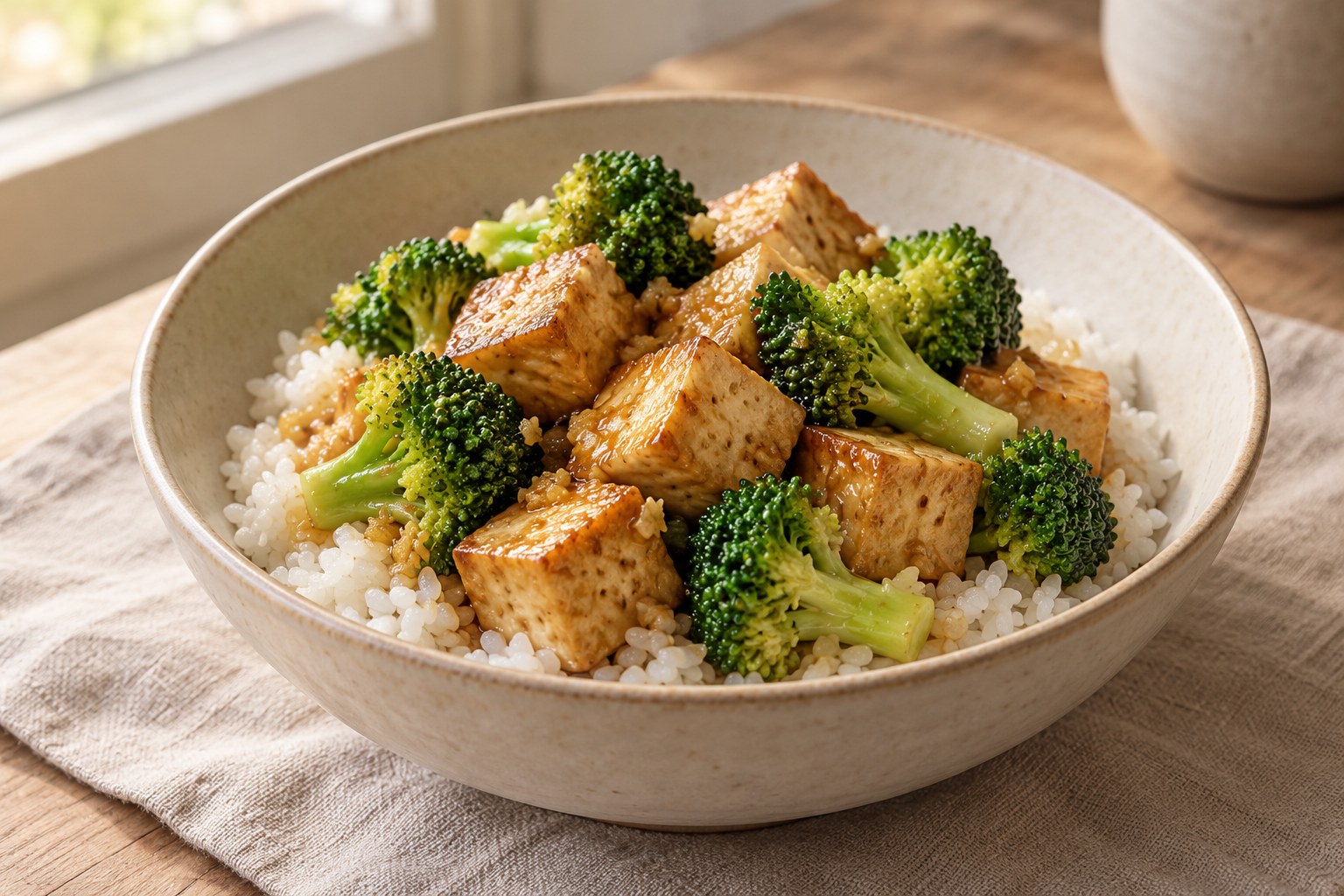
10. Ginger tofu stir-fry
Use firm tofu, broccoli, soy sauce, ginger and rice. Dry and brown tofu, add broccoli with a little water to help it cook, and season with ginger and soy sauce. Serve over cooked rice. Soy sauce already supplies salt, so season the finished meal carefully.
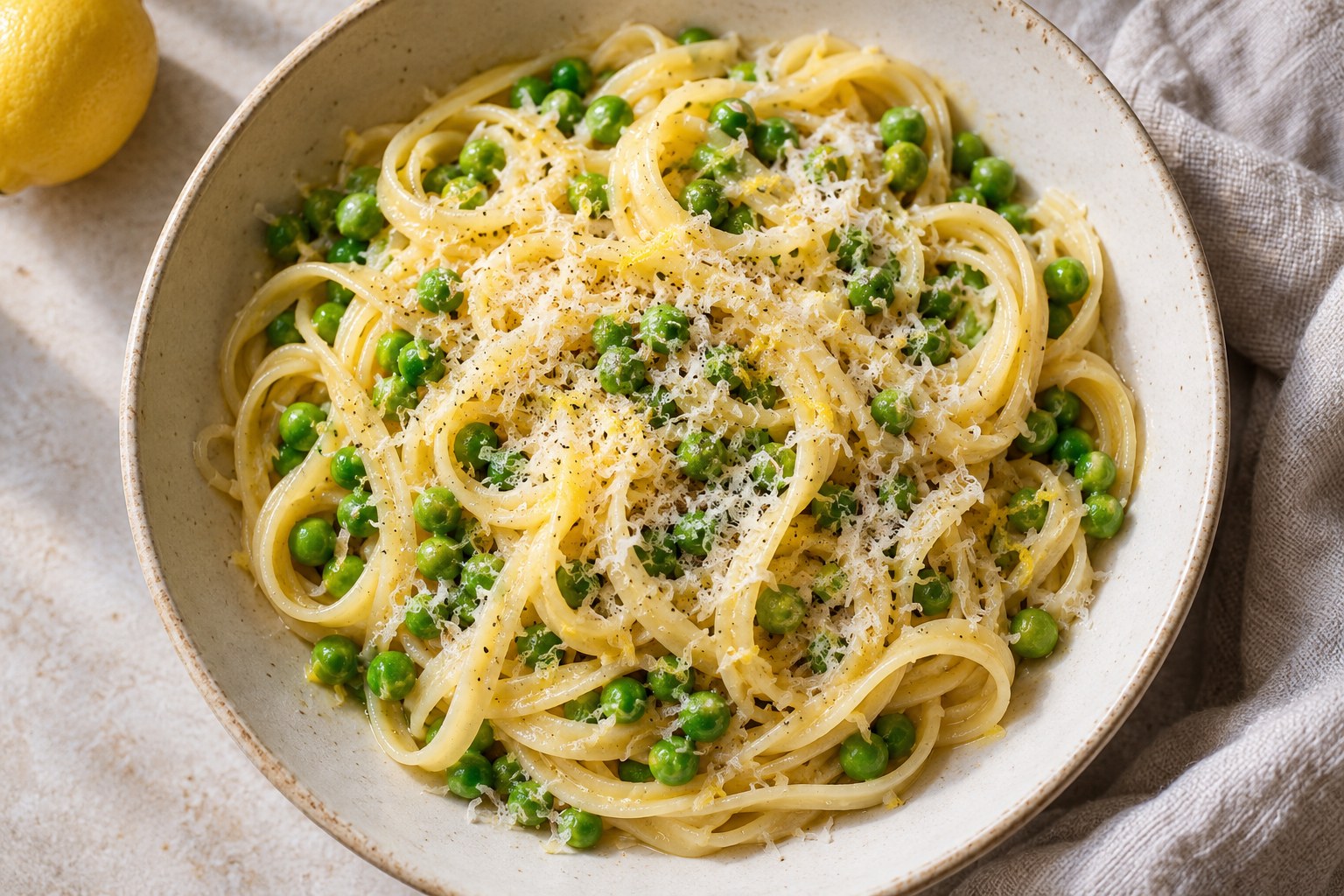
11. Lemon butter pea noodles
Use pasta, frozen peas, butter, lemon and parmesan. Cook pasta, adding peas at the correct stage so they're heated through. Toss with butter, lemon and some reserved cooking water, then top with parmesan. A classic example of how starch and emulsion make a satisfying sauce without cream.
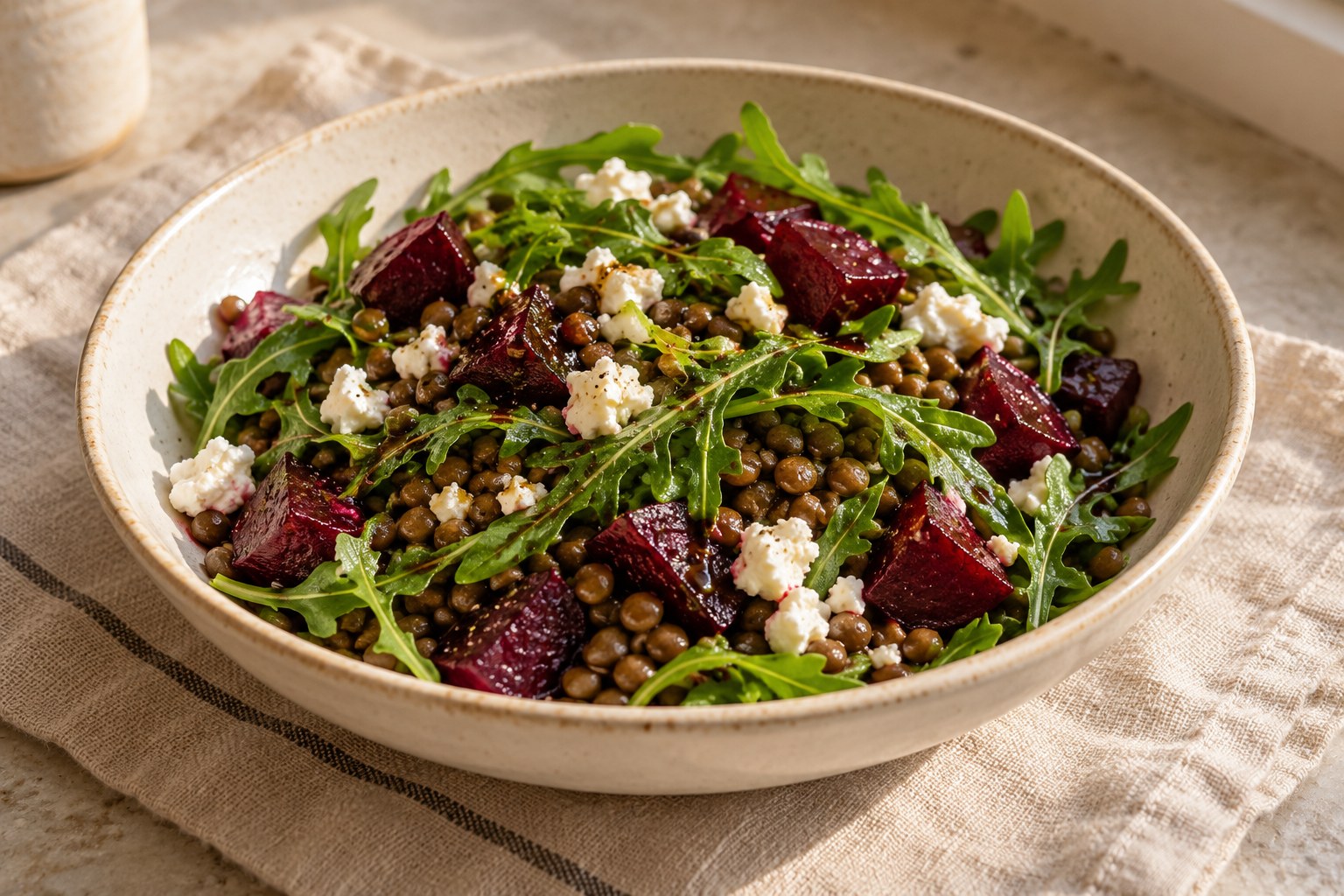
12. Warm lentil salad
Use cooked lentils, roasted beets, arugula, goat cheese and balsamic vinegar. Toss warm lentils and beets, then add greens, cheese and vinegar. Canned or vacuum-packed cooked beets keep preparation quick. If using dry lentils, their cooking time is a separate step and not included in a short preparation claim.
13. Rice and egg vegetable bowls
Use cooked rice, eggs, frozen mixed vegetables, soy sauce and scallions. Heat vegetables and rice thoroughly, scramble eggs until cooked, then combine with soy sauce. Keep previously cooked rice safely refrigerated and reheat leftovers appropriately rather than using room-temperature rice from the previous night.
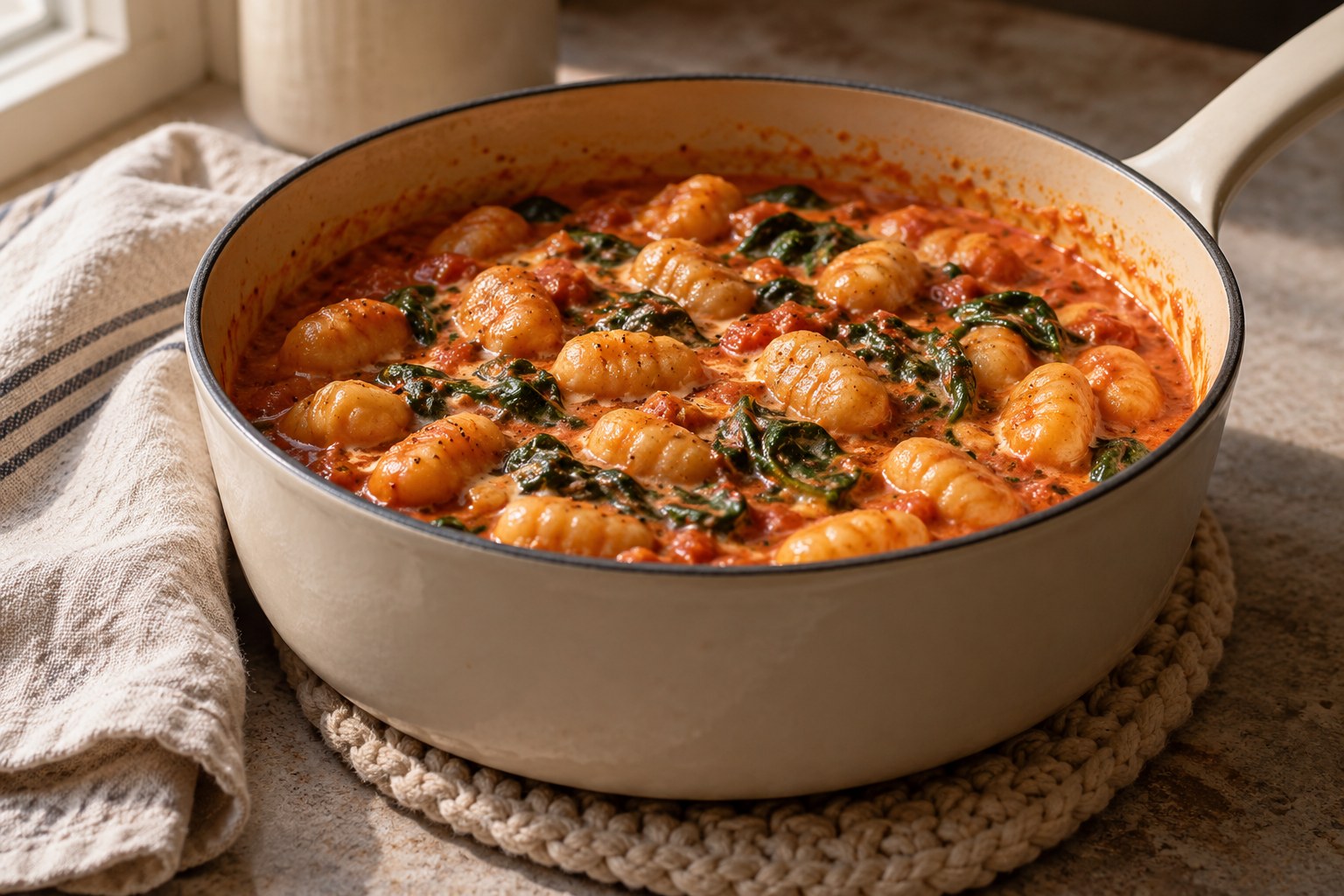
14. Creamy tomato gnocchi
Use shelf-stable gnocchi, tomato passata, mascarpone, spinach and garlic. Simmer passata and garlic, add gnocchi according to its cooking directions, fold in spinach and finish with a small amount of mascarpone. Check the product label: some gnocchi require a separate boiling step.
15. Baked feta with vegetables
Use feta, cherry tomatoes, zucchini, chickpeas and oregano. Roast vegetables and chickpeas in a suitable dish with the feta until hot and softened according to a tested recipe. Serve as a hearty bowl or add bread, acknowledging that bread is an additional ingredient. The salty cheese means little extra salt may be needed.
Why the prepared ingredient matters
A flavoured sausage, jarred pesto or passata can replace a long list of separate seasonings. This is convenient but not automatically cheaper or suitable for every diet. Compare per-serving prices and ingredients; a can of plain tomatoes plus a pantry spice may be a better value than a premium sauce jar.
Build flavour with contrast
Short-list recipes benefit from one bright element: lemon, vinegar, herbs or pickled vegetables. Rich dishes need acidity; mild beans benefit from aromatic spices; roasted vegetables need a little salt or umami. You don't need ten seasonings when the few chosen ingredients complement one another.
When five ingredients isn't enough
A recipe that requires more items for adequate protein, vegetables or safe cooking doesn't become better by deleting them. Five ingredients should be a tool for simplicity, not a dietary rule. Add a side salad or fruit when a small dish needs more variety.
Use overlapping ingredients across the week
Tomatoes can serve pasta and baked feta; a lemon can finish salmon and white-bean soup; spinach can enter gnocchi and chickpeas. Plan two or three dinners that share perishables while tasting different. This reduces waste and keeps the shopping list shorter overall.
Food safety with shortcuts
Prepared ingredients still require correct handling after opening. Keep perishable sauces and cooked leftovers at 4°C (40°F) or colder, refrigerate within two hours and follow the producer's use-by instructions. Use food thermometers for chicken and other meats rather than assuming a short ingredient list means a short safe cooking time.
Choose simplicity that feels generous
The best five-ingredient dinner uses a good central ingredient, a supporting vegetable or starch and one bright finishing flavour. Count honestly, choose formulas with sensible portions and let a short shopping list free you to enjoy the meal.
Food-safety reference: Health Canada: food safety tips for leftovers.
IN PICTURES
From the baking notebook
FROM THE RECIPE BOX