Salmon and Dill Quiche Recipe

A buttery, flaky crust cradles a silky custard filled with tender salmon and fragrant dill, creating a sophisticated quiche that's both comforting and elegant.
Difficulty:
Intermediate
Prep Time:
30 mins
Cook Time:
45 mins
Serves:
1 quiche (8 slices)
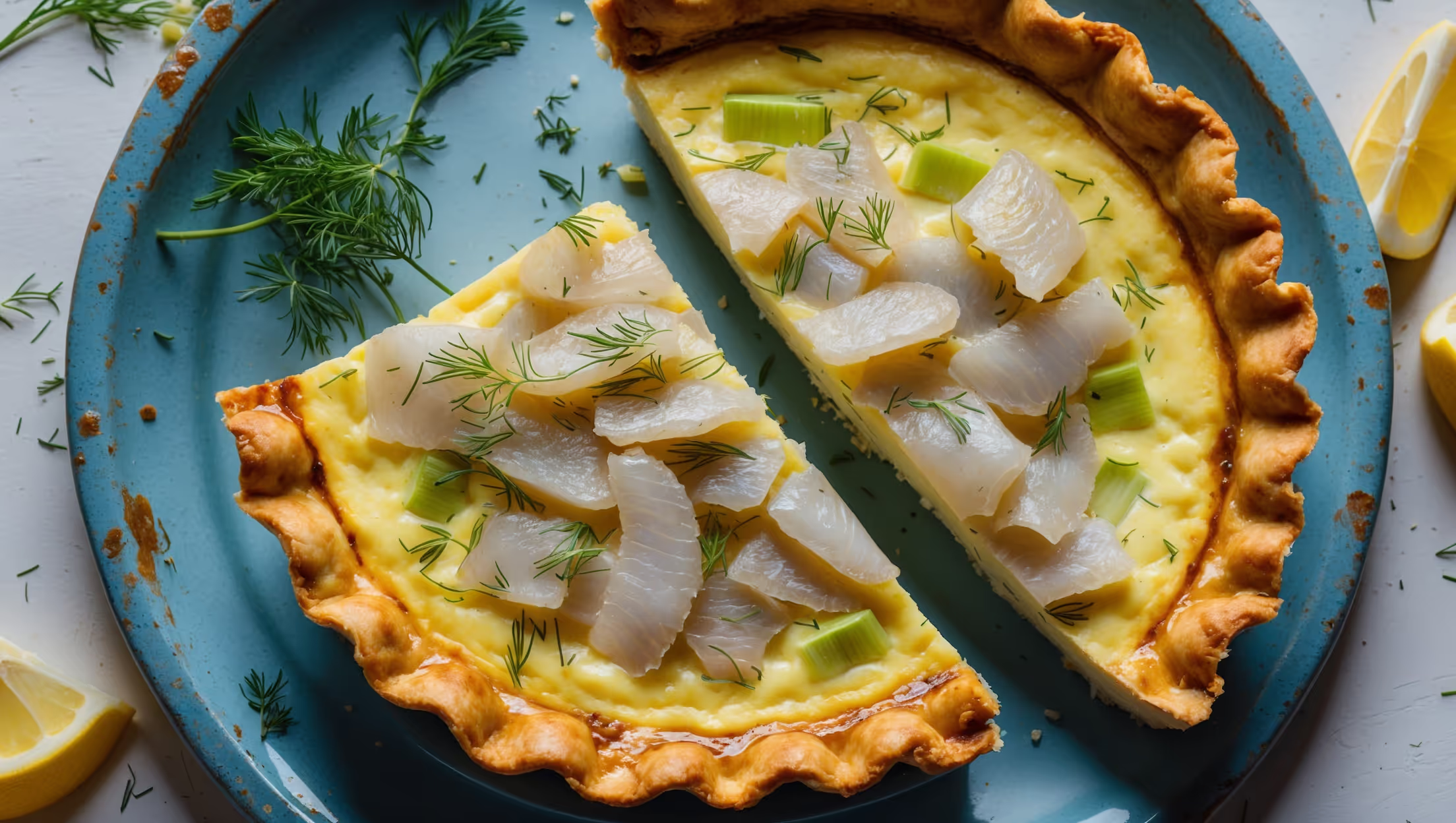
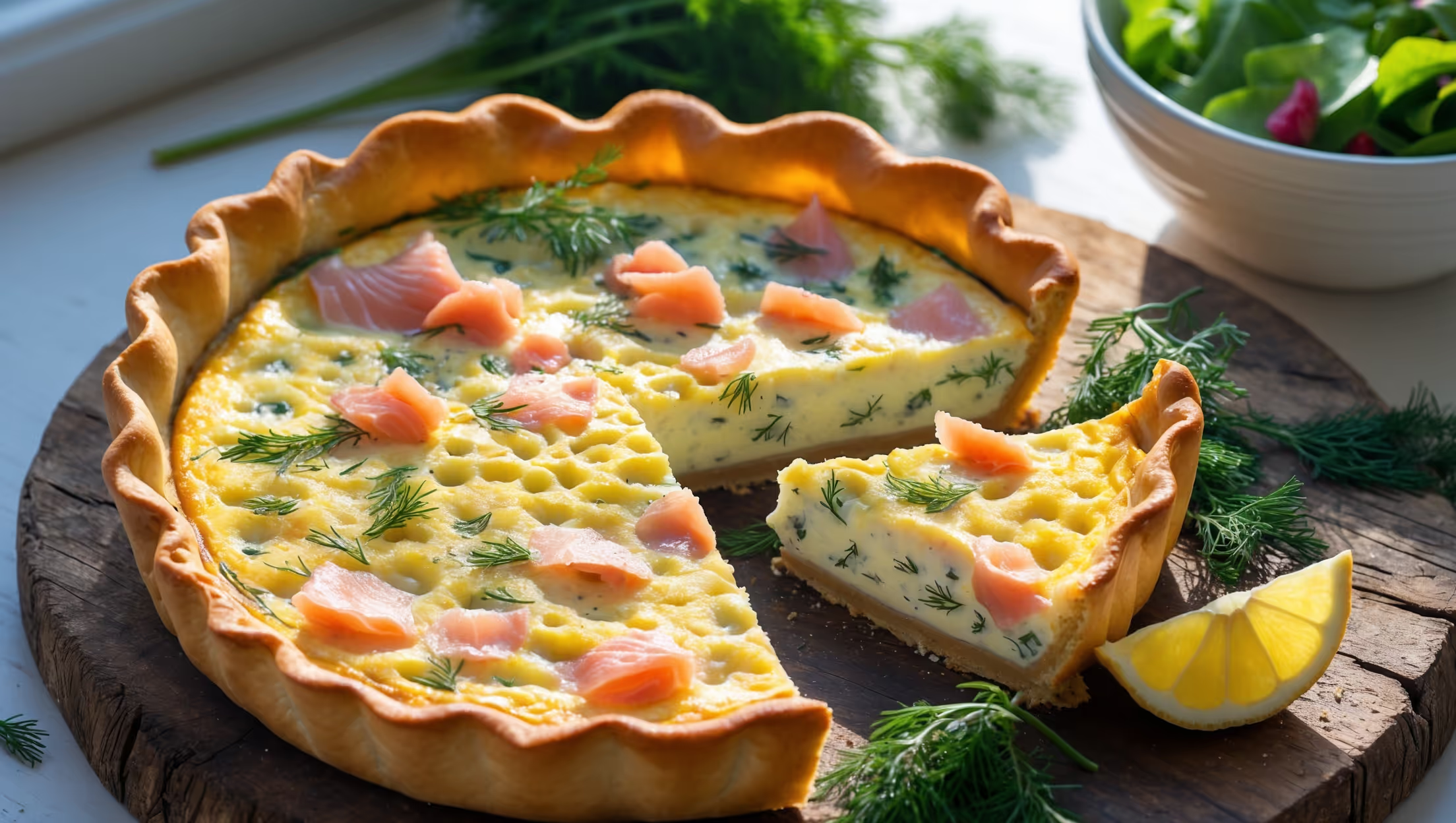
A golden-brown Salmon and Dill Quiche photographed in cross-section, revealing the creamy, pale yellow custard studded with vibrant pink chunks of salmon and bright flecks of fresh dill. A slice has been cut, showing the perfectly crisp, flaky pastry holding together a moist filling. Shot in soft natural light on a rustic wooden board, with a small bunch of fresh dill and lemon wedges artfully arranged alongside. Delicate wisps of steam still rise from the warm filling, highlighting the just-baked freshness, while the contrasting textures of the crumbly pastry edge and silky center create visual interest.

Ingredients

<ul class="ingredients-main-list"><li class="ingredients-single-item">200g plain flour</li><li class="ingredients-single-item">100g cold unsalted butter, cubed</li><li class="ingredients-single-item">1/4 tsp salt</li><li class="ingredients-single-item">3-4 tbsp ice-cold water</li><li class="ingredients-single-item">250g fresh salmon fillets (or smoked salmon)</li><li class="ingredients-single-item">4 large eggs</li><li class="ingredients-single-item">250ml double cream</li><li class="ingredients-single-item">100ml whole milk</li><li class="ingredients-single-item">3 tbsp fresh dill, chopped</li><li class="ingredients-single-item">1 small leek, finely sliced (or 1 shallot)</li><li class="ingredients-single-item">100g Gruyère cheese, grated (or Emmental)</li><li class="ingredients-single-item">1 tbsp olive oil</li><li class="ingredients-single-item">1/2 tsp freshly ground black pepper</li><li class="ingredients-single-item">1/4 tsp grated nutmeg</li></ul>

Equipment

<ul class="equipment-main-list"><li class="equipment-single-item">23cm (9-inch) loose-bottomed tart tin</li><li class="equipment-single-item">Baking beans or rice (for blind baking)</li><li class="equipment-single-item">Baking parchment</li><li class="equipment-single-item">Food processor (optional)</li></ul>
BAKE SMARTER

Kitchen Converter

Quickly switch between common baking units without leaving the recipe.

Convert
Result—

Volume uses US cups, tablespoons, and teaspoons. Converting weight to volume depends on the ingredient.

Directions

<ol class="no-list-style"><li class="MethodStepper"><h4 class="step-title">Step 1</h4>Preheat your oven to 190°C (170°C fan). To make the pastry, place the flour and salt in a large bowl (or food processor). Add the cold cubed butter and rub it in with your fingertips until the mixture resembles breadcrumbs (or pulse in a processor). This cold butter will create steam pockets during baking, resulting in flaky layers.</li><li class="MethodStepper"><h4 class="step-title">Step 2</h4>Add the ice-cold water one tablespoon at a time, mixing gently until the dough just comes together - don't overwork it or your pastry will be tough. Form into a disc, wrap in cling film and chill for at least 30 minutes. The resting period allows the gluten to relax, preventing shrinkage during baking.</li><li class="MethodStepper"><h4 class="step-title">Step 3</h4>On a lightly floured surface, roll out the pastry to about 3-4mm thickness and use it to line your tart tin, gently pressing into the corners. Trim the excess and prick the base with a fork. Line with baking parchment, fill with baking beans and blind-bake for 15 minutes. Remove the beans and parchment, then bake for another 5-7 minutes until the base looks dry and slightly golden.</li><li class="MethodStepper"><h4 class="step-title">Step 4</h4>While the pastry bakes, prepare the filling. If using fresh salmon, rub with a little olive oil, season with salt and pepper, and bake in the oven for 10-12 minutes until just cooked through. Once cooled slightly, flake into bite-sized pieces, discarding any skin and bones. If using smoked salmon, simply cut into small pieces.</li><li class="MethodStepper"><h4 class="step-title">Step 5</h4>In a frying pan, heat the olive oil over medium heat and gently sauté the leeks until soft but not colored, about 5-6 minutes. Set aside to cool slightly. Softening the leeks before baking removes excess moisture that could make your quiche soggy.</li><li class="MethodStepper"><h4 class="step-title">Step 6</h4>In a large bowl, whisk together the eggs, cream, and milk until well combined. Stir in the chopped dill, sautéed leeks, grated cheese, black pepper, and nutmeg. The high fat content in the cream creates a silky, stable custard that won't curdle when baked.</li><li class="MethodStepper"><h4 class="step-title">Step 7</h4>Reduce oven temperature to 180°C (160°C fan). Scatter the salmon pieces evenly over the base of the blind-baked pastry case. Carefully pour the egg mixture over the salmon, filling it to about 5mm below the rim (the filling will puff up slightly during baking).</li><li class="MethodStepper"><h4 class="step-title">Step 8</h4>Bake the quiche for 25-30 minutes until the filling is just set with a slight wobble in the center - it will continue firming up as it cools. The perfect quiche should tremble like a gentle jelly when lightly shaken; if it's completely firm in the middle, it's overcooked.</li><li class="MethodStepper"><h4 class="step-title">Step 9</h4>Allow the quiche to cool in the tin for 10-15 minutes before carefully removing. This resting period allows the custard to set completely, making clean slices easier. Serve warm or at room temperature with a crisp green salad. The quiche will keep refrigerated for up to 3 days, or can be frozen for up to a month.</li></ol>

Nutrition Facts (per serving)

🍽️ Serving Size: 1 slice
🔥 Calories: 375 calories
🥑 Fat: 28 g
🧈 Saturated Fat: 15 g
🍞 Carbohydrates: 18 g
🍭 Sugar: 2 g
🍗 Protein: 15 g
🫀 Cholesterol: 210 mg
🧂 Sodium: 420 mg

Chef’s Notes

A few helpful details for making this recipe.

Can I use smoked salmon instead of fresh in a quiche?

Yes, smoked salmon works beautifully in quiche! Simply cut it into bite-sized pieces and scatter over the pastry base - no pre-cooking needed. It adds a deeper, saltier flavour profile compared to fresh salmon, so you might want to reduce any added salt in the recipe.

Why is my quiche soggy on the bottom?

Soggy quiche bottoms usually happen when you skip blind-baking or don't cook the pastry long enough. Always blind-bake your pastry case until golden and dry, and pre-cook wet ingredients like leeks or mushrooms to remove excess moisture before adding to the filling.

How do I know when my quiche is perfectly cooked?

A perfectly cooked quiche should have a slight wobble in the centre when gently shaken - like set jelly. The edges will be puffed and golden, but the middle shouldn't be completely firm. It will continue setting as it cools. Insert a knife 1 inch from centre; it should come out clean.

Want to try something else in ...

More recipes you might like

Keep exploring with more recipes from What's Baking.