Turkish Quiche (with Sumac and Pomegranate) Recipe

A savory Mediterranean quiche with flaky pastry crust filled with spiced minced lamb, creamy feta, tangy sumac, and jewel-like pomegranate seeds for bursts of sweetness.
Difficulty:
Intermediate
Prep Time:
45 mins
Cook Time:
35 mins
Serves:
1 quiche (8 slices)
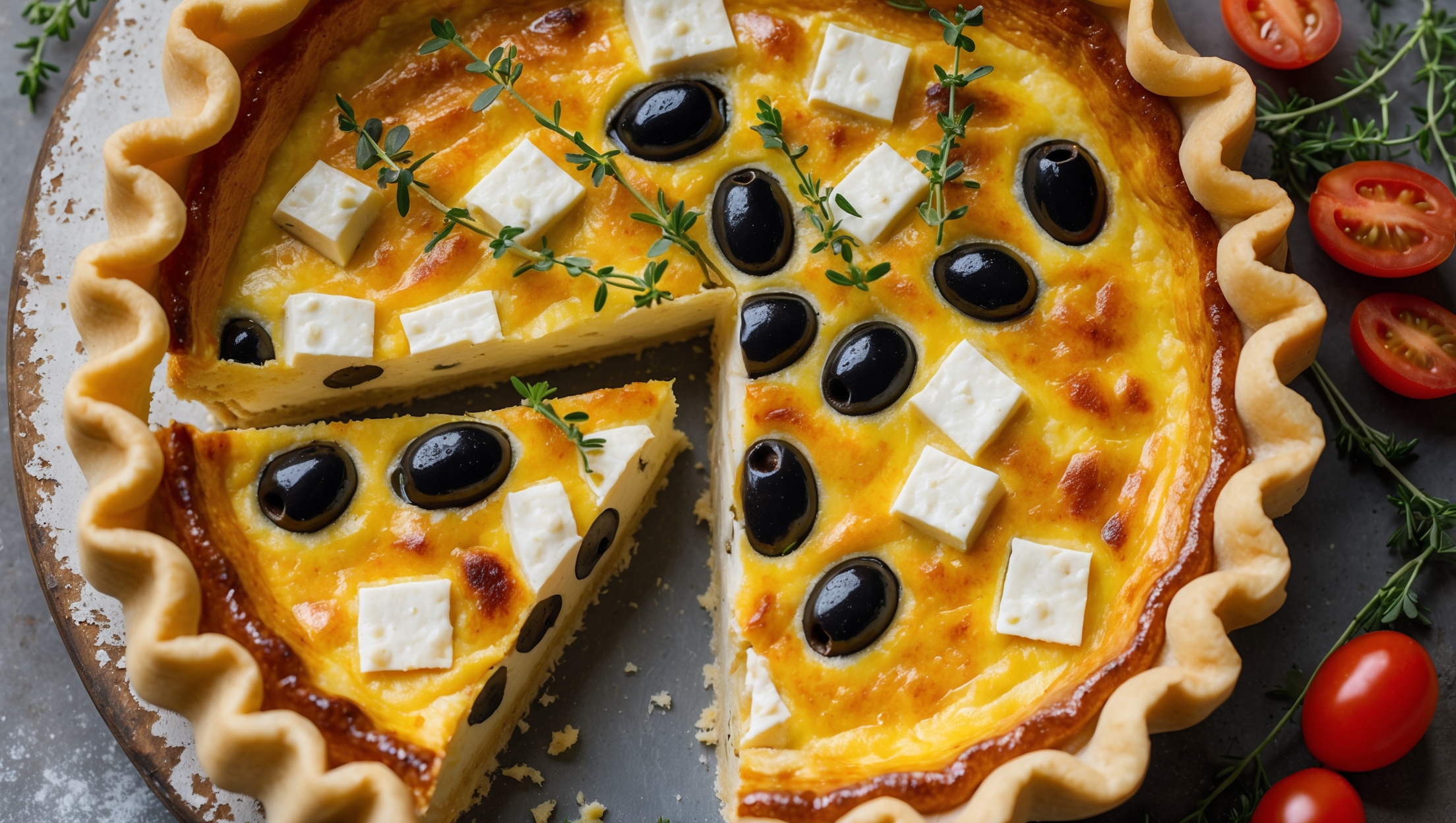
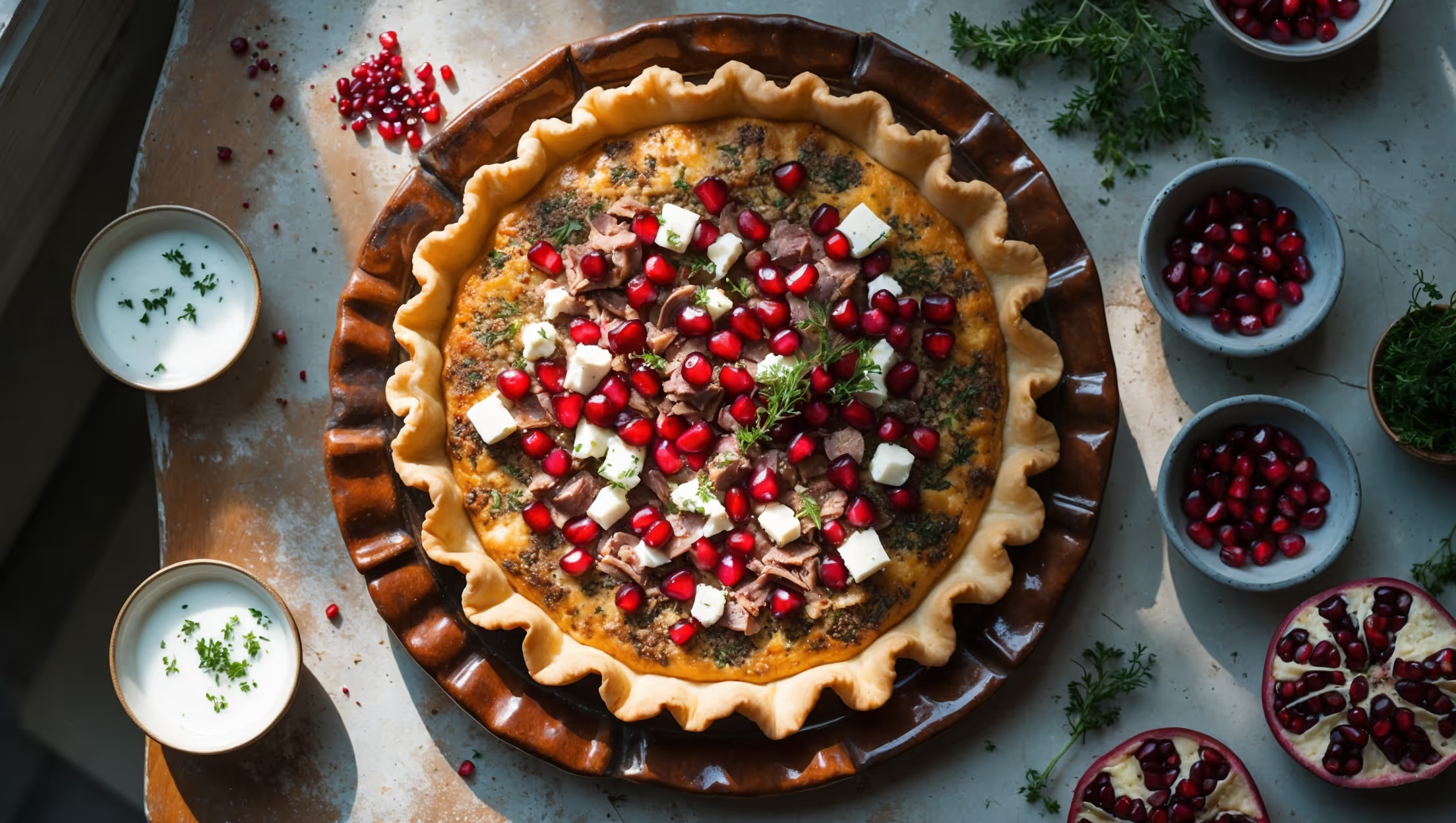
An overhead shot of the golden-brown quiche resting on a handcrafted ceramic platter, bathed in soft natural light from a nearby window. The crust displays a perfect flaky texture with a slightly crimped edge, while the filling reveals a rich mosaic of colors – the russet tones of sumac-spiced lamb, ivory flecks of feta, and ruby-red pomegranate seeds scattered across the surface like gems. Surrounding the quiche are small bowls of additional pomegranate arils, fresh herbs, and a light yogurt sauce, all arranged on a weathered wooden table with scattered sumac and a vintage Turkish tea set nearby, creating a warm, inviting Mediterranean tableau.

Ingredients

<ul class="ingredients-main-list"><li class="ingredients-single-item">For the pastry:</li><li class="ingredients-single-item">200g plain flour</li><li class="ingredients-single-item">100g cold unsalted butter, cubed</li><li class="ingredients-single-item">1 egg</li><li class="ingredients-single-item">3-4 tbsp ice-cold water</li><li class="ingredients-single-item">½ tsp salt</li><li class="ingredients-single-item">For the filling:</li><li class="ingredients-single-item">250g minced lamb</li><li class="ingredients-single-item">1 medium onion, finely diced</li><li class="ingredients-single-item">3 garlic cloves, minced</li><li class="ingredients-single-item">2 tbsp olive oil</li><li class="ingredients-single-item">2 tbsp sumac, plus extra for garnish</li><li class="ingredients-single-item">1 tsp ground cumin</li><li class="ingredients-single-item">1 tsp ground coriander</li><li class="ingredients-single-item">¼ tsp cinnamon</li><li class="ingredients-single-item">1 tbsp tomato paste</li><li class="ingredients-single-item">150g feta cheese, crumbled</li><li class="ingredients-single-item">3 eggs</li><li class="ingredients-single-item">200ml double cream</li><li class="ingredients-single-item">100ml Greek yogurt</li><li class="ingredients-single-item">2 tbsp fresh mint, chopped</li><li class="ingredients-single-item">2 tbsp fresh parsley, chopped</li><li class="ingredients-single-item">Seeds from 1 pomegranate (about 100g)</li><li class="ingredients-single-item">Salt and freshly ground black pepper to taste</li></ul>

Equipment

<ul class="equipment-main-list"><li class="equipment-single-item">23cm (9-inch) fluted tart tin with removable base</li><li class="equipment-single-item">Baking beans or rice for blind baking</li><li class="equipment-single-item">Baking parchment</li><li class="equipment-single-item">Rolling pin</li></ul>
BAKE SMARTER

Kitchen Converter

Quickly switch between common baking units without leaving the recipe.

Convert
Result—

Volume uses US cups, tablespoons, and teaspoons. Converting weight to volume depends on the ingredient.

Directions

<ol class="no-list-style"><li class="MethodStepper"><h4 class="step-title">Step 1</h4>Start with the pastry by placing the flour and salt in a large bowl. Add the cold cubed butter and rub it into the flour with your fingertips until the mixture resembles breadcrumbs. Cold butter is essential here as it creates steam during baking, resulting in those lovely flaky layers in your pastry.</li><li class="MethodStepper"><h4 class="step-title">Step 2</h4>Beat the egg with 3 tablespoons of ice-cold water, then add to the flour mixture. Mix gently with a knife, adding the extra tablespoon of water if needed, until the dough just comes together – be careful not to overwork it, which would develop the gluten and make your pastry tough.</li><li class="MethodStepper"><h4 class="step-title">Step 3</h4>Form the dough into a disc, wrap in cling film, and chill in the refrigerator for at least 30 minutes. This resting period relaxes the gluten and firms up the butter, ensuring your pastry will hold its shape when baked.</li><li class="MethodStepper"><h4 class="step-title">Step 4</h4>Meanwhile, prepare the filling. Heat the olive oil in a large frying pan over medium heat. Add the onions and cook for 5-6 minutes until soft and translucent. Add the garlic and cook for another minute until fragrant.</li><li class="MethodStepper"><h4 class="step-title">Step 5</h4>Add the minced lamb to the pan, breaking it up with a wooden spoon. Cook until browned, about 8-10 minutes. Stir in the sumac, cumin, coriander, cinnamon, and tomato paste. Cook for another 2 minutes to toast the spices, which releases their aromatic oils and intensifies the flavor. Season with salt and pepper, then remove from heat and allow to cool completely.</li><li class="MethodStepper"><h4 class="step-title">Step 6</h4>Preheat your oven to 180°C (160°C fan/350°F). Roll out the chilled pastry on a lightly floured surface to about 3-4mm thickness, ensuring it's large enough to line your tart tin with some overhang. The pastry should be thin but not so thin that it tears easily.</li><li class="MethodStepper"><h4 class="step-title">Step 7</h4>Carefully lift the pastry into the tin, pressing it gently into the corners without stretching it. Trim the excess, leaving a small overhang to account for shrinkage. Prick the base with a fork, line with baking parchment, and fill with baking beans. Blind bake for 15 minutes, then remove the beans and parchment and bake for another 5 minutes until the base is just starting to color.</li><li class="MethodStepper"><h4 class="step-title">Step 8</h4>In a large bowl, whisk together the eggs, cream, and yogurt until well combined. The yogurt adds a subtle tanginess that complements the sumac beautifully. Stir in most of the herbs (reserving some for garnish).</li><li class="MethodStepper"><h4 class="step-title">Step 9</h4>Spread the cooled lamb mixture evenly over the base of the pastry case. Scatter two-thirds of the crumbled feta and half of the pomegranate seeds over the lamb. The pomegranate seeds will soften slightly during baking but still maintain their juicy pop.</li><li class="MethodStepper"><h4 class="step-title">Step 10</h4>Carefully pour the egg and cream mixture over the filling, ensuring it's evenly distributed. Sprinkle the remaining feta on top.</li><li class="MethodStepper"><h4 class="step-title">Step 11</h4>Bake in the preheated oven for 30-35 minutes, or until the filling is set with just a slight wobble in the center and the top is golden. A skewer inserted into the center should come out clean. If the pastry edges are browning too quickly, cover them loosely with foil.</li><li class="MethodStepper"><h4 class="step-title">Step 12</h4>Allow the quiche to cool for at least 15 minutes before removing from the tin – this resting time helps the filling to set completely. Just before serving, garnish with the remaining pomegranate seeds, reserved herbs, and a light dusting of sumac for that final burst of color and flavor.</li><li class="MethodStepper"><h4 class="step-title">Step 13</h4>Serve warm or at room temperature – both ways are delicious! This Turkish quiche pairs wonderfully with a simple green salad dressed with olive oil and lemon juice. The quiche can be stored in the refrigerator for up to 3 days and gently reheated in a moderate oven.</li></ol>

Nutrition Facts (per serving)

🍽️ Serving Size: 1 slice
🔥 Calories: 385 calories
🥑 Fat: 26 g
🧈 Saturated Fat: 14 g
🍞 Carbohydrates: 28 g
🍭 Sugar: 6 g
🍗 Protein: 12 g
🫀 Cholesterol: 135 mg
🧂 Sodium: 520 mg

Chef’s Notes

A few helpful details for making this recipe.

Can I make this Mediterranean quiche ahead of time for entertaining?

Yes! This quiche can be made up to 2 days in advance and stored in the refrigerator. You can serve it cold or gently reheat in a 160°C oven for 15-20 minutes. The flavours actually develop beautifully overnight, making it an excellent make-ahead option for dinner parties.

What can I use instead of sumac if I can't find it?

If sumac isn't available, use 1 tablespoon of lemon zest mixed with 1 teaspoon of paprika to mimic its tangy, slightly fruity flavour. Za'atar spice blend (which often contains sumac) or a combination of lemon juice and paprika can also work as substitutes in this Mediterranean quiche.

Is there a vegetarian alternative to the lamb filling in this recipe?

Absolutely! For a vegetarian version, replace the lamb with a mixture of roasted aubergines and cooked lentils seasoned with the same spices. Alternatively, use plant-based mince with similar seasonings. Either way, the sumac and pomegranate will still provide those distinctive Turkish flavours.

Want to try something else in ...

More recipes you might like

Keep exploring with more recipes from What's Baking.