Directions
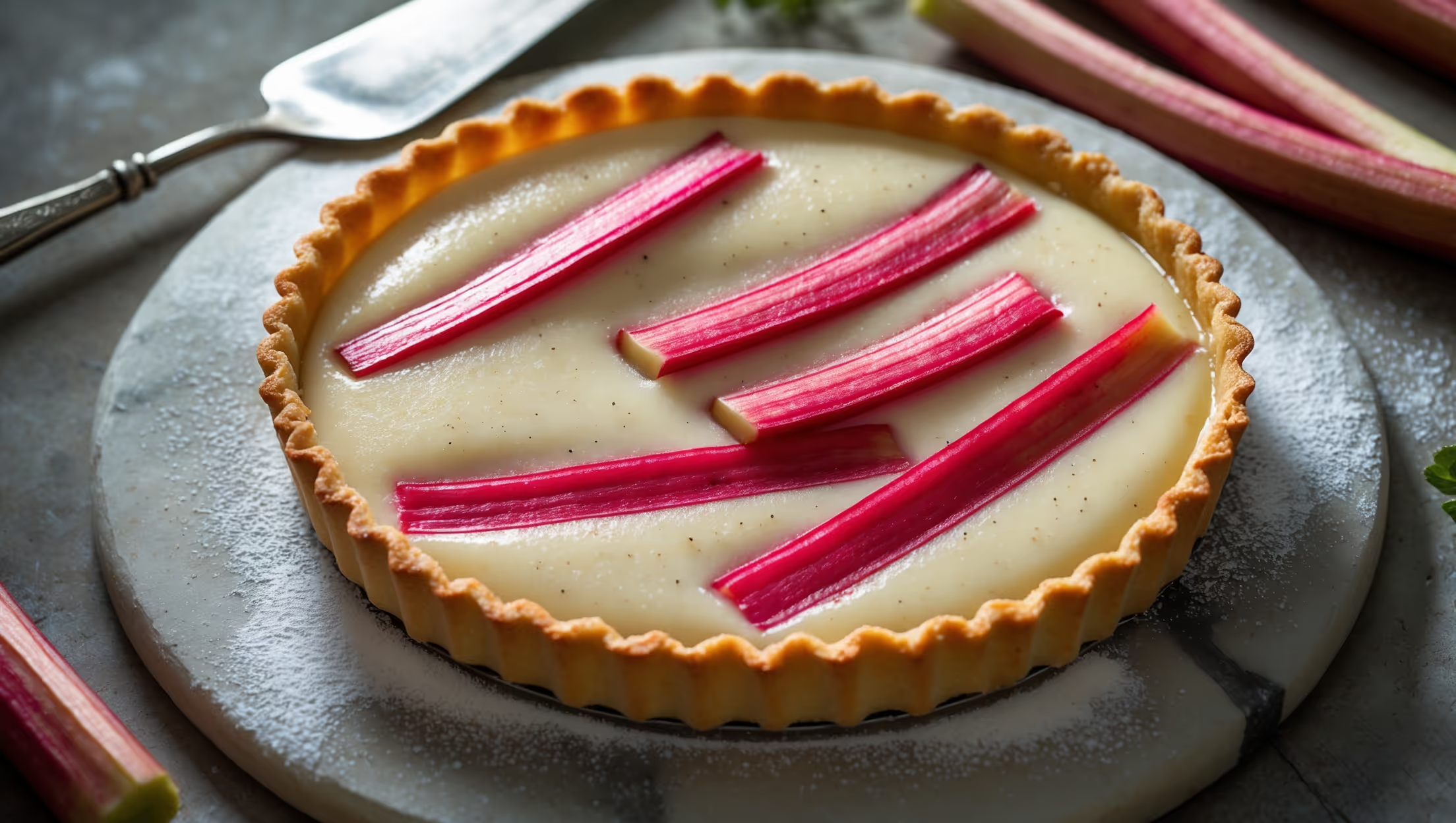
<ol class="no-list-style"><li class="MethodStepper"><h4 class="step-title">Step 1</h4>Begin by making the pastry. Place the flour, salt, and cubed cold butter in a food processor and pulse until the mixture resembles fine breadcrumbs. The cold butter is essential as it creates steam pockets during baking, resulting in flaky pastry. Alternatively, use your fingertips to rub the butter into the flour.</li><li class="MethodStepper"><h4 class="step-title">Step 2</h4>Add the sugar, egg yolk, and 2 tablespoons of ice-cold water. Pulse again until the dough just comes together, adding the remaining tablespoon of water if needed. The dough should hold together when pressed but shouldn't be sticky. Shape into a disc, wrap in cling film and refrigerate for at least 30 minutes to relax the gluten.</li><li class="MethodStepper"><h4 class="step-title">Step 3</h4>Prepare the rhubarb by washing and trimming the stalks. Cut into 5cm pieces for visual appeal. Place in a bowl with the sugar and lemon juice, toss gently to coat, and let macerate for 15 minutes. This draws out some moisture and starts to soften the rhubarb.</li><li class="MethodStepper"><h4 class="step-title">Step 4</h4>Preheat your oven to 190°C (170°C fan). Roll out the chilled pastry on a lightly floured surface to about 3mm thickness, creating a circle approximately 28cm in diameter. Loosely roll the pastry around your rolling pin to help transfer it to the tart tin.</li><li class="MethodStepper"><h4 class="step-title">Step 5</h4>Gently press the pastry into the tin, ensuring it fits into all edges without stretching (which would cause shrinkage). Trim any excess, leaving a small overhang which you can neaten after blind baking. Prick the base with a fork and return to the refrigerator for 15 minutes to prevent shrinkage.</li><li class="MethodStepper"><h4 class="step-title">Step 6</h4>Line the chilled pastry case with baking parchment and fill with baking beans or rice. Blind bake for 15 minutes, then remove the beans and parchment and bake for a further 5-7 minutes until the pastry is dry and pale golden. The bottom should look matte, not shiny. Trim any overhanging pastry for a neat edge.</li><li class="MethodStepper"><h4 class="step-title">Step 7</h4>While the pastry case cools slightly, make the custard. In a medium bowl, whisk together the egg yolks and sugar until pale and creamy. This incorporation of air helps create a silky texture in the finished custard.</li><li class="MethodStepper"><h4 class="step-title">Step 8</h4>Pour the cream and milk into a saucepan. Add the vanilla seeds and the empty pod (for maximum flavor). Heat gently until just below simmering point – look for small bubbles forming around the edge.</li><li class="MethodStepper"><h4 class="step-title">Step 9</h4>Remove the vanilla pod and very slowly pour the hot cream mixture over the egg yolks, whisking constantly. This gradual tempering prevents the eggs from scrambling. Strain the custard through a fine sieve to ensure silky smoothness.</li><li class="MethodStepper"><h4 class="step-title">Step 10</h4>Reduce the oven temperature to 160°C (140°C fan). Drain the macerated rhubarb, reserving the juices. Arrange about two-thirds of the rhubarb pieces in the pastry case, then carefully pour in the custard, ensuring it doesn't overflow. Scatter the remaining rhubarb on top for visual appeal.</li><li class="MethodStepper"><h4 class="step-title">Step 11</h4>Carefully place the tart in the oven and bake for 30-35 minutes until the custard is just set with a slight wobble in the center. The gentle heat ensures the custard cooks evenly without curdling. If the pastry edges start to brown too much, cover with foil.</li><li class="MethodStepper"><h4 class="step-title">Step 12</h4>Allow the tart to cool completely at room temperature – this final setting time is crucial for perfect texture. The residual heat will continue cooking the custard slightly. Just before serving, you can brush the top with the reserved rhubarb juices for extra shine and dust lightly with icing sugar if desired. Serve at room temperature or slightly chilled.</li></ol>