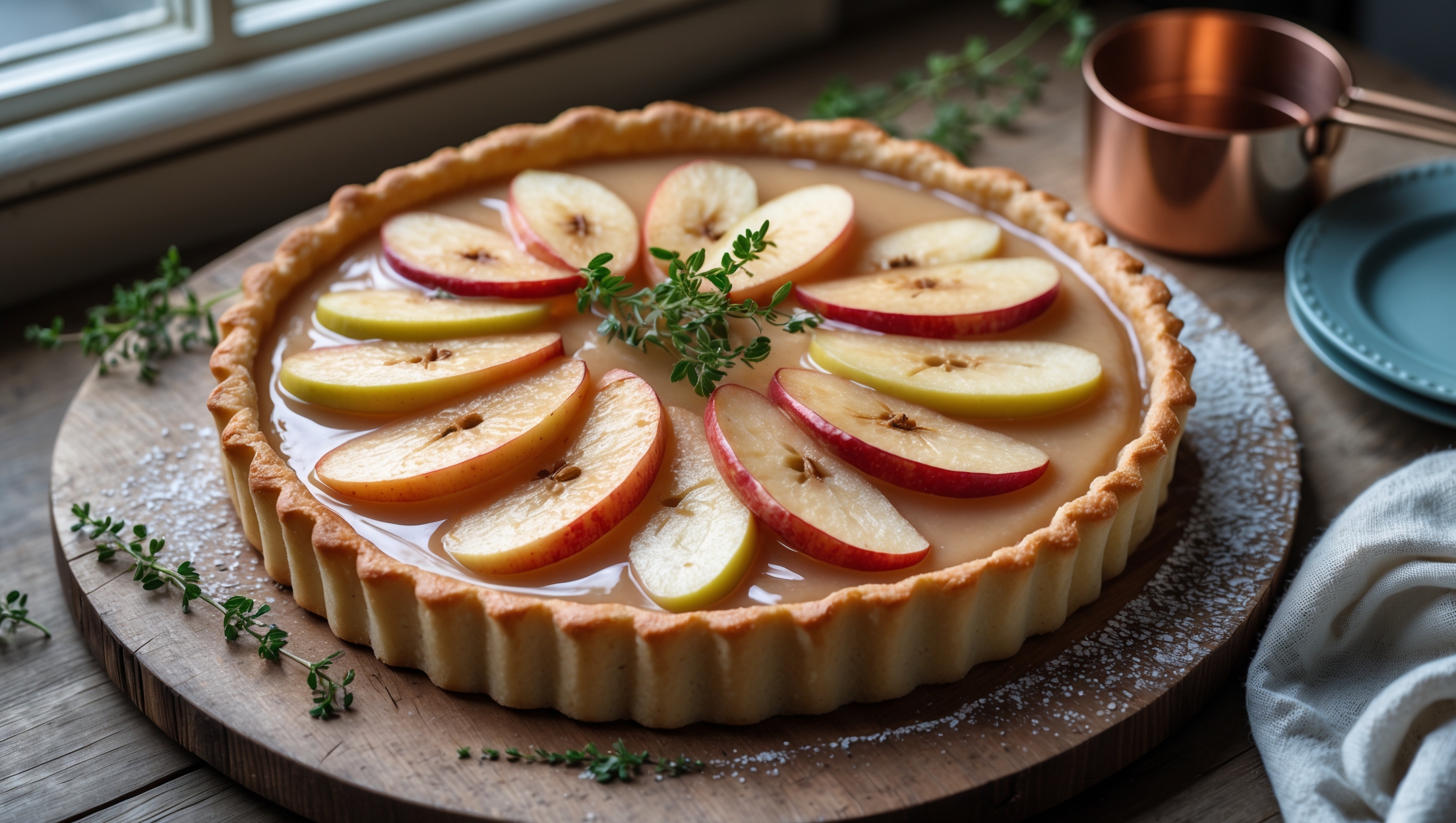
Directions
<ol class="no-list-style"><li class="MethodStepper"><h4 class="step-title">Step 1</h4>Begin by making the pastry. If using a food processor, pulse the flour, salt and butter until the mixture resembles breadcrumbs. If making by hand, rub the cold butter into the flour and salt between your fingertips until you achieve the same texture. The key is to work quickly to prevent the butter from warming – cold butter creates steam in the oven, which makes the pastry wonderfully flaky.</li><li class="MethodStepper"><h4 class="step-title">Step 2</h4>Add the icing sugar and mix briefly. In a small bowl, whisk the egg yolk with 2 tablespoons of ice-cold water, then add to the flour mixture. Pulse or stir with a knife until the dough just starts to come together – add the remaining water only if necessary. The dough should hold together when pressed but shouldn't be sticky.</li><li class="MethodStepper"><h4 class="step-title">Step 3</h4>Turn the dough onto a lightly floured surface and gently bring together into a disc without overworking it. Wrap in cling film and refrigerate for at least 30 minutes. Chilling relaxes the gluten in the flour and firms up the butter, preventing shrinkage during baking.</li><li class="MethodStepper"><h4 class="step-title">Step 4</h4>Preheat your oven to 190°C (170°C fan). Roll out the chilled pastry on a lightly floured surface to about 3-4mm thickness, creating a circle large enough to line your tart tin. Carefully drape the pastry over your rolling pin to transfer it to the tin, then gently press into the corners without stretching the dough.</li><li class="MethodStepper"><h4 class="step-title">Step 5</h4>Trim the excess pastry, leaving a slight overhang to allow for shrinkage. Prick the base with a fork, then line with baking parchment and fill with baking beans or rice. Blind bake for 15 minutes, then remove the beans and paper and bake for a further 5-10 minutes until the pastry is golden and crisp. The bottom should look dry and feel sandy to the touch, indicating it's fully baked. Trim any overhanging pastry with a sharp knife for a clean edge. Allow to cool completely in the tin.</li><li class="MethodStepper"><h4 class="step-title">Step 6</h4>While the pastry shell cools, make the custard. Pour the milk into a heavy-based saucepan, add the vanilla seeds and pod (or extract), and bring to just below boiling point. Remove from heat and allow the vanilla to infuse for 10 minutes, enhancing the flavor depth.</li><li class="MethodStepper"><h4 class="step-title">Step 7</h4>In a medium heatproof bowl, whisk together the egg yolks, sugar, and cornflour until pale and well combined. Gradually pour the warm milk over the egg mixture, whisking constantly to prevent curdling. Pour everything back into the saucepan and cook over medium heat, stirring constantly with a wooden spoon or heatproof spatula.</li><li class="MethodStepper"><h4 class="step-title">Step 8</h4>Continue cooking the custard until it thickens significantly – this may take 5-7 minutes. You'll know it's ready when it coats the back of a spoon and a finger drawn through leaves a clear path. Remove from heat, discard the vanilla pod if used, and stir in the butter until melted. The butter enriches the custard and gives it a silky finish. Transfer to a clean bowl, cover with cling film directly on the surface (to prevent a skin forming) and allow to cool for 15 minutes.</li><li class="MethodStepper"><h4 class="step-title">Step 9</h4>Pour the slightly cooled custard into the pastry case, smoothing the surface with an offset spatula. Refrigerate for at least 2 hours until the custard is completely set and firm to the touch.</li><li class="MethodStepper"><h4 class="step-title">Step 10</h4>When ready to serve, prepare the persimmons. Cut off the tops and peel the fruit if the skin is tough (Fuyu persimmons often have edible skin when ripe). Using a mandoline or very sharp knife, slice the persimmons very thinly, about 2-3mm thickness. The thinner the slices, the more elegant the finished tart will look.</li><li class="MethodStepper"><h4 class="step-title">Step 11</h4>Arrange the persimmon slices in an overlapping pattern on top of the set custard. You can create a spiral pattern starting from the outside and working inward, or create concentric circles – both look stunning. If your persimmons aren't perfectly ripe, you can brush them lightly with honey to add sweetness.</li><li class="MethodStepper"><h4 class="step-title">Step 12</h4>For the finishing glaze, gently heat the apricot jam with water in a small saucepan until melted and smooth. Strain if necessary, then use a pastry brush to lightly brush the glaze over the arranged persimmon slices. This gives the fruit a beautiful shine and helps preserve its color.</li><li class="MethodStepper"><h4 class="step-title">Step 13</h4>Refrigerate the tart for 30 minutes before serving to allow the glaze to set. Just before serving, you can dust the edges lightly with icing sugar if desired. The tart is best enjoyed on the day of assembly, though the pastry case and custard can be prepared a day in advance and stored separately until ready to assemble.</li></ol>